
Patio & Pool Deck Coating in Seattle
In Seattle, outdoor concrete spends much of the year wet, so traction matters as much as looks. We prep it like a garage floor and finish it with a UV-stable polyaspartic topcoat with anti-slip grit in the clear coat.
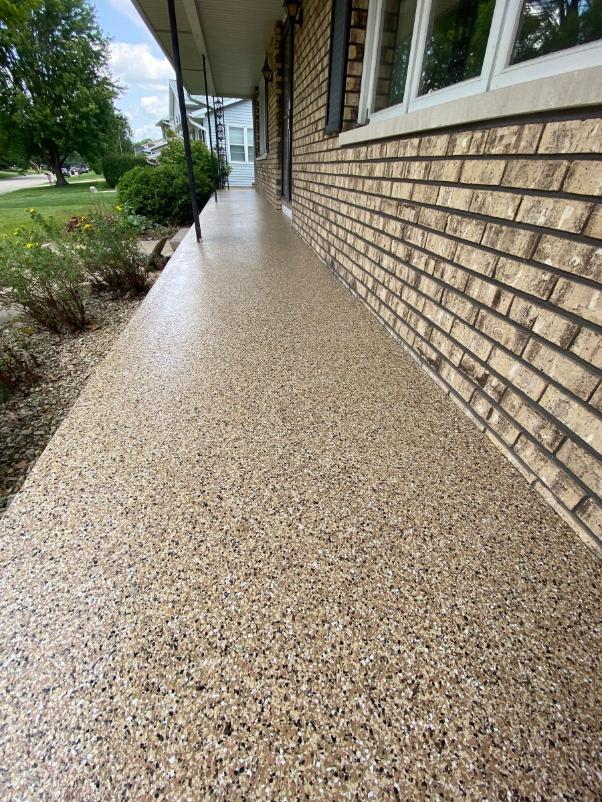
- Anti-slip clear coat
- UV-stable topcoat
- Diamond-ground prep
- Lifetime adhesion warranty
Can you coat a concrete patio or pool deck?
Yes, if it's sound concrete. It's the same layered system as our garage floors (grind, repair, base coat, flake, clear topcoat) with two outdoor priorities: a topcoat that won't yellow in the sun, and traction when the surface is wet. The polyaspartic chemistry handles the first; anti-slip grit in the clear coat handles the second.
Patios, pool decks and front walkways all take it, and the flake hides the stains and old patches outdoor concrete collects over the years.
- UVstable clear coat
- Gripanti-slip in the topcoat
- Lifetimeadhesion warranty
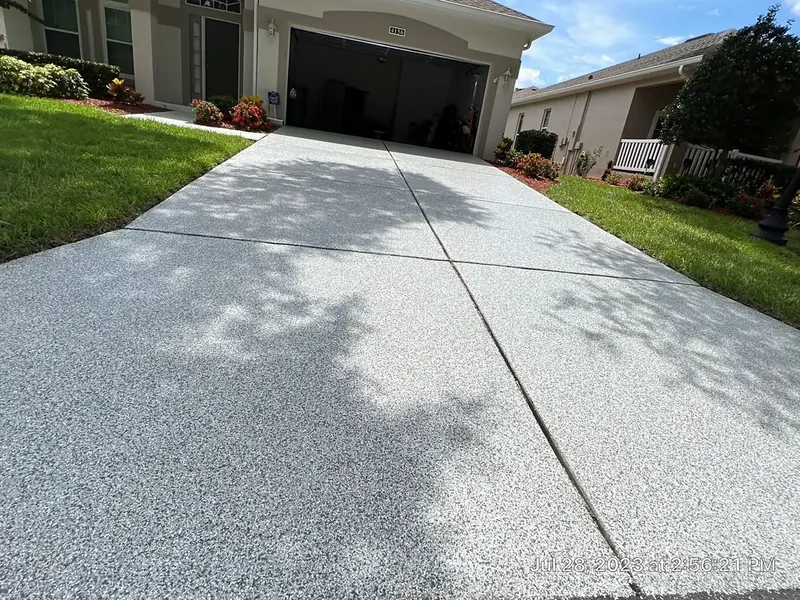
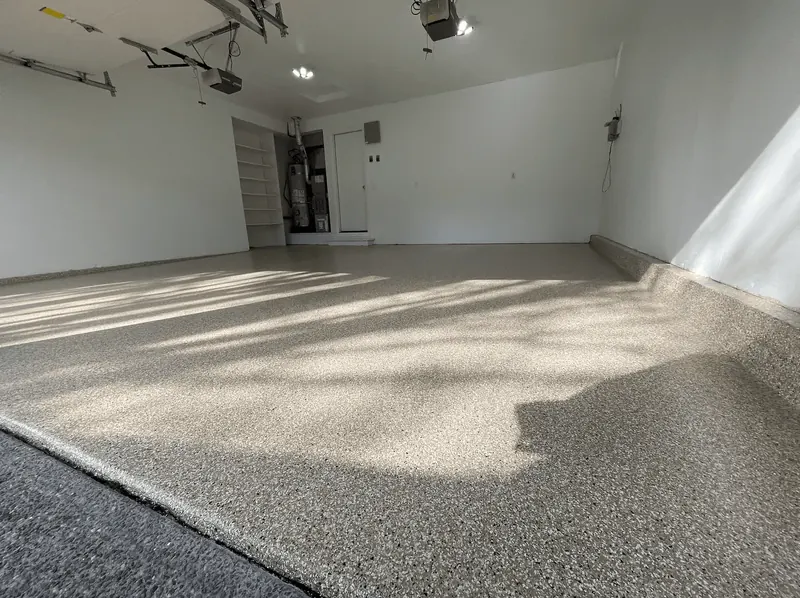
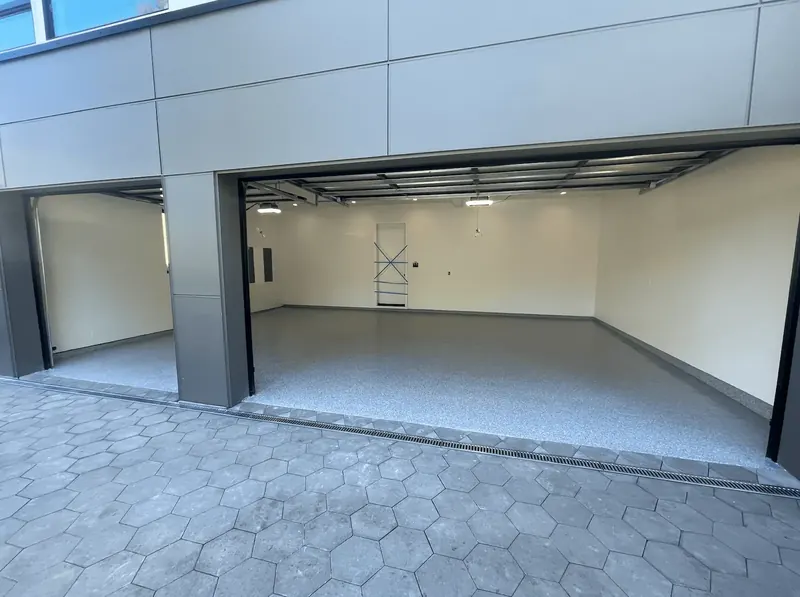
What outdoor concrete needs from a coating
A garage floor mostly fights tires, oil and moisture from below. A patio or pool deck adds rain, wet bare feet, sun on the clear days and bigger temperature swings.
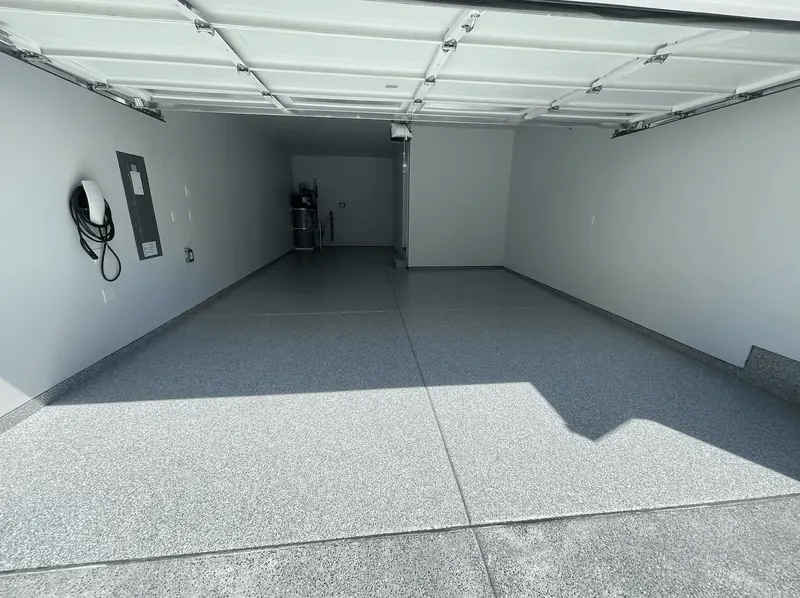 Sun
Sun
UV stability
Epoxy yellows and loses its gloss in sunlight. A polyaspartic topcoat doesn't. Seattle gets less UV than Phoenix, but a south-facing patio still sits in direct summer sun.
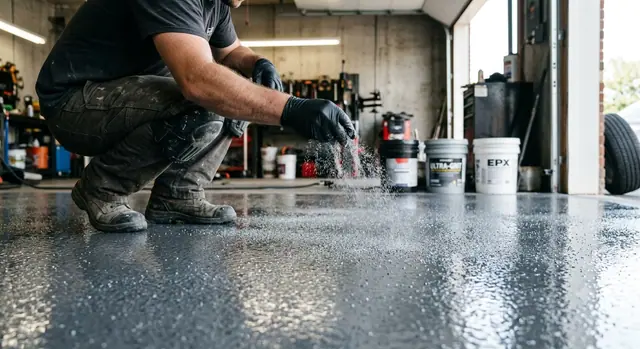 Water
Water
Traction when it's wet
Any glossy surface is slick when it's wet. Anti-slip grit goes into the clear coat, and around a pool we can go heavier on it.
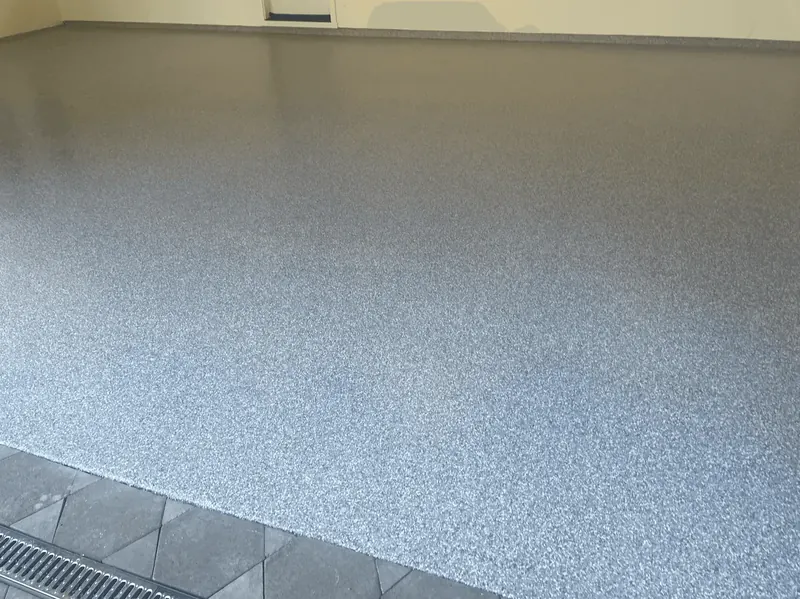 Temperature
Flexibility
Outdoor slabs expand and contract with the temperature. Polyaspartic flexes with the concrete, where rigid epoxy is prone to cracking.
 Heat
Heat
Surface temperature
Any coated surface in full sun gets hot underfoot. Lighter flake blends absorb less heat than dark ones, which is worth weighing for a deck that gets afternoon sun.
How we coat a patio or pool deck
Bond first, finish second. The same steps that keep our garage floors down.
- Inspect and test: cracks, crumbling or heaving concrete, old coatings or sealers, and moisture. You get a written price.
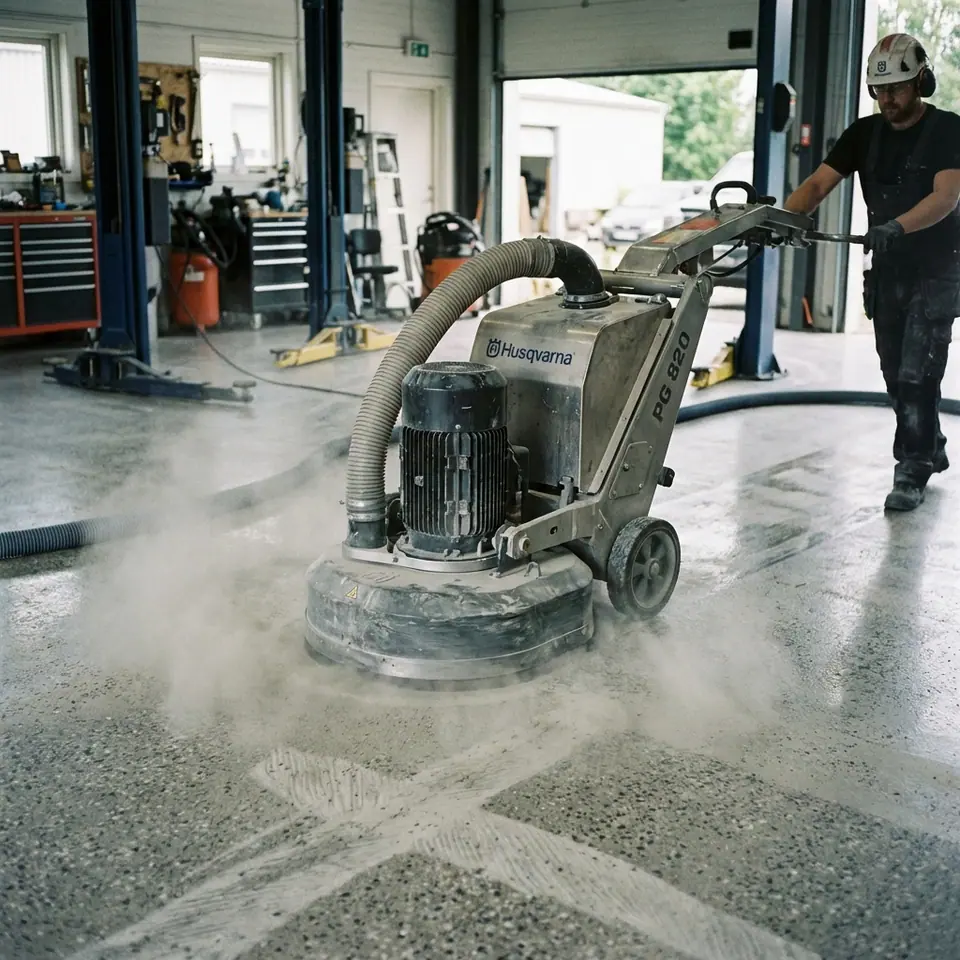
- Diamond grind: sealers, old coatings and the weak top layer come off, so the coating keys in.
- Crack and joint repair: filled and ground flush. Heaving or crumbling concrete needs repair first.
- Base coat and flake: a full broadcast that builds thickness and hides color differences in the concrete.
- Clear polyaspartic topcoat: the UV-stable wear layer, with anti-slip grit mixed in.
Outdoor work runs on the weather. The slab has to be dry and stay above the dew point while we coat it, so rain can move an outdoor install date.
What we can and can't coat
Good candidates
- Concrete patios
- Concrete pool decks
- Concrete with old paint, sealer or coating on it. Grinding takes it off.
Not candidates
- Pavers, brick, stone or wood
- Concrete that's heaving or crumbling, until it's repaired
Patios and pool decks in Seattle
Outdoor coating in Seattle is mostly a scheduling question. The slab has to be dry and stay above the dew point while we work, and the weather decides when that is.
 Timing
Book the dry season
July and August together average under 1.6 inches of rain, which makes them the most reliable months for outdoor installs. Polyaspartic tolerates cool temperatures far better than epoxy, so a dry stretch outside summer can work too.
 Traction
Wet a lot of the year
SeaTac averages about 156 days of measurable rain a year, so a Seattle patio spends a lot of its life wet. Anti-slip grit goes into the clear coat, and we can go heavier on it where people walk.
We coat patios and pool decks across Seattle, Bellevue, Redmond, Kirkland, Renton, Tacoma, Federal Way and Sammamish. Our Seattle service area · Seattle timing guide · Also serving Nashville and Scottsdale & Phoenix.
Pick your blend
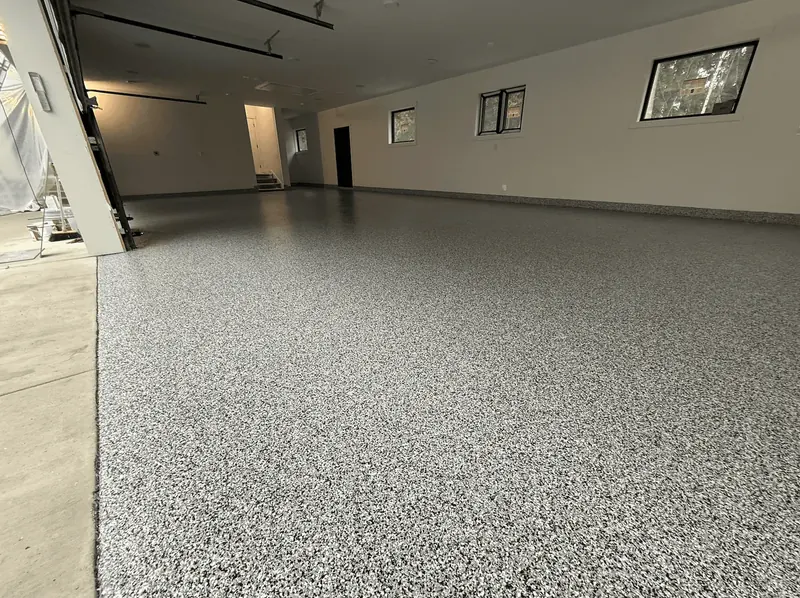
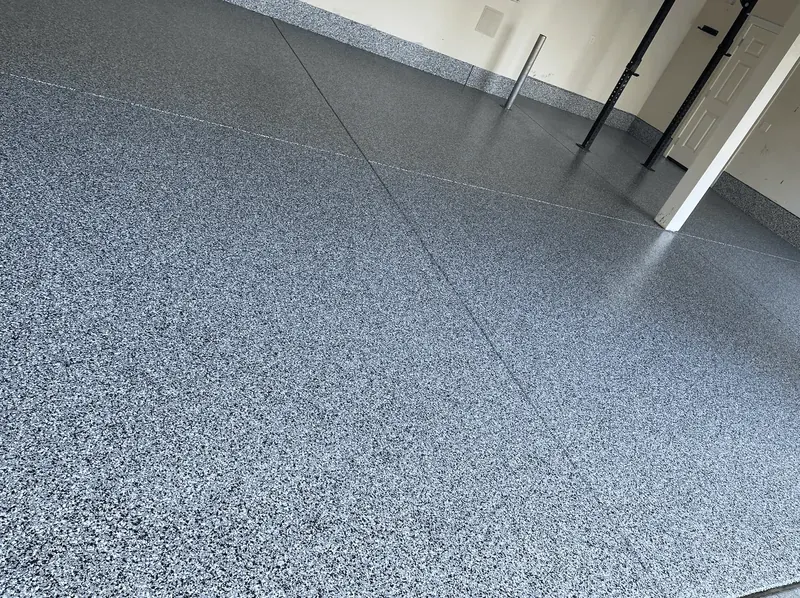
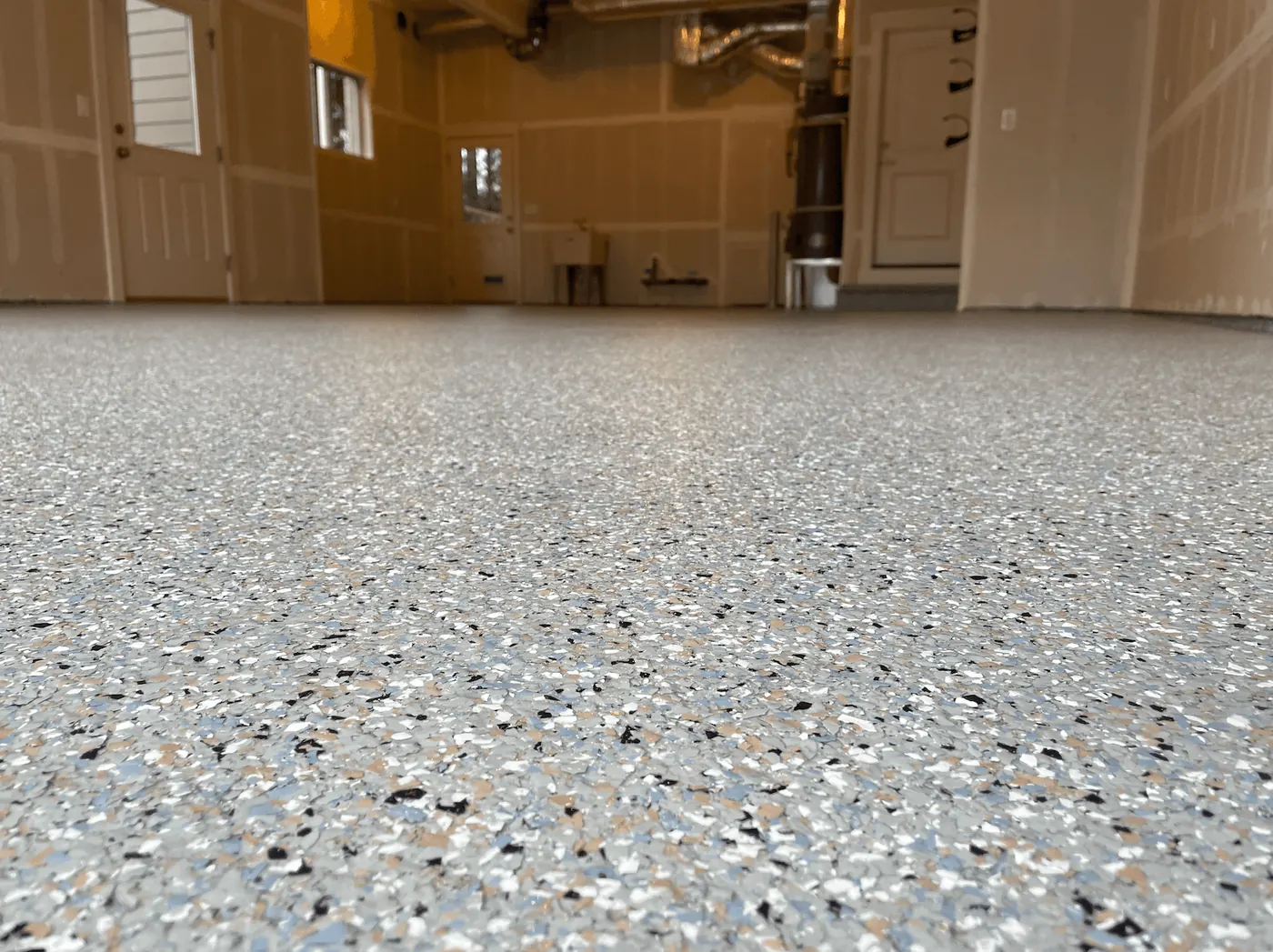
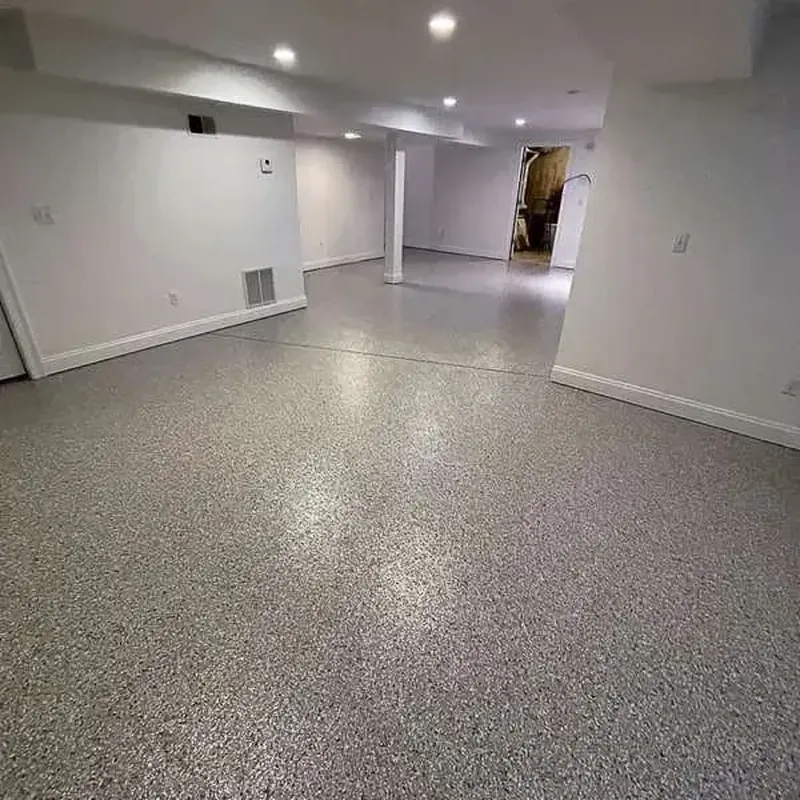
Flake comes in blends from light to dark. For a surface in full sun, a lighter blend stays cooler underfoot than a dark one. Browse finished floors in the gallery to see how different blends look on a real slab.
Patio and pool deck coating questions
Is a coated pool deck slippery?
Any glossy surface is slick when it's wet, and a pool deck is wet a lot. We mix anti-slip grit into the clear topcoat, and we can go heavier on it for more grip.
Will a patio coating yellow in the sun?
The topcoat won't. It's an aliphatic polyaspartic, the UV-stable chemistry. Epoxy is the coating that ambers in sunlight, which is why it doesn't belong on a surface that sits in the sun.
Does a coated pool deck get hot?
Any surface in full sun gets hot underfoot. Lighter flake blends absorb less heat than dark ones, so on a pool deck in full sun, the color you pick matters for comfort as well as looks.
Can you coat pavers, brick or a wood deck?
No. This is a coating for solid concrete: it bonds to diamond-ground concrete, so pavers, brick, stone and wood aren't candidates.
Can you coat over an existing deck coating or sealer?
Usually. Diamond grinding removes paints, sealers and old coatings down to clean concrete. Textured or heavily built-up surfaces can take more work to remove, and we'll tell you what's involved at the estimate.
How soon can we use the patio after it's coated?
Light foot traffic the next day. The coating keeps hardening for about a week to ten days, so hold off on dragging heavy furniture or a grill across it early on.
What's the best time of year to coat a patio or pool deck?
Whenever the slab is dry and the forecast is too: outdoor concrete has to be dry and stay above the dew point while we coat it. Polyaspartic handles cool temperatures far better than epoxy, which widens the window. In Seattle, July and August are the most reliable months.
Does the lifetime adhesion warranty cover outdoor coatings?
Yes, on the same terms as every floor we install. If the coating delaminates from the concrete, whether it peels, blisters or lifts, we repair or recoat the affected area at no charge. It doesn't cover impact damage, abrasion, staining, improper maintenance, or using the surface before the cure times we give you.
Can you epoxy outdoor concrete?
Not well. Epoxy ambers and chalks in sunlight within a season or two, it cures rigid so it cracks as the slab expands and contracts, and it needs a warm, dry slab to go on. Outdoor concrete coating is what polyaspartic was made for: it is UV-stable, stays flexible and cures in cool temperatures. We install a polyurea base and flake under a clear polyaspartic topcoat with anti-slip grit.
Can you coat a concrete driveway?
Our outdoor coating work is concrete patios and pool decks. Driveways aren't on our list today: they take turning tires, road salt and far more water and sun than a patio. If you have a carport or a covered slab, ask at the estimate and we'll tell you honestly whether it's a candidate.
More floors we coat

Get a free patio or pool deck estimate
We look at the slab, check it for moisture and damage, and leave you a written price.