
12 Questions to Ask Before Hiring a Garage Floor Coating Company in Seattle
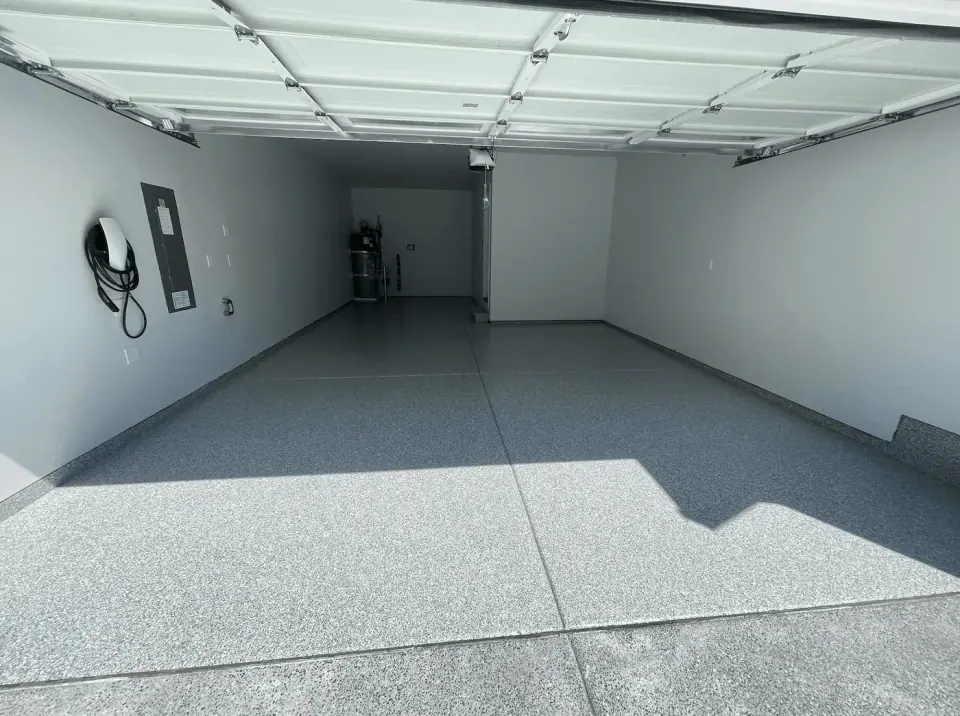
Short answer: the questions that actually separate a good contractor from a bad one are about prep and paperwork, not the topcoat. Ask about moisture testing, prep method, what's itemized in writing, and the exact warranty wording — and be skeptical of anyone who can't give you a straight answer on any of them.
Print this list, or keep it open on your phone during the estimate. None of these are trick questions. A contractor who's confident in their process will answer all twelve without changing the subject. Under each one: why it matters, and what a good and a weak answer sound like.
Short on time? Our page on hiring epoxy floor installers in Seattle has a shorter checklist of six, and it sorts the companies into four kinds first.
Prep and process
1. Do you moisture-test the slab before coating?
Moisture rising through the slab is what pushes a sealed coating off from below, and you can't see it on the day of the quote. It's also the step a lower bid is most likely to skip. Here's why it matters in a climate like Seattle's.
- Good answer: they name the test and the limit, test at the estimate, write the reading on the quote, and tell you what happens if the slab is over: a barrier primer, or no coating.
- Weak answer: "We've never had a problem." "Our product lets the slab breathe." Or a test that only happens on install day, after the price is set.
2. What's the prep method, diamond grinding or acid etching?
A coating holds on by gripping rough, clean concrete. Grinding takes off the weak top layer, old sealers and stains, and leaves that grip. Acid only roughens what it touches. It can't lift a sealer or oil that has soaked in, and the rinse wets the slab just when you want it dry. See diamond grinding vs. acid etching, side by side.
- Good answer: a diamond grinder over the whole floor, more than one pass, hand grinding at the edges, and dust collection the whole time.
- Weak answer: "A good wash and an etch." Or a confident answer about the middle of the floor and nothing about the edges, where a big grinder can't reach.
3. How many coats are included?
Each layer has a job. The base coat grips the concrete, the flake adds texture and grip, and a clear top coat takes the wear. Thickness matters as much as the count. A one-coat hardware-store kit dries to about 3 mils, thinner than a sheet of paper. A full-flake floor is about 30 to 40 mils.
- Good answer: every layer named, including a primer or barrier when the slab needs one, and a total thickness in mils.
- Weak answer: "Two coats." "Plenty thick." Or a clear top coat sold as an upgrade.
4. How is cracked or stained concrete handled?
A coating follows the slab under it. A crack that's only painted over shows through, and one that's still moving will crack the new floor too. Oil soaked into the concrete keeps any coating from sticking. What each repair involves is in can you coat a cracked garage floor.
- Good answer: a method for each problem. Cracks filled and ground flush, a plan for the wider ones, oil spots degreased and ground, and a straight warning if a crack needs a concrete contractor first.
- Weak answer: "The flake hides it." "We'll take care of it." Or a plan to coat over a crack with one side higher than the other.
5. What coating system are you using, by name?
Two floors that look the same on day one can be very different products. A name lets you look up the maker's data sheet. It lists how thick each coat goes on, the coldest slab it can go on, and when you can park.
- Good answer: a brand and a product for each layer, and the data sheets if you ask.
- Weak answer: "Our own industrial blend." "Military grade." Or names that change between the estimate and the contract.
Price and paperwork
6. Is the price itemized or a single lump sum?
One number hides what's in it. Line items let you hold two quotes side by side and spot what one of them left out, which is usually the prep.
- Good answer: separate lines for the grinding, crack repair, the moisture barrier, the coating, and any steps or wall edges, with anything included at no charge listed too.
- Weak answer: one number with "everything included," and no way to see what everything is.
7. Is the quote a flat rate or "starting at"?
A "starting at" price is the best case. The real number shows up after grinding, when your garage is already empty and the crew is already there.
- Good answer: a final price for your measured floor, good until a date written on the quote.
- Weak answer: "Starting at." "Plus repairs as needed." "We'll know once we grind."
8. What's the exact warranty wording, and what voids it?
"Lifetime warranty" can mean the floor, the material in the can, or labor for a year. The words after it decide what you actually get, so get them on paper, not in conversation. The fine print to look for is in what a garage floor coating warranty actually covers.
- Good answer: the word adhesion, the failures named (peeling, blistering, hot-tire pickup), labor included, and a written list of what's left out and what voids it.
- Weak answer: "It's covered." A warranty from the coating maker only. Or coverage that shrinks a little every year.
9. Is the warranty transferable if you sell the house?
Many floor warranties end when the house sells. If you might move in a few years, that changes what the warranty is worth.
- Good answer: a yes or a no in writing, and what the buyer has to do to keep it.
- Weak answer: "Sure, it goes with the house," said out loud and written nowhere.
Trust and logistics
10. How much do you need up front, and when is the rest due?
The Federal Trade Commission's advice for any home project is simple. Don't pay the whole price before work starts, and hold the last payment until the job is done and you're happy with it.
- Good answer: a deposit at signing that holds your install date, and the balance when the floor is finished, both written on the contract.
- Weak answer: most of the price before anyone shows up, or cash only.
11. How long will my garage actually be out of commission?
You need to know when the car can go back in. A car parked on a coating that hasn't cured can leave tire prints, or pull the coating up.
- Good answer: real times. How long the install takes, when you can walk on it, when you can park, and when it's fully hard. Ours is walk the next day, park after 72 hours, full hardness in 7 to 10 days, laid out in our install timeline, hour by hour.
- Weak answer: "A day or two." Or "you can park on it tonight."
12. Can I see examples of your local work?
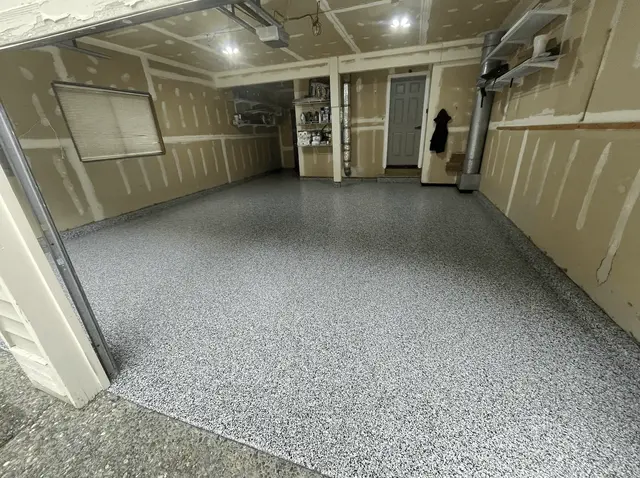
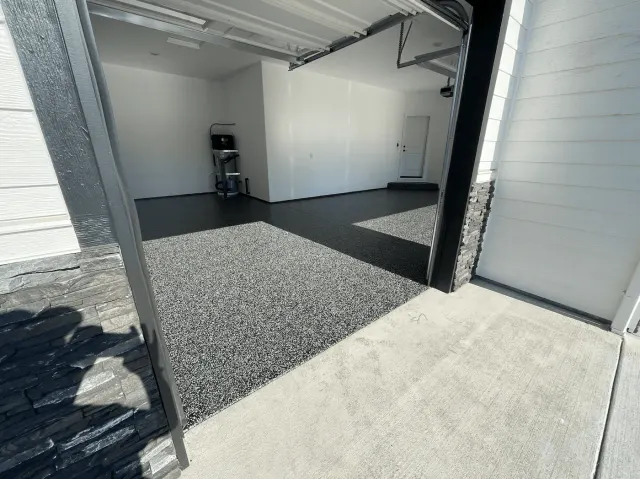
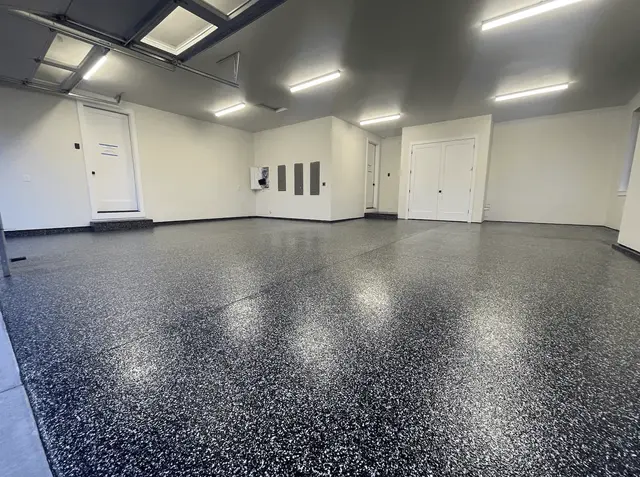
Photos of nearby floors show the company works on slabs like yours, in this climate. A website's best shot shows what a floor can look like, not what this crew does.
- Good answer: real photos from recent local jobs, and the area each one is in.
- Weak answer: stock images, or the same three photos on every page.
Why we're fine with being asked all twelve
We moisture-test every slab, diamond-grind as standard prep, itemize the $1,513 upgrade package by name and dollar value on every Premium estimate, and put the exact warranty wording in writing before anything is signed. None of that is a special favor for people who ask. It's just what the process already looks like. The point of this list isn't to make any one contractor look good. It's to make the hidden parts of a quote visible before you're the one finding out what got left out.
Red flags in the answers themselves
Listen for how specific an answer is, not how confident it sounds. "We always do it right" doesn't answer "what prep method do you use?" A real answer names the method. None of these questions are about catching someone in a lie. They're about telling a contractor with a real, repeatable process from one who's making up the answer on the spot.
Hiring questions
What questions should I ask a garage floor coating contractor?
Start with prep and paperwork. Do they moisture-test the slab, and how? Do they grind or acid-etch? Is the price itemized, in writing and final? What does the warranty cover, and what voids it? How much is due up front? The full list of twelve, with good and weak answers, is above.
How do I choose a garage floor coating company in Seattle?
Get a few written quotes and ask each company the same questions. Then compare the answers, not just the totals: the moisture reading, grinding or acid etching, an itemized final price, the warranty wording, and photos of floors they've done in this region. The company with the most specific answers is usually the safer pick.
What should a garage floor coating warranty cover?
Adhesion, named in writing. Ours covers the coating letting go of the concrete, including peeling, blistering and hot-tire pickup, and we repair or recoat the affected area at no charge. It doesn't cover impact damage, abrasion, staining, improper maintenance or using the floor before the cure times we give you. Whoever you hire, get that list of what's in and out before you sign.
How much of a deposit is normal for garage floor coating?
A deposit at signing to hold your install date, with the balance due when the job is finished. Get both amounts, and when each is due, written on the contract. Be wary of anyone who wants most of the price before work starts, or who only takes cash.
What are red flags when hiring a garage floor coating company?
No moisture test, or one that only happens on install day. An acid wash instead of a grind. A quote with no line items, or a "starting at" price. Most of the money due before work starts. Pressure to sign the same day. And a warranty nobody will put in writing.
Want to see how our answers stack up?
Ask us any of these during your estimate — moisture test included, no charge.
Get A Quote