
Garage Floor Coating in Bellevue, WA
Your car drips rain onto the last owner's oil stains. Our garage floor coating, the upgrade over an epoxy floor, buries them under full flake and a clear topcoat in your Bellevue garage. We moisture-test your slab before we quote, and the visit is free.
- Free in-home estimate
- Slab moisture-tested
- Parked again in 72 hours
- Lifetime adhesion warranty
What you get with garage floor coating in Bellevue
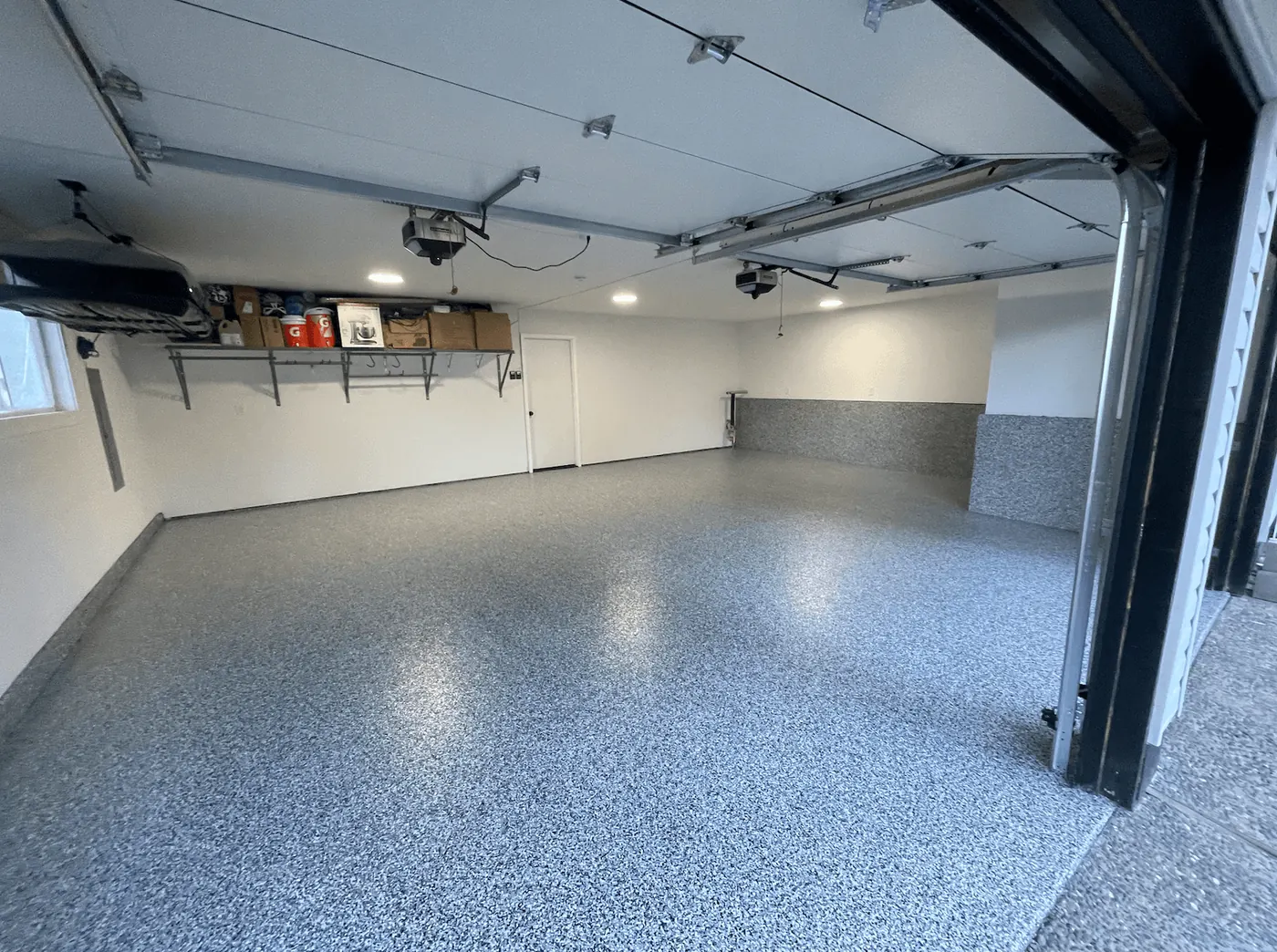
Task Force Garage installs garage floor coating across Bellevue, WA. Our crew diamond-grinds your slab, fills its cracks, rolls on a polyurea base coat, buries it in vinyl flake and seals it under a clear polyaspartic topcoat with anti-slip grit. We moisture-test every slab before quoting, and the estimate at your house is free.
A dry slab is a one-day job. A damp one gets our moisture barrier primer first, which cures overnight, so the work runs two days. Both ways, you can walk on the floor the next morning and park after 72 hours.
Most people here would call it an epoxy floor, and we're happy to answer to that. It's the step past epoxy, with the same prep and speckled look. It hardens in hours, flexes as your slab moves and holds its color in the sun, so your car is back in three days instead of about a week.
Cold weather won't stop it either. Epoxy needs a warm slab, which pushes most local epoxy jobs into summer. Ours can go down in November once your slab passes the moisture test, and fall dates are easier to book than spring ones.


Which kind of Bellevue garage is yours?
Bellevue garages come in four kinds, and each asks something different of your floor. Find yours to see what we'll look at first when we come out.
 Lake Hills · Eastgate
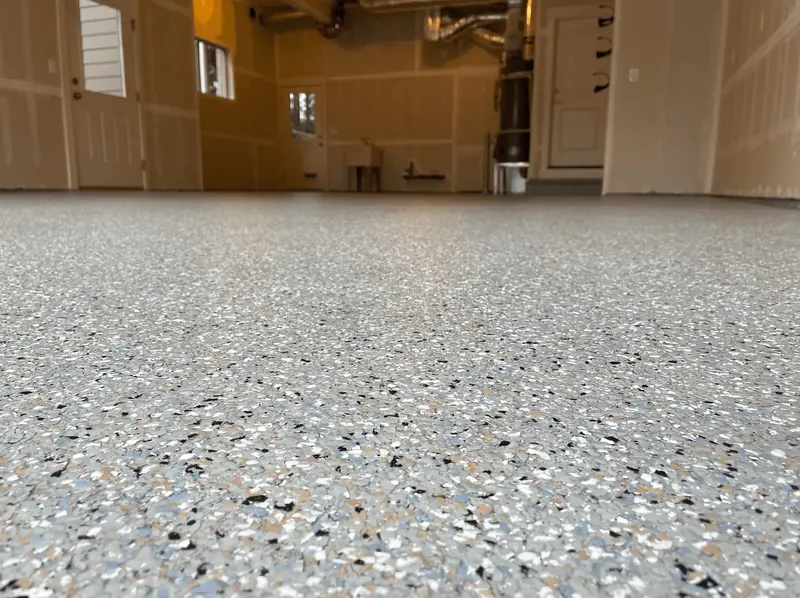
1960s ramblers
Most Bellevue houses went up before 1980, and a garage slab that old likely has no plastic under it. Expect decades of oil, maybe old paint or peeling epoxy. A deeper grind takes it all off, and your moisture reading carries extra weight.
 Somerset · Newport Hills
Hillside homes
Split-levels and daylight basements step down the slope, so your garage may sit low, with soil packed against a wall. We take readings beside those walls. If they run high, the moisture barrier goes down before anything else.
 Enatai · Surrey Downs
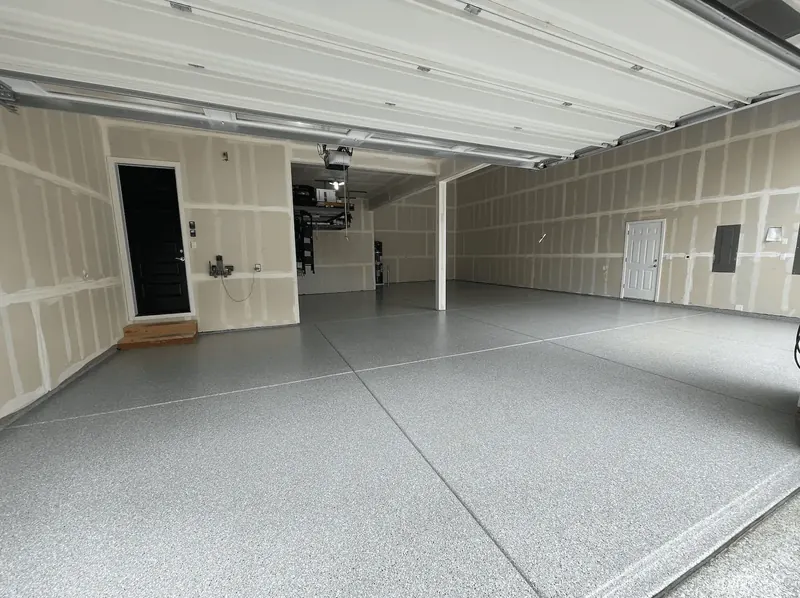
New builds
A new house leaves you a bare, smooth builder slab. Give it about four weeks to cure, then we grind off the hard top layer so the coating can grip. Code skips the plastic under garages, so new slabs get tested too.
 Bridle Trails
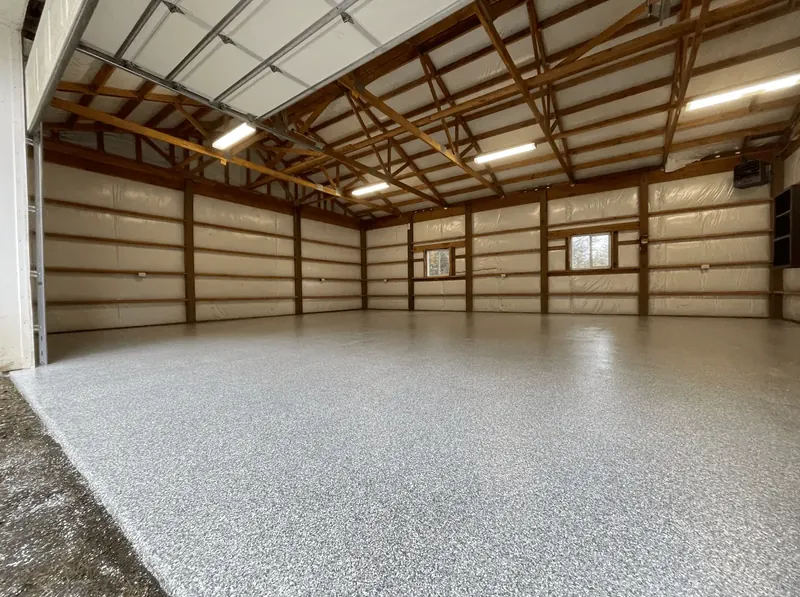
Horse acreage
Out here, the horse trailer, the muddy boots and the hay dust all end up in the garage. Full flake hides the mess between hosings, and water beads on the clear topcoat. We coat detached shops and pole barns as well.
Bellevue's hills get the snow first
Live up in Somerset, Newport Hills or Lakemont? The city says most of Bellevue's ice and snow lands right where you live. Before a storm, crews spray a calcium chloride anti-icer on your roads, and once ice builds, they spread sand mixed with more of it.
All of it rides home in your tire treads. On your bare concrete it leaves a white film, and since calcium chloride soaks up moisture from the air, that film never quite dries. Over the years, chloride deicers can break down concrete itself, starting at the joints, while the sand grinds into the surface.
On a coated floor, the whole mess sits on top. You push it out the door with a squeegee or a hose, and the grit mixed into the topcoat gives your boots some bite on a slushy morning.
Why we moisture-test every Bellevue slab
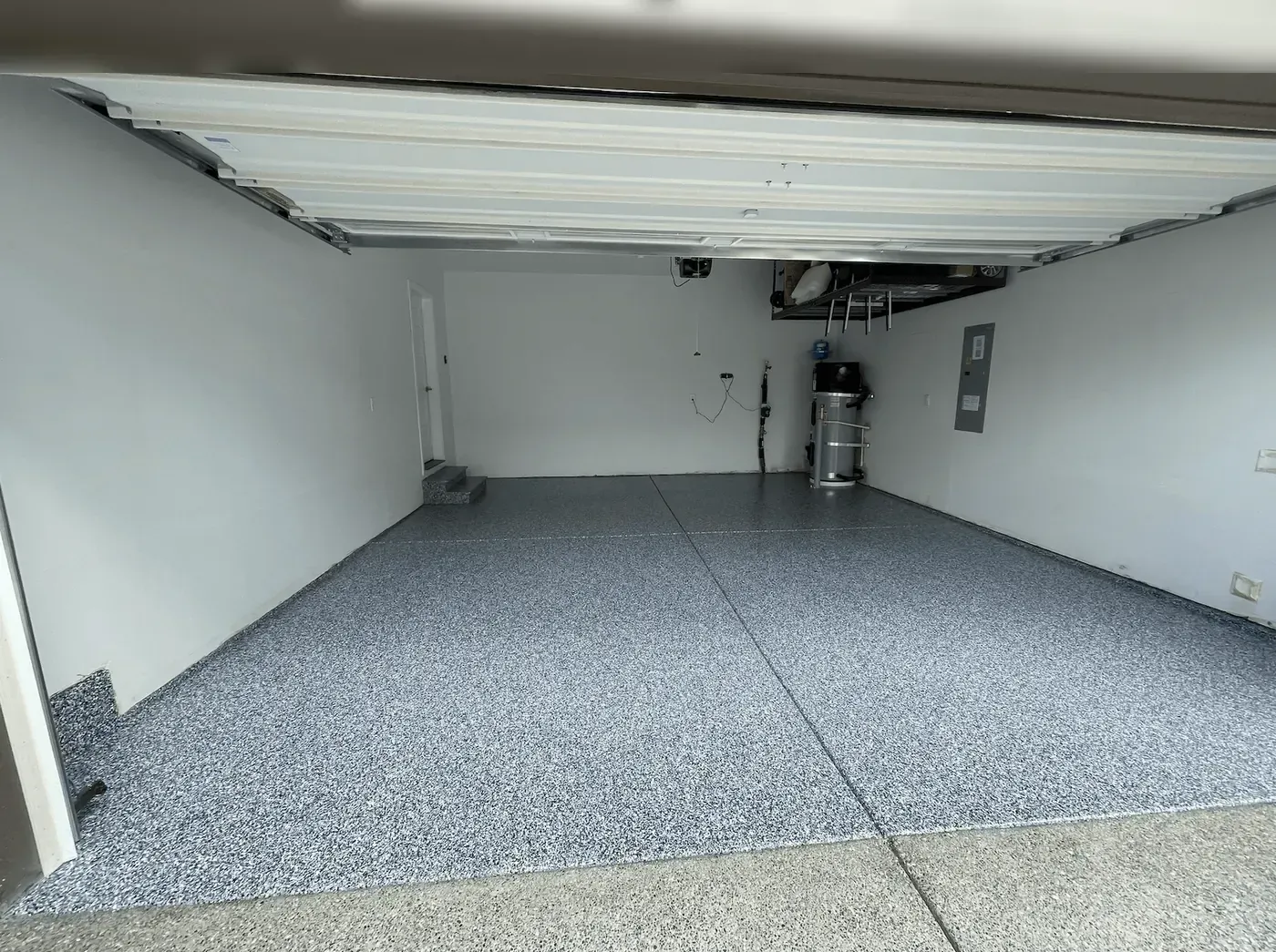
Dig a few feet down in much of Bellevue and you'll hit glacial till. It's a dense, packed layer the last ice sheet left behind, and water soaks into it slowly. Soil engineers here find rainwater perched on top of the till, at its highest in winter and early spring.
If your garage is cut into a slope, that water can sit right against your slab and walls. An older slab with no plastic underneath lets it wick up into the concrete, where it works against any coating on top.
So before we price anything, we meter-test your slab by the walls and in the middle, and look for white chalky deposits or dark, damp-looking patches. A high reading, or two of those signs, puts the moisture barrier primer down first. Your job then takes two days, and your floor goes on a slab that's ready for it.
Want the details? Our guide to garage floor moisture walks you through the test.
Got an EV charger on the garage wall?
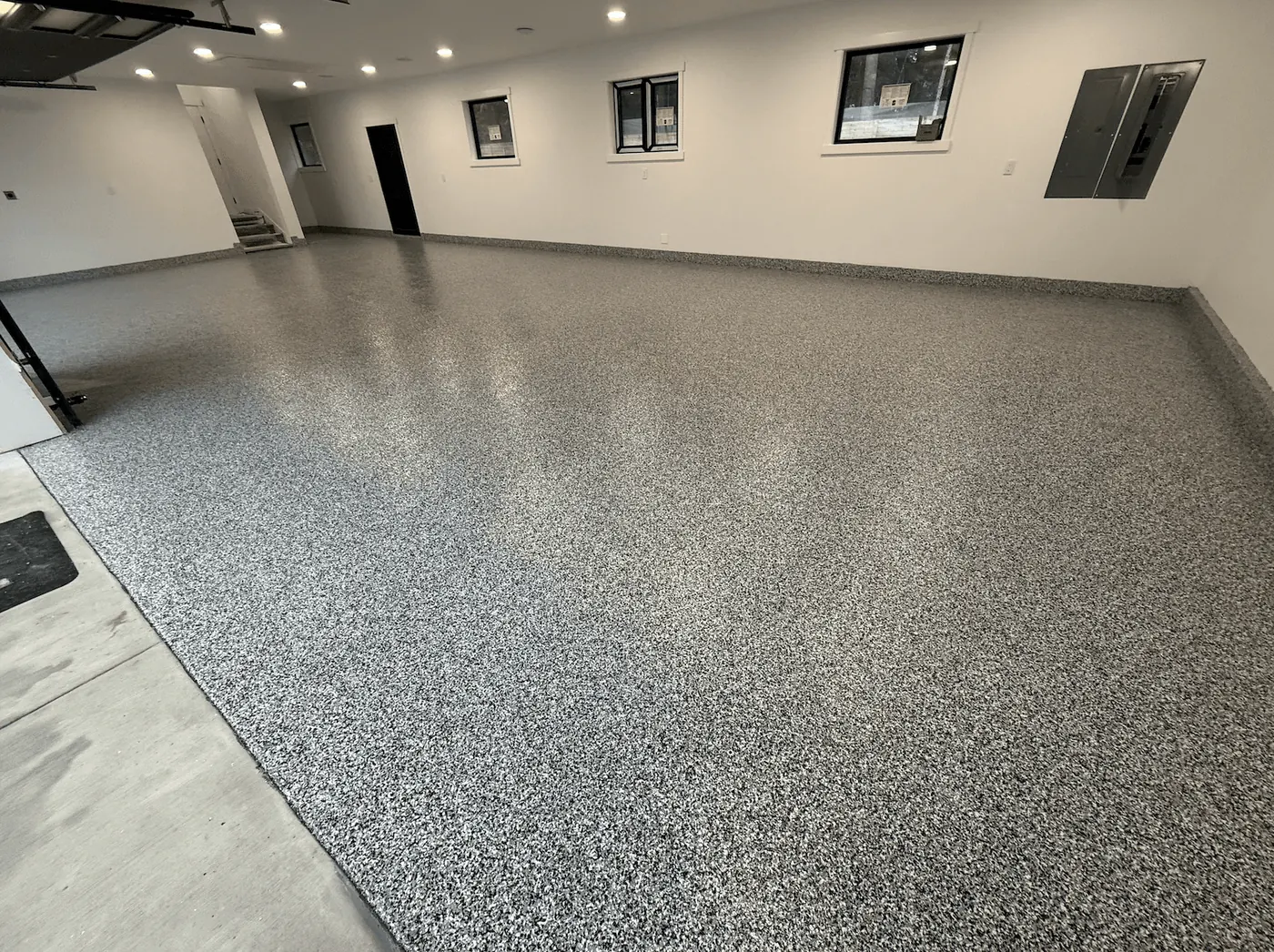
You're in good company. Bellevue has about one registered EV for every four households, and an EV changes a few things on install day.
- We work around the charger. Our crew tapes off the charger and its conduit before we grind, and the coating runs right up to the wall beneath them.
- Charge up the night before. Your car sleeps in the driveway until the floor is ready for it, so top off the battery before we arrive.
- The weight isn't a worry. An EV is heavy, but the concrete carries the load. The coating's job is the surface, and on day three your car parks like any other.
With no oil drips, your floor mostly sees rain, road film and winter grit, and all of it wipes off. Your garage stays clean enough to become the gym or workshop you keep meaning to set up.
Your Bellevue install day, start to finish
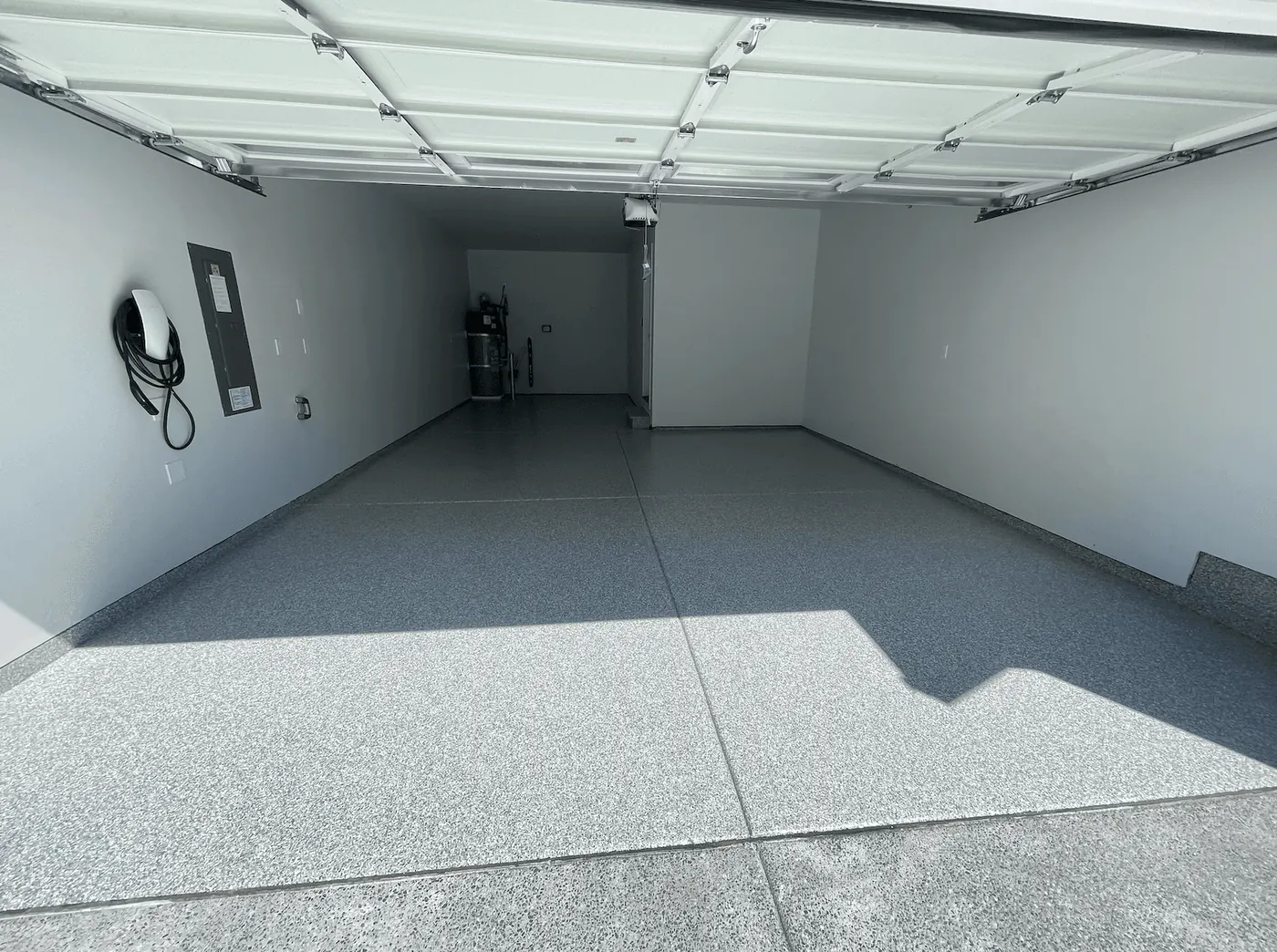
Picture your two-car garage with a dry slab. Add the moisture barrier, and the same work spreads over two days.
The night before
You clear out the cars, bins and freestanding shelves. Cabinets screwed to the wall can stay. Tell us if your driveway is steep or shared, so we can plan where our truck parks.
Morning: test and grind
First thing, our crew takes a fresh reading of your slab. Then diamond grinders cover every inch of it, hand tools work the edges, and vacuums pull up the dust as it comes off.
Cracks and joints
We fill each crack and the saw-cut control joints, then grind the patches level, so the old lines in your slab stay hidden.
Base coat and flake
Next comes the polyurea base coat, tinted to suit your blend. We toss vinyl flake into it by the handful until the base disappears, and that full cover hides the pits of older concrete.
The clear topcoat
Loose flake gets scraped and swept off, and the clear topcoat goes on with its anti-slip grit. You can cross it in socks tomorrow and park after 72 hours. It keeps hardening for a week, so don't drag anything heavy across it yet.


Epoxy and flake floor costs in Bellevue
Your exact price comes in writing. For a rough number now, here are typical Seattle-area prices for professional installs, from thin coatings to full flake systems.
- $1.6K–$5.8Kmost two-car garages
- $2.5K–$10Kmost three-car garages
Four things move your price. Square footage comes first, then crack repair, any paint or old coating we grind away, and whether your slab needs the moisture barrier. An older Lake Hills slab usually takes more prep than a Lakemont one from the 1990s.
On Premium, the barrier comes included, along with cove base, coated steps, a session to design your flake blend and a checkup after one year, at no extra charge. Selling in the spring? Original may be all the floor you need, and we'll tell you so.
Either way, your floor carries a lifetime adhesion warranty. Our Seattle-area cost guide breaks the prices down by garage size.
Every corner of Bellevue, hills and flats
We come to you anywhere in Bellevue, from Bridle Trails horse farms to the newest streets on Cougar Mountain. If your street isn't in this sampling, you're still in our area.
- 98004
- West Bellevue
- Enatai
- Surrey Downs
- Meydenbauer
- 98006
- Somerset
- Newport Hills
- Lakemont
- Factoria
- 98007 · 98008
- Eastgate
- Lake Hills
- Crossroads
- Phantom Lake
Live past the city line? You're covered in Mercer Island, Newcastle, Kirkland and Redmond, too.
Flake blends, from light to dark
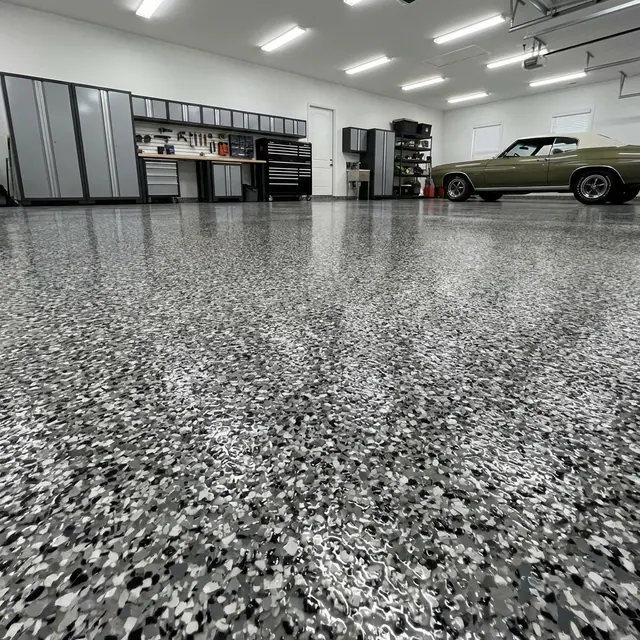
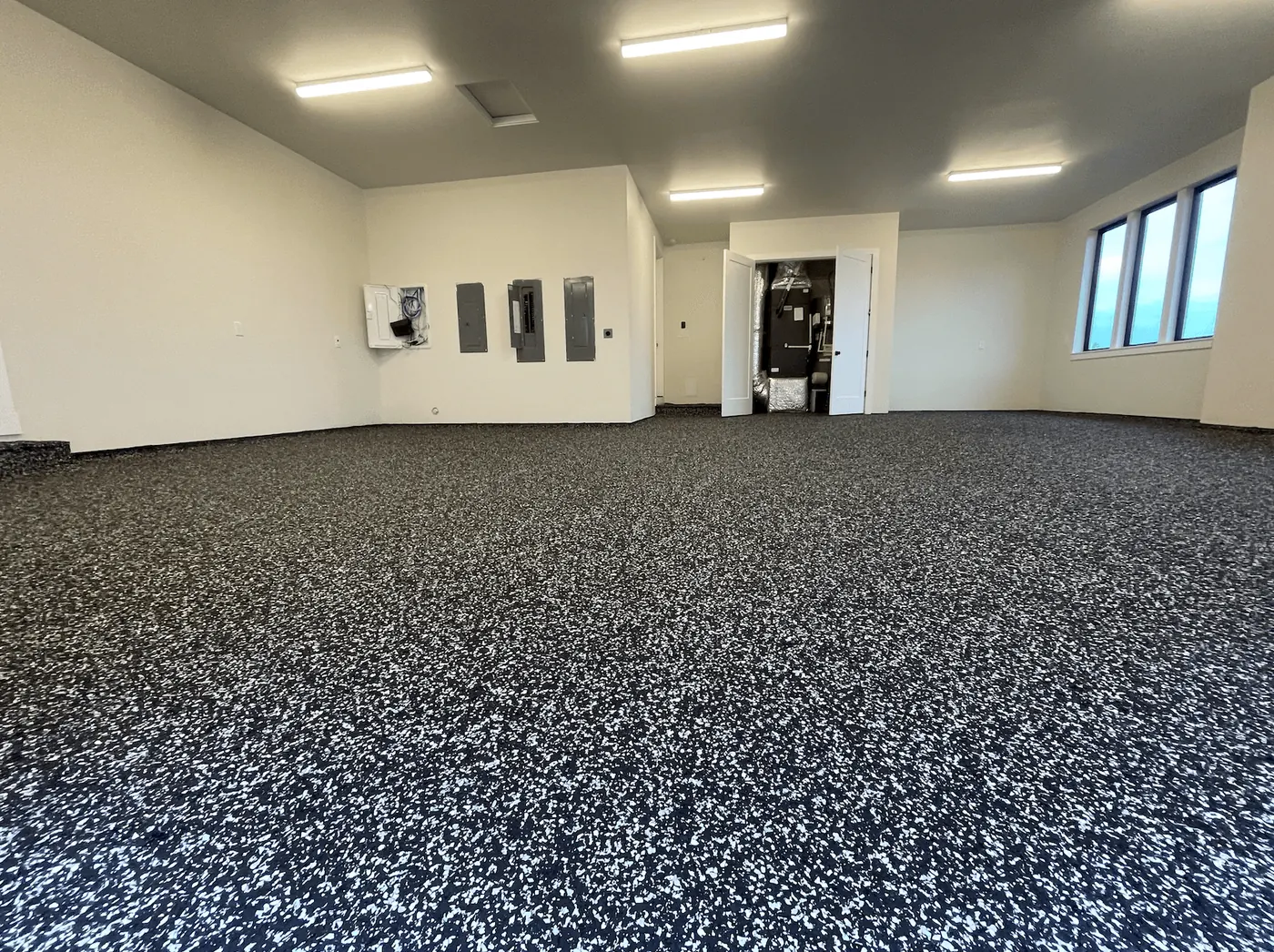
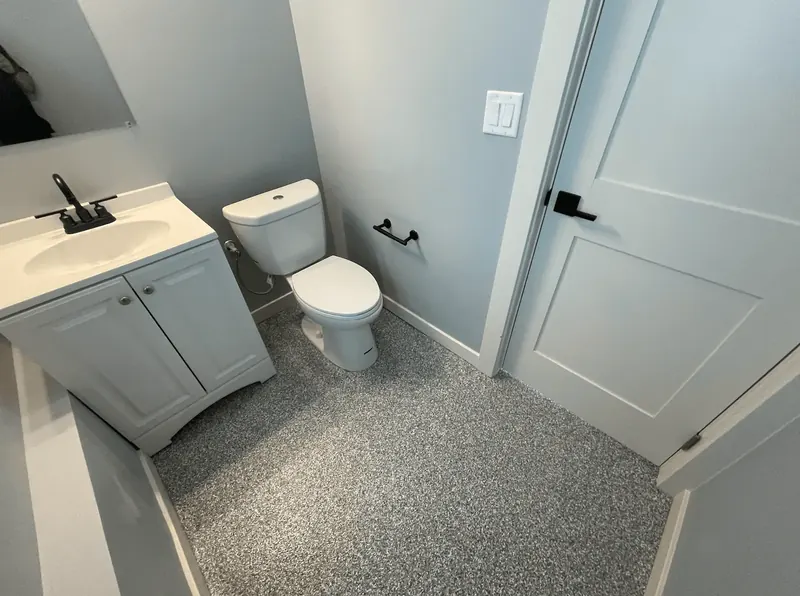
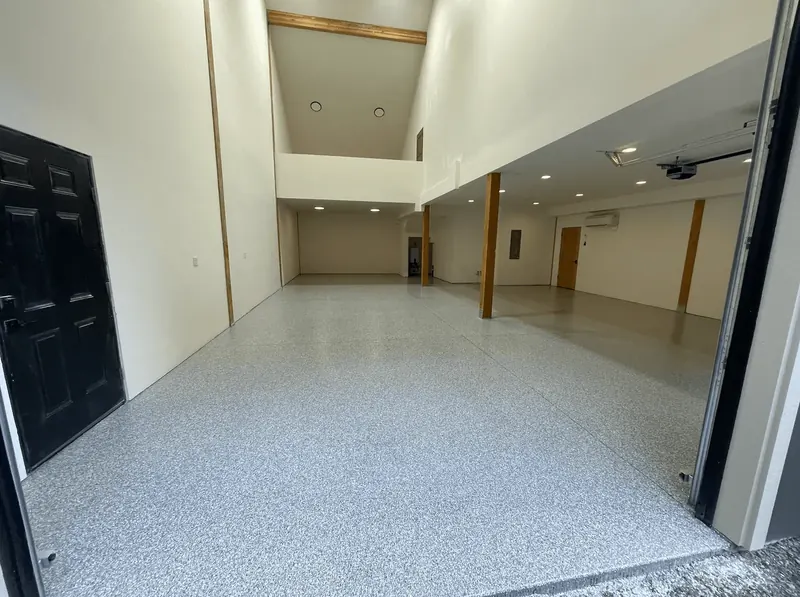
Seven blends on finished floors. Busy, mid-tone mixes hide dust and winter grit best. More are in the gallery, and you can test a color on a photo of your own garage.



Your Bellevue garage floor questions
How much does garage floor coating cost in Bellevue, WA?
Across the Seattle area, most pro-installed floors run about $1,600 to $5,800 for a two-car garage, or roughly $4 to $12 per square foot. Your own number depends on square footage, crack repair, any old coating to remove and whether the slab needs the moisture barrier. The free estimate puts it in writing, line by line.
Do you install epoxy garage floors in Bellevue?
We install the step up from epoxy: a polyurea base coat under full flake, sealed with a clear polyaspartic topcoat. The prep and the look match a good epoxy job. Ours hardens in hours, bends a little with the slab and holds its color in the sun, so your car is back in three days instead of a week. See epoxy and our floor side by side.
How do I compare garage floor coating companies in Bellevue?
Ask every installer the same four questions. How do you prep the slab, grinding or acid etching? Do you test for moisture before you quote? What exactly goes on the floor, coat by coat? Will the price be itemized in writing? A good company answers all four plainly. We'll answer them at your free estimate.
Is a garage dug into a Somerset hill a moisture risk?
It can be. A garage cut into a slope often has soil against a wall, and on Bellevue's glacial till, water can sit there all winter. So we take readings by those walls as well as the middle, and high readings put the moisture barrier primer down first, which turns a one-day job into two.
How soon can a new West Bellevue slab be coated?
Give fresh concrete about four weeks to cure. New slabs also have a hard, smooth top that a coating can't grip, so we diamond-grind it open first. Washington's code lets builders skip the plastic sheet under a garage slab, too, so your new floor gets the same moisture test as an old one. More on coating new concrete.
Do you install polyaspartic garage flooring in Bellevue?
Yes, as the top half of our system. The clear topcoat is polyaspartic, over a polyurea base coat with full flake. The base flexes with a cool, damp Bellevue slab, and the topcoat stays clear in the sun and stands up to winter grit.
Do you coat shop and barn floors in Bridle Trails?
Yes. Detached shops and pole barns get the same process we use in garages, from the grind to the topcoat, and a bigger floor costs less per square foot. Tell us whether yours holds tack, tools or a trailer, and we'll walk it with you at the estimate. More on shop and barn floors.
Should we coat the garage if we might sell soon?
It depends on your timeline. If you'll be there a few more winters, a floor that wipes clean instead of staining and shedding dust is worth having. If the sign goes up next spring, a cheaper refresh or our Original package may be the smarter spend, and we'll say so.
Let's look at your Bellevue garage floor
Give us about 20 minutes at your house. We'll measure the floor, read your slab's moisture and write up an itemized price, then leave you to think it over.