
Polyaspartic Garage Floor Coating in Seattle
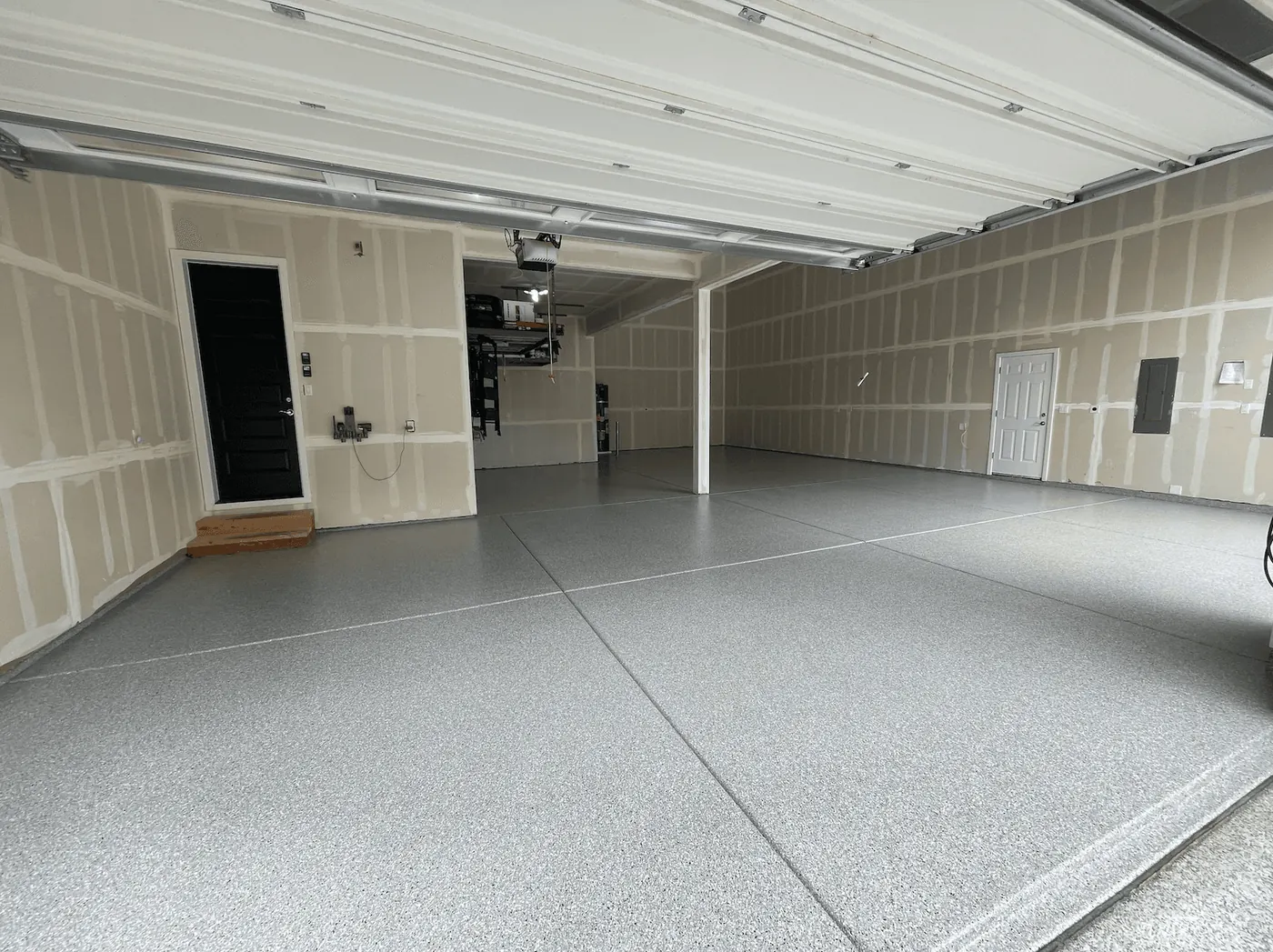
A garage floor coating is only as good as its grip on the concrete, and in Seattle, on what's coming up through it. We diamond-grind every slab, repair the cracks, test for moisture first, and finish with full flake under a clear polyaspartic topcoat.
- Installed in 1–2 days
- Park on it after 72 hours
- Moisture-tested first
- Lifetime adhesion warranty
What is a polyaspartic garage floor coating?
It's a layered floor that grips into the concrete: a polyurea base coat, vinyl flake broadcast into it, and a clear polyaspartic topcoat that your tires and boots actually touch. It seals the slab against oil, chemicals and stains, wipes clean, and unlike epoxy it doesn't amber in sunlight.
The chemistry has its own guide: what is polyaspartic floor coating. The same polyaspartic floor coating goes on patios, shops and basements too.
Looking for epoxy floor installers in Seattle?
You found them, with one honest footnote: we install the polyaspartic upgrade on an epoxy floor, not plain epoxy. Same diamond-ground prep and the same flake look, but it cures in a cold garage, stays flexible as the slab moves and takes a car after 72 hours instead of a week.
Compare epoxy floor installers in Seattle, see how our installation works, check what it costs, or read the epoxy vs. polyaspartic guide.
- 1–2days to install
- 72 hrsuntil you park on it
- Lifetimeadhesion warranty
What goes into the floor, bottom to top
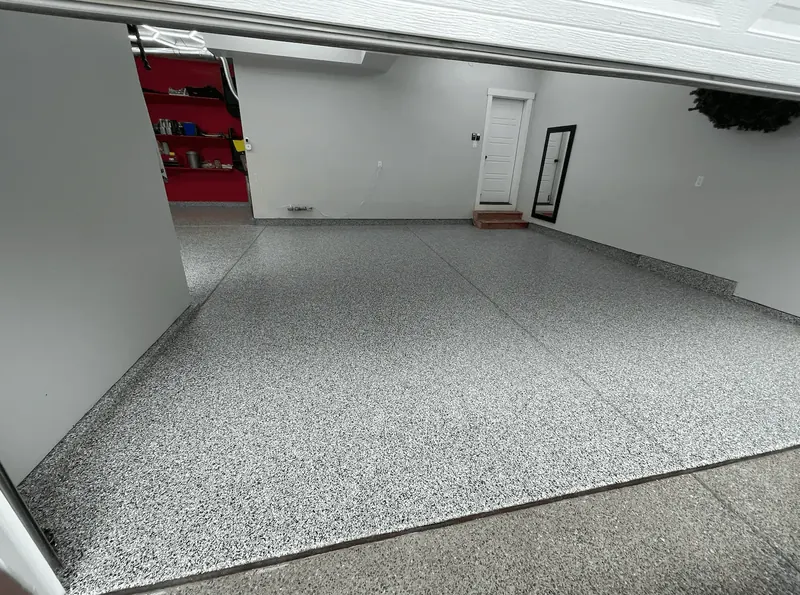
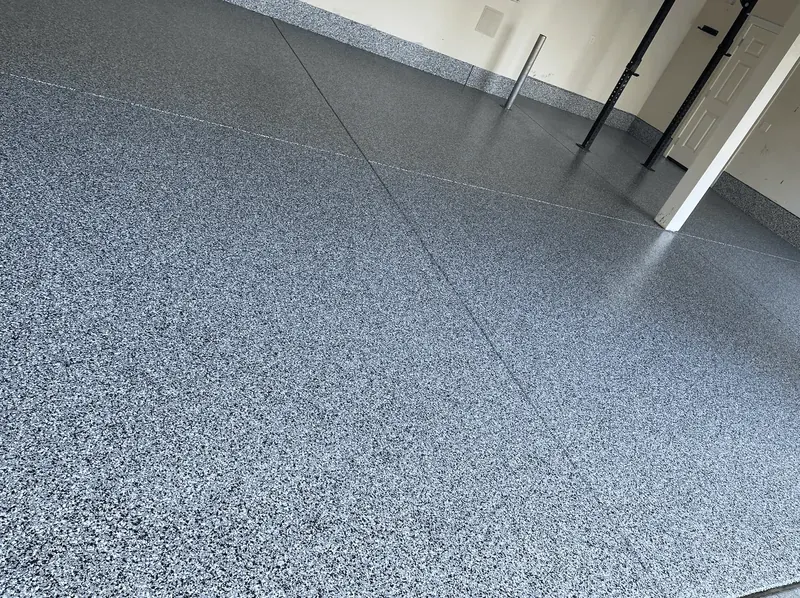
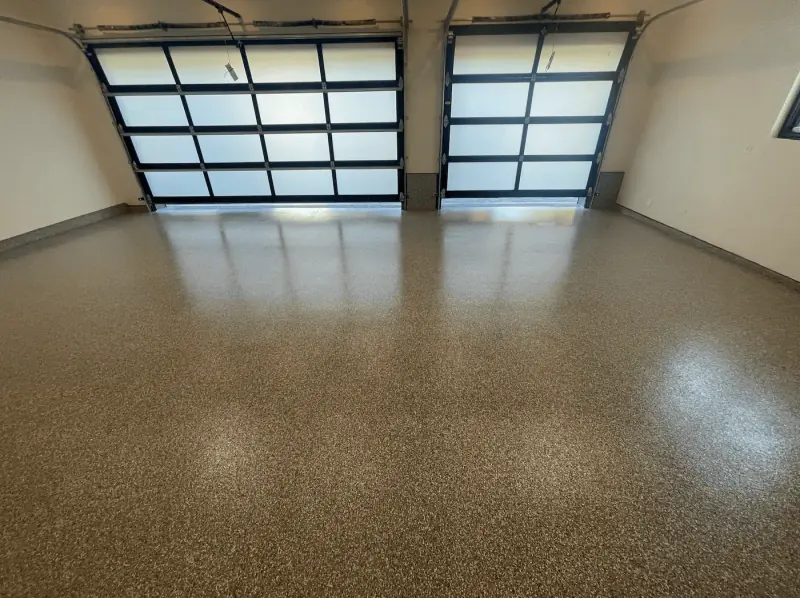
Every floor we coat gets the same diamond-ground prep. Here's each layer and why it's there.
-
Diamond grind
Diamond tooling takes the weak, dusty top layer off the slab and opens the concrete's pores, so the coating keys into the concrete instead of sitting on top of it. We make a coarse pass and then a refining pass, hand-grind every edge and corner, and run the grinders with dust collection.
This is most of the labor on the job, and it's the step a cheap bid shortcuts: an acid wash instead of a grinder, or one fast pass that scuffs the surface without opening it.
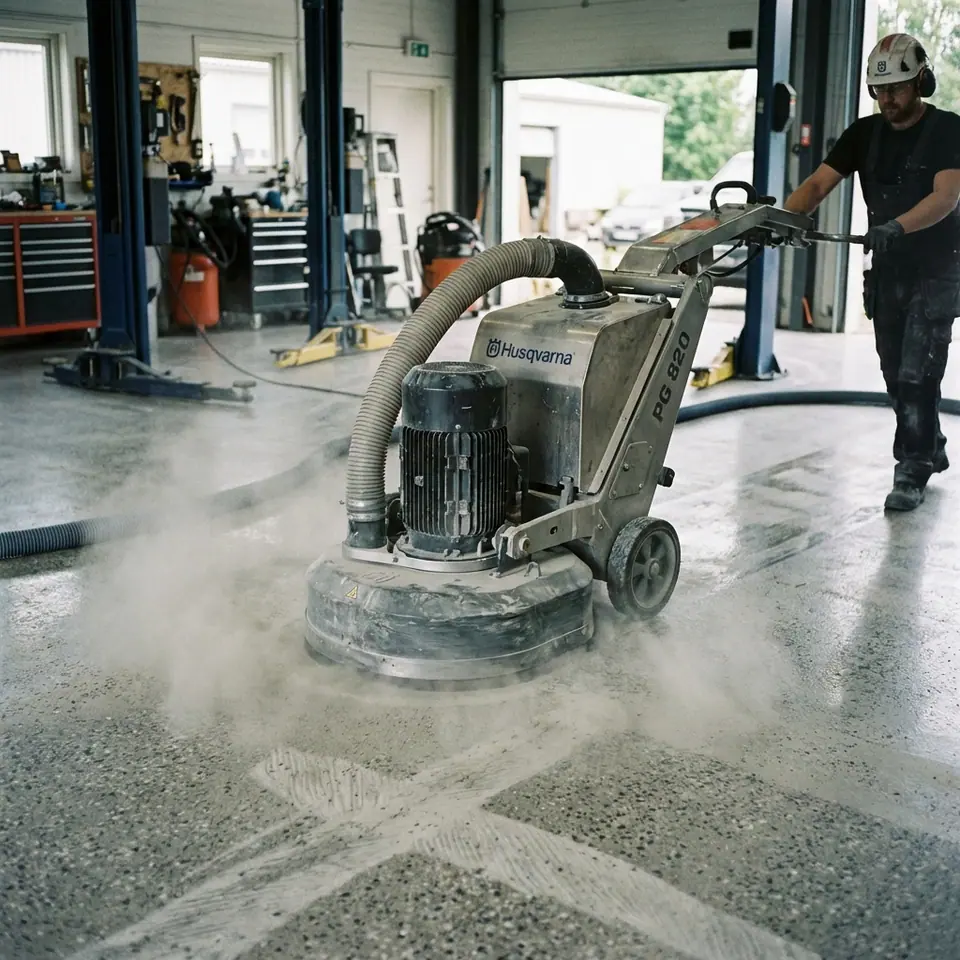
Diamond grinding, two passes -
Crack and joint repair
Every visible crack and control joint is filled with professional filler and ground flush before anything is coated. On our Premium floor, larger cracks are cut open and rebuilt from the bottom and control joints are run edge to edge.
A crack with one side higher than the other, crumbling concrete or a settling slab is a structural problem that needs concrete repair first. If we see one, we'll say so at the estimate.
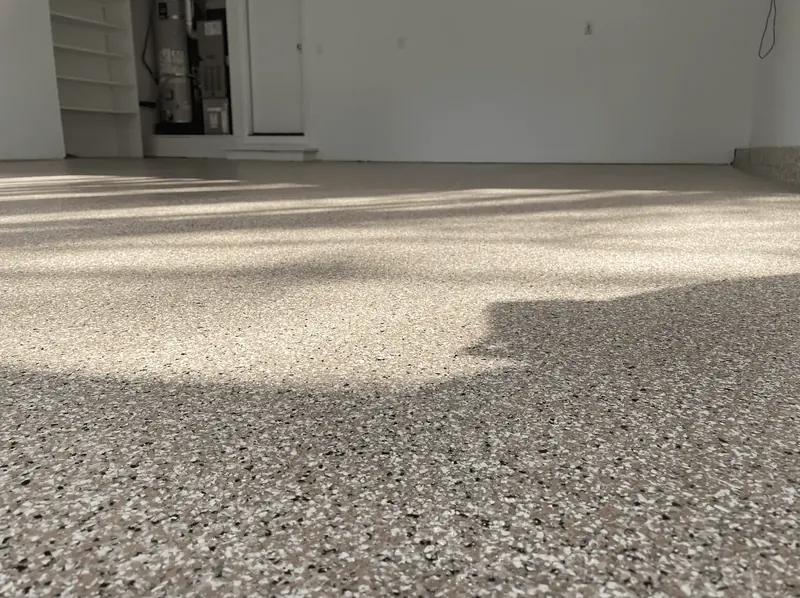
Cracks filled and ground flush -
Moisture test, and a barrier when the slab needs one
Before we quote, we test the slab for moisture and look for the signs a meter can miss: white chalky deposits you can't sweep off, damp patches when nothing's been spilled, old coating that peeled.
If the slab needs it, a moisture vapor barrier primer goes onto the bare, ground concrete and cures overnight before the base coat. That's why a floor with a barrier is a two-day install.

The barrier primer goes onto the bare slab -
Base coat and full flake broadcast
The polyurea base coat goes down and we broadcast vinyl flake into it until it won't hold any more. A full broadcast builds thickness and hides small imperfections and color differences in the concrete. Once it sets, the loose flake is scraped and vacuumed off.

Flake broadcast into the wet base coat -
Clear polyaspartic topcoat
The wear layer: a clear, UV-stable polyaspartic coat with anti-slip grit mixed in. It's more flexible and more chemical-resistant than an epoxy topcoat, and it holds its color where epoxy ambers. A finished full-flake floor is about as thick as a credit card.
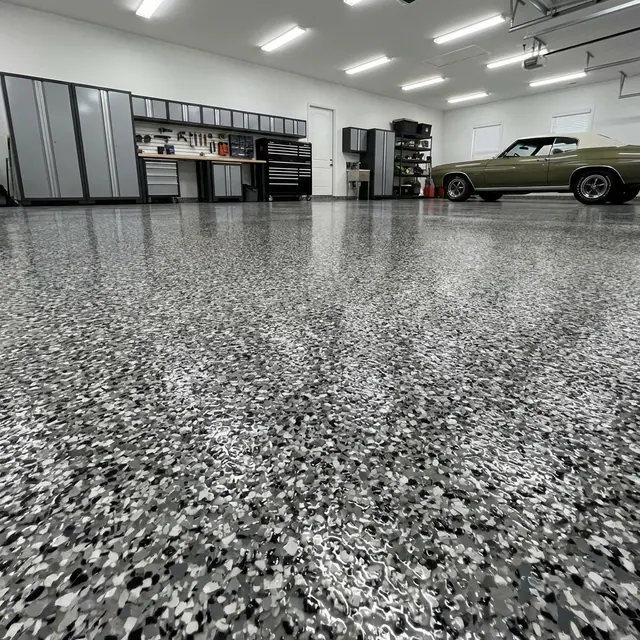
The finished floor under its clear topcoat -
Finishing details
Cove base carries the coating 4–6 inches up the walls, so there's no raw seam where the floor meets the wall, and interior garage steps can be coated to match the floor. Both are part of the upgrade package included with our Premium floor.
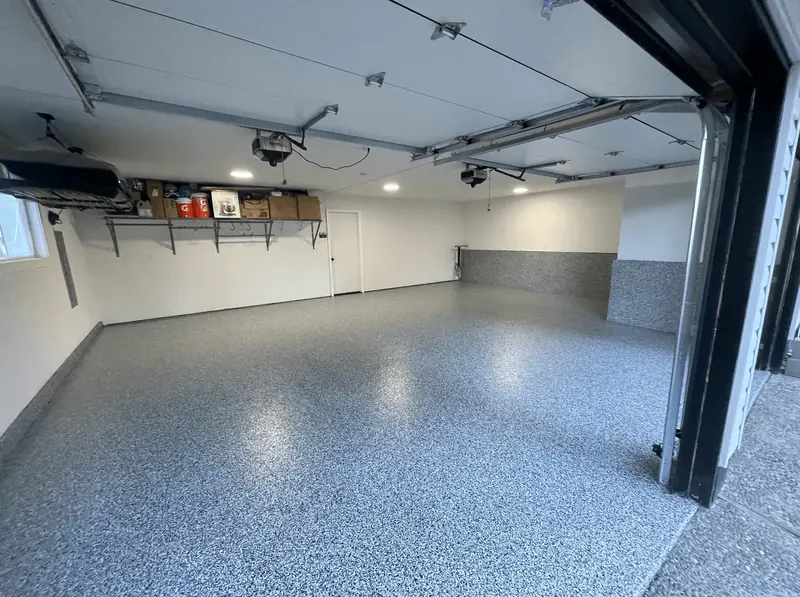
Cove base: no raw seam at the wall
Want to see every system side by side? Compare our coating systems, or see the garage flooring options, ranked for Seattle, from tiles to paint.
How installation day goes
One day without a moisture barrier, two with one, because the barrier primer cures overnight before anything covers it. The one-day garage floor coating page walks through it step by step.
-
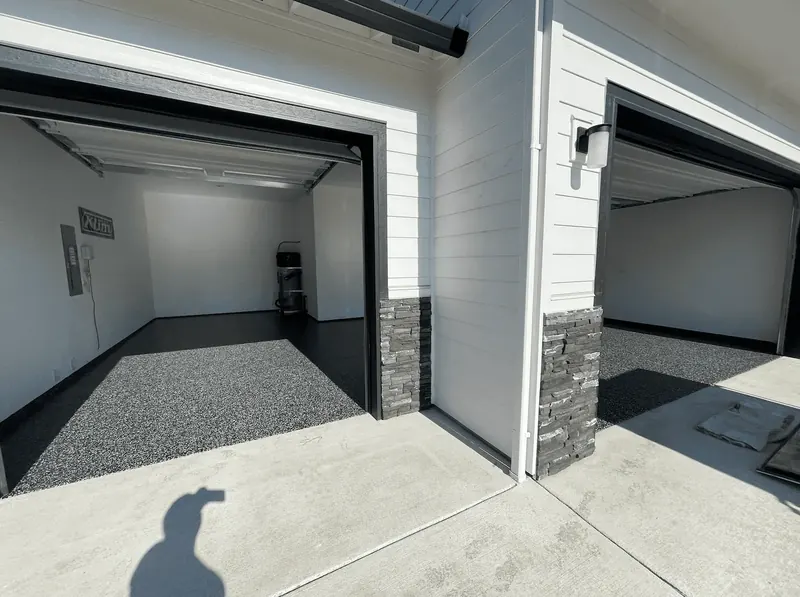
Free estimate at your house
We measure the floor, test the slab for moisture, walk you through what it needs and leave a written price. No pressure to sign.
-
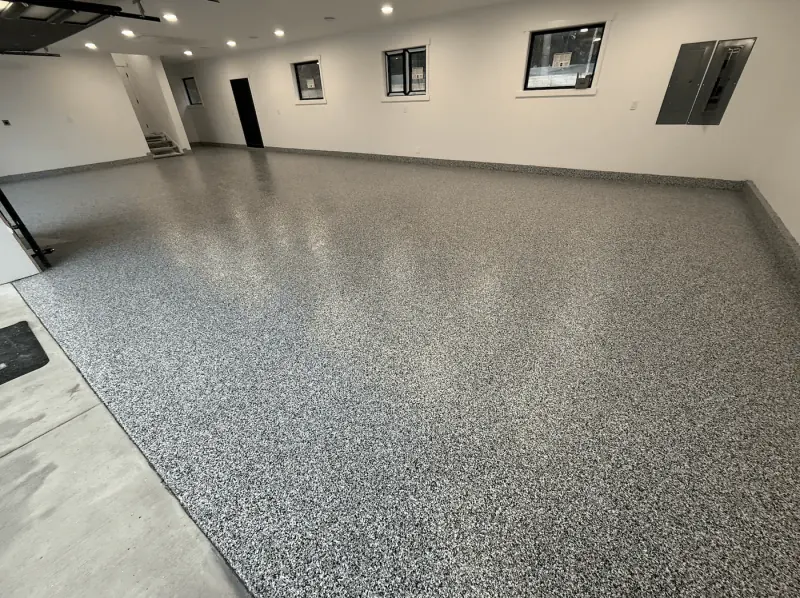
Before we arrive
Empty the garage the night before: cars, boxes, freestanding shelves. Leave the driveway clear and an outlet and a tap within reach.
-
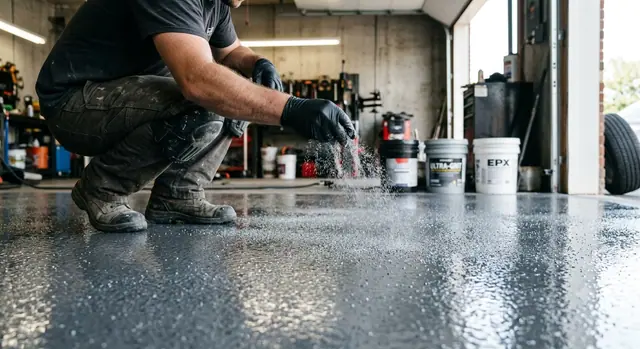
Install
One day on a dry slab: grind, crack repair, base coat, flake and topcoat. Two days with a moisture barrier, which cures overnight.
-
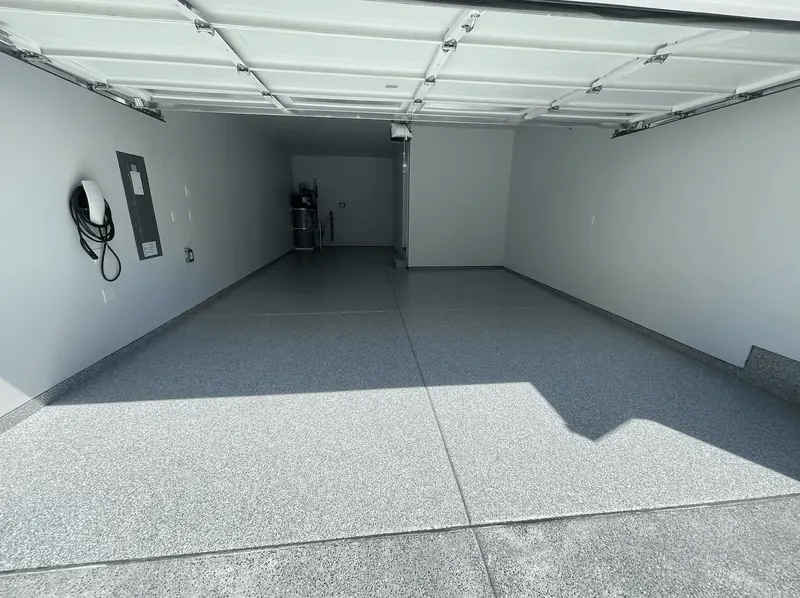
Walkthrough and cure
We walk the floor with you and go over the cure. Walk on it the next day, park after 72 hours. It keeps hardening for about a week.
Why garage floor coatings fail, and what we do about it
Peeling is almost always a prep or moisture problem, not a product problem. Here's how a garage floor lets go, and what we do about each. Already peeling? Read why epoxy garage floors peel, then what goes into coating over an old epoxy floor. Pitted or crumbling concrete is a different job: garage floor resurfacing and repair.
 Prep
Prep
Coated over weak concrete
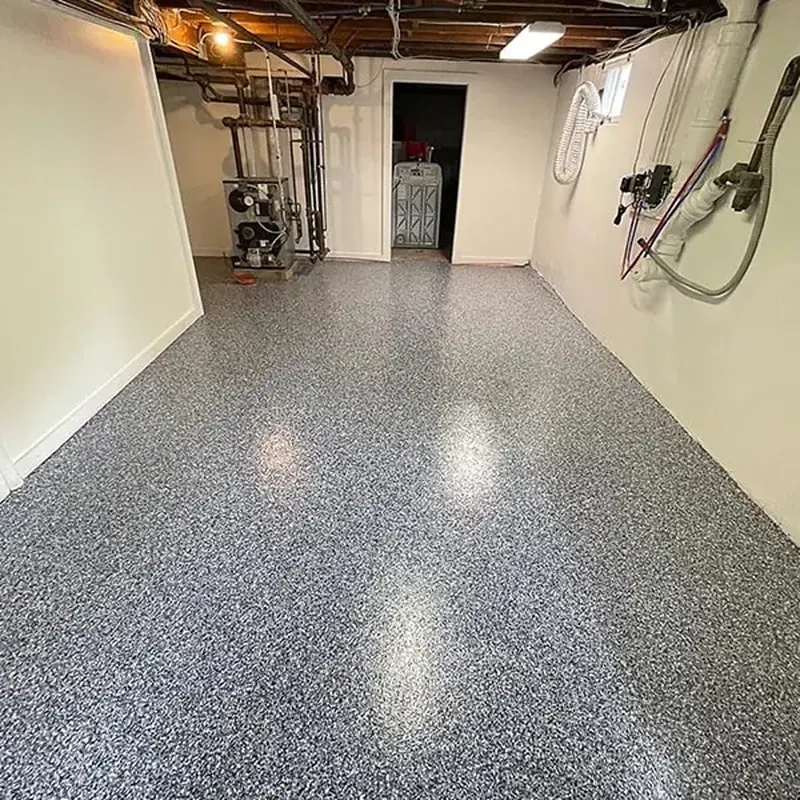
Coat unground concrete and the coating bonds to the dusty top layer, then peels off with it. We grind every floor until the pores are open.
 Moisture
Vapor pushing up from below
Vapor rising through the slab builds pressure under the coating until it blisters. We test first and add a barrier when the slab needs one.
 Hot tires
Hot tire pickup
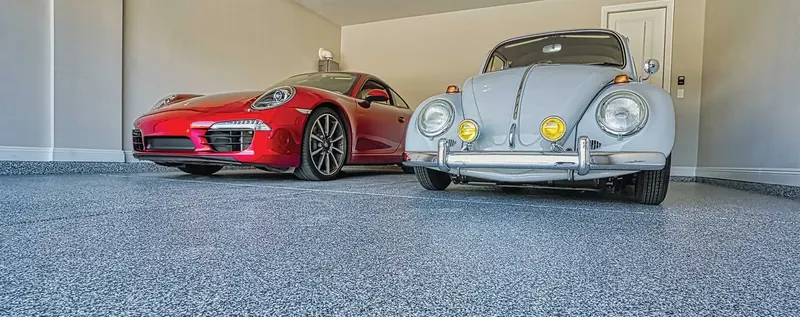
Hot tires push softening agents into a weak coating, and it lifts with the tire. Our topcoat resists that, and the adhesion warranty covers it if it happens.
 Timing
Coated too soon
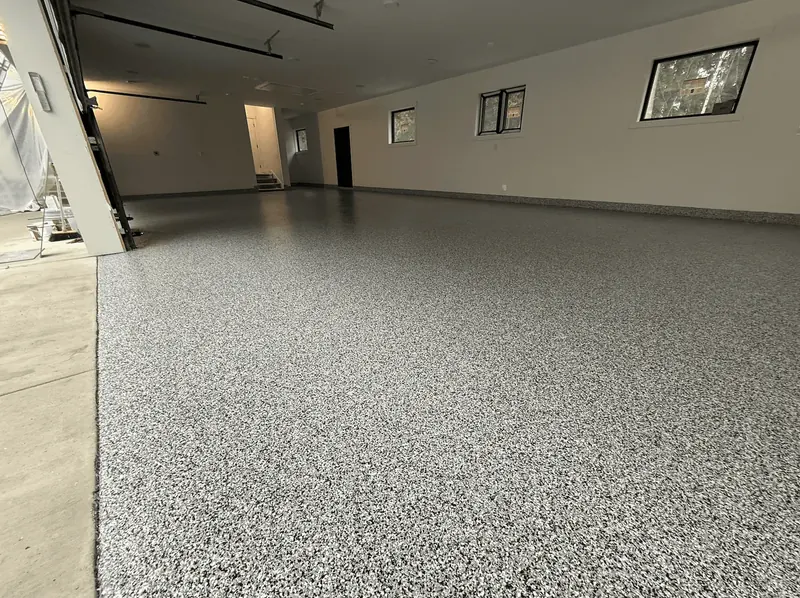
New concrete needs about 28 days before it can be coated, and a new floor needs its cure before cars go on it. We put those times in writing.
The warranty, in plain English
Every floor carries our lifetime adhesion warranty. "Adhesion" is the important word: it covers the coating letting go of the concrete. What to check on anyone's warranty is in what a garage floor coating warranty covers.
Covered
If the coating delaminates from the concrete, we repair or recoat the affected area at no charge. That includes:
- Peeling
- Blistering
- Hot-tire pickup
Not covered
Damage that isn't the bond failing:
- Impact damage, like a dropped floor jack
- Abrasion and staining
- Improper maintenance
- Using the floor before the cure times we give you
Garage floor coating in Seattle
Rain doesn't reach the slab inside a garage, but the ground under it stays wet for much of the year. That, not the sun, decides how we build a Seattle floor.
 Moisture
The slab is wettest in winter
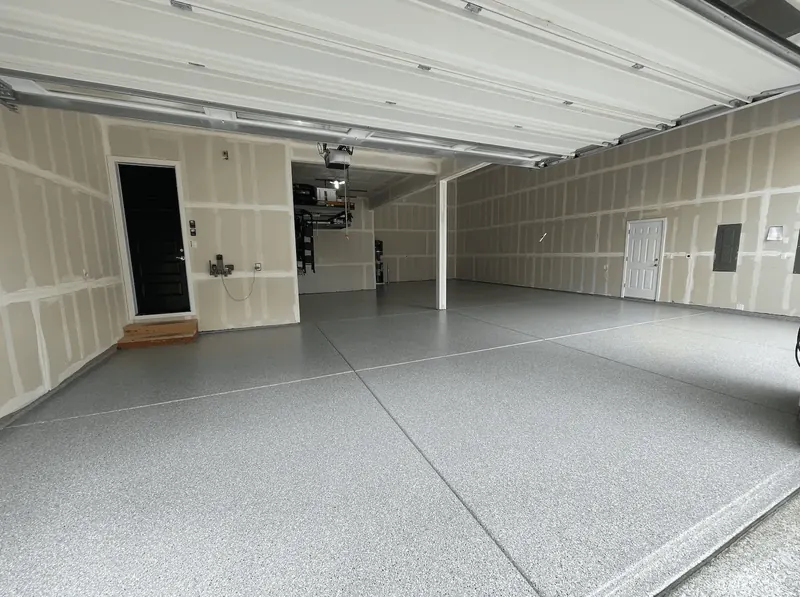
Nearly half of Seattle's rain falls from November through January. A slab that tests dry in August can test wet in February, so we go by what the slab shows, not one reading.
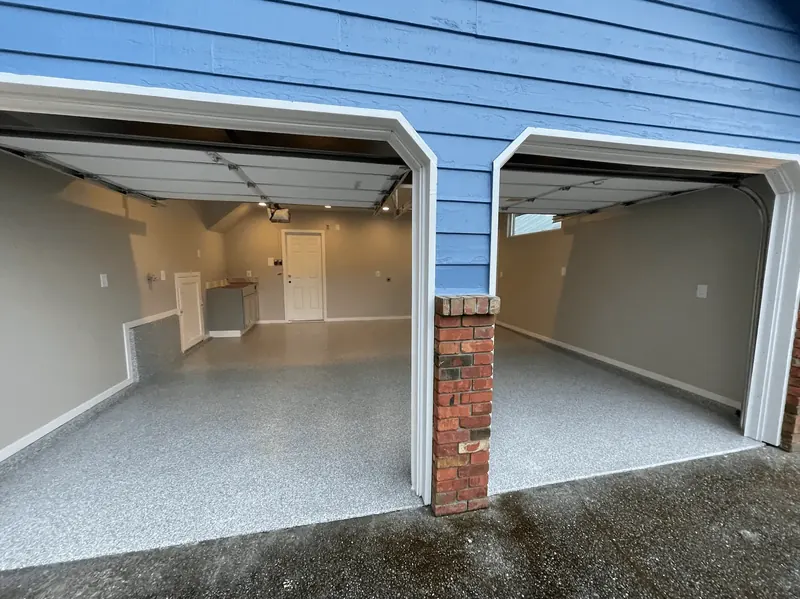 Housing
Below-grade garages and older slabs
Garages cut into a slope are common here, and slabs poured before the 1980s often have no plastic sheet underneath. Both raise the moisture risk, so the barrier decision comes before the color.
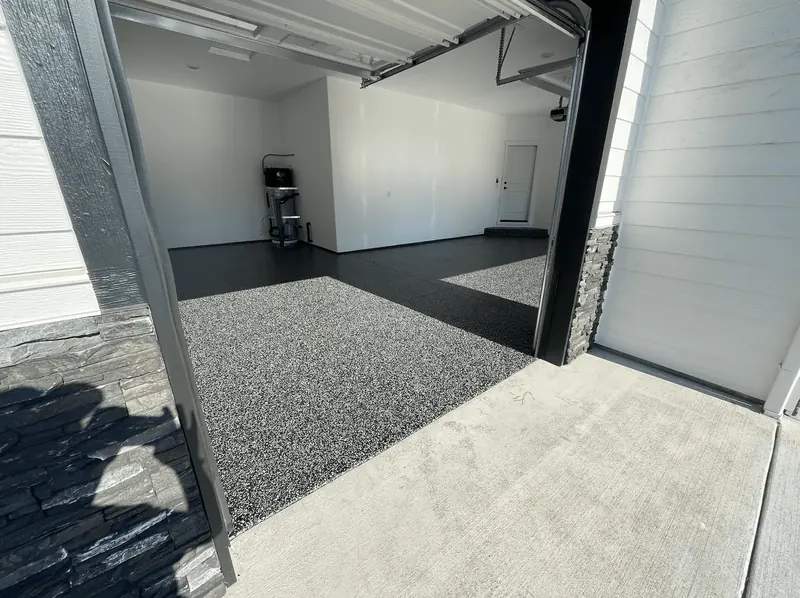 Cold
Cold
Too cold for epoxy, fine for polyaspartic
Epoxy needs the floor at 55°F or warmer, and Seattle's average January high is 48°F. Polyaspartic cures in the cold, so here the moisture test decides when your floor goes down.
We install across Seattle, Bellevue, Redmond, Kirkland, Renton, Tacoma, Federal Way and Sammamish. Our Seattle service area · Seattle garage floor guides · Also serving Nashville and Scottsdale & Phoenix.
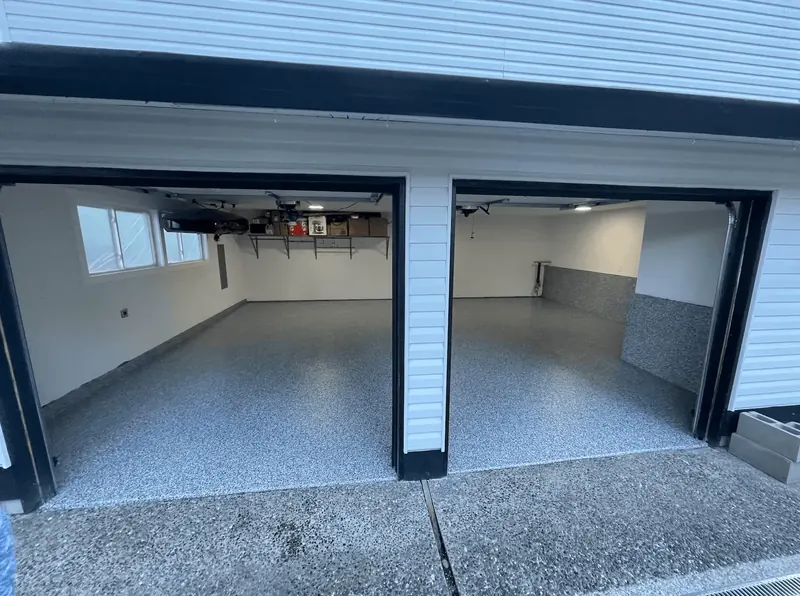
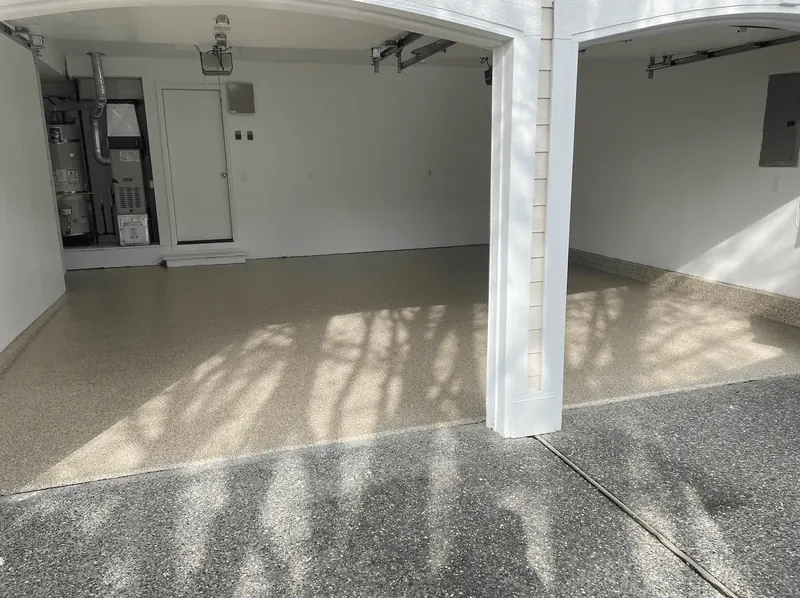
Pick your flake
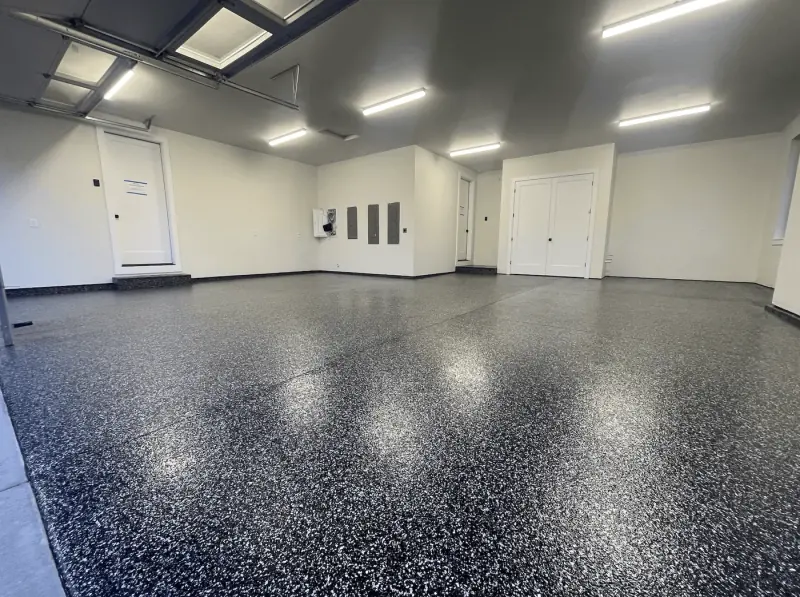
Browse finished floors in the gallery, or upload a photo of your garage to our AI Floor Preview and see it coated first. Real floors in each blend are on our garage floor colors page.




Garage floor coating questions
How long does it take to coat a garage floor?
One or two days. A floor that needs a moisture vapor barrier takes two, because the barrier primer has to cure overnight before anything goes over it. Without a barrier, it's a one-day install. We'll tell you which at the estimate.
How soon can I park on a newly coated garage floor?
Walk on it the next day and park on it after 72 hours. The coating keeps hardening for about a week to ten days after that, so avoid dragging heavy equipment across it early on.
Can you coat a garage floor in Seattle in winter?
Cold isn't the obstacle with polyaspartic. Epoxy needs the floor at 55°F or warmer, and Seattle's average January high is 48°F, but polyaspartic cures at much lower temperatures. Moisture is the obstacle: the slab is at its wettest in the rainiest weeks of winter, and during those weeks we'd steer most homeowners toward waiting until it tests dry. Fall and spring work when the slab passes the moisture test.
Is polyaspartic better than epoxy for a garage floor?
For most garages, yes. Polyaspartic is ready for vehicles in about 72 hours where epoxy needs 5 to 7 days, it stays flexible where epoxy is rigid, it resists chemicals better, and it doesn't amber in sunlight. The trade-offs are real too: it costs more in material, it's harder to spot-repair once cured, and as a thin film it follows the shape of the concrete, so it won't level a wavy floor. Read the full epoxy vs. polyaspartic comparison.
Will a garage floor coating hide cracks and stains?
It hides stains, small chips and color differences in the concrete; the flake does most of that work. Cracks are filled and ground flush before coating, so you won't see them. What a coating won't do is level the floor: if the slab has a dip, the finished floor will too. Structural cracks, crumbling concrete or a settling slab need concrete repair before coating, and we'll tell you if we see them.
Is a coated garage floor slippery?
Any glossy floor is slick when it's wet, finished concrete included. We mix anti-slip grit into the clear topcoat for traction, and we can go heavier on it if you want more grip.
Will hot tires lift the coating?
Hot tire pickup is chemical, not weight: heat from driving pushes softening agents out of the rubber, and on a weak coating the tire bonds to the coating more strongly than the coating bonds to the concrete. A polyaspartic topcoat resists it, and a coating keyed into diamond-ground concrete has very little to let go of. If it ever does lift, that's an adhesion failure, which our lifetime adhesion warranty covers.
Can you coat a brand-new concrete slab?
Yes, once it's about 28 days old. New concrete is still curing for roughly a month after it's poured, and coating it before then sets the floor up to fail.
What does the lifetime adhesion warranty cover?
The coating letting go of the concrete. If it delaminates, whether that's peeling, blistering or hot-tire pickup, we repair or recoat the affected area at no charge. It doesn't cover impact damage, abrasion, staining, improper maintenance, or using the floor before the cure times we give you.
How much does a garage floor coating cost?
It's priced from your garage's square footage and the condition of the slab, so the honest number comes from measuring it. The estimate is free, it happens at your house, and the price is in writing. If you'd like market context first, our Seattle cost guide explains what pushes garage floor quotes up and down.
Is this the same as an epoxy garage floor?
It's the upgrade on one. The floor is a polyurea base coat with full flake under a clear polyaspartic topcoat, over the same diamond-ground prep a good epoxy floor needs. Most people still call it an epoxy floor, and that's fine. It cures in a cold garage, handles Seattle's damp air, never yellows, and you park on it after 72 hours. Here's the installation, step by step.
More floors we coat

Get a free garage floor estimate
We measure the floor, test the slab for moisture, and leave you a written price. No pressure to sign anything.