
Epoxy Floor Installation Cost in Seattle
You want a number, not a pitch: about $4 to $12 a square foot installed, so a two-car garage lands between $1,600 and $5,800. What decides where you land isn't the color. Read this, then let us measure and put the exact price in writing.
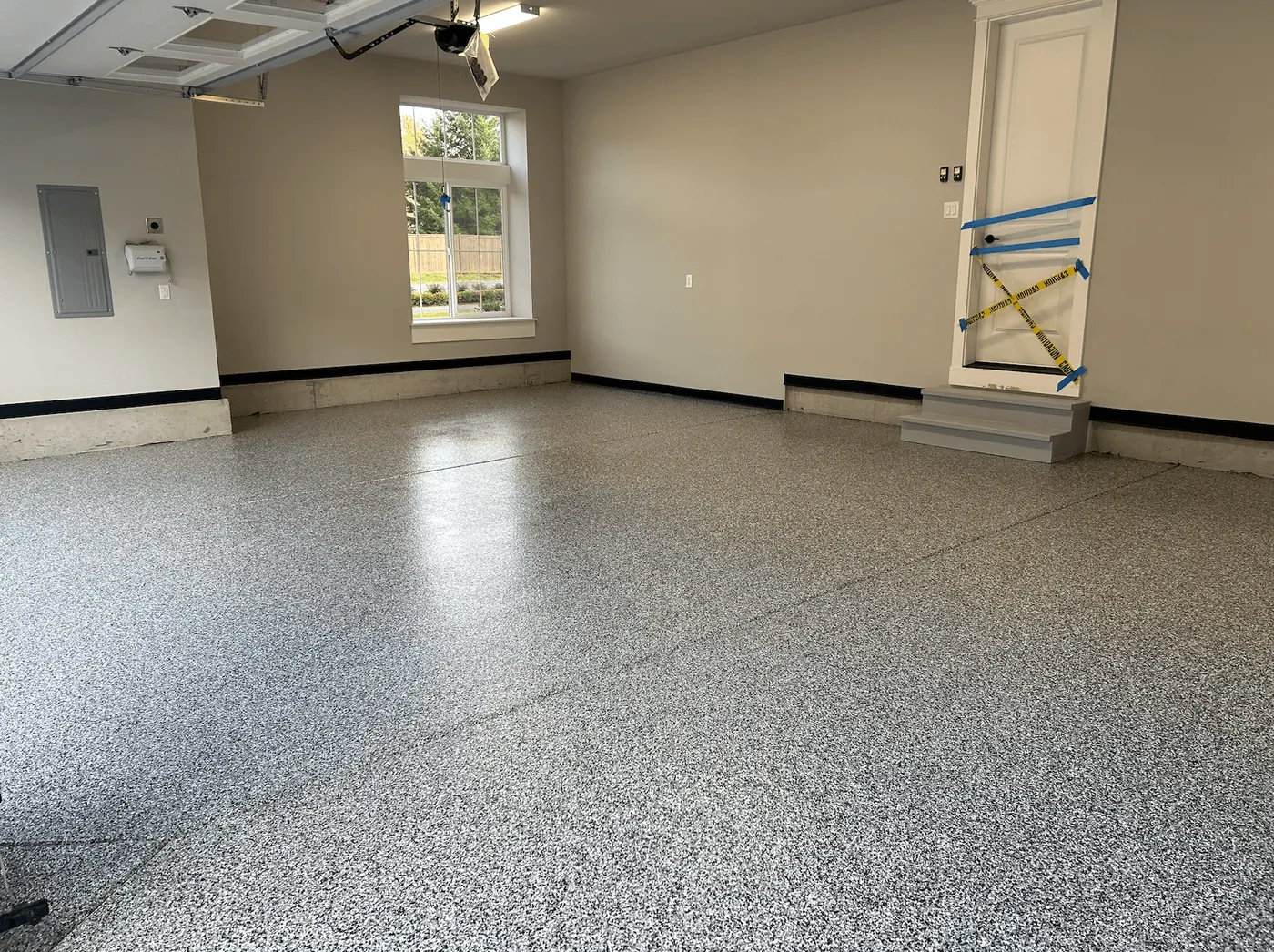
- $4–$12 per sq ft installed
- Two-car: $1,600–$5,800
- Free written estimate
- $1,513 included on Premium
Epoxy floor installation cost per square foot in Seattle
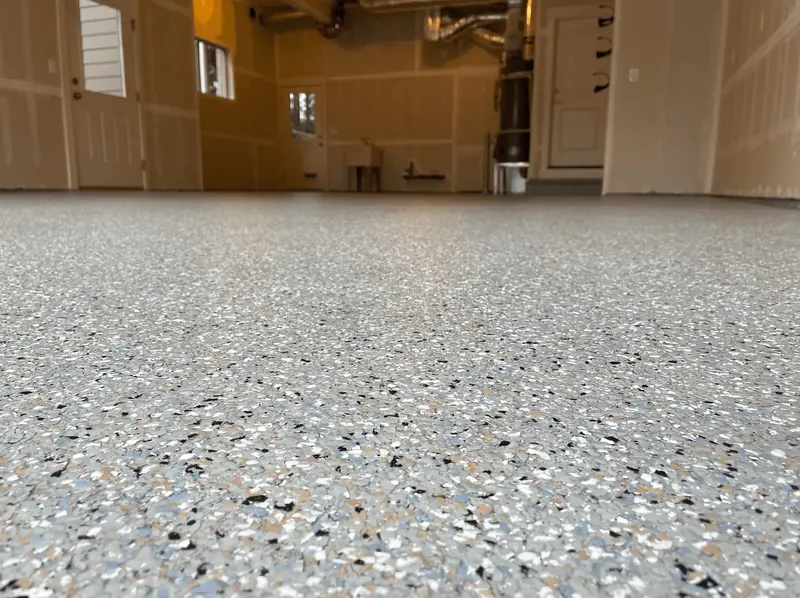
Across the Seattle market, installed prices run about $4 to $10 a square foot for plain epoxy, $5 to $10 for polyurea and $4 to $12 for polyaspartic. The ranges overlap because the coating isn't what moves the number. The prep is: a $10 floor of either kind was ground twice, crack-repaired and moisture-tested.
Seattle quotes also sit above the national calculators, and they should. Construction labor here runs about a third above the U.S. average, our wet ground means more slabs need a barrier, and older garages need more repair. The wider market picture is in our garage floor coating cost guide.
Epoxy floor installation cost by garage size
Square footage is the biggest single driver, so here's the Seattle-area range for each common garage. The width of each range is prep, not color.
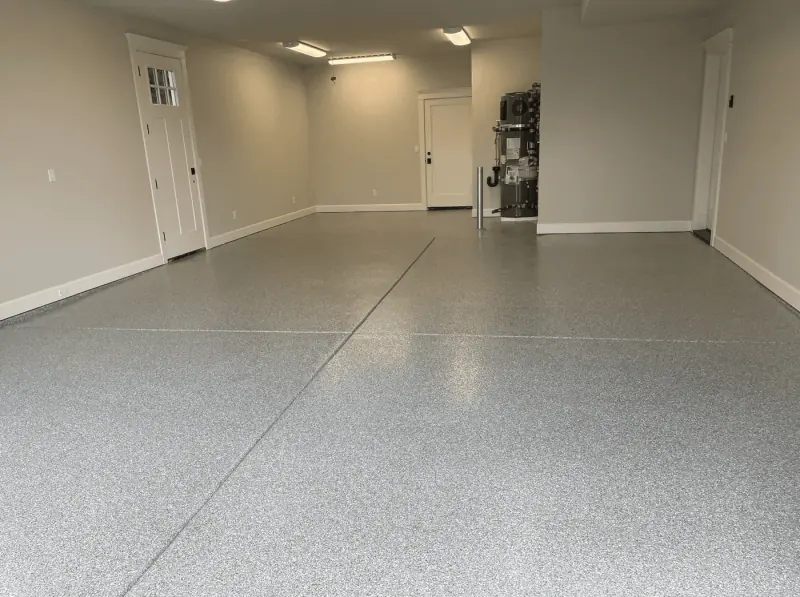 One-car
$835 to $3,340
About 200 to 280 square feet. The bottom is a thin coating over an etched slab. The top is a fully ground, repaired and barriered floor.
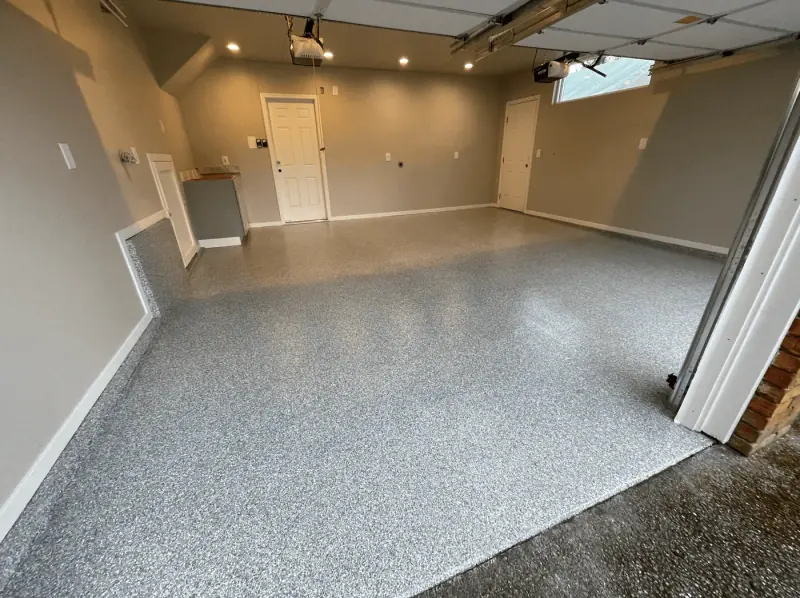 Two-car
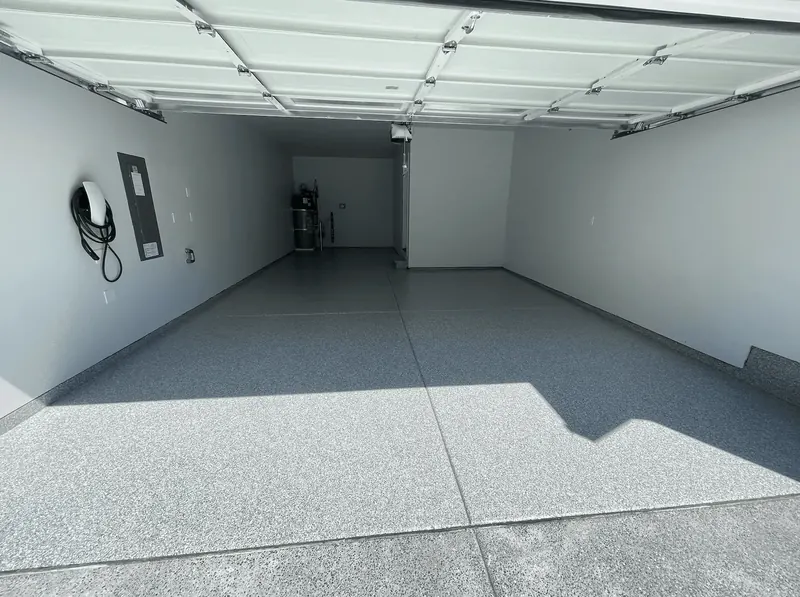
$1,600 to $5,800
About 400 to 500 square feet, which covers most two-car garages. A floor that needs full prep prices in the upper half of this range.
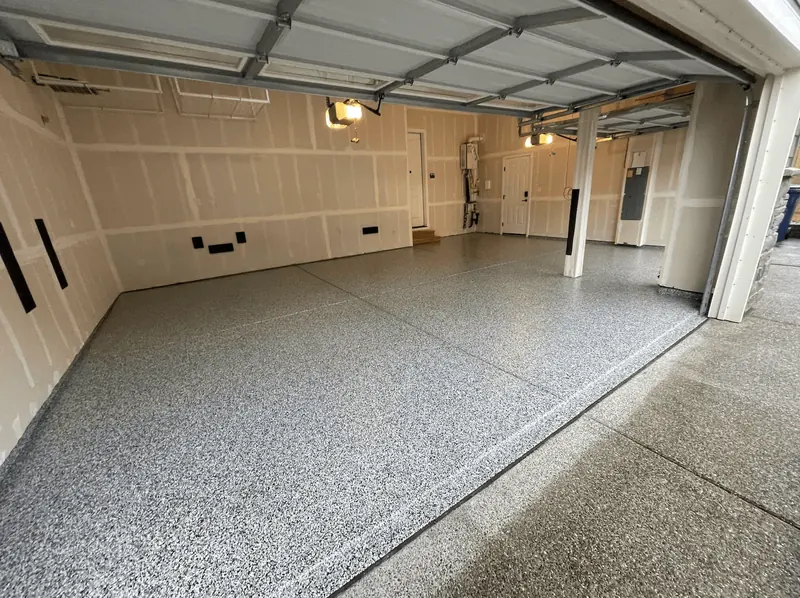 Three-car
$2,500 to $10,000
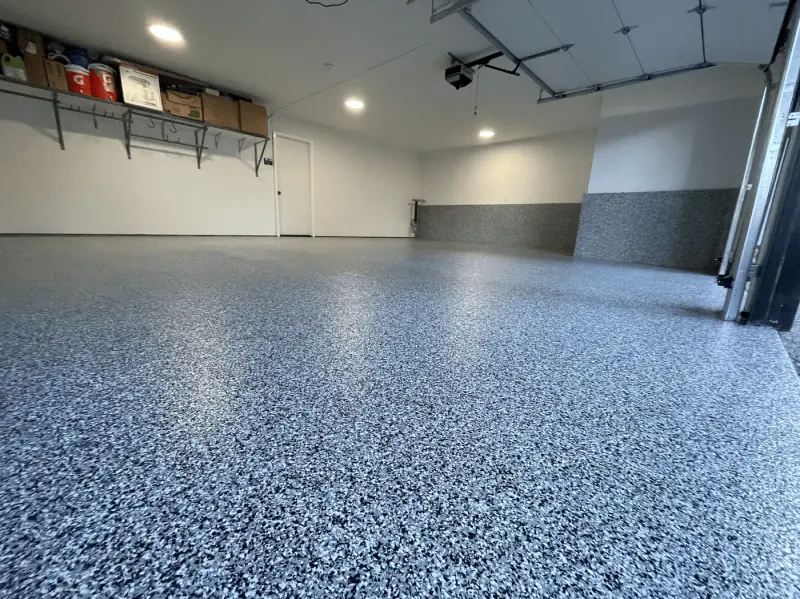
About 600 to 750 square feet. The range is wider because every difference in prep and material is multiplied over more floor.
Where the money goes in an epoxy floor installation price
"Installed" hides three different bills. Here they are, so you can see what a quote is actually charging you for.
-
Labor: half to two-thirds of the total
This surprises people. A coating crew spends most of the day grinding concrete and fixing cracks, and only a few hours on the part you see. National guides put labor at $4 to $7 a square foot, and Seattle wages sit at the top of that. Cheap labor almost always means a shorter grind, which is where floors fail.
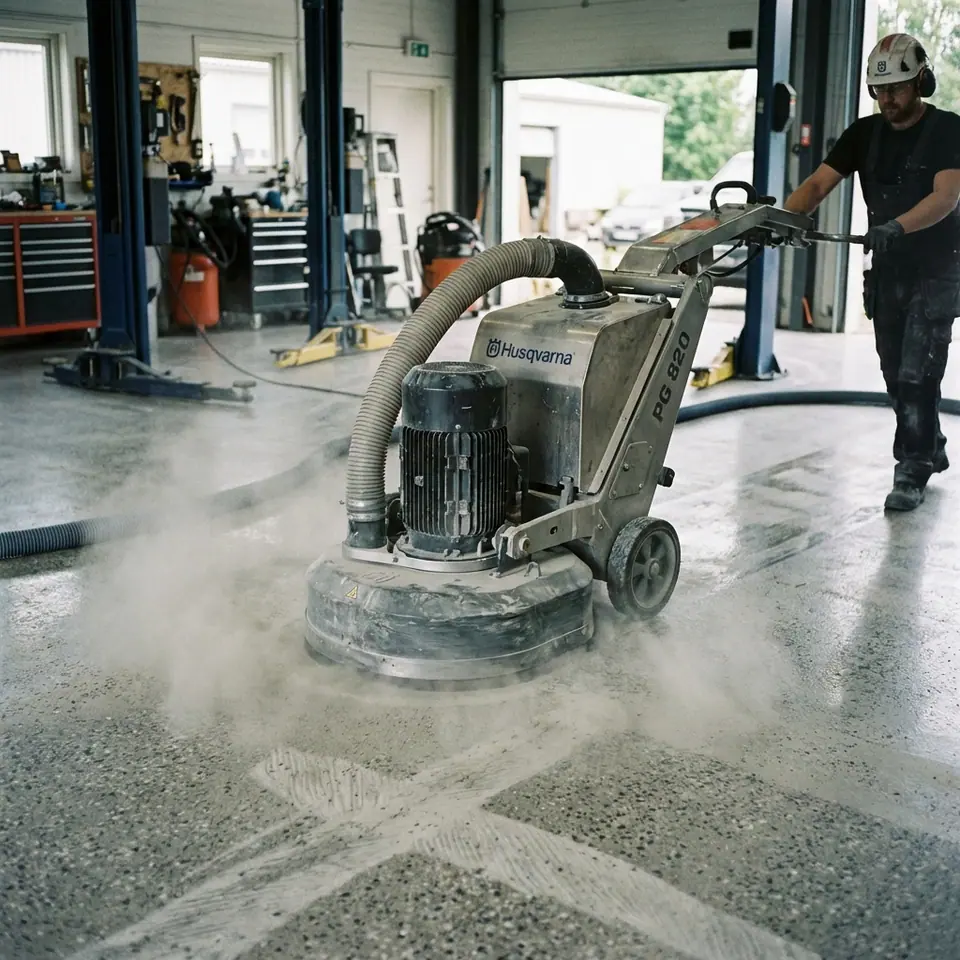
Grinding: most of the labor in the job -
Materials: roughly $1 to $5 a square foot
Base coat, flake, clear topcoat, crack filler, and a primer or barrier where it's used. The price climbs with thickness and chemistry: a water-based kit costs a fraction of a thick polyurea system, and a full flake broadcast uses far more flake than a light sprinkle.

Flake and topcoat: the materials -
Prep extras: the part that moves your quote the most
Grinding off an old coating, a moisture barrier on a slab that tests wet, bigger cracks cut open and rebuilt, pitted concrete, steps, cove base. None of them show in a per-foot rate, and all of them show in the total. Ask for them as separate lines.
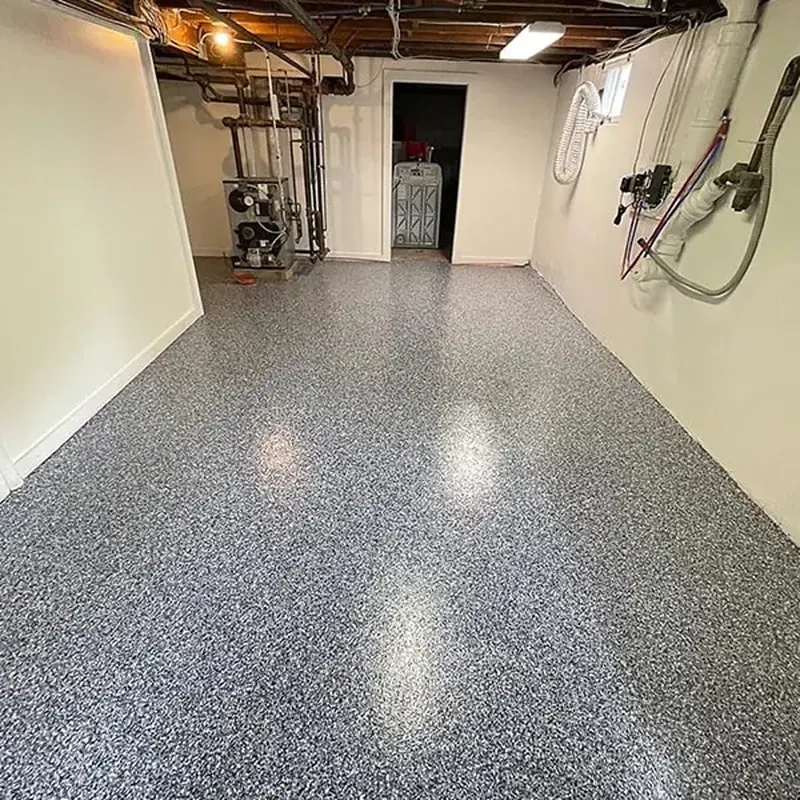
A barrier on a slab that tests wet -
Not a coating cost at all: leveling or replacing the slab
A coating follows the concrete, so an uneven or sloped floor stays uneven, just shinier. Leveling or replacing a slab is separate concrete work that happens before we show up, and we'll tell you at the estimate if yours needs it.
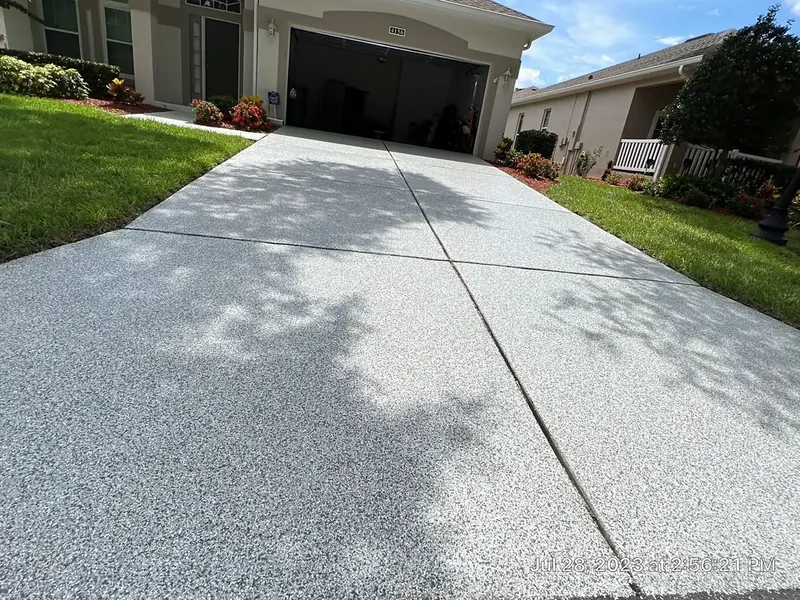
Leveling a slab is separate work
Why one epoxy floor installation quote is a third of another
Two contractors walk the same garage and come back with wildly different numbers, both calling it the same service. It isn't a scam. It's two products wearing the same name.
What's in a full-prep quote
- Diamond grinding, two passes, edges by hand
- A moisture test, and a barrier if the slab needs it
- Every crack and joint filled and ground flush
- A thick base coat and full flake broadcast
- A clear polyaspartic topcoat with grip
- Cure times and a warranty in writing
What the cheap one quietly leaves out
- An acid wash or a single quick grinding pass
- No moisture test, no barrier
- Cracks painted over
- A thin coat with a light sprinkle of flake
- No clear topcoat, or a second coat of the same product
- A warranty that's mostly exclusions
Holding a cheap quote? The six questions on our epoxy floor installers page show which column it belongs in.
Our two floors, and what's included in the price
Both get the identical prep and the identical polyurea-and-polyaspartic floor. The difference is what's wrapped into the price.
Premium
The full-prep floor, with everything a Seattle garage tends to need already included.
- Moisture vapor barrier primer ($499 retail)
- Cove base carried up the walls ($425)
- Interior steps coated to match ($375, where applicable)
- Custom flake design session ($89)
- One-year courtesy inspection ($125)
- Larger cracks rebuilt, joints run edge to edge
Original
The same prep and the same floor, without the extras, for a sound, dry slab and a tighter budget.
- Diamond-ground prep, same as Premium
- Polyurea base, full flake, polyaspartic topcoat with grip
- Every crack and joint filled and ground flush
- Flake design session and one-year inspection
- Add-ons: moisture barrier, cove base, steps
Want them side by side with the basement and patio systems? Compare every coating system.
Polyaspartic cost per square foot vs. epoxy
Per square foot, polyaspartic and epoxy can cost about the same up front. The difference is what you pay per year. A thin epoxy floor in a damp Seattle garage is the one that bubbles at the joints and gets redone. A polyaspartic floor over properly ground concrete is the one you install once. The numbers by garage size are in our polyaspartic floor coating cost guide.
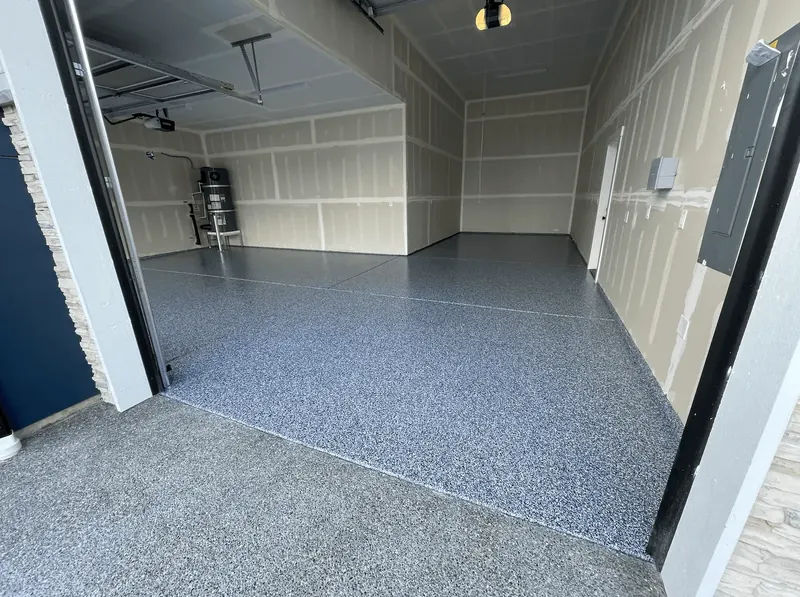
How to get your exact epoxy floor installation price
We don't quote a flat per-foot rate over the phone, because a flat rate is a guess and you'd be the one paying for the guess. Here's how it works instead.
-
Book a free estimate
Online or by phone at (206) 895-7444. It takes about 20 minutes, at your garage, because the garage is where the price is.
-
We measure and test
Square footage, the condition of the slab, cracks, any old coating, and a moisture test. That's what sets your number. What the visit looks like.
-
You get it in writing
Itemized, with the Premium upgrades listed at $0, and final. It holds for the period written on it, and there's nothing to sign that day.
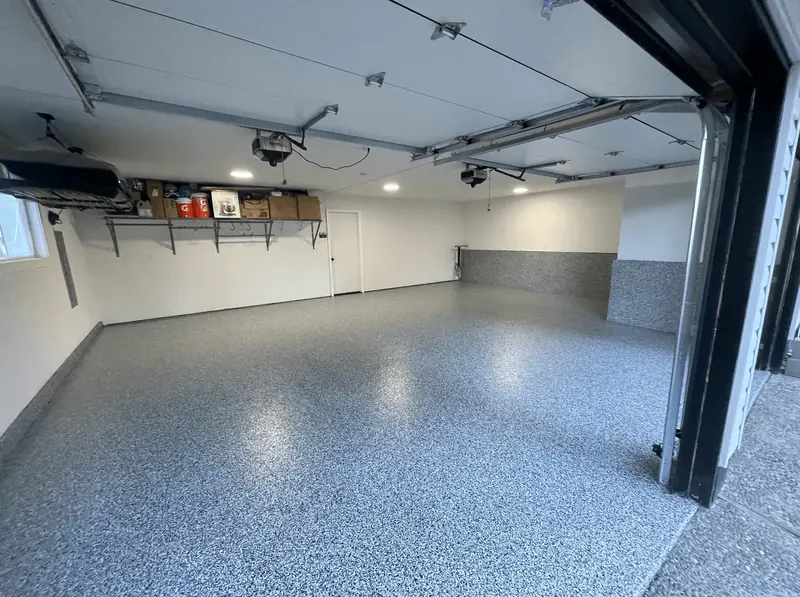
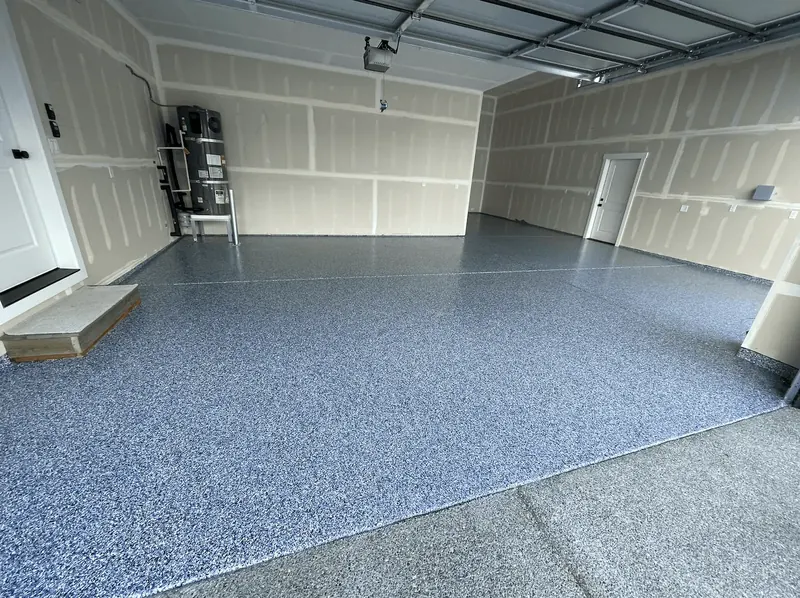
A few of the floors priced this way.





Epoxy floor installation cost questions
How much does epoxy floor installation cost per square foot in Seattle?
Roughly $4 to $10 per square foot installed for epoxy, $5 to $10 for polyurea and $4 to $12 for polyaspartic. The low end is a thin coating over light prep. The high end is diamond grinding, crack repair, a moisture barrier where the slab needs one and a full-flake polyaspartic finish. Seattle labor costs push local quotes toward the upper half.
How much does it cost to epoxy a two-car garage in Seattle?
About $1,600 to $5,800 across the Seattle market for a 400 to 500 square foot garage. The bottom of the range is a thin, low-prep coating. The top is a diamond-ground slab with crack repair, a moisture barrier and a polyaspartic topcoat. Where yours lands depends on the slab's condition far more than on the color.
How much of the cost is labor?
Usually half to two-thirds. Grinding, crack repair and cleaning take most of the day; the coating itself takes a few hours. National guides put labor at $4 to $7 a square foot and materials at $1 to $5, and Seattle wages sit at the high end of that. A quote with cheap labor almost always means a shorter grind.
Why is a Seattle quote higher than the online calculators?
Wages, mostly. Construction trades in the Seattle area earn about a third more per hour than the national figure, and labor is the biggest part of a coating job. Seattle slabs also need a moisture barrier more often, and older garages need more repair. The calculators average in cheaper, drier markets.
Is an epoxy floor installation cheaper than polyaspartic?
Per square foot the ranges overlap: about $4 to $12 for polyaspartic against $4 to $10 for epoxy. The gap shows up over time. An epoxy floor that bubbles and gets redone every few years in a damp garage costs more over fifteen years than a polyaspartic floor installed once over properly ground concrete.
Does the price include crack repair and the moisture barrier?
On ours, crack and joint repair is included on every floor. The moisture vapor barrier, cove base and coated steps are included on Premium and listed on the estimate at retail value, at no charge. On Original the barrier is a paid add-on the moisture test decides. On other companies' quotes, ask. It's the most common thing left out.
Can I get an installation price over the phone?
A range, yes, and it's on this page. A real price, no. Square footage and the condition of the slab set the number, and both get measured and tested at your house. The estimate is free, takes about 20 minutes, and the written price is itemized and final rather than a "starting at" figure that moves on install day.
Keep reading

Get the exact number for your garage
Free 20-minute estimate at your house, priced in writing.