
How Long Does Garage Floor Coating Really Take? A Seattle Install, Hour by Hour
Short answer: One day if your floor doesn't need a moisture barrier, two if it does, because the barrier primer cures overnight before anything goes over it. Every Premium floor includes the barrier, so a Premium install is two days. You can walk on the floor the day after we finish and park vehicles on it after 72 hours. Traditional epoxy takes much longer to cure, often up to a week before it can handle vehicle weight.
"A day or two" isn't much help when you're planning around it, and the install is only one part of the wait. Here's the whole timeline, from the first call to the day the car goes back in. If you want each install step explained, with what to watch for from any installer, see epoxy floor installation in Seattle, step by step.
The whole timeline at a glance
- The estimate: about 20 minutes at your house.
- Booking: you agree on a window, and we confirm the exact day.
- The night before: the garage is empty.
- Install: one day, or two with a moisture barrier.
- The next morning: walk on it and carry light things back in.
- 72 hours after we finish: park.
- 7 to 10 days: the coating reaches full hardness.
Step 1: the estimate, about 20 minutes
The clock starts with a free visit. The estimator measures the floor, runs a moisture test on the slab, checks the cracks and any old coating, and leaves a written price. It takes about 20 minutes. You don't need to clear the garage for it. A walking path is enough.
That visit also settles the biggest unknown in your schedule: one day or two. A Premium floor is always two. Otherwise the moisture reading, the age of the concrete and whether an old coating has peeled decide it, so you know before you book. What the estimator does, step by step, is in what happens during a garage floor estimate.
Step 2: booking, and what the season changes
If you go ahead, you and the estimator agree on a window, and we call to confirm the exact day. How far out that window sits depends on how busy the crew is and on the time of year.
Seattle's weather sets everyone's calendar. July to September is the driest stretch and fills first, because every epoxy crew needs those warm weeks. A polyaspartic floor can go down in fall and spring too, if the slab passes the moisture test. The wettest winter weeks are the one stretch we'd steer most people to wait out. Month by month, it's all in the best time to coat a garage floor in Seattle.
One date is set by the concrete, not the calendar. A new slab needs about 28 days to cure before any coating goes on, so a fresh pour gets booked for after that.
Step 3: getting your garage ready
Everything that stands on the floor comes out: cars, storage, bikes and freestanding shelves. Wall-mounted shelving and cabinets can usually stay. Grinding and coating both need an open slab from wall to wall, so have it empty the night before, not the morning of. Keep the driveway free for our truck and grinder. We'll also need a power outlet and a water tap nearby.
In a packed garage, emptying it is the longest job on your list. Give it a weekend, not an evening, and decide where things go before you start. Anything that can't sit out in the rain needs a covered spot or a spare room.
Step 4: install day, hour by hour
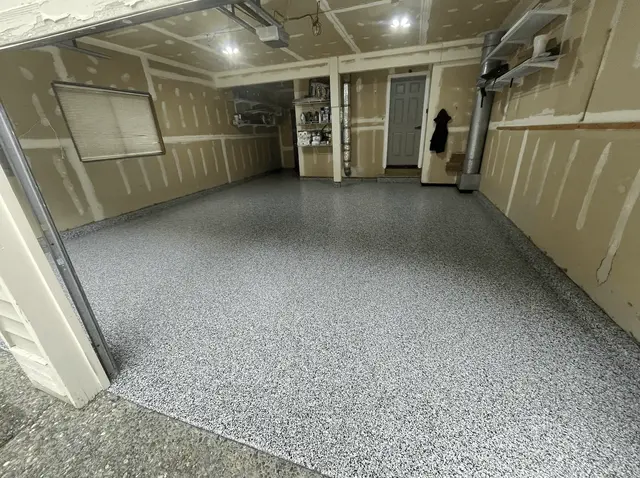
Here's a typical day for a two-car garage that doesn't need a moisture barrier. The work runs six to eight hours, longer in a bigger garage. Our page on one-day garage floor coating explains what the crew does at each step. This is the same day from your side of the door.
- Early morning: our crew arrives; you’ll get the time when the install is booked. Someone needs to be home to walk the floor with them, confirm the color and point out any problem spots. They check the slab's moisture again and photograph the floor before work starts.
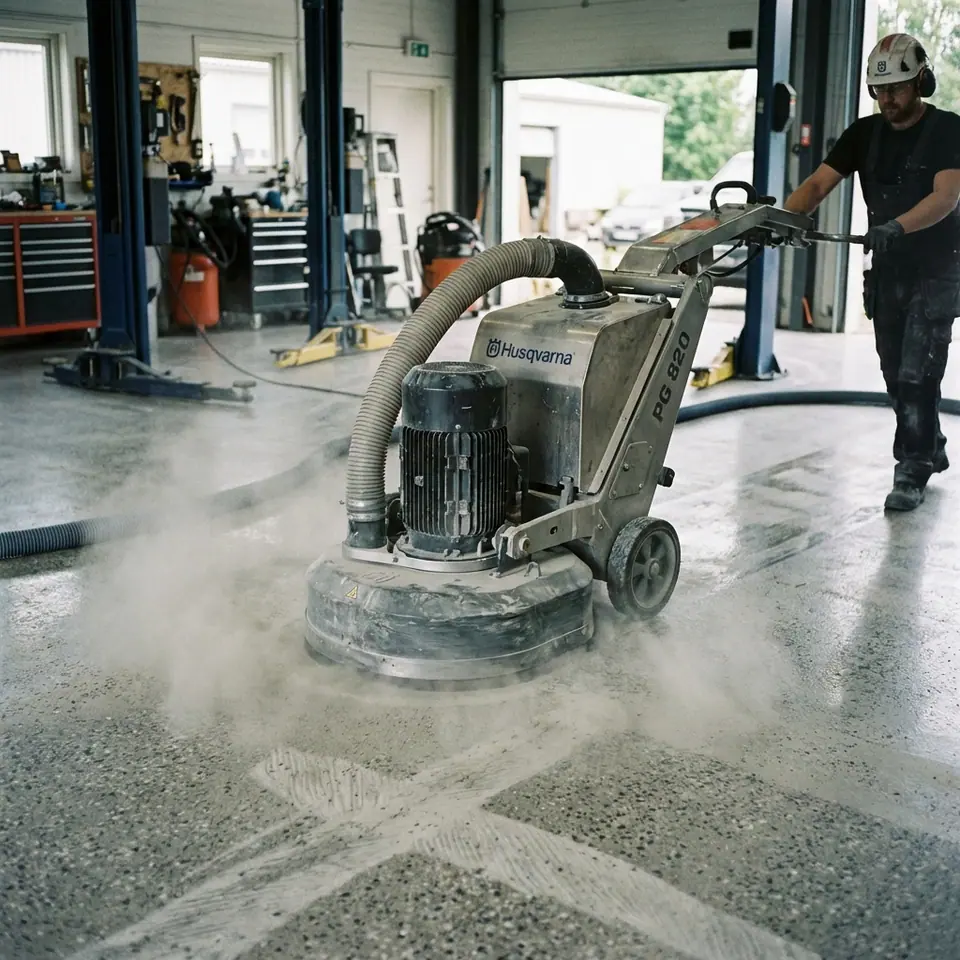
- Most of the morning: diamond grinding. This is the loud part. Grinders and dust vacuums run with the garage door open. From now until the next morning, keep people and pets out of the garage.
- Late morning: cracks, chips and joints get filled and ground flush.
- Around midday: the base coat goes down, and the flake is thrown into it while it's wet. Keep the door from the house shut.
- Early afternoon: the loose flake is scraped and vacuumed off, and the clear top coat goes on. You may smell it. It's a low-odor coating, and the smell fades as it cures.
- Mid-afternoon: a final walkthrough, so someone needs to be home for this too. We go over the cure times with you, and the garage stays closed for the night.
With a moisture barrier: two days
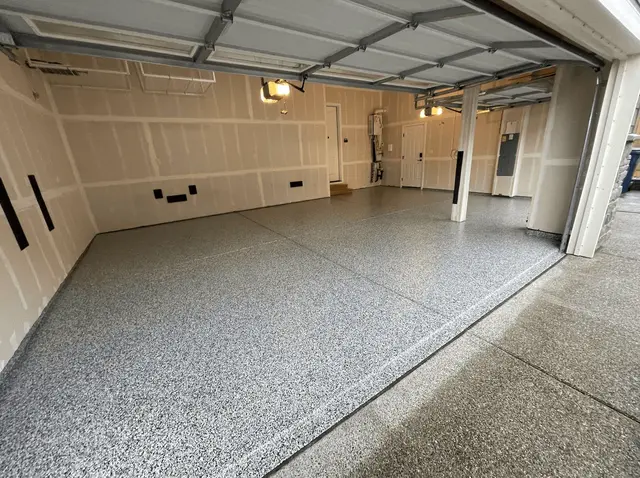
Every Premium floor includes the barrier, and it's the one step that adds a day.
- Day one: diamond grinding, crack repair, then the moisture barrier primer, applied directly to the ground slab. It's the layer that blocks moisture from wicking up and causing the blistering and peeling we cover in our moisture science breakdown. The primer cures overnight.
- Day two: base coat, full flake broadcast and polyaspartic topcoat.
The overnight wait is the point: a base coat rushed onto an uncured barrier would trap the very moisture the barrier is there to stop. Everything after the install moves back a day. You walk on the floor the morning after day two, and you park 72 hours after we finish.
The cure clock after we leave
- The evening we finish: the floor is off-limits. Let it cure undisturbed.
- Next day: safe to walk on. Light things can go back in.
- 72 hours: safe to park. Heavier things can go back too, lifted or rolled into place.
- The first week: clean it with a broom and plain water only.
- 7 to 10 days: the coating reaches full hardness. Even then, lift or roll heavy things rather than drag them.
That timeline is for the polyaspartic system we install. A plain epoxy system commonly needs several more days before a car goes back in, one of the trade-offs in our epoxy vs. polyaspartic comparison.
What rain, cold and a full garage change
Rain doesn't stop the job, because the coating goes on indoors. Damp air even makes polyaspartic set faster. That shortens the crew's working time, not your schedule. What a wet season changes is the slab, which can read wetter after weeks of rain. That's why the moisture test happens before scheduling, and why our crew checks it again on the morning of the install.
Cold doesn't change our cure times either. Polyaspartic keeps curing in a cool garage, and our 72-hour rule already allows for a Seattle slab. Epoxy is where cold bites. Coating makers' rule of thumb is that cure time doubles for every 18 degrees colder, so an epoxy floor that's ready in three days at 70 degrees can need about six at 52.
A full garage takes the most planning, because the install touches more than the floor:
- Cars. Plan on about four nights outside for a one-day install, five for two days. On a Seattle street, the city's 72-hour rule applies, so move the car to another block before the 72 hours run out. The driveway is free again once our truck leaves.
- A garage fridge or freezer. It comes out too, so plug it in somewhere else. If it has to sit unplugged for a while, the USDA says a full freezer holds its temperature for about 48 hours with the door shut, a half-full one about 24, and a fridge about 4.
How it lands on your calendar
Say the install starts on a Monday and the slab doesn't need a barrier:
- Sunday night: the garage is empty and the cars are out.
- Monday: install day. The floor is off-limits that night.
- Tuesday: walk on it and carry light things back in.
- Thursday afternoon: the 72 hours are up. Park.
- The following week: full hardness, 7 to 10 days after the install.
With a barrier, the install runs Monday and Tuesday, you walk on it Wednesday, and you park Friday afternoon. If you're traveling, book the install for the day before you leave, and the floor cures while you're away.
Install and cure time questions
How soon can I park in my garage after floor coating?
You can walk on the floor the day after we finish and park vehicles on it after 72 hours. Traditional epoxy takes much longer to cure, often up to a week before it can handle vehicle weight.
How many days will I be without my garage?
For a one-day install, plan on about four days without parking. The garage is emptied the night before, the install takes a day, and the car goes back in 72 hours after we finish. A two-day install with a moisture barrier adds a day. You can walk in and carry light things back the morning after we finish.
How long does it take to epoxy a garage floor?
A professional epoxy floor is usually a two-day job, because the epoxy base coat has to cure overnight before the topcoat goes on, and cars stay out for three days to a week while it cures, depending on the product and the temperature. Our polyaspartic floors take one day, or two with a moisture barrier, and you can park after 72 hours.
When can I put things back in the garage?
You can walk in the next day, so light items can go back then, and you can park after 72 hours. The coating keeps hardening for 7 to 10 days, so wait until then before dragging heavy shelving or equipment across it.
Do I need to empty the garage?
Yes. Vehicles, storage and freestanding shelving all come out, because the whole slab is ground and coated wall to wall. Wall-mounted shelving can usually stay. Have it empty the night before, so the crew can start on time.
Does cold weather change when I can park?
Not on our floors. Polyaspartic keeps curing in a cold garage, and our times, walk the next day and park after 72 hours, already allow for a cool Seattle slab. Epoxy is different. Its cure time roughly doubles for every 18 degrees colder, and below about 55 degrees it can stall, which can stretch the wait to park well past a week.
Want an exact schedule for your garage?
We'll confirm install timing and the full cure schedule during your on-site estimate.
Get A Quote