
One-Day Garage Floor Coating in Seattle
If your slab doesn't need a moisture barrier, the whole job is one working day: diamond grinding, crack repair, base coat, full flake and a clear polyaspartic topcoat, finished before dinner. If it does need one, it's two days, and we tell you which before you sign anything.
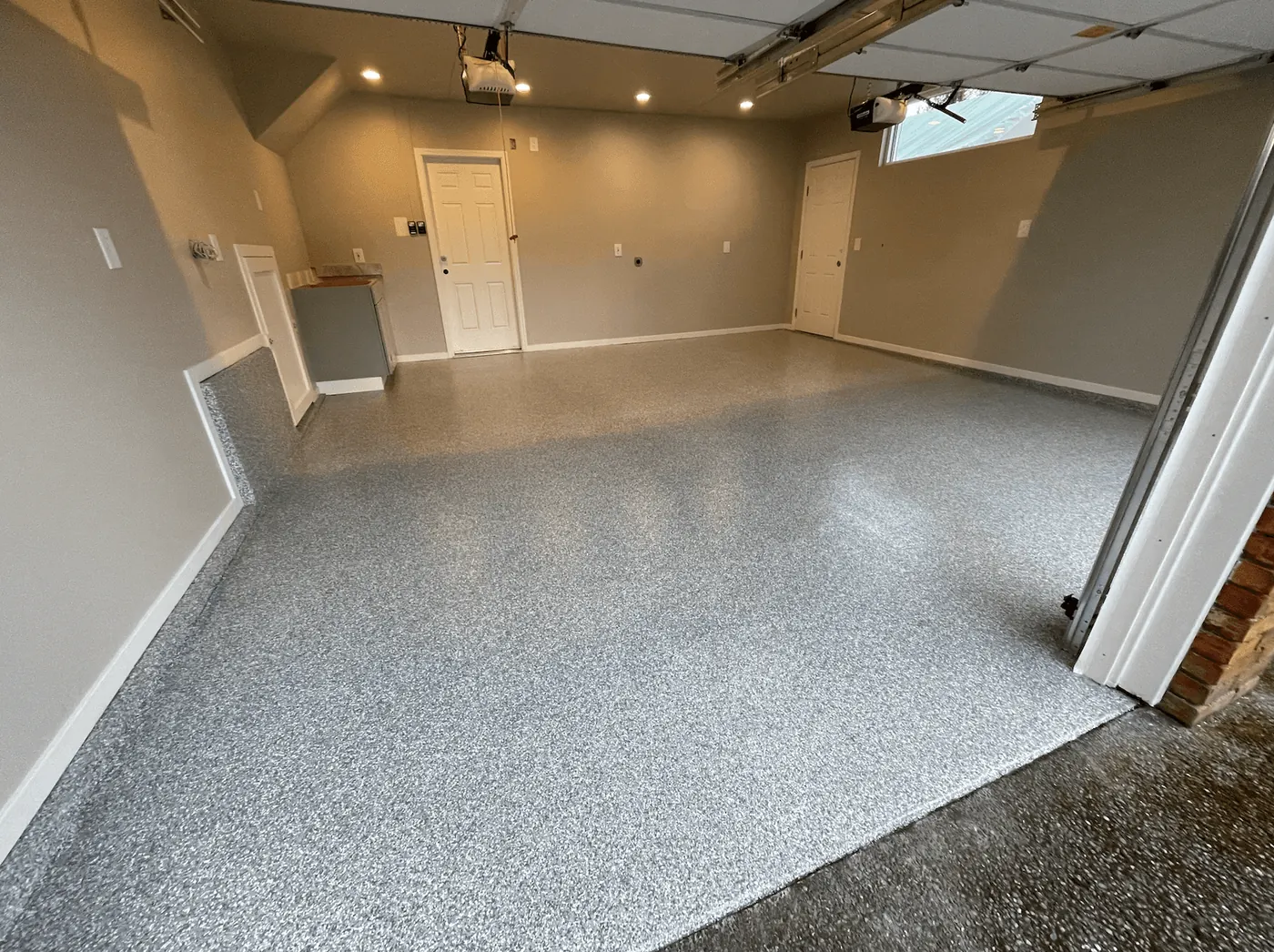
- One visit on a dry slab
- Walk on it the next morning
- Park on it after 72 hours
- Lifetime adhesion warranty
Can a garage floor really be coated in one day?
Yes, and it's not a shortcut. A one-day floor uses coatings that cure in hours instead of days: a polyurea base coat and a polyaspartic topcoat.
The prep is the same as on a two-day floor. We grind the concrete, fix the cracks and build the floor in layers. The layers just set fast enough to finish before dinner. The only thing that adds a day is a moisture barrier, because that primer has to cure overnight.
You'll see it sold as a one-day floor, a same-day coating or a garage floor in 24 hours. Same idea. Here's what the day looks like, what it costs, and when it honestly takes two.

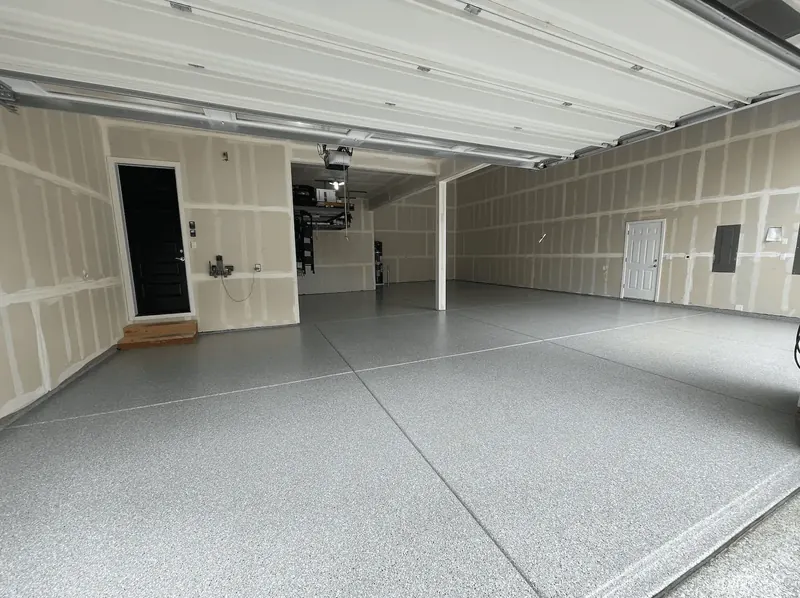

What one day covers, and what it doesn't
One day is the install. The cure keeps going after we leave. That distinction matters, because it's the part some one-day ads skip.
What happens in one day
- Grinding the whole slab with diamond tooling, edges and corners by hand.
- Filling cracks, chips and control joints and grinding them flush.
- A polyurea base coat, rolled while the slab is fresh from the grinder.
- Vinyl flake broadcast into the wet base until it won't hold any more.
- Scraping and vacuuming the loose flake, then a clear polyaspartic topcoat with anti-slip grit.
Start to finish, one visit. You can walk on it the next morning.
What doesn't happen in one day
- The full cure. Our rule is cars back in after 72 hours, and the floor keeps hardening for 7 to 10 days.
- A moisture barrier. If the slab needs one, that's day one, and the floor goes on day two.
- Removing a thick, well-stuck old coating. Grinding it off is usually still same-day, but a gummy half-cured kit can push a big garage into a second morning. You'll hear that at the estimate, not at 4 p.m.
- Clearing the garage. Cars, bins and freestanding shelves come out before we pull up. That part's yours.
If a company promises same-day epoxy with cars that night, ask them for the data sheet. Epoxy doesn't do that.
Why it's one day, and epoxy takes a week
It comes down to chemistry, not hustle. Epoxy cures slowly and needs warmth. A typical garage epoxy wants the floor at 55°F or warmer and about three days before a car can sit on it. In a Seattle garage in March, that can stretch to a week.
Polyurea and polyaspartic go from wet to walkable in hours. Product sheets put foot traffic at four to six hours and cars at 24 to 48. We still say walk on it the next morning and park after 72 hours, because a cool, damp slab cures slower than a lab bench.
And polyaspartic keeps curing in the cold, where epoxy stalls. So in Seattle a one-day floor isn't just faster. It's the one that actually finishes curing in an unheated garage in October.
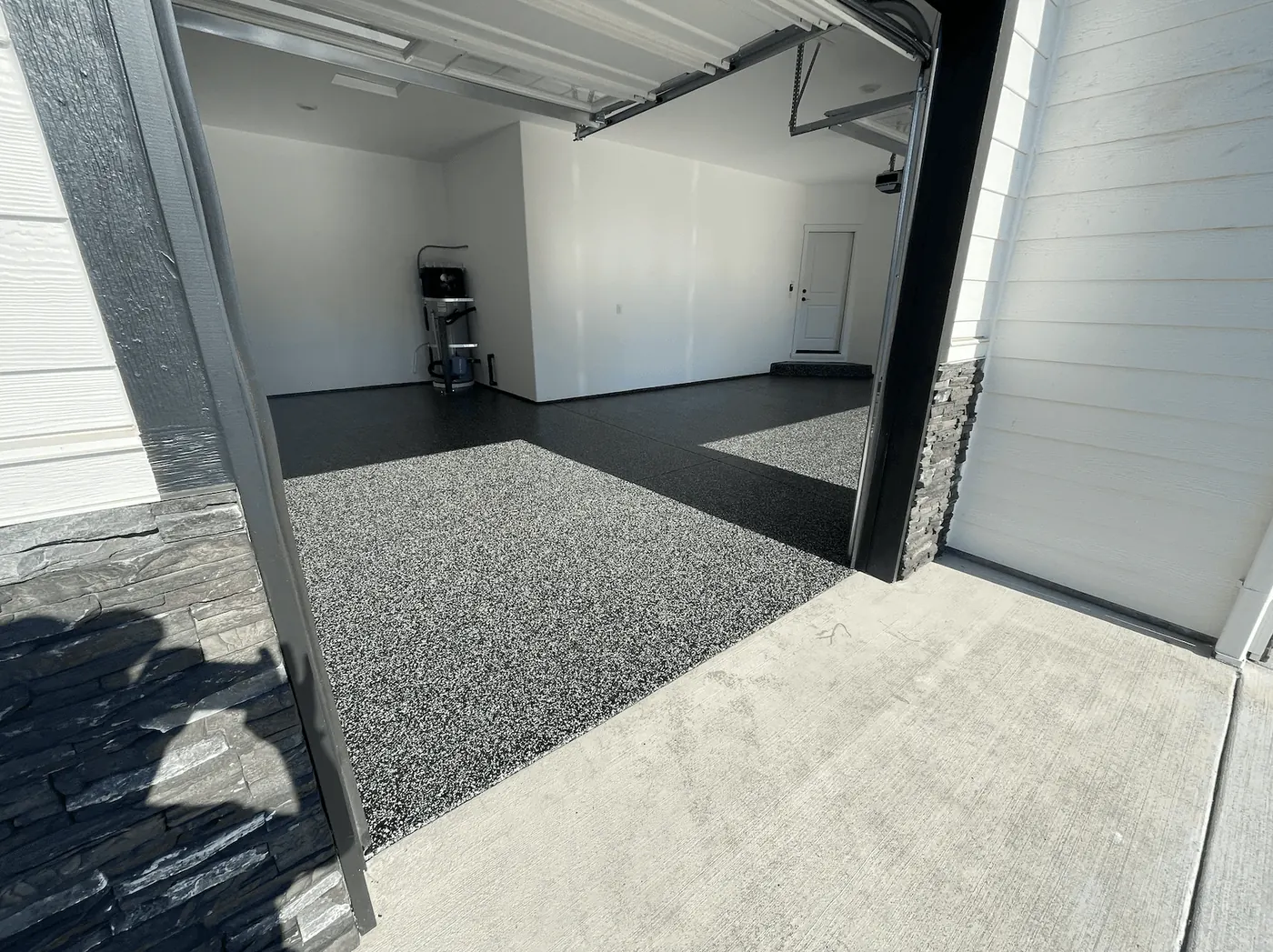
A one-day install, step by step
Here's the day for a two-car garage that doesn't need a moisture barrier. Bigger garages run longer; the order never changes.
-
Morning: walk the slab, then grind
Our crew re-checks the moisture, marks the cracks and tapes the walls. Then the grinders go to work: a coarse pass and a refining pass over every square foot, with hand grinding at the edges. It takes most of the morning, and dust collection runs the whole time.
-
Late morning: crack and joint repair
Every visible crack and control joint gets filled and ground flush, so you won't find them later with your eyes or your tires. A slab with a lot of pitting takes longer here; that's the step a cheap one-day bid usually trims.
-
Midday: base coat and full flake
The polyurea base coat goes down in the color you picked, and flake is broadcast into it while it's still wet, to full coverage. Full flake is what hides the small imperfections in the concrete and gives the floor its texture.
-
Afternoon: scrape, vacuum, topcoat
Once the base has set, the loose flake is scraped off and vacuumed up, so the surface is smooth, not gritty. Then the clear polyaspartic topcoat is rolled on with anti-slip grit mixed in. That's the layer your boots and tires touch, and the one that carries the warranty.
-
Evening: hands off
We walk you through the cure clock and leave. The floor is off-limits that night. Walk on it the next morning; park on it after 72 hours.
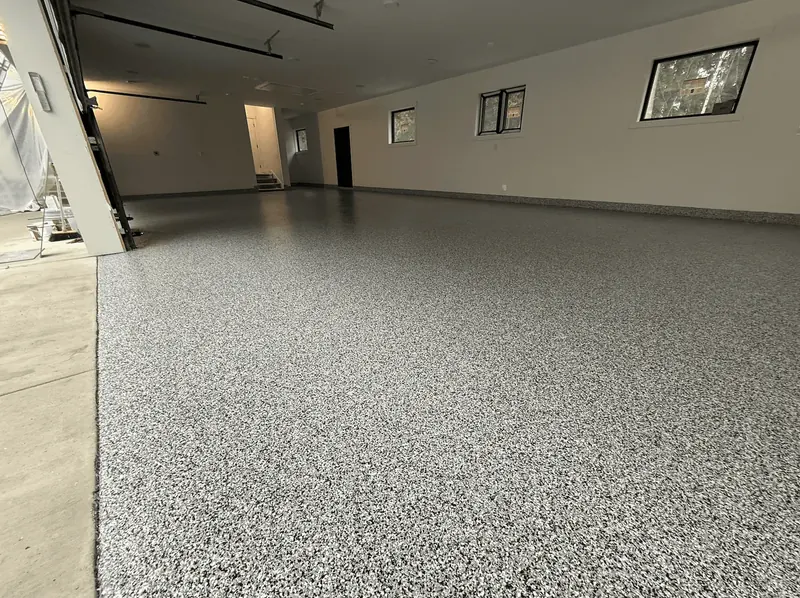
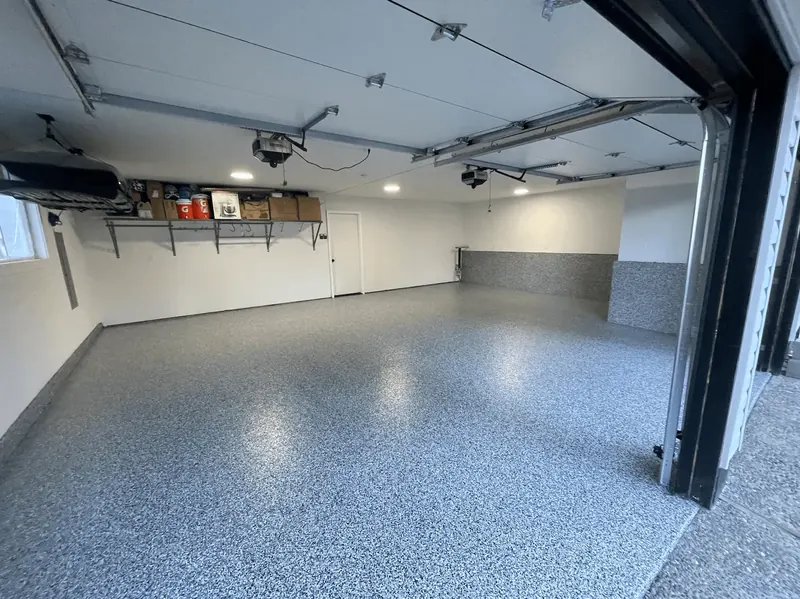
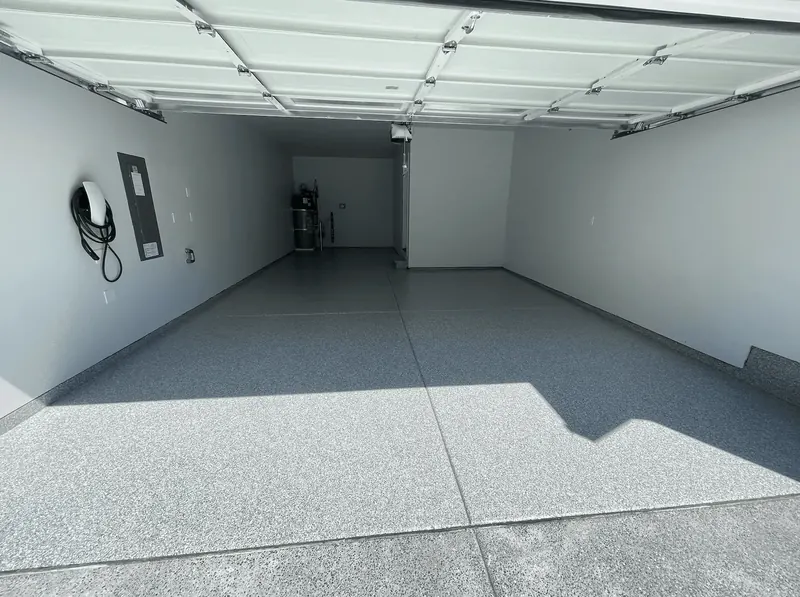
Want the version with the clock on it? How long a garage floor coating really takes walks through an install hour by hour.
When it's two days instead of one
One step adds a day: a moisture vapor barrier primer. It goes onto the bare, ground slab and has to cure overnight before the base coat can touch it. Rush that and you trap the exact moisture the barrier was meant to stop.
Every Premium floor includes the barrier, so a Premium install is always two days. On other floors the slab decides: the moisture reading, the age of the concrete, whether an old coating peeled. Here's how we decide.
Two days isn't a downgrade. It's one more day without the garage, for a floor that moisture can't push off from underneath.
One‑day vs. two‑day systems, honestly
You'll read that a two-day epoxy-base floor is tougher than a one-day floor. Some of that is marketing, some of it is fair. Here's how we'd put it if we were sitting at your kitchen table.
 The claim
"Epoxy bonds deeper than fast coatings"
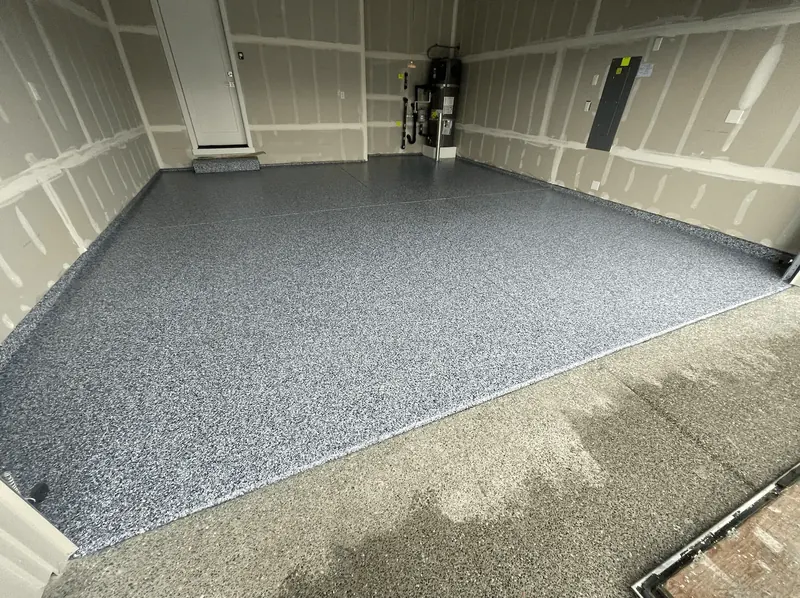
Partly true for a thin polyaspartic rolled straight onto concrete, which is why we don't do that. Our base coat is polyurea, thick and flexible, built to grip ground concrete. The finished floor is 30 to 40 mils thick.
 The claim
"Fast coatings cure too quickly in the heat"
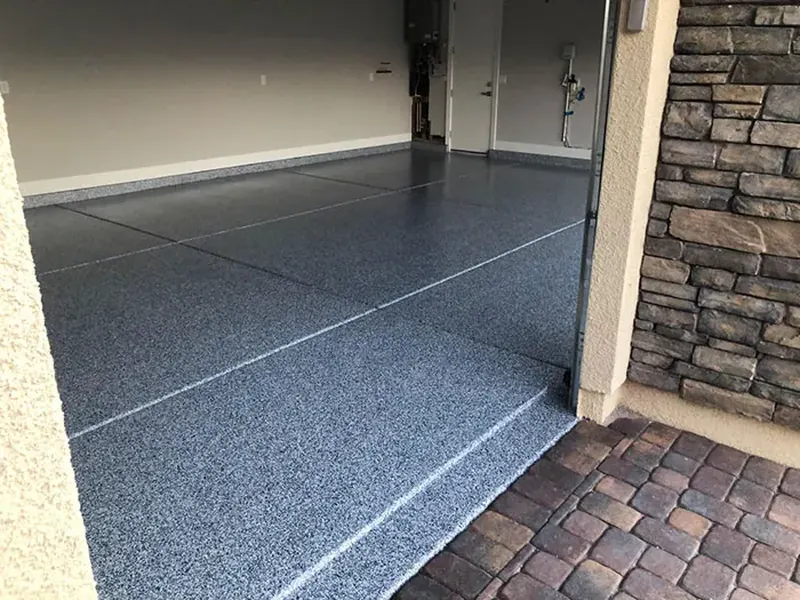
Fair, in Phoenix in July. In Seattle the problem runs the other way: cold, damp slabs that stop epoxy from curing at all. Polyaspartic keeps curing in the cool, which is why a one-day floor suits this climate.
 The claim
"One-day floors skip prep to make the schedule"
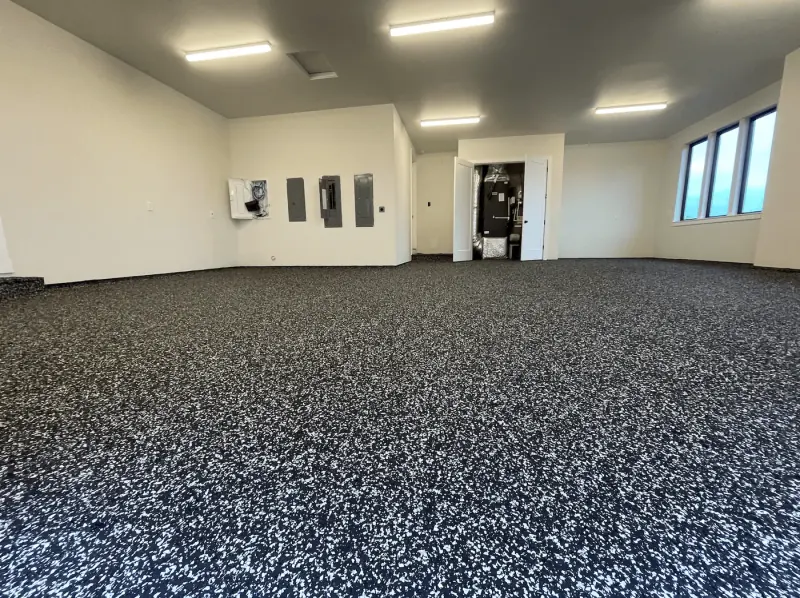
Some do. Acid-etch instead of grinding, skip the moisture test, and any floor fits in a day, then peels in a year. The fix isn't a second day. It's a grinder and a meter. Ask any installer how they prep.
 What matters
Prep, moisture, thickness
Three things decide how long a floor lasts: a real grind, moisture tested and handled, and the thickness of the finished system. None of them depend on the calendar. All three are on our estimate sheet.
What a one-day garage floor costs in Seattle
The same as any professional garage floor coating, because that's what it is. Speed doesn't carry a surcharge, and it doesn't earn a discount.
- $4–$12per square foot, Seattle market
- $1.6K–$5.8Ka typical two-car garage
What moves your number: square footage, how much repair the slab needs, an old coating to grind off, and whether a moisture barrier is part of the job. The full breakdown is in our Seattle cost guide. The written price we leave at the estimate doesn't change on install day.
Getting your garage ready
The day only works if the slab is ready and empty when we pull up. Four things to know.
Give fresh concrete 28 days
A brand-new slab has to cure for 28 days before any coating goes on, ours included. If the pour is fresh, we book the install for after that.
Empty it, wall to wall
Cars, bikes, bins and freestanding shelving all come out. Wall-mounted shelves and cabinets can usually stay. Leave the driveway clear for our truck and the grinder.
Rain doesn't stop the job
The coating goes on indoors, so a wet day is fine. What matters is the moisture inside the slab, and we measure that at the estimate. It's why we install all winter.
Three days without the car
Walk in the next morning and carry light things back in. Keep the cars on the driveway for 72 hours, and go easy dragging heavy shelving for the first week.
Floors we've installed
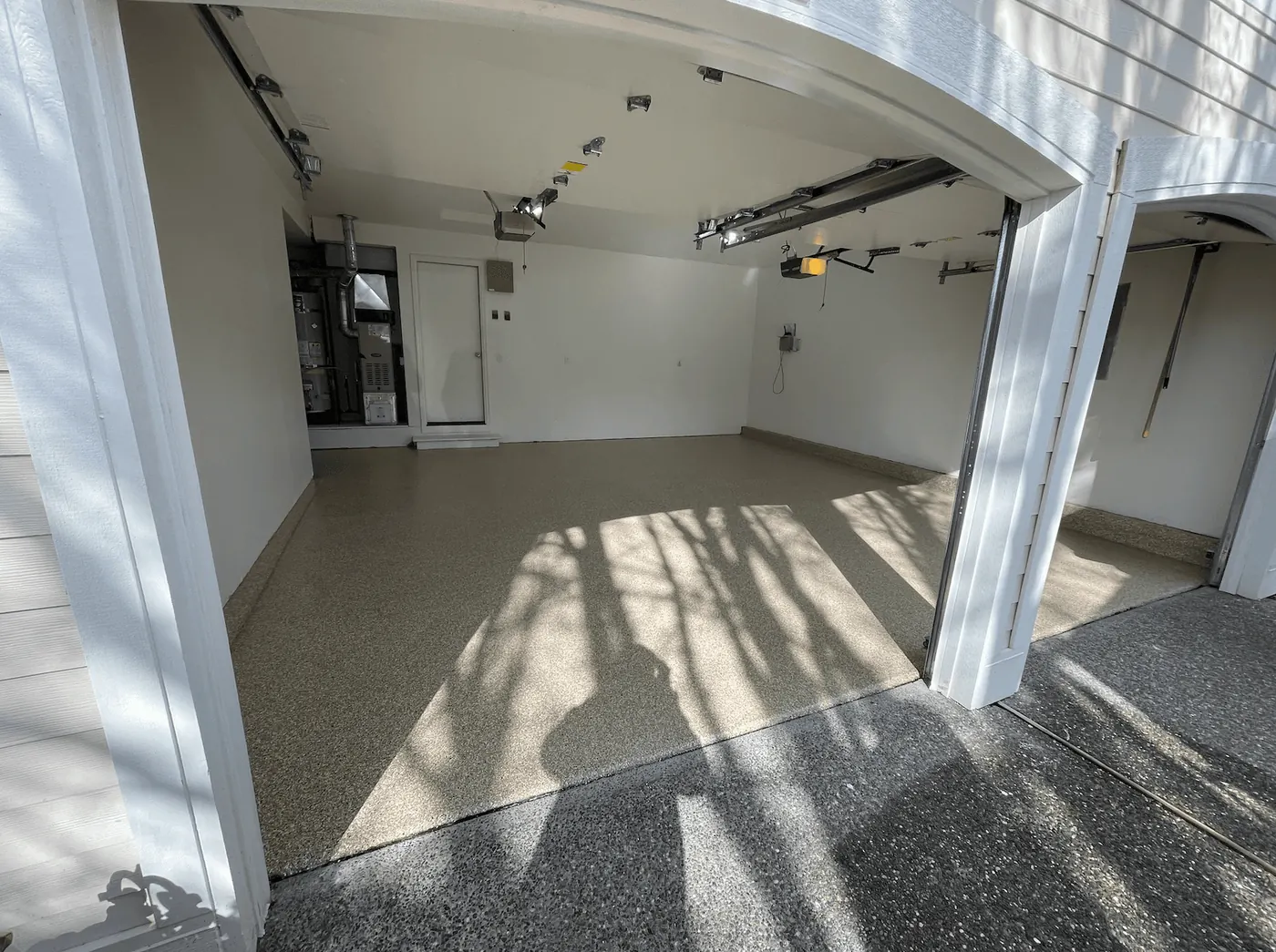
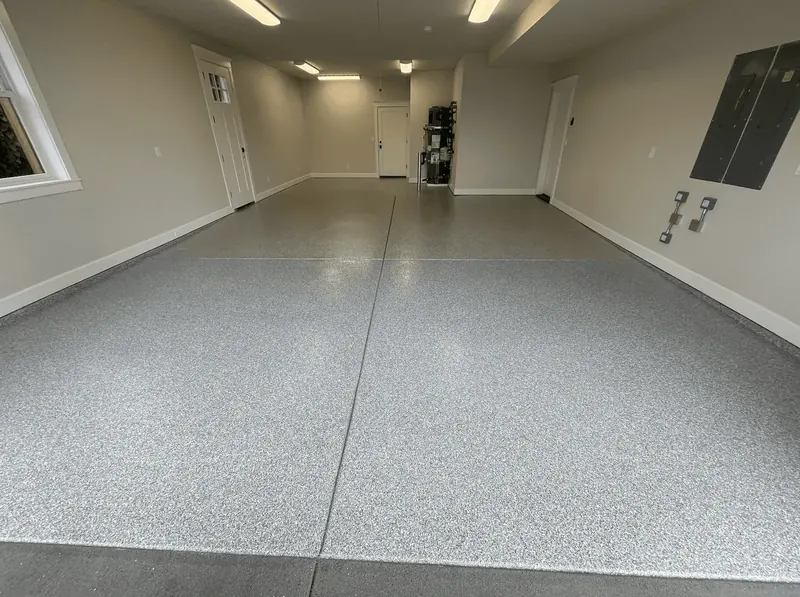
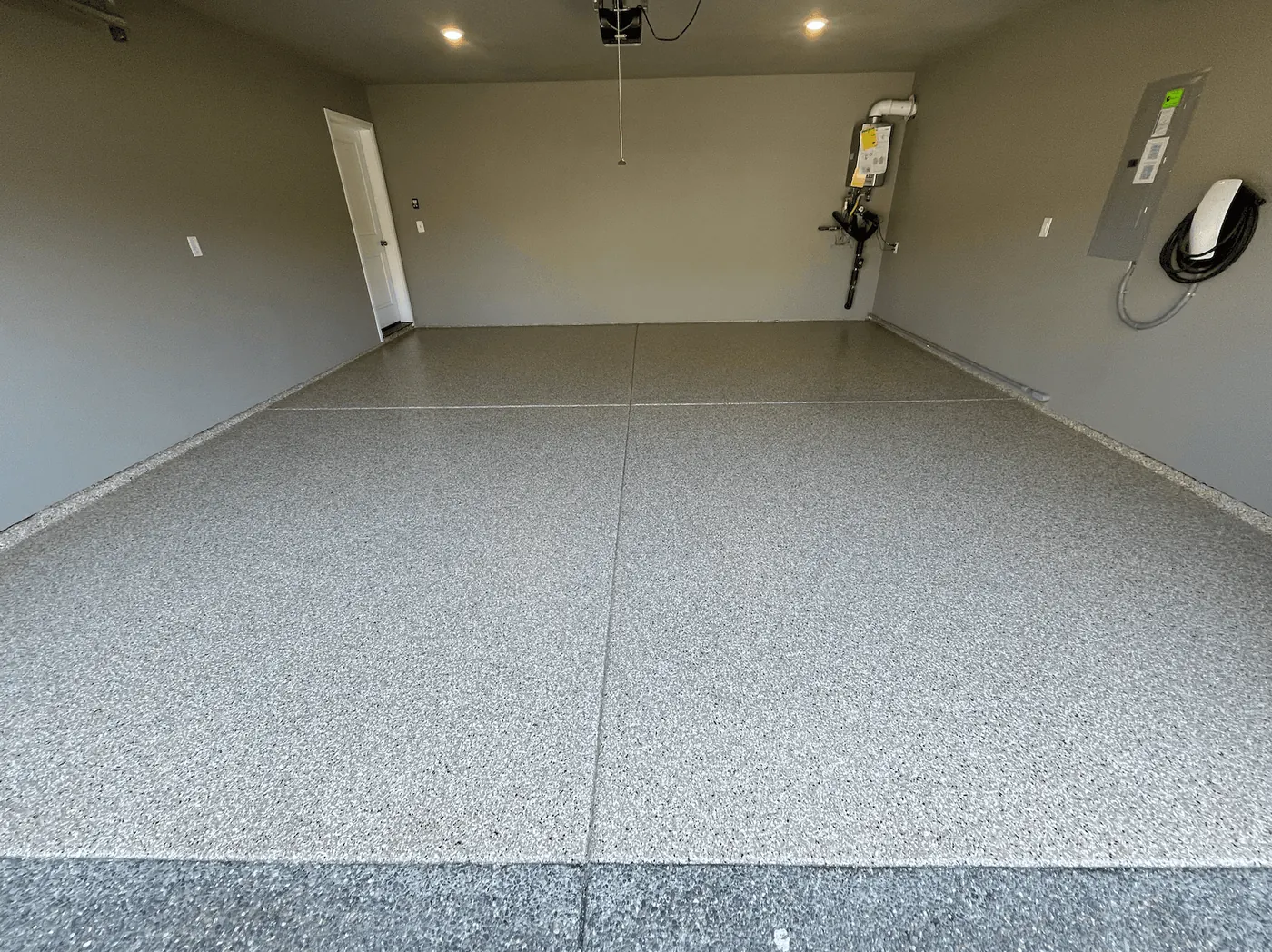
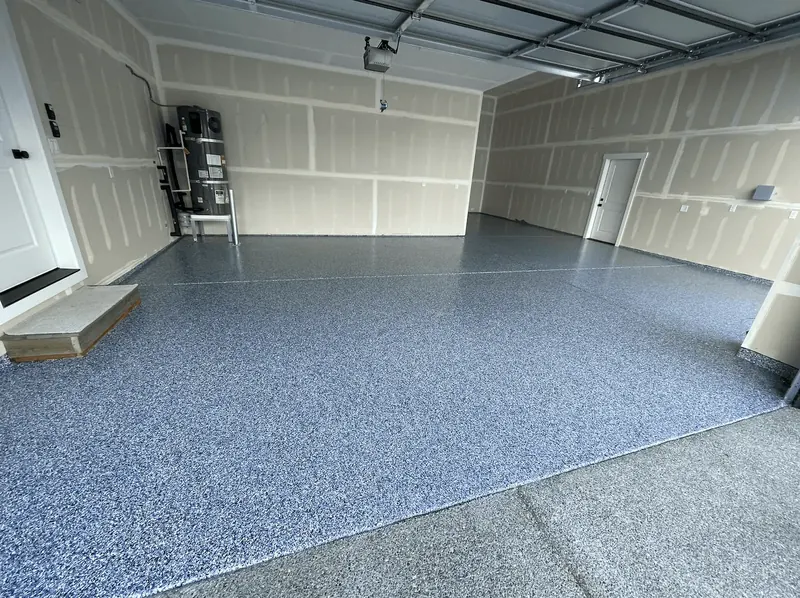
Real jobs, real slabs. Every one of these started with a grind and a moisture reading. See the full gallery, or preview a flake color on your own garage.






One-day garage floor questions
Is a garage floor coating really done in one day?
Yes, when the slab doesn't need a moisture barrier. Grinding, crack repair, base coat, full flake and the clear topcoat all happen in one visit, because polyurea and polyaspartic set in hours. A floor with a moisture barrier takes two days, since the barrier primer cures overnight before the base coat goes on.
How soon can I park on a one-day garage floor?
Walk on it the next morning and park on it after 72 hours. The coating keeps hardening for 7 to 10 days, so don't drag heavy shelving across it in the first week. Product sheets allow vehicles sooner in warm conditions; we hold the longer line because Seattle garages run cool and damp.
Can you do a one-day floor in winter or when it's raining?
Yes. The work is indoors, and polyaspartic cures in cool temperatures where epoxy stalls. What has to be right is the moisture inside the concrete, which we measure at the estimate. A slab that reads high gets a moisture barrier and a two-day schedule instead.
Is a one-day floor as durable as a two-day epoxy floor?
Done properly, yes. Durability comes from grinding the concrete to a real profile, handling moisture, and the thickness of the finished system, not from how many days it took. Our one-day floor is a polyurea base with full flake and a polyaspartic topcoat, about 30 to 40 mils thick, with a lifetime adhesion warranty.
Do you skip grinding to finish in a day?
No. Grinding is most of the morning and most of the labor on the job, and it's the step that decides whether any coating holds. Crews that finish in a day by acid-etching instead of grinding are the reason one-day floors have a bad name in some forums.
Do you do same-day epoxy floors?
No, and nobody honestly can. Epoxy needs a warm slab and several days before a car can sit on it. What we install in one day is a polyurea and polyaspartic system, which is the step up from epoxy for a wet, cool climate like Seattle's.
How much does a one-day garage floor cost?
The same as any professional flake floor in the Seattle market: roughly $4 to $12 per square foot, or about $1,600 to $5,800 for a typical 400 to 500 square foot two-car garage, depending on prep, old coating removal and whether a moisture barrier is included. Speed isn't a line item.
What if my slab needs a moisture barrier?
Then it's a two-day job: grinding, repair and the barrier primer on day one, the floor on day two. Every Premium floor includes the barrier. On other floors the meter and the slab's history decide, and we tell you at the estimate, not on install day.
Want your garage back tomorrow?
Tell us the size of the garage and whether it has ever been coated. We test the slab, tell you one day or two, and leave a written price. No pressure to sign on the spot.