
Garage Floor Coating in Sammamish, WA
Up on the plateau, snow can stick when Seattle just gets rain. Your car hauls that salty slush home onto a slab that's been taking drips since the '90s. Our garage floor coating seals it under full flake and a clear topcoat you can squeegee clean. The estimate is free, at your house.
- Free estimate at home
- Moisture-tested first
- Cars back in 72 hours
- Lifetime adhesion warranty
Sammamish garage floor coating, explained
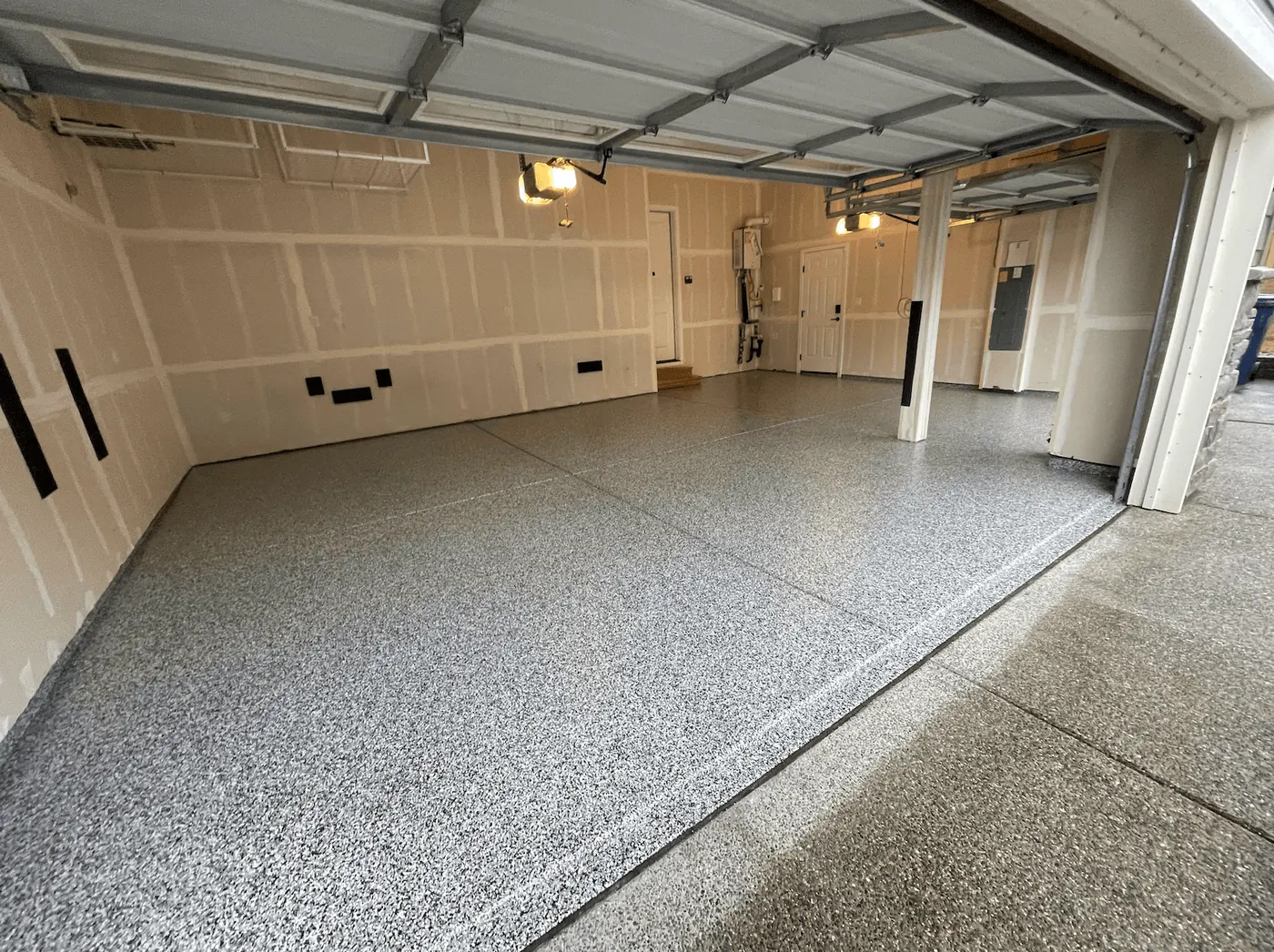
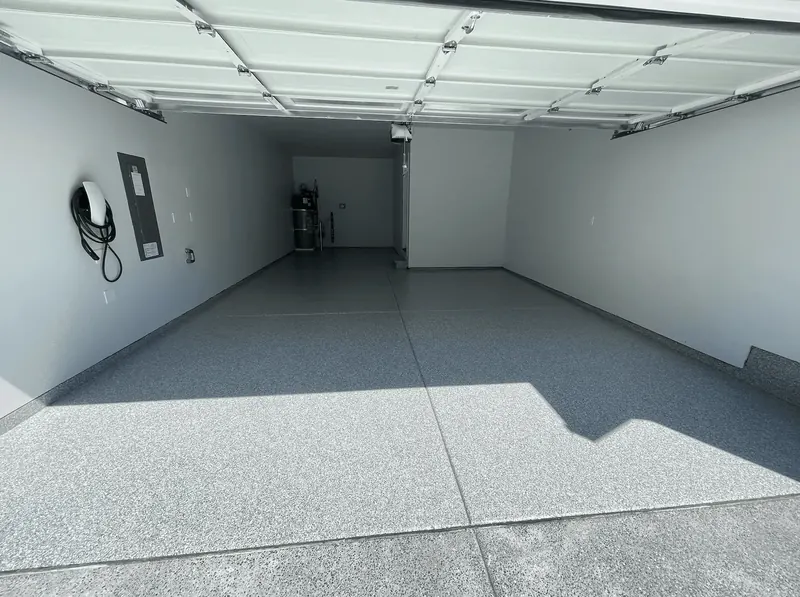
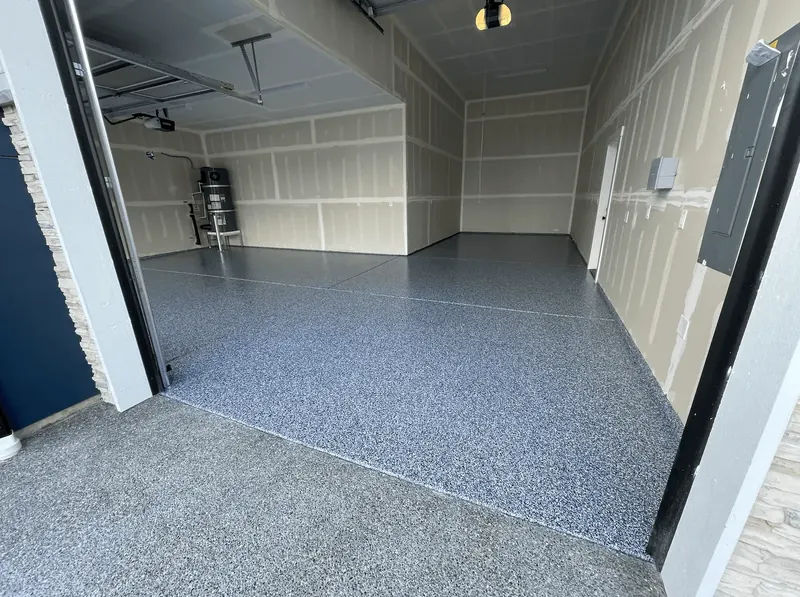
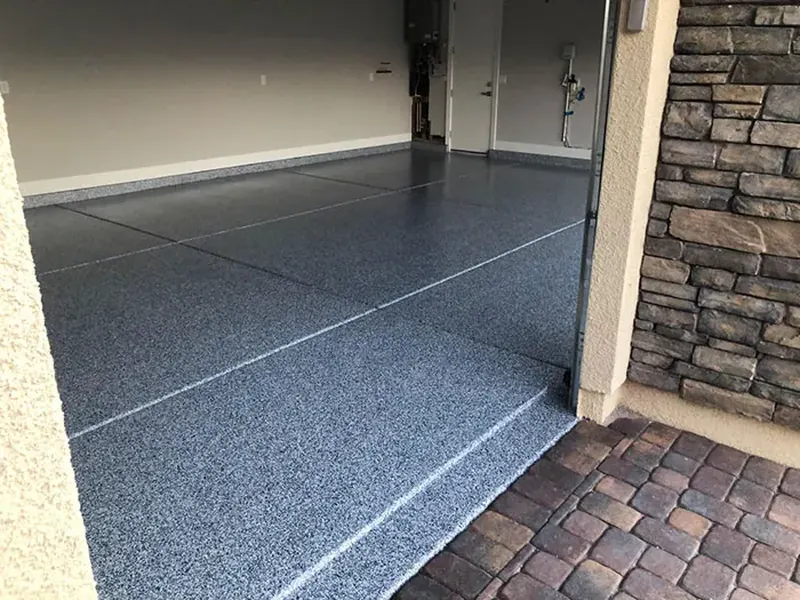
Task Force Garage installs garage floor coatings in Sammamish, WA. We diamond-grind your slab and fill its cracks. Then we lay a polyurea base coat, bury it in vinyl flake and seal it under a clear polyaspartic topcoat with anti-slip grit. Every slab is moisture-tested first, and the estimate is free, at your house, with a written price.
Shopping for an epoxy garage floor in Sammamish? What we install is the upgrade over epoxy. You get the same ground prep and the same flake look. It cures faster and stays flexible as your slab moves, and its clear topcoat holds its color in sunlight, where epoxy tends to yellow. You park on it after 72 hours instead of about a week.
That matters up here. Epoxy wants a warm slab, so most epoxy jobs around Seattle wait for the dry summer months. Our system cures across a much wider range of temperatures, so a fall or winter install is realistic once your slab passes the moisture test.

Is your Sammamish house from the '80s or '90s?
Odds are it is. More than half the homes in Sammamish went up in those two decades, Klahanie among them. So your garage slab has likely seen 30 winters. It shows in the oil spots from cars you sold long ago, and in the paint that's lifting by the door.
Your older slab has one thing going for it. It's done most of its shrinking, so it moves less than a new pour would. What it needs is a clean, open surface for your coating to grip. Our diamond grinders take the top skin off your concrete, along with any old sealer or loose paint, and we fill every crack and control joint flush.
Did a past owner roll epoxy paint on your floor? If it's peeling anywhere, it comes off to bare concrete. If it's stuck down everywhere, your new floor can go over it once it's ground dull. You'll know which at the estimate, and our guide to coating over an old epoxy floor explains how we decide.
What a plateau winter tracks into your garage
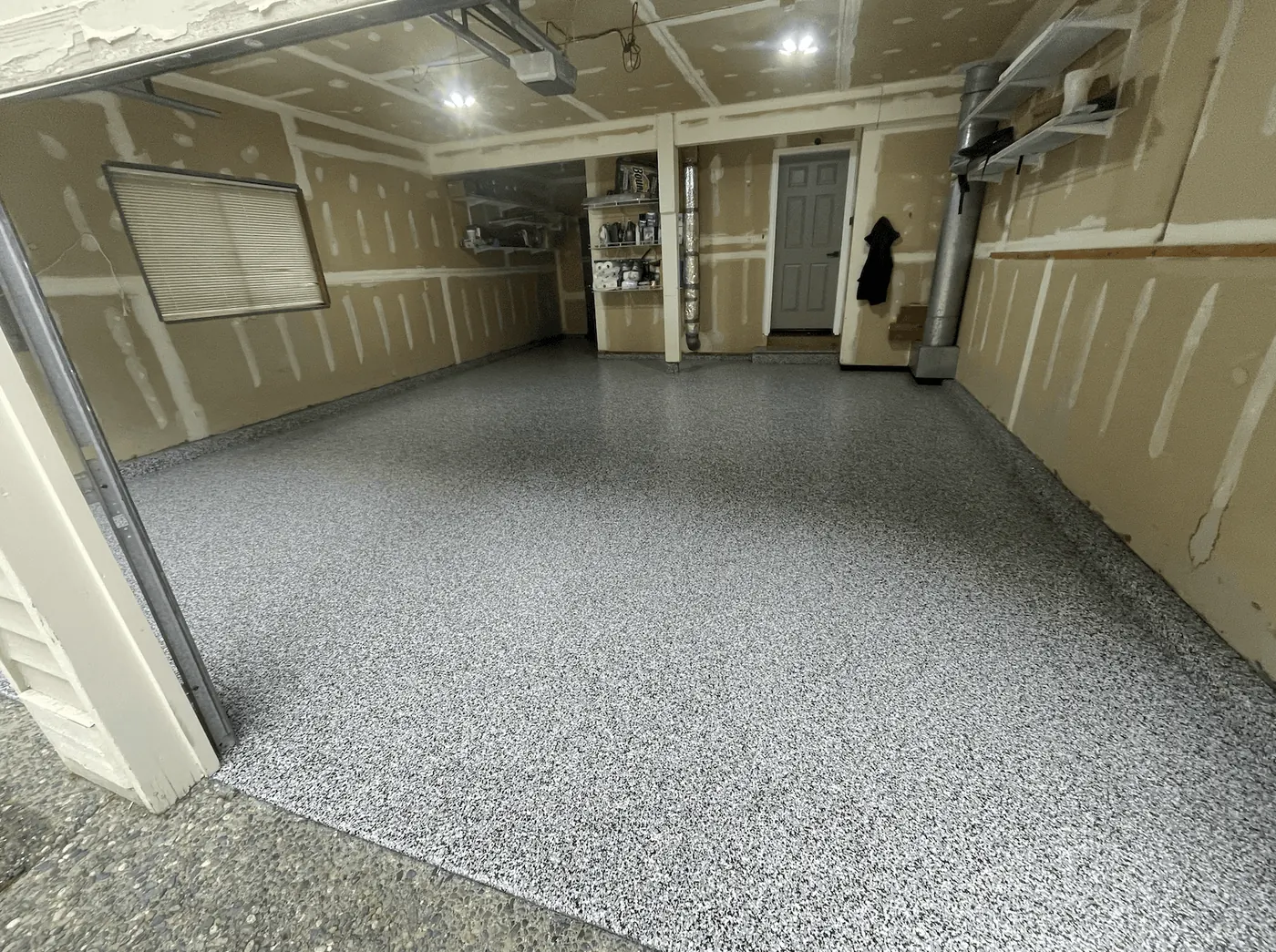
Bare concrete soaks up whatever your tires carry in, and a Sammamish winter carries in a lot. This is where a sealed floor earns its keep.
 Snow days
Plateau snow
A storm that only wets Seattle can turn the plateau white. Your car comes home packed with snow and drips for hours. On a coated floor the melt sits on top, and a squeegee pushes it out the door.
 Main roads
Road salt
The city spreads rock salt and calcium chloride on the main routes and big hills. Calcium chloride is the salt in closet damp-catchers, so it stays wet on bare concrete. Our topcoat rinses clean.
 Your street
Cul-de-sac slush
In an average storm, the city plows its priority routes and leaves cul-de-sacs to melt. That last stretch home is slush, and it rides into your garage packed in the wheel wells.
 Wet nights
Three wet cars
A three-car garage on a rainy night means three cars' worth of drips. Bare concrete darkens, stains and stays damp. Our topcoat carries anti-slip grit, so your footing holds on a wet floor.
Is your Sammamish garage cut into the hill?
Plenty of homes up here sit on a slope, especially on the hillsides that drop toward the lake. If yours does, the ground outside may sit higher than your slab along one wall. That's the biggest moisture risk we look for.
Under much of the plateau sits glacial till, a packed layer of silty sand and gravel that water soaks through slowly. In late winter and early spring, groundwater can sit on top of it, close to the surface. A slab over wet ground pulls that moisture up into the concrete.
So we meter your slab at the estimate, in more than one spot, and look for white chalky deposits and dark, damp patches. A high reading or two warning signs means our moisture barrier primer goes down first, and your install takes two days. Our guide to garage slab moisture explains the test.
If water ever runs in along a wall after a big storm, that's a drainage fix to make before any coating. We'll tell you so before we quote.
Where do your cars go for three days?
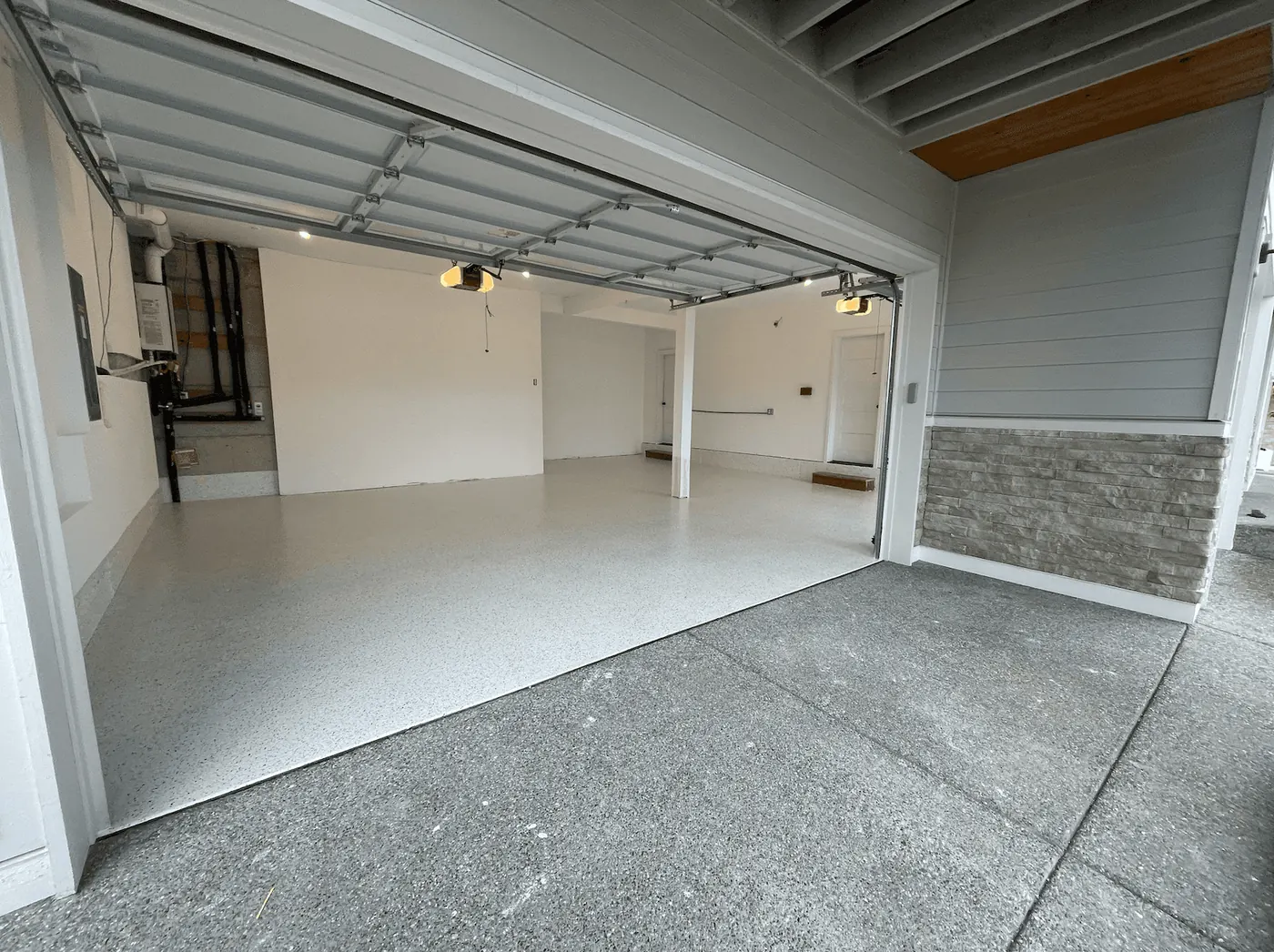
A three-car garage empties onto the driveway or the street until the floor can take tires. If your HOA limits street parking, or you charge an EV in there, tell us when you book and we'll plan the dates with you.
Grind and prime
You clear the garage the night before. Our crew re-checks the moisture, grinds the slab with dust control running and fills the cracks. If your slab needs the barrier, its primer cures overnight.

Flake and seal
The polyurea base coat goes down, and we broadcast flake into it until no base shows. After we scrape and vacuum the loose flake, the clear topcoat with anti-slip grit seals it in.

Park in 72 hours
Walk on it the next day and carry your boxes back in. After 72 hours the cars go back too, or two cars and the home gym you've been planning for bay three. Go easy dragging heavy things that first week.
What garage floor coating costs in Sammamish
Your exact price comes in writing after the estimate. For a ballpark, here's where most pro-installed floors land across the Seattle area, from our Seattle-area cost guide.
- $2.5K–$10Ka typical three-car garage
- $1.6K–$5.8Ka typical two-car garage
Size moves your number most. A bigger floor spreads our setup over more square feet, so your three-car garage costs less per square foot than a two-car would. After size come any old paint or epoxy to grind off, the cracks to fill and whether your slab needs the moisture barrier.
Choose Premium and you get the moisture barrier, cove base up your walls, coated steps, a flake design session and a one-year checkup at no extra charge. See what Premium includes. Either package comes with a lifetime adhesion warranty.
Listing your house in the spring? Tell us. A simpler floor may be all your sale needs, and we'll price both for you. Comparing garage floor installers in Sammamish? Lay our itemized quote next to theirs, line by line.
Sammamish neighborhoods we cover
Wherever you live on the plateau, from Sahalee and Inglewood in the north to Trossachs in the south, our crew comes to you. Here are a few neighborhoods by ZIP code. Don't see yours? You're still covered.
- 98074
- Sahalee
- Inglewood
- Timberline
- Montrachet
- 98075
- Pine Lake
- Beaver Lake
- Trossachs
- Aldarra
- 98029
- Klahanie
- Heatherwood
- The Willows
Klahanie kept its Issaquah ZIP when it joined Sammamish, so if that's your address, you're on this list too. Live off the plateau? We also cover Issaquah, Redmond, Bellevue and Snoqualmie.
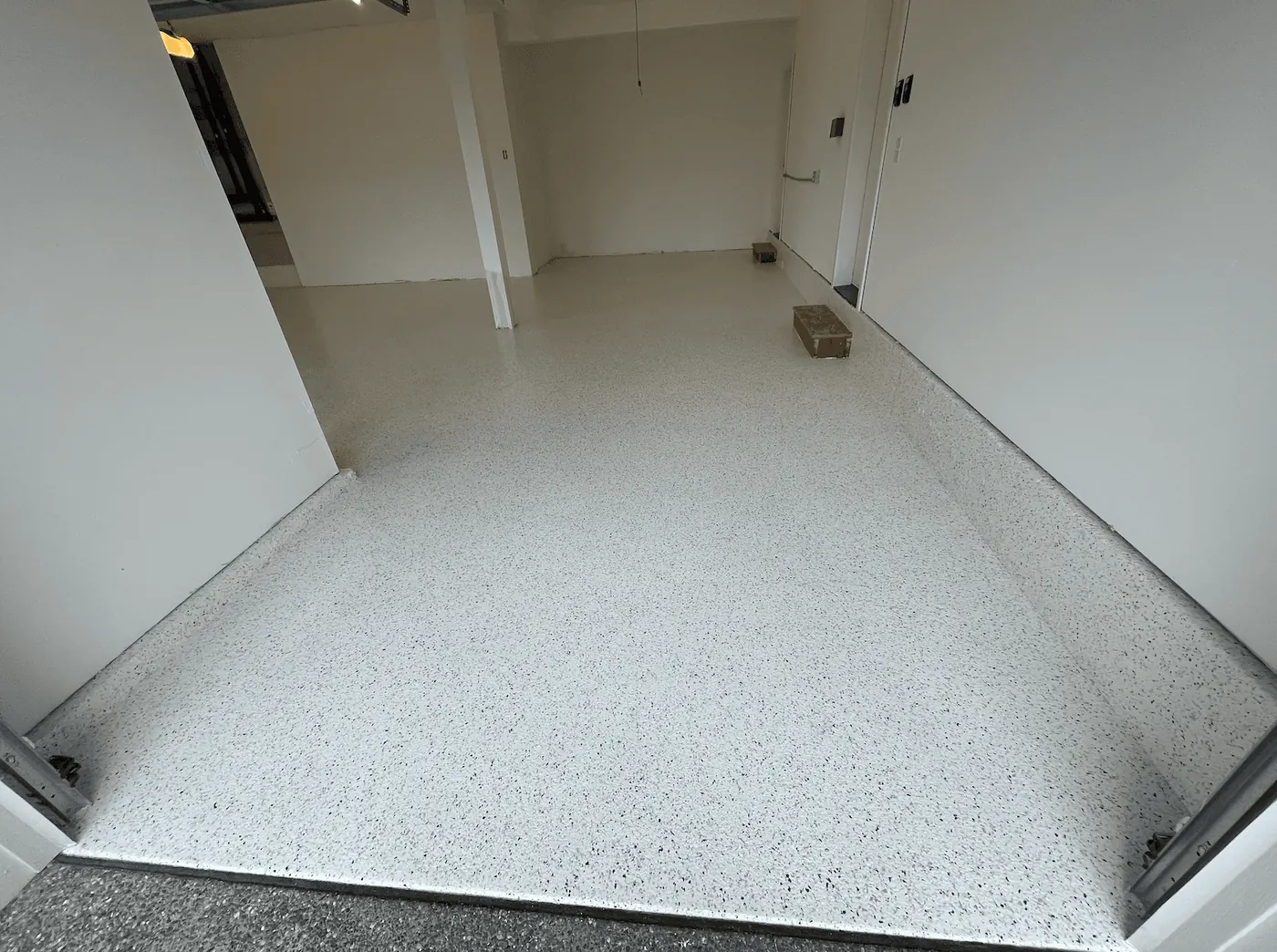
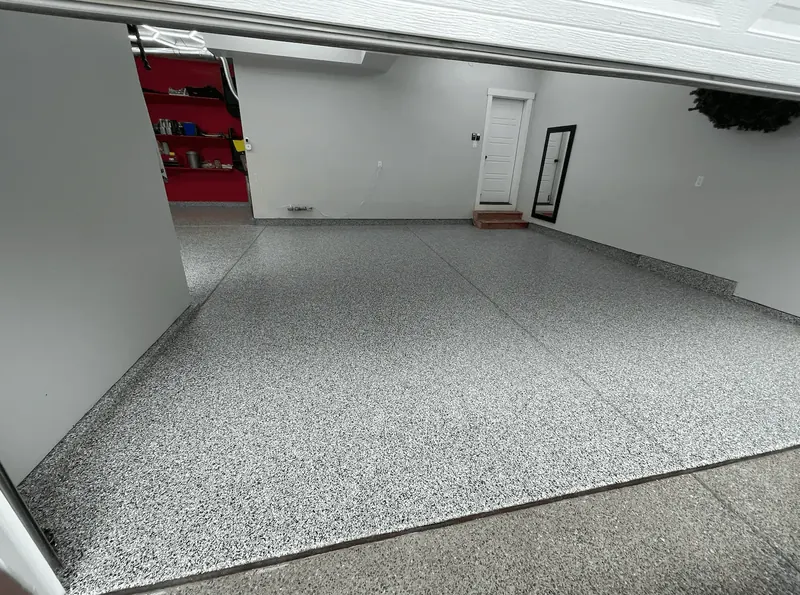
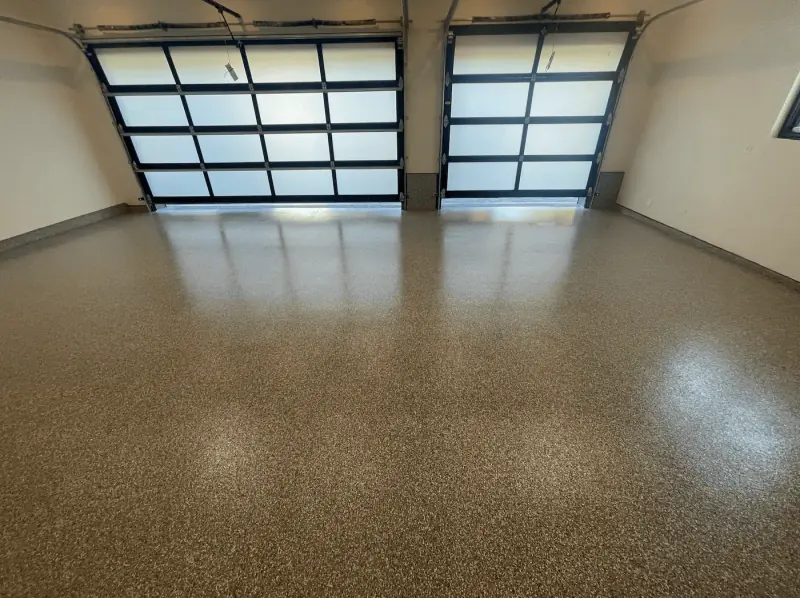
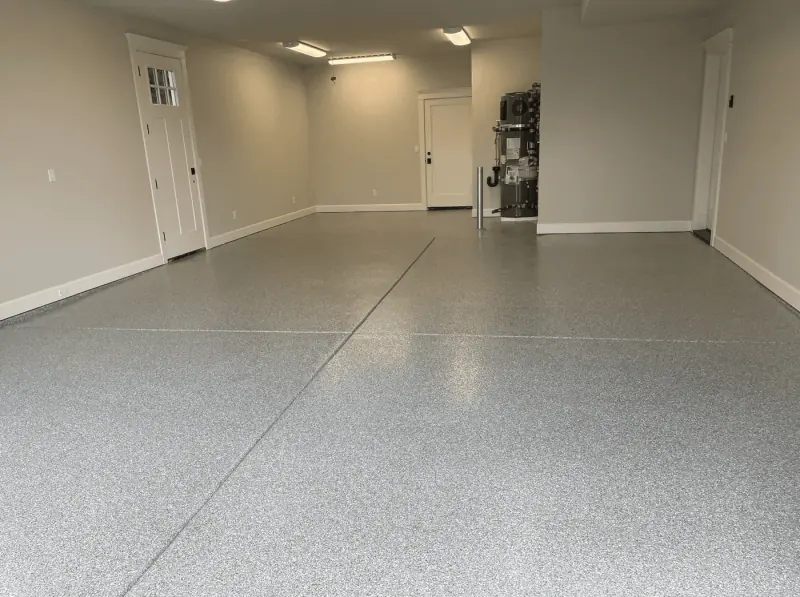
Pick a flake that forgives a muddy week
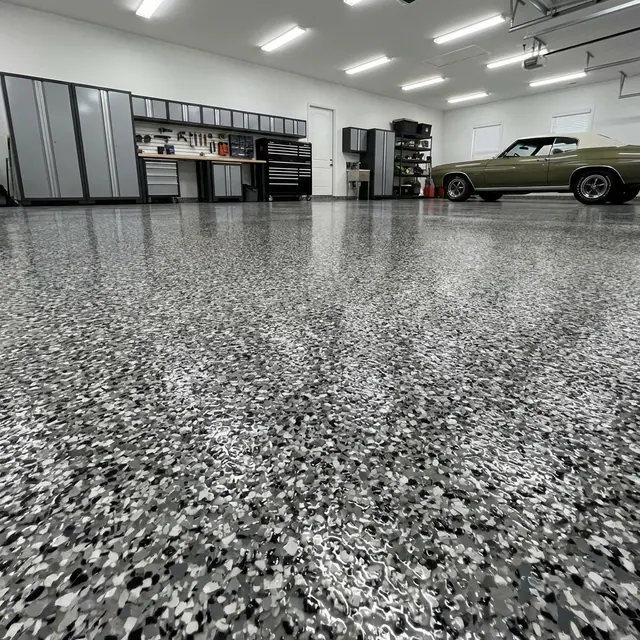
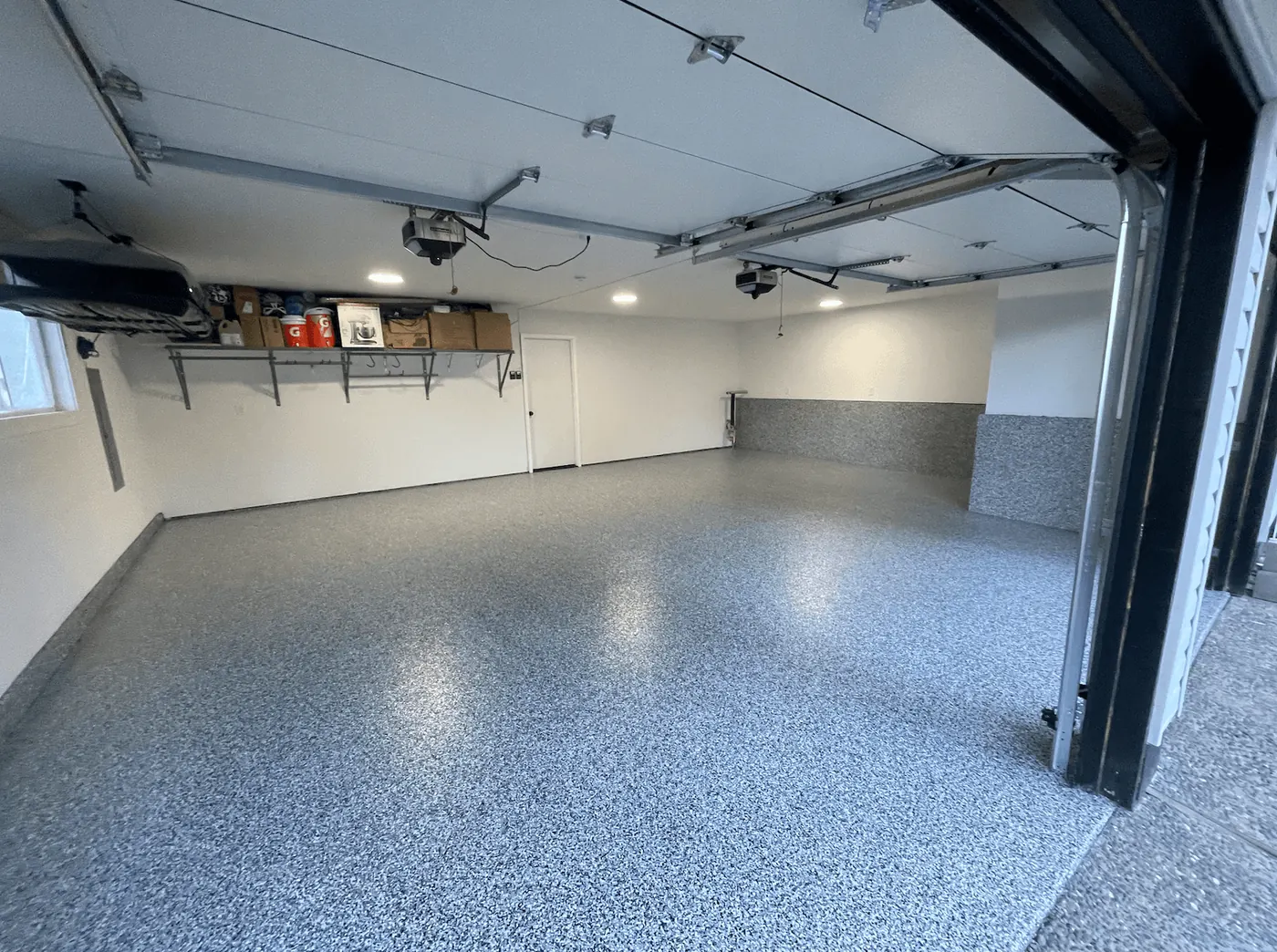
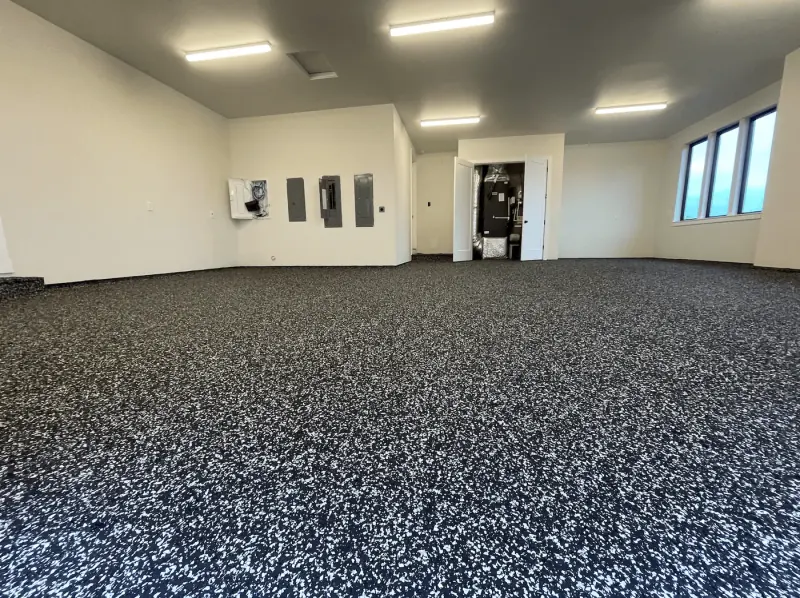
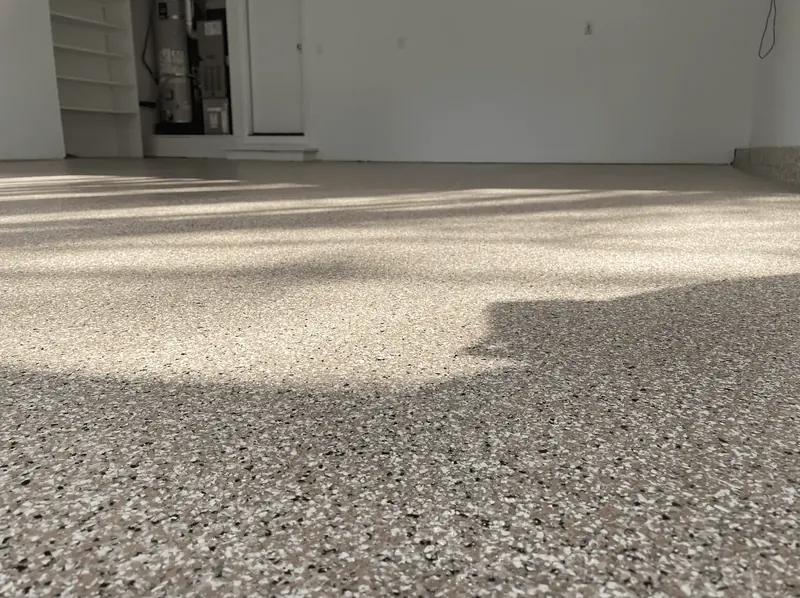
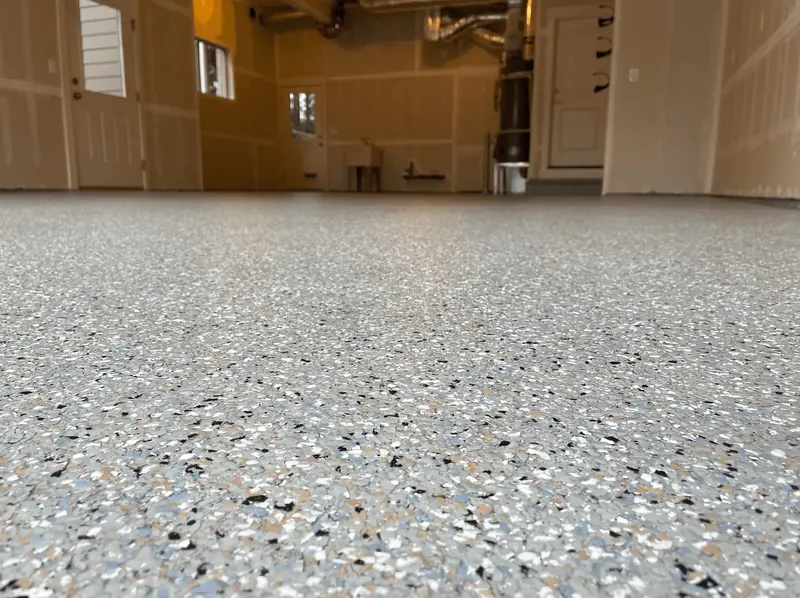
A busy flake blend hides grit between hosings, which helps in a garage that sees snow and slush. Here are seven, photographed in finished garages. Browse the gallery, or try a color on a photo of your own garage.

Sammamish garage floor questions
How much does garage floor coating cost in Sammamish?
Across the Seattle area, most pro-installed two-car floors run about $1,600 to $5,800, and three-car garages cost more in total. Your number depends on the size, the crack repair, any old coating to remove and whether your slab needs the moisture barrier. After the free estimate, you get it in writing, line by line.
Do you install epoxy garage floors in Sammamish?
We install the upgrade over epoxy. You get the hard, glossy flake floor people picture when they say epoxy, over the same diamond-ground slab. Underneath, it's a polyurea base and a clear polyaspartic topcoat. It cures fast and keeps its color in the sun, and your car is back in three days instead of about a week. See how it compares with epoxy.
Can you do garage floor coating in Sammamish, WA in winter?
Yes. The work happens inside your garage, and our system keeps curing in the cold that stalls epoxy. What we watch is the slab. It has to pass the moisture test, and on install day the concrete and air must stay at least 5°F above the dew point. Most people call in spring, so winter dates are easier to get.
Will road salt hurt a coated garage floor?
Rock salt, calcium chloride and slush sit on the clear topcoat, where a rinse or a damp mop takes them off. On bare concrete, those salts soak into the pores and hold water, and freeze-thaw can start flaking the surface. Hose the floor out now and then through the winter, and push the meltwater toward the door with a squeegee.
Our old epoxy is peeling. Can you coat over it?
Not over the peeling parts. Anything that's lifting comes off to bare concrete first, and when it's letting go in the tire lanes, we usually take the whole floor down. If the old coating is still stuck tight everywhere, a new floor can go over it once it's ground dull. We test which at the estimate and price that path.
Do I need HOA approval to coat my garage floor?
Usually not for the floor itself, since it's inside your garage. HOA rules tend to cover what the neighbors see and hear: contractor parking, work hours and cars left on the street. Check yours, tell us what it says when you book, and we'll plan the days around it. If your board asks, your written estimate describes the work.
Can you coat a three-car garage in one day?
On a dry slab, yes. A bigger floor just makes a longer day for our crew. If your slab needs the moisture barrier, plan on two days whatever the size, because the primer cures overnight. Either way, you can walk on the floor the next day and park on it after 72 hours.
Do you cover Klahanie and the rest of Sammamish?
Yes. Klahanie still uses an Issaquah ZIP, but it's part of Sammamish. We cover it like the rest of the plateau: Pine Lake, Beaver Lake, Trossachs, Sahalee, Inglewood and every neighborhood between. Off the plateau, we also work in Issaquah, Redmond and the rest of the Eastside.
Get your Sammamish garage priced in writing
We come to your house, measure every bay, test your slab for moisture and leave you an itemized price. It takes 15 to 20 minutes, and nobody will push you to sign that day.