
Garage Floor Coating in Tacoma, WA
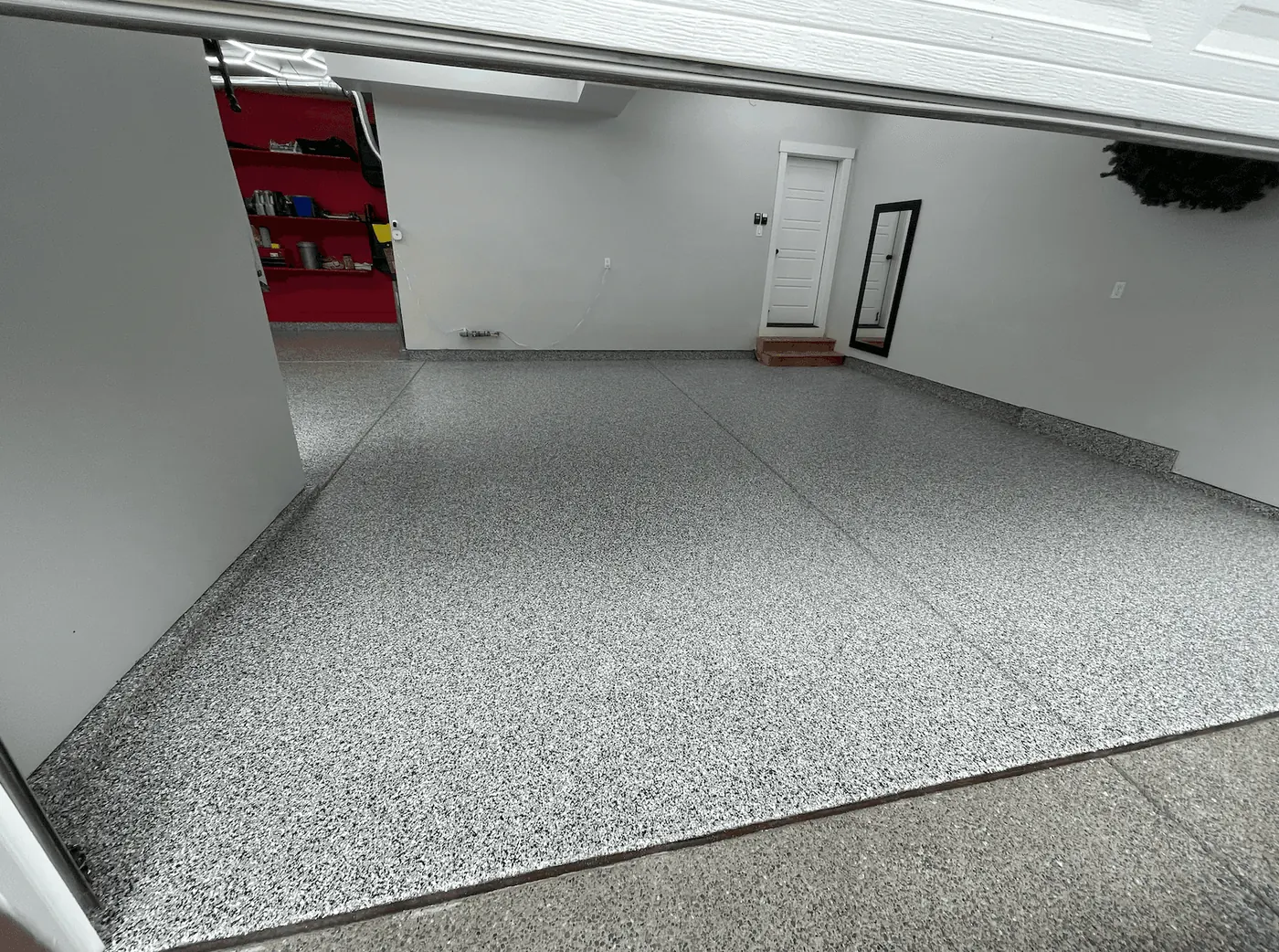
Plenty of Tacoma garages went up in the Model T years. If yours did, its floor has been soaking up oil ever since. Our garage floor coating in Tacoma covers your slab, old or new, in full flake under a clear, wipe-clean topcoat. We test it for moisture first, and the estimate at your house is free.
- Free estimate at home
- Every slab tested first
- Park again in 72 hours
- Lifetime adhesion warranty
What garage floor coating in Tacoma includes
Task Force Garage installs garage floor coatings in Tacoma, WA. We diamond-grind your slab, fill its cracks and roll on a polyurea base coat, then bury it in vinyl flake. A clear polyaspartic topcoat with anti-slip grit seals it all in. Every slab gets a moisture test first, and the estimate at your house is free.
Searched for an epoxy garage floor in Tacoma? What we install is the upgrade over one. You get the same diamond-ground prep and the same flake look, but your floor cures in hours and flexes as an old slab moves. It won't yellow where the sun hits it, and your car is back in after 72 hours, where epoxy needs about a week.
A dry slab takes one day. If yours needs our moisture barrier primer, plan on two, because the primer cures overnight. Older slabs need it more often, and the test at your estimate tells you whether yours does before you sign anything. Every floor we install carries our lifetime adhesion warranty.
Can an old Tacoma slab take a new floor?
Usually, yes. Odds are your Tacoma home went up before 1980, and there's about a one-in-three chance it went up before 1940. Builders back then didn't put plastic under slabs, so your garage floor likely sits right on the dirt.
That matters because ground moisture can creep up through bare concrete, and old concrete is more porous than new. It's a common reason paint and kit epoxy let go of old garage floors. It's also where that white, chalky crust along a garage wall comes from.
So we test before we price. At the free estimate we take meter readings and look for chalky deposits, dark damp patches and flaking paint. A high reading, or two of those signs, means our moisture barrier primer goes down first. You'll see it on the written price before you agree to anything.
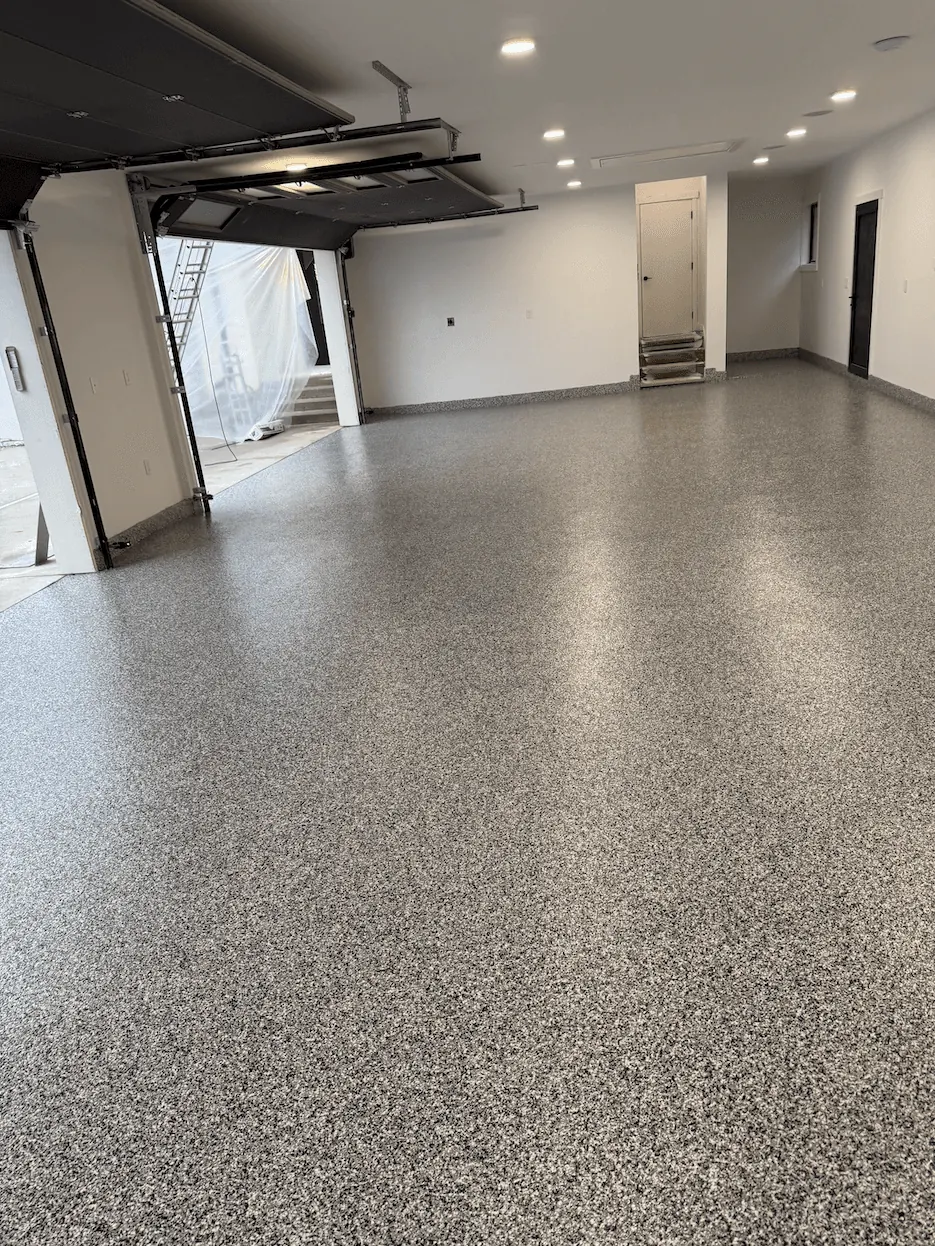
Which Tacoma garage do you have?
Tacoma built its garages in waves, and each wave left a different floor behind. Find yours below. It tells us what to check first when we come out.
 North End
The alley garage
Plenty of Proctor, Stadium and North Slope homes have a detached garage out back on the alley, often built for one car. If rain runs in under your door, show us. Water coming in from outside needs a fix out there first.
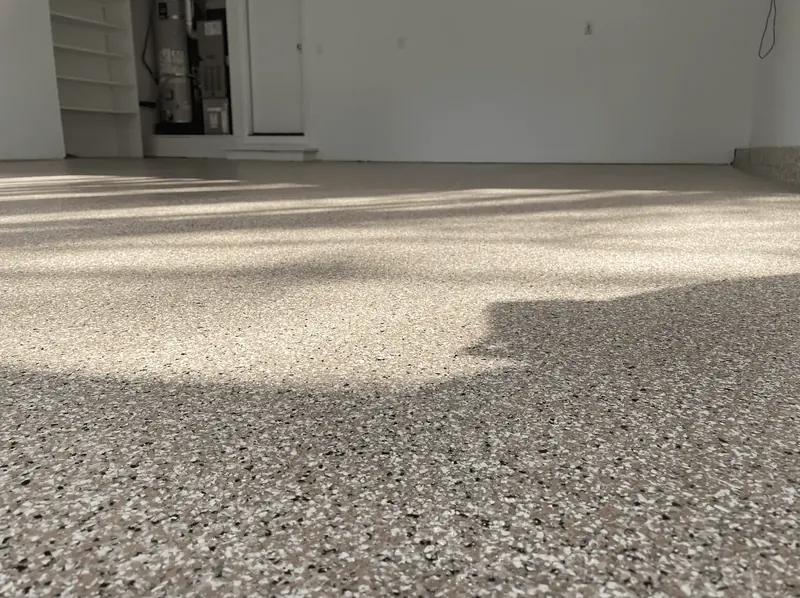 Hillsides
Below the street
On a sloped lot, the garage often sits low, with dirt banked against a wall or two. That's the biggest moisture risk a slab can carry. We read yours in more spots than usual and price in the barrier if it reads high.
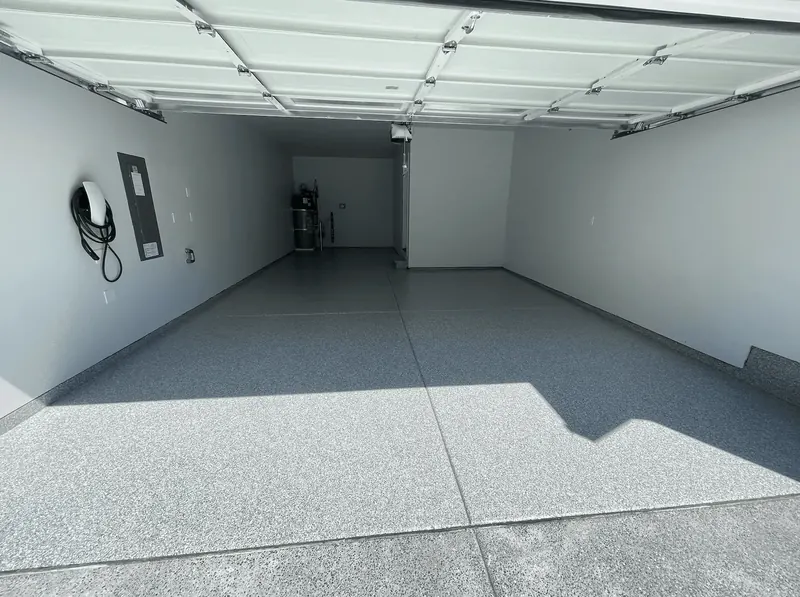 West End
The '50s rambler
Westgate and the West Slope filled in after the war with ramblers and split-levels, many with a one-car attached garage. Decades of oil and old floor paint come off in the grind, so your new floor bonds to clean concrete.
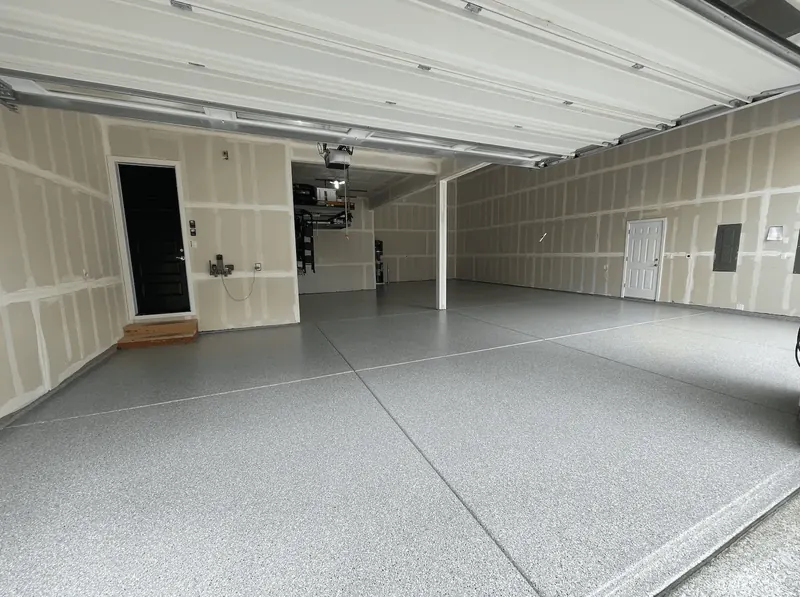 Northeast
The younger slab
Northeast Tacoma mostly went up in the 1980s and '90s, so its slabs are younger and usually grind cleaner. Washington's code still doesn't require plastic under a garage, though, so yours gets the same moisture test.
What a Tacoma winter does to bare concrete
When frost is in the forecast, the city sprays salt brine on Tacoma's bridges and shaded hills. Your tires bring it home, along with months of rain.
Bare concrete soaks all of it up. Brine dries in white streaks, drips spread into dark rings, and the top starts to dust onto whatever you store out there. Another winter sets those stains deeper.
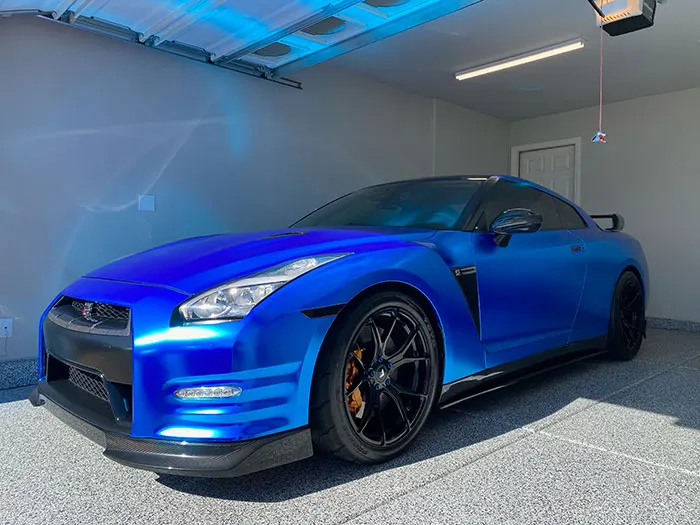
Our clear topcoat keeps all of that on the surface. Pull in on a wet night, and the water sits on top until your squeegee pushes it out the door. The grit in the topcoat keeps your shoes from skating on the way inside.
How your install day goes
You clear out the garage the night before. On a dry slab, everything below happens in one day. If yours needs the barrier, the primer cures overnight and the flake goes down the next morning.
Grind, fill, prime
Our crew diamond-grinds your slab, edges by hand, with vacuums pulling the dust as we go. Cracks and joints get filled and ground flush. On a two-day job, the primer goes on at the end of day one.

Base coat and flake
The polyurea base coat goes down, and we throw vinyl flake into it by hand until no gray shows through. Full flake also hides the old patches in your slab.

Clear coat, then wait
A clear topcoat with anti-slip grit goes on over the flake. You can walk on it the next day and park on it after 72 hours. Then the garage is yours again.
What garage floor coating costs in Tacoma
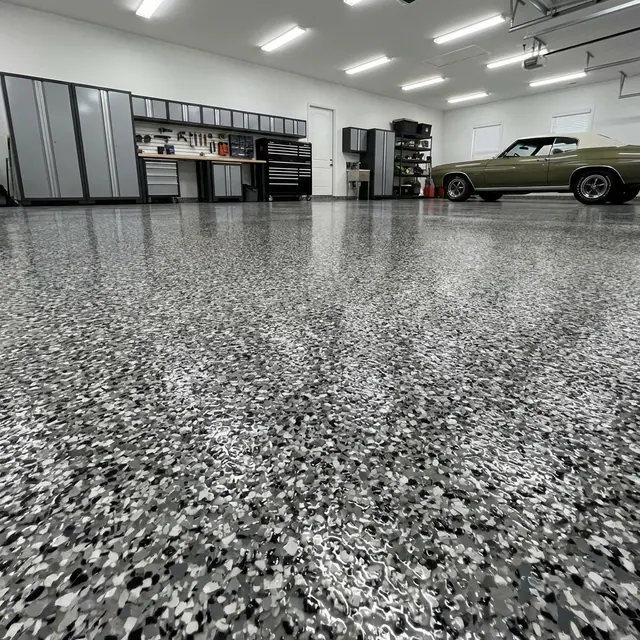
You get your exact price in writing after we've seen the slab. For a ballpark, most pro-installed floors across the Seattle area land here.
- $835–$3.3Ka typical one-car garage
- $1.6K–$5.8Ka typical two-car garage
Size sets most of your number. On an old slab, three things move it next: how many cracks you have, whether old paint has to come off and whether your slab needs the barrier primer.
Premium includes that barrier, plus cove base, coated steps, a flake design session and a one-year checkup, at no extra charge (see what Premium includes). Original or Premium, your floor carries our lifetime adhesion warranty.
Comparing garage floor coating contractors in Tacoma? Put our itemized quote next to theirs, line by line, and you'll see what each price covers. Our Seattle-area cost guide explains every range.
Where we work in Tacoma
We cover the whole city. Here's a sample, by ZIP code.
- 98403
- Stadium District
- North Slope
- Old Town
- 98407
- Proctor
- Ruston Way
- Point Defiance
- 98465
- West Slope
- Narrowmoor
- 98422
- Northeast Tacoma
- Browns Point
Not on the list? You're still covered. We also work in Hilltop, the Lincoln District, McKinley Hill, Westgate and South Tacoma. If you're just over the line, we cover Puyallup, Gig Harbor, Federal Way, University Place, Fircrest and Ruston.
Flake colors for an old house or a new one
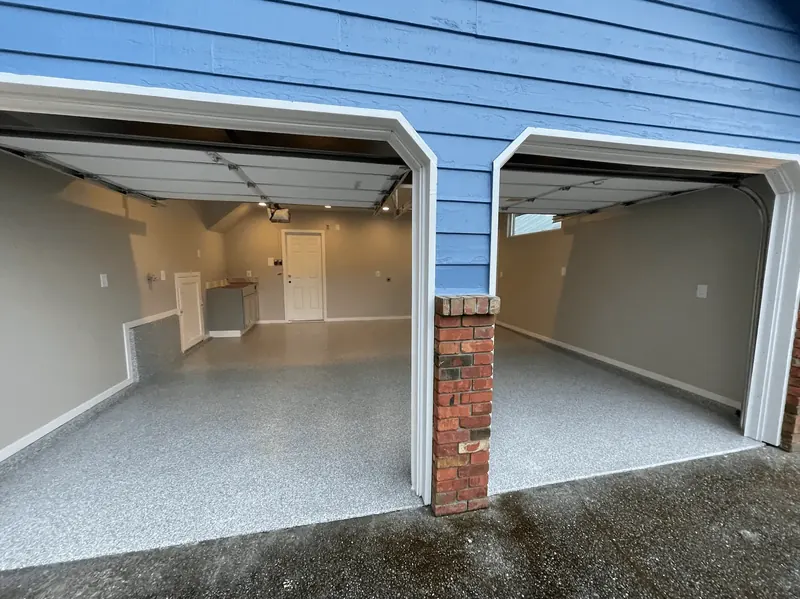
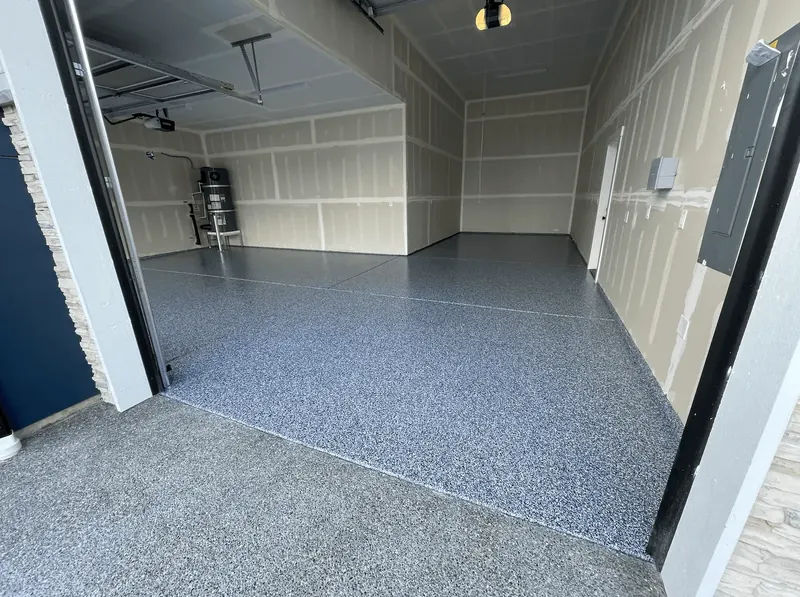
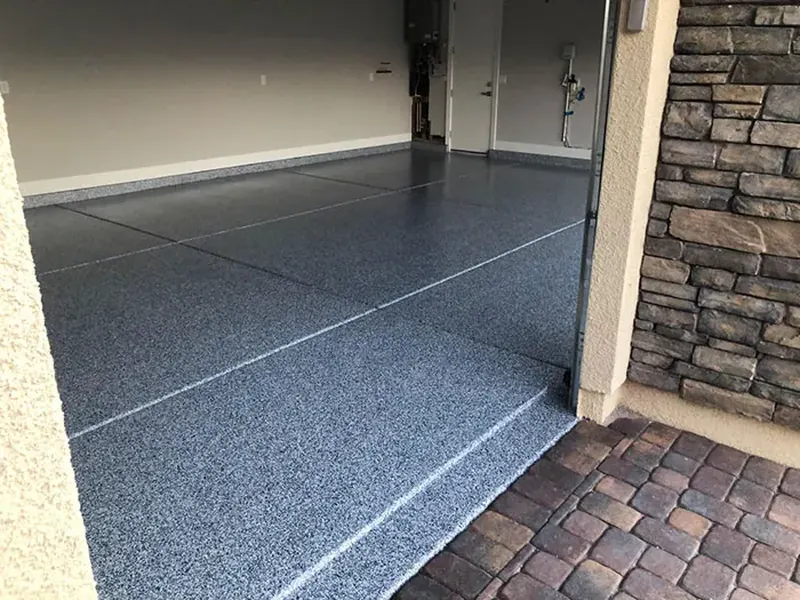
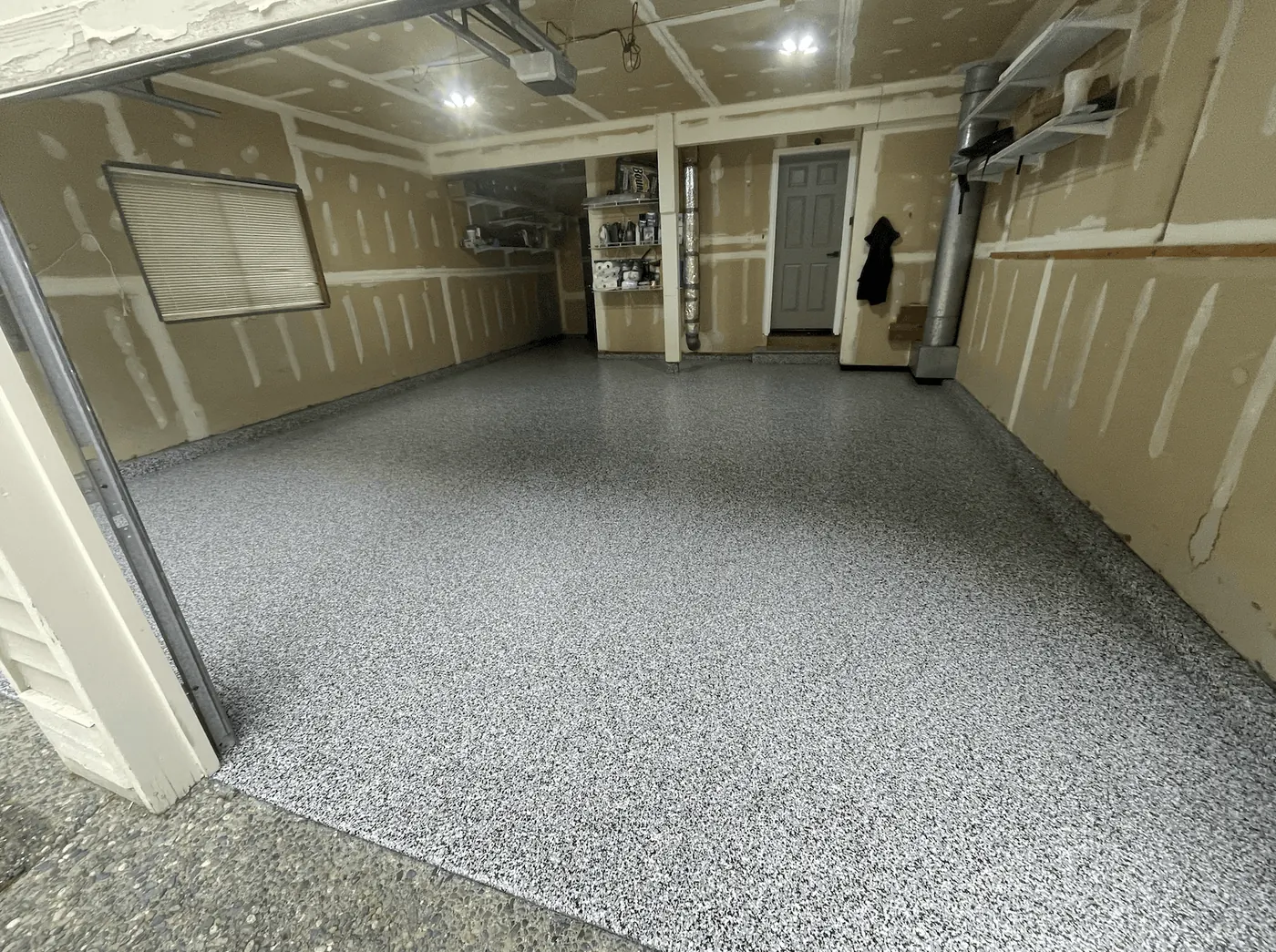
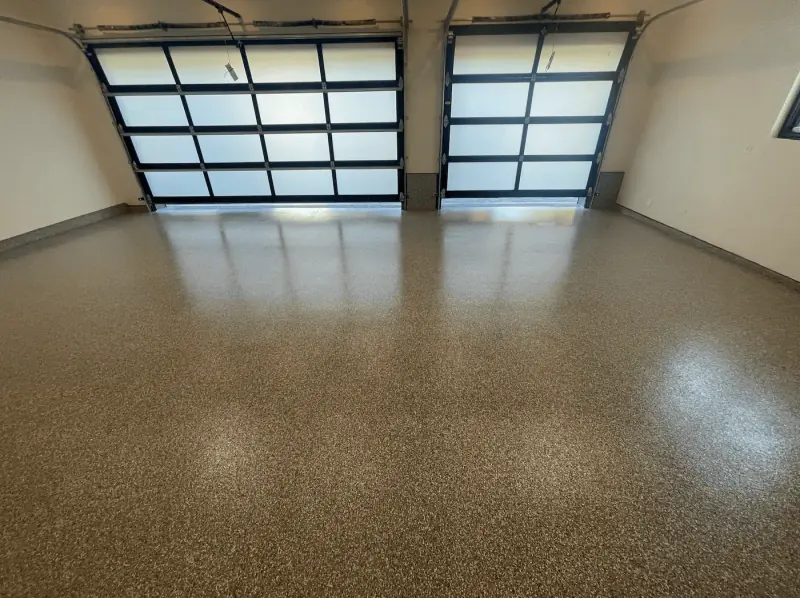
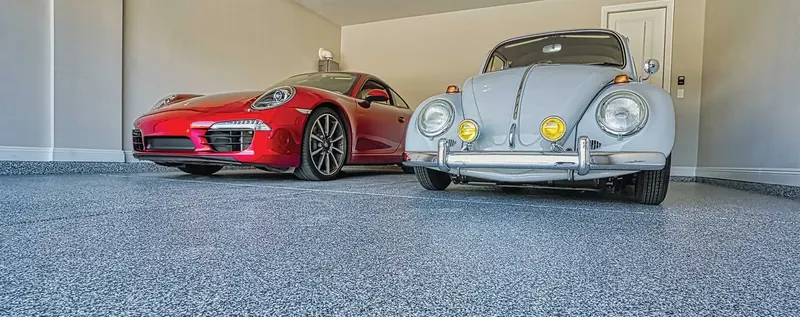
Seven flake blends, shot in finished garages. Darker blends hide tire marks and alley grit, and lighter ones brighten a garage with one small window. See the whole gallery, or try a color on a photo of your own garage.





Your Tacoma garage floor questions
How much does garage floor coating cost in Tacoma?
Across the Seattle area, most pro-installed two-car floors run about $1,600 to $5,800, and a one-car alley garage costs less. Where yours lands depends on size, crack repair, any old paint to grind off and whether your slab needs the moisture barrier. You get the exact number in writing after the free estimate.
Do you install epoxy garage floors in Tacoma?
We install the step up from one. You get the full-flake look of an epoxy garage floor, built on a polyurea base coat under a clear polyaspartic topcoat. It cures faster and flexes as your slab moves. It also holds its color in sunlight, and you're parking on it in three days, where epoxy usually needs about a week. See epoxy and our floor side by side.
Can you coat a garage slab that's a hundred years old?
Usually. Age alone doesn't rule your slab out. We test it for moisture first, and an old slab with no plastic under it often gets the barrier primer. Then we grind off the worn top and fill the cracks. If yours has broken into loose pieces or heaved, it needs a concrete contractor first, and we'll tell you so at the estimate.
My garage is a detached one on the alley. Is that a problem?
No. Tell us when you book so we can plan where to park and how to get in, and mention it if the garage has no power. If rain runs under your door from the alley, we'll talk about fixing the drainage first, because a floor coating can't stop water coming in from outside.
Will a coating hide the cracks in my garage floor?
We fill your cracks and control joints and grind them flush before the base coat, and full flake hides the repairs. What a coating can't fix is a slab that's still moving. Sunken or heaved sections need concrete work first, and we'll point them out to you at the estimate. More on coating a cracked floor.
Can you install a garage floor coating in a Tacoma winter?
Yes. Epoxy wants a warm slab, which is why most epoxy flooring jobs around here wait for summer. Our floor goes down in a much wider range of temperatures. We make sure your slab and the air sit at least five degrees above the dew point, and deep winter gets our most careful moisture read. Fall and winter also give you more open dates than spring.
How soon can I park in my garage again?
After 72 hours. You can walk on the floor the next day, so the door to your house is yours again, but give your tires three full days. The coating keeps curing harder for a week or more after that, so slide your heavy toolbox gently for a while.
Which parts of Tacoma and Pierce County do you cover?
All of Tacoma, from the North End and Old Town to South Tacoma, the Eastside and Northeast Tacoma. Nearby, we also cover Puyallup, Gig Harbor, University Place, Fircrest and the rest of the Seattle area. Not sure about your street? Call and ask.
Find out what your Tacoma slab needs
We come to your house, measure, run the moisture test and leave you a price in writing, line by line. It takes 15 to 20 minutes, and nobody will push you to sign that day.