
Why Garage Floors Fail in Seattle: The Moisture Science No One Explains

Short answer: Concrete is porous, and moisture from damp ground wicks up through a slab. The industry calls that moisture vapor transmission. When a coating seals the top of the slab, that moisture has nowhere to go. Pressure builds right where the coating meets the concrete, and once it's stronger than the bond, the coating bubbles, blisters and peels. The industry's rule of thumb is that a slab giving off more than 3 to 5 pounds of moisture per 1,000 square feet a day is a risk for a coating.
Most explanations of "why is my garage floor peeling" stop at "moisture got in". That's true, but it skips the part that matters: how it gets in, why a wet place like Seattle makes it worse, and how you'd know before it becomes a visible problem.
Where garage floor moisture comes from
A garage floor is almost always a slab poured straight on the ground, not over a basement. Concrete looks solid, but up close it's full of tiny pores, and it takes on moisture from three directions: damp soil underneath, humid air on top, and, in Seattle specifically, ground that stays soaked for months at a time. Heavy rain can raise ground moisture even under a slab that has a plastic sheet beneath it. That's why some homeowners see damp spots show up at the joints only after weeks of steady rain, not during a single storm.
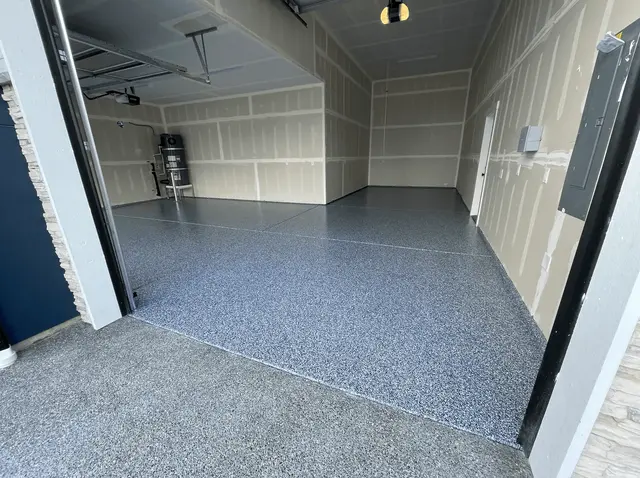
Why a garage floor coating blisters and peels
Once moisture is moving through the slab, it doesn't just sit there. As the slab warms even a little, trapped water turns to vapor and pushes upward looking for a way out. A bare slab lets it evaporate. A coated slab seals it in, and pressure builds exactly where the coating meets the concrete. Past a certain point, the pressure wins, and the coating bubbles, blisters and lets go. There's a second thing going on too: the moisture carries minerals up to the surface that weaken the bond on their own, pressure or not.
The garage floor moisture test you can run tonight
You don't need any equipment for a first read. Tape a square of plastic, about 16 inches on a side, tightly to a few spots on your garage floor. Seal the edges all the way around and leave it for 24 hours. Pull it up and check the underside. If it's damp, moisture is moving through that part of the slab. This won't give you a number. A proper test does that. But it will tell you whether it's worth taking seriously before you coat anything.
Is a garage floor coating waterproof?
From above, yes. A cured polyaspartic or epoxy floor is one continuous layer. Rain off the car, melting snow, oil and road salt sit on top of it and wipe up, instead of soaking into the slab the way they do into bare concrete. That's the sense in which a coated garage floor is waterproof, and it's the main reason the slab stays cleaner and stops dusting.
From below, no coating is waterproof, and a coating that blocks moisture is the problem rather than the cure. Vapor that used to pass harmlessly through the open slab now stops at the coating, and pressure builds there until the floor lifts. A floor can be perfectly waterproof on top and blister from underneath in the same winter. The fix for the underside isn't a thicker coating. It's the moisture test and, when the slab needs it, a barrier primer. If your floor is already lifting, why epoxy garage floors peel shows how to tell a moisture failure from a prep failure.
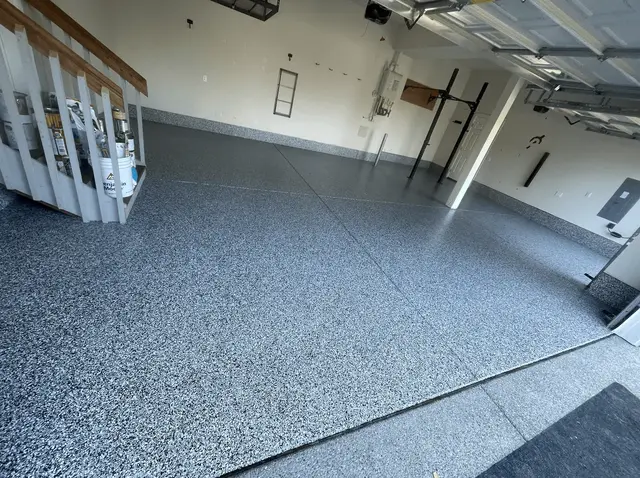
Garage floor moisture after rain: why one storm isn't the whole story
Moisture problems in Seattle garages build over weeks, not days. A single storm rarely changes a slab's moisture reading much. Weeks of rain do. As the soil around the garage soaks through, more pressure pushes moisture up into the slab, and it keeps building for as long as the ground stays wet. That's also why damp spots often show up at the joints first. They're the easiest path through the concrete, so trapped moisture finds its way out there before it shows anywhere else.
How moisture is measured before a floor is coated
The plastic-sheet test is a useful first read, but it's a yes-or-no answer, not a number. A real pre-install check uses a calibrated moisture meter or an in-slab humidity probe to get an actual reading against that 3-to-5-pound rule of thumb. The number decides whether a slab can be coated as it is, needs a barrier primer first, or, in rare bad cases, needs a heavy-duty barrier coat before any finish goes down. Skipping this step doesn't make a borderline slab safe to coat. It just moves the failure from the estimate to the warranty claim.
Do you need a moisture barrier under a garage floor coating?
Only if the slab says so, which is why the test comes first. A garage floor moisture barrier, in coating terms, is a moisture vapor barrier primer: a special coat applied to the bare, ground concrete that stops vapor from reaching the coating above it. It isn't a sheet of plastic, and it can't be added later. It has to be the first layer down.
The barrier changes the schedule. It cures overnight on the bare slab before the base coat goes on, so a floor that needs one is a two-day install instead of one. On our Premium floor the barrier is part of the system rather than an add-on. On any floor, a reading over the limit means the barrier goes down or the floor doesn't get coated. A slab that tests dry doesn't need it, and paying for one you don't need is as wasteful as skipping one you do. The full picture, including which Seattle garages usually need one and the red flags on a quote, is in do you need a moisture barrier under a garage floor coating.
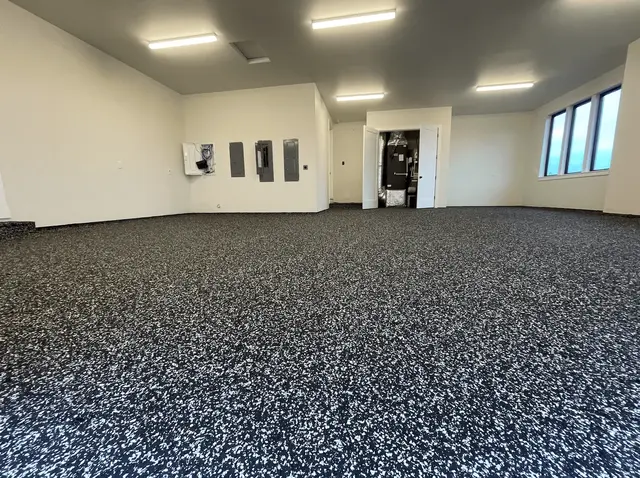
Why this is the first thing we test, not the last
Every slab we quote gets moisture-tested before we coat it. Not because anyone makes us, but because it's the difference between a floor that lasts fifteen years and one that blisters in three. It's also the step a lower bid is most likely to have skipped, because it's invisible in a photo of the finished floor and it can add a day most installers don't want to spend.
A basement is the same problem with more pressure behind it. The slab sits below ground, with wet soil against it from underneath and from the sides. That's why the moisture test decides every basement floor coating we quote.
Garage floor moisture questions
What is Moisture Vapor Transmission?
It's the upward movement of moisture through a concrete slab, from damp ground below up into and through the concrete. Because concrete is porous, it happens even in slabs that look bone dry on top. The industry's rule of thumb is that more than 3 to 5 pounds of moisture per 1,000 square feet in 24 hours is a risk for a coating.
How do I know if my garage floor has a moisture problem?
A simple check: tape a square of plastic, about 16 inches on a side, tightly to the slab in a few spots, seal the edges and leave it 24 hours. If the underside is damp when you pull it up, moisture is moving through the slab. It's a useful early warning, but not a substitute for a proper moisture test before coating.
Why does a garage floor coating blister or peel?
Moisture moving up through the slab gets trapped under a sealed coating. As it turns to vapor and pushes up, pressure builds where the coating meets the concrete. Once that pressure is stronger than the bond, the coating bubbles, blisters and eventually peels. A moisture barrier primer on the bare, ground slab, put down before the base coat, is what stops it.
Is garage floor epoxy waterproof?
The surface is. Water, oil and road salt sit on top of a cured epoxy or polyaspartic floor. What no coating does on its own is stop moisture pushing up from under the slab. Sealed in, that moisture builds pressure under the coating, which is how a waterproof-looking floor ends up blistering. On a slab that shows moisture, a barrier primer goes down first.
How do you seal a garage floor from moisture?
Find out how much moisture there is first, with the plastic-sheet check and then a proper test. If the slab shows moisture, a moisture barrier primer goes onto the bare, ground concrete and cures overnight before the base coat, which is why a floor with a barrier takes two days.
Outside, move downspouts that empty at the garage wall and fix ground that slopes toward the door. Liquid water coming up through the floor is a different problem from vapor. Fix that before coating anything.
What moisture reading is too high to coat a garage floor?
It depends on the test. A calcium chloride test should read under 5 pounds per 1,000 square feet per 24 hours, and an in-slab humidity probe under the coating maker's limit, usually 75 to 85 percent. On site we use an electronic meter, where the limit for coating is 3.5 percent. A reading over that, or two or more visible signs such as white chalky deposits or an old coating that's peeling, means the barrier primer goes in.
What is a garage floor moisture barrier?
A moisture vapor barrier primer: a special coating applied to the bare, ground slab before the base coat, so moisture moving up through the concrete never reaches the floor above it. It cures overnight, which makes a floor that needs one a two-day install. It is part of every Premium floor we install.
Why does my garage floor sweat after rain?
Two different things look the same. Condensation forms on a cold slab when warm, humid air meets it, usually in spring, and wipes away. Moisture coming up through the slab after days of rain shows as darker patches that come back in the same places, often with white, chalky deposits as they dry. The plastic-sheet test tells them apart: damp underneath means moisture from below.
Is polyaspartic floor coating waterproof?
On the surface, yes. Water, oil and salt sit on top of a cured polyaspartic floor and wipe up. Like every coating, it can't stop moisture coming up from underneath on its own. That's what the moisture test and the barrier primer are for. Polyaspartic has one advantage here: it cures in a cold, damp garage where epoxy can't be applied at all.
Not sure what's happening under your floor?
We test every slab before we quote a system. No guessing based on the season or how the floor looks.
Get A Quote