
Best Time to Coat a Garage Floor in Seattle (Hint: It's Not Spring)
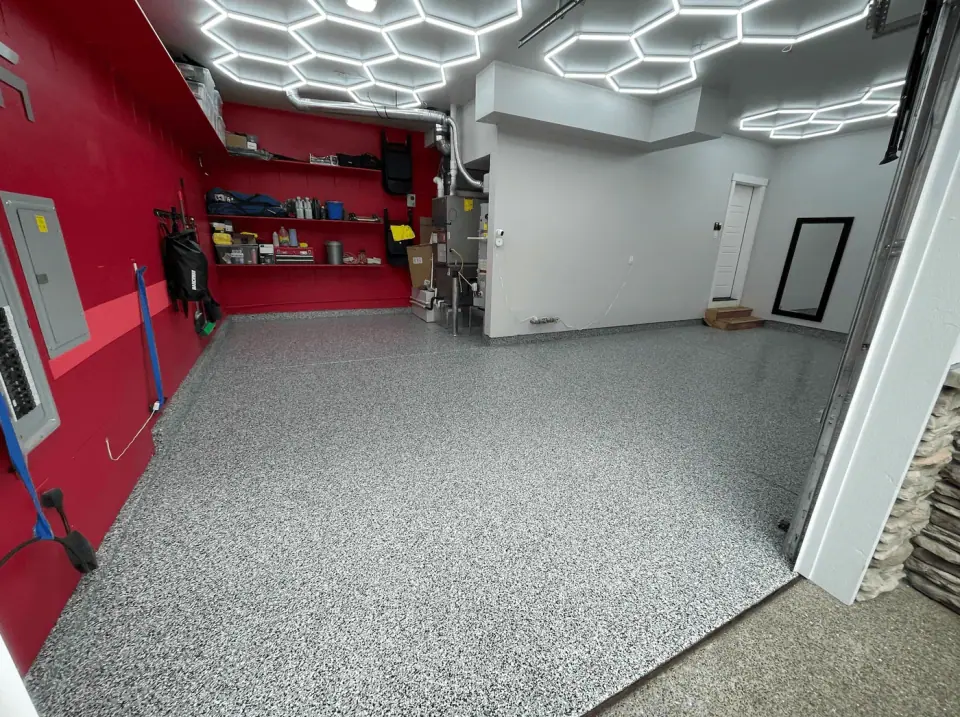
Short answer: In Seattle, epoxy installers are mostly stuck with July through September, because the slab has to sit somewhere between about 55 and 85 degrees for epoxy to cure. Polyaspartic gets around that almost entirely. It's ready to walk on the next day, and it cures in a much wider range of temperatures, so you're not waiting for a dry summer window.
Most national guides say spring or fall is the best time to coat a garage floor. That's true in a lot of the country. It's not true here. Plan around it and you'll end up booking your install in one of the wettest stretches of the Seattle year.
Why the generic advice doesn't transfer to Seattle
The "spring or fall" rule assumes those seasons are dry and mild. Seattle's rain doesn't work that way. It comes fall through spring, about 39 inches a year, most of it between October and April. A slab that tests dry in August, after a whole dry summer, can fail a moisture test outright in February after months of soaked ground.
That's how concrete works. It's porous, and ground moisture wicks up into the slab. The wetter the ground, the more pressure builds under a coating. That's exactly why we test every slab for moisture before we coat it, instead of assuming a season is "probably fine".
The real constraint: it's about the coating, not the calendar
Traditional epoxy has a narrow window. Most epoxies want the slab between roughly 55 and 85 degrees, and damp air slows the cure even more. In practice, that pushes most epoxy installs in this region into July, August and September, whether the contractor says so up front or not.
Polyaspartic is different stuff. You can walk on it the next day and park on it after 72 hours, where epoxy needs up to a week before cars. It also stays flexible across a much wider temperature swing, and it doesn't mind the damp air that hangs around here most of the year. That's the top coat on every floor we install. Not a marketing preference. It's the one that works with Seattle's calendar instead of against it. What it is, and where it falls short, is on our page about polyaspartic floor coating in Seattle.
So when should you actually book it?
If you're set on a traditional epoxy floor, aim for July through September and book early. That's everyone's window, and good crews fill up. If you're getting a polyaspartic floor, you have a lot more room. Fall and even winter installs are realistic, as long as the slab passes a real moisture test first.
The one stretch we'd steer you away from, whatever the coating: the deep winter weeks when the ground is soaked and the air is damp at the same time. That's when even a well-prepped slab is fighting the worst conditions of the year.
What's actually happening while it cures
Epoxy hardens through a chemical reaction that slows way down outside its comfort zone. Below about 55 degrees it can stall almost completely, leaving a soft surface that dents and scuffs. Above about 85 it can kick off too fast, trapping bubbles and weakening the bond. Damp air makes both worse, whatever the brand.
Polyaspartic tolerates a much wider band on both ends. That's the plain reason it can go down in October, or even a mild January, after the epoxy crews have packed it in.
Seattle, month by month
NOAA's 1991 to 2020 averages for Sea-Tac Airport. Rain days count any measurable rain.
| Month | Rain | High/low | For your floor |
|---|---|---|---|
| Jan | 5.8 inches, 19 days | 48°/38° | Soaked ground. Test first, and wait out the wettest weeks. |
| Feb | 3.8 inches, 16 days | 50°/38° | The snowiest month. Still wet underneath. |
| Mar | 4.2 inches, 17 days | 54°/40° | The rain eases. The ground doesn't, yet. |
| Apr | 3.2 inches, 15 days | 59°/43° | Drying out. Polyaspartic with a passing test. |
| May | 1.9 inches, 11 days | 66°/49° | The first month to average above 55°. Early for epoxy. |
| Jun | 1.5 inches, 9 days | 71°/53° | Warming up. Epoxy's window opens in July. |
| Jul | 0.6 inches, 5 days | 77°/57° | The driest month. Epoxy's best shot. |
| Aug | 1.0 inches, 5 days | 78°/57° | The warmest month. Book well ahead. |
| Sep | 1.6 inches, 8 days | 72°/54° | Still warm, and the ground is at its driest. |
| Oct | 3.9 inches, 14 days | 61°/47° | The rain returns. Epoxy's window closes. |
| Nov | 6.3 inches, 18 days | 52°/41° | The wettest month. Readings climb. |
| Dec | 5.7 inches, 18 days | 47°/37° | The coldest month. Same advice as January. |
Two things stand out. The daily average stays under 55 degrees from October through April, so for most of the year a cold slab rules out epoxy before the rain does. And the ground runs behind the rain. USGS studies of shallow wells in western Washington find water levels rising through fall and winter and falling through spring and summer. That's why a slab can still test wet in April, and why September is the sweet spot.
What rain on install day changes, and what it doesn't
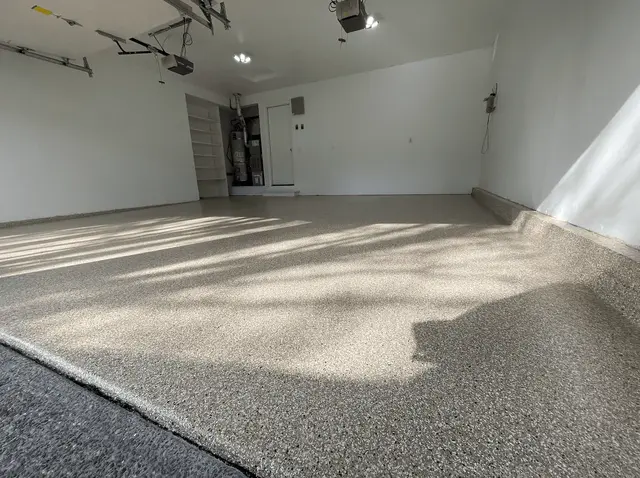
Our crew works inside the garage, so a wet day doesn't cancel the job. The weather still matters in a few ways:
- It doesn't soak the slab. A slab's moisture comes up from the ground over weeks, not hours. It was measured at the estimate, and our crew checks it again on install morning.
- It brings the air close to its dew point. The coating only goes down while the slab stays at least 5 degrees above the dew point, so a wet morning is when the thermometer matters.
- It keeps the car outside. Park outside the night before, so rain dripping off the car doesn't wet the slab.
On a dry slab the whole job takes one working day. Here's how it runs, on our page about one-day garage floor coating.
How a moisture barrier changes the calendar
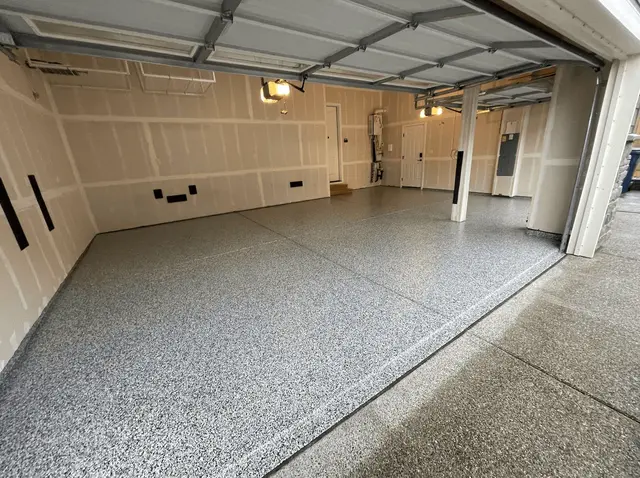
When the slab reads over the limit, a moisture barrier primer goes onto the bare, ground concrete first. It cures overnight and the floor goes on the next day, so the install takes two days instead of one. Every Premium floor includes the barrier, so a Premium install is always two days.
Readings run highest from October to April, so a slab that's a one-day job in August is more likely to need the barrier in February. In the wet months, plan your week around two days.
Then count the days without your car. A one-day install keeps it out for about four days: install day, plus 72 hours. A barrier floor keeps it out for about five. The 72 hours hold in every season, because the rule is already set for a cool, damp Seattle slab.
How far ahead should you book?
For a summer epoxy install, book in spring. Spring and summer are the busy season for coating crews everywhere, and fall and winter calendars tend to be more open. With us, the steps run in this order:
- A free estimate. About 20 minutes, and the moisture test comes first, before any date is set. You leave with the price in writing and know whether it's a one-day or two-day job.
- A price that holds. It's good for the period written on it. If the floor is months away, check that date.
- An install date. Someone needs to be home at the start and the end of the day, and the garage has to be empty when the crew arrives.
Pouring a new slab first? New concrete needs about 28 days before any coating goes on.
Getting your garage ready in each season
- Summer: The easy season. Bins can wait on the driveway for a few days, with a tarp handy.
- Fall: Clean the gutters and turn the downspouts away from the garage before the rain settles in. Water dumped at the wall shows up as a higher reading on that side of the slab.
- Winter: Skip the space heater. Propane and kerosene heaters put water vapor and carbon dioxide into a closed garage, and neither helps a fresh coating. Find a dry spot indoors for anything that can't sit out in the rain.
- Spring: Watch for a sweating floor. When a warm, wet day follows a cold snap, damp air beads up on the cold slab. Keep the big door shut on muggy days.
Seattle timing questions
Can you coat a garage floor in Seattle during the rainy season?
Yes, with a polyaspartic floor, as long as the slab passes a moisture test first. Polyaspartic handles far more cold and damp than epoxy, which in Seattle is usually limited to July through September. The exception is the wettest winter weeks, when ground moisture peaks. That's the one stretch where we'd steer most people toward waiting.
Why doesn't the generic 'spring or fall' timing advice apply in Seattle?
That advice assumes a climate where spring and fall are dry. Seattle's rain comes fall through spring, so a slab that tests dry in August can fail a moisture test in February. The advice is written for a different climate and doesn't transfer here.
Can you epoxy a garage floor in winter?
Usually not in Seattle. Epoxy needs the slab at about 55 degrees or warmer to cure, and most makers want the air at 60 or more. Below that, the reaction can stall and leave a soft surface that dents and scuffs. Polyaspartic handles far colder conditions, so in winter the obstacle for it is ground moisture, not temperature.
How cold is too cold to coat a garage floor?
For epoxy, a slab below about 55 degrees. For polyaspartic, the dew point matters more than the temperature: the slab and the air have to stay at least 5 degrees above it while the coating goes down, so no condensation forms on the floor. A temperature that keeps dropping during the cure is worse than a steady cold one.
When should I book a garage floor coating in Seattle?
For an epoxy floor, book in spring for the July-to-September window, which fills quickly. A polyaspartic floor gives you much more room, from spring through fall and even a mild January, but the moisture test comes before the install date, not after.
What is the best month to coat a garage floor in Seattle?
For epoxy, July or August, the driest and warmest months, with rain on about five days each. For a polyaspartic floor, September is hard to beat, because the ground under the slab is at its driest. Any month can work with a passing moisture test, except the wettest winter weeks.
Not sure which window fits your garage?
We test the slab before we quote anything. That's how we know whether "now" actually works, instead of guessing by the calendar.
Get A Quote