
Polyaspartic Coatings in Seattle, Garage to Patio
Polyaspartic is the clear, UV-stable wear layer on every floor we install. It cures in a cold garage, takes cars in 72 hours and never yellows at the door. Here's what it is, what it costs and where it falls short.
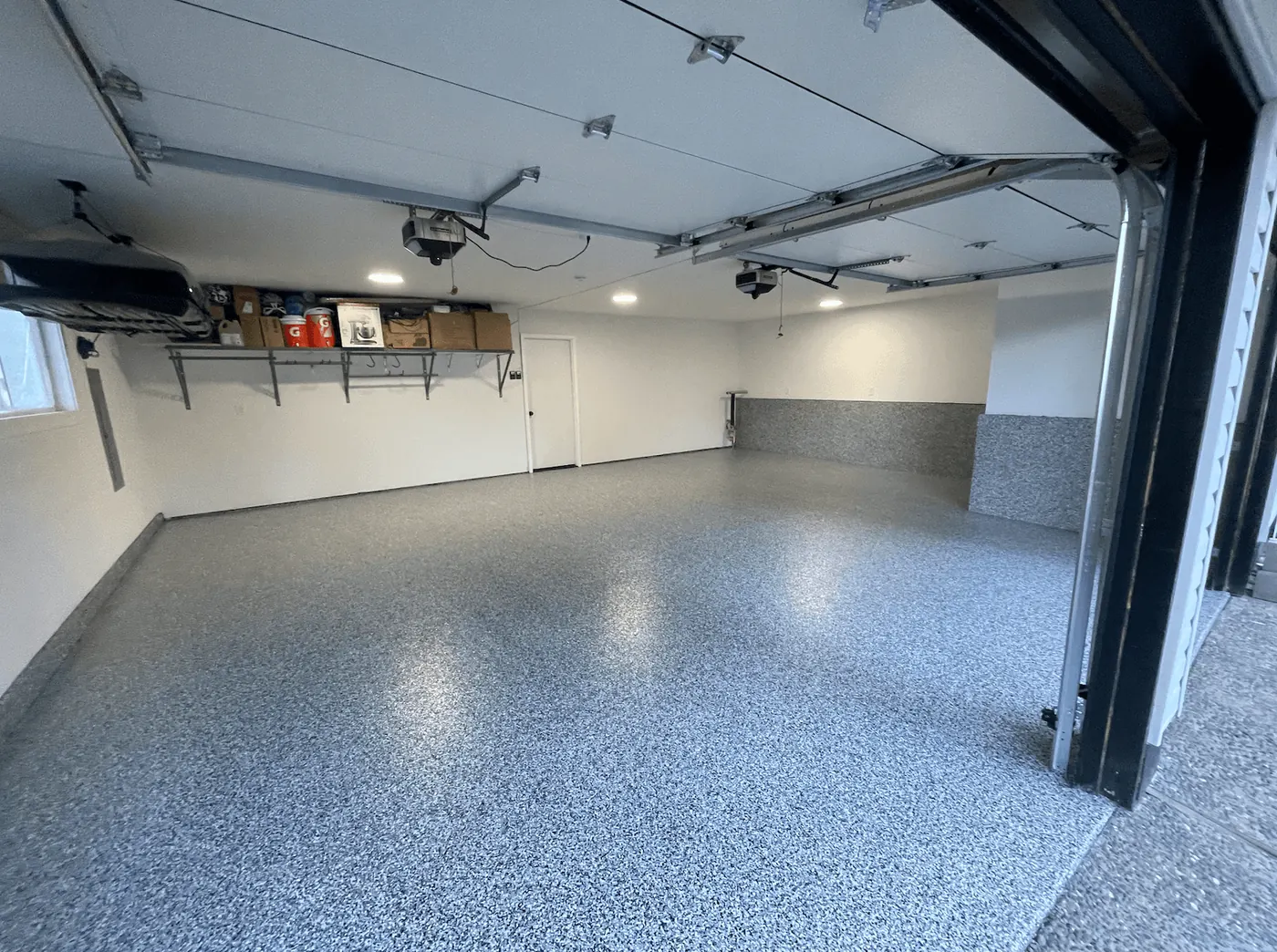
- Cures in cool, damp garages
- Park on it in 72 hours
- UV-stable: never ambers
- Lifetime adhesion warranty
What is polyaspartic floor coating?
It's a kind of polyurea, the same family as spray-on truck bed liners, that chemists at Bayer slowed down in the early 1990s so it could be rolled by hand instead of sprayed by a machine.
It's a two-part coating: mix it, roll it, and it goes from wet to walkable in hours. It doesn't yellow in sunlight, it stays slightly flexible after it cures, and it shrugs off oil, gas, de-icer and most of what lands on a garage floor.
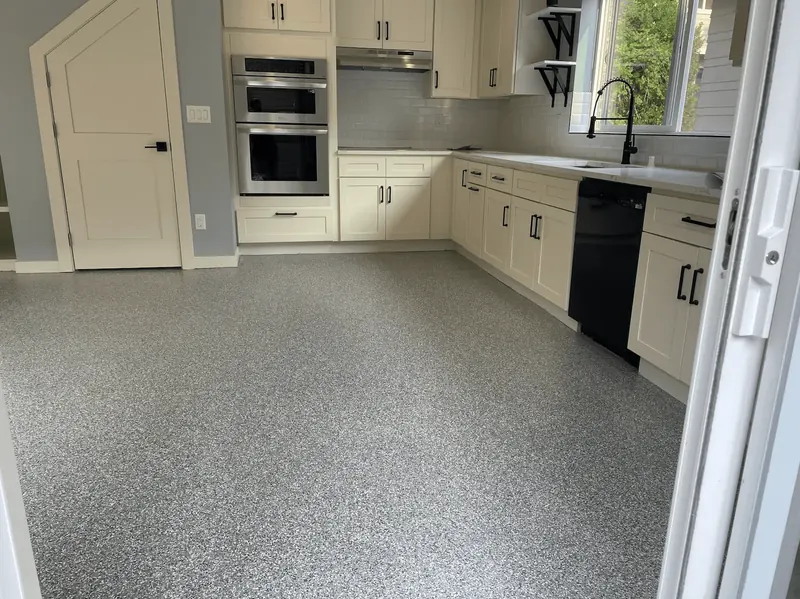
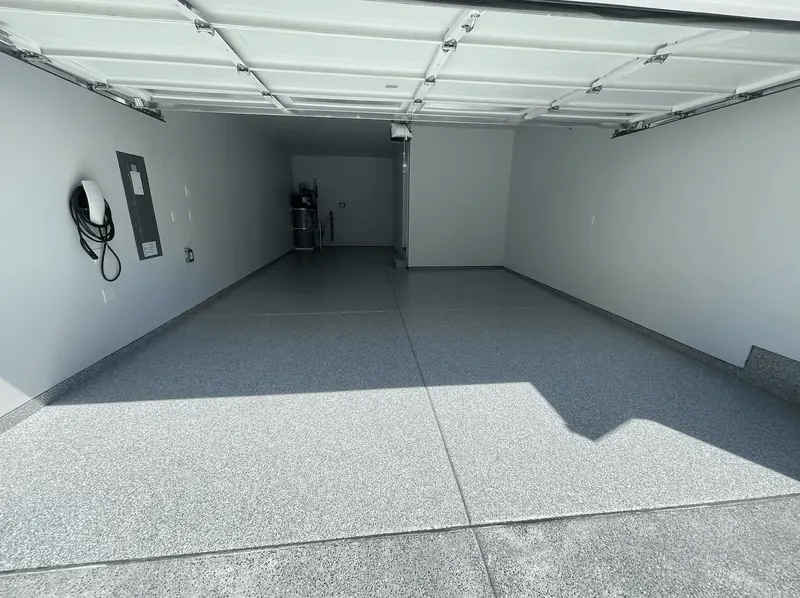
On our floors it's the top layer: a clear polyaspartic topcoat with anti-slip grit over a polyurea base and a full broadcast of vinyl flake. Whether you call it a polyaspartic floor, polyaspartic flooring or just "poly," that's the floor.

Where polyaspartic goes in the floor, and where it doesn't
A floor is layers, and each one has a job. Polyaspartic is very good at one of them.
-
Ground, tested concrete
Diamond grinding opens the slab so the coating keys in. A moisture reading decides whether a vapor barrier primer goes down first. No coating, polyaspartic included, survives a wet slab it wasn't prepared for. Why we grind instead of etch.
-
Polyurea base coat
Thick, flexible and fast-setting, built to grip ground concrete and bend with it. This is the layer that gives the floor its build. Some one-day installers use polyaspartic here too; we don't, because a thin, fast topcoat makes a poor foundation.
-
Full flake broadcast
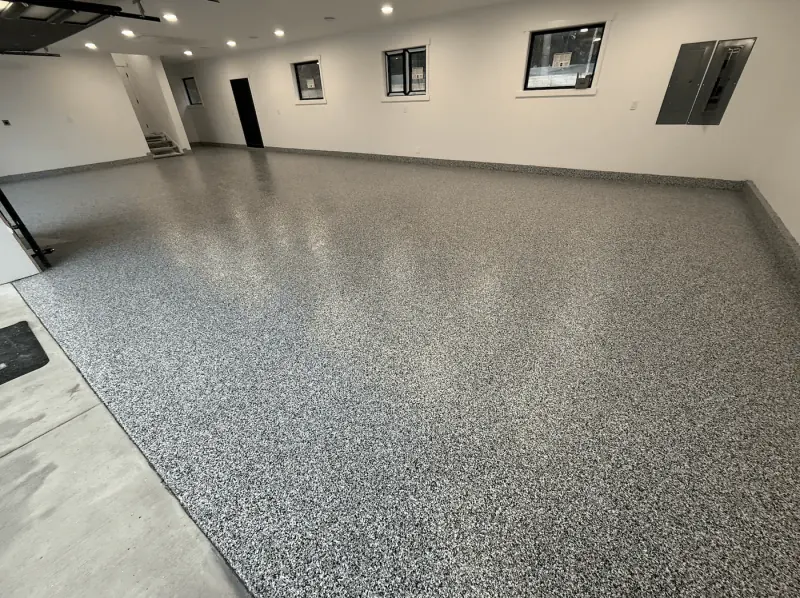
Vinyl flake thrown into the wet base until it won't hold any more. Texture, grip, and a surface that hides every stain and color difference the slab had. The blends we install, photographed.
-
Clear polyaspartic topcoat
The wear layer. UV-stable, chemical-resistant, gritted for traction. It locks the flake in and is the only part of the floor your tires and boots ever touch. The finished full-flake floor is roughly 30 to 40 mils thick.
Polyaspartic vs. epoxy vs. polyurea
Three coatings, three jobs. The short version, with the long one in our epoxy vs. polyaspartic guide.
| Epoxy | Polyurea | Polyaspartic | |
|---|---|---|---|
| What it is | Rigid two-part resin | Fast-setting, flexible; the truck-bed-liner family | Polyurea slowed down to roll by hand |
| Best job in the floor | Base coat in a warm, dry garage | Base coat | Clear topcoat |
| Sunlight | Ambers | Standard versions yellow | Stays clear |
| Cold slab | Stops curing below about 55°F | Cures | Cures |
| Flex with the concrete | Little | Yes | Yes |
| Cars back in | 3 to 7 days | 72 hours on our floors | |
| Working time once mixed | 30 to 40 minutes or more | Seconds sprayed; 10 to 30 minutes as a roll-on base coat | 15 to 30 minutes |
Every floor we coat with it
The same four layers, tuned to the room. Where the slab sits and what lands on it changes the prep, not the chemistry.
 Garages
Daily drivers, hot tires, de-icer
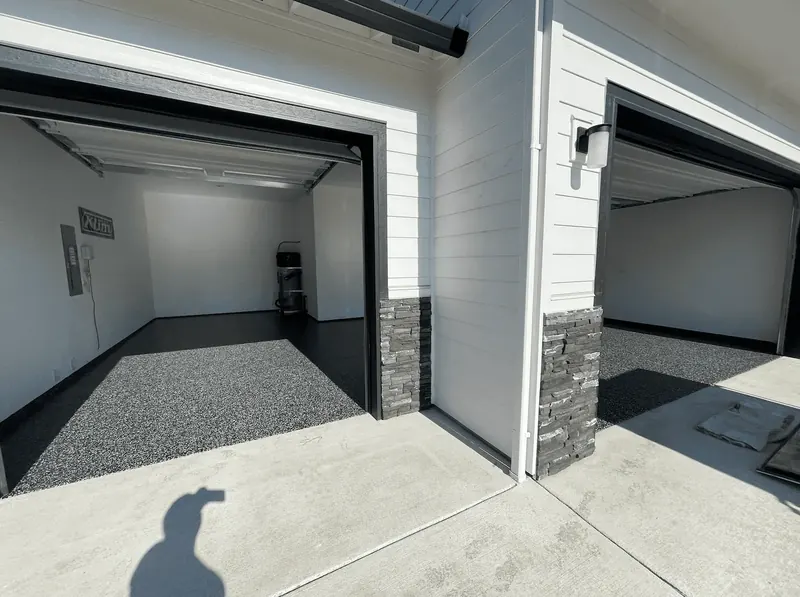
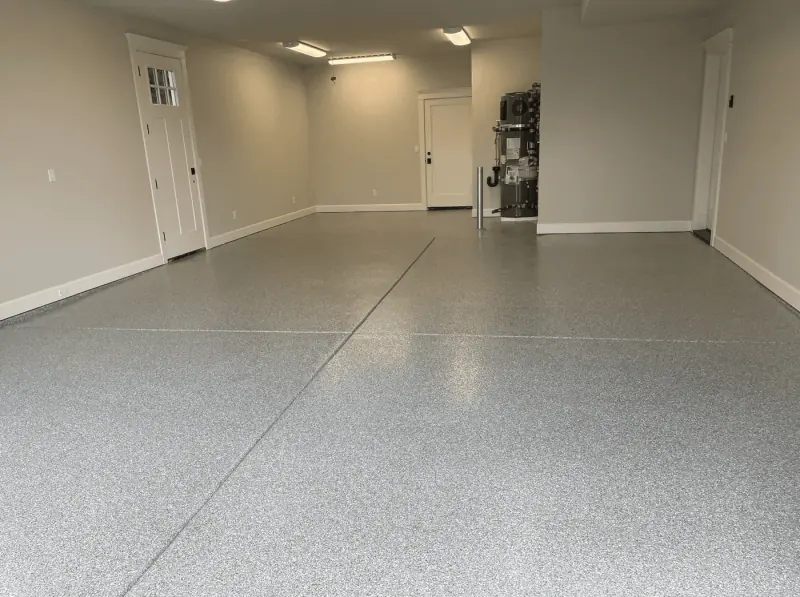
The floor this system was built for: full flake for grip, a gritted topcoat, cars back in after 72 hours. It can run up the wall as a cove base and onto the steps. Our polyaspartic garage floor coating.
 Basements
Below grade, moisture first
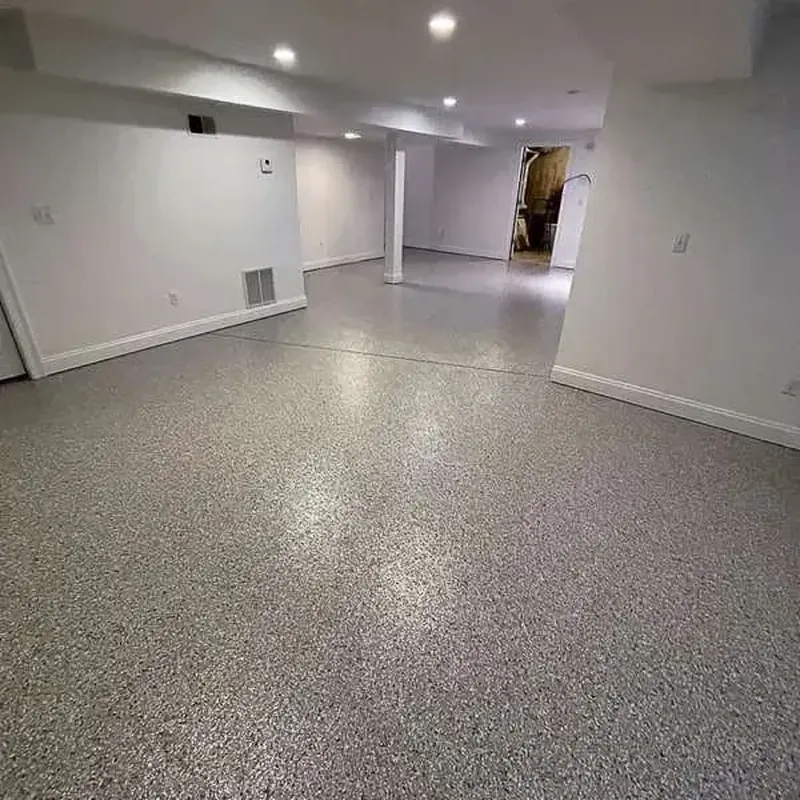
Laundry rooms, home gyms, storage, play rooms. The moisture test matters more here than anywhere, and a vapor barrier primer is usually part of the job. Basement floor coating.
 Patios and pool decks
Sun, rain and wet feet
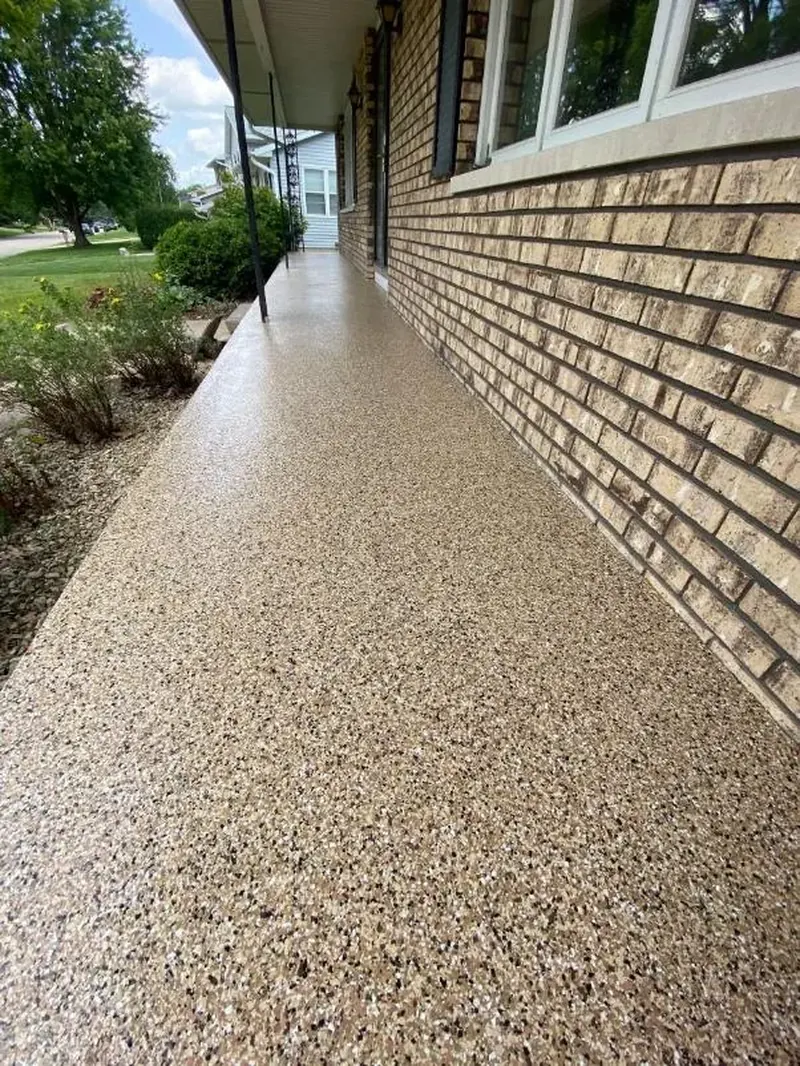
Outdoors is where polyaspartic's UV stability earns its keep, with heavier grit in the topcoat for traction when it's wet. Patio and pool deck coating.
 Shops and rooms
Workshops, pole barns, kitchens
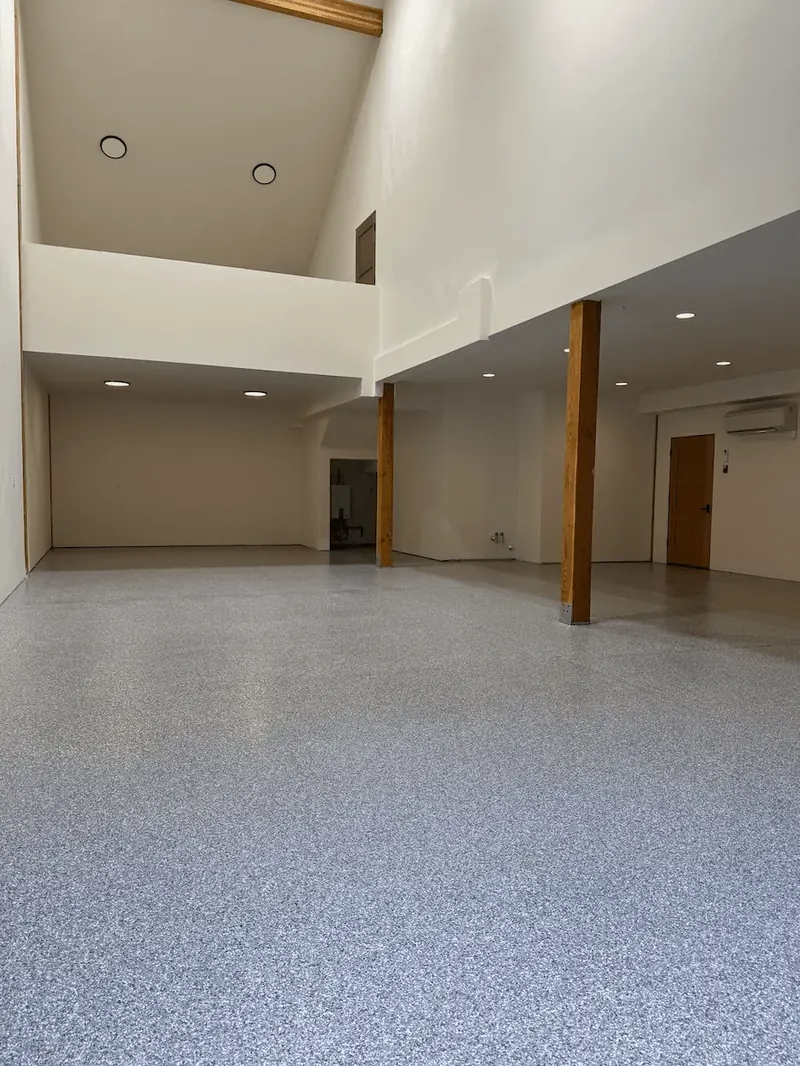
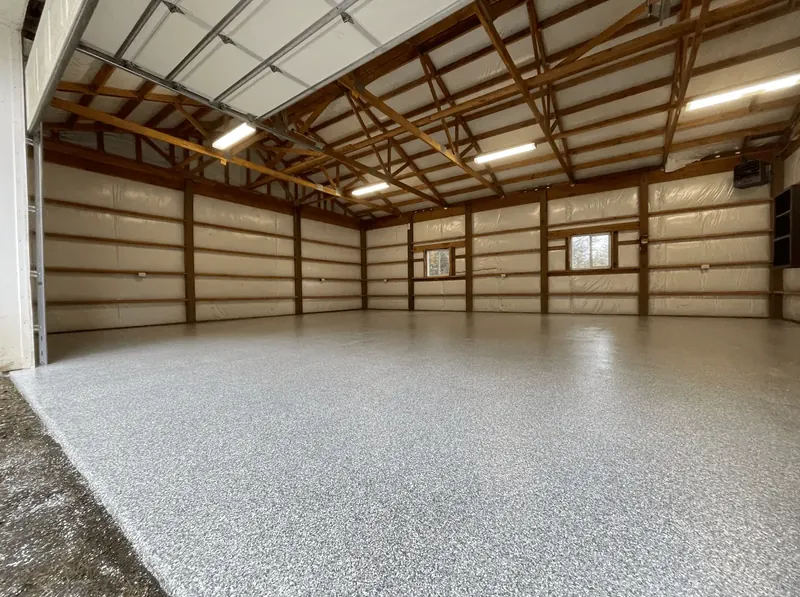
Dropped tools, rolling toolboxes, a car on stands, or a great room on a slab. Same floor, and the flake hides the abuse. Shop and pole barn floors.
What a polyaspartic floor costs in Seattle
Epoxy prices start in the same place. The difference shows up in years, not dollars.
- $4–$12per sq ft installed, Seattle market
- 15–20 yrsover ground, tested concrete
That's roughly $1,600 to $5,800 for a typical 400 to 500 square foot two-car garage. Professional epoxy commonly lasts three to seven years in a Puget Sound garage, so per year of use, the polyaspartic floor is the cheaper one.
What moves the number is the slab, not the coating: square footage, repairs, an old coating to remove, and whether it needs a moisture barrier. Our polyaspartic cost guide breaks it down by garage size.
Install and cure times
This is the part polyaspartic is famous for, and the part most often oversold. Here's what a one-day install looks like.
What's true
- A floor without a moisture barrier is installed in one day. With the barrier, two, because the primer cures overnight.
- Manufacturer sheets put foot traffic at a few hours and vehicles at 24 to 48 hours in warm conditions.
- It keeps curing in temperatures that stop epoxy cold, which is why we install year-round in Seattle.
What we tell you anyway
- Walk on it the next morning. Park on it after 72 hours. A cool, damp Seattle slab cures slower than a lab, and we'd rather you never find the edge.
- The floor keeps hardening for 7 to 10 days. Go easy on dragging heavy shelving across it until then.
- "One day" is the install, not the cure. Anyone promising cars that night is selling, not installing.
Where polyaspartic falls short
No coating is perfect, and the sales pages that say otherwise are the ones to walk away from.
- It's slick when it's wet, on its own. A smooth polyaspartic surface is glassy. That's why ours always has flake texture under it and anti-slip grit in it, and why we'll go heavier on the grit if you ask. Is a coated floor slippery?
- It sets fast. Fifteen to thirty minutes of working time once it's mixed. That's great for the schedule and unforgiving for a first-timer, which is why it's a crew's product, not a weekend one.
- It costs more than epoxy up front. The gap closes on lifespan, but the first check is bigger.
- It can't do the marbled metallic look. That swirl is an epoxy technique that needs epoxy's long working time. We don't install metallic floors.
- It doesn't fix a wet slab. Nothing rolled on top does. Moisture is handled underneath, with a test and a barrier, or the floor fails no matter what it's made of.
- It smells during install. The uncured material has a strong odor and needs ventilation; the crew wears respirators. Once it cures, it's inert and the smell is gone within a day or so.
Why polyaspartic is the right chemistry for Seattle
It cures in an unheated garage
Our slabs sit under 55°F from fall to spring. Epoxy stalls there. Polyaspartic doesn't, so the install calendar runs all year, January included.
It stays clear at the door
The patch of floor that gets afternoon light is where epoxy goes amber. Polyaspartic is aliphatic; it holds its color for the life of the floor.
It bends with a slab that moves
Wet winters and the odd hard freeze make Seattle concrete swell and shrink. A flexible system moves with it instead of shearing off along the cracks.
Moisture is handled under it
The coating is the wear layer. The vapor barrier primer handles the ground water. We test every slab to decide whether it needs one. How that decision gets made.
Floors we've installed
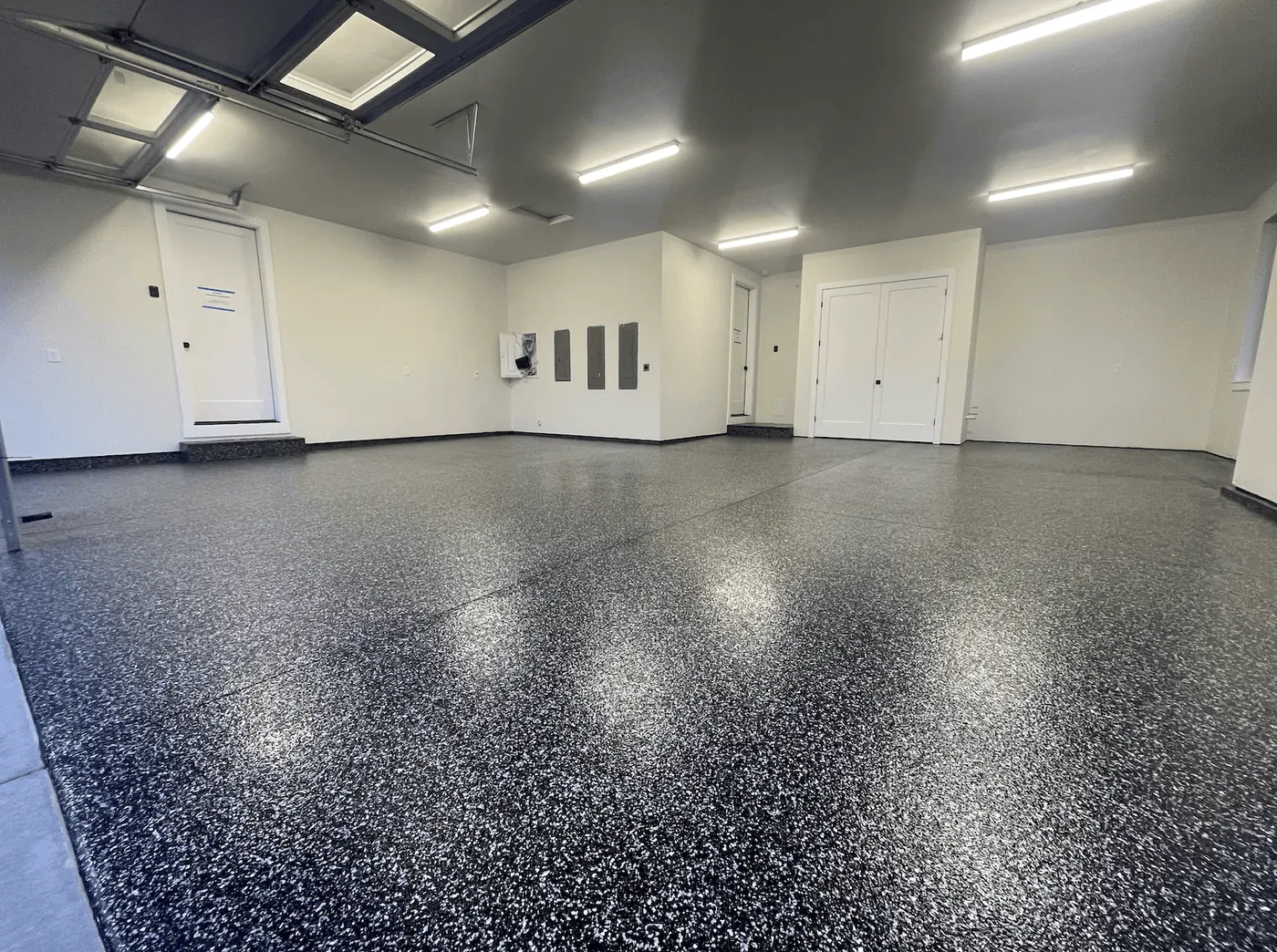
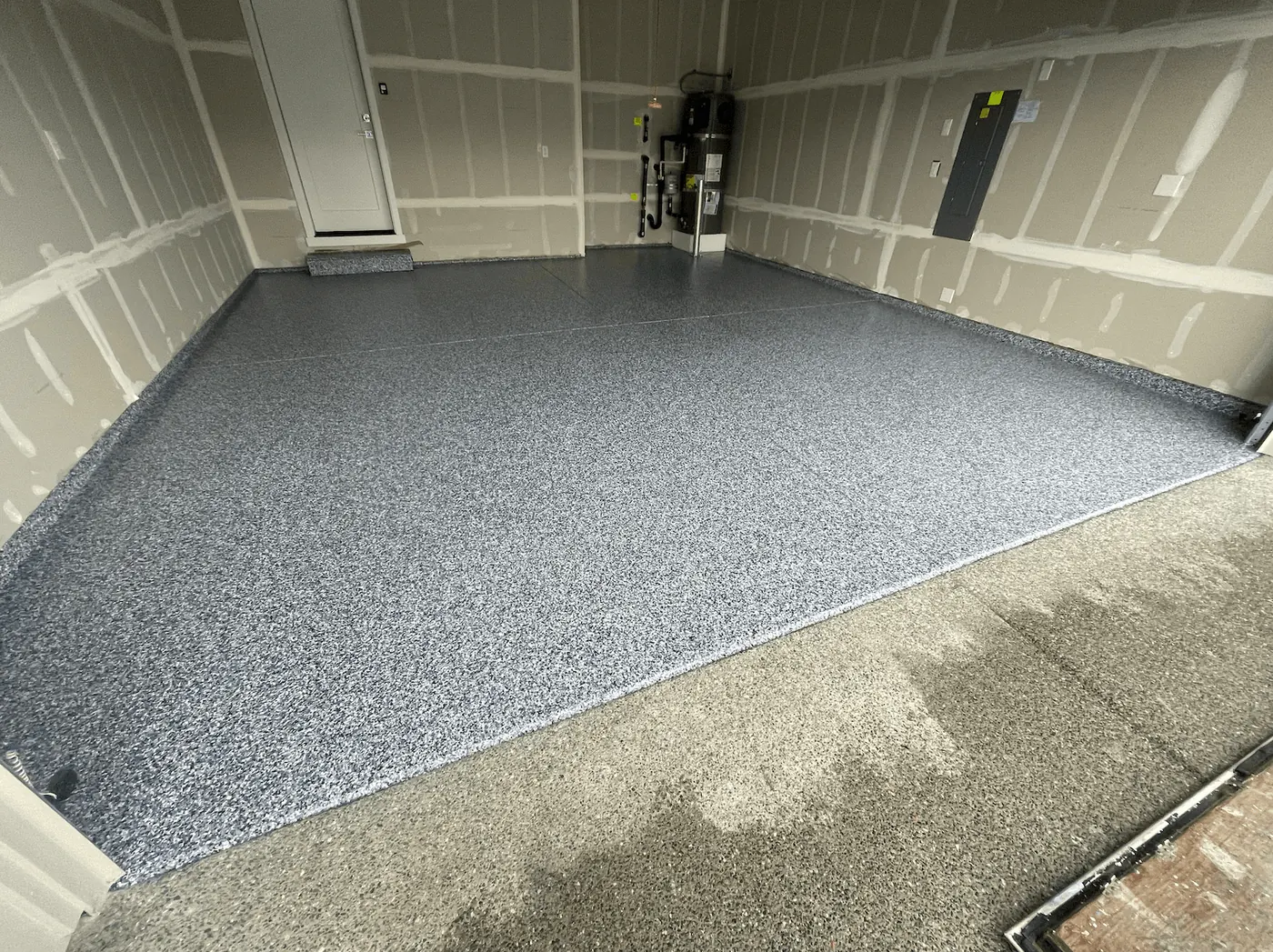
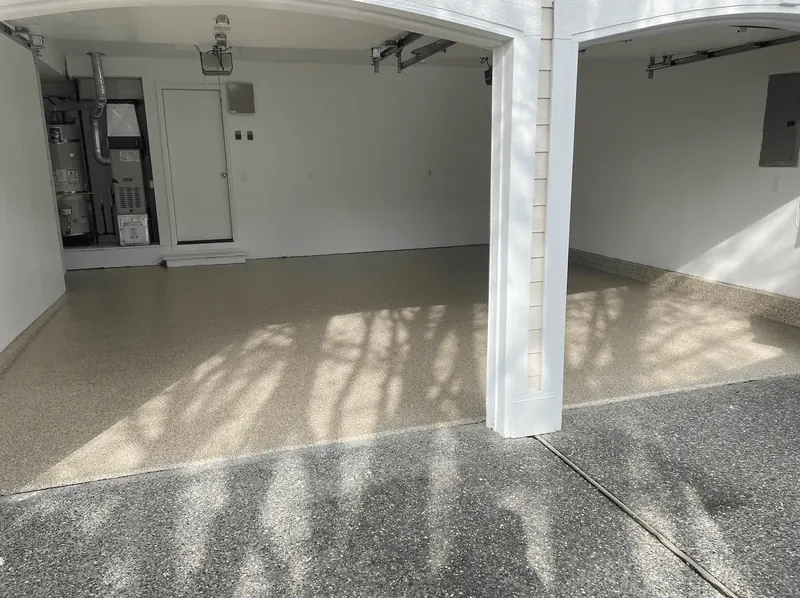
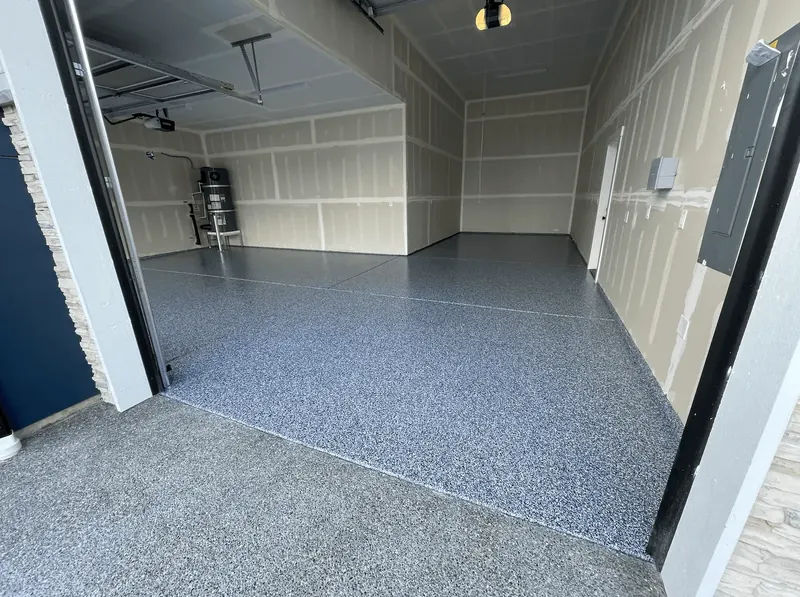
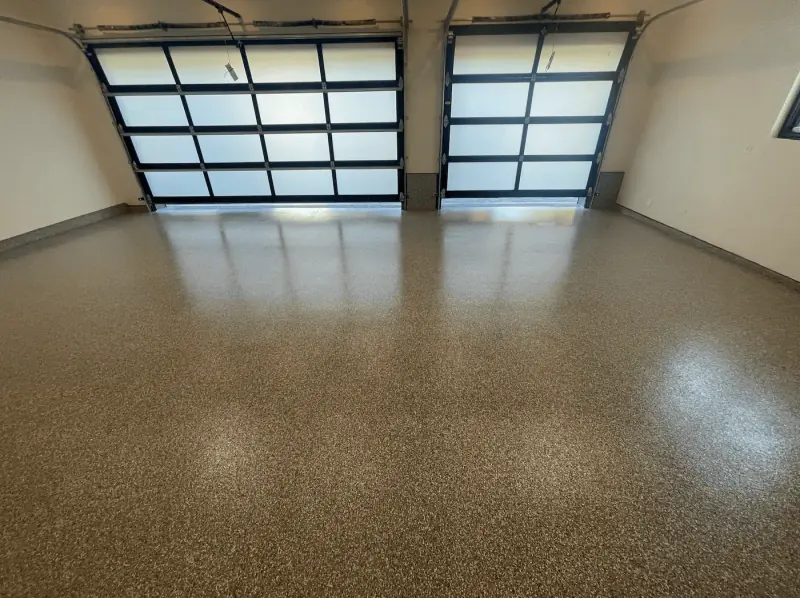
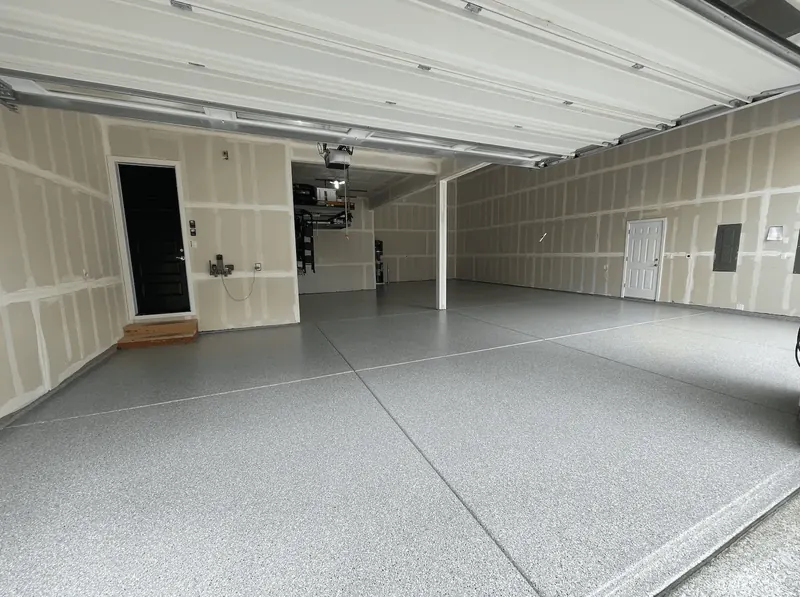
Real jobs, real slabs. Every one of these started with a grind and a moisture reading. See the full gallery, or preview a flake color on your own garage.


Polyaspartic questions
What is polyaspartic floor coating?
A two-part coating from the polyurea family, slowed down in the early 1990s so it can be rolled by hand. It cures in hours, stays slightly flexible, resists chemicals and doesn't yellow in sunlight. On our floors it's the clear, gritted topcoat over a polyurea base and full flake.
Is polyaspartic better than epoxy?
For a Seattle garage, yes, on the three things that matter here: it cures on a cold slab where epoxy stalls, it stays clear where epoxy ambers, and it flexes with the concrete where epoxy cracks. Epoxy still wins on price and solid-color range in a warm, dry garage.
What makes a polyaspartic floor fail early?
Almost never the coating wearing out. Over ground, moisture-tested concrete, a polyaspartic floor lasts 15 to 20 years and often more. What ends one early is moisture pushing up through a slab nobody tested, or skipped prep, an acid etch where a grind belonged. Both are decided before the coating goes on.
What changes the price of a polyaspartic floor?
The slab, more than the coating. Installed, polyaspartic runs about $4 to $12 per square foot across Seattle-area installers, roughly $1,600 to $5,800 for a typical 400 to 500 square foot two-car garage. Crack repair, grinding off an old coating and a moisture barrier move a floor within that range.
Is polyaspartic slippery?
A smooth polyaspartic surface is slick when wet, which is why ours is never smooth: full flake gives it texture and anti-slip grit goes into the topcoat. We'll add more grit for a pool deck or a shop that gets wet.
Can polyaspartic be applied in cold weather?
Yes, well below the 55°F an epoxy needs, which is why we install through a Seattle winter. The slab still has to be dry enough to pass a moisture test, and cold does slow the cure, so our 72-hour rule for vehicles holds year-round.
Is polyaspartic the same as polyurea?
Polyaspartic is a type of polyurea. The polyurea in spray-in truck liners sets in seconds and has to be sprayed; floor base coats use a slower, roll-on grade, and that's our base coat. Polyaspartic sets in minutes and stays clear, which makes it the top coat. One floor uses both.
Can you put polyaspartic on a patio or pool deck?
Yes, and outdoors is where its UV stability matters most. We use a heavier grit in the topcoat for traction when it's wet and schedule around Seattle's dry season for outdoor slabs.
Does polyaspartic smell?
During installation, yes; the uncured material is strong and the crew ventilates and wears respirators. Once it cures, which is a matter of hours, it's inert and the smell is gone within a day or so.
Get a polyaspartic floor quote
Garage, basement, patio, shop or a finished room. We test the slab, show you the flake colors on your own floor, and leave a written price.