
Garage Floor Colors: Every Flake Blend We Install, Photographed
Picking a color is the fun part, and it's where people get stuck. So we skipped the catalog swatches and photographed the real thing: gray, black, blue, tan, white and black-and-white flake floors in real garages, most of them around Seattle. Find the one you keep coming back to, then try it on yours.
- Nine flake blends
- Real photos, not renders
- Full flake on every floor
- Try any color on your garage
What color should a garage floor be?
Here's the answer we give in driveways: a medium gray flake hides everything and looks right with every house.
Go darker if you work on cars and want tire marks and oil drips to disappear. Go lighter if your garage is a cave and you want it to feel bigger. Pick blue, tan or black-and-white if you want people to notice the floor.
Then stop worrying. The flake does the hard work in every one of them, breaking up dust, dirt and the odd stain in a way no solid color can.
Gray garage floors
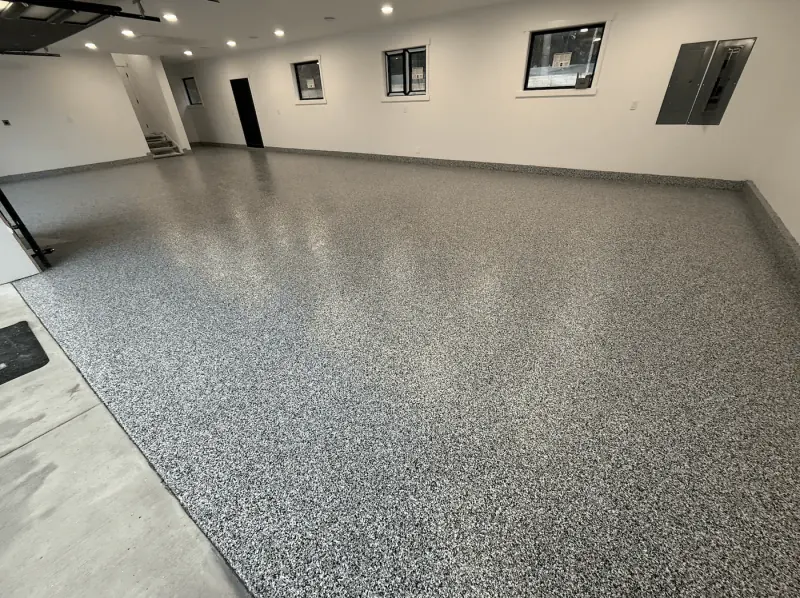
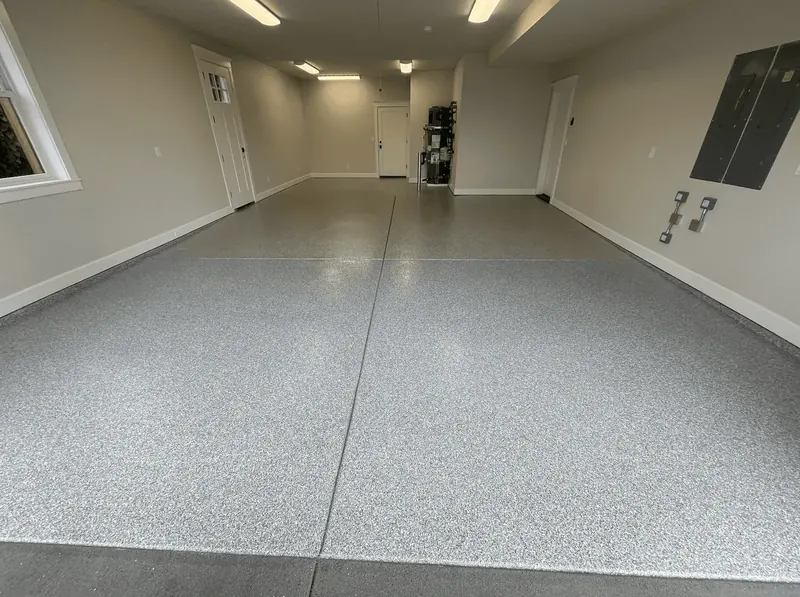
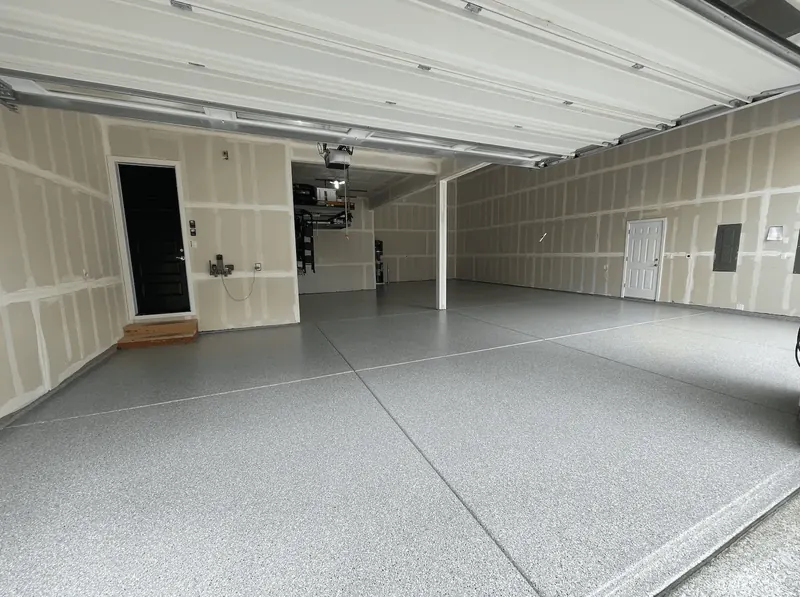
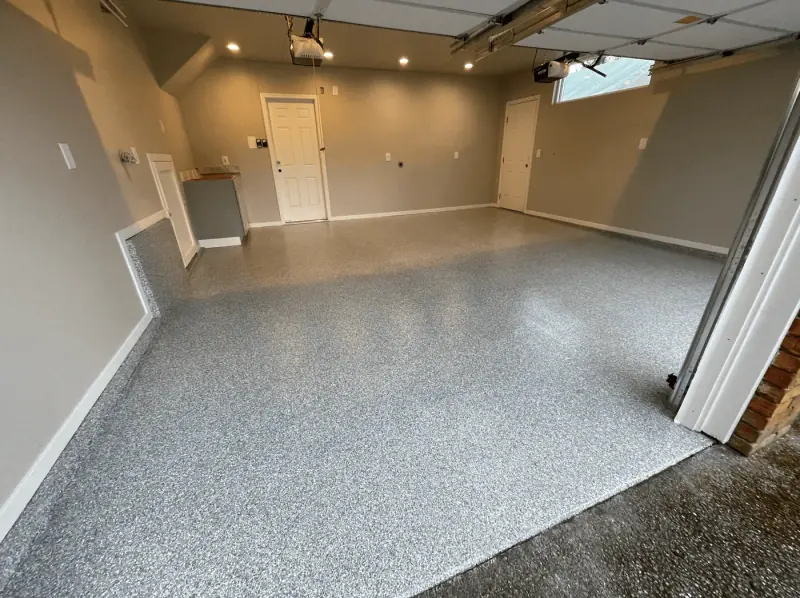
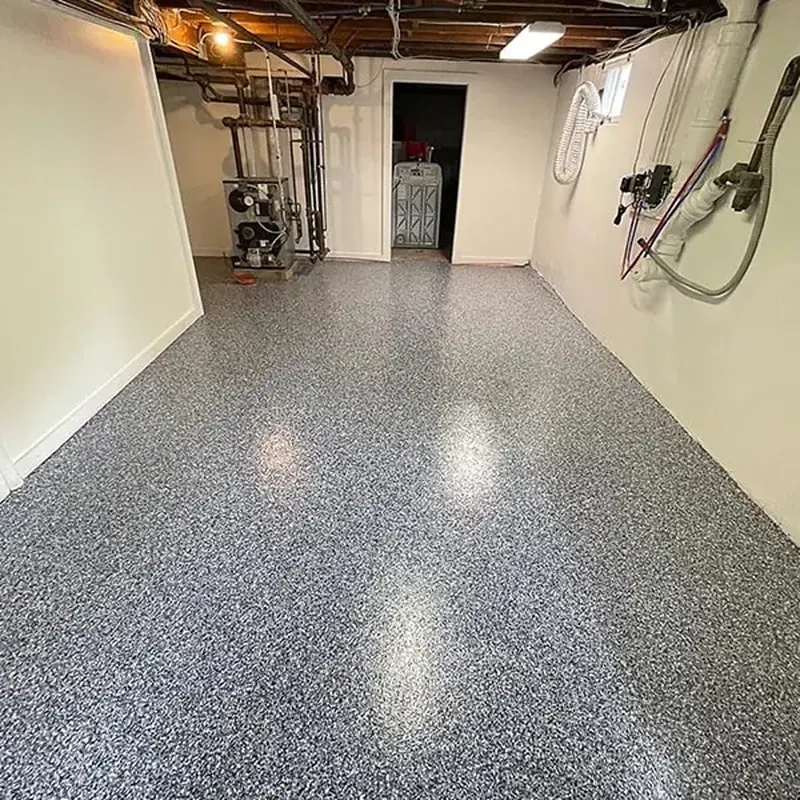
Light gray, medium gray, dark gray, or grey if you spell it that way. Most floors in our Seattle gallery are a shade of it, for good reason: gray reads as clean, it doesn't fight your car or your cabinets, and the mid-tones hide road grit and winter salt.





Black and charcoal garage floors
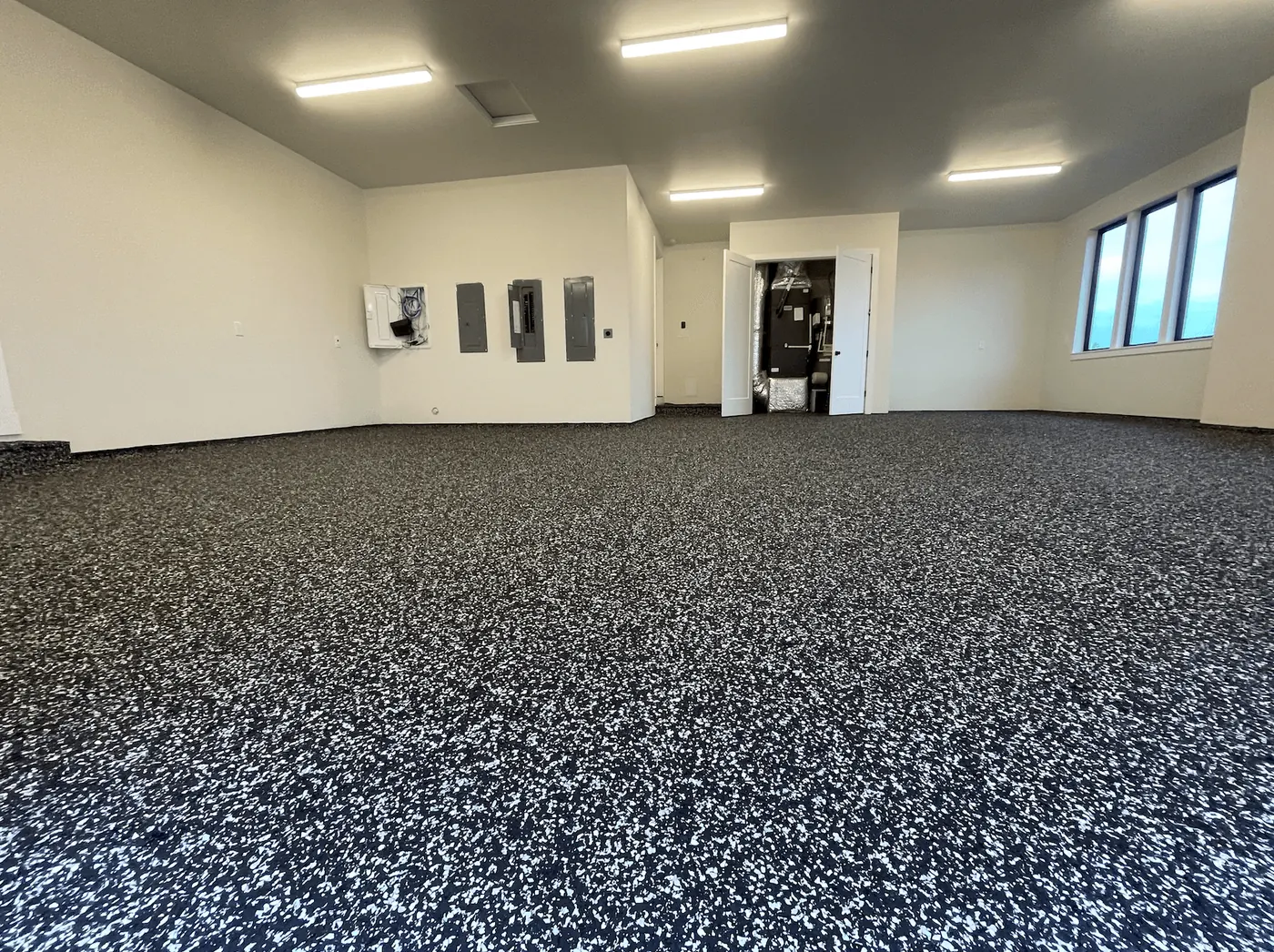
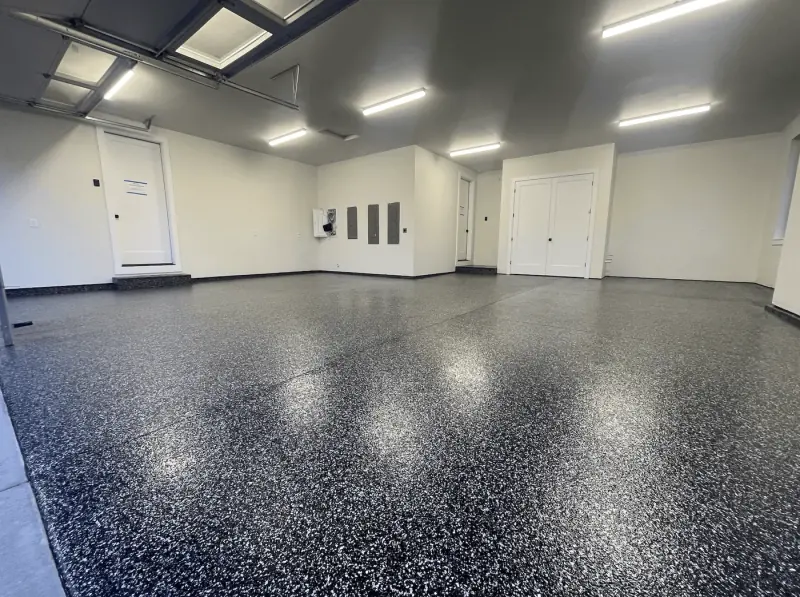
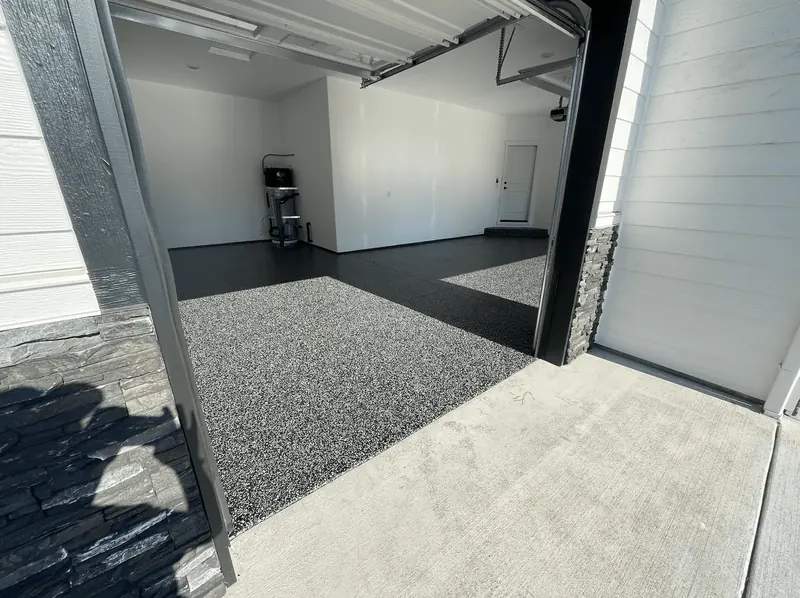
A black epoxy garage floor is what most people picture when they picture a nice garage. Ours isn't epoxy, but the look is the same: deep and glossy, chips catching the light. It hides oil and tire marks, and shows dust until you sweep.
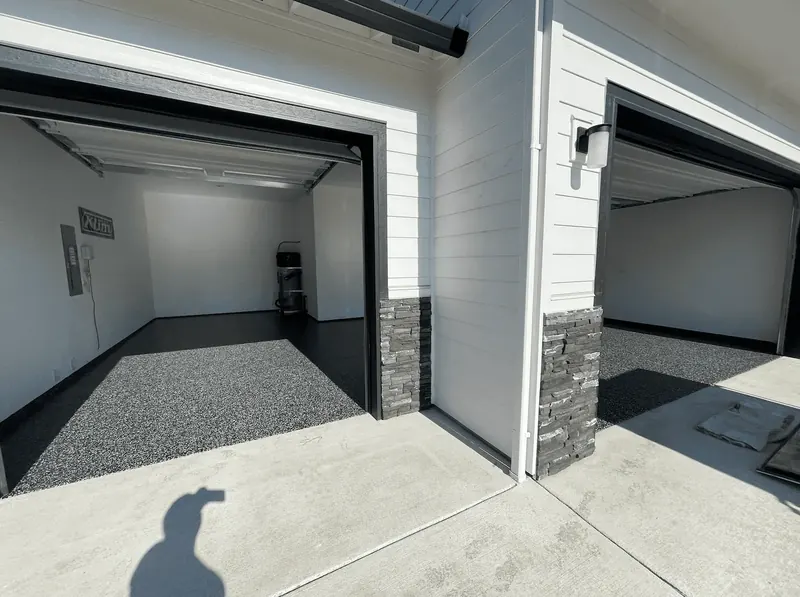
Black and white garage floors
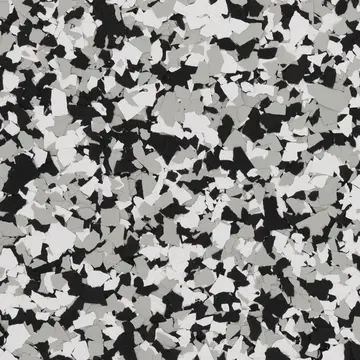
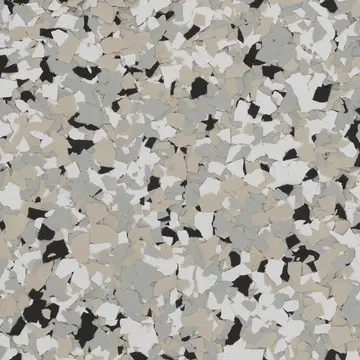
High contrast, a little retro, and the one the neighbors comment on. Some brands call this look Tuxedo; ours is Domino, the floor at the top of this page. It pairs with white cabinets, black garage doors and anything chrome.

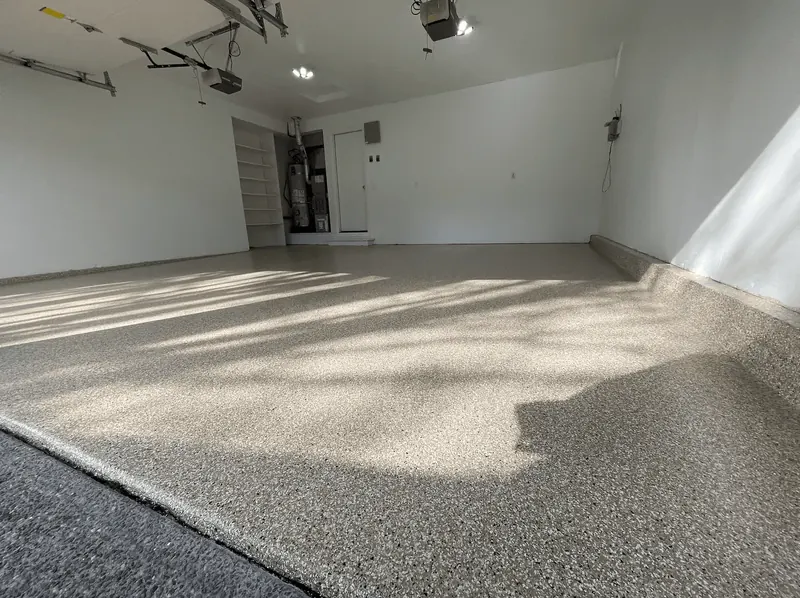
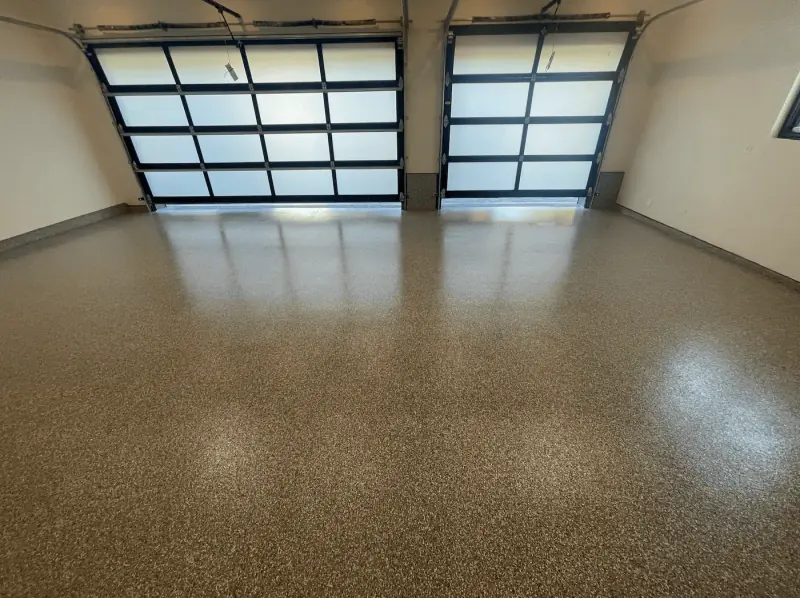
Tan, beige and brown garage floors
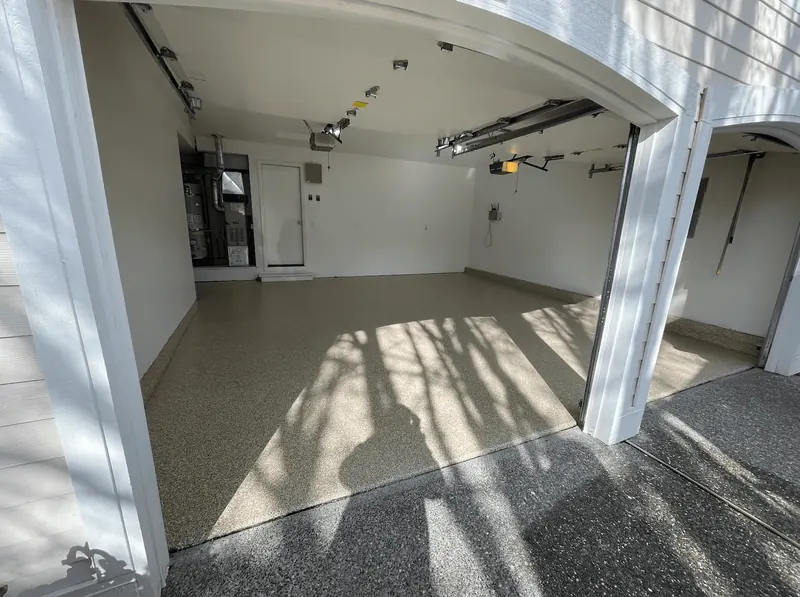
Warm floors for warm houses. With cedar, stone, brick or a brown front door, a tan or beige flake floor looks like it was always there. They're also the best at hiding the Pacific Northwest's specialty: mud.

Blue garage floors
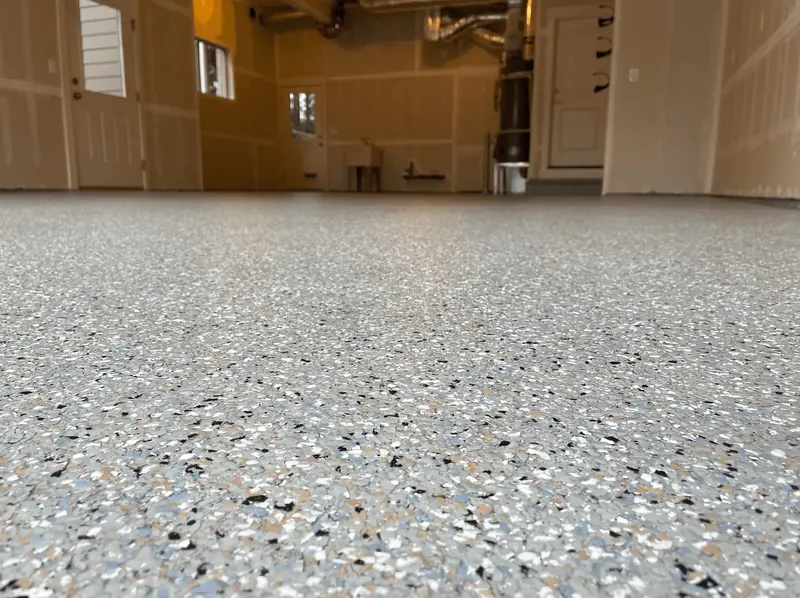
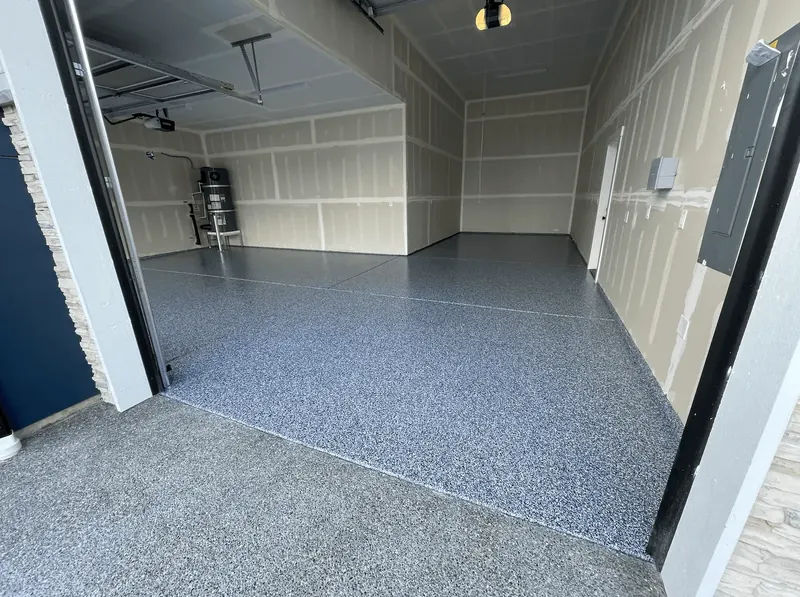
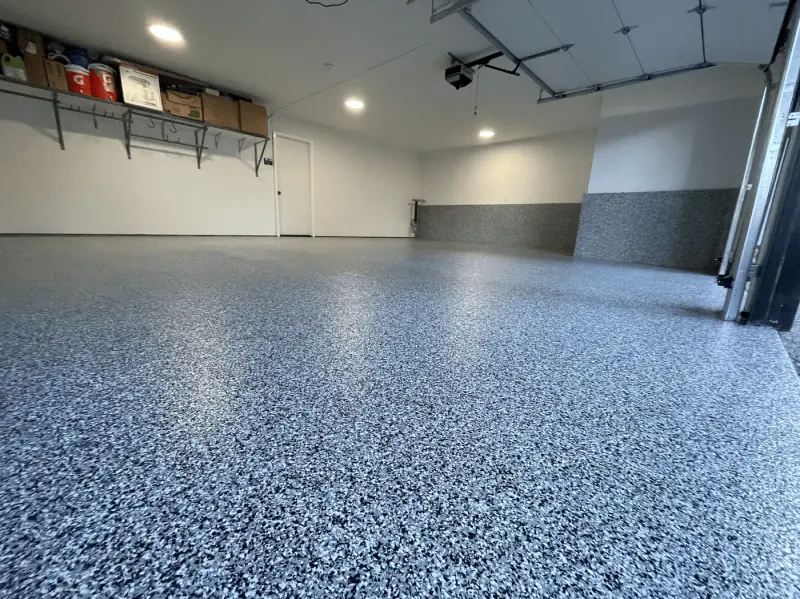
Blue is the color people think they'll regret, and then don't. As a flake blend it's really a gray floor that leans blue. It makes a white garage feel clean, and it flatters a car.


White and light garage floors
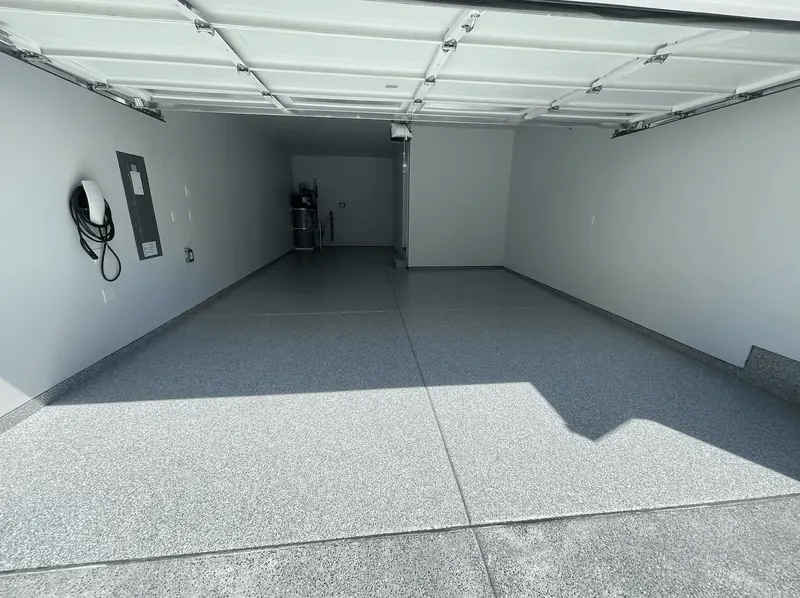
A white garage floor is a statement. It bounces light around a dark garage like nothing else, and it shows tire marks more than any other color. Our light blends soften that with gray and tan chips.



The nine flake blends you pick from
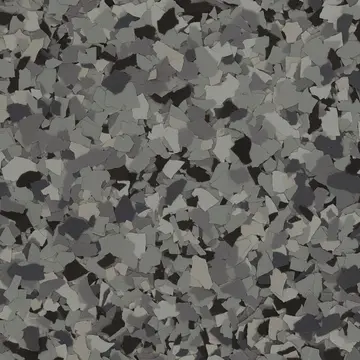
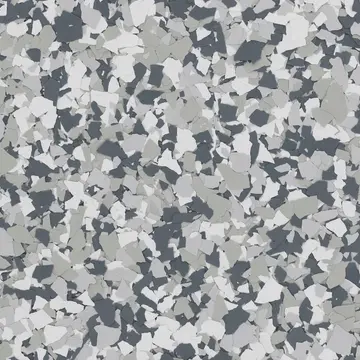
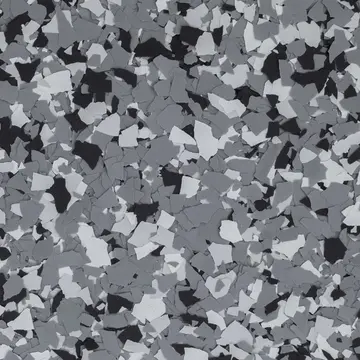
Every floor above started as one of these. The names are the industry's, not ours, and if you've searched for Nightfall, Domino or Cabin Fever floors, this is what you were looking at. Tap one in the AI Floor Preview, upload a photo of your garage, and see it on your own slab.
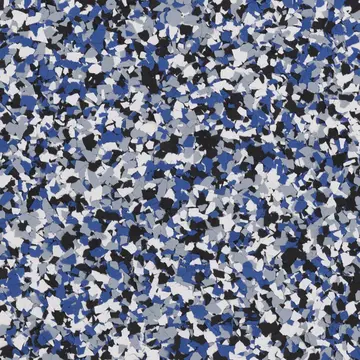
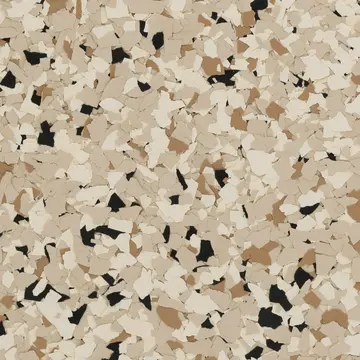
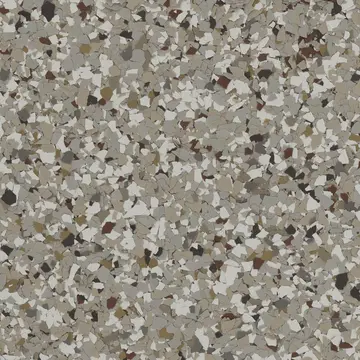
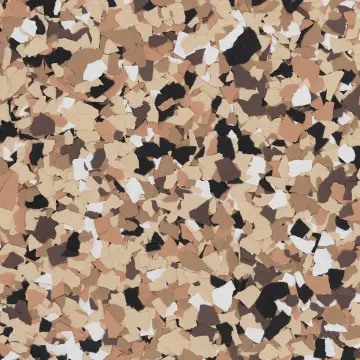
Red or green floor on your mind? Those aren't in the nine. Call us and we'll tell you honestly what's possible before you get attached to the idea.
How to choose a garage floor color
Three questions settle it. Then take a photo and try your top two on your actual floor, and the argument's over.
 Use
Use
What's the garage for?
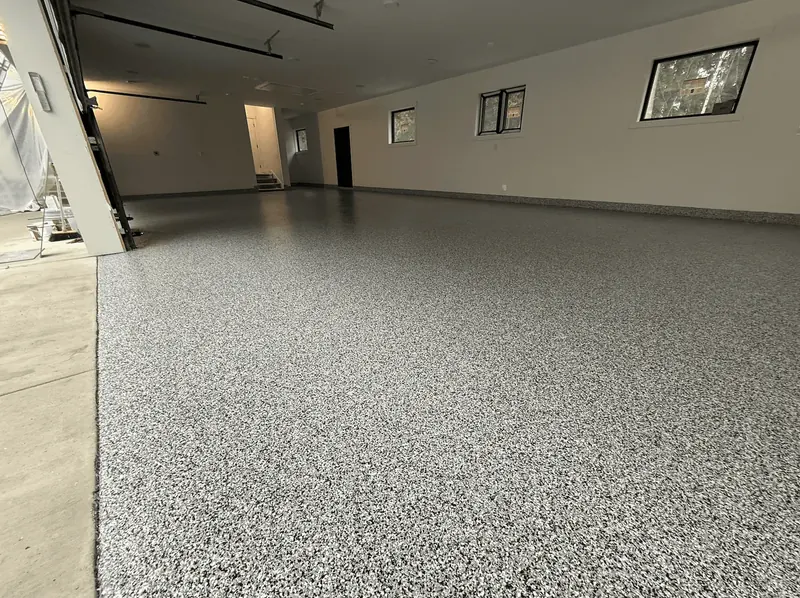
Working on cars? Go dark or mid gray and let the floor hide the evidence. A showpiece? Pick it the way you'd pick a kitchen floor.
 Light
Light
How bright is the garage?
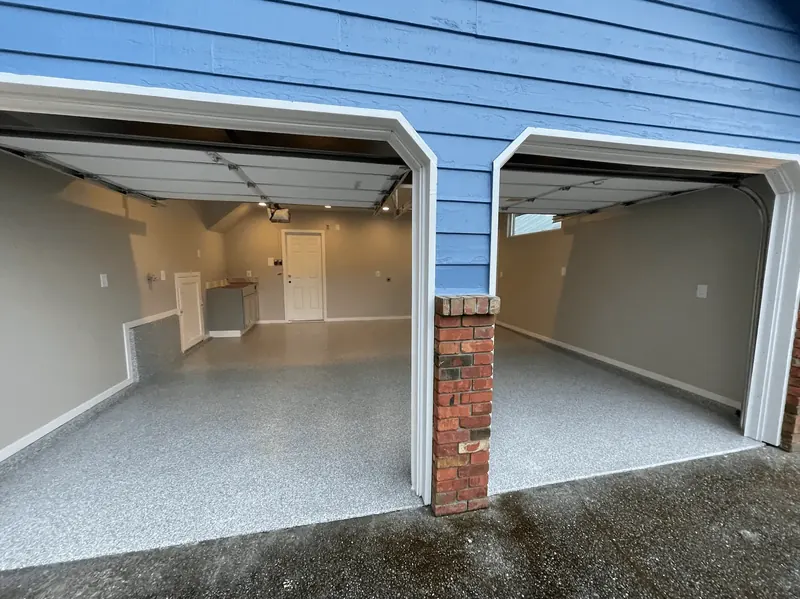
A north-facing garage with one bulb wants a lighter floor. Windows, LED panels or glass doors can carry a dark one.
 House
House
What color is the house?
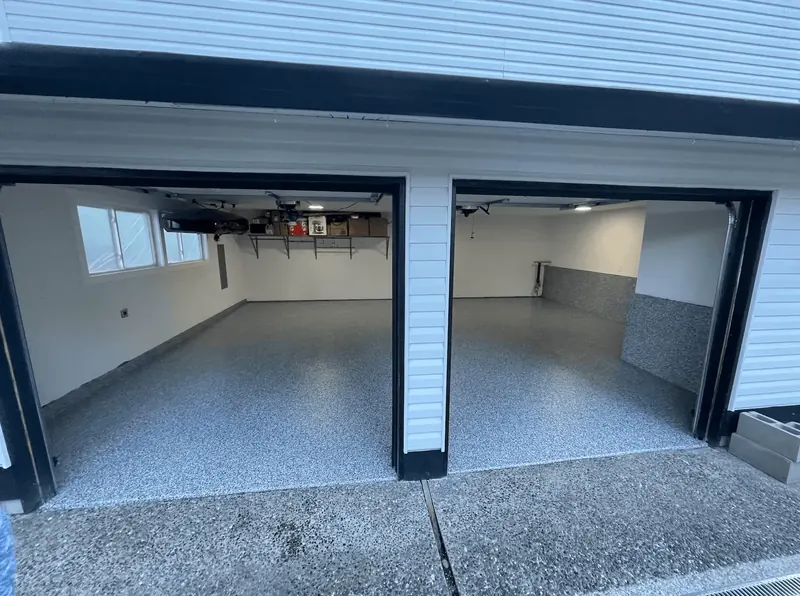
Gray siding takes any gray or blue. Brick, cedar and warm paint suit tan and beige. Black trim and modern builds love charcoal and Domino.
More ideas, including finishes beyond the flake: garage floor coating ideas and flake colors. Still weighing a coating against tiles or mats? Every option, ranked for Seattle: garage flooring options.
A garage makeover starts with the floor
People plan the cabinets, the slatwall and the lights, and leave the floor for last. Do it the other way around. The floor is the biggest surface in the room, and the only one you look at every time you get out of the car.
Pick the floor color first, and the rest of the makeover falls into place around it.
Garage floor color questions
What is the most popular garage floor color?
Gray, by a wide margin. Most of the floors in our Seattle gallery are some shade of light-to-medium gray flake, with charcoal next for people who want a darker garage floor. In the blend lineup, Gravel and Wombat are the grays and Nightfall is the charcoal.
Should a garage floor be light or dark?
Dark floors hide tire marks, oil and grease and show dust and dried salt. Light floors do the reverse and make a dim garage feel bigger. A mid gray splits the difference, which is why it's the default. If you work on cars, go dark. If your garage has one bulb and no windows, go light.
Does a black garage floor show dirt?
It shows dust and the white residue road salt leaves behind, and it hides oil, tire marks and grime. Because our black floors are flake blends with white and gray chips rather than solid black, the speckle breaks up most of what lands on it. A weekly sweep keeps it looking new.
Gray or grey garage floor: is there a difference?
Only in spelling. Gray is the American spelling and grey the British one, and people search for gray epoxy garage floors and grey epoxy garage floors in about equal numbers. Same floors, same blends. Our grays run from pale frost and dove gray to charcoal and storm gray.
Can I see what each color looks like in my own garage?
Yes. Upload a photo of your garage to the AI Floor Preview on this site, pick any of the nine blends, and it renders the floor on your slab in your lighting. It's the fastest way to settle a color debate, and it's free.
Will the color fade or yellow?
Not in the way epoxy does. Epoxy ambers in sunlight, which turns a light floor yellow and a dark one muddy. The clear polyaspartic topcoat we use is UV-stable, so the flake color you pick stays that color, even in a garage that faces the afternoon sun with the door open.
Do you do metallic or solid-color garage floors?
We don't do metallic. The swirled metallic look is an epoxy technique, with epoxy's cure problems in a Seattle garage. Solid color is possible, but it shows every speck of dust, every tire mark and every repaired crack, which is why nearly everyone ends up with flake. If you still want solid, raise it at the estimate.
Do you do red, green or custom garage floor colors?
Our standard range is the nine blends on this page, which cover gray, black, blue, tan, white and black-and-white. A true red or green floor isn't one of them. If you have your heart set on it, call us and we'll tell you straight what's possible before you plan the rest of the garage around it.
Found your color? Let's look at your floor.
We'll test the slab, measure, and leave you a written price. Bring the color debate with you.