
Flake Garage Floor Coating in Seattle
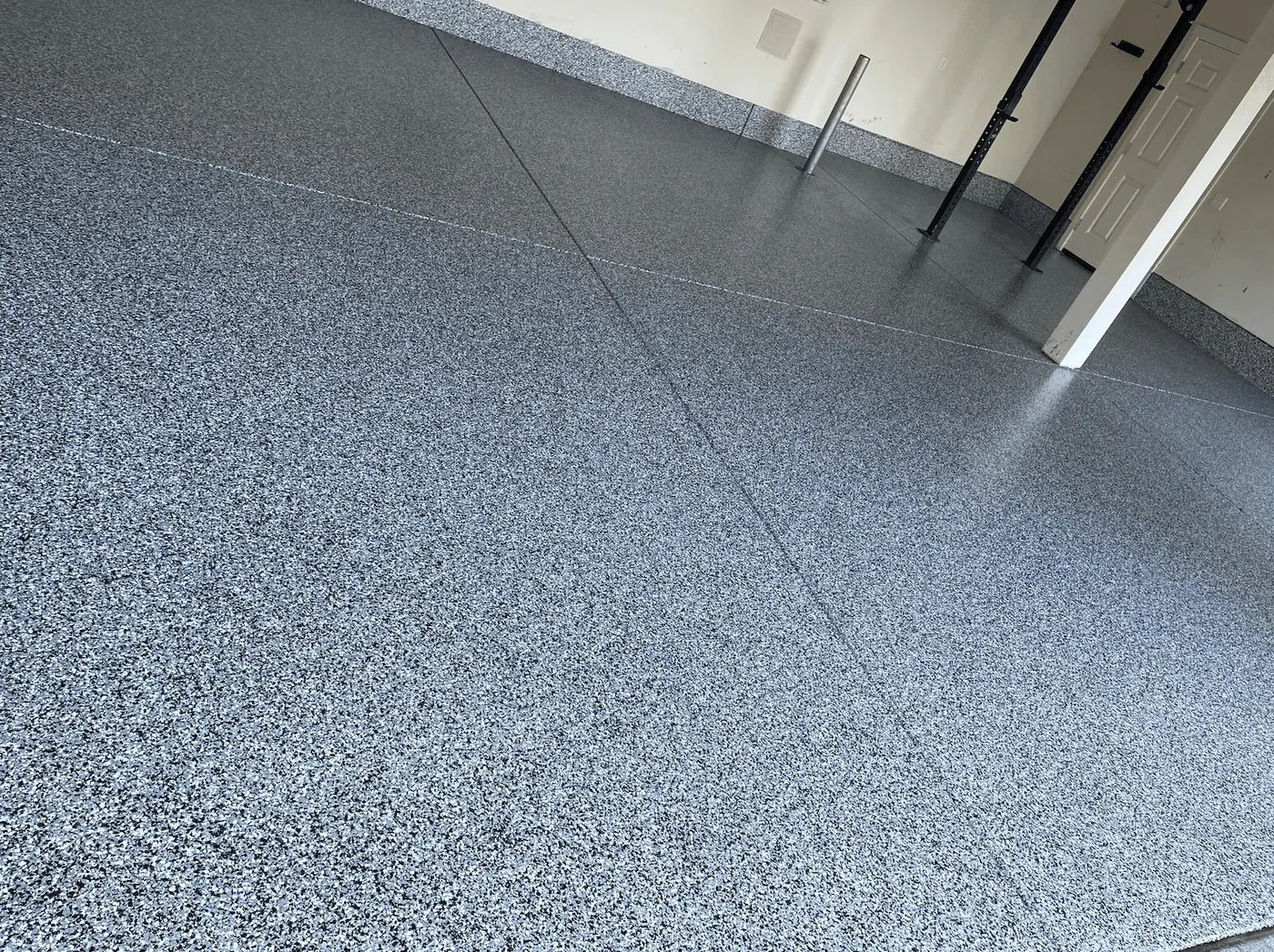
That speckled garage floor on your neighbor's slab? That's a flake floor. Chips, flakes, speckles: three words for bits of colored vinyl, broadcast into a wet base coat and locked under a clear top. Here's why every floor we install is full flake, and what has to sit under it.
- Full flake on every floor
- Polyurea base, clear top
- Park after 72 hours
- Lifetime adhesion warranty
What is a flake garage floor coating?
It's a three-layer floor. A colored base coat goes onto ground concrete, vinyl flakes get thrown into it by the handful while it's wet, and the whole thing gets sealed under a clear topcoat.
The flake isn't just decoration. It adds thickness, gives your boots grip when the floor is wet, and hides every stain, crack repair and color difference the bare concrete had.
A full-flake floor means the flake was thrown until the floor couldn't hold any more, so you never see the base coat through it. That's the only kind we install.
- 3 layersbase, flake, clear coat
- Full flakebroadcast to rejection
- 72 hrsuntil you park on it
Chips, flakes, speckles: why they matter
You could coat a garage floor one solid color. Almost nobody who's lived with one does it twice. Here's what the flake is quietly doing for you.
 Hides
Hides
Dust, dirt and repairs
A solid floor shows every speck, tire mark and filled crack. A flake floor shows a pattern, so the dirt waits quietly until you sweep.
 Grips
Grips
Texture under wet boots
Flake gives the clear coat a slight texture, and we add anti-slip grit on top. Here, where you walk in wet most of the year, that matters.
 Thickens
A thicker, tougher floor
Base, flake and clear coat stack up to about ten sheets of paper. Paint is a third of one sheet. That thickness shrugs off hot tires.
 Looks
Looks
Like stone, not paint
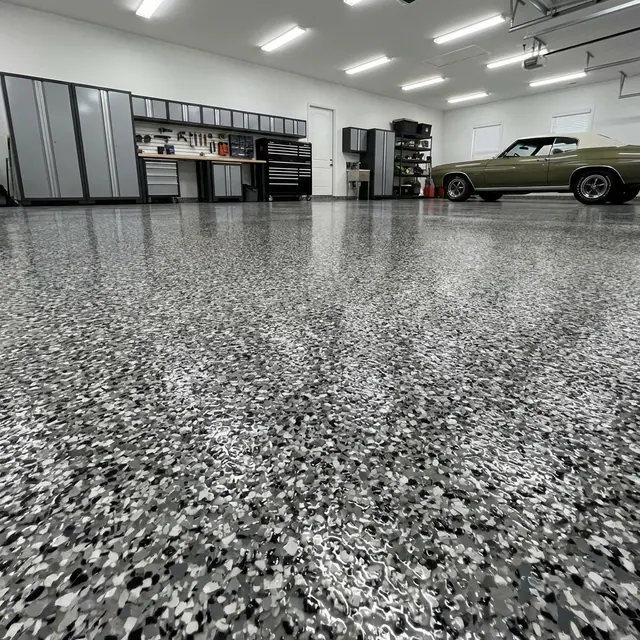
From standing height a flake floor reads like granite or terrazzo, and the garage starts to feel like part of the house.
Full flake vs. a light sprinkle
This is the difference between a floor that still looks new years from now and one that looks tired by its second winter. Check it on anyone's quote, including ours.
Full broadcast, to rejection
"To rejection" is the trade's phrase for throwing flake until the wet base coat can't accept another chip. Then the loose flake gets scraped and vacuumed off, and the clear coat goes over a surface that's solid flake.
- No base coat visible anywhere, so no thin spots to wear through.
- Roller marks and lap lines disappear under the pattern.
- The floor can be re-topcoated years from now without redoing the flake.
Partial broadcast, or "accent flake"
A handful of chips tossed across a painted floor. It's what the hardware-store kits give you, and it's what a low quote is usually hiding.
- The base coat does all the work, and it's thin.
- Every roller line and footprint shows through.
- When it wears, it wears in the tire paths first, and you can't patch a pattern.
If a quote doesn't say "full broadcast" or "full flake," ask. The hardware-store version of this: epoxy kit vs. a professional floor.
What's under the flake matters more than the flake
Here's the part the brochures skip. The flake looks the same on an epoxy floor and on ours. The difference is the two coats it's sandwiched between, and in a Seattle garage that decides whether the floor stays down.
-
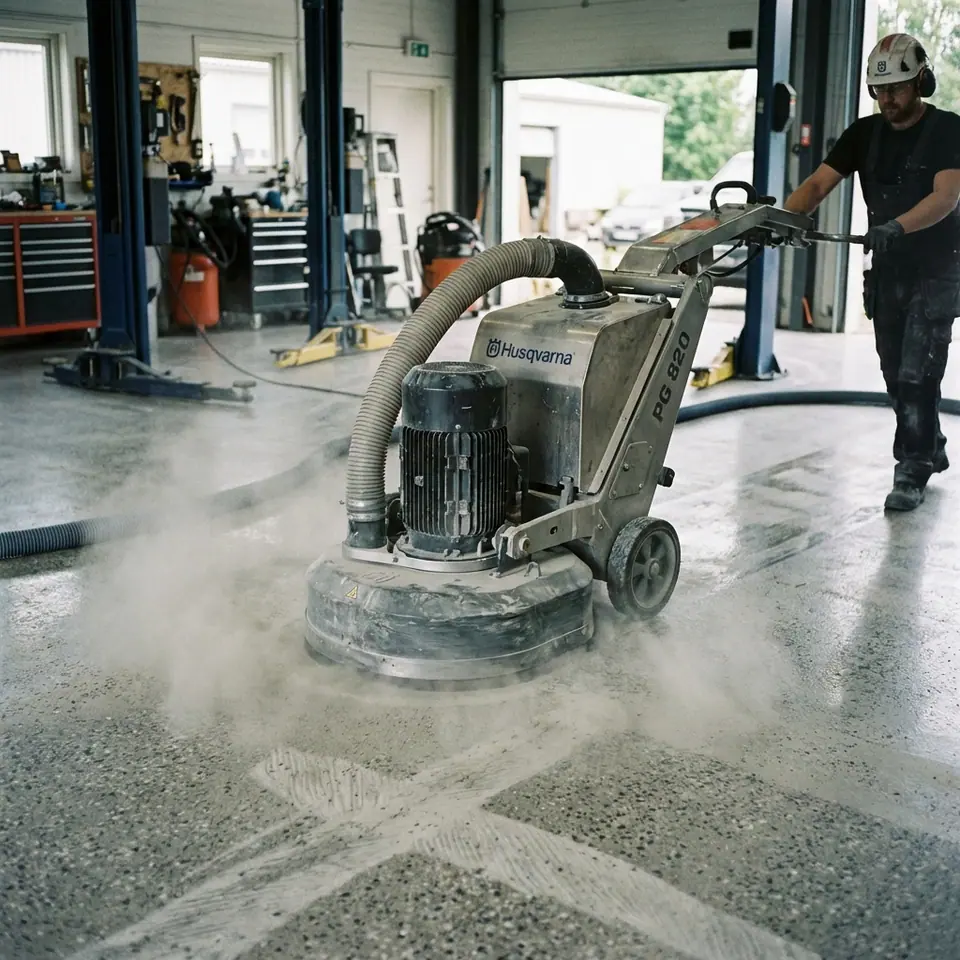
Ground, not etched
We diamond-grind the slab open so the base coat can bite. Acid etching, what the kits do, leaves it too smooth to hold.
-

Barrier, if needed
We test every slab first. If it reads wet, a vapor barrier primer goes down and cures overnight, so the floor doesn't lift in February.
-

Base coat and flake
The flake goes into a polyurea base that stays slightly flexible and moves with the slab. Epoxy cures brittle, so it peels in sheets.
-
Clear top, with grit
The glass over the picture: UV-stable, cures in the cold, carries the anti-slip grit. Walk on it the next morning, park after 72 hours.
The chemistry, in plain English: what polyaspartic floor coating is · where polyurea fits · epoxy vs. polyaspartic · polyaspartic floor coating in Seattle, every surface we coat.
Bare concrete to full flake
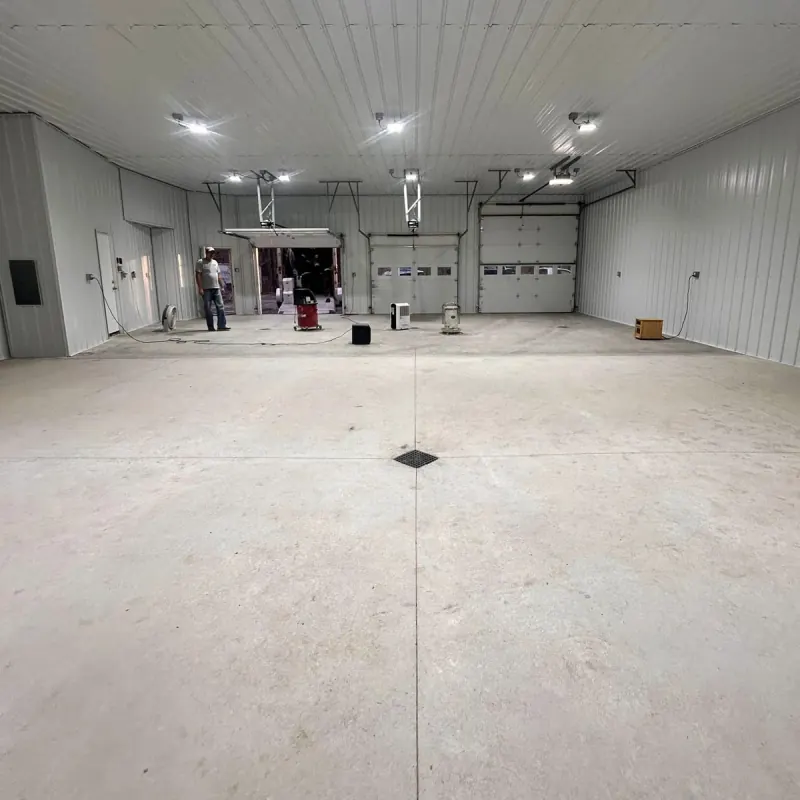
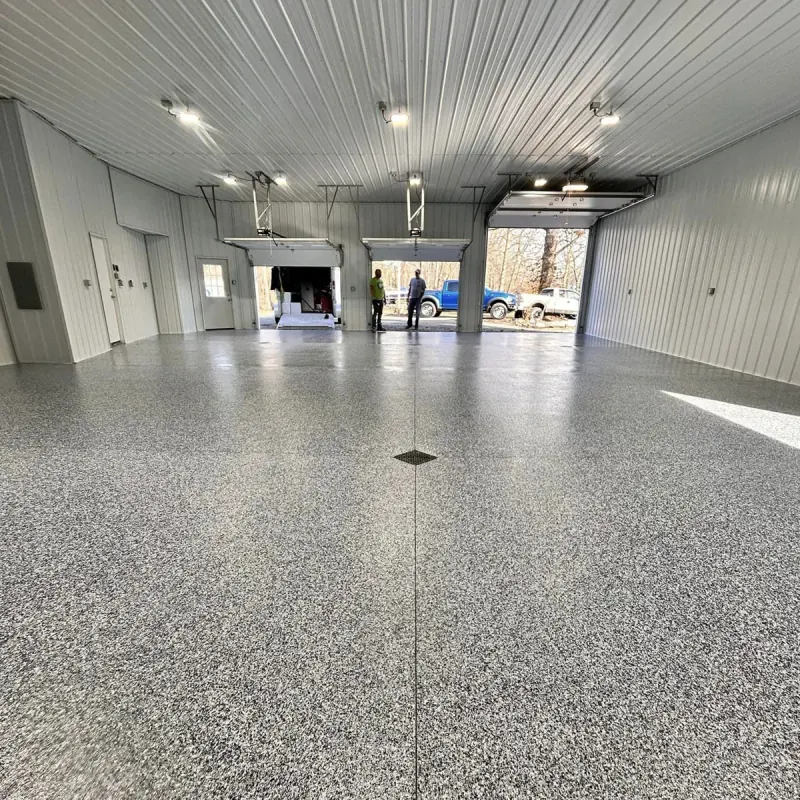
Same pole barn shop, same lighting, one install. The before is what every garage floor starts as. The after is what a full broadcast looks like when it's done right.
Why most floors get the quarter-inch flake
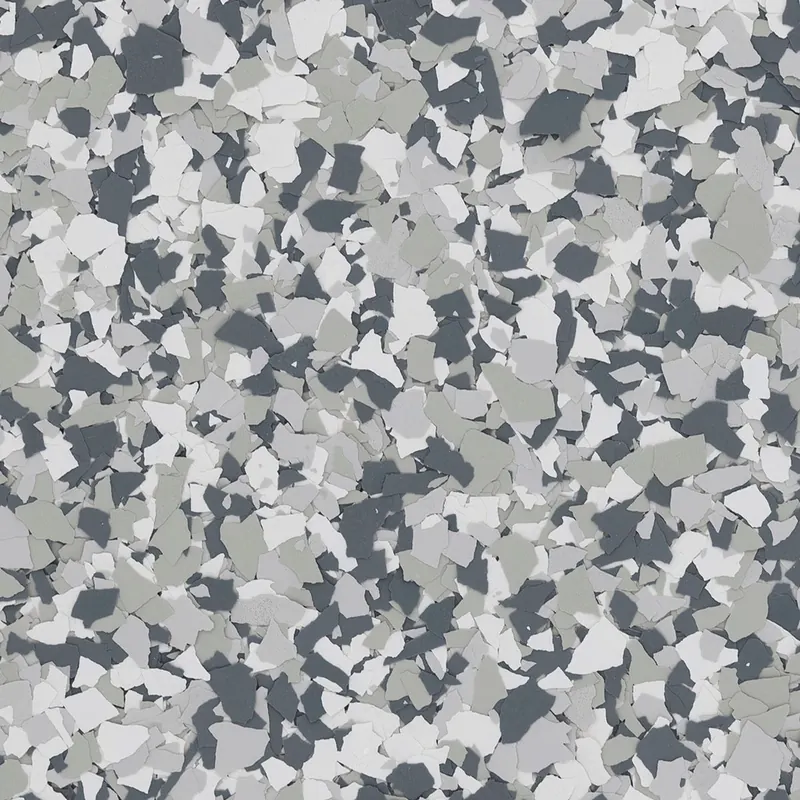
Flake comes in sizes, from a one-inch chip down to specks you'd need a magnifying glass for. The quarter-inch flake is the garage standard, and it's what you see in nearly all our photos: big enough to read as a pattern from standing height, small enough that a two-car garage doesn't look like a sample board.
Smaller flake reads finer, more like stone or terrazzo. Bigger flake gets bold and graphic, which suits a huge shop and looks like confetti in a one-car garage. No preference? Trust the quarter inch.
Is flake the best garage floor coating?
Search "best garage floor coating" and you'll get a dozen lists written by people selling kits. Here's ours. We sell the first one, so weigh it accordingly.
-
Full-flake polyaspartic
A polyurea base, full flake and a polyaspartic top. The most durable floor we know of for a wet, cool climate: flexible, UV-stable, and it cures in the cold.
-
Professional epoxy flake
Excellent in a warm, dry garage. In Seattle it's a moisture problem waiting to happen, and it ambers in the sun.
-
Hardware-store epoxy kit
Fine for a year or three. Thin, etched instead of ground, light on flake. The kits by name.
-
Garage floor paint
A coat of color about a third of a sheet of paper thick. Hot tires peel it. Paint vs. a coating.
-
Tiles and mats
Covers, not coatings. They trap moisture against the slab, and they dent. Tiles vs. a coating.
Every coating type, how it goes on and how it cures: garage floor coating options compared. Ranked for a Seattle garage, tiles and mats included: garage flooring options in Seattle.
Flake floors we've installed around Seattle
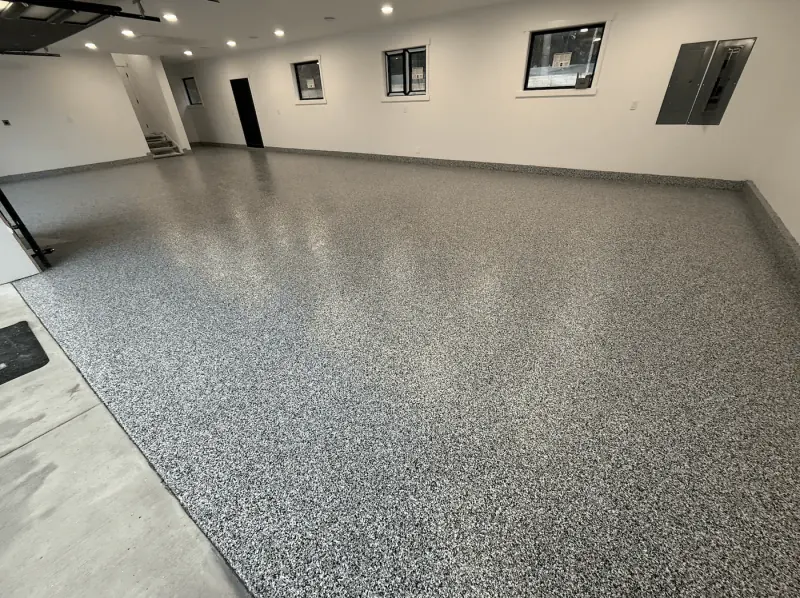
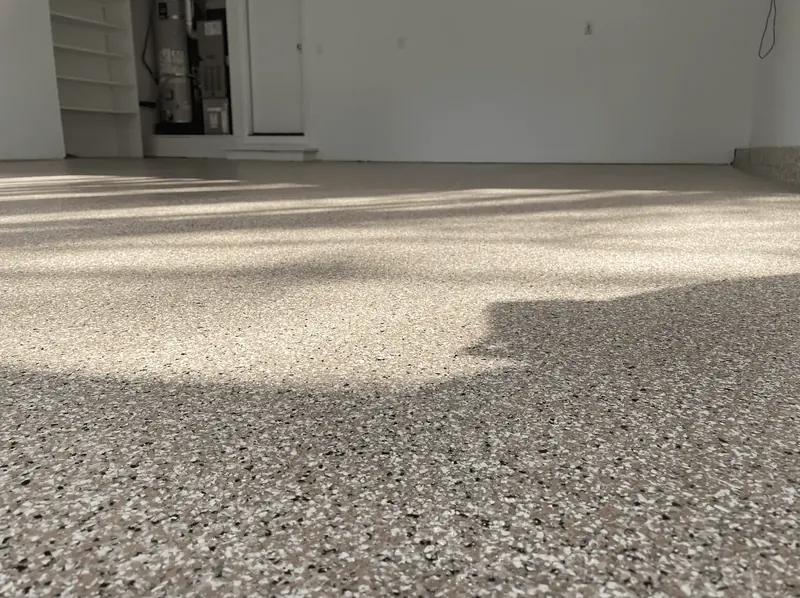
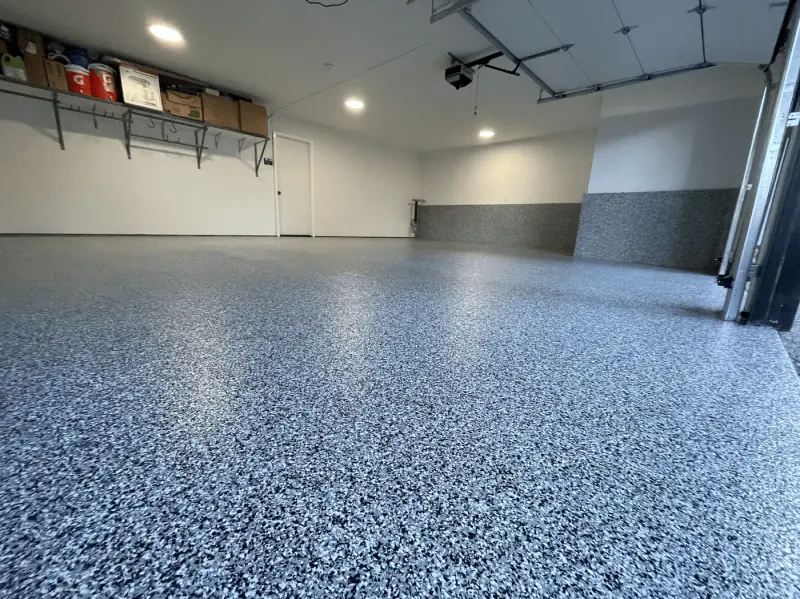
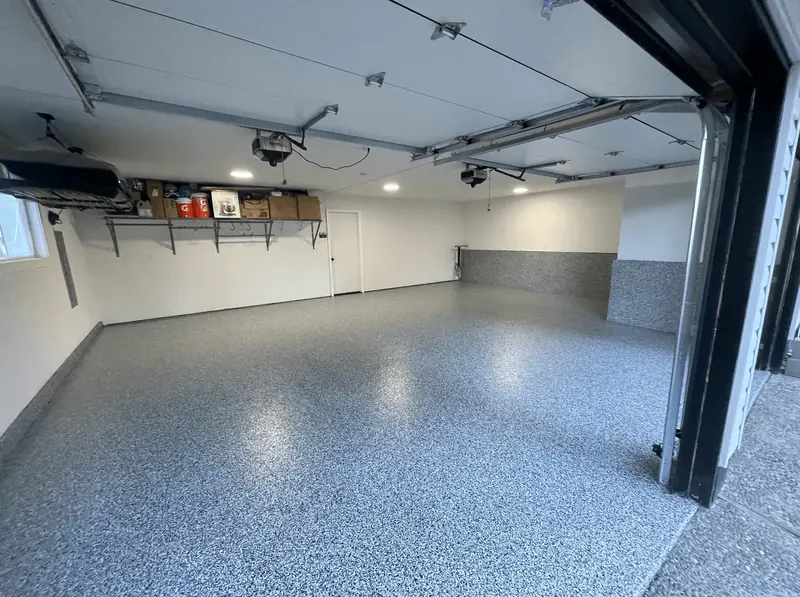
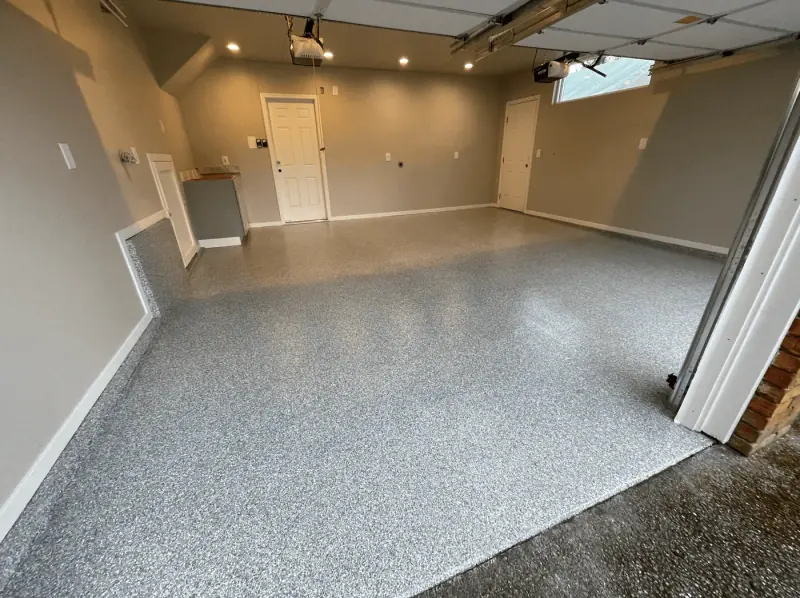
A few of ours. Every one is a full broadcast, and every one is a floor our crew put down.
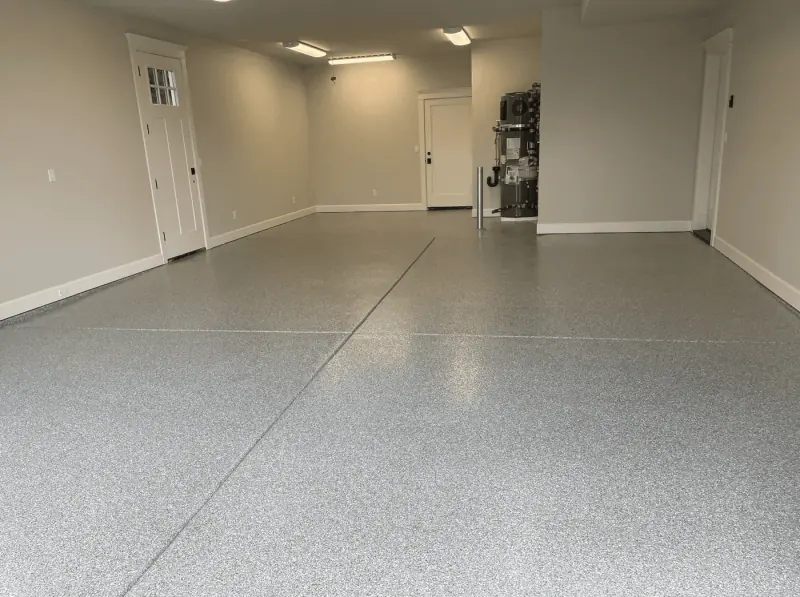
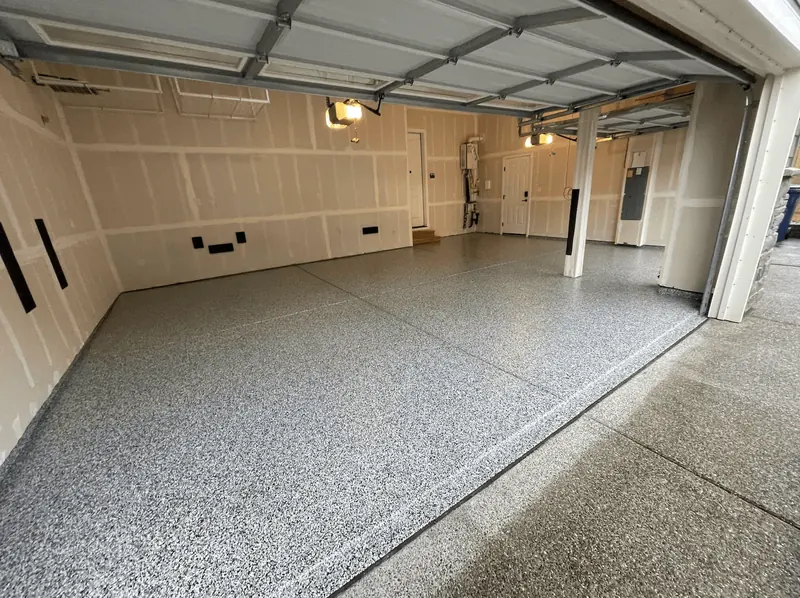
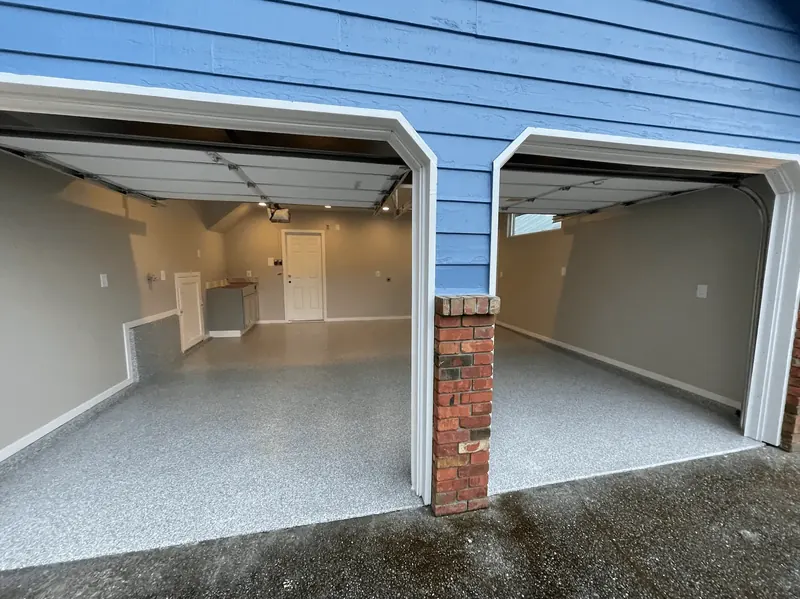
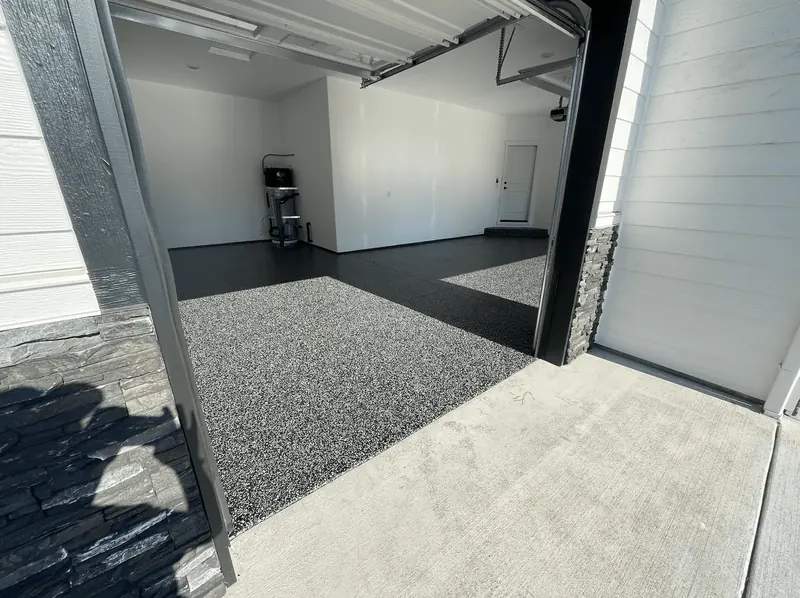

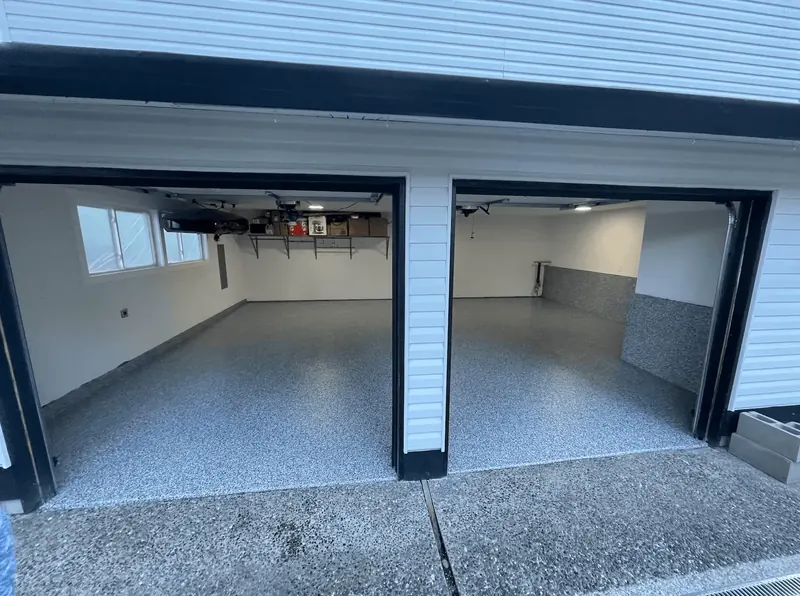
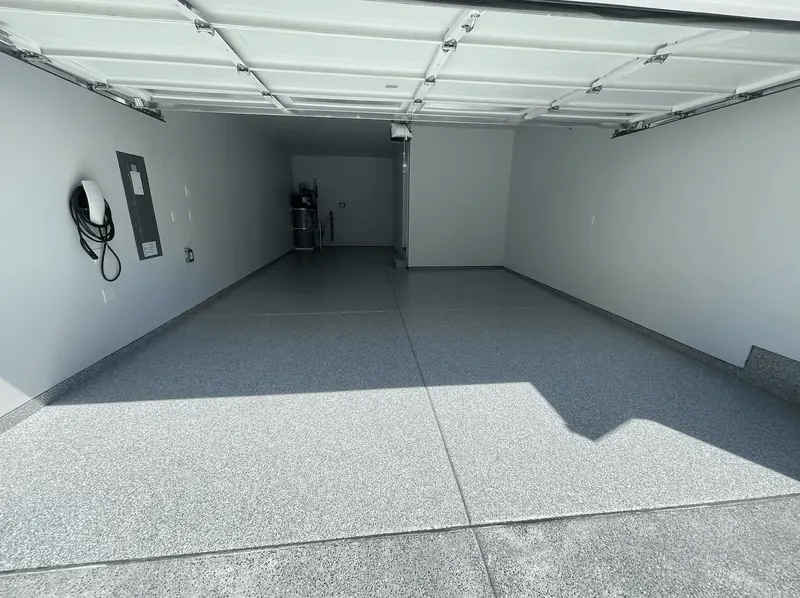
Every color we install, photographed: garage floor colors. The whole book: project gallery. Or see any blend on your own slab in the AI Floor Preview.
Flake floors and Seattle weather
Three things about this climate shape every flake floor we install.
Wet boots and tires
A glossy solid floor gets slick when it's wet. Flake texture plus the grit in our clear coat is the fix. Is a coated floor slippery?
Older slabs breathe
About half the houses here predate the plastic sheet under the slab, so ground moisture comes up through the concrete. We test first. Why floors fail here.
It cures in February
Epoxy needs a warm slab. The polyurea and polyaspartic we use cure in cool weather, so a flake floor waits for a dry slab, not for July.
We install flake floors across Seattle, Bellevue, Kirkland, Redmond, Renton, Kent, Tacoma, Everett and the towns between. Also serving Nashville and Scottsdale & Phoenix.
Flake floor questions
Is an epoxy flake floor the same as a polyaspartic flake floor?
The flake is the same. What's under and over it isn't. An epoxy flake floor sets the chips in epoxy, which cures hard, needs a warm dry slab and yellows in sunlight. Ours sets them in a flexible polyurea base and seals them under a clear polyaspartic topcoat that stays clear and cures in the cold. Same look on day one, very different floors in year five in a Seattle garage.
How thick is a full-flake garage floor?
Roughly ten sheets of paper stacked up, counting the base coat, the flake and the clear topcoat. A painted garage floor is about a third of one sheet, and a hardware-store epoxy kit is about one. The thickness is a big part of why a full-flake floor shrugs off hot tires, dropped tools and a dragged lawnmower.
Do the flakes come off or wear away?
No. Once the clear topcoat is on, the flakes are sealed under it like a photo under glass. What you walk and drive on is the clear coat, not the chips. Years from now, if the clear coat ever dulls in the tire paths, it can be recoated without touching the flake.
Can I choose the flake size?
Yes. Quarter-inch is the standard and what most garages get, because it reads as a pattern from standing height without looking busy. Smaller flake gives a finer, stone-like look and uses more material. Larger flake looks bold and graphic and suits a big shop better than a small garage. Tell us at the estimate.
Does full flake cost more than partial flake?
It uses more flake and more labor, so a full-broadcast floor costs more than a sprinkle, and that's usually where a suspiciously low quote is saving its money. Across the Seattle market a full polyaspartic flake floor runs about $4 to $12 a square foot installed, with most two-car garages between $1,600 and $5,800. Every floor we quote is full flake.
Will a flake floor hide cracks in my garage floor?
It hides the repairs. Cracks and control joints get filled and ground flush before the base coat goes on, and the flake pattern makes the filled lines disappear. What it won't do is level a dipped or sloped slab, and it won't fix a structural crack, which we'll point out before we coat anything.
Is a flake floor glossy or matte?
Glossy, from the clear topcoat, with a slight texture from the flake and the anti-slip grit. It's not a mirror; the flake breaks up reflections, which is part of why it photographs so well under garage lights. If you want more grip, we can go heavier on the grit.
How durable is a full-flake garage floor?
In a cool, wet climate it's the toughest floor we know of: a polyurea base, flake thrown until the base can't take more, and a polyaspartic topcoat, all over diamond-ground concrete. It moves with the slab, shrugs off hot tires, stays clear in the sun and cures in the cold. That's why every floor we install is full flake, and why each one carries a lifetime adhesion warranty.
Get a free flake floor estimate
We'll test the slab, measure, show you the blends, and leave a written price. Most garages are one day.