
Garage Floor Epoxy Kits, Read Honestly
We don't sell kits and we don't install them. Our only stake is the floors we get called to grind off. Here's what the makers' own data sheets say about the popular kits, and what that means in an unheated Seattle garage.
- Data-sheet numbers
- Cure temps vs Seattle
- Kit vs pro thickness
- When a kit is the right call
Are the hardware-store garage floor kits any good?
They're real products from serious companies. On the garage they were designed for, warm, dry, out of the sun and lightly used, they do what the box says for a few years.
The trouble is that a Seattle garage is usually none of those things, and the data sheet knows it even when the box doesn't. Three lines on every sheet decide how a kit does here: the minimum floor temperature, the dry film thickness, and the prep it asks for.
We use brand names below because that's how you'll find them on the shelf. Nothing here is a knock on any of them. It's their own numbers, next to a Seattle slab.


The kits, by name
Four products cover most of the search traffic. The rest sort into the same three categories.
Rust-Oleum EpoxyShield
The classic kit. Its sheet wants the air, the coating and the floor between 60 and 85°F, the floor 5°F above the dew point, humidity under 85%, and three days before a car in a warm garage. It dries to about three mils a coat. Kits ran about $129 to $185 when we checked.
Rust-Oleum RockSolid
The tougher sibling: epoxy, urethane and polyurea, 96% solids. It allows 40 to 90°F but slows under 55°F, and cars can return in 24 to 36 hours at room temperature. An independent review still estimates about three mils dry and suggests a second clear coat.
Behr Premium 1-Part Epoxy
Sold by the gallon, around $48, and rolled like paint because it is one: an acrylic with some epoxy resin for toughness. Easy to apply, thin when dry, and the first to lift under hot tires. Honest use: a storage garage you want looking clean.
Seal-Krete and the rest
Seal-Krete, Quikrete, H&C, Sika and the online "pro" kits each land in one of three bins: a one-part floor paint, a water-based two-part kit, or a 100% solids kit that's thicker but sets fast and still wants a warm, ground, dry slab. Read its sheet for the three numbers below.
The three numbers to read on any kit
Every technical data sheet has them. The box rarely does.
-
Minimum floor temperature
Not the air: the concrete itself. Most two-part epoxies want 55°F or warmer and a few degrees above the dew point. An unheated Seattle slab sits under that from about October to April, and a kit applied then can stay soft for days or never fully harden.
-
Dry film thickness, or solids by volume
How much coating is left after the water or solvent leaves. Water-based kits dry to about three mils a coat. A professional full-flake floor is 30 to 40. Thickness is what stands between a hot tire and the concrete.
-
The prep it asks for
Almost every kit says etch. Etching opens the surface a little and removes nothing, and it barely bites a hard-troweled slab. Kits say etch because a homeowner can etch. The coating would rather you ground it. Grinding vs. etching.
What those numbers mean in a Seattle garage
 Cold
Cold
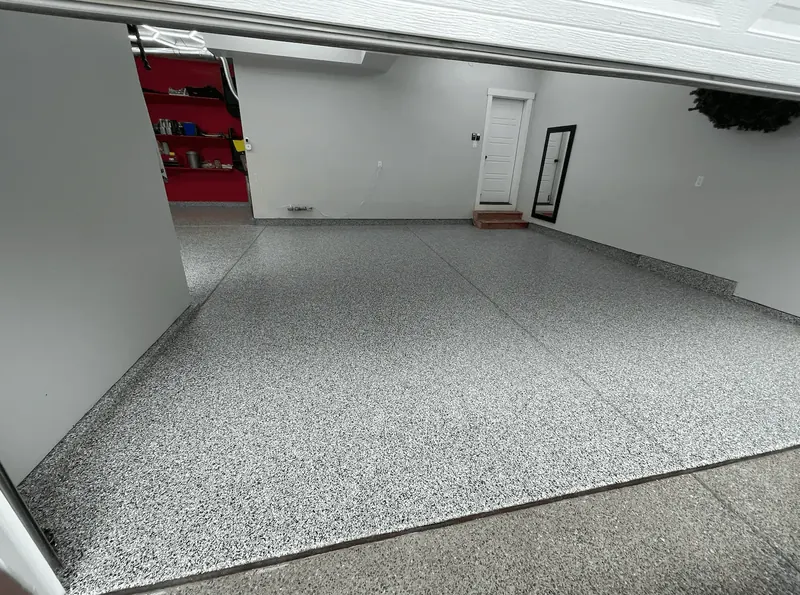
Half the year is out of the window
If the sheet says 55 or 60°F, you're waiting for a warm, dry stretch, which in Seattle means May to September. The forum threads titled "too cold to epoxy now?" are from people who found this out in October with the kit already open.
 Wet
Wet
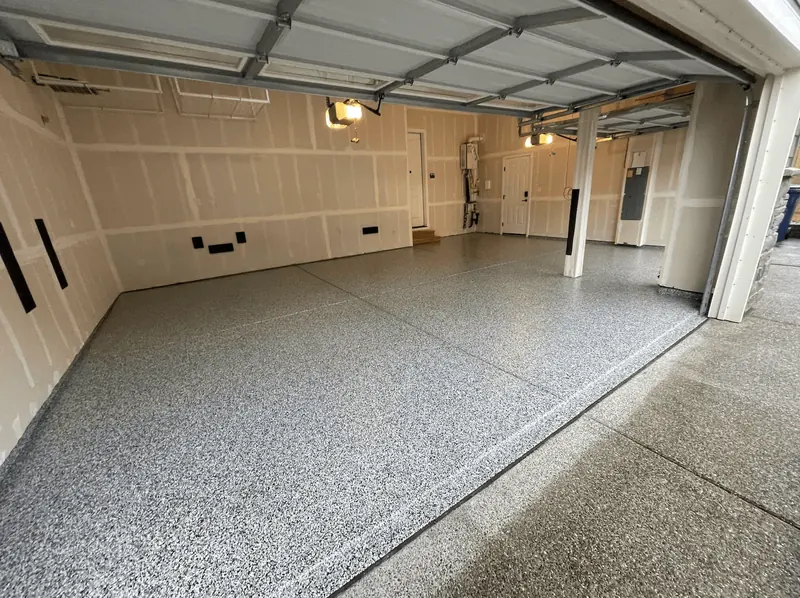
No kit includes a vapor barrier
Ground water moves up through our slabs. A thin epoxy over that blisters, and no kit on the shelf has a moisture-barrier primer in the box. Tape a square of plastic to the floor overnight before you buy one. Condensation under it is your answer.
 Thin
Thin
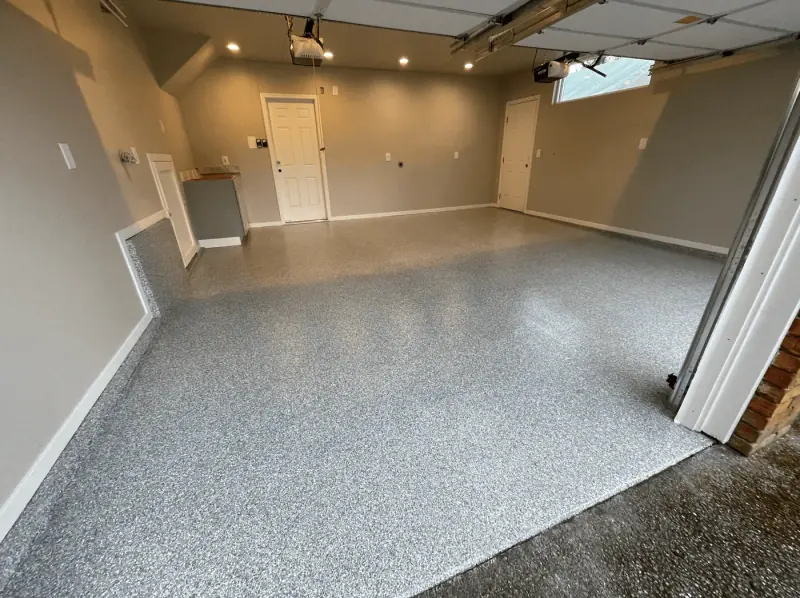
Three mils under a hot tire
A tire comes home from the highway hot enough to soften a thin, low-solids coating, then cools and grabs it. The classic kit failure is clean bare concrete in two tire-shaped stripes. Thickness and real prep are the only two things that stop it.
 Old
Old
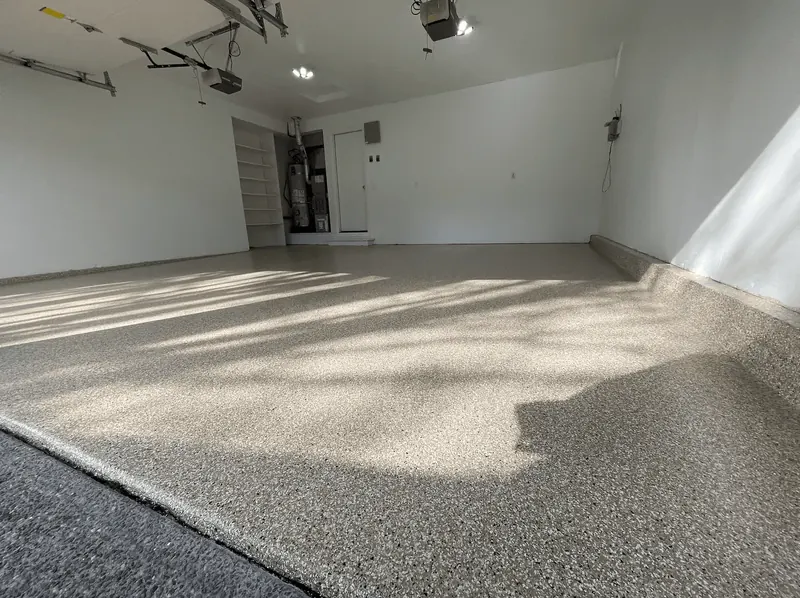
Our slabs are hard-troweled and often sealed
Seattle's housing skews old, and a lot of garage slabs carry decades of sealer, paint or a previous kit. Acid etch does nothing to those. The kit bonds to whatever's on top and comes off with it.
What a kit costs, all in, and per year
The kit itself is $130 to $250. Add etch, rollers, spiked shoes, a respirator and a crack patch, and a two-car garage is usually $250 to $450 out of pocket, more with a rented grinder.
- 1–3 yrstypical kit life under daily parking here
- 15–20 yrsa professional floor over ground concrete
A professional floor runs about $1,600 to $5,800 for a typical 400 to 500 square foot two-car garage. Per year of floor, the two land closer than the sticker prices suggest, roughly $100 to $300 a year for a kit against $110 to $390 for a pro floor.
The difference is what you have at the end: a floor with a lifetime adhesion warranty, or a kit to grind off at $1 to $3 a square foot. The full Seattle numbers.
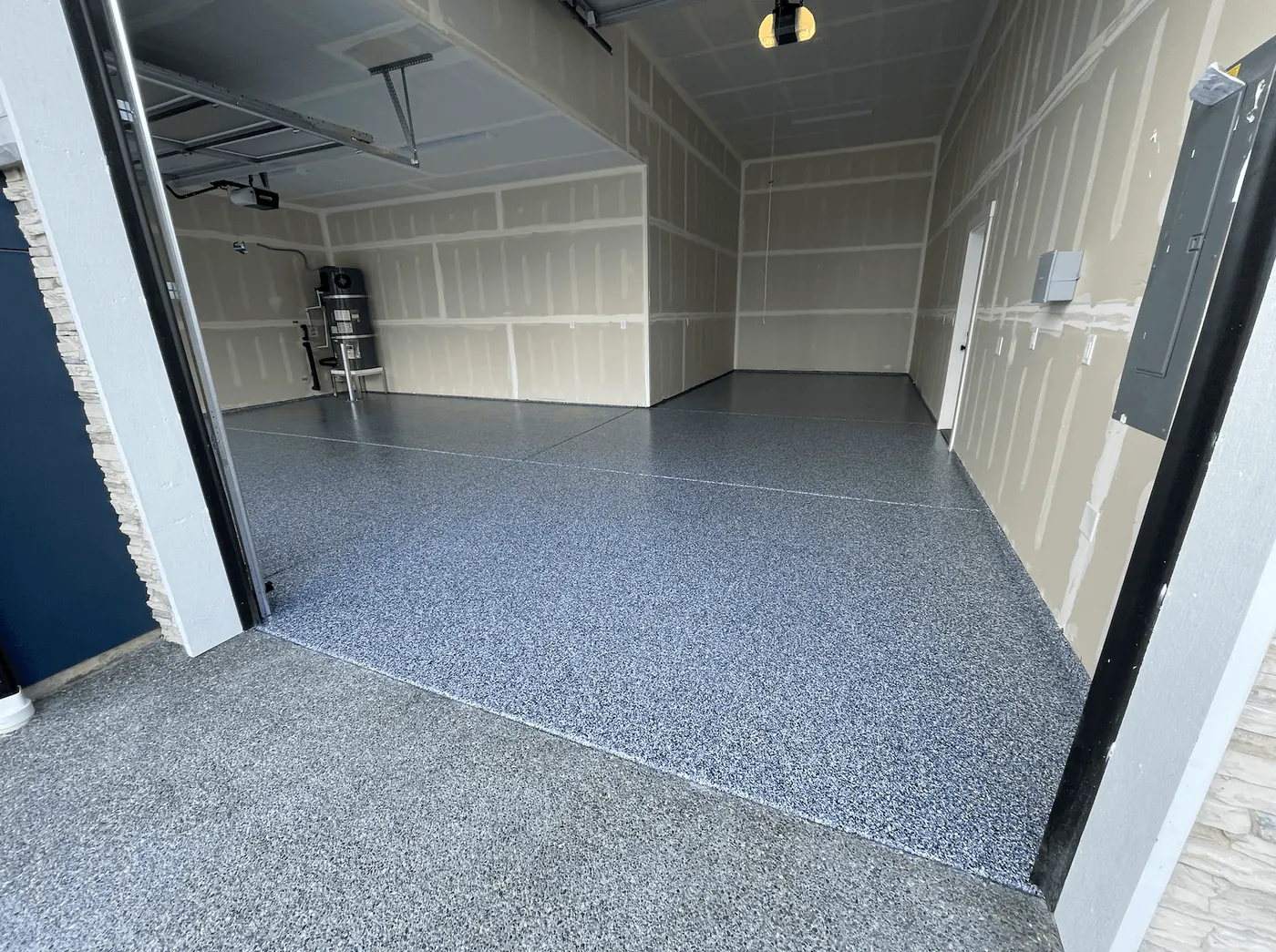
When a kit is the right call
We'd rather you buy the right thing than the expensive thing. A kit makes sense when:
- The garage is heated or you can wait for a warm, dry week, and the slab passes the plastic-sheet test.
- You're selling in two or three years and want it clean, not permanent.
- It's a rental, a storage garage, or a shop where nothing drives in.
- You like the work and you're willing to rent the grinder, fill the cracks, and follow the sheet's cure times to the hour.
Do it that way and a kit is a fair two-to-five-year floor. Skip the grinder and the thermometer, and it's a one-winter floor. Our kit vs. professional guide walks the whole decision, and why epoxy garage floors peel shows what the end of a kit usually looks like.
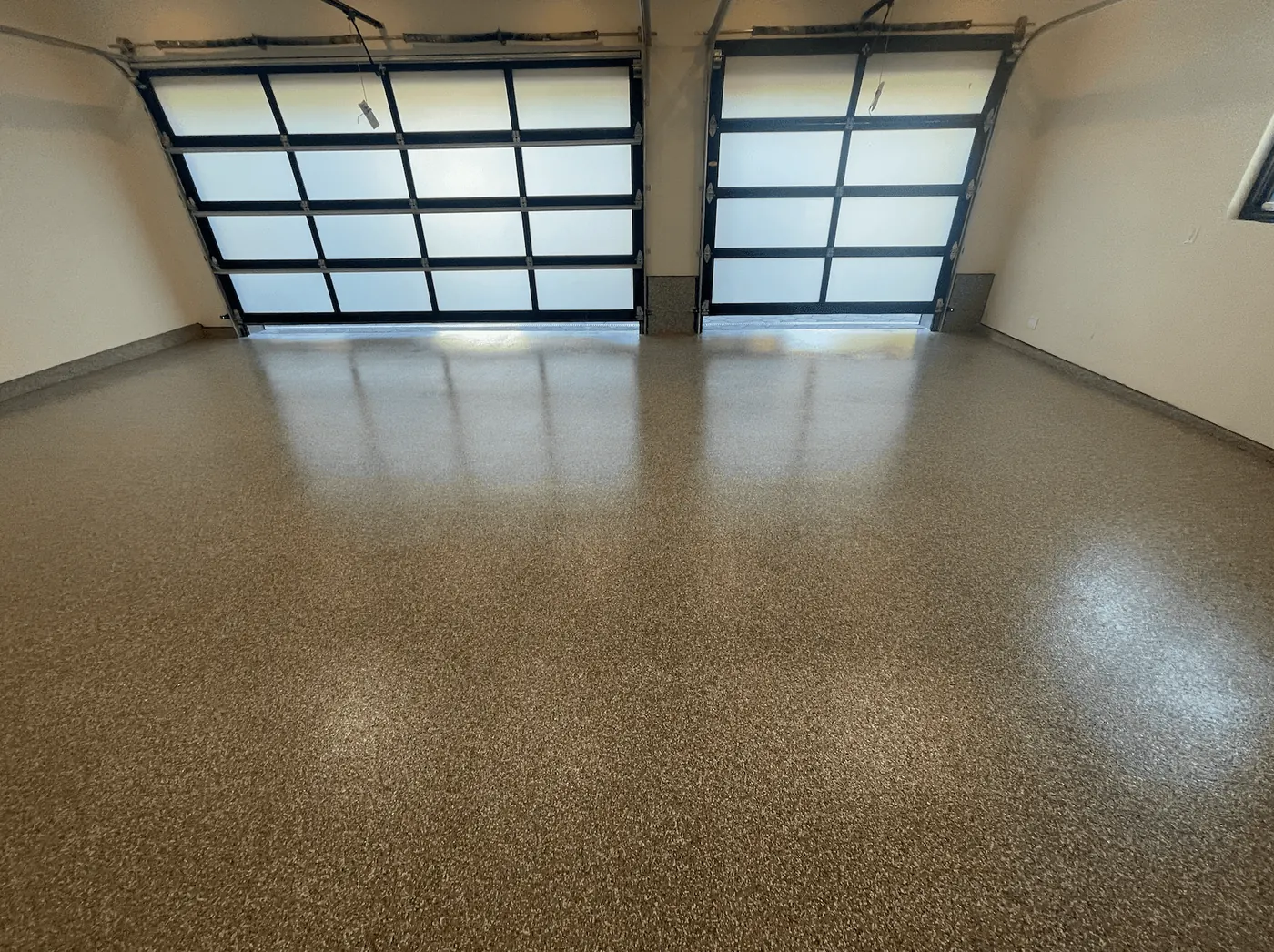
Already did a kit, and it's peeling?
How it came up tells you why
Sheets with a smooth back: prep. A damp, chalky back: moisture. Two tire-shaped stripes: hot tires on a thin coat. Each one changes what the next floor needs.
Recoat or redo
A kit that's bonded everywhere can sometimes be ground dull and coated over. One that's lifting anywhere comes off to bare concrete. Water-based kits are usually too thin to pass. How we tell, and what each costs.
Moisture, prep, thickness
The three things the kit couldn't give you are the three things a professional floor is built around: a moisture test and barrier, a diamond grind, and 30 to 40 mils of coating. The floor, layer by layer.
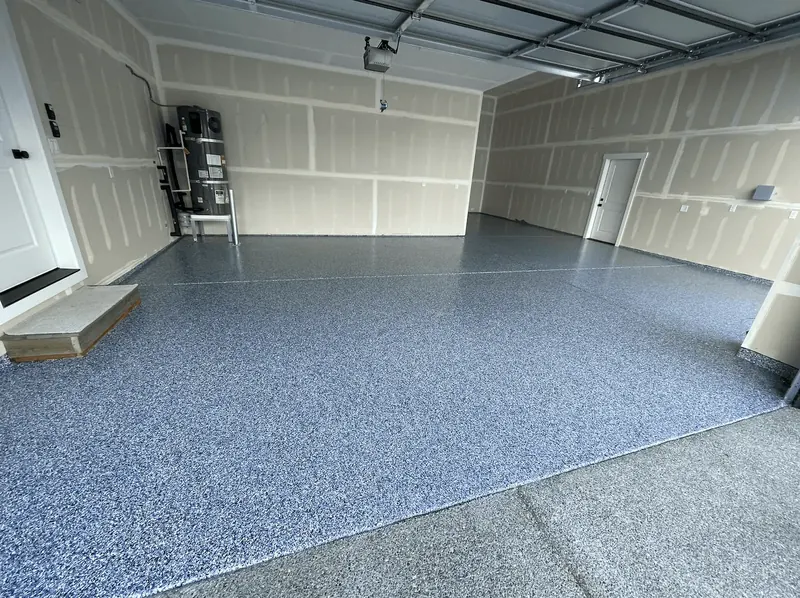
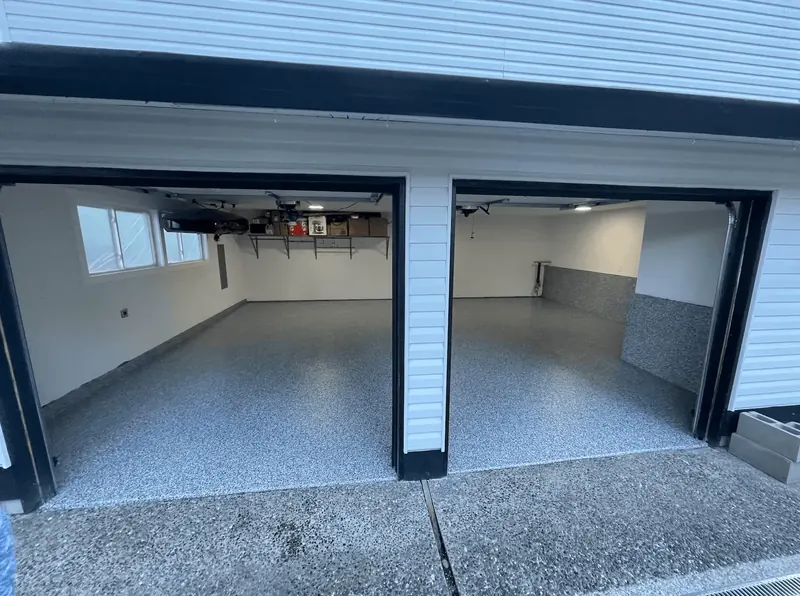
Floors we've installed
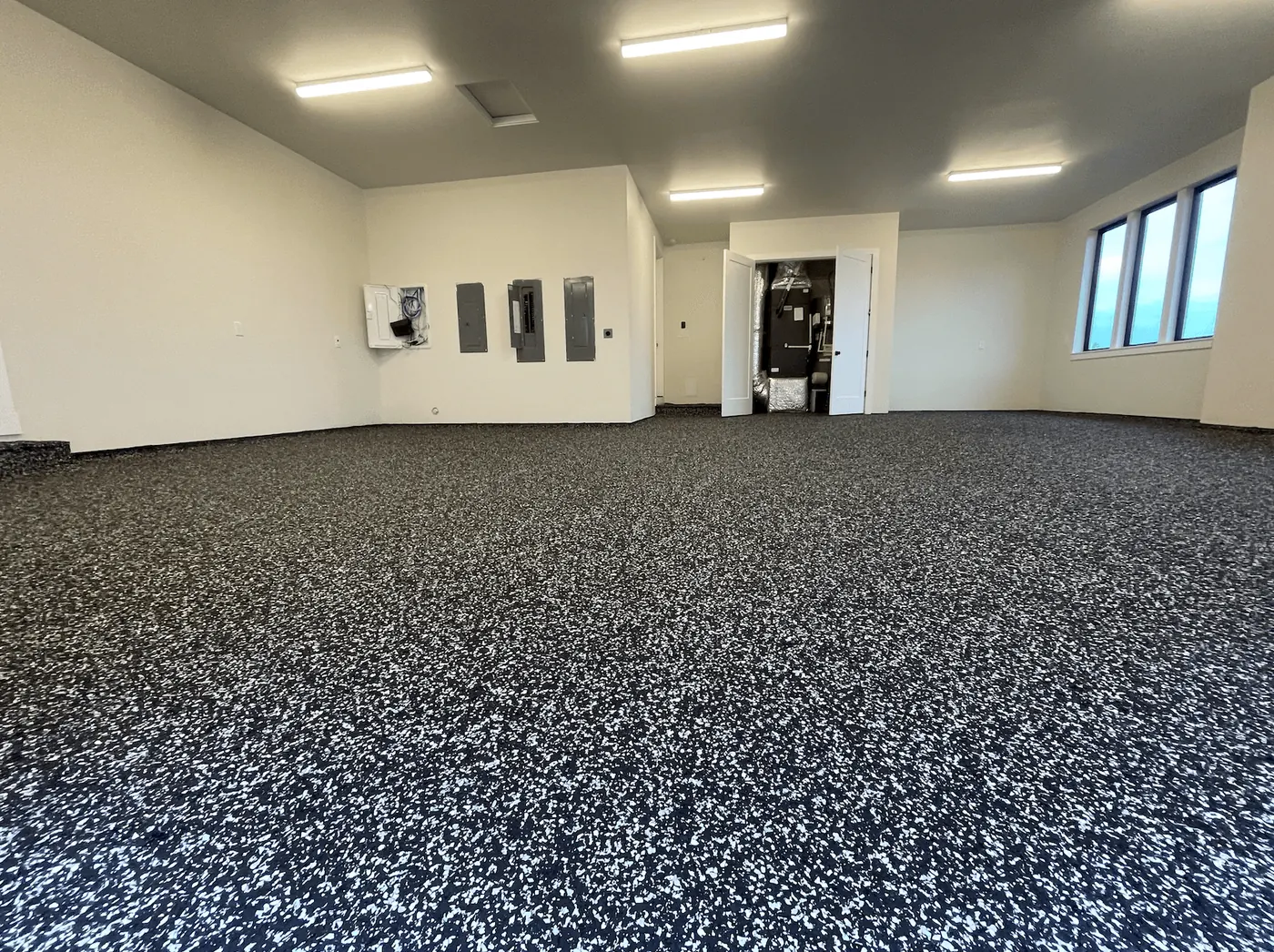
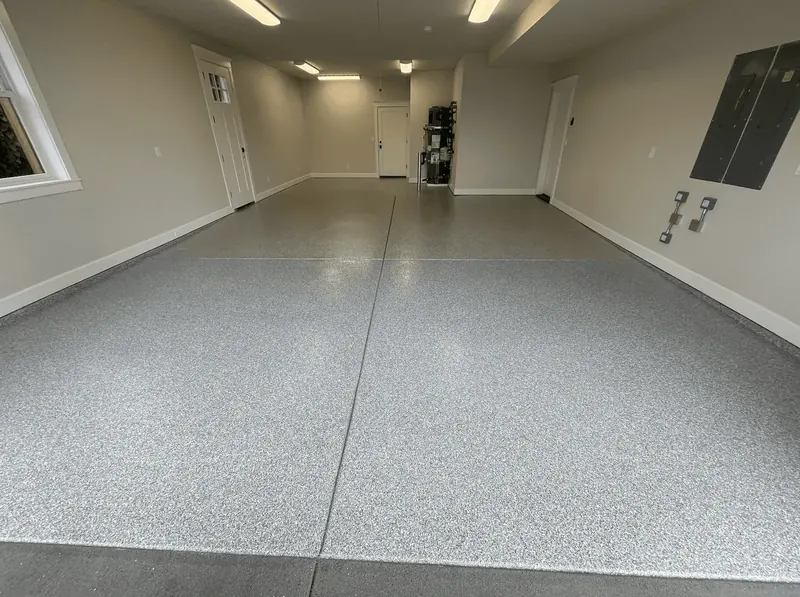
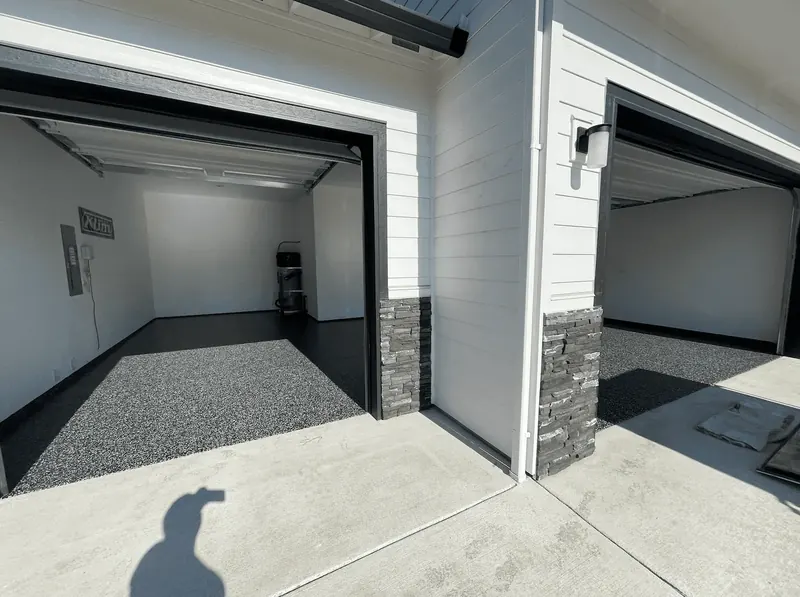
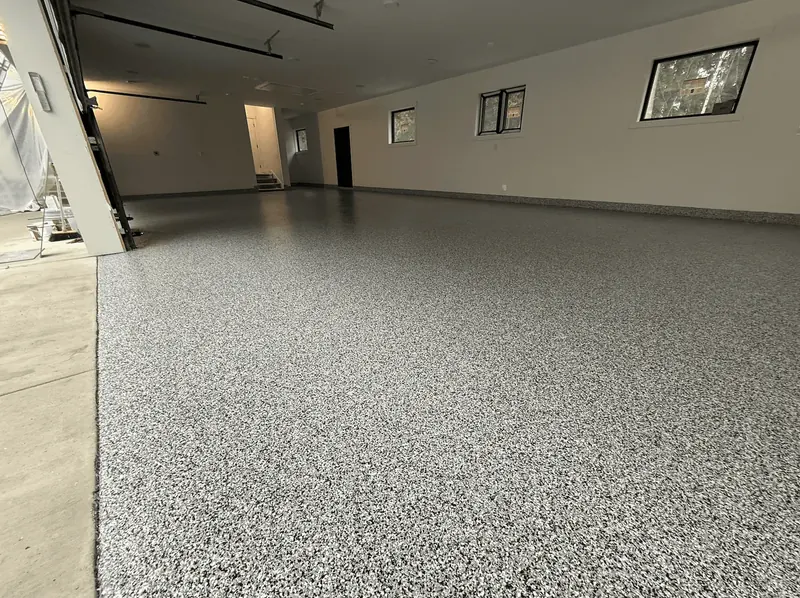
Real jobs, real slabs. Every one of these started with a grind and a moisture reading. See the full gallery, or preview a flake color on your own garage.





Garage floor kit questions
Is Rust-Oleum EpoxyShield good for a garage floor?
On a warm, dry, etched slab with light use, it does what its sheet says for a few years. Its data sheet wants the air, the coating and the floor between 60 and 85°F with the floor 5°F above the dew point, three days before cars in a warm garage, and it dries to about 3 mils a coat. In an unheated Seattle garage under daily parking, that usually means one to three years, then peeling in the tire lanes.
Is RockSolid better than EpoxyShield?
It's thicker in solids (96% by volume on the sheet) and tolerates a wider temperature range, 40 to 90°F with 55°F as the practical floor, and cars can return in 24 to 36 hours at room temperature. An independent review still estimates only about 3 mils dry and suggests a second clear coat. Better kit, same category.
How long does a Rust-Oleum garage floor coating last?
In a Seattle garage with cars, plan on one to three years for a water-based kit, two to five on a dry, heated slab that was properly prepped. The sheets don't promise a lifespan; the thickness and the prep instructions predict it.
Can I apply a garage floor kit in winter?
Not reliably. EpoxyShield's sheet wants the air, the coating and the floor at 60°F or warmer with the floor 5°F above the dew point, most two-part kits want the concrete itself at 55°F or more, and an unheated Seattle slab sits below that from fall to spring. RockSolid's sheet allows 40°F but warns dry times slow below 55°F. Wait for a warm, dry week or heat the slab for days first.
Do I need to grind the floor before using a kit?
The kit says etch; the coating would rather you ground. Etching removes nothing, not sealers, cure compounds, old paint or oil, and barely bites a hard-troweled slab. A rented grinder for a day is the single biggest improvement you can make to a kit's lifespan.
What is the best garage floor epoxy kit?
The one whose data sheet matches your garage. Check the minimum floor temperature, the dry film thickness or solids by volume, and whether it needs a vapor barrier you can't buy. 100% solids kits from pro suppliers are thicker than the big-box water-based kits, and harder to apply.
Can a professional coat over a failed kit?
Only if the kit is bonded everywhere, and water-based kits rarely are. Usually it gets ground off to bare concrete, about $1 to $3 per square foot, and a full floor goes down on the prepared slab. The upside is the second floor gets the moisture test and the grind the first one didn't.
Why do garage floor kits peel where the tires sit?
Hot-tire pickup. A tire comes home from the highway hot, softens a thin low-solids coating, then cools and grabs it. The next time you back out, the coating comes with the tire. Thin film and shallow prep cause it; thickness and a real grind stop it.
Kit, or the floor you don't redo?
If you're weighing a weekend with a kit against a floor with a lifetime adhesion warranty, get the real number first. A free estimate takes about 20 minutes, and the written price doesn't pressure you either way.