
Coating Over an Old Epoxy Garage Floor
Sometimes. If the old epoxy is still stuck to the concrete everywhere, a new floor can go over it once it's ground dull. If it's lifting anywhere, it comes off to bare concrete first. Here's how we tell which, and what each path costs.
- Three tests before any quote
- Sound epoxy gets recoated
- Peeling epoxy comes off
- Done in one or two days
Can you put a new coating over old epoxy?
Yes, but only over epoxy that's still bonded to the concrete everywhere, and only after it's ground dull. Cured epoxy is hard and glassy. Nothing sticks to it as-is.
A new layer is only as strong as the layer under it. Put a fresh coat over epoxy that's letting go in the tire lanes, and the whole thing lifts off together, usually faster than the old floor did.
So the real question isn't whether you can coat over epoxy. It's whether the old epoxy is still stuck down. That's what we test before we quote, and it decides whether your job is a recoat or a redo.

Recoat or redo?
How to read your floor
The part of a failure you can see is usually smaller than the part you can't. Coating that has let go of the slab can still look perfectly flat. So we go by sound and by pull, not by looks.
A recoat is reasonable when
- The old coating is a real two-part epoxy, not a one-part "epoxy paint" or a thin water-based kit.
- It sounds solid everywhere you tap it: at the door, along the walls, where the tires sit.
- Nothing lifts when you score it and pull tape off it.
- The problem is cosmetic: dull, scratched, faded, gloss gone, a color you're tired of.
- The slab underneath passes a moisture test.
A tired floor that's still bonded is cosmetic. One that's letting go is structural, and you can't paint over structural.
It's a redo when
- You hear hollow spots when you tap. The coating has already separated, even if it hasn't peeled yet.
- It's lifting at the edges, peeling in sheets, or coming up where the tires park (hot-tire pickup).
- There are blisters or bubbles. That's moisture pushing up from below, and no top layer stops it.
- It's a hardware-store kit. They go on thin, and they rarely hold a professional topcoat.
- A quarter or more of the floor has failed, or the floor is ten years old and wearing everywhere.
The three tests we run before we quote
Ten minutes with a screwdriver, a roll of tape and a moisture meter tells us more than an hour of looking. You can run the first two yourself before you call anyone.
-
The tap test
Tap across the floor with a screwdriver handle, slowly, at the door, along the walls and where the tires sit. Bonded coating sounds dull and tight. Debonded coating sounds hollow. Mark where the sound changes: that outline is the real size of the failure, and it's usually bigger than the peeled patch.
-
The tape test
Score a small X through the coating, press strong tape over it and rip it off. If flakes come up with the tape, the bond is weak, and a recoat would fail with it. We test several spots: a floor can be solid in the middle and loose at the edges.
-
The moisture test
We take meter readings and look at the back of any loose piece. A damp, chalky back means moisture pushed the old floor off, and a new one will go the same way without a barrier primer. Your own check: tape plastic to bare concrete overnight and look for condensation.
What the old floor was matters too. If you know the brand of kit, when it went down and how the concrete was prepped, tell us. A kit applied over an acid etch on a never-tested slab tells us most of the story before we tap anything.
What a recoat involves, when the floor passes
A recoat isn't a new coat rolled over the shine. Cured epoxy is too smooth to bond to, so we grind the whole floor dull first. Not down to concrete, just enough to cut a fine profile into the old coating.
Then it's vacuumed and wiped, and the new floor goes on: a polyurea base coat, full flake in the color you choose, and a clear polyaspartic topcoat with anti-slip grit. The old epoxy becomes a primer under a new floor.
Only want the gloss back on a sound flake floor? A clear polyaspartic topcoat over the ground epoxy is a smaller job, and unlike an epoxy clear coat it won't amber at the door.
One honest note: our lifetime adhesion warranty covers a coating letting go of the concrete. On a recoat, the layer under our work is someone else's epoxy. We put what's covered in writing first, and when there's any doubt about the old bond, we grind to bare concrete instead.
What a redo involves, when it fails
A redo is a new floor on a clean slab. The old coating is a removal job first, and the removal is what you're mostly paying extra for.
-
Grind everything off
Old epoxy, paint, sealer and the failed layer all come off, down to clean concrete. Taking off only the loose parts leaves a seam between old and new, and the seam fails first. Most floors take a morning; a thick commercial epoxy or a gummy DIY kit takes longer.
-
Repair the slab
Cracks and control joints are filled and ground flush; on a Premium floor, the bigger ones are cut open and rebuilt. Pits and spalls get patched. The failed coating often hid these, which is one reason a redo finishes better than the first floor did.
-
Test for moisture and fix the cause
If moisture pushed the old floor off, a moisture vapor barrier primer goes onto the bare slab and cures overnight. That's the one step that turns a one-day redo into a two-day one. Skipping it means paying for the same failure twice. How we decide a slab needs the barrier.
-
Build the new floor
Polyurea base coat, full flake broadcast, clear polyaspartic topcoat with anti-slip grit. Walk on it the next morning, park after 72 hours, and the floor carries our lifetime adhesion warranty, because this time it's bonded to concrete we prepared.
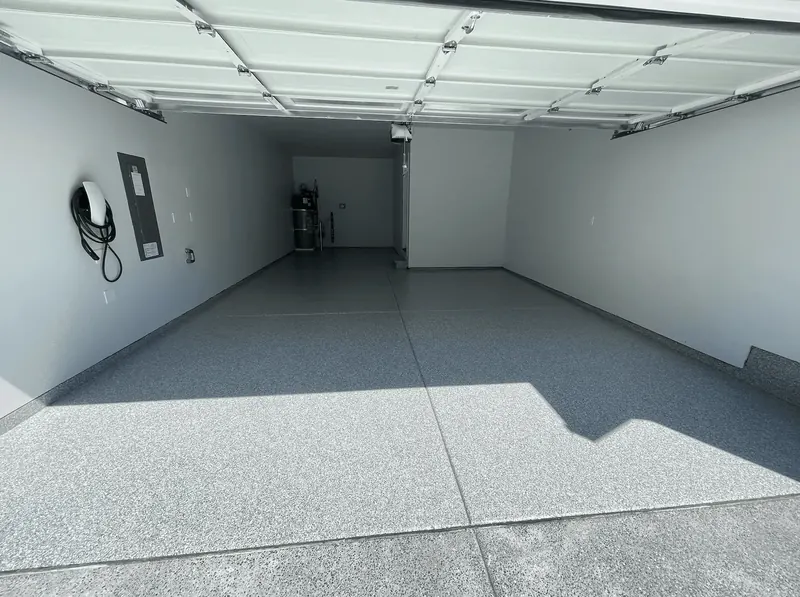
What it costs to redo a garage floor
Two numbers add up: taking the old coating off, then putting the new floor down.
- $1–$3per sq ft to remove a failed coating
- $4–$12per sq ft for the new floor
On a two-car garage of about 450 square feet, a full redo usually lands between $2,200 and $6,800, depending on how much comes off, how much repair the slab needs, and whether it needs a moisture barrier.
A recoat over sound epoxy costs less: a lighter grind and nothing to haul away. A spot repair is cheaper still, but only holds when the peeling is in one small area. If it's letting go in several places, a redo costs less in the end, because every patch over a failing floor fails in turn.
We leave a written price with the removal as its own line. Full ranges are in our Seattle cost guide.
Why the old floor failed matters more than the new coating
A redo that repeats the first floor's mistake repeats its lifespan. Peeling epoxy fails for one of five reasons, and in Seattle two of them do most of the damage.
 Cause 1
Bad prep
Most kits tell you to acid-etch. Etching leaves a profile too shallow for a thick coating to grip, and it can't remove old sealers or a hard-troweled finish. The coating sits on top instead of keying in, and the first hot tire pulls it loose. The fix is grinding, not a better kit.
 Cause 2
Moisture from below
Ground water moves up through a Seattle slab for months every year. Epoxy blocks it, pressure builds, and the coating blisters and lets go. If the back of a peeled piece is damp or chalky, this is your cause, and the new floor needs a barrier primer, not just a grind.
 Causes 3 to 5
Something in between, cold, or too soon
Sealer, curing compound or oil between the epoxy and the slab. A coat put down on a cold, damp floor that never cured right. A car parked on it two days early. Each leaves its own signature, and why epoxy garage floors peel shows you how to read them.
Top coats, clear coats and re-epoxying
A few things people ask for by name, and the straight answer on each.
Good on a sound floor
Over bonded epoxy that's been ground dull, a clear polyaspartic topcoat adds UV stability and grip, and it cures in a cool garage. Over hollow spots, it just seals a failure under gloss.
Same rules as any recoat
Possible when the old floor is sound everywhere and ground dull first. We'd put polyurea and polyaspartic on it instead, for the reasons on our epoxy page, but the rule doesn't change.
Don't
Floor paint can't grip cured epoxy. It's a few thousandths of an inch thick, and hot tires lift it inside a season. Then the paint has to come off too. Grinding dull and recoating is the cheapest fix that actually lasts.
Yes, after a grind
A new coat can't bond chemically to cured epoxy, so the bond is mechanical, which is why the grind isn't optional. Our polyurea guide covers the same question for the base coat.
Floors we've installed
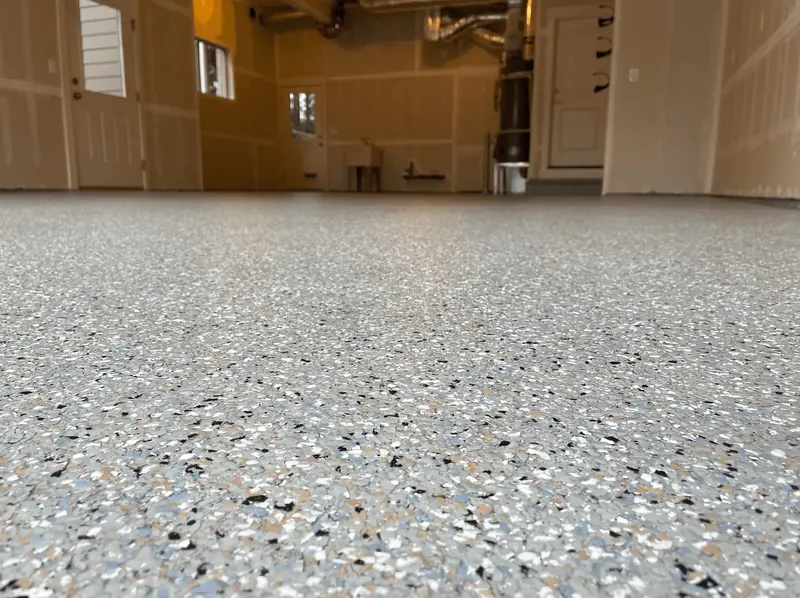
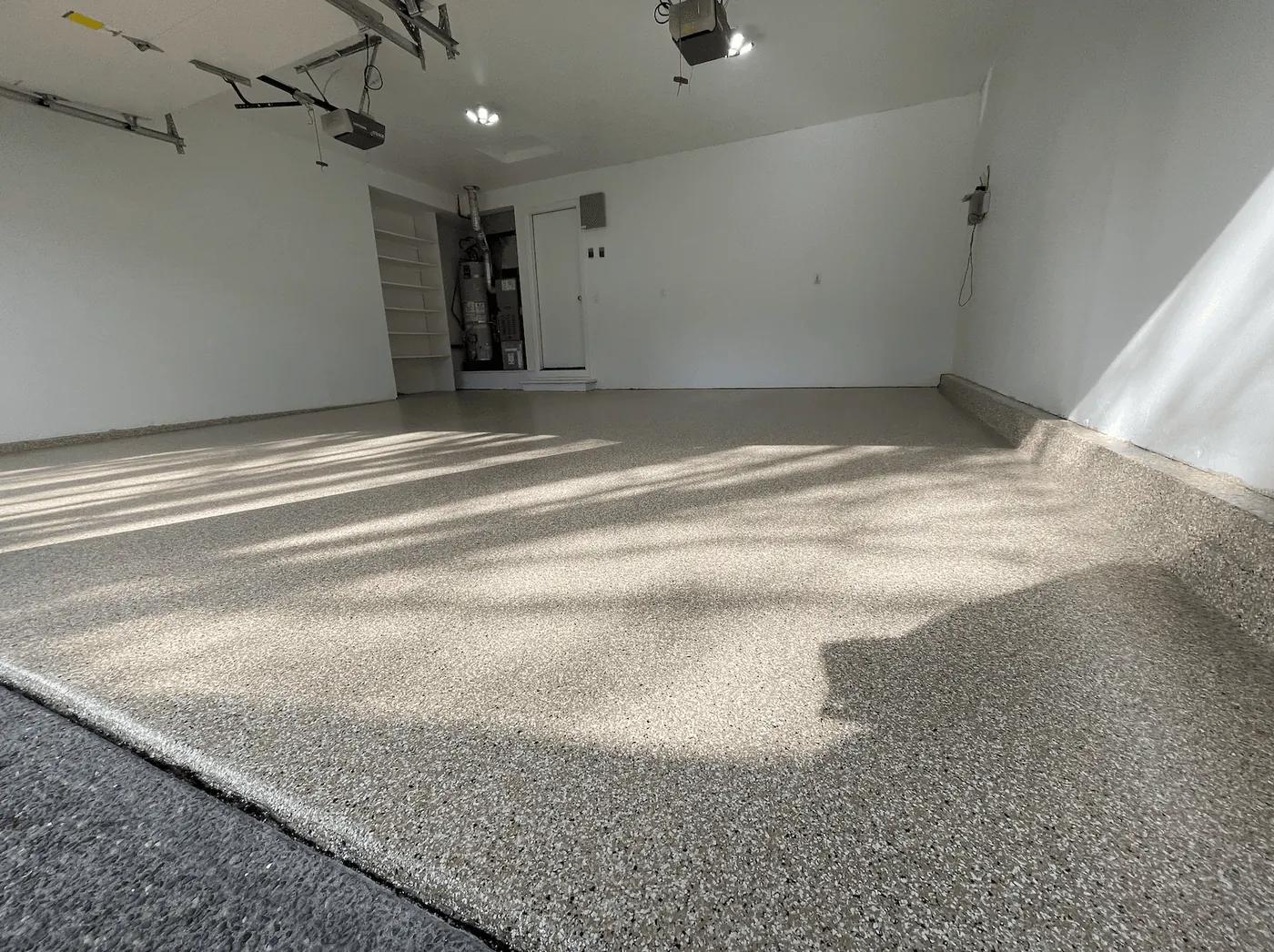
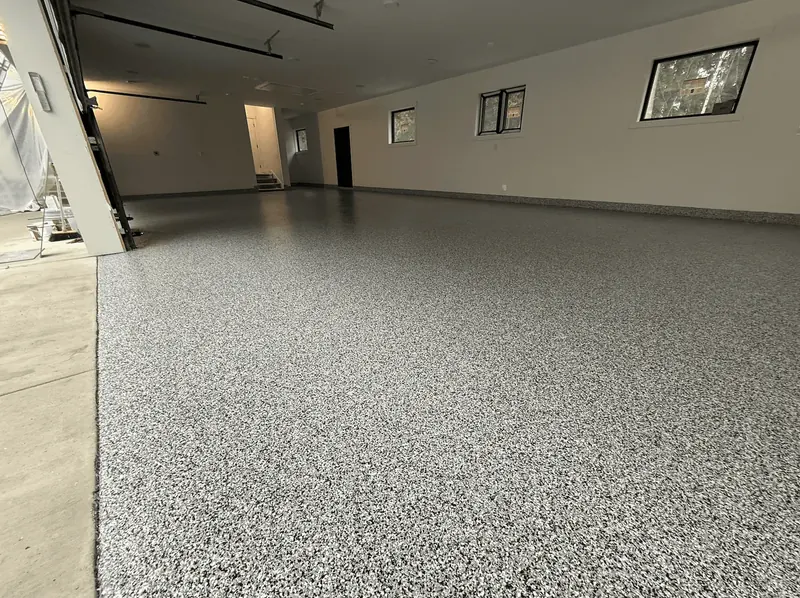
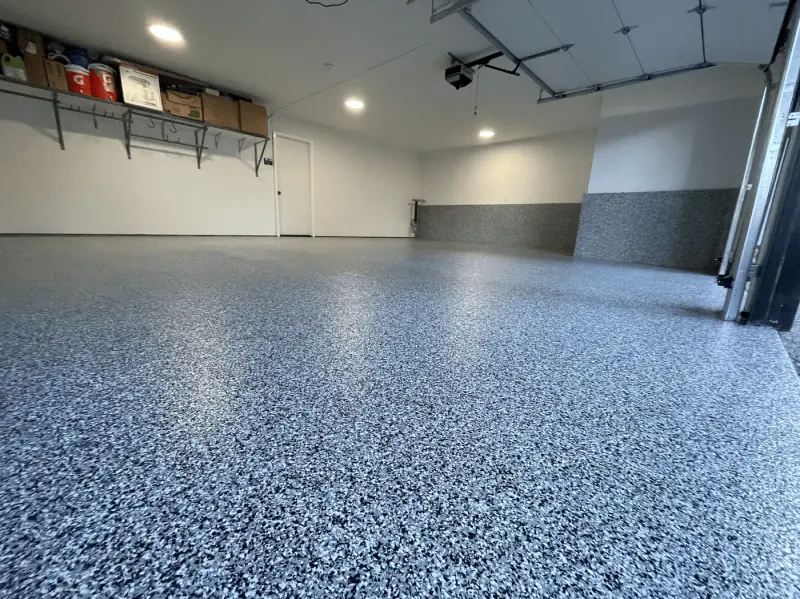
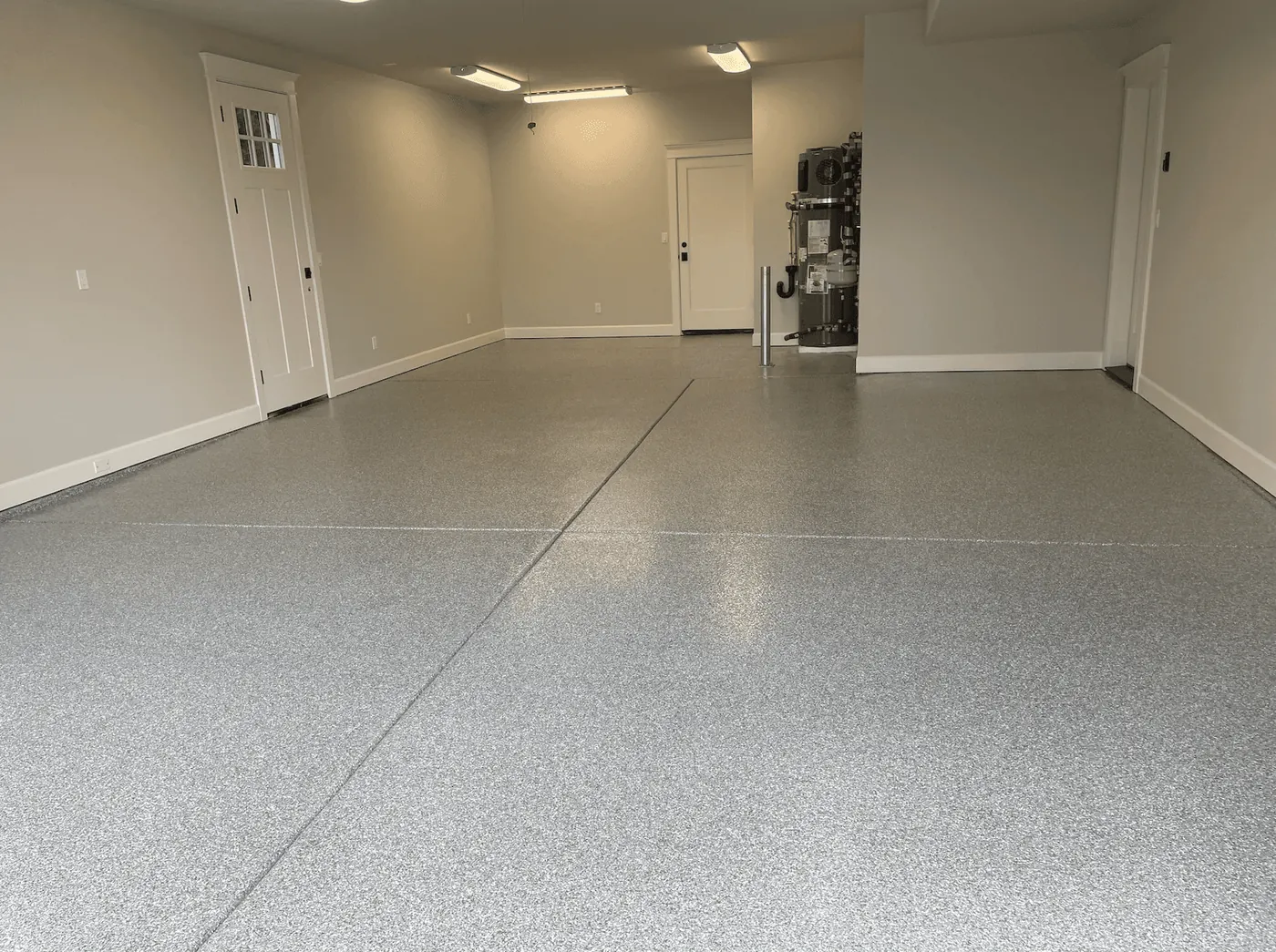
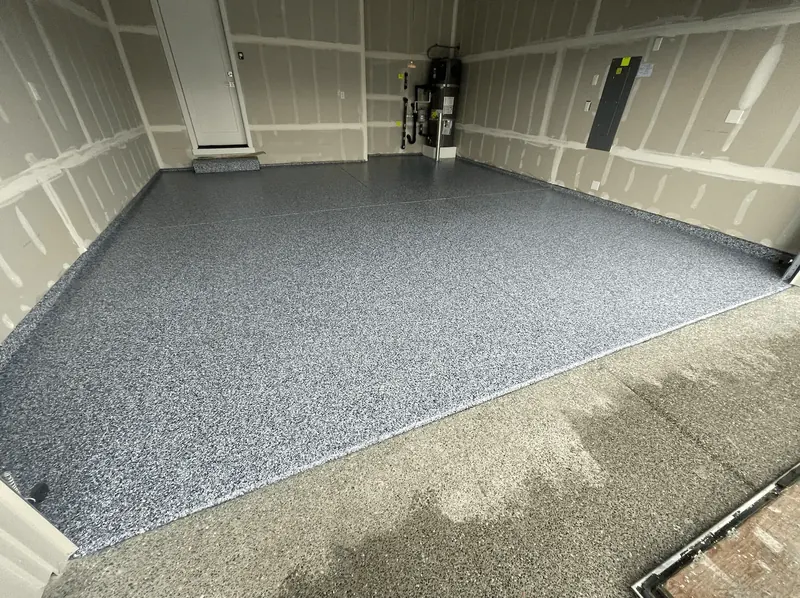
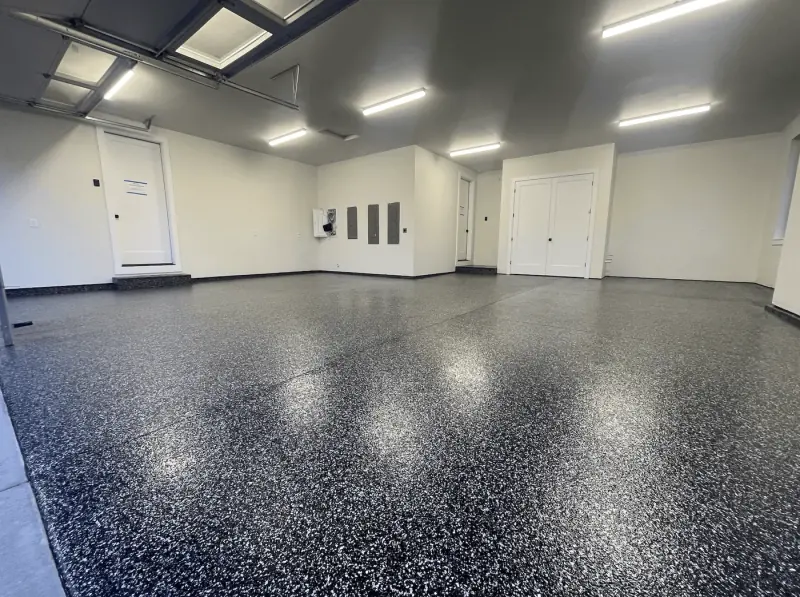
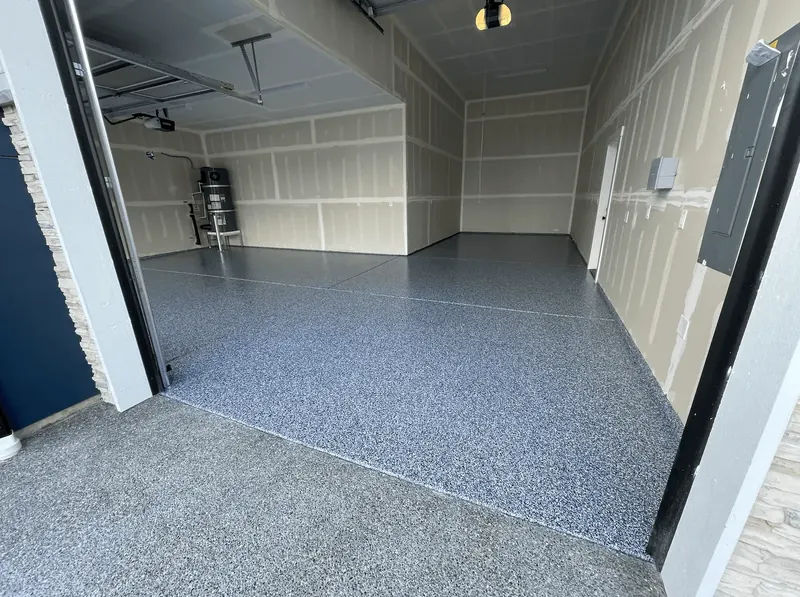
Real jobs, real slabs. Every one of these started with a grind and a moisture reading. See the full gallery, or preview a flake color on your own garage.





Recoat and redo questions
Can you put polyaspartic over an epoxy garage floor?
Yes, if the epoxy is bonded to the concrete everywhere and gets ground dull first. Cured epoxy is too smooth to bond to, so the new coat grips the ground surface mechanically. If the epoxy is lifting anywhere, it comes off to bare concrete before anything new goes down.
Can you epoxy over old epoxy?
Only over epoxy that's stuck down solid everywhere, and only after grinding it dull. If it's peeling anywhere, the new coating peels with it. We'd recoat with a polyurea base and polyaspartic top rather than more epoxy, but the rule is the same whatever goes on top.
How do you know if old epoxy is still bonded?
Tap it and pull on it. Bonded coating sounds dull and tight; debonded coating sounds hollow. Score a small grid, press strong tape over it and rip the tape off; if flakes come up, the bond is weak. Check the door, the walls and the tire lanes, not just the middle.
Do you have to grind off old epoxy before recoating?
Yes, one way or another. Sound epoxy gets ground dull so the new floor can grip it. Failing epoxy gets ground off completely, down to clean concrete, because removing only the loose parts leaves a seam that fails first.
Can you put a clear coat over an epoxy garage floor?
On a sound, ground-dull floor, yes, and a clear polyaspartic topcoat is a real upgrade: UV-stable, chemical-resistant and gritted for traction. On a floor with hollow spots or blisters, a clear coat only seals the failure under gloss. We test before we recommend it.
How much does it cost to redo a garage floor?
Removal plus the new floor. Removing a failed coating runs about $1 to $3 per square foot, then the new polyurea-polyaspartic floor runs about $4 to $12 per square foot in the Seattle market. A two-car garage usually lands between $2,200 and $6,800, depending on removal, repairs and whether a moisture barrier is needed.
Is it cheaper to repair or redo a peeling epoxy floor?
If it's peeling in one or two small spots and the rest is solid, a spot repair is cheaper. If it's peeling in several places, a redo costs less in the end, because every patch over a failing floor fails in turn and you pay for each one.
Can you paint over an epoxy floor?
We don't recommend it. Floor paint can't grip cured epoxy, it's only a few thousandths of an inch thick, and hot tires lift it within a season. Grinding the epoxy dull and recoating it is the cheapest fix that lasts.
How long does a garage floor redo take?
Usually one day: grind the old coating off, repair the cracks and pits, then base coat, flake and topcoat. Two days if the slab needs a moisture vapor barrier, because the barrier primer cures overnight. Walk on it the next morning and park after 72 hours.
Not sure if your floor is a recoat or a redo?
Send us a photo of the worst spot, or book a free estimate. We tap the whole floor, test the slab and tell you which path it needs, with a written price for it.