
Epoxy Garage Floors in Seattle, Honestly
Most people who ask us for an epoxy garage floor want a tough, glossy floor that handles cars. In Seattle, plain epoxy is the hardest way to get one. Here's what epoxy really costs, where it fails in our climate, and what we put down instead.
- Epoxy wants 55°F or warmer
- Days before you can park
- Ambers in sunlight
- Our floor: polyurea-polyaspartic
Should you get an epoxy garage floor in Seattle?
If your garage is heated, dry and gets no sun at the door, a professional epoxy floor can be a fine floor. Most Seattle garages are none of those things.
Our slabs sit on wet ground half the year, run cold from October to April, and face the door. Epoxy struggles with all three: it won't cure on a cold slab, moisture from below blisters it, and daylight ambers it.
That's why we don't install plain epoxy. We install the step up: a polyurea base coat, full flake and a clear polyaspartic topcoat. It's the look people mean by an epoxy floor, but it cures in the cold, moves with the concrete and stays clear.
If you've been calling it epoxy, keep calling it epoxy. Everyone does. Here's how our epoxy floor installation in Seattle actually goes.
"Epoxy garage floor" means three very different products
The gap between the cheapest thing sold as epoxy and the most expensive is bigger than the gap between epoxy and anything else. Know which one a quote or a kit is talking about.
Latex with a little epoxy in it
Sold by the gallon next to the wall paint, and it rolls on like paint because it mostly is paint. It lasts one to three years under cars, and hot tires lift it first. Fine for a storage garage you're about to sell.
Water-based epoxy in a box
A real two-part epoxy, thinned with water, so it dries to about three mils a coat. The box wants a 55°F floor, an acid etch and three days before the car comes back. In a Seattle garage, that's two to five years.
The real thing, with the same weak spots
Ten to thirty mils a coat and ten to twenty years when it's installed right. Right still means a warm, dry, tested slab and days of cure. And it still ambers in sunlight, which is why pros top it with a clear coat.
Why epoxy fails in a Seattle garage
None of this is a knock on epoxy. It's a knock on putting a warm-climate coating on a cold, damp slab. Four things do the damage.
 Cold
Cold
It won't cure on a cold slab
Most epoxies need the concrete itself at 55°F or warmer. Below that the cure slows hard, and an unheated Seattle garage spends half the year under that line. The result: a floor that stays soft, scuffs, or never fully hardens.
 Water
Water
Moisture from below blisters it
Epoxy is a vapor barrier. When ground water rises through the slab, pressure builds under the coating until it blisters and lets go. Older Seattle slabs often have no plastic sheet under them, and it's the most common reason a redo is needed.
 Sun
Sun
It ambers in daylight
Standard epoxy turns yellow in UV. The patch of floor that gets afternoon light through the open door goes amber and dull while the back stays gray. Once it happens, it's in the epoxy itself, and the fix is grinding and recoating.
 Stiffness
It cracks with the slab and lifts under hot tires
Epoxy cures into a rigid shell, and concrete moves with the seasons, so it eventually shears off along the cracks. Thin epoxies also soften under a hot tire and come up when you back out: hot-tire pickup.
What an epoxy garage floor costs in Seattle
At the low end, epoxy and a polyaspartic floor cost about the same per square foot. The math splits on how long each one lasts here.
- $4–$10per sq ft for installed epoxy
- 3–7 yrstypical epoxy life in a Puget Sound garage
A polyurea-polyaspartic floor runs $4 to $12 and lasts 15 to 20 years over ground, tested concrete. Spread each price over its years, and the "cheaper" floor costs more every year.
DIY kits are the other end: $130 to $250 a kit, plus etch, rollers and a weekend. The full breakdown is in our Seattle cost guide.
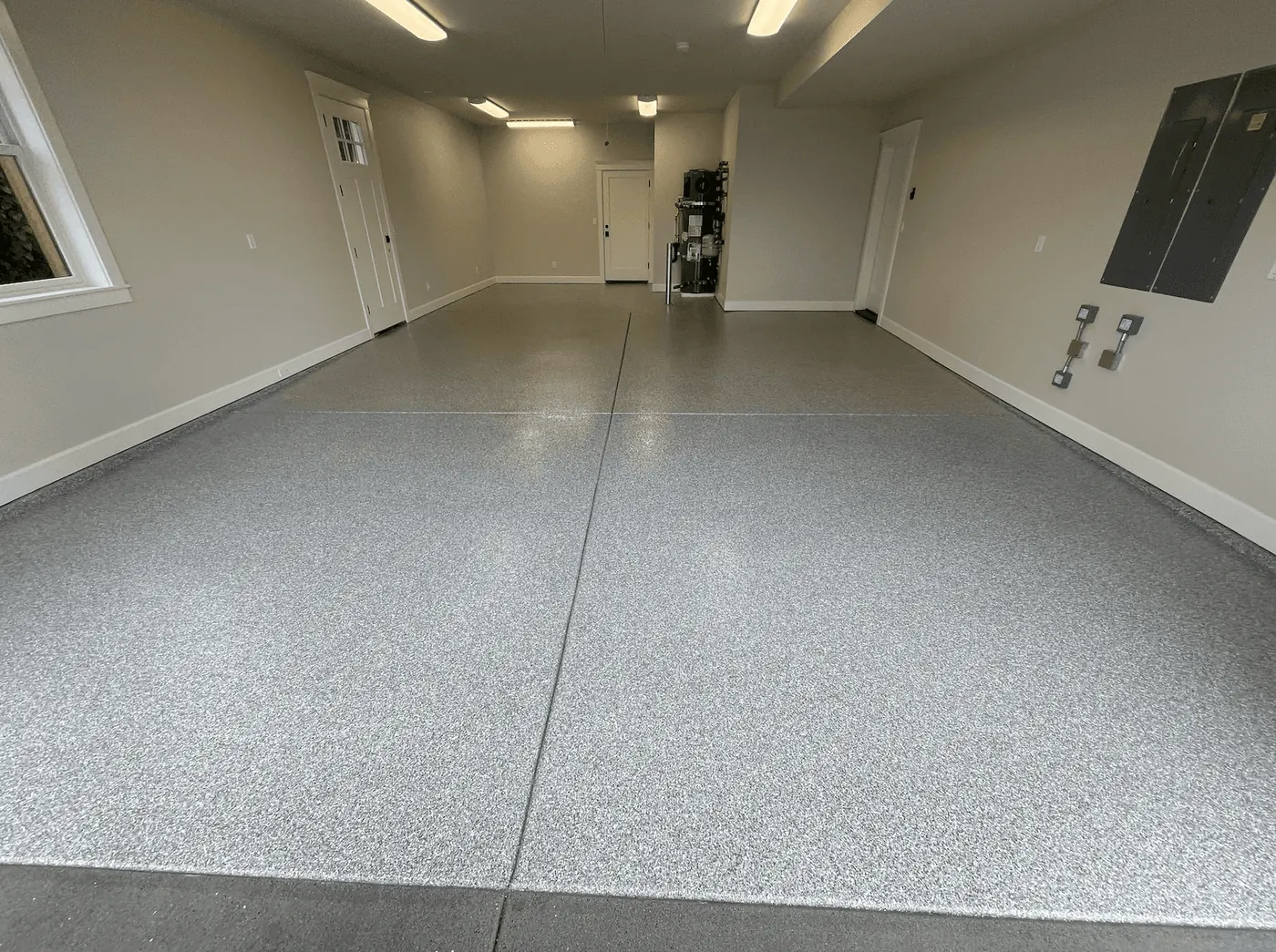
What we install instead, and why we call it the epoxy alternative
Same flake look, same seamless finish, different chemistry under it. Here's the floor, layer by layer.
-
Diamond-ground concrete, moisture-tested
Grinding opens the slab so the coating keys into it instead of sitting on top. The moisture reading decides whether a vapor barrier primer goes down first. Both are the steps a cheap epoxy bid skips, and both matter more than the coating.
-
Polyurea base coat
Thick, flexible and fast-setting. It grips ground concrete, bends with the slab instead of shearing off it, and cures in temperatures that stop epoxy cold.
-
Full flake broadcast
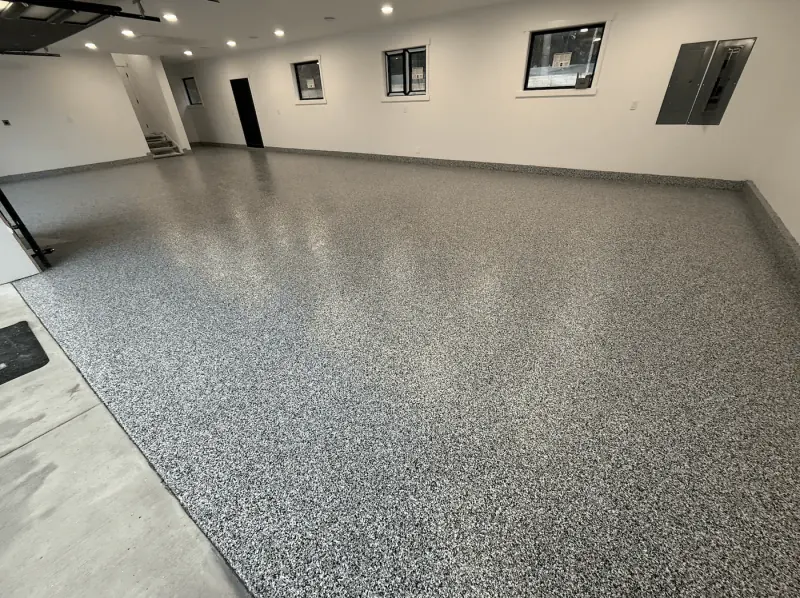
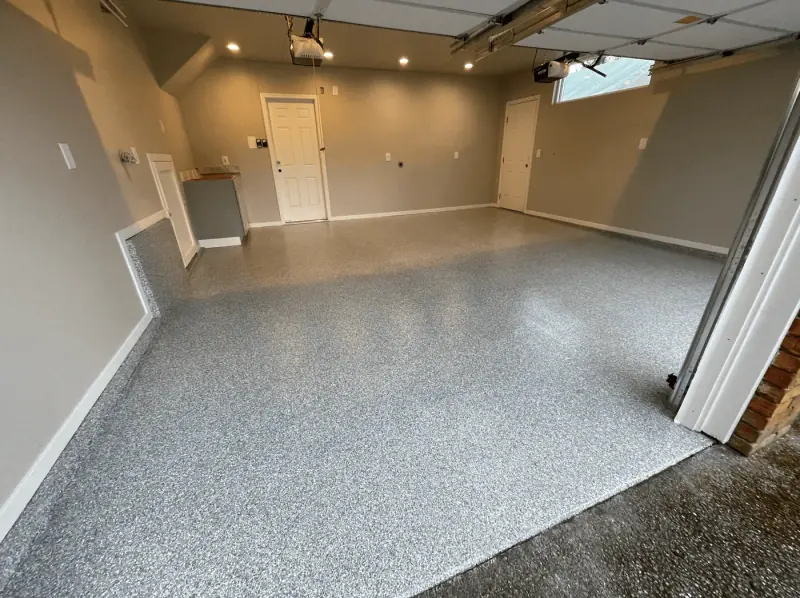
Vinyl flake thrown into the wet base until it won't hold any more. That's the texture, the grip and the look. Flake colors and blends, photographed in Seattle-area garages.
-
Clear polyaspartic topcoat
The wear layer. UV-stable, so it never ambers at the door. Chemical-resistant, with anti-slip grit mixed in. Walk on it the next morning, park after 72 hours. The finished floor is roughly 30 to 40 mils thick, and it carries a lifetime adhesion warranty.
Two-day "epoxy" systems with an epoxy base and a polyaspartic top are common and legitimate in a heated garage. If a Seattle quote says "epoxy," ask which layer. The full comparison is in epoxy vs. polyaspartic vs. polyurea.
Epoxy vs. polyaspartic and polyurea, side by side
| What matters here | Epoxy | Our floor (polyurea + polyaspartic) |
|---|---|---|
| Slab temperature to cure | 55°F and up, warmer is better | Cures in a cold garage |
| Cars back in | 3 to 7 days | 72 hours |
| Sunlight at the door | Ambers and dulls | Stays clear |
| Concrete movement | Rigid; cracks and shears | Flexible; moves with the slab |
| Moisture from below | Blisters without a barrier | Barrier primer when the slab reads high |
| Thickness, installed | Kits 3–5 mils; pro 10–30 per coat | About 30–40 mils, full flake |
| Typical life in a Puget Sound garage | Kits 1–3 yrs; pro 3–7 yrs | 15–20+ years |
| Installed cost, Seattle market | $4–$10 per sq ft | $4–$12 per sq ft |
When epoxy is still the right call
We'd rather lose a job than pretend. Epoxy makes sense when:
- The garage or shop is heated and the slab is dry, tested and out of the sun. A detached, conditioned shop is the classic case.
- You want a solid color epoxy can mix that flake can't match, and you'll keep a UV-stable clear coat over it.
- It's a rental or a short-term fix, and a $150 kit on a dry slab buys you the three years you need. Go in knowing the cure times.
- You want a metallic or marbled floor. That's an epoxy technique, with epoxy's cure window and ambering, and it isn't something we install; an epoxy specialist is the right call.
If your garage is a normal Seattle garage, attached, unheated, door open on weekends, with a slab that's older than you are, it isn't on that list.
Already have an epoxy floor?
 Peeling
Read the failure first
How it came up tells you why: sheets with a smooth back mean bad prep, a damp chalky back means moisture, lifting in the tire lanes means hot-tire pickup. Why epoxy garage floors peel, and what the repair takes.
 Dull or yellow
Recoat or redo
Epoxy that's bonded everywhere can be ground dull and recoated with a polyaspartic top that won't amber. Epoxy that's lifting anywhere comes off to bare concrete. How we tell the two apart, and what each costs.
 Still deciding
See it on your own floor
Our floor preview tool puts the flake colors on a photo of your garage, so you can compare the look you'd get from a polyaspartic floor with the epoxy you had in mind before anyone quotes anything.
Floors we've installed
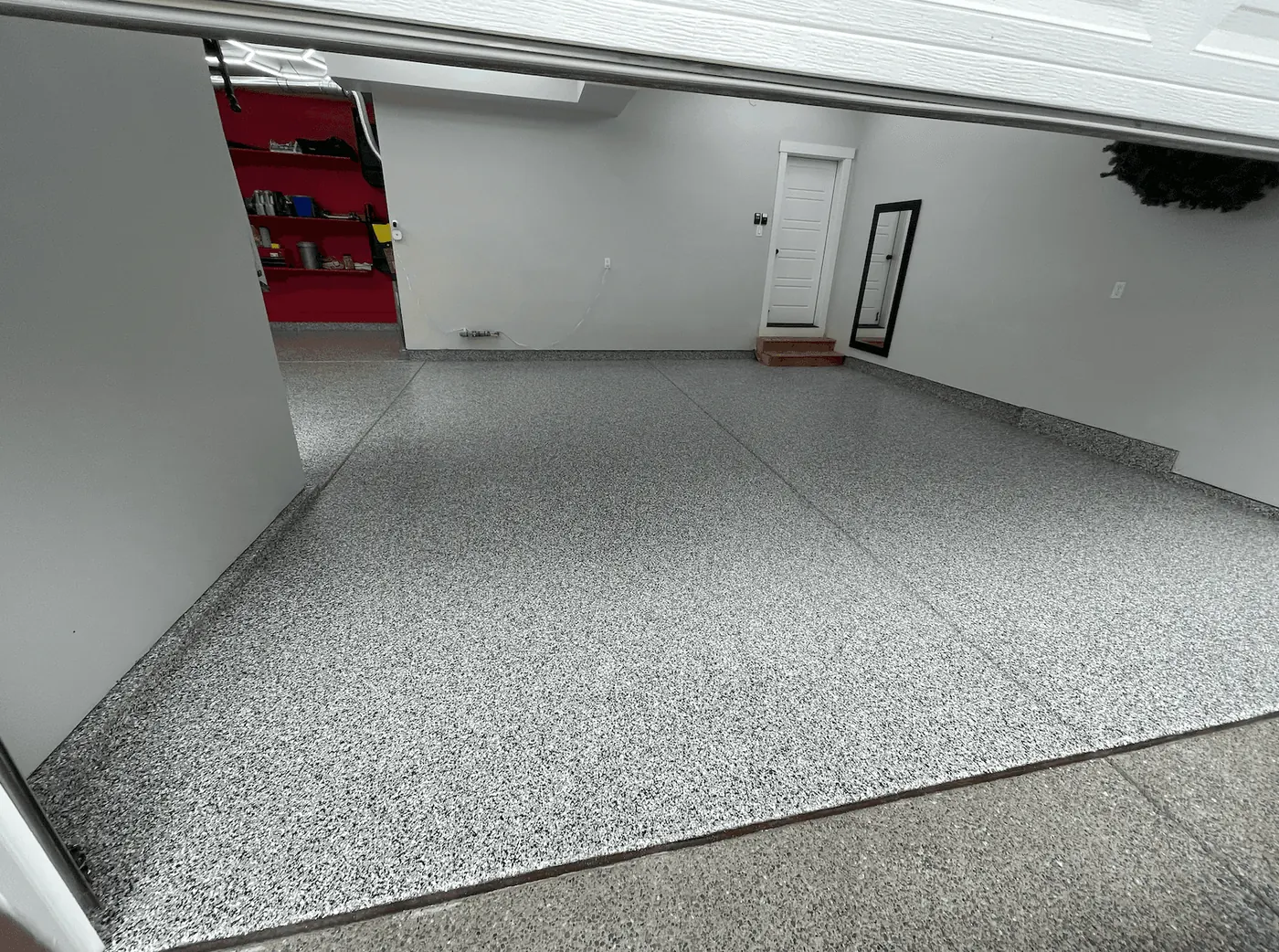
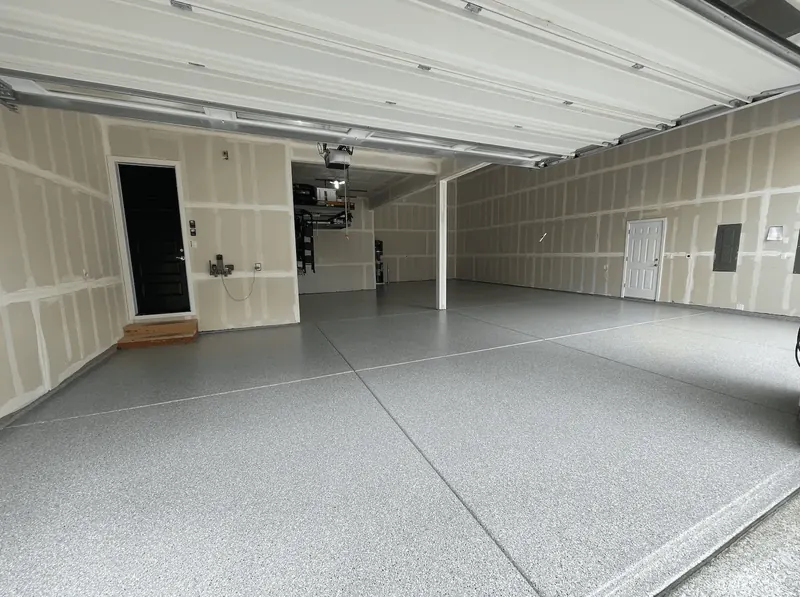
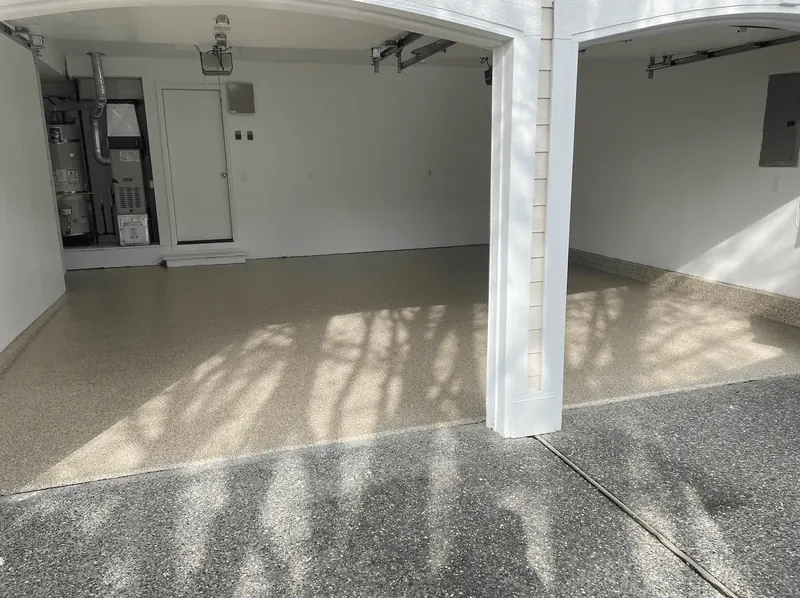
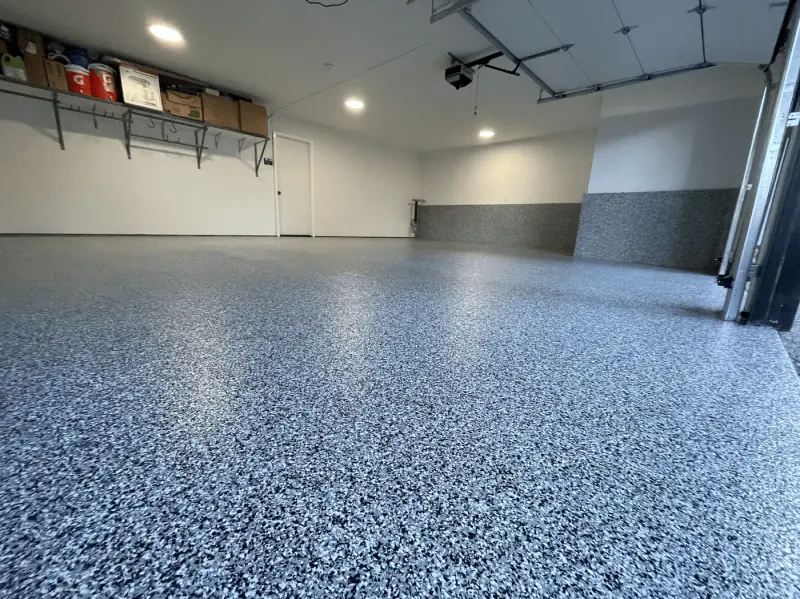
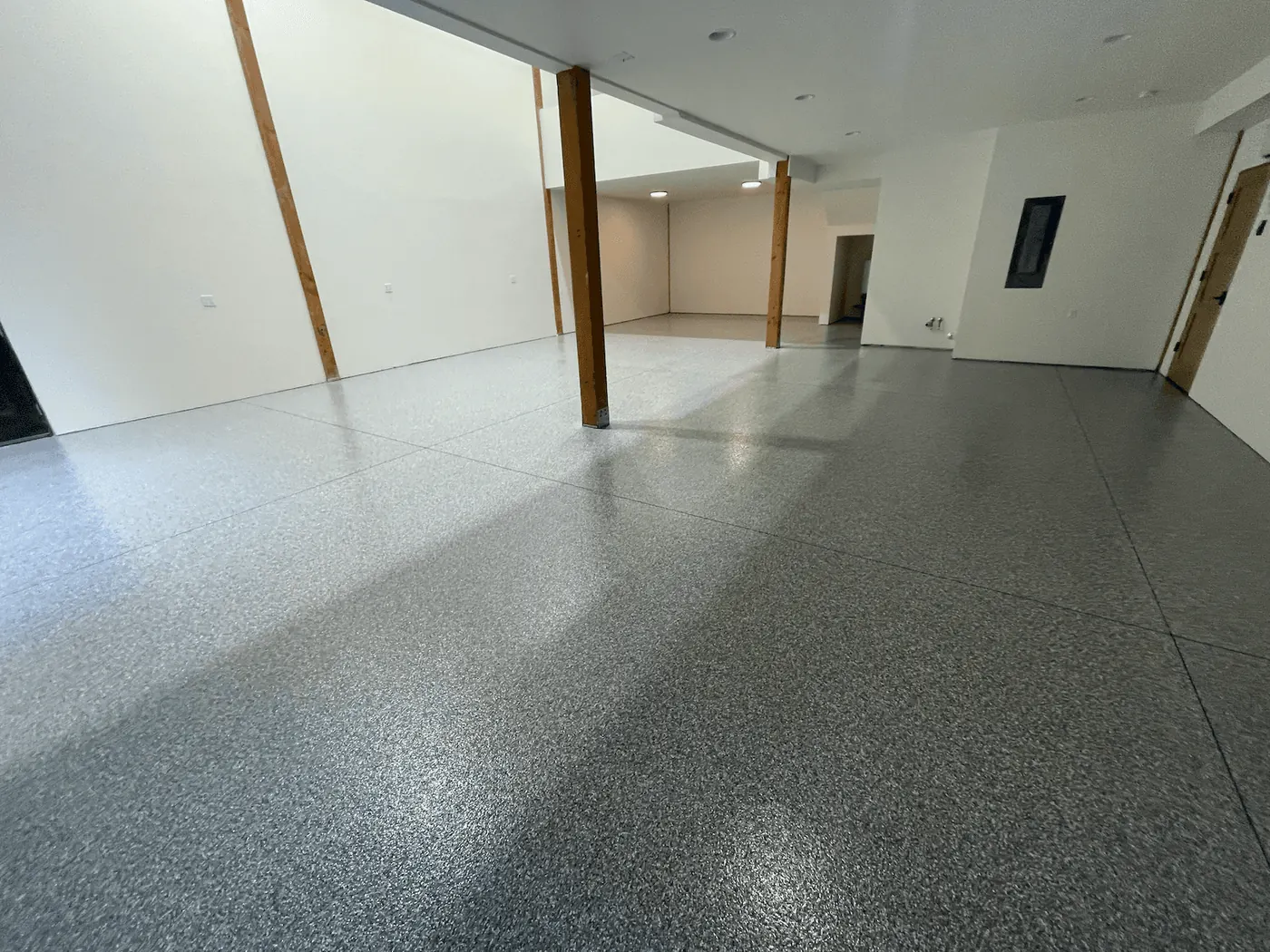
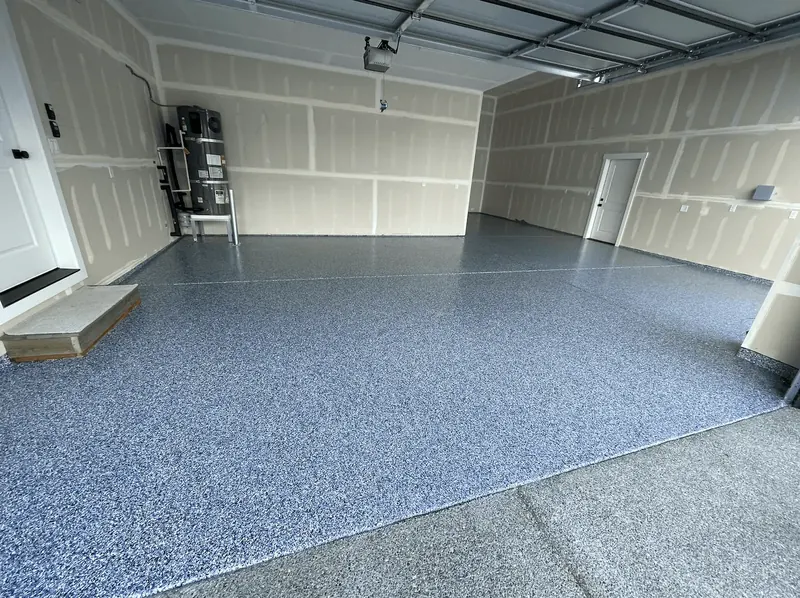
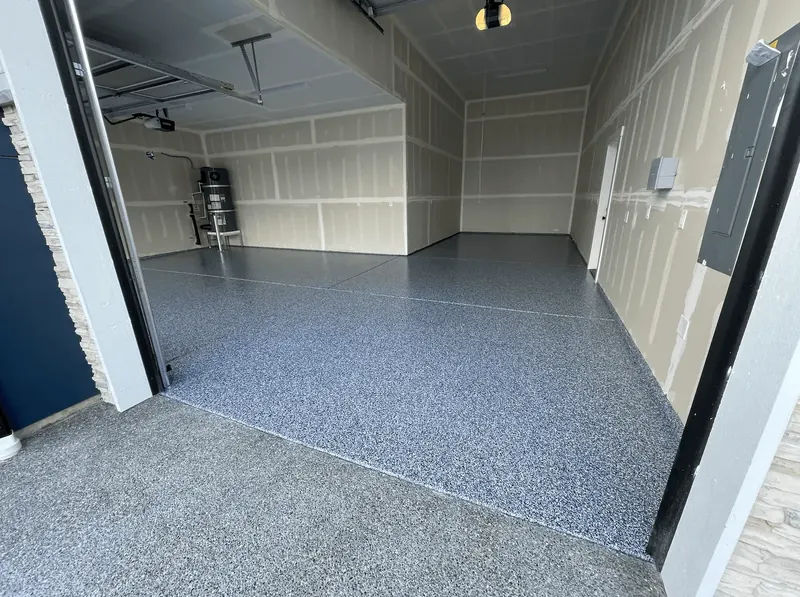
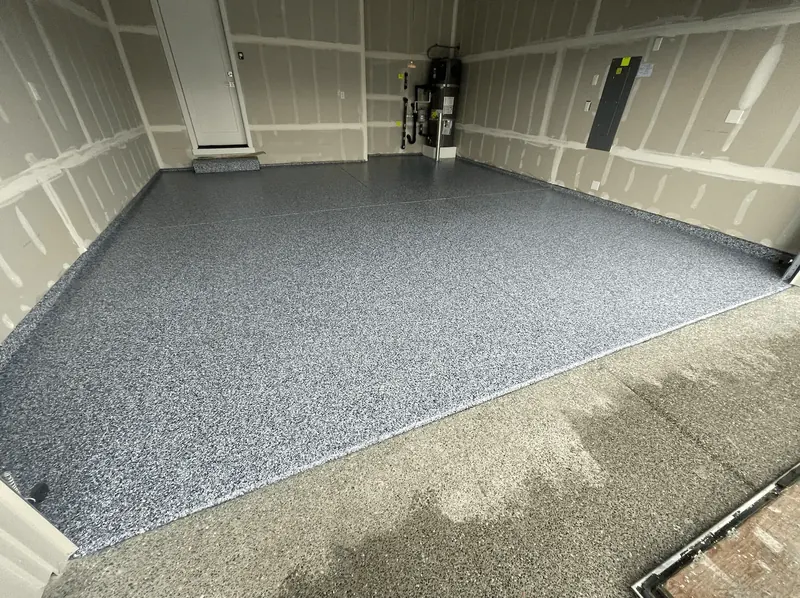
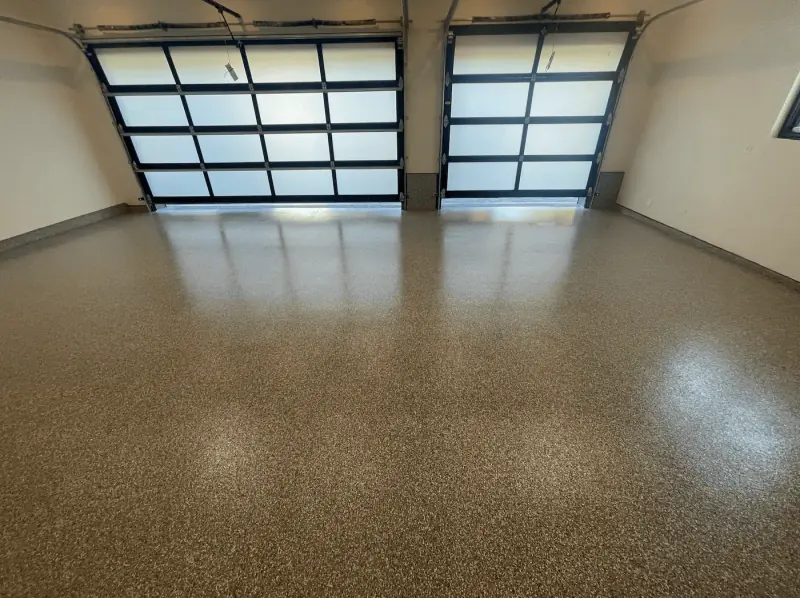
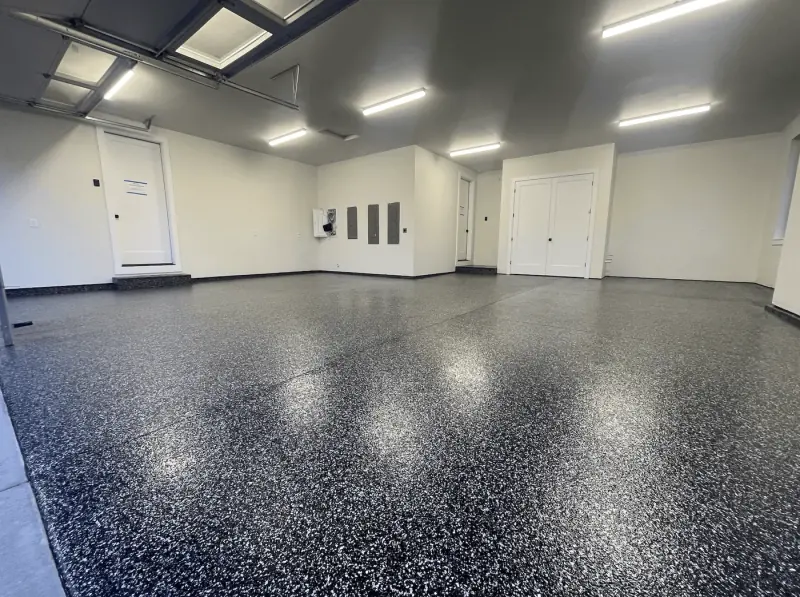
Real jobs, real slabs. Every one of these started with a grind and a moisture reading. See the full gallery, or preview a flake color on your own garage.



Epoxy garage floor questions
How much does an epoxy garage floor cost in Seattle?
Installed epoxy runs about $4 to $10 per square foot in the Seattle market, roughly $1,800 to $4,500 for a two-car garage. A polyurea-polyaspartic floor runs $4 to $12. Because epoxy lasts three to seven years here and the polyaspartic system lasts 15 to 20, the polyaspartic floor costs less per year of use.
How long before you can drive on an epoxy garage floor?
Most garage epoxies want about three days before a car, longer on a cool slab, and an unheated Seattle garage in winter can stretch that toward a week. Some hybrid kits allow 24 to 36 hours at room temperature. Our polyurea-polyaspartic floor takes cars after 72 hours, cold slab or not.
Do you install epoxy garage floors?
No. We install the step up from epoxy: a polyurea base coat, full flake and a clear polyaspartic topcoat. It has the look people mean by "epoxy floor," cures in a cold garage, bends with the concrete, stays clear in sunlight, and takes cars after 72 hours. If you want plain epoxy specifically, we'll tell you when it's a good fit and when it isn't.
When is epoxy the better choice?
In a heated, dry garage out of the sun, or when you want a solid color or a metallic finish at the lowest price up front. In a normal Seattle garage it isn't: polyaspartic cures on a cold, damp slab where epoxy stalls, stays clear in sunlight where epoxy ambers, and flexes with the concrete where epoxy cracks.
Why does epoxy peel in Seattle garages?
Usually moisture or prep. Ground water moves up through our slabs for months a year, and epoxy blocks it until pressure blisters the coating off. Kits applied over an acid etch never grip the concrete in the first place. Cold slabs that stop the cure, and cars parked too soon, do the rest.
Can I epoxy my garage floor in winter?
Not reliably. Epoxy needs the concrete itself at 55°F or warmer, and the slab in an unheated Seattle garage sits below that from fall to spring. Polyaspartic cures in the cold, which is why we can install floors year-round as long as the slab passes a moisture test.
Does epoxy turn yellow?
Standard epoxy does. It's aromatic, and UV light breaks it down into an amber tint, usually in the patch of floor that gets daylight through the door. Once it's yellowed, the color is in the epoxy; the fix is grinding and recoating with a UV-stable polyaspartic top.
Is a DIY epoxy kit worth it?
For a dry, heated garage you'll sell in a couple of years, maybe. For a normal Seattle garage, usually not: the kit wants a warm slab, an acid etch that doesn't grip, and days of cure, and it dries to a few thousandths of an inch. A lot of peeling garage floors started as kits.
Want the epoxy look without the epoxy problems?
Tell us about your garage. We test the slab, show you the flake colors on your own floor, and leave a written price for a floor that cures in a Seattle winter and never yellows at the door.