
Garage Flooring Options, Ranked for Seattle
There are eight real ways to floor a garage. Here they are, ranked for a Seattle garage: what each costs, how long it lasts, how it handles a wet slab, and who it suits. Including the seven we don't sell.
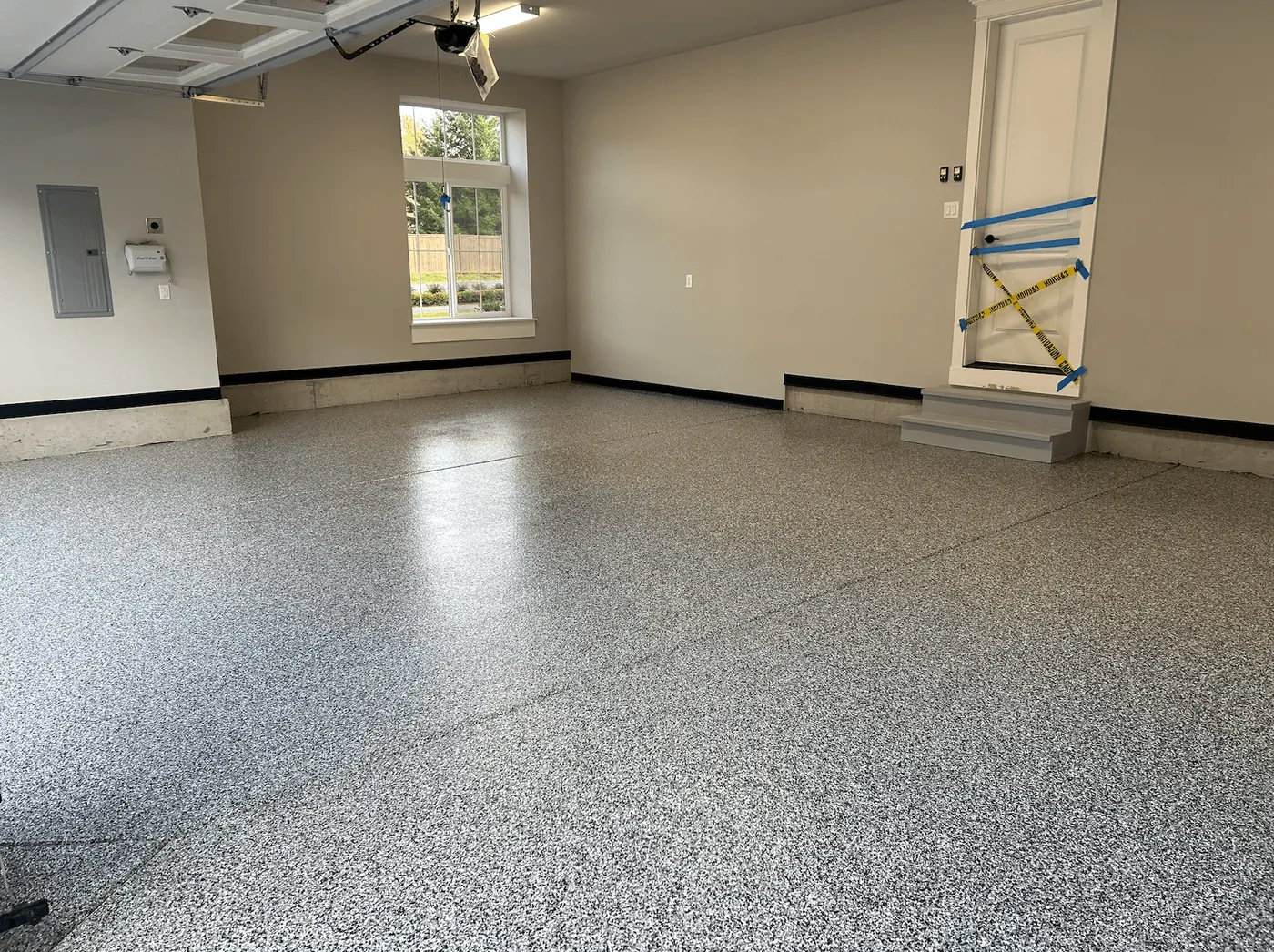
- Eight options, ranked
- Costs and lifespans
- How each handles a damp slab
- Not always a coating
What's the best garage flooring?
Three questions decide it. Does the slab move moisture? Do you park cars on it? How long are you staying?
For a daily-use Seattle garage you plan to keep, the answer is a coating: a polyurea base with full flake and a polyaspartic topcoat, over ground, tested concrete. For a renter, a strict HOA or a slab that fails the moisture test, it's tiles. For a storage garage you're selling in the spring, it's paint.
Below is the ranking, then every option, then a table. We sell one of the eight, and we'll still tell you when another one is the right call.
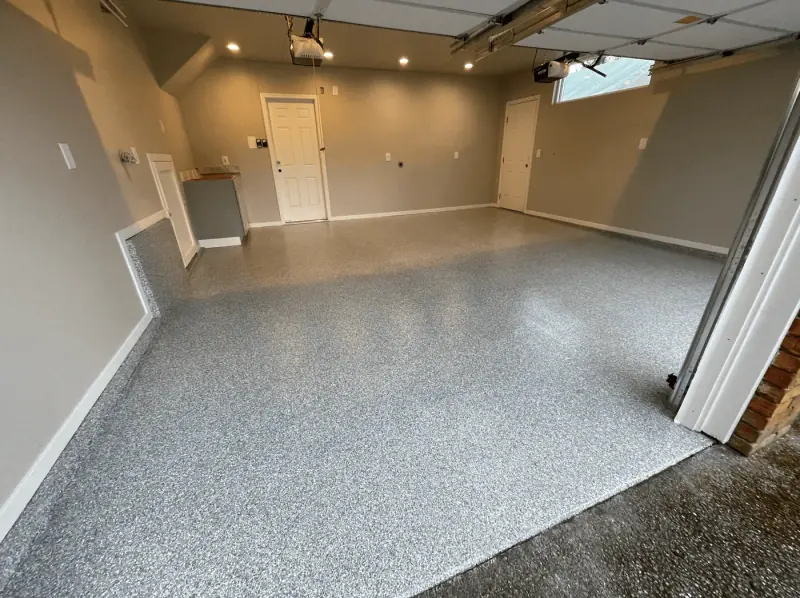

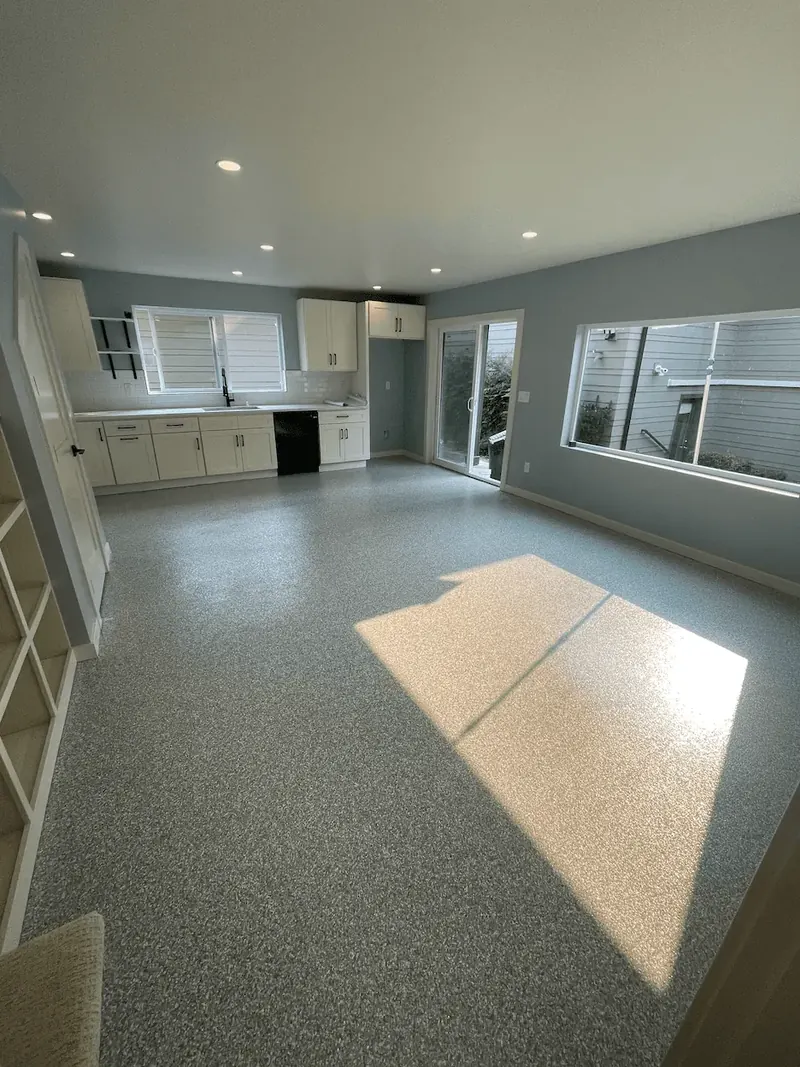
Garage flooring options, ranked for a Seattle garage
Ranked on how a floor holds up under cars on a damp Puget Sound slab, per dollar per year. Your garage may reorder the middle. It rarely reorders the top or the bottom.
Every option, in plain terms
What each one really is, what it costs and where it falls short, in the order we ranked them.
Polyaspartic flake floor
The floor becomes the surface of the slab: ground concrete, a flexible polyurea base, full flake and a clear topcoat that stays clear. It shrugs off oil and de-icer and cures in a cold garage. Biggest check here, longest life. Layer by layer.
Interlocking tiles
Rigid plastic tiles that snap together with no prep, about $3 to $8 a square foot plus edges. They float over a wet or rough slab, which is their superpower. Their weakness is what drains through the seams and sits underneath. Tiles vs. coating.
Professional epoxy
A real 100% solids epoxy is a serious floor in the right garage: heated, dry and out of the sun. In a typical Seattle garage, cold stalls the cure, ground water blisters it and the patch by the door ambers. Epoxy, honestly.
Polished concrete
No coating at all: the slab is ground, hardened and burnished to a shine. It breathes and never yellows. In a garage it stains unless it's kept guarded, tires slowly wear the shine off the lanes, and small floors pay a premium.
Mats and liners
Vinyl rolls and containment mats, about $1.50 to $4 a square foot. Unroll, trim, done, and they catch the water a Seattle winter brings in. Over a whole garage they creep, bunch and trap water underneath. Best as a parking pad.
Concrete sealer
A clear sealer soaks in or sits on top. It stops the slab dusting and slows oil stains, and that's the whole job: no wear layer, no texture, redone every year or three. Sealer vs. coating.
DIY epoxy kits
EpoxyShield, RockSolid and the rest: real products, thin films, about three mils a coat. One to three years under cars in a Seattle garage, longer on a dry, heated slab prepped with a rented grinder. What the data sheets say.
Garage floor paint
Latex or one-part "epoxy paint," $1 to $3 a square foot and an afternoon's work. It lasts a year or two under cars and lifts in the tire lanes first. Right for a storage garage you're selling. Paint vs. coating.
Garage flooring compared: cost, life and the wet-slab question
Costs are published ranges for the Seattle market or national guides; lifespans are what each floor typically does under cars in a Puget Sound garage.
| Option | Cost per sq ft | Typical life here | On a damp slab | Install |
|---|---|---|---|---|
| Polyurea + polyaspartic coating | $4–$12 installed | 15–20+ years | Yes, with a barrier primer | 1–2 days, pro |
| Interlocking tiles | $3–$8 + edges | 10–20 years | Yes, floats; rinse underneath | An afternoon, DIY |
| Professional epoxy | $4–$10 installed | 3–7 years | No, blisters | 2–3 days plus cure, pro |
| Polished concrete | $3–$12; $8–$15+ small floors | 20+ years | Yes, breathes | 2–3 days, pro |
| Roll-out mats / liners | $1.50–$4 | 3–5 years | Traps water under it | An hour, DIY |
| Concrete sealer | Low | 1–3 years | Penetrating types tolerate it | An afternoon, DIY |
| DIY epoxy kit | $130–$250 a kit | 1–3 years | No | A weekend plus days of cure |
| Garage floor paint | $1–$3 | 1–2 years | No | An afternoon plus days of cure |
Which garage flooring for which Seattle garage
Four situations cover almost every garage in town.
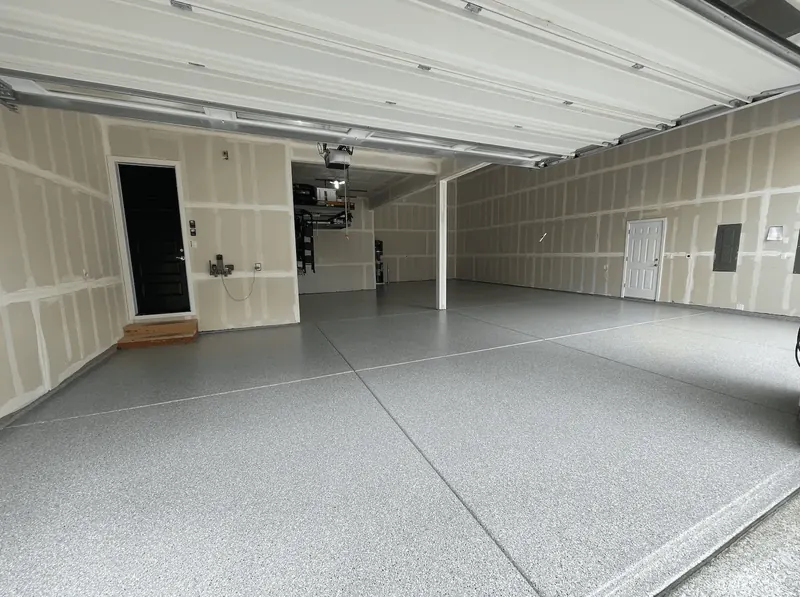 Staying put
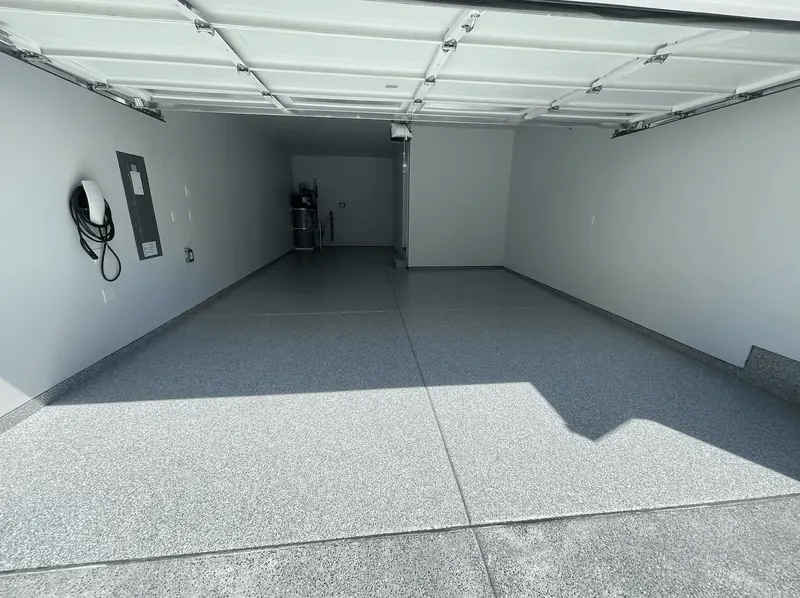
A coating
Cars come home wet half the year and the slab is older than you are. A grind, a moisture test, and a floor you stop thinking about. Home gym in the corner? Rubber mats where the iron lands.
 Renting or a wet slab
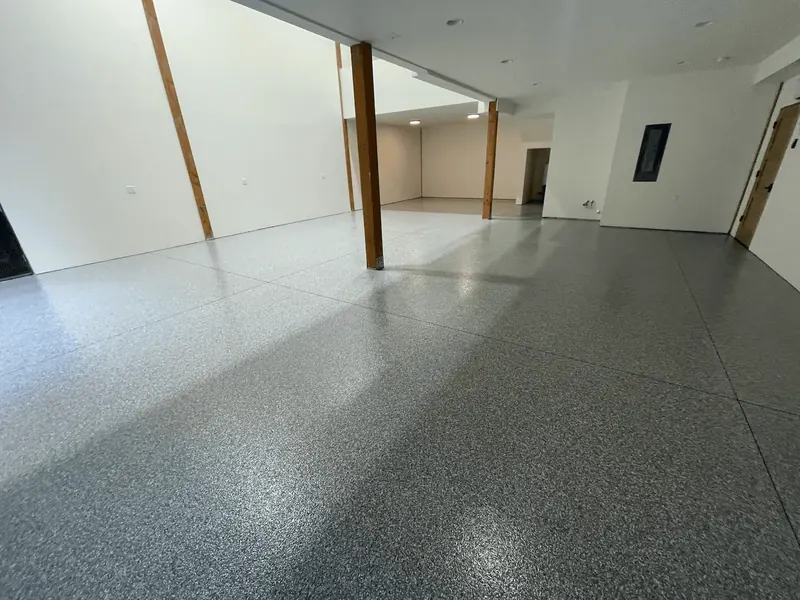
Tiles
No prep, no permission, and they leave with you. They also float over a slab that fails the moisture test while you save for a barrier. Lift a few and rinse underneath once a season.
 Heated, dry shop
A coating, or polished concrete
Here epoxy and polished concrete finally get the conditions they want. Polished if it's big and kept clean; a coating if tools drop and oil spills, which in most shops they do.
 Selling in the spring
Paint or a sealer
Clean, bright and cheap, for a garage that only has to look good through the open house. Skip it if you're staying: under cars it won't make it through two Seattle winters.
Garage flooring ideas we'd talk you out of
- Carpet, vinyl plank or laminate on a garage slab. They trap moisture against the concrete and are the first thing to fail when the slab gets damp. Fine in a finished basement with a vapor barrier under it; not under a car.
- Paint under daily drivers. One winter of hot tires and you'll have two bare stripes.
- A metallic epoxy floor in a garage with a sunlit door. Gorgeous in a showroom; it ambers where the light hits. We don't install metallic floors, and that's one reason.
- A liner as a permanent floor. It's a drip tray. Use it as one, over a coating.
- Any coating on a slab nobody tested. Not ours, not anyone's. The test is five minutes; the failure is a year.
If you want the coatings-only version of this comparison, with paint, sealer, stain, epoxy and polyaspartic side by side, it's in our garage floor coating options guide.
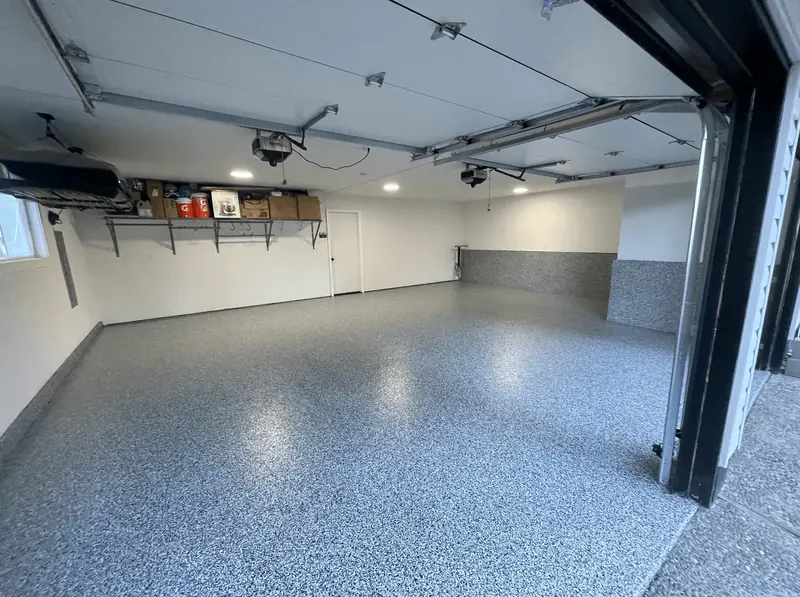
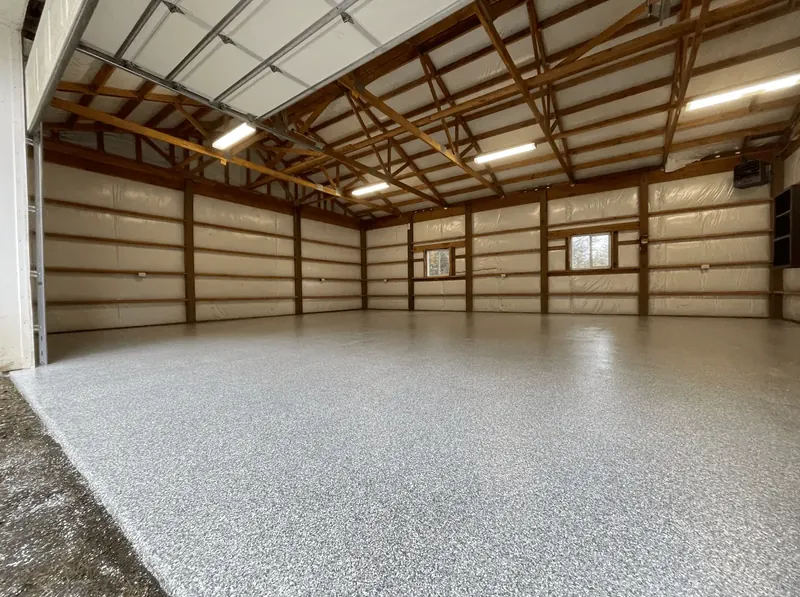
Floors we've installed
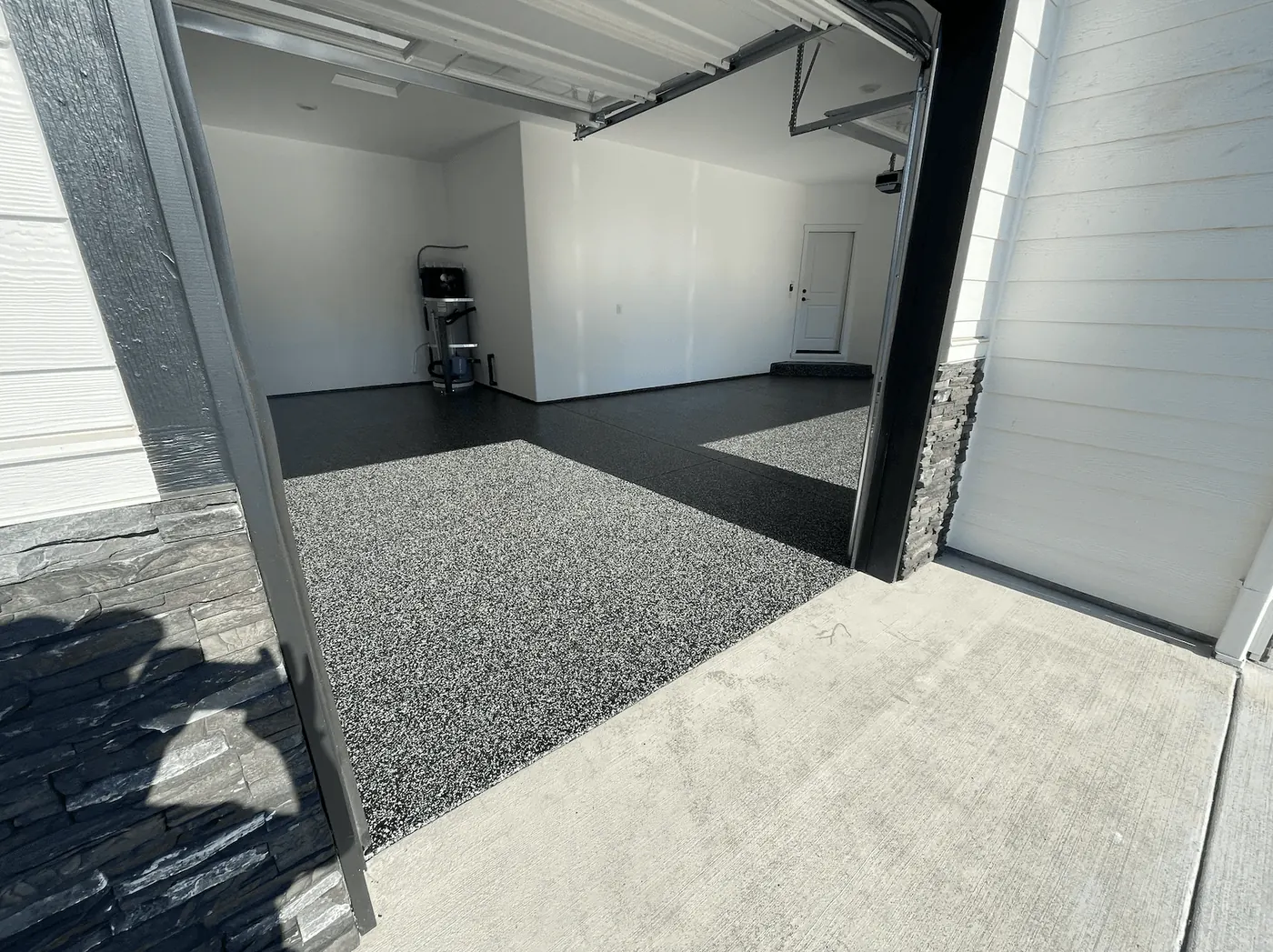
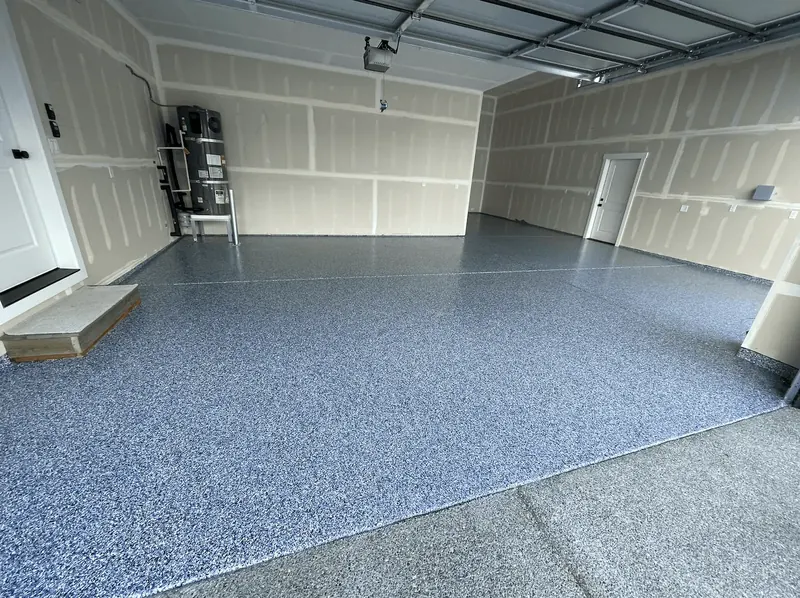
Real jobs, real slabs. Every one of these started with a grind and a moisture reading. See the full gallery, or preview a flake color on your own garage.




Garage flooring questions
What is the best flooring for a garage?
For a garage you park in and plan to keep, a polyurea base with full flake and a polyaspartic topcoat over ground, moisture-tested concrete: 15 to 20 years, wipes clean, cures in a cold garage. For a renter, a strict HOA or a slab that fails the moisture test, interlocking tiles. For a storage garage you're selling, paint.
Where do tiles rank against a coating for a Seattle garage?
Second, behind a polyurea-polyaspartic coating. Tiles float over a rough or damp slab, go down in an afternoon and leave with you; a coating becomes the surface of the slab and lasts longer under cars when the slab is prepared. On a wet slab, tiles beat a plain epoxy. For a floor you keep, a coating with a barrier beats tiles.
What is the cheapest garage flooring?
Garage floor paint at $1 to $3 per square foot, or a sealer. Both are an afternoon's work and a year or two of life under cars. Roll-out mats at $1.50 to $4 per square foot are the cheapest thing that catches water.
What is the most durable garage floor coating?
A polyurea base coat with a clear polyaspartic topcoat over diamond-ground concrete. About 30 to 40 mils thick with full flake, flexible enough to move with the slab, UV-stable, and 15 to 20 years in a Puget Sound garage. Professional epoxy is close in a heated, dry garage and far behind in a cold, damp one.
Is polished concrete good for a garage floor?
In a big, dry, clean shop, yes: it breathes, never yellows and lasts as long as the slab. Under a daily driver, it stains unless it's kept guarded, tires slowly wear the shine off the lanes, and every crack stays visible. Small floors also pay a premium, often $8 to $15 per square foot.
Are garage floor mats worth it?
As a parking pad, yes. A containment mat or a ribbed G-Floor roll under the car catches the water and slush a Seattle winter brings in. As a whole-garage floor, they creep, bunch under rolling tools and trap water underneath for a three-to-five-year life.
What garage flooring is best for a damp or wet slab?
Tiles, because they float and let the slab breathe, or a coating installed over a moisture vapor barrier primer. Paint, kits and plain epoxy blister and peel on a slab that moves moisture, and mats trap it. Test the slab first: a square of plastic taped down overnight tells you.
Can you put vinyl plank or carpet in a garage?
Not where cars park. Both trap moisture against the concrete and lift or mold when the slab gets damp, and tires and dropped tools destroy them. In a finished room on a slab with a vapor barrier, they're fine; a coating is the sealed alternative that handles the garage too.
Want a straight answer for your garage?
We test the slab for moisture at the estimate and tell you which option it can take, even when that answer is "tiles for now." Free, with a written price if a coating is the right call.