
Garage Floor Coating Options for Seattle Garages: Every Type Compared, From Paint to Polyaspartic
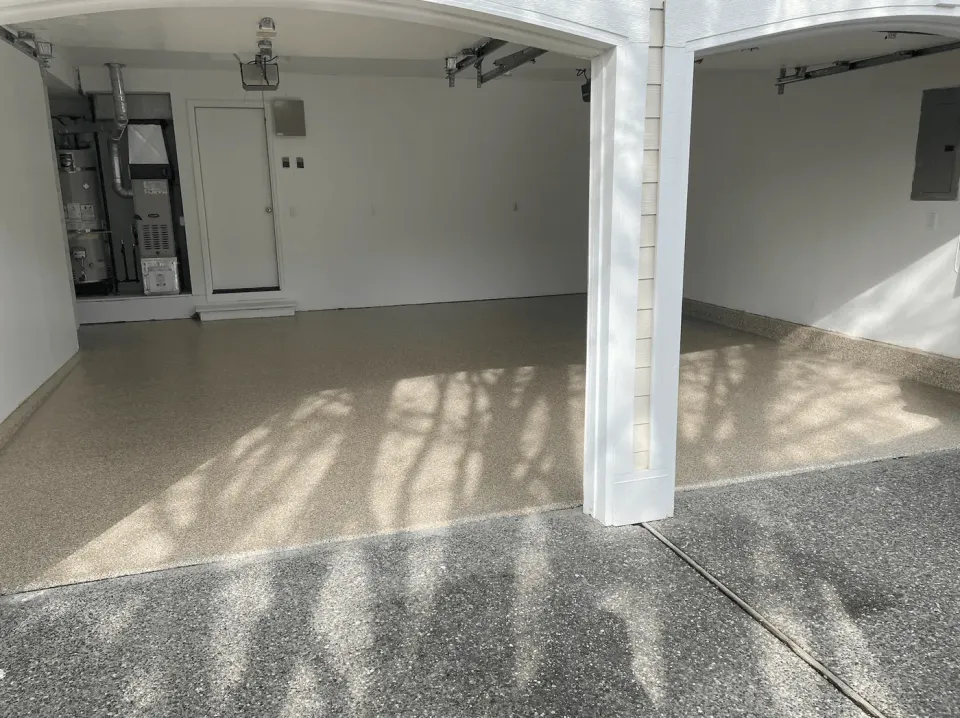
Short answer: Garage floor coatings come in three families. Thin finishes, meaning paint, sealer and stain, add color or a little protection a few thousandths of an inch deep, or no film at all. Epoxies, water-based or 100% solids, build a real film but need a warm, dry slab to cure. Polyurea and polyaspartic cure in a cold garage, and used together, with flake between them, they build a floor 30 to 40 mils thick. In a damp Seattle garage, how a coating cures matters as much as what it costs.
Tiles and mats aren't on this page, because they cover the slab instead of bonding to it. Every way to floor a garage, covers included, is ranked on our garage flooring options page, and the head-to-head is in garage floor tiles vs coating. This guide goes one layer deeper on the coatings: how each goes on, how it hardens, how thick it ends up, and what it does on a cold, wet slab.
Three things that separate one coating from another
- How it hardens. Some coatings dry: water or solvent leaves, and the film is what's left behind. Others cure: two parts react and turn solid, and nothing leaves. Drying slows to a crawl in cold, damp air. Curing slows in the cold too, but some coatings are made to cure there.
- How thick it ends up. Coatings are measured in mils, thousandths of an inch. A sheet of copy paper is about 4 mils. Thickness is what stands between a hot tire and the concrete.
- What it needs from the slab. Each data sheet lists the coldest slab it will cure on, and most want the slab at least 5°F warmer than the dew point, the temperature at which damp air leaves water on a cold surface. On a raw winter day, with a wet car parked inside, a Seattle garage slab can sit close to that line.
| Coating | How it hardens | Thickness when dry | On a cold, damp slab |
|---|---|---|---|
| Floor paint | Water leaves, film forms | About 1 to 1.5 mils a coat | Most cans want 50°F; dries slowly in damp air |
| Film sealer | Solvent or water leaves | About a mil, often less | Turns milky white if moisture gets trapped |
| Penetrating sealer | Soaks in, reacts inside the pores | No film | Lets vapor out; needs a dry slab to soak in |
| Stain | Reacts with the concrete, or soaks in as dye | No film; needs a sealer on top | Slow to react, slow to dry |
| Water-based epoxy | Water leaves, then it cures | About 2 to 4 mils a coat | Humid air slows it; wants a 55°F floor |
| 100% solids epoxy | Two parts react, nothing leaves | About 8 to 15 mils a coat | Slows sharply in the cold; can blush in damp air |
| Polyurea base coat | Two parts react in minutes | About 5 to 10 mils, before the flake | Low-temperature grades cure near freezing |
| Polyaspartic | Two parts react; damp air speeds it up | About 3 to 12 mils a coat | Cures in the cold; no water on the surface |
| Polyurea base, flake, polyaspartic top | Each layer cures the same day | About 30 to 40 mils in all | Cures in a cold garage; barrier primer if the slab is wet |
Garage floor paint
Paint is rolled on in two thin coats over a cleaned, etched slab. Latex floor paint dries as its water leaves and the tiny plastic particles in it fuse into a film. That fusing needs warmth: most cans ask for a floor and air of at least 50°F, and in damp air the water leaves slowly. Each coat dries to about 1 to 1.5 mils, a third of a sheet of paper. A "1-part epoxy" paint is the same kind of product with some epoxy stirred in.
Two things work against it in a garage. Tires carry softeners that can attack a latex film, and a warm tire presses them in. And moisture coming up through the slab lifts it from below. Read the data sheet before you buy: many porch-and-floor paints say they aren't meant for garage floors or car traffic at all, and the ones that are ask for five to seven days before you park. The whole paint question is on garage floor paint vs. a coating.
Concrete sealer
Sealers come in two kinds that behave in opposite ways.
- Film sealers, usually acrylic, are rolled or sprayed on and dry as the solvent or water leaves, to a clear film about a mil thick or less. When moisture gets trapped, from a damp slab, a humid day, dew falling while it dries or a coat laid on too thick, the film turns milky white. Softer acrylics also lift under hot tires.
- Penetrating sealers, such as silane and siloxane, soak into the top of the slab and react inside the pores. There's no film to peel or whiten, and moisture vapor can still get out. They shed water but not oil, and they need a dry slab to soak in deep.
Neither one adds a wear layer. A sealer keeps a slab from dusting and slows stains, which makes it a fair answer for a dry slab you want to keep looking like concrete. More in garage floor sealer vs coating.
Concrete stain
Stain puts color into the concrete instead of on top of it. An acid stain is a mix of acid and metal salts that reacts with the lime in the cement over several hours and leaves a mottled, marbled color. Then the floor is neutralized and rinsed several times, and a sealer goes on, because the colored layer is very thin. Water-based stains and dyes soak in for a more even color. Either way, the stain adds no thickness. The sealer over it is the only protection, and it's the weak point under tires.
Older Seattle slabs are hard to stain well. Decades of oil, old sealers and paint block it, and old concrete has lost much of the lime an acid stain needs, so the color can come out weak or blotchy. In a cold garage the reaction runs slowly, and all that rinse water can take days to leave the slab. We install coatings, not stains.
Water-based epoxy
This is the epoxy in most hardware-store kits. The two parts are thinned with water, which gives you a couple of hours to work. The water leaves first and then the epoxy cures, so a coat dries to roughly half its wet thickness, about 2 to 4 mils. Humid air slows the water down, and cold can leave the film weak and porous. Its one advantage on a damp slab is that it breathes a little, so vapor pushes on it less than on a solid film. It's still thin, and it still wants a warm floor. What the kits' own data sheets say is on garage floor epoxy kits.
100% solids epoxy
Nothing evaporates from a 100% solids epoxy. The two parts react, and what goes on stays on: about 8 to 15 mils a coat. A mixed batch gives the crew 30 to 40 minutes. It needs warmth to cure, a floor at 55°F or warmer, and the reaction runs about half as fast for every 18 degrees colder. In cold, damp air it can also grow a greasy film called amine blush, which the next coat won't stick to until it's washed off. Propane and kerosene heaters make that worse, because they add moisture and carbon dioxide to the air. One coatings trade journal puts the limit for standard epoxy at about 75 percent humidity when it's 50°F. Seattle's winter air averages around 80.
Once cured, it's hard and rigid. It blocks moisture vapor completely, so a wet slab blisters it unless a barrier primer goes on first, and it turns amber where the sun hits it. In a heated, dry shop it's a serious floor. More in epoxy garage floors in Seattle.
Polyurea
Two different products share this name. Pure polyurea, the kind in spray-in truck bed liners, comes out of a heated, high-pressure spray rig and turns solid in seconds. It barely cares about cold or humidity, and it's built up thick. You can't roll it.
The polyurea in a garage floor is a hand-applied version made for the job. It's mixed in small batches, gives the crew 10 to 30 minutes, and goes on with a squeegee and a roller at about 5 to 10 mils, with flake thrown into it while it's wet. Low-temperature grades cure in a garage near freezing, but the floor still has to be 5°F above the dew point, and a coat laid on too thick can foam. It grips ground concrete hard and stays flexible. The regular kind fades and chalks in sunlight, which is why it goes under a clear top coat. More in our polyurea guide.
Polyaspartic
Polyaspartic is a polyurea slowed down so it can be rolled by hand. A mixed batch gives the crew about 15 to 30 minutes. Unlike epoxy, it likes damp air: moisture in the air speeds its cure, so on a humid day the crew mixes smaller batches. It cures in a cold garage, just more slowly, and some grades go on in the 30s. A coat runs about 3 to 12 mils, a little more over flake. The sun-proof kind stays clear, which is why it's the top coat. What it can't take is water on the surface while it cures. Condensation or a wet slab leaves bubbles and pinholes, so the dew-point rule still applies. The plain-English version is in what is polyaspartic floor coating.
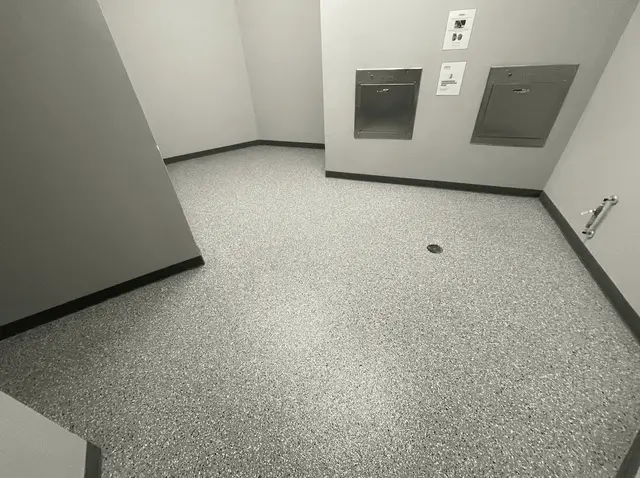
Polyurea base with a polyaspartic top: the floor we install
This system uses each coating for the job it does best. On install day our crew diamond-grinds the slab, repairs the cracks and joints, and rolls on the polyurea base coat. Flake goes into the wet base until it won't hold any more. Once it sets, the loose flake is scraped and vacuumed off, and the clear polyaspartic top coat goes on with anti-slip grit mixed in. The finished floor is about 30 to 40 mils thick, roughly ten sheets of paper, against a third of one for a coat of paint.
The base grips the ground concrete and flexes with it; the top takes the sun, the salt and the tires. Both cure in a cold garage, so winter alone doesn't stop the install. Moisture decides the schedule instead: when the slab tests wet, a moisture barrier primer goes on the bare concrete first and cures overnight, which makes it a two-day job. You walk on it the next day and park after 72 hours, and every floor carries our lifetime adhesion warranty. When the barrier is needed, and why, is in do you need a moisture barrier.
Three questions that sort any coating quote
- "Is it 100% solids, or water-based?" The answer tells you how much of what's rolled on stays on the floor.
- "How many mils, dry, for the whole floor?" Ask for a number, not "thick". A full flake floor should come to 30 mils or more.
- "What's the lowest slab temperature on the data sheet, and how will you check the dew point on install day?" A surface thermometer and the day's humidity are all it takes to check.
The rest of the list, from prep to warranty wording, is in questions to ask a garage floor contractor.
Coating type questions
What are the options for coating a garage floor?
Paint, concrete sealer, stain, water-based epoxy, 100% solids epoxy, polyurea and polyaspartic. The first three are thin finishes. The epoxies build a real film but need a warm, dry slab. Polyurea and polyaspartic cure in a cold garage, and the longest-lasting floors use both: a polyurea base with flake under a polyaspartic top coat.
What kind of garage floor coating is best?
For a Seattle garage you park in, a polyurea base coat with full flake under a clear polyaspartic top coat. It cures in a cold garage, stays clear in the sun, flexes with the slab and ends up 30 to 40 mils thick. Over ground, moisture-tested concrete it lasts 15 to 20 years or more.
What is the difference between water-based and 100% solids epoxy?
Water-based epoxy is thinned with water, which has to evaporate before the epoxy cures, so each coat dries to about 2 to 4 mils and humid air slows it down. A 100% solids epoxy has nothing to evaporate, so a coat stays 8 to 15 mils thick. It's tougher, but it sets faster in the bucket and seals in any moisture rising from the slab.
Can you stain a garage floor instead of coating it?
You can, but stain is color, not protection. It soaks into the top of the concrete and needs a sealer over it, and that sealer is what tires wear through and lift. Old slabs with oil, sealer or paint on them take stain unevenly. For a garage that cars use, a coating lasts far longer.
Is a polyurea floor the same as a truck bed liner?
Same chemical family, different product. A spray-in liner is pure polyurea, sprayed from a heated, high-pressure rig, and it turns solid in seconds. A garage floor base coat is a polyurea made to give a crew 10 to 30 minutes, rolled on thin with flake thrown into it, then sealed under a clear polyaspartic top coat.
What is the best garage floor coating for old concrete?
One that starts with diamond grinding and a moisture test, because old slabs carry oil, old sealers and often no plastic sheet underneath. Thin finishes and kits sit on top of all that. A ground slab under a polyurea base and a polyaspartic top coat, with a barrier primer when the slab tests wet, is built for it.
Is garage floor paint worth it?
As a short-term refresh in a garage nobody parks in, it can be. Each coat dries to about a third of a sheet of paper, tires and moisture lift it, and many porch-and-floor paints say on their own data sheets that they aren't for garage floors. It also has to be ground off before a real coating can go on.
What's the cheapest garage floor coating option?
Paint or a sealer costs the least up front, then a DIY epoxy kit. Per year the gap shrinks fast, because those get redone every one to three years and a polyurea and polyaspartic floor lasts 15 to 20 years or more. Count the redos, and the grinding off of the old coat, before you compare.
Not sure which option fits your garage?
A free on-site estimate includes a moisture reading, which rules options in or out faster than anything on this page.
Get A Quote