
How Long Does a Garage Floor Coating Last in Seattle? DIY Kits, Epoxy, Polyurea and Polyaspartic Compared
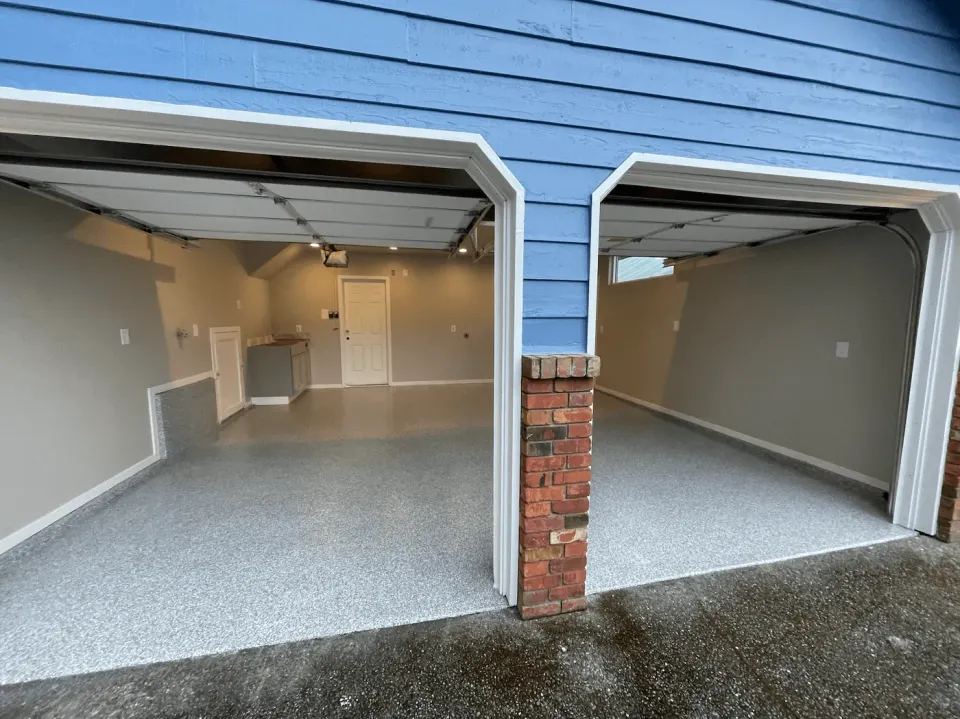
Short answer: It depends far more on the prep than on the product. In a Seattle garage, a hardware-store epoxy kit usually lasts one to three years before it peels. A professionally installed epoxy lasts three to seven. A polyurea-base, polyaspartic-top floor over ground, moisture-tested concrete lasts 15 to 20 years and often more. The thing that ends most floors early here isn't wear. It's moisture from below, and that's decided before the coating ever goes on.
Every quote promises a long life. Here's what actually decides it, what wears out first, and how to tell a floor that will last from one that won't, before you pay for either.
How long each kind of floor lasts in a Seattle garage
| Floor | Typical life | How it usually ends |
|---|---|---|
| DIY epoxy or paint kit | 1 to 3 years | Peels in sheets, or lifts in the tire lanes |
| Professional epoxy | 3 to 7 years | Yellows near the door, bubbles from moisture, wears thin in the tire lanes |
| Polyurea base + polyaspartic top, ground and moisture-tested | 15 to 20+ years | The shine dulls in the tire lanes after years; the bond outlasts the gloss |
| Tiles and mats | Varies; the slab underneath keeps aging | Water and salt get under them; they cover the slab, they don't protect it |
Those are typical ranges for this climate, and the spread inside each row is the prep. The same polyaspartic over an unground, untested slab doesn't make it to year five.
What actually sets the lifespan
- The bond. Diamond grinding opens the concrete so the base coat can grip. A floor that bonds doesn't peel. A floor that doesn't will, no matter what it's made of.
- Moisture control. Vapor from a wet slab is the Seattle killer. A moisture test before coating, and a barrier primer when the slab needs it, is the difference between a 15-year floor and a two-winter floor. See do you need a moisture barrier.
- The coating itself. Epoxy cures rigid and yellows. Polyurea and polyaspartic bend with the slab and stay clear. Over ten years of hot summers and cold nights, that's the difference between a floor that cracks at the joints and one that doesn't.
- Thickness and flake. A full-flake floor under a full-thickness top coat has a lot of material to wear through. A thin single coat doesn't.
- The first 72 hours. Parking on a floor that hasn't cured leaves tire prints and starts hot-tire pickup. Walk the next day, park after three.
What fails first, in the order it shows up
Each kind of failure keeps its own clock, which tells you what to watch for and when.
- Hot-tire pickup: the first days to the first summer. A hot tire softens a coating that isn't fully cured, or is too thin, then grips it as it cools. When the car backs out, the coating lifts where the tires sat.
- Moisture blisters: the first months to the first year. Vapor pressure takes time to build under a coating, so blisters tend to appear in the first three to six months, coating makers' technical papers say, and some take longer. Lab work also found that a slab that dried out and then got wet again blistered sooner. That's a Seattle pattern: coated after a dry summer, soaked from below by November.
- Ambering at the door: months to a couple of years. Standard epoxy yellows where sunlight reaches it, starting with the band inside the door. It can't be cleaned off, because the change is inside the coating.
- Wear in the tire lanes: years. On a well-built floor, the shine dulls first where grit, salt and rubber rub on the clear coat. The color and the bond underneath are untouched, and a fresh clear coat over a scuffed floor brings it back.
- Salt: every winter, adding up. When roads ice up, the state treats King and Snohomish County highways with a calcium chloride anti-icer, and it rides home on your tires. On bare concrete, research has found that this salt reacts with the cement and expands, flaking the surface and the joints. On a coated floor it can't reach the concrete unless it finds a chip or an open crack.
The first three are prep, moisture and chemistry problems, and why epoxy garage floors peel shows how to read them. Why epoxy struggles in this climate is on our epoxy garage floor page.
How to inspect your floor once a year
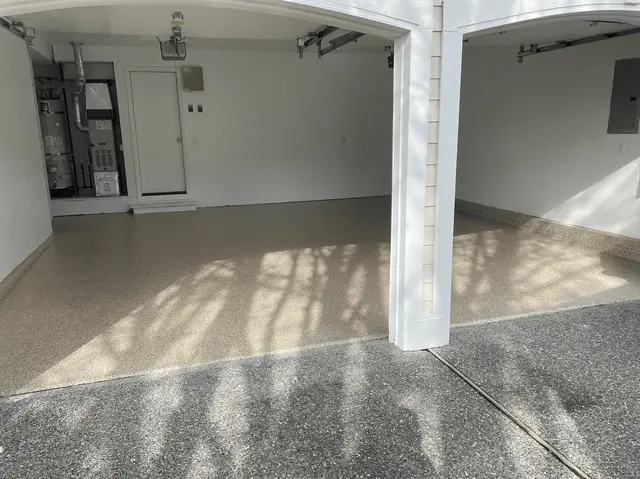
Pick a dry day in late spring, after the salt season, and give it fifteen minutes. Take photos from the same spots each year, so slow changes show.
- The tire lanes. Clean them first, because a film of cleaner and tire residue looks like wear. Then compare their shine with floor that never sees traffic, like the spot under a shelf. Dull is normal after years. Flake you can feel through the clear coat means it's getting thin.
- The strip by the door. Compare its color with a shaded spot, and check the door edge for lifting, since water and salt sit there.
- Joints, cracks and edges. A fine line running straight along a saw cut is usually the joint moving under the floor. Lifting at a wall, a joint or the step is worth a call.
- Anything raised. Moisture blisters are round and firm and often hold liquid. Tap around them with a screwdriver handle: a hollow sound marks where the bond has let go.
- Under mats and storage. Lift them and look for stains and trapped water.
When to recoat, and what it involves
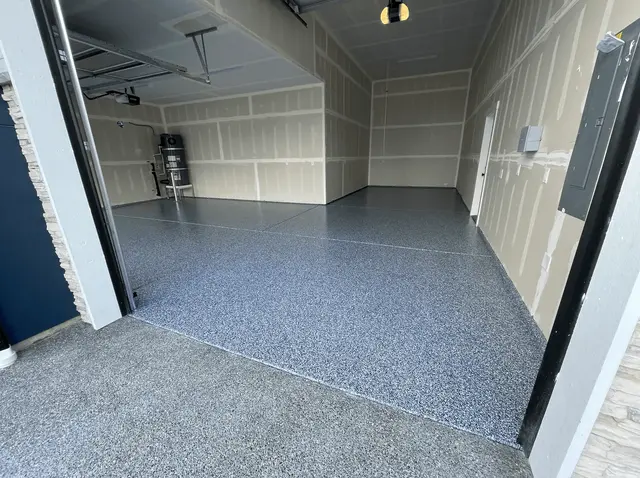
A floor that's still bonded rarely needs replacing for wear. It needs a fresh clear coat when the tire lanes stay dull after a deep clean and the clear coat feels thin over the flake, and before wear reaches the flake or the base coat. Topcoat makers' care sheets put that somewhere in the floor's second decade for a typical home garage, and sooner for one that works hard.
A recoat isn't a coat rolled over the shine. Cured polyaspartic is too smooth to grip, so the whole floor is sanded dull, cleaned and recoated edge to edge. Patching only the tire lanes leaves an outline. And the floor has to be sound first, because a new coat over one that's lifting anywhere fails with it. The tap and tape tests that tell you are on our coating over old epoxy page.
Heated and unheated garages
Most Seattle garages aren't heated, and a polyurea and polyaspartic floor handles that, because it stays flexible in the cold. A heated garage is easier on any coating, because the slab stays warmer and drier, and epoxy in particular lasts longer there. The catch is meltwater. Slush off the wheel wells melts into salty puddles instead of freezing, so squeegee them out before they dry into a gritty film. And skip vent-free gas heaters, which add moisture to the air.
How to make a coated floor last longer
- Respect the cure times: next day on foot, 72 hours for cars, 7 to 10 days before dragging heavy gear across it.
- Rinse winter road salt off the floor. Salt is gritty, and it's what dulls the tire lanes.
- Put a mat under a weight rack, a jack stand or a motorcycle kickstand, because impact chips any coating. For a mat that stays down for months, pick a fabric-backed one: softeners in solid rubber backings can stain a coating.
- Clean with water and a mild soap, not solvents or scouring pads.
- Wipe up brake fluid and gas when they happen. The top coat resists them, but a week-long puddle marks anything.
The full care routine is in how to clean and care for a coated garage floor.
What a warranty does and doesn't tell you about lifespan
Every floor we install carries a lifetime adhesion warranty. Read it as a forecast about one thing, the bond: the coating won't let go of the concrete, and if it does, we repair or recoat that area at no charge. That covers the early failures on the list above, hot-tire pickup and moisture blisters, because both are the bond letting go.
It says nothing about how the floor will look in year twelve. Wear, scratches, dings and stains aren't bond failures, so no adhesion warranty covers them, ours included. That part of the lifespan is in your hands. What ours covers and leaves out is in what a garage floor coating warranty actually covers.
Lifespan questions
How long does a garage floor coating last?
In a Seattle garage: a DIY kit one to three years, professional epoxy three to seven, and a polyurea-base, polyaspartic-top floor over ground, moisture-tested concrete 15 to 20 years and often more. Prep and moisture control set the number more than the product does.
How long does polyaspartic last?
Over diamond-ground concrete with the moisture handled, 15 to 20 years and often longer in a home garage. The shine in the tire lanes dulls first, after years, and a fresh clear coat brings it back.
How long does an epoxy garage floor last?
Professionally installed, three to seven years is typical in the Puget Sound climate. A hardware-store kit, one to three. Moisture from below and yellowing near the door end most epoxy floors here before wear does.
Does a garage floor coating wear out in the tire tracks?
The clear top coat dulls there first, because grit, salt and rubber rub on it. On a full-flake floor, the color and bond underneath are untouched, and a new clear coat renews it.
Can a worn garage floor coating be recoated instead of replaced?
Yes, if the bond is solid everywhere. The floor gets scuffed and a new clear top coat goes on. If it's peeling anywhere, it comes off down to concrete first.
What shortens the life of a garage floor coating?
Skipping the grind, skipping the moisture test, parking before it cures, salt left on the floor all winter, and impact from dropped tools and jack stands.
How often should a garage floor coating be recoated?
When the clear coat in the tire lanes stays dull after a deep clean, and before wear reaches the flake. Topcoat makers' care sheets put that somewhere in the second decade for a typical home garage, sooner for a hard-working floor. The whole floor is sanded dull and recoated, because patching only the lanes leaves an outline.
Does a heated garage make a floor coating last longer?
It helps, mostly for epoxy, which lasts longer on a warm, dry slab. A polyurea and polyaspartic floor handles an unheated Seattle garage fine. In a heated garage, squeegee out meltwater, which stays liquid and salty instead of freezing, and avoid vent-free gas heaters, which add moisture to the air.
Want a floor you don't think about again?
Book a free estimate. We'll test the slab, write the system and the warranty down, and tell you honestly what it will take to last.
Get A Quote