
What Does a Garage Floor Coating Warranty Actually Cover? The Lifetime Adhesion Warranty, Explained for Seattle Homeowners
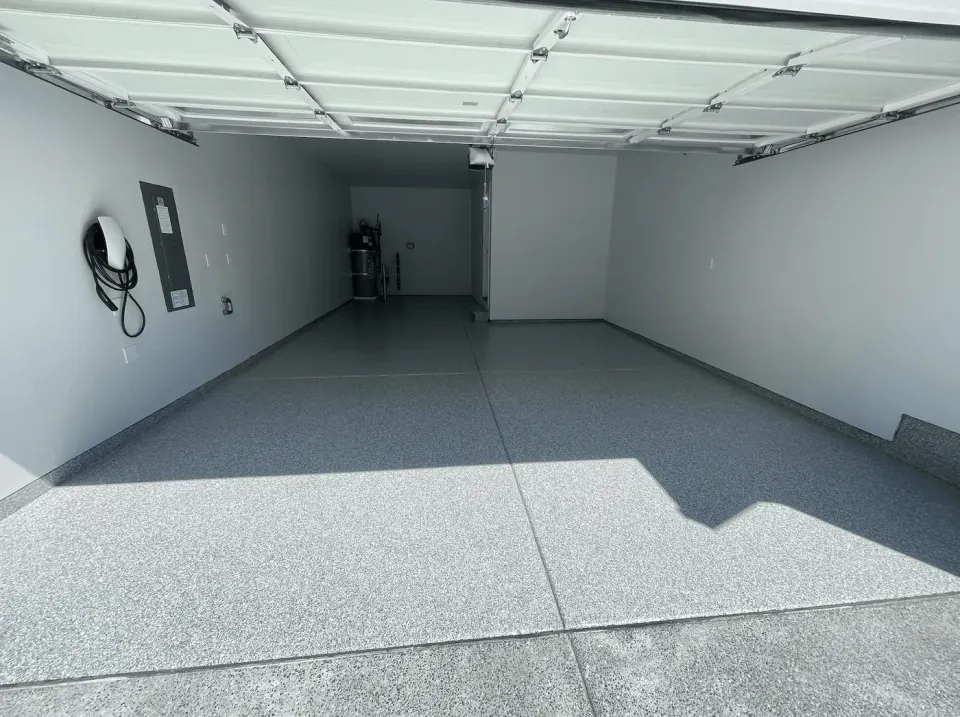
Short answer: A garage floor coating warranty is worth exactly one thing: a promise about the bond. If the coating lets go of the concrete, by peeling, bubbling or lifting under a hot tire, the installer fixes it. Everything else is fine print. Ours is a lifetime adhesion warranty on every floor we install. It covers exactly that, and it leaves out exactly four things, listed below.
"Lifetime warranty" is printed on almost every garage floor quote in the Seattle area. The words after it are the ones that matter.
What "adhesion" means, and why the word has to be there
A coating can fail two ways. It can wear out, which happens to every floor eventually. Or it can let go of the concrete, which is a prep or moisture problem and should never happen. A warranty that covers "adhesion" or "delamination" promises the second one won't happen on your floor, and that if it does, the installer pays. A "lifetime warranty" without that word could mean the materials, or the labor for a year, or nothing in particular. Ask what the warranty is a warranty of.
What "lifetime" means, in plain words
Every lifetime warranty runs for somebody's life, or something's: the floor's, the time you own the house, or the company's. The Federal Trade Commission's guides on warranty ads say a seller who uses the word should make clear which life it means. So ask: whose lifetime?
The second word you'll see is "limited". Federal warranty law sorts written product warranties into two kinds. A "full" one has to cover anyone who owns the product while the warranty lasts, make repairs free, and ask nothing of you but to report the problem. Anything short of that is "limited", which is why nearly every product warranty is. That isn't a warning sign. The list of limits is what to read. Ours runs for the life of the floor, under the terms written on your estimate.
What ours covers
Every floor we install carries our lifetime adhesion warranty. If the coating lets go of the concrete, we repair or recoat that area at no charge. That includes:
- Peeling, in sheets or at the edges.
- Blistering, the bubbles that form when something pushes up from below.
- Hot-tire pickup, a coating that lifts where a warm tire sat.
Those three are the ways a bond fails, and they're the three things a proper install is built to prevent: grinding so the base coat has something to grip, a moisture test and a barrier primer so nothing pushes up from below, and a full-thickness top coat cured for three days before a car goes back in.
What it doesn't cover, and why
- Impact damage. A dropped floor jack chips any coating. That's not the bond failing.
- Scratches and stains. Dragging a steel bench across the floor, or leaving brake fluid to sit for a week, hurts the surface, not the bond.
- Improper maintenance. Harsh solvents and scouring pads wear the top coat early, and a wax or sealer put on top covers it with a surface we didn’t install. Our care guide lists what never goes on the floor.
- Using the floor before the cure times we give you. Walk the next day, park after 72 hours. A car parked on day one leaves a tire print no warranty should have to cover.
Notice what's not on that list: moisture. Because every slab is tested before it's coated and gets a barrier primer when it needs one, a moisture failure on our floor is our failure, and it's covered.
The fine print to look for on anyone's warranty
- A moisture exclusion. The most common escape hatch: "not covered if the slab's moisture is over X". If the installer never tested the slab and wrote the number down, that clause voids the warranty the day you need it. Ask to see the reading.
- Labor for a year, materials for life. A lifetime warranty on materials alone pays for a bucket of coating. The grinding and the labor, which are most of the cost, are on you after year one.
- Original owner only. Common and fair, but it matters if you might sell the house. More on that below.
- Tire stains and "cosmetic" exclusions. Thin coatings exclude tire marks because they can't resist them.
- Concrete cracking. No coating warranty covers the slab itself cracking or settling. That's the concrete, not the coating. Repairing cracks before coating is what keeps them from showing through, and it's part of every floor we install.
- A company that won't be around. A warranty is only as long as the business behind it. Ask how long they've been installing floors and whether the warranty is from the installer or the manufacturer.
What usually voids a floor warranty
An exclusion leaves out one kind of damage. A voiding clause can end coverage on the whole floor, or on the part someone touched:
- Something put on top. Wax, a sealer, a "shine" product or another coating. Our care guide puts all of them on its never-use list, because we can't stand behind a surface someone else has coated over.
- Repairs by someone else. A patch or regrind by another company usually ends coverage on that area, at least.
- Cleaning against the care sheet. Some warranties ask you to show how you cleaned, so keep the instructions you were given.
- A missed deadline. Many warranties want a problem reported within a set time after you spot it, often 30 days. Some also make you sign up for the warranty within a few weeks of the install.
How to compare warranties on three quotes
Line up the three warranties, not just the three prices, and get the same four answers from each in writing:
- Which failures are named? Peeling, blistering and hot-tire pickup, by name. "Defects" alone could mean anything.
- Whose lifetime, or how many years? The floor's, the first owner's, or a number.
- What's the fix? The failed area repaired, labor included, is the real thing. A credit for material, or coverage that shrinks a little every year, is worth far less.
- What does a claim take? A call and a photo, or forms, deadlines and an inspection fee if the claim is turned down.
Then compare the prep lines too. A warranty is only as good as the grinding and the moisture test behind it. Our page on how to compare epoxy floor installers in Seattle lines up the questions that sort them.
How to make a claim, and what happens
Call or text the number on your estimate, send a photo of the spot, and we'll come look. A bond failure is usually obvious: the coating lifts off the concrete with a smooth or chalky back. We repair or recoat the area at no charge. We won't argue about whether a peeling corner counts as "cosmetic". The whole point of putting the word adhesion in the warranty is that there's nothing to argue about.
With any installer, keep four things together: the signed estimate, the install date, a few photos of the floor when it's new, and, if a spot ever lifts, a wide photo and a close-up from the day you notice it. Our estimates also record the cure times and your slab's moisture reading. That reading is what turns a moisture failure into a warranty repair instead of an argument.
If you sell the house
Many coating warranties end at the sale, because they're a contract with the person who paid. Others pass to the next owner once, or on shorter terms, or only with some paperwork. If you might sell in the next few years, ask four things before you sign: does it transfer, how many times, what does the buyer have to do, and do the terms change for them. Whether ours transfers is written on your estimate.
If it does transfer, put the estimate and the warranty in the folder you hand the buyer at closing. A buyer can't claim on a warranty nobody passed on.
Why Seattle makes the warranty matter more
Moisture coming up through the slab is the number one reason coatings fail here, and it's the clause most warranties quietly leave out. If you only ask one question about a warranty in this market, ask how the installer handles moisture and whether a moisture failure is covered. The science is in why garage floors fail in Seattle, and the barrier that prevents it is in do you need a moisture barrier.
Warranty questions
What does a garage floor coating warranty cover?
A good one covers adhesion: the coating letting go of the concrete, including peeling, blistering and hot-tire pickup. Ours repairs or recoats the area at no charge for the life of the floor.
What does a lifetime garage floor warranty not cover?
On ours: impact damage, scratches and stains, improper maintenance, and using the floor before the cure times we give you. None of those is the bond failing. On other warranties, watch for moisture exclusions and labor that's only covered for a year.
Is a lifetime warranty really for life?
It's for the life of the floor under the terms on the estimate, usually for the original owner. Whether it transfers to a new owner is stated on the estimate. Ask before you sign.
How do you make a claim on a garage floor coating warranty?
On ours, call or text the number on your estimate and send a photo of the spot, one wide and one close. We come look, and if the coating has let go of the concrete, we repair or recoat the area at no charge. On any warranty, report the problem soon. Many set a deadline, often 30 days.
Does the warranty cover moisture problems?
Ours does, because every slab is moisture-tested before coating and gets a barrier primer when the test calls for it. Many warranties exclude moisture. If the installer never tested the slab, that exclusion is the clause that voids the warranty when you need it.
Does the warranty cover hot tire marks?
Hot-tire pickup, where the coating lifts under a warm tire, is a bond failure and is covered. A tire print left by parking before the 72-hour cure isn't.
Does a garage floor coating warranty cover cracks in the concrete?
No warranty covers the slab itself cracking or settling. Existing cracks are repaired before coating so they don't show through. A crack that opens later is a concrete problem, not a coating one.
Is a DIY epoxy kit warrantied?
Kits warranty the material in the can, not the floor. If the kit peels because the slab wasn't ground or tested, that's an installation problem and it isn't covered.
Want the warranty in writing before you decide?
Every estimate we write states the warranty, the cure times and the moisture plan for your slab. Book a free on-site visit.
Get A Quote