
What Actually Happens During a Garage Floor Estimate in Seattle
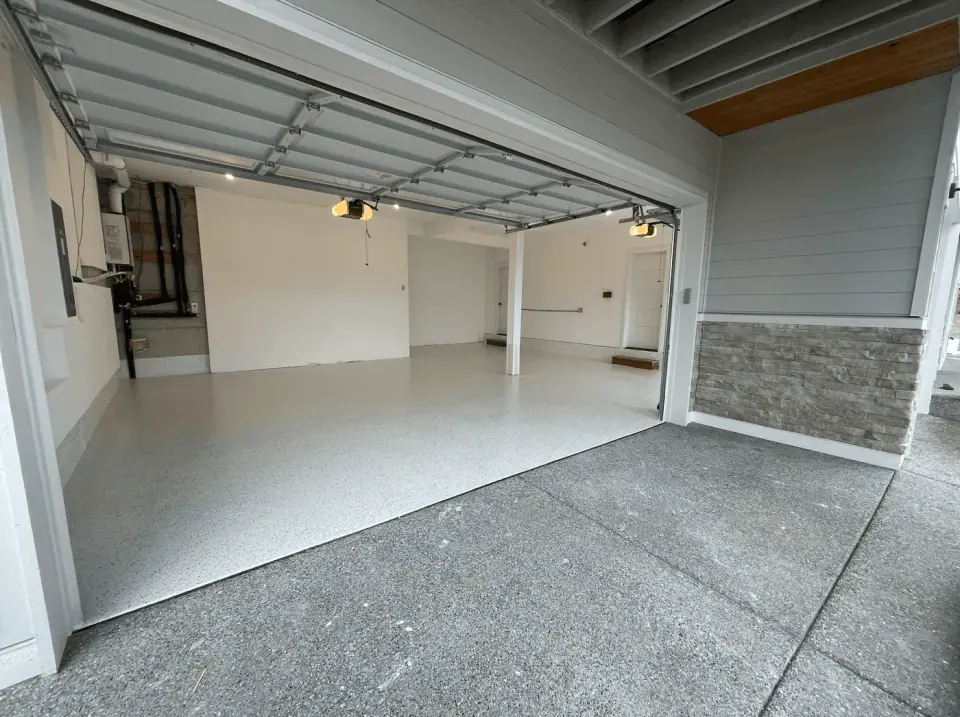
Short answer: a garage floor estimate takes about 20 minutes. The estimator measures the floor, runs a moisture test on the slab, and gives you the exact final price in writing before they leave — not a "starting at" figure, not a callback later. There's no obligation to sign anything that day.
If you've put off booking an estimate, the reason is rarely the 20 minutes itself. It's the mental image of a stranger in your driveway building toward a hard sell in your own living room. That's a reasonable thing to want to avoid — so here's exactly what actually happens, in order.
How to get your garage ready for the estimate
You don't need to empty anything, measure anything or fill out a form. Clear a walking path if the garage is packed, and that's enough. Got ten spare minutes? These make the visit more useful:
- Pull the car out. The estimator wants to see the slab where you park. Oil spots, worn tire lanes and cracks tend to hide under the car.
- Free up a few feet of wall. Slide bins off the walls in two or three places. Damp patches and white powder tend to show at the edges first.
- Know the floor's history. The year the house was built, and whether the slab was ever sealed, painted or coated. If a few drops of water bead up instead of soaking in, something is on the surface.
- Keep photos of damp spots. The estimate is one reading on one day. If the floor goes dark at the joints after a wet week in February, a photo shows what a dry day can't.
- Measure it yourself. Length times width, wall to wall. A 20-by-22-foot garage is 440 square feet. Then you can check the square footage on every quote.
What happens on site
- The floor gets measured. Actual square footage, not a guess from a phone call.
- The slab gets moisture-tested. This is the step a lot of competitors skip — see our moisture science breakdown for why it matters, especially here.
- Existing damage gets assessed. Cracks, previous coatings, stains — anything that changes prep scope gets noted on the spot.
- You get a price, in writing, before they leave. Calculated from your actual floor, not a phone-quoted square-foot rate.
What gets measured, and what each number decides
Everything the estimator checks changes either the price or the plan. Here's what gets looked at, and why.
- Square footage. The biggest single driver of the price. Most two-car garages run 400 to 500 square feet. Steps, and coating carried up the walls as a cove base, are measured on their own.
- Cracks. Each crack is checked for width and for whether one side sits higher. A crack that's still moving needs a concrete contractor first, and you hear that at the estimate.
- Moisture. Meter readings in the middle of the slab and near the walls, plus a look for white powder, dark patches and old coating that has let go. A reading over 3.5 percent on our meter, or two or more of those signs, means the moisture barrier primer goes in. That also makes it a two-day install instead of one.
- Old coatings and sealers. Paint, an old kit or a clear sealer has to come off before a new floor can bond. Removal runs about $1 to $3 a square foot, so it gets its own line.
- Wear and stains. Pitting, flaking near the door from road salt, and soaked-in oil. Each adds grinding time, and grinding is most of the labor on a coating job.
How those lines turn into a total is on our page about where the money in an installation price goes.
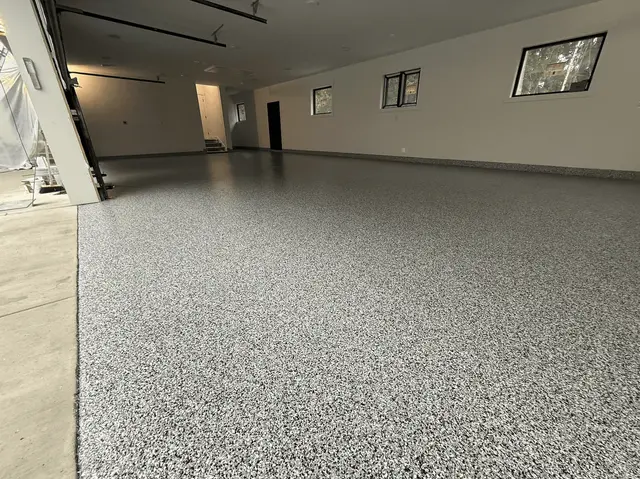
What the written estimate should list
Whoever writes your quote, these lines should be on it. If one is missing, ask for it before you compare prices.
- Your square footage, plus steps and cove base if they're part of the job.
- The prep method, by name: diamond grinding.
- Crack and joint repair, and how it's done.
- The moisture reading, and whether a barrier primer is in the price.
- Each layer by product name: base coat, flake and clear top coat.
- Removal of any old coating.
- Cure times: when you can walk on the floor and when you can park.
- The warranty wording, including what it leaves out.
- The total, and the date the price expires.
Watch for any line marked "as needed." Ask what decides it and what it would cost. That blank is where a low quote grows.
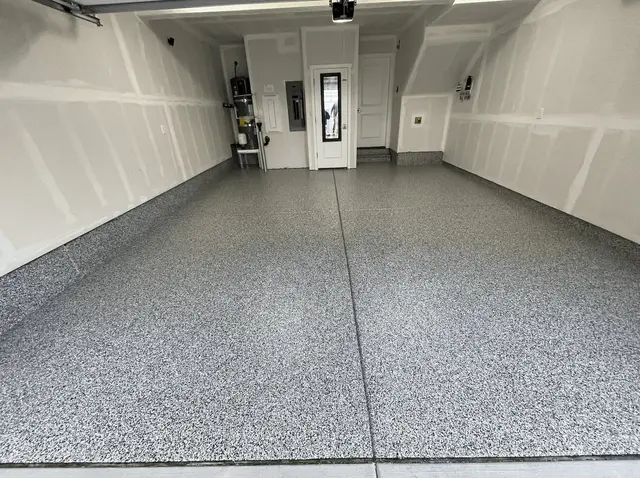
What doesn't happen
No pressure to sign that day. No countdown-clock discount that disappears if you don't commit on the spot. No vague number that turns into a bigger one once work starts — the price is itemized, including the $1,513 in upgrades included at no charge on a Premium floor, so you can see exactly what's in it before deciding anything.
Why not just get a price over the phone?
Floor condition varies enough, house to house, that a phone quote is really a guess dressed up as a number. Two garages with identical square footage can need completely different amounts of crack repair, and only one of them might have a moisture problem that changes the prep required. A phone quote either lowballs to win the call and grows once the crew shows up, or pads upward to cover the unknown. An on-site estimate removes the guessing on both sides.
Questions to ask before the estimator leaves
A few questions about your own floor get the most out of the 20 minutes:
- What did my slab read, and where was it highest?
- Is this a one-day job or a two-day job, and why?
- What happens to each crack I can see?
- Does anything have to come off the floor first?
- How long does this price hold?
- What do I need to do before install day?
To compare one company with another, use our 12 questions to ask a garage floor contractor.
What happens after the estimate
You keep the written quote. There's no countdown clock forcing a decision, and no follow-up pressure beyond a normal check-in. If you book, scheduling is based on your timeline and, if relevant, the seasonal timing considerations we cover in our best-time-to-coat guide. If you don't book, you keep the moisture reading and the exact price for your own records.
If you do book, three things happen before install day:
- The moisture plan is settled. A slab under the limit is a one-day install. Over it, and on every Premium floor, the barrier primer goes down on day one and the floor on day two. Our crew checks the slab again on install morning.
- You empty the garage. Cars, bins and freestanding shelves come out. Wall-mounted shelves can usually stay. Leave the driveway clear for the truck and the grinder.
- Someone is home at the start and the end. There's a walk-through when the crew arrives and another when they finish. You're free in between.
Then the cure clock runs. Walk on the floor the next day, park after 72 hours, and give it 7 to 10 days to reach full hardness.
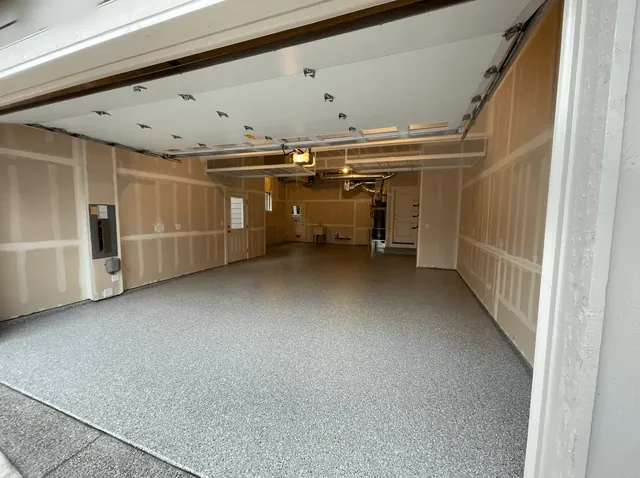
How to compare our estimate with other quotes
The Federal Trade Commission's advice for any home project fits a garage floor too: get more than one written estimate, don't take the lowest by default, and ask why when two prices are far apart. Then hold the quotes up against the checklist above, line by line. The gaps that matter most are the square footage, the prep, the moisture reading and the warranty wording. Two quotes for the same garage should measure close to the same floor. If they don't, ask which one measured wall to wall.
Be wary of a price that only exists if everyone in the house is home. Some in-home sales training teaches reps to hold the number back until every decision-maker is in the room, so they can ask for a signature that night. A real quote doesn't depend on who's home. For the six questions that sort one installer from another, see our page on hiring epoxy floor installers in Seattle.
Why we do it this way
A floor coating is a considered purchase, not an impulse one. An estimate that pressures you into a same-day signature is optimizing for the estimator's day, not your decision. Ours is built to leave you with everything you need to decide on your own schedule — the exact price, what's included, and what it would have cost without the upgrades.
Estimate questions
How long does a garage floor estimate take?
About 20 minutes. The estimator measures the floor, runs a moisture test on the slab and walks you through the exact price before leaving.
Is the garage floor estimate free?
Yes. The estimate and the moisture test are free, and there's no obligation to book.
Do I have to sign anything during the estimate?
No. The estimator's job is to measure the floor, test the slab and leave you with a written quote, not to pressure you into signing on the spot. The quote is yours to sit on.
Is the price I'm quoted during a garage floor estimate final?
Yes. It's calculated from your actual square footage and floor condition on site and given to you in writing, not a 'starting at' figure or a callback with a number later.
Do I need to empty the garage before the estimate?
No. Clear a walking path if it's packed, so the estimator can see the slab. The garage only has to be emptied for the install itself.
Can you give me a price from photos or over the phone?
Not a final one. Two garages the same size can need very different amounts of crack repair, and only one of them may have a moisture problem that changes the prep. Measuring and testing on site removes the guessing on both sides.
What should a garage floor estimate include?
Your square footage, the prep method, crack and joint repair, the moisture reading and whether a barrier is in the price, and each layer by product name. Add any old coating removal, the cure times, the warranty wording, the total and the date the price expires. Any line marked "as needed" should say what decides it.
Ready to see the real number for your garage?
20 minutes, a real moisture test, and a written price before we leave. No pressure, no obligation.
Book Your Estimate