
Basement Floor Coating in Seattle
In a Seattle basement, moisture is the first question, not the color. We test the slab before we quote, add a vapor barrier when it needs one, and tell you straight when a basement needs a drainage fix before any coating will hold.
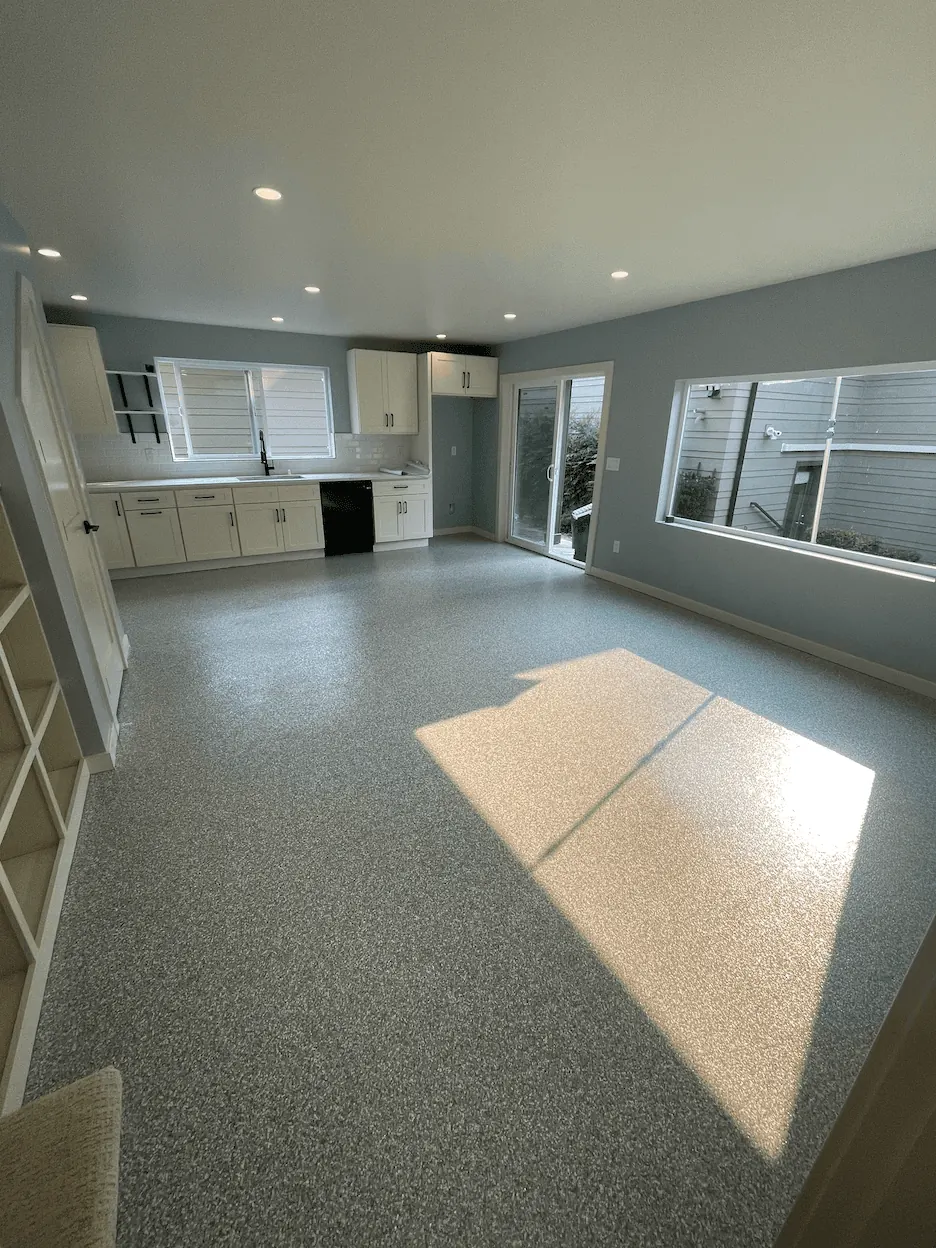
- Moisture-tested first
- Vapor barrier if needed
- Installed in 1–2 days
- Lifetime adhesion warranty
Can you coat a basement floor?
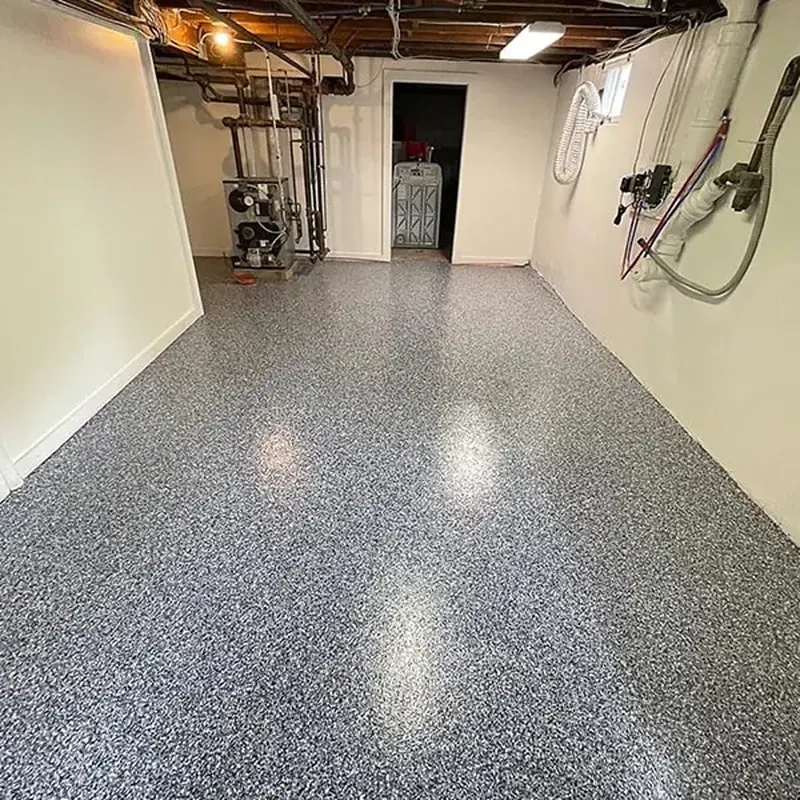
Yes, if the concrete is sound and what's coming up through it is vapor rather than water. A coated basement floor uses the same layers as our garage floors (a diamond grind, crack repair, a base coat with flake, and a clear polyaspartic topcoat), with more riding on the moisture test.
Below grade, the ground presses moisture against the slab from underneath and from the sides, so we settle the moisture question before anything else. A dry slab is a one-day install. One that needs a barrier takes two.
- 1–2days to install
- Testedbefore we quote
- Lifetimeadhesion warranty
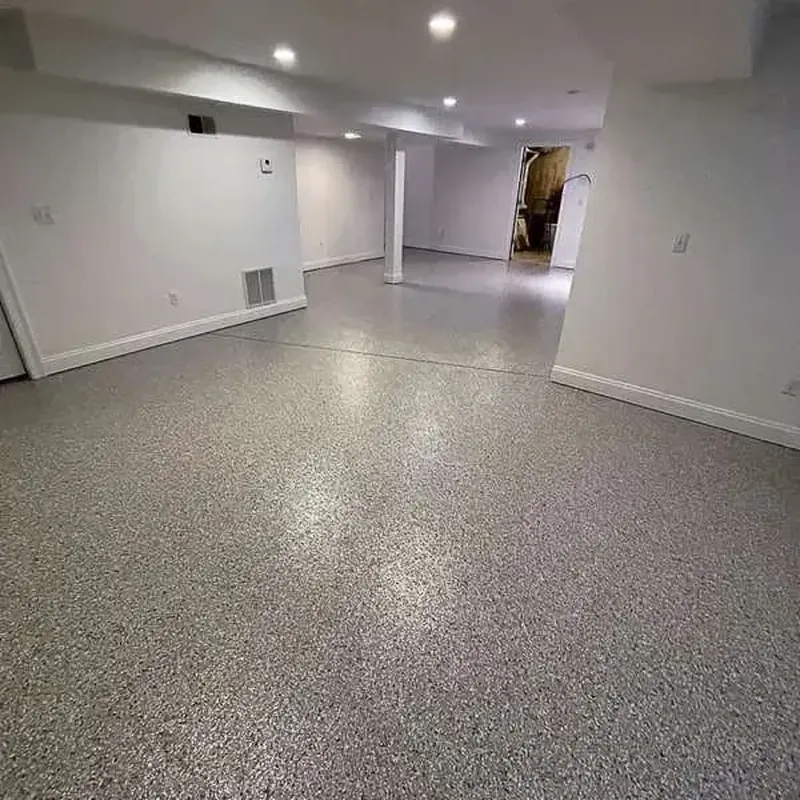
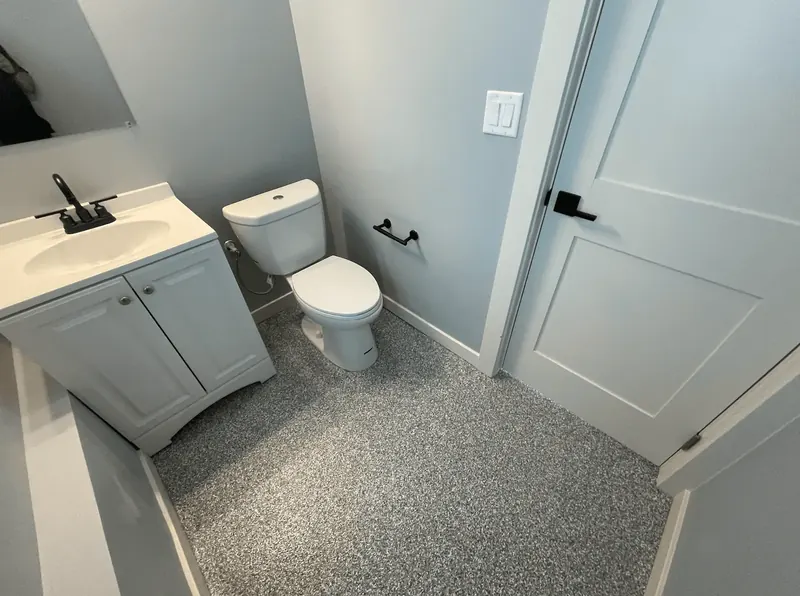
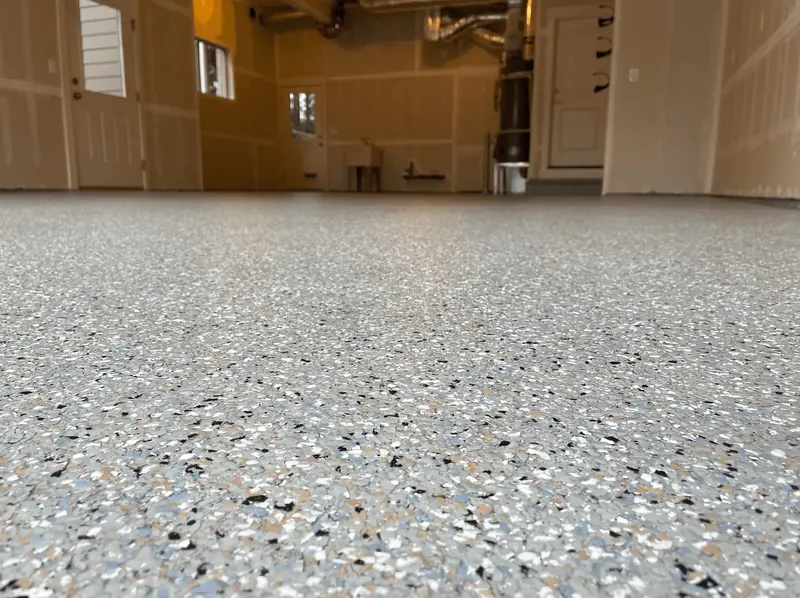
Vapor or water? The question that decides a basement floor
Most basement slabs carry some moisture. What matters is the form it takes, because a coating system can handle one and not the other.
Vapor: a coating can handle it
Moisture moving up through a below-grade slab as vapor is normal. The signs:
- White chalky deposits you can't sweep off. That's salt left behind by evaporating water.
- Dark patches that look damp when nothing's been spilled.
- Old paint or coating that's peeling or bubbling.
The fix is a moisture vapor barrier primer on the bare, ground concrete, cured overnight before the base coat goes down.
Water: fix that first
Liquid water is a different problem:
- Standing water on the floor.
- A floor that gets wet after heavy rain.
- Water seeping through cracks or at the base of the walls.
That's a drainage or waterproofing job, and no floor coating fixes it. If we see it, we'll tell you at the estimate, before you've spent anything, and we won't coat over it.
What raises the moisture risk under a basement floor
A moisture meter only reads the top of the slab, so we weigh what we can see as heavily as the reading.
 Location
It's below grade
Wet soil presses on the slab from underneath and from the sides. On its own, it's the biggest risk factor.
 Age
Age
An older house
Slabs poured before the 1980s often have no plastic sheet underneath, and older concrete passes more water than it did new.
 Drainage
Water fed from outside
Downspouts that empty at the foundation and ground that slopes toward the house keep feeding the slab. Fix those first.
 History
A coating that already failed
Old paint or epoxy peeling with a damp or chalky underside means moisture pushed it off, and it will do the same again.
When two or more of these show up, the barrier is part of the job, not an optional extra.
How we coat a basement floor
The same diamond-ground prep we use on every floor, with the moisture decision made before you sign anything.
- Walk the slab and test it: moisture readings, the signs above, the cracks and the concrete. You get a written price.
- Diamond grind: old paint, sealers and the weak top layer come off, so the coating can grip. Dust collection runs throughout.
- Crack and joint repair: filled and ground flush. Structural cracks need repair first, and we'll tell you if we see them.
- Moisture vapor barrier, when needed: onto the bare slab, cured overnight, which makes it two days. Do you need one?
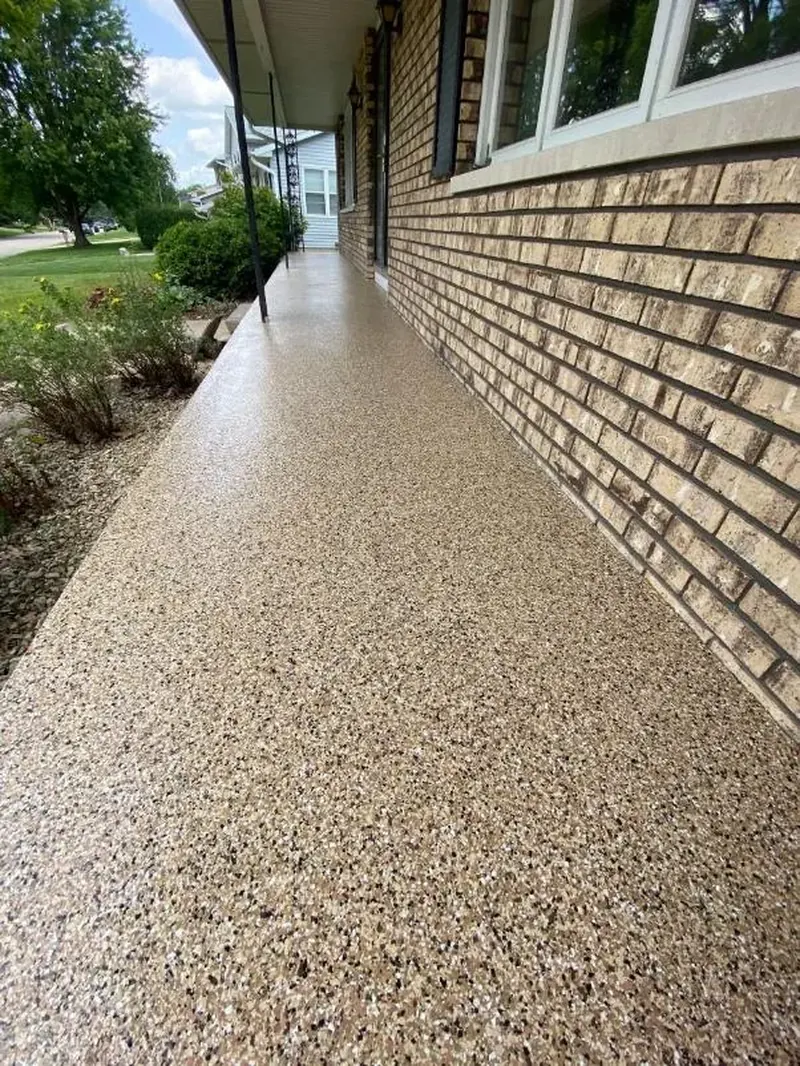
- Base coat, flake and clear topcoat: full flake under a polyaspartic topcoat with anti-slip grit. Walk on it the next day.

What a coated basement floor is good for
A coated slab is sealed, wipes clean and stops the concrete from dusting. What it won't do: waterproof a basement that leaks, level an uneven slab or fix structural cracks. Those come first.
 Finished basement
Play rooms and storage
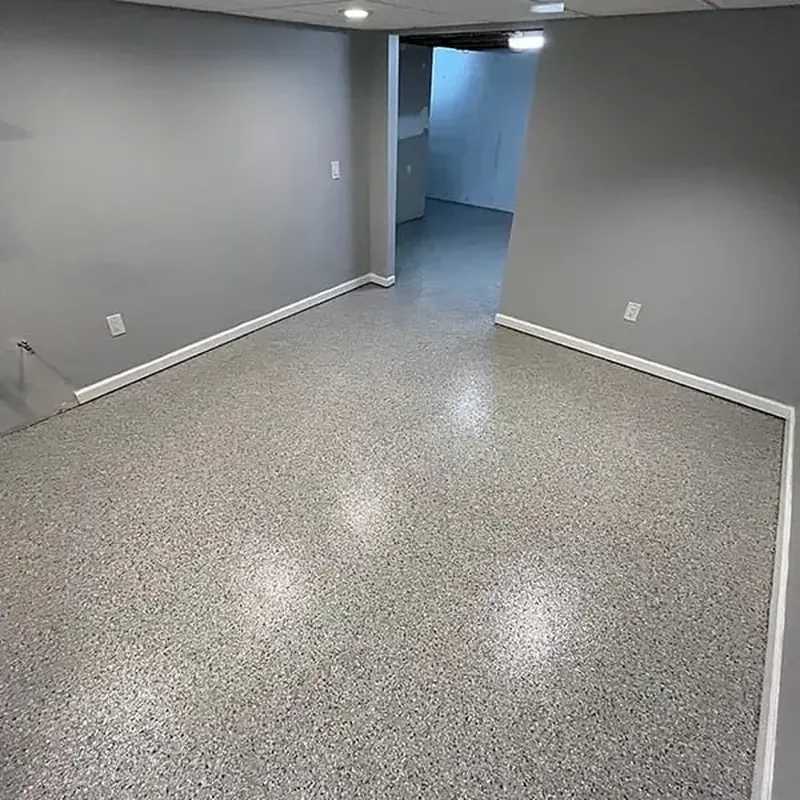
The flake hides the stains and color differences bare concrete always has, and nothing you store down there gets dusty.
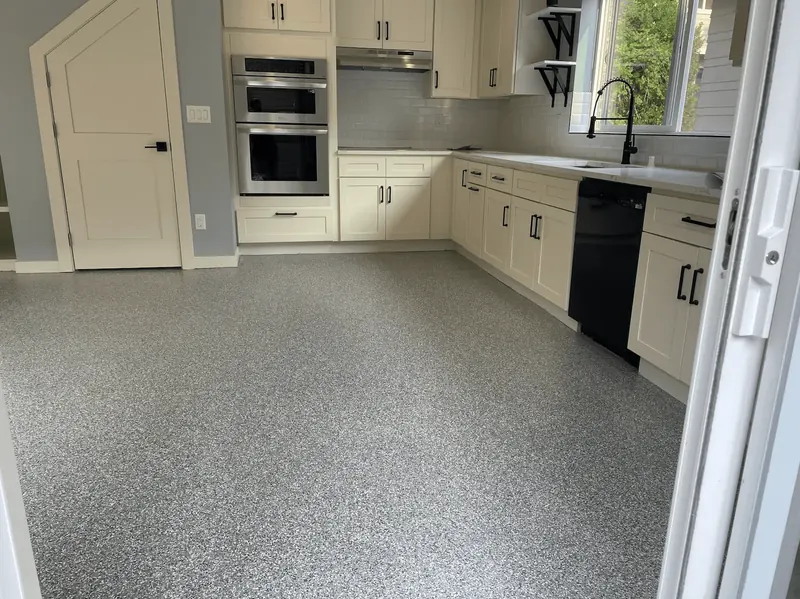 Living space
Kitchens and great rooms
The same floor in a room you live in. It's seamless, so there are no grout lines or edges to collect dirt.
 Workshop
Home gyms and workshops
Tough under tools and equipment. Put rubber mats where weights get dropped: impact damage isn't covered.
Basement floors in Seattle
Seattle stacks the odds against a basement slab: wet ground for much of the year, and a lot of homes built before a vapor sheet under the slab was standard practice.
 Season
Wettest in winter
Nearly half of Seattle's rain falls from November through January. A slab that looks dry in August can read wet in February, so we go by the signs on the slab, not one reading.
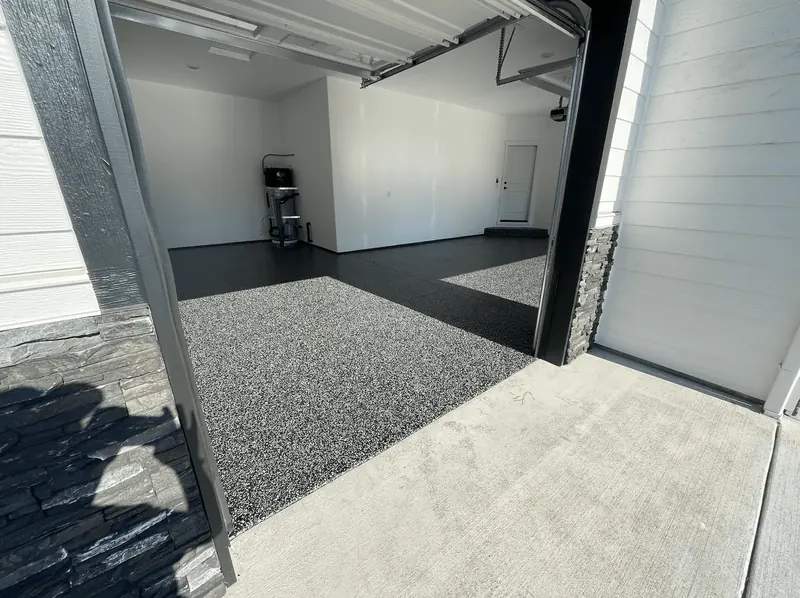 Housing
Older homes, no vapor sheet
Slabs poured before the 1980s often have no plastic sheet underneath, and much of Seattle's housing is that age. Below grade plus an older slab usually means a barrier.
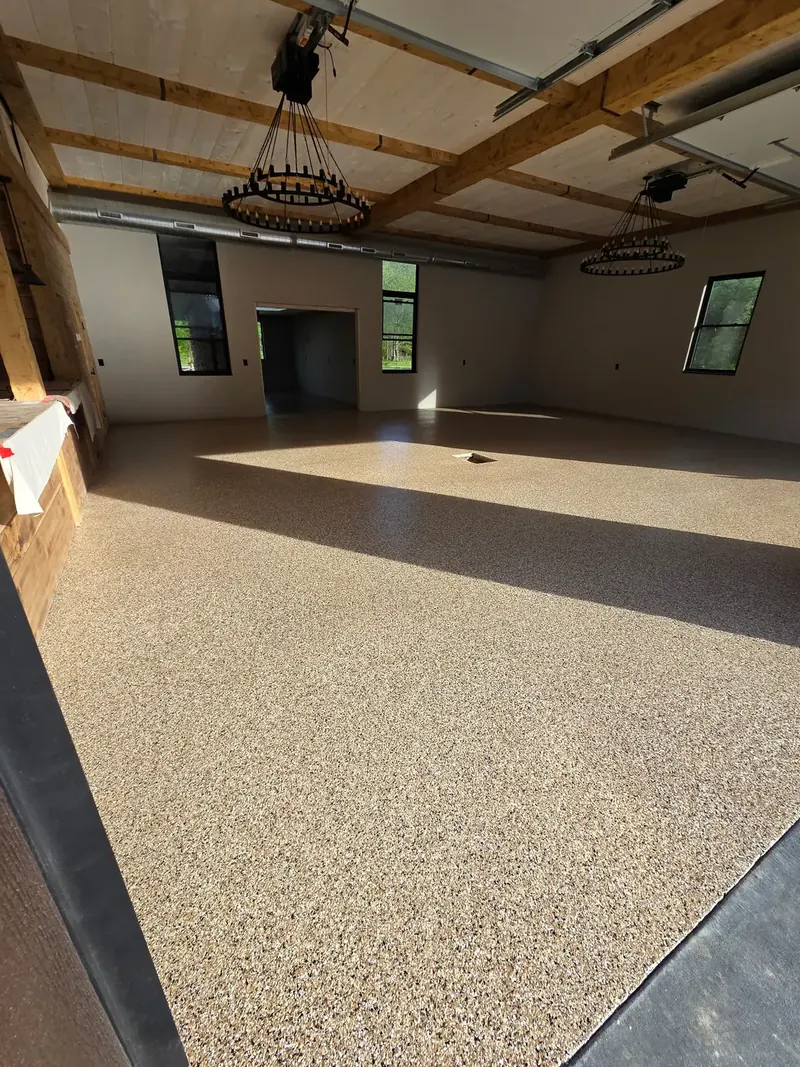 Cold
Cold
A cool basement can still be coated
Epoxy needs the floor at 55°F or warmer. Polyaspartic cures much cooler, so a cool basement doesn't have to wait for summer if the slab passes the moisture test.
We coat basements across Seattle, Bellevue, Redmond, Kirkland, Renton, Tacoma, Federal Way and Sammamish. Our Seattle service area · The moisture science, explained · Also serving Nashville and Scottsdale & Phoenix.
What an epoxy basement floor costs in Seattle
Most people call it an epoxy basement floor. Ours is the polyaspartic upgrade on one, priced like all our floors: by the square foot, set by the slab, not the room.
- $4–$12per sq ft installed
- $1–$3per sq ft removal
- Freewritten estimate
Three things move a basement up or down that range:
- The moisture test. A below-grade slab that shows vapor gets the barrier primer and an overnight cure first. It's included on a Premium floor.
- What's on the floor now. Paint, sealer or an old coating comes off first, at about $1 to $3 a square foot.
- Stairs and finished walls. A staircase as the only way in takes longer to set up, and finished walls need clean edges. A cove base is included on a Premium floor.
You get the price in writing at the free estimate, after the moisture test. Pricing a garage too? See epoxy floor installation cost.
Basement floor coating questions
Can you coat a basement floor that gets damp?
Usually, yes, as long as the moisture is vapor and not water. A damp-looking slab or white chalky deposits are signs of vapor coming up through the concrete, and a moisture vapor barrier primer under the coating blocks it. Standing water, or a floor that gets wet after heavy rain, is different: that's a drainage or waterproofing problem to fix first. No floor coating stops running water, and we won't coat over it.
How much does it cost to coat a basement floor?
About $4 to $12 a square foot installed, the same range as our garage floors. A damp slab that needs the barrier primer, or an old coating that has to come off at about $1 to $3 a square foot, pushes it toward the top. You get the exact number in writing after the moisture test at the free estimate.
Do I need a moisture barrier in my basement?
It depends on what the slab shows, which is why we test before we quote. Being below grade is the single biggest risk factor on its own. Add an older house, drainage problems outside or a previous coating that peeled, and the barrier becomes part of the job rather than an option.
Can you coat over a painted or previously coated basement floor?
Yes. Diamond grinding takes old paint, sealers and coatings off down to clean concrete. If the old coating peeled, we want to know why first: if the underside is damp, chalky or blistered, moisture pushed it off, and a barrier goes under the new floor.
How long does a basement floor coating take?
One or two days. It's two when the slab needs a moisture barrier, because the barrier primer cures overnight before the base coat goes down. You can walk on the finished floor the next day.
When is the best time to coat a basement floor in Seattle?
Summer is the safest window, because the slab is driest. Polyaspartic cures in cool temperatures, so fall and spring work too when the slab passes the moisture test. In the wettest weeks of winter the slab is at its most saturated, and we'd steer most homeowners toward waiting.
Is a coated basement floor slippery?
Any glossy floor is slick when it's wet. We mix anti-slip grit into the clear topcoat for traction, and we can go heavier on it if you want more grip.
Will the coating hide cracks and an uneven floor?
Cracks are filled and ground flush before coating, and the flake hides stains and color differences. What a coating won't do is level the floor: it's a thin film that follows the concrete, so a dip or slope in the slab will still be there. Structural cracks or crumbling concrete need repair first.
Can I use a coated basement as a home gym?
Yes. Put rubber mats down where weights get dropped, because impact damage isn't covered by the warranty.
What does the warranty cover on a basement floor?
The same lifetime adhesion warranty as every floor we install. If the coating delaminates from the concrete, whether it peels, blisters or lifts, we repair or recoat the affected area at no charge. It doesn't cover impact damage, abrasion, staining, improper maintenance, or using the floor before the cure times we give you.
Can you epoxy a basement floor?
You can, but we don't recommend it below grade, and it isn't what we install. Epoxy blocks vapor and cures rigid, so moisture coming up through a below-grade slab blisters and peels it, and it needs a warm, dry slab to cure, which a Seattle basement rarely offers. Our basement floors are a polyurea base coat and flake under a clear polyaspartic topcoat, with a moisture vapor barrier primer underneath when the slab needs one.
What are the basement floor coating options?
Three get used. A sealer or stain is thin and cheap, wears quickly and does nothing about moisture. A DIY epoxy kit is rigid and blocks vapor, so it peels when vapor pushes up, and it needs a warm, dry slab. A professional flake system, a polyurea base and full flake under a clear polyaspartic topcoat over a diamond-ground slab, with a vapor barrier primer when the test calls for it, is the one that lasts below grade. Tile, vinyl plank and carpet aren't coatings; each traps moisture against the slab and is the first thing to fail when the basement gets damp.
More floors we coat


Get a free basement floor estimate
We test the slab for moisture before we quote, tell you what it needs, and leave you a written price.