
How to Clean and Care for an Epoxy or Polyaspartic Garage Floor in Seattle
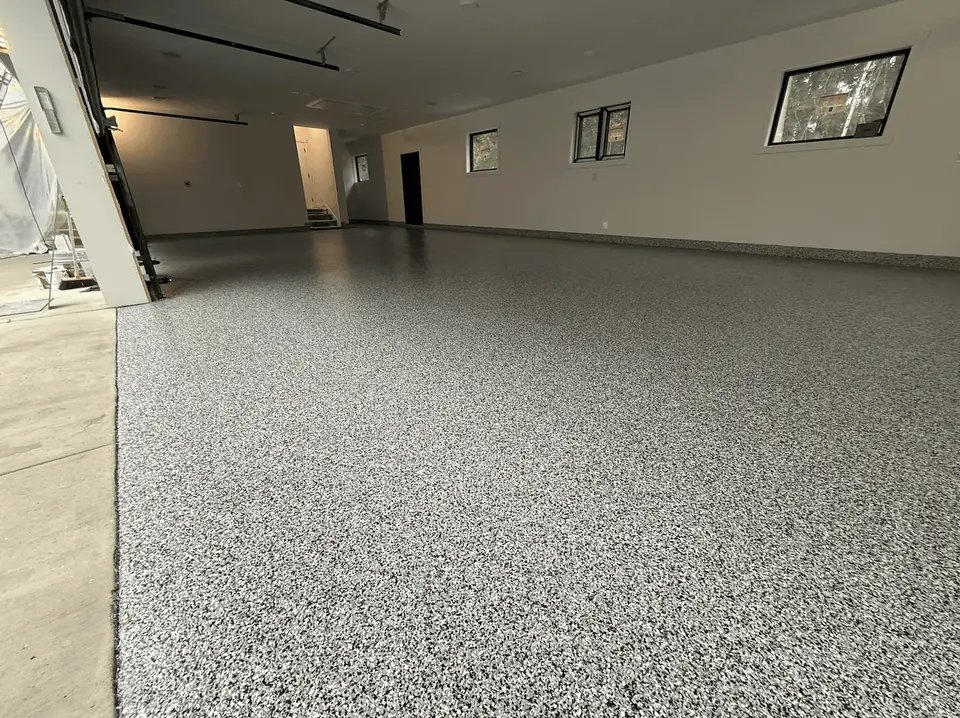
Short answer: sweep or dust-mop once a week, hose it down and squeegee it dry when it's muddy, and every month or two mop it with a pH-neutral cleaner, then rinse. Wipe up car fluids when they happen and rinse off road salt after a freeze. Never put wax, sealer or a "shine" product on it, and keep acids, bleach and strong solvents off it. For the first week after install, water only.
A polyaspartic floor is about the easiest floor in your house to look after. Most of what goes wrong comes from doing too much to it, not too little.
The first week: hands off
Our polyaspartic floors take foot traffic the next day and cars after 72 hours, but the coating keeps hardening for about ten days. For the first seven days, use nothing but a broom and plain water. No cleaners, sealers, waxes or coatings of any kind on top. Parking too early is the most common way a brand-new floor gets damaged, so give it the full three days even if it looks ready sooner.
The routine, season by season
- Every week: sweep or dust-mop. Grit is what dulls a coated floor. Under shoes and tires it works like fine sandpaper. A soft broom or a microfiber dust mop picks it up without scratching.
- Wet days: hose and squeegee. From October to April, every car brings water in. Rinse the floor and push the water out the door with a rubber squeegee so grit doesn't dry onto it.
- Every month or two: mop. Damp-mop with a pH-neutral floor cleaner mixed to its label, then go over the floor with clean water so no film is left. On a textured anti-slip finish, a soft deck brush gets into the texture better than a mop.
- After a freeze: rinse off the salt. When roads ice up, the state treats King and Snohomish County highways with a calcium chloride anti-icer, which is a salt, and it rides home on your tires. Rinse it off once the cold snap ends so the white film doesn't sit there all winter.
- Once a year: look it over. Check the edges, the spot where the tires sit and the area by the door. If your package includes the one-year courtesy inspection, that visit is the time to ask about anything you've noticed.
What to clean it with
Water does most of the work. When it doesn't, use a pH-neutral floor cleaner, mixed to the label and rinsed off afterward. "pH-neutral" just means it's neither acidic nor alkaline, so it won't eat at the finish. A few cautions:
- Go easy on soap. Soap leaves a film that dulls the gloss, holds dirt and makes the floor slick when it's wet. If you use any, use very little and rinse well.
- Skip ammonia. Some care guides say two or three ounces of ammonia in a gallon of hot water is fine for a deep clean. Others say ammonia dulls the finish over time. A pH-neutral cleaner does the job without the argument.
- Test anything new in a corner first, and never mix cleaners. Ammonia and bleach together give off toxic fumes.
Not sure about a product? Ask us before you use it. It's a two-minute answer and it protects your warranty.
What never goes on the floor
- Wax, polish, sealers or "floor shine" products. The top coat already has its gloss. Anything on top of it clouds the finish, makes it slippery, and isn't covered by our adhesion warranty, because we can't stand behind a surface someone else has coated over.
- Acids, including vinegar and acid-based concrete cleaners.
- Bleach and harsh degreasers.
- Strong solvents like paint stripper and brake cleaner. They attack the coating.
- Abrasives: scouring powder, scrub pads, wire brushes and metal shovels. Clear slush with a plastic shovel.
- High-pressure water. You don't need a pressure washer. If you use one, keep it on a low setting, under about 1,200 PSI, hold the tip well back, and never aim it at an edge or a crack. Some installers say skip it entirely.
Tire marks, and the chemistry behind them
Those yellow-brown marks where the tires sit don't come from dirt. They come from a chemical called 6PPD that tire makers add so rubber doesn't crack. It slowly works its way out of the tire and into whatever the tire sits on, and heat speeds it up, which is why tires fresh off the highway leave marks faster. A polyaspartic top coat resists it better than epoxy does, but no coating is immune.
For light marks, a damp melamine sponge (the "magic eraser" type) with a little pH-neutral cleaner usually lifts them. Parking pads under the tires stop them altogether. Tire marks count as stains, so they're not a warranty item.
One local footnote: when 6PPD reacts with the air, it forms a related chemical called 6PPD-quinone. In 2020, researchers at the University of Washington Tacoma and Washington State University identified that chemical, washing off roads in rainstorms, as the reason coho salmon were dying in Puget Sound streams. Same tire chemistry, much bigger problem than a stain on your floor.
Where the water goes when you hose out the garage
In Seattle, the storm drains in the street are not connected to a treatment plant. Seattle Public Utilities puts it plainly: what goes down a storm drain flows untreated to a creek, a lake, the Duwamish River or Puget Sound. That's why the drains are stenciled "only rain down the drain."
So when you hose out the garage: sweep first, so you're moving water and not grime. Use as little water as the job needs. Let it run onto the lawn or a planted bed, not down the driveway to the street. Soak up oil with cat litter or absorbent pads and put that in the trash, don't rinse it. If your garage has a floor drain, find out where it goes before you send cleaner down it.
Spills and stains
The top coat resists car fluids, but resisting isn't the same as ignoring. Brake fluid, battery acid, gasoline, antifreeze and washer fluid left to sit can dull or stain the finish, and stains from things left on the surface aren't a warranty item. Wipe spills up when you notice them. For a big oil spill, soak it up first, sweep that up, then mop.
Protect it from the things that actually damage it
Most real damage to a coated floor is impact, not wear:
- Pads under jack stands and jack points. A square of plywood works.
- Lift or roll heavy equipment. Don't drag toolboxes, engine stands or appliances across the floor. Use a mat or a dolly.
- Furniture pads under workbench legs and storage racks.
- No solid rubber-backed mats left down for months. Softeners in some rubber backings can stain a coating, especially where the mat traps moisture. A fabric-backed mat, or a containment mat made for coated floors, is the safer choice.
Two Seattle habits worth having
Don't let water sit. It won't hurt the coating, but squeegeeing it out keeps grit from drying onto the floor and keeps the surface from staying slick.
Expect the occasional damp floor. On a mild, humid day after a cold snap, moist air condenses on a cold slab and the whole floor can look wet with nothing spilled. That's surface condensation, and it clears when you open the door or run a fan. Any smooth floor is slicker when it's wet, which is why our top coat has anti-slip grit in it. Moisture coming up from under the slab is a different problem; our moisture guide explains it.
What the warranty asks of you
Our floors carry a lifetime adhesion warranty: if the coating peels or lifts from the concrete, we repair or recoat that area at no charge. It doesn't cover impact damage, scratches, stains, improper maintenance, or using the floor before the cure times we give you. In practice, the routine above is also what keeps you covered: respect the cure times, keep anything we haven't approved off the top coat, and clean up what you spill. Our warranty guide has the details.
Garage floor care questions
How do you clean an epoxy or polyaspartic garage floor?
Sweep or dust-mop it weekly, hose it down and squeegee the water out when it's muddy, and every month or two damp-mop it with a pH-neutral floor cleaner, then rinse with clean water. Wipe up car fluids as they happen. That's all the maintenance it needs.
What is the best cleaner for an epoxy garage floor?
Plain water for routine cleaning, and a pH-neutral floor cleaner mixed to its label when you need more. Go easy on soap, which leaves a dull, slippery film, and keep acids, bleach and solvents off the floor. Rinse whatever you use.
Can you pressure wash a coated garage floor?
You don't need to. A garden hose and a squeegee clean a coated floor. If you do use a pressure washer, keep it on a low setting, hold the tip well back from the surface, stay away from edges and cracks, and wait until the floor is at least a week old.
Should you wax or seal an epoxy garage floor?
No. The top coat already provides the gloss and the protection. Wax or sealer on top clouds the finish, makes the floor slippery, and isn't covered by our adhesion warranty.
How do you get road salt off a garage floor?
Rinse it with clean water and squeegee it out, then damp-mop if a white film is left. On a coated floor the salt sits on the surface instead of soaking into the concrete, so it comes off easily. Just don't let it build up all winter.
How do you remove tire marks from an epoxy garage floor?
Try a damp melamine sponge with a little pH-neutral cleaner, then rinse. The marks come from a chemical in the tire rubber that soaks into the coating over time, so the sooner you catch them the easier they lift. Parking pads under the tires prevent them.
Can you put rubber mats on an epoxy garage floor?
For a while, yes. For mats that stay down for months, avoid solid rubber backings. Softeners in some rubber can stain a coating, especially where moisture is trapped underneath. Fabric-backed mats or containment mats made for coated floors are the safer choice.
Want a floor this easy to keep clean?
We'll test your slab, explain what it needs, and quote the system that fits how you use the garage.
Get A Quote