
Is a Coated Garage Floor Slippery When Wet? Non-Slip Garage Floor Coatings for Seattle
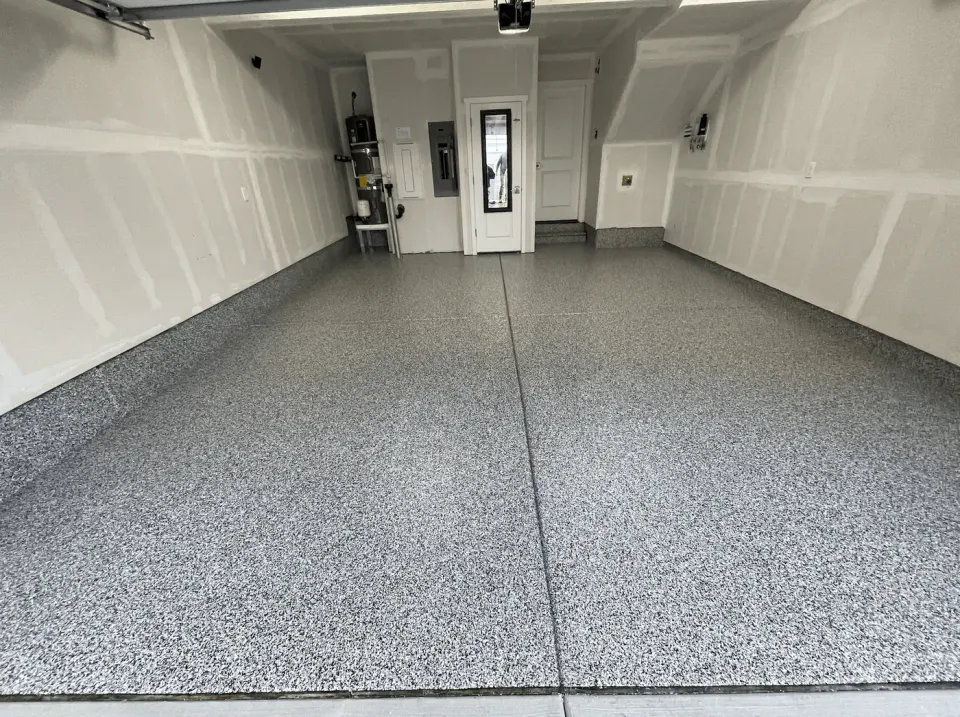
Short answer: A glossy coated floor with no texture is slippery when it's wet, and a Seattle garage floor is wet from October to April. The fix is built into a proper floor: a full flake broadcast that gives the surface a fine texture, and anti-slip grit mixed into the clear polyaspartic topcoat. We include the grit on every floor and go heavier on request. A coated floor with grit has better wet traction than bare, sealed concrete.
"Is epoxy slippery?" is one of the most common questions about garage floors, and the honest answer depends entirely on the top layer. Here's what makes a coated floor slick, what fixes it, and the trade-off nobody mentions until the floor is in.
Why a coated floor can be slippery
Resin coatings are non-porous. That's their virtue, because oil and water sit on top instead of soaking in, and it's also why a smooth, solid-color epoxy or polyaspartic floor behaves like glass under a wet shoe. Water, melting slush off a car, sawdust and a drip of oil all turn a smooth coating into a hazard. The floors that get people hurt are the smooth, high-gloss, solid-color ones with nothing added to the topcoat.
How slip resistance is tested, and what the tests teach
Labs measure grip three main ways. A pendulum swings a rubber foot across a wet patch at about the speed of a heel strike, and Britain's workplace safety regulator favors it. A small motorized sled drags a rubber foot across a wet strip, which is the American tile industry's test. And on a tilting ramp, a person in a harness walks until they slip, in oily boots or, for pool decks, barefoot on soapy water.
The scores don't convert from one test to another, but the lessons match. A dry reading says nothing about a wet floor. A smooth surface fails wet because a thin film of water gets trapped under the sole, the way a tire hydroplanes. Texture is the cure: tiny peaks give the water somewhere to go, so the sole reaches the floor.
Two things that make a floor grip
- Full flake. Vinyl flake broadcast to refusal and scraped flat leaves a fine, even texture under the clear coat. Partial flake, with base coat showing between chips, leaves smooth patches that are the slick spots.
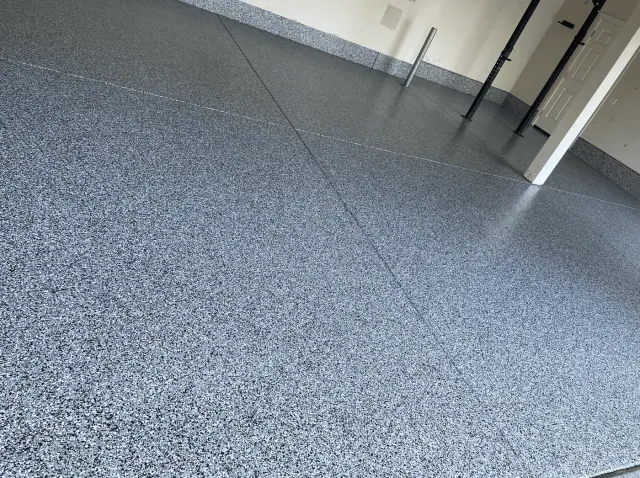
- Anti-slip grit in the topcoat. A fine aggregate mixed into the clear polyaspartic before it's rolled, so it's locked in the film rather than sprinkled on top where it can wear off.
On our floors both are standard: full flake under a clear polyaspartic topcoat with grit mixed in. The full stack is on the garage floor coating page.
Grit types, grit sizes and what flake size changes
Two kinds of grit do most of the work:
- Polymer beads. Tiny, rounded plastic beads. They stay spread through the coat instead of sinking, and they're gentle on bare feet, knees and mops. They're the usual choice for a home.
- Aluminum oxide. A crushed mineral, one of the hardest made, with sharp edges. It grips hardest and wears longest, but it shreds a cotton mop and scuffs a knee. It suits ramps, outdoor steps and oily shop floors.
Both come in grades, from powder-fine to the size of coarse salt. The trade's rule of thumb is that a grain should end up half buried in the clear coat and half standing out, so a thicker coat takes a coarser grade.
Flake size matters less than you'd think. What you feel is how deeply the clear coat buries the chips, and bigger chips take more of it to bury. So the grit, not the chip, sets the grip. The quarter-inch chip is our standard, and the flake garage floor coating page shows smaller and bigger ones.
The trade-off: grip vs cleanability
More grit means more traction and a floor that's slightly harder to mop; coarse, sharp aggregate can feel rough on bare feet and knees and collects dirt. That's why the grit we use by default is fine enough to wipe clean with a push broom or a wet mop and still give wet traction, and why we offer a heavier dose where it's useful: the strip inside the door where wet tires come in, in front of a utility sink, on steps and landings. Decide this before install day. Adding grit later means another topcoat.
What about a floor that's already slick?
If the existing coating is sound, not peeling or lifting, the fix is a new clear topcoat with grit mixed in, over a floor that's been scuffed so the new coat bonds. If the coating is failing anywhere, the topcoat goes with it and the floor is ground and redone. Sprinkling sand onto a cured floor doesn't work; it has nothing to lock into.
Seattle specifics
- Wet tires most of the year. Seattle gets measurable rain on about 156 days a year, most of them between October and April, so cars bring water in almost daily for half the year.
- Winter de-icer. Road salt and anti-icer tracked in off the highways leave a film that makes a smooth coating slicker, and that wipes off a textured one.
- Garages that double as workshops and gyms. Sawdust on a smooth floor is as slick as ice. A gym floor gets rubber mats under the rack regardless.
- Patios and pool decks. Outside, the grit isn't optional. See patio and pool deck coating.
Where your garage floor gets wet, and where your feet go
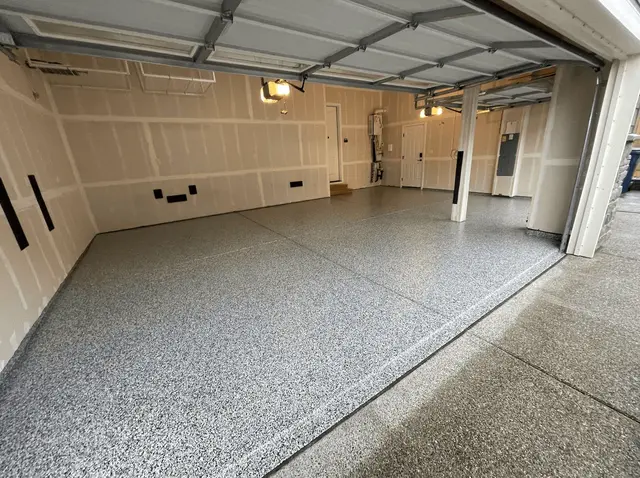
Water doesn't land evenly. Rain runs off the car and drips from the wheel wells, leaving a wet outline under every parked car. Then it moves. Building codes ask for a garage floor to slope toward the big door or a drain, so spills run out instead of toward the house, and the most water ends up in the strip just inside the door.
At parking speed, tires aren't the worry. Feet are. So map the grip to the walking routes: driver's door to house door, past the trash bins, to the freezer or the workbench. Those paths are where a heavier dose of grit is worth asking for.
Steps, ramps and the mat at the door
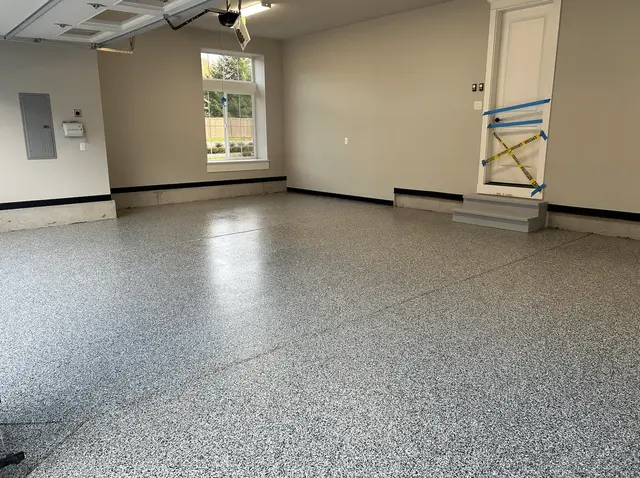
The step into the house deserves as much thought as the floor. Stair-safety research keeps finding that people trip on edges they didn't see, and older eyes need more contrast to find one. So light the step well and give it a rail. The CDC's home fall checklist asks for a light switch at the top and bottom of every stair, and handrails as long as the stairs.
On the coating side, ask for extra grit on the treads and the landing. A ramp needs more grip than a flat floor, because every degree of slope adds to what your shoes need. And the mat at the house door should lie flat and stay put. Some rubber backings stain a coating, and our care guide covers safer mats.
Older homeowners and kids
More than one in four adults over 65 falls each year, the CDC reports, and falls are the leading cause of injury deaths at that age. For children, falls are the most common reason for an injury trip to the emergency room. A garage is where both meet a hard floor in wet shoes, socks or bare feet.
So keep the grit fine where people kneel or go barefoot, and go heavier on the step and the strip by the door. Light the garage well, so a puddle or a dropped toy shows, and park bikes and scooters off the walking routes.
Cleaning a gritted floor without losing the grip
A gritted floor rarely goes slick because the grit wears away. It goes slick because soap scum and cleaner residue settle between the grains and fill the texture in, a little more with every mopping.
- Sweep with a soft push broom. A cotton string mop snags on grit and leaves lint.
- Lift the dirty water off with a squeegee or a wet vacuum after you scrub. Left to dry, the dirt settles back into the texture.
- Rinse with plain water last, so no film is left.
- Skip anything that promises shine. Wax, polish and "restorer" products fill the texture.
If the floor feels slick when it's wet, deep-clean it before you decide the grit is worn.
Non-slip and the warranty
Grit mixed into the topcoat is part of the coating film, so it carries the same lifetime adhesion warranty as the rest of the floor. It's also why the 72-hour cure matters: the grit sets in the film as the topcoat hardens, and the floor earns its traction on the same schedule it earns its parking.
Slip and traction questions
Is epoxy flooring slippery?
A smooth, glossy epoxy or polyaspartic floor with nothing added is, especially when wet. Full flake texture and anti-slip grit in the clear topcoat make a coated floor grippier than sealed bare concrete.
Is polyaspartic slippery when wet?
Not with grit in the topcoat and full flake under it, which is how we install every floor. A plain, smooth polyaspartic topcoat would be slick when wet, like any gloss coating.
What is the anti-slip additive in a garage floor coating?
A fine aggregate mixed into the clear topcoat before it's rolled: fine polymer beads for a thin topcoat, coarser aggregate for a thick one. Mixed in, not sprinkled on, so it's locked in the film.
Can you make an existing epoxy floor non-slip?
Yes, if the existing coating is sound: it's scuffed and a new clear topcoat with grit mixed in goes over it. If the coating is peeling anywhere, it comes off and the floor is redone.
Does anti-slip grit make the floor hard to clean?
Fine grit, no: a push broom or a wet mop handles it. Coarse aggregate collects dirt and feels rough on bare feet, which is why we use fine grit as the default and go heavier only where you ask for it.
Which garage floor coating is best for traction?
A full-flake floor with grit in a clear polyaspartic topcoat. The flake gives texture, the grit gives bite, and the polyaspartic holds both for the life of the floor.
How do you make garage steps less slippery?
Light them well and add a handrail, because a step edge that's hard to see is easy to miss. On a coated step, ask for a heavier dose of grit on the treads and the landing. Keep the mat at the house door flat and stable, and keep shoes, bags and tools off the steps.
Want extra grip by the door?
Tell us at the estimate. We'll mark the entry strip, steps or sink area for a heavier dose and it's in the written quote.
Get A Quote