
What Is Polyaspartic Floor Coating? Cure Time, Lifespan and How It Differs From Epoxy
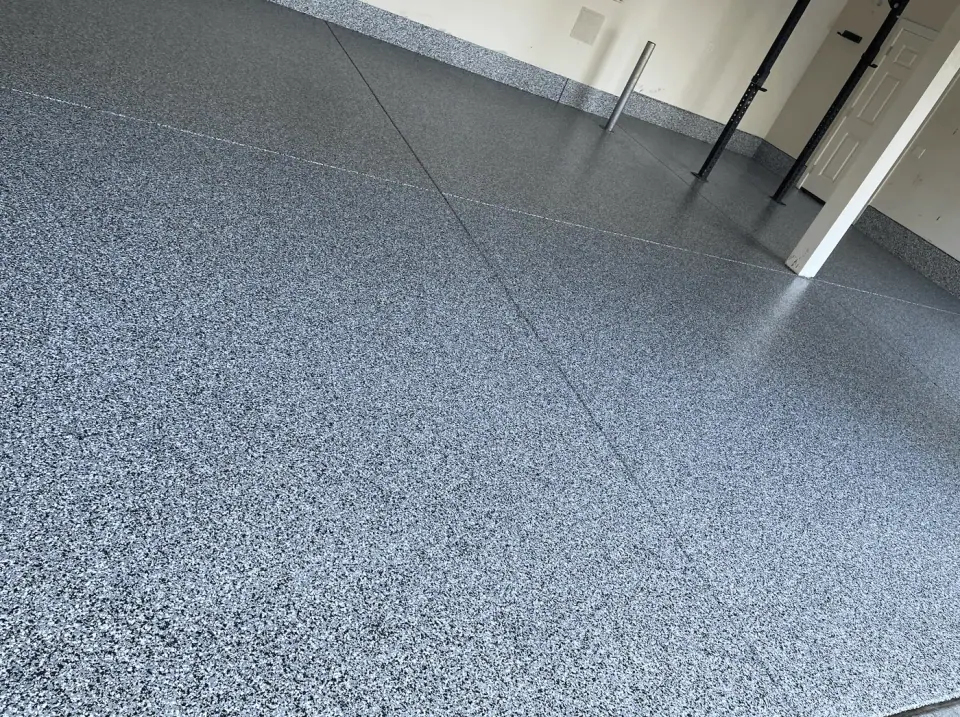
Short answer: Polyaspartic is the clear top layer on most good garage floors. It's a close cousin of polyurea, the stuff in spray-in truck bed liners. It dries fast, it doesn't turn yellow in the sun, and it cures just fine in a cold, damp garage. On the floors we install, you walk on it the next day and park on it three days later.
If you've been collecting quotes, you've seen the word a dozen times by now. Nobody explains it. Here's the plain-English version, with the parts that matter in Seattle called out.
What polyaspartic actually is
It's a two-part coating. The crew mixes a resin with a hardener right there in your garage, rolls it out, and within hours it sets into a hard, clear shell. Chemically it belongs to the polyurea family. Regular polyurea sets in seconds, which is why it gets sprayed. Polyaspartic is polyurea slowed down, so a person has about half an hour to roll it out smooth. That's the whole trick.
Two things about it make a difference in a garage:
- It stays clear in sunlight. Epoxy turns yellow near a sunny door. Polyaspartic doesn't.
- It stays a little flexible. Concrete moves a bit with the seasons. A rigid coating cracks; this one bends with the slab.
Where it goes on your floor
A flake garage floor is a stack of layers, and polyaspartic is usually the top one. On the floors we install, the stack is: your concrete, ground open with a diamond grinder; a polyurea base coat that grips the concrete and holds the flake; the flake itself; and a clear polyaspartic top coat that your tires and boots actually touch. Some companies use polyaspartic for both layers. Some put it over epoxy. The top coat is the layer that handles sun, chemicals and hot tires, so when a quote says "polyaspartic", ask which layer they mean. The whole stack, layer by layer, is on our garage floor coating page.
How long it takes to dry
This is the part people notice. Polyaspartic is dry to the touch in a few hours, so the flake and the top coat go on the same day as the base coat, and a whole floor goes in during one visit. After we leave, the clock runs like this:
- Next day: walk on it.
- 72 hours: park on it.
- 7 to 10 days: fully hard. Go easy on dragging heavy things until then.
Epoxy takes longer to get there, commonly three days to a week before the car goes back in, and longer in a cold garage. The hour-by-hour version is in our install timeline guide. One thing adds a day: if your slab needs a moisture barrier, that primer has to cure overnight before anything goes over it. So a floor with a barrier is a two-day job.
Fast drying has one downside. The crew has to mix small batches and move quickly, which is why polyaspartic is a professional product and not a hardware-store kit.
How long it lasts
Over properly ground concrete, with the moisture handled, a polyaspartic floor is a 15-to-20-year floor, and often longer. When it does show age, it's the shine dulling in the tire lanes, not the coating letting go. The bond is the part we stand behind: every floor we install carries a lifetime adhesion warranty. If the coating ever peels, blisters or lifts under a hot tire, we fix it at no charge. Dings from a dropped tool, scratches, stains, or driving on it too early aren't covered, because none of those is the bond failing. Realistic lifespans for every type of floor are in how long a garage floor coating lasts.
Is it slippery?
Any shiny floor is slick when it's wet, and a Seattle garage sees wet tires most of the year. Two things fix that. The flake gives the surface a fine texture, and we mix anti-slip grit into the clear top coat. We can go heavier on the grit by the door or on steps if you want. A polyaspartic floor with grit in it has better grip when wet than bare sealed concrete. The grip-versus-cleaning trade-off is in is a coated garage floor slippery.
Does it yellow?
No. That's the main reason it's the standard clear coat over colored flake. Epoxy goes yellow where the sun hits it, which in a garage means the strip inside the door, often within a year or two. Polyaspartic stays clear, which is also why we use it outside on patios and pool decks. Every surface we coat with it, from basements to shops, is on our page about polyaspartic floor coating in Seattle.
Does it smell, and is it safe?
While it's wet, it's strong stuff. Our crew wears respirators and keeps the garage door open, and we ask that people and pets stay out until the floor is walkable the next morning. The formula we use is low-odor, and the smell fades within a day or two as it cures. Once it's cured, it's hard plastic. It doesn't give off fumes, and it's easier to keep clean than bare concrete because oil, salt and spills sit on top instead of soaking in. Think of install day like a painting day, and the finished floor like a countertop.
Polyaspartic vs epoxy vs polyurea, in plain terms
- Epoxy is the cheapest. It needs a warm, dry slab to cure, it turns yellow in the sun, it's rigid, and the car stays out for three days to a week.
- Polyurea sets in seconds and is very tough and flexible. That makes it a great base coat under the flake. The regular kind yellows, so it doesn't belong on top.
- Polyaspartic is polyurea slowed down so it can be rolled on. It stays clear, cures in a cold garage, and the car is back in three days. It costs more per gallon.
Polyurea and polyaspartic aren't rivals. On a good floor, polyurea is the base and polyaspartic is the top. The longer comparison, with the Seattle weather argument, is in epoxy vs. polyaspartic vs. polyurea, and polyurea on its own is in polyurea garage floor coating.
Why it suits a Seattle garage
Three local facts push the choice. From October to April, the slab in a Seattle garage is cold and damp. Epoxy wants a warm, dry slab and a narrow weather window; polyaspartic cures in the cold. Garage doors here stand open all summer, so the floor sees real sun, and polyaspartic doesn't yellow. And moisture coming up through the concrete is the number one reason floors fail here. No coating fixes that on its own. It takes a moisture test before the job and a barrier primer when the slab needs one, which is why we test every slab first and why the barrier is part of our Premium floor. The science is in why garage floors fail in Seattle.
What it costs compared with epoxy
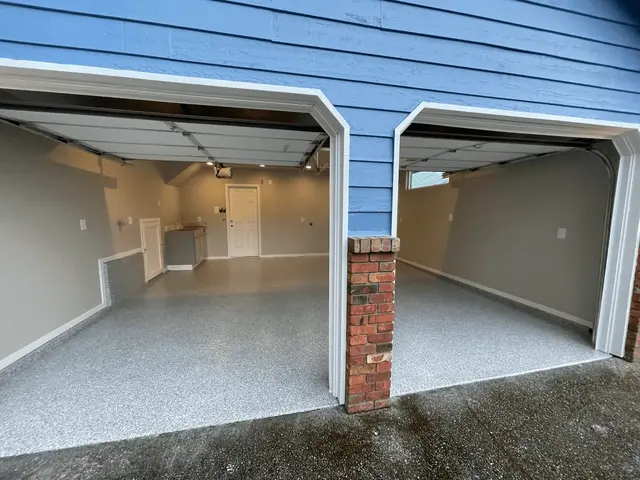
Polyaspartic costs more per gallon than epoxy. But on an installed floor, the coating is a small part of the price. The grinding, the crack repair, the moisture work and the labor are the same whichever clear coat goes on last. So the installed gap is smaller than the material gap, and the differences in drying time and yellowing are permanent. Real Seattle ranges are in the cost guide, and the polyaspartic-specific numbers in polyaspartic floor coating cost.
Words you'll see on a quote
- 100% solids: nothing evaporates as it cures, so what goes on is what stays on.
- Mils: thousandths of an inch of coating. A full flake floor is built from several coats.
- Full broadcast: flake thrown until the floor won't hold any more, so none of the base coat shows.
- Moisture vapor barrier: a primer on the bare slab that stops moisture from pushing the coating up from below.
- Hot-tire pickup: a hot tire softening and lifting a thin or half-cured coating. Covered by our warranty, and the reason for the 72-hour rule.
Polyaspartic questions
Is polyaspartic the same as a clear coat?
Not quite. “Clear coat” means any clear top layer, and acrylic sealers, urethanes and polyaspartics are all sold as one. Polyaspartic is the kind that stays clear in the sun and stands up to hot tires, which is why it’s the top coat on the floors we install, over a polyurea base coat and full flake.
How long does polyaspartic take to cure?
It's dry to the touch in a few hours. On the floors we install, you can walk on it the next day, park on it after 72 hours, and it's fully hard in 7 to 10 days. A floor that needs a moisture barrier takes one extra day.
Does polyaspartic need a primer or base coat?
It can go straight onto ground concrete, and some systems use it for every layer. On the floors we install in Seattle it’s the clear top coat, over a polyurea base coat that grips the ground concrete and holds the flake. When the slab tests wet, a moisture barrier primer goes on the bare concrete under both.
What does a polyaspartic floor look like?
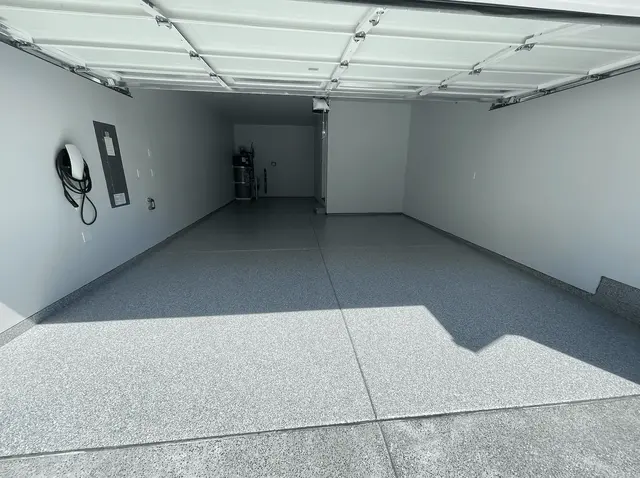
Like a clear, glossy glaze over whatever is under it. On our floors that’s full flake, so you see a speckled, stone-like floor with a shine that repeats your lights, and the fine grit in the top coat gives it a light texture underfoot. It stays clear instead of turning amber at the door.
Does polyaspartic yellow in sunlight?
No. It stays clear, which is why it's the standard clear coat. Epoxy yellows where the sun hits it, usually the strip inside the garage door.
Is polyaspartic toxic?
While it's wet, the fumes irritate skin, eyes and lungs, so it's applied with respirators and the door open, and people and pets stay out until the next day. Once cured, it's inert hard plastic that doesn't give off fumes.
What is the difference between polyaspartic and polyurea?
Polyaspartic is a type of polyurea, slowed down so it can be rolled by hand and made to stay clear in the sun. Regular polyurea sets in seconds and is used as the base coat under the flake; polyaspartic is the clear top coat over it.
Can polyaspartic be used outdoors?
Yes, and it's the right choice there. It doesn't yellow, it bends with the slab as it heats and cools, and with grit in it, it stays grippy when wet. We use it on patios and pool decks as well as garages.
What is a polyaspartic top coat?
The clear wear layer over the base coat and flake. It seals the flake in, handles chemicals and hot tires, and is the surface you walk and park on. On our floors it goes over a polyurea base coat.
Want to see polyaspartic on your own floor?
Try the flake colors on a photo of your garage in our AI floor preview, or book a free on-site estimate and we'll test the slab while we're there.
Get A Quote