
How Much Does Polyaspartic Floor Coating Cost in Seattle? Per Square Foot, by Garage Size, and vs Epoxy and Polyurea
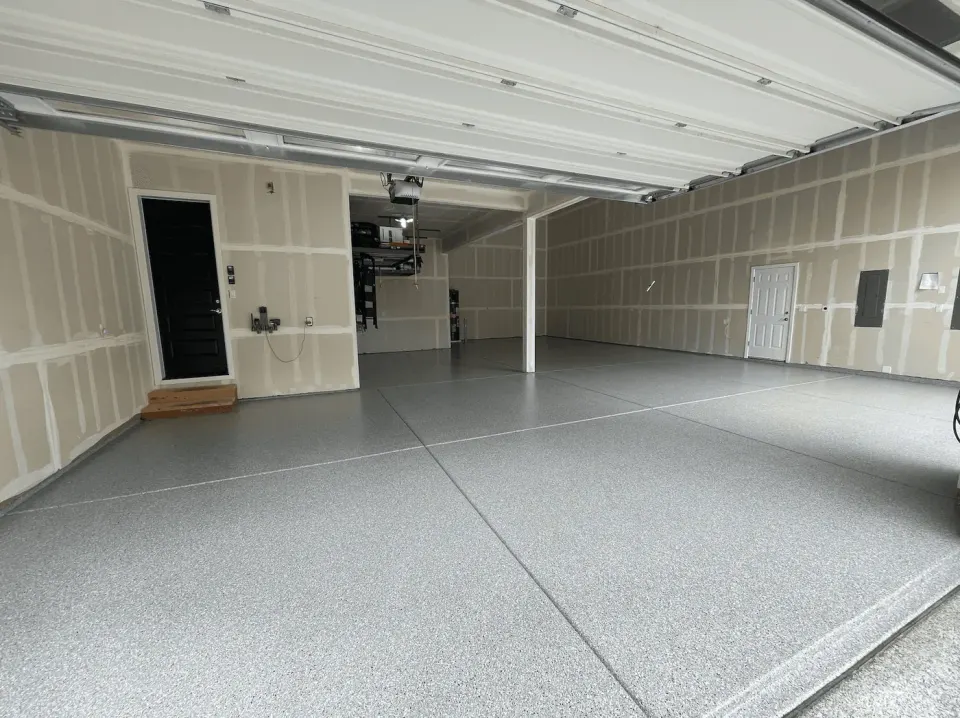
Short answer: In the Seattle market, a professionally installed polyaspartic garage floor runs about $4 to $12 per square foot. That puts a two-car garage at roughly $1,600 to $5,800, a three-car garage at $2,500 to $10,000, and a one-car garage from about $835. The material costs more than epoxy per gallon. But on an installed floor, the grinding, crack repair, moisture work and labor are most of the price, so the gap between a polyaspartic floor and a good epoxy floor is much smaller than the gap between the two cans. What moves your number is prep and moisture, not chemistry.
These are the same Seattle ranges we publish in the garage floor coating cost guide, narrowed to the question people ask most: what does the polyaspartic floor cost, and why.
Polyaspartic cost per square foot
About $4 to $12 installed. The low end is a thin coat over minimal prep. The high end is a full flake floor over a diamond-ground, crack-repaired, moisture-tested slab with a barrier primer, cove base and steps. For comparison, epoxy runs about $4 to $10 and polyurea about $5 to $10 per square foot in the same market. On a per-foot basis the three overlap. The lifespan doesn't, and the per-year math below is what splits them.
Cost by garage size
| Garage | Typical size | Range |
|---|---|---|
| One-car | 200 to 280 sq ft | about $835 to $3,340 |
| Two-car | 400 to 500 sq ft | about $1,600 to $5,800 |
| Three-car | 600 to 750 sq ft | about $2,500 to $10,000 |
The width of each row is the point. The same two-car garage can land at either end, depending on what's under the top coat.
What a polyaspartic floor costs per year
Spread over 15 years, the low end of a floor's life on ground, tested concrete, a polyaspartic floor costs about $55 to $225 a year for a one-car garage, $105 to $385 for a two-car and $165 to $665 for a three-car. Every year past 15 brings those numbers down. A fresh clear coat somewhere in the second decade adds a little to them, since it costs a fraction of a new floor. Professional epoxy, which lasts three to seven years in a Seattle garage, pays its full price again each time it's redone. What the material is, and where it sits in the floor, is on our polyaspartic floor coating page.
Why polyaspartic costs more than epoxy, and why the gap shrinks once it's installed
Polyaspartic costs more per gallon than epoxy. It sets fast, so it has to be mixed in small batches and rolled by a crew that knows the pace. And on our floors it goes over a polyurea base coat rather than standing alone. All of that is real cost. But a floor is mostly labor and prep. Grinding, crack repair, the moisture test, the barrier primer if the slab needs it, the flake and the cleanup are the same no matter which clear coat goes on last. So the installed price of a polyaspartic floor from the same installer is a modest premium, paid once, for a floor that cures in a cold Seattle garage, takes a car after 72 hours and doesn't yellow at the door.
What's inside the price of a polyaspartic floor
Labor is the biggest share of the price, and most of it happens before any coating is opened.
- The grind. Two passes with a diamond grinder, the edges by hand, the dust into a vacuum. It's the longest step and the one a cheap quote cuts.
- Repairs. Cracks and joints filled and ground flush and pits patched; on a Premium floor, bigger cracks are cut open and rebuilt.
- Moisture. The test, and when the slab needs it, a barrier primer that adds material and a second day.
- The floor. A polyurea base, then flake until the base won't hold more. The flake maker Torginol puts a full broadcast of quarter-inch chip at five to seven square feet per pound, so a 450-square-foot garage takes roughly 65 to 90 pounds. Then the clear polyaspartic top coat, which costs more per gallon than epoxy, rolled by a crew with 15 to 30 minutes before it sets.
- Edges. Cove base up the walls and coated steps are slow hand work.
- Showing up. Travel, setup, equipment and cleanup cost about the same for any size of garage.
The labor and materials split, with national figures, is on our epoxy floor installation cost page.
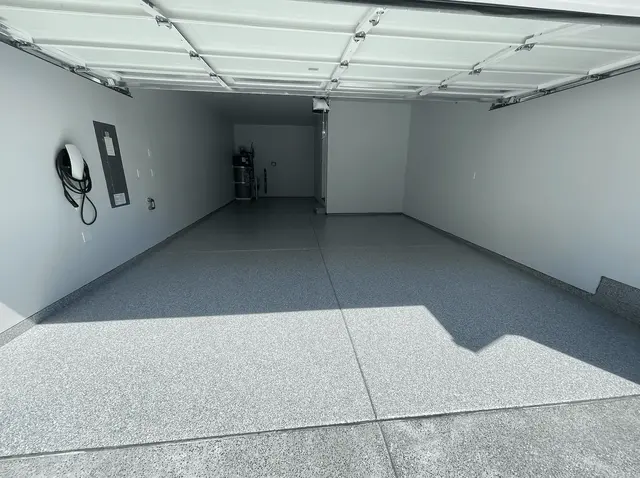
What moves your number inside the range
- Moisture. A slab over the limit needs a barrier primer, which adds material and a second install day. On our Premium floor it's part of the included upgrade package. On most quotes it's a line item. See do you need a moisture barrier.
- Old coating removal. Grinding off a failed epoxy or paint adds hours before the prep even starts.
- Crack repair. Filling and grinding cracks is routine on every floor we install. Cutting open and rebuilding the bigger ones, which a Premium floor includes, takes longer. See can you coat a cracked garage floor.
- Steps, cove base, a floor drain. Each one is extra edge work, priced separately on most quotes. Steps and cove base are in our Premium package.
- Full flake or partial. Full coverage uses more flake and more top coat, and it's the one that lasts.
Seattle factors that raise or lower a quote
- Size. Setup and travel weigh more per foot on a small floor, so a one-car garage lands higher in the per-foot range and a big garage lower.
- The age of the house. About half the houses in Seattle were built before the late 1980s, and many of their garages have no plastic sheet under the slab. Those slabs need the barrier more often, and more crack and pit repair.
- Salt damage at the door. Years of de-icer brine can pit and flake the first few feet of a bare slab, and those spots get ground and patched first.
- Access. Most quotes assume an empty garage, a clear driveway for the truck, and an outlet and a water tap within reach. A packed garage or a steep, tight drive adds time, so ask how a quote handles it.
- Season. Polyaspartic cures in the cold, so the chemistry adds no winter charge. But a slab tested in February reads wetter than the same slab in August, so winter tests call for the barrier more often.
Polyaspartic vs polyurea vs epoxy cost, side by side
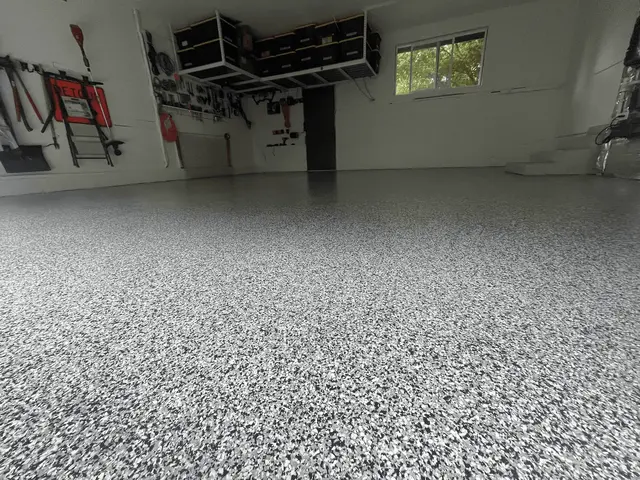
Per square foot in the Seattle market: epoxy about $4 to $10, polyurea about $5 to $10, polyaspartic about $4 to $12. The honest way to read that is that the chemistry isn't what separates a $2,000 two-car floor from a $5,000 one. The prep is. A quote at the bottom of the polyaspartic range is usually a thin coat over an etched, untested slab, and it costs the top of the range to grind off and redo in a few years. How to tell a thin quote from a thorough one is in the twelve questions to ask a contractor.
How to compare polyaspartic quotes line by line
Two quotes for "a polyaspartic floor" can describe two different jobs. Make them describe the same one before you compare totals.
- Check the square footage. Measure wall to wall yourself. If one quote measured 420 square feet and another 480, neither the totals nor the per-foot prices line up.
- Line up the scope. Grinding, not etching. A moisture test, with the reading written down. What the crack repair covers. Full flake. The top coat named, with its thickness in mils, which are thousandths of an inch. Grit, cove base and steps.
- Price the "if needed" lines. "Moisture barrier if needed" with no number is how a low quote grows on install day. Ask for the price now.
- Compare the paper. Cure times in writing, the warranty's exact wording, and how long the price holds.
A quote that's cheaper because it leaves a step out isn't cheaper. It's a different floor.
Paying for it: timing and financing
- Collect quotes close together. Material prices move, and each quote holds only for the period written on it.
- Skip the summer rush. July to September is every crew's busy stretch. A polyaspartic floor doesn't need summer, so you don't have to compete for those weeks.
- Read the "if" in any financing offer. Store cards and "no interest if paid in full" deals often use deferred interest. The Consumer Financial Protection Bureau warns that if any balance is left when the promotion ends, the interest back to the purchase date comes due at once. A true zero-percent rate charges interest only on what's left.
- Do the slabs together. If a basement, patio or shop floor is also on your list, ask what both cost in one visit, since the setup is paid once.
How to get an exact number
Not over the phone. Square footage and the slab's condition set the price. The estimator measures the floor, tests the slab for moisture, and leaves a written, itemized quote that holds for the period stated on it. The visit is free and takes about 20 minutes. What happens there is in what actually happens during a garage floor estimate.
Polyaspartic cost questions
How much does polyaspartic floor coating cost per square foot?
About $4 to $12 installed in the Seattle market. The low end is a thin coat over minimal prep. The high end is a full flake floor over a ground, crack-repaired, moisture-tested slab with a barrier primer.
How much does a polyaspartic floor cost for a 2-car garage?
About $1,600 to $5,800 in the Seattle area, for 400 to 500 square feet. Where it lands depends on prep, moisture work, and how much flake and top coat go down.
How much does a polyaspartic floor cost for a 3-car garage?
About $2,500 to $10,000 for 600 to 750 square feet in the Seattle market.
Is polyaspartic more expensive than epoxy?
Per gallon, yes. Installed, the difference is modest, because grinding, crack repair, moisture work and labor are most of the price and are the same for both. Over 15 years it's usually cheaper, because it isn't redone.
Does a polyaspartic floor cost more in winter?
No. Polyaspartic cures in a cold garage, so there's no seasonal premium. The price is set by the floor's size and condition. The slab's moisture reading does run higher in winter, which can mean a barrier primer.
Can I get a polyaspartic price over the phone?
A range, yes. A price, no. The estimator measures and tests the slab on site and leaves a written, itemized quote.
Does a small garage cost more per square foot?
Usually, yes. Travel, setup, the grinder and the cleanup cost about the same on a one-car garage as on a three-car one, so they weigh more per foot on a small floor. That's why a one-car garage lands higher in the $4-to-$12 range and a big one lower, and why many installers set a minimum job charge.
Want your number instead of a range?
Book a free on-site estimate. Measured, moisture-tested, itemized, in writing.
Get A Quote