
Can You Coat a Cracked Garage Floor? Crack Repair Before Coating, and What It Costs in Seattle
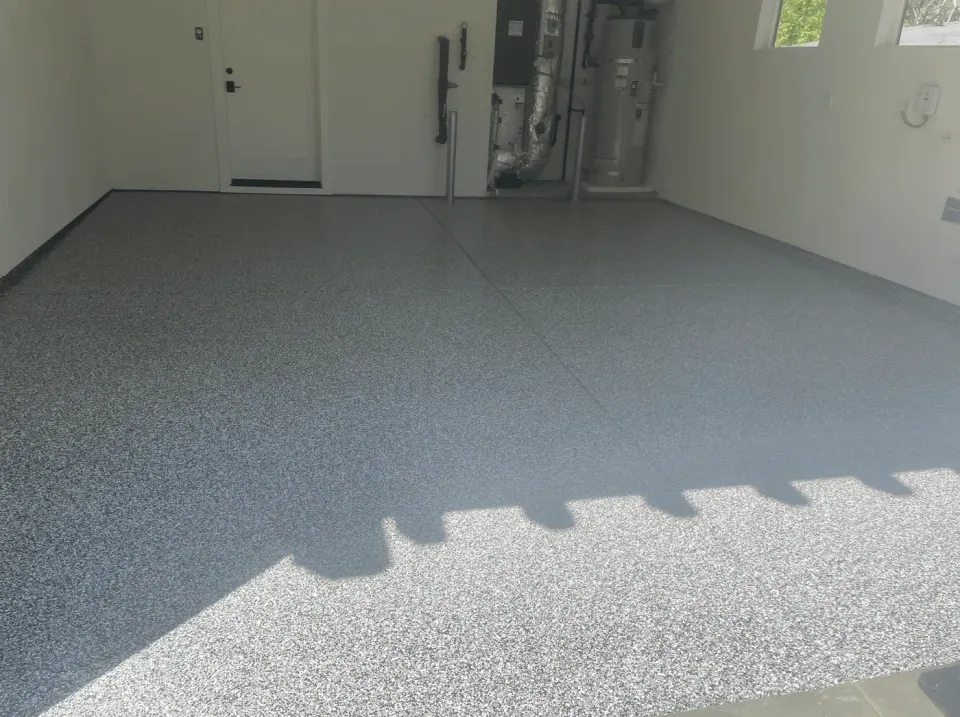
Short answer: Yes, almost every cracked garage floor can be coated, but not by coating over the cracks. They're repaired first: hairline and shrinkage cracks are filled and ground flush, wider cracks are cut open, filled and rebuilt, and control joints are filled so they don't collect water. A coating is a film, not a filler; roll it over an open crack and the crack is back by morning. The one exception is a crack that's still moving, which is a slab problem to fix before anyone coats anything.
Most Seattle garage slabs have cracks. Dense glacial soils that drain slowly, wet winters and the occasional hard freeze at the door see to that. Here's which cracks are routine, which aren't, what the repair involves and what it does to the price.
Read the crack first
- Hairline and map cracks. Thin, random, both sides level. Shrinkage from when the slab cured, often starting at an inside corner, like the one by the step into the house. They show up in the first months, then stop. Routine; filled and ground flush.
- Wider cracks, under about a quarter inch, level on both sides. Still routine. Cut open to clean concrete, filled with a rigid repair compound and ground flat so the repair is as hard as the slab.
- Control joints. The straight lines sawn or tooled into the slab on purpose. Not cracks. We fill them flush so they don't trap water and dirt under the coating, which is the practice on every floor we install. A crack a few inches beside a joint means the joint was cut too late or too shallow. Also routine: one more line to fill.
- Cracks with a step. One side higher than the other, or a gap that widens from one season to the next. The slab has settled, often along a wall where soil was dug out and filled back in during the build, or been pushed up, here more often by a tree root than by frost. Either way, it's still moving. No coating bridges a moving crack. That's a concrete contractor's job first, and we'll tell you so at the estimate instead of coating over it.
- Spalling and pitting at the door. Surface concrete flaking off where water and de-icer sit. Why it happens, and the fix, are below.
How to tell if a crack is still moving
You can check this yourself before anyone quotes. Draw a pencil line across each end of the crack and write the date beside it. Measure the widest point with a ruler, or a plastic crack-width card from the hardware store, and take a photo with the ruler in it. Then check again a season later. Seattle soil swings from dry in September to soaked in February, so that span tells you the most.
Same length, same width and still level means it has stopped. Growing past your marks, widening or forming a step means it's still moving. Bring your notes to the estimate.
Why you can't just coat over cracks
A coating is a film a few hundredths of an inch thick. Rolled over an open crack it sags into it, thins at the edges and shows the crack as a line, often by the next morning. Trapped air and moisture in the crack push up through the thin spot and blister. And a crack left open under a coating keeps pumping moisture from below into the bond line. Filling first fixes all three, which is why crack repair is part of every floor we install rather than an option, and why it's the thing a cheap quote quietly leaves out.
What the repair involves
- Open it up. The crack is chased with a diamond blade to remove loose, failing concrete and give the filler clean walls to bond to.
- Fill it. A rigid, fast-curing repair compound for static cracks, so the repair is as hard as the slab around it; for larger cracks on a Premium floor, cut open and rebuilt from the bottom.
- Grind it flush. The repair is ground level with the slab during the diamond grind that preps the whole floor, so it disappears under the flake.
- Test for moisture. Cracks are where moisture shows first. The reading decides whether a vapor barrier primer goes down before the base coat.
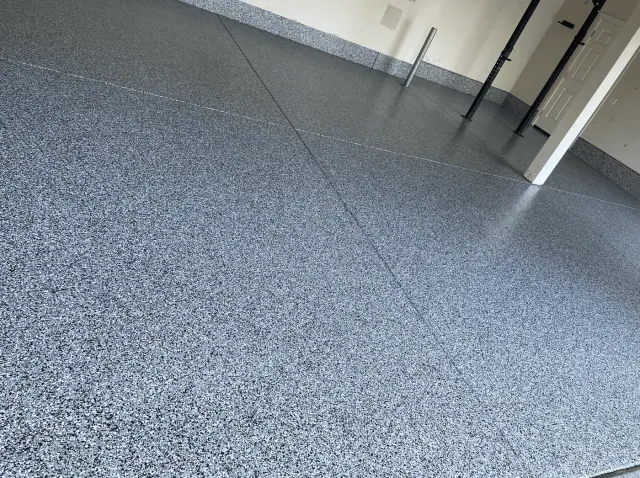
Then the floor is built normally: polyurea base coat, full flake, clear polyaspartic topcoat. The repaired cracks aren't visible under full flake; under a solid-color floor a faint line can show, which is one reason flake is the standard finish here. A single smooth color shows every change in level or sheen in low light from the door; flake gives the eye nothing straight to follow.
Rigid or flexible: what goes into the crack
- Epoxy filler cures harder than the concrete, so a tire can't dent the repair. It needs hours before it can be ground flush.
- Polyurea and polyaspartic fillers do the same job in minutes, which is why coating crews use them on install day. Semi-rigid grades give a little and are made for sawn joints that cars roll over.
- Cement patch matches concrete, but plain patch shrinks as it cures and needs weeks before a coating can go over it. Resin patches, sand bound with epoxy or polyurea, fill pits and spalls the same day.
- Flexible caulk stretches with a joint that truly moves, but a hard coating over soft caulk cracks.
A rigid fill is the strongest, but if the slab moves, it cracks again along the same line. A flexible fill moves, but nothing hard can sit on it. So static cracks get a rigid fill, and moving ones get fixed before any coating goes down.
What crack repair does to the price
Routine cracks don't change our price; crack repair is part of every tier, and the larger cut-and-rebuild work is included on a Premium floor. On other quotes it's often a line item, so compare quotes with that line included. A slab that needs structural work before coating is a separate job by a concrete contractor, priced separately. The full picture of what moves a quote is in the cost guide.
Cracks on a floor that's already coated
A coating that's cracking along the slab's cracks or joints was either applied over open cracks or is a rigid product that couldn't move with the slab. If the coating is sound everywhere else, the cracked lines are opened, filled and the area recoated. If it's lifting along the cracks, the failure is spreading under the coating and the floor comes off; the diagnosis is in why epoxy garage floors peel. A flexible polyurea base coat is part of the answer going forward: it moves with the slab's seasonal expansion instead of shearing off it.
When to call a concrete contractor first
- One side of a crack sits higher, or the crack keeps growing.
- Part of the slab has sunk or rocks underfoot.
- A crack runs from the floor up into the foundation wall.
- Water comes up through a crack after heavy rain.
Those fixes are concrete work: lifting a sunken panel by pumping grout or foam under it, replacing a broken section, or fixing the drainage. We coat once the repair has cured; ask the contractor how long that takes, since new concrete needs about 28 days. Our garage floor resurfacing and repair page lists what we fix and what we refer out.
Spalls and pitting by the door: what road salt does
Since 2009, Seattle has fought ice on its main streets with salt brine and rock salt, and the state uses chloride de-icers on its highways. That salty slush rides home under the car and drips just inside the door, mostly in the tire lanes. Bare concrete soaks it up. We get far fewer freezes than the Midwest, but when salty water freezes in the surface, it flakes the top off. Two of the road salts, calcium and magnesium chloride, also attack the cement itself, even above freezing. That's why the front edge pits first.
Small spalls are ground back to sound concrete, filled with a resin patch and ground flush. Flaking across a whole area, a quarter inch deep or more, needs a cement resurfacer and about a month to cure first. Once the floor is coated, salt sits on top and rinses off.
Seattle specifics
Water sits on the dense glacial till under much of the city for months at a time, and older garages on hillsides from West Seattle to Kirkland can add a settled corner. None of that rules out a coating. It means the crack repair and the moisture test matter more here than almost anywhere else.
Crack repair questions
Can you coat a cracked garage floor?
Yes, after the cracks are repaired. Hairline cracks are filled and ground flush, wider ones are cut open, filled and rebuilt, and control joints are filled. The exception is a crack that's still moving, which needs a concrete contractor first.
Can you epoxy over cracks in a garage floor?
Not successfully. A coating is a thin film; rolled over an open crack it shows the line by the next day, thins at the edges and blisters from trapped moisture. Fill first, then coat.
How do you fix cracks in a garage floor before coating?
Chase the crack with a diamond blade to clean concrete, fill it with a rigid repair compound, grind the repair flush with the slab, then test for moisture before the base coat goes down.
Will a garage floor coating hide cracks?
Repaired cracks disappear under full flake. Unrepaired cracks show through any coating, and under a solid-color floor even a repaired crack can show as a faint line.
How much does garage floor crack repair cost?
On our floors, nothing extra: crack repair is part of every tier, with the larger cut-and-rebuild work included on a Premium floor. Many other quotes list it as a separate line item. Structural slab repair is a separate job.
Should control joints be filled before coating?
On every floor we install, yes: they're filled flush so they don't collect water and dirt under the coating. A joint that's actively moving is treated like a moving crack.
What if one side of the crack is higher than the other?
The slab has settled or heaved and is still moving. No coating bridges that. It's a concrete repair first, and we'll say so at the estimate rather than coat over it.
How can you tell if a garage floor crack is still moving?
Mark both ends with a pencil and the date, measure the widest point, and photograph it with a ruler beside it. Check again a season later. If it has grown longer or wider, or one side has risen, it's still moving, and it needs a concrete contractor before any coating goes on.
Got a crack you're not sure about?
Send a photo or book a free on-site estimate. We'll tell you whether it's routine, a rebuild, or a slab problem to fix first.
Get A Quote