
Can You Epoxy a New Garage Floor? What a Brand-New Seattle Slab Needs First
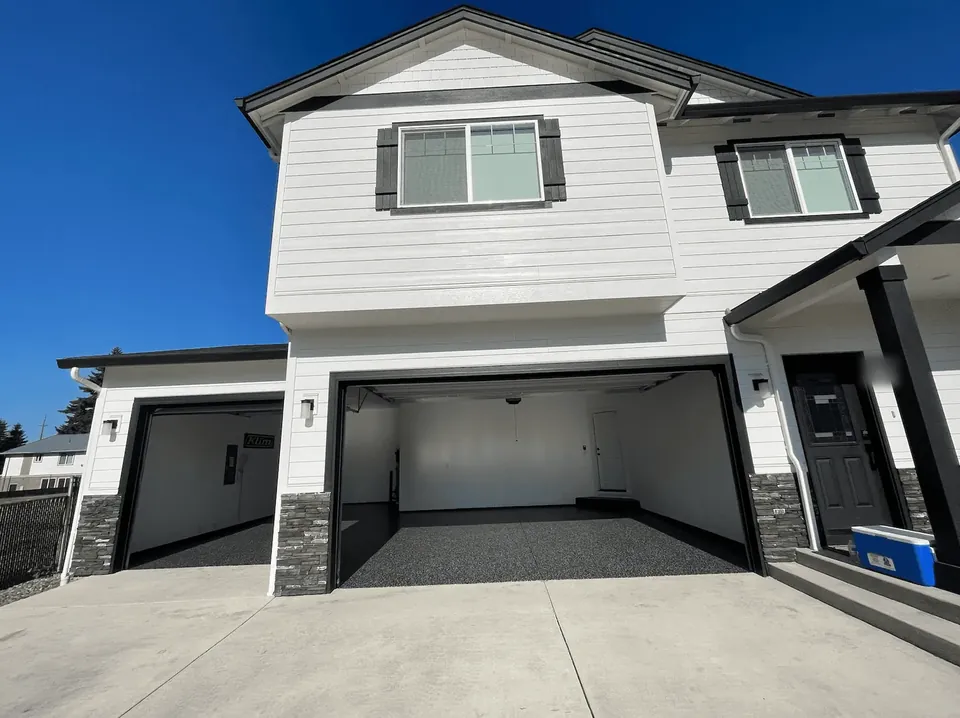
Short answer: yes, but not yet. New concrete needs about 28 days to cure before any coating goes on, and that's the earliest date, not the target. The slab also has to test dry, and the sealer most builders spray on a fresh slab has to be ground off. In Seattle, a slab poured in the fall often isn't ready until spring.
You just moved into a new build, or you just poured a new garage. The floor is a clean gray slab and you'd like to keep it that way with a coating. Here's what has to happen first, in plain terms, and why a few extra weeks of waiting is the cheapest part of the whole job.
Why the 28-day rule exists
Concrete doesn't dry the way paint dries. The cement and the water in the mix react with each other, and that reaction keeps going for weeks. The building trade tests concrete strength at 28 days because that's when it has reached most of the strength it was designed for. Until then, installers call it green. Green concrete is still getting harder, still giving off water, and still shrinking a little.
Coat a green slab and you seal in water that's still trying to leave. That water pushes up against the coating from below until the coating lets go. We treat coating green concrete as a guaranteed failure, so we don't do it. Coating makers say the same thing. The fine print on most garage floor coatings tells you to wait at least 28 days on new concrete, and some manufacturers warn it can take closer to 60 days in cool, damp conditions.
Cured isn't the same as dry
Here's the part most people miss. The 28-day mark is about strength, not dryness. A garage slab is usually about 4 inches thick, and it holds a surprising amount of water from the day it was poured. Almost all of that water has to escape through the top.
The rule of thumb in the flooring trade is about a month of drying for every inch of thickness, in good drying weather. For a 4-inch slab, that's around four months. Cool, damp air slows it down, and Seattle gets more than 150 days a year with measurable rain, most of them between October and April. A slab poured in September may not see real drying weather until the following spring.
So the calendar only tells you when to test. The test tells you when to coat. There are three common ways to check:
- The plastic-sheet test. Tape a square of clear plastic to the slab, seal the edges, and leave it overnight. Droplets under the plastic, or concrete that's gone dark, mean water is still coming out. It's a yes-or-no check, not a number.
- A moisture meter. This is what we use at your estimate. We take three readings, one in the middle of the floor and one near each side wall. Over 3.5 percent, the slab gets a moisture barrier primer under the coating.
- A probe test. For a hard number, installers drill small holes and leave humidity probes in the slab overnight. Each coating maker sets a limit for that reading, usually between 75 and 85 percent.
If a new slab reads high, you have two honest options: wait and test again, or put the barrier primer down. The primer cures overnight, so the job takes two days instead of one. Our install timeline shows both versions, and our moisture barrier guide explains when the primer is worth it.
Your garage slab probably has no plastic under it
Most people assume every concrete floor sits on a sheet of plastic that keeps ground moisture out. Under your house, that's true. Washington's residential building code requires a heavy plastic sheet, called a vapor retarder, under a home's concrete floors. But the same rule lists exceptions, and the first one is garages, along with sheds and other unheated buildings. Builders are allowed to skip it under the garage, and many do.
Without that sheet, damp ground keeps feeding moisture into the slab long after the mixing water is gone. Through a wet Seattle winter, the ground under a slab stays damp for months. That's exactly what the moisture test is there to catch. Ask your builder whether a vapor barrier went under the garage. If nobody knows, plan as if there isn't one. Our moisture guide explains what happens when that moisture meets a coating.
The sealer your builder sprayed on has to come off
Concrete crews often spray a curing compound, sometimes sold as a cure-and-seal product, on a fresh slab. It slows the drying so the concrete cures stronger. Good for the concrete, bad for a coating, because it leaves a thin film on the surface. A coating sticks to the film instead of to the concrete, and when the film lets go, the floor goes with it.
Every coating manufacturer we've read agrees that the film has to be ground off. Pressure washing doesn't remove it, and an acid wash just beads up on top of it. New slabs have two more problems. The smooth, troweled finish gives a coating very little to grip. And the very top layer of a new slab is the weakest concrete in it.
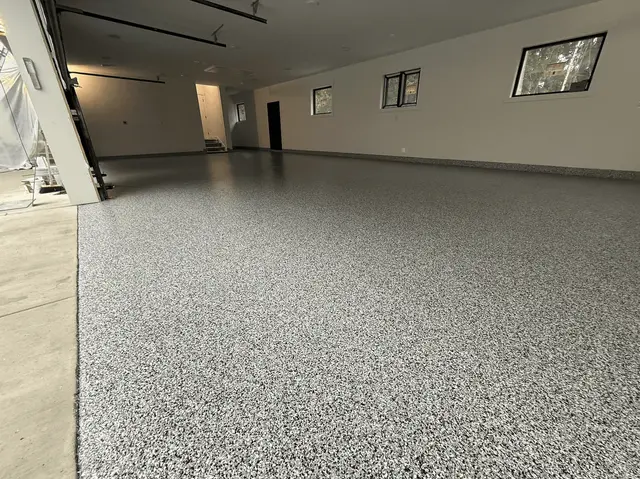
You can check your own floor with a few drops of water. If they bead up, something is sealing the surface. If they soak in and darken the concrete within a minute or so, the surface is open. Either way, our crew grinds the whole floor with diamond grinders, in two passes: a rough pass that takes off the sealer and the weak top layer, then a finer pass that leaves an even, open surface the coating can soak into.
Waiting helps with cracks too
New concrete shrinks as it dries, and small cracks usually show up in the first few months. If the floor is coated before they appear, they open under the coating and show through it. If you wait, we fill them first. Our crack repair guide covers what happens with the bigger ones.
Building a garage? Ask for two things before the pour
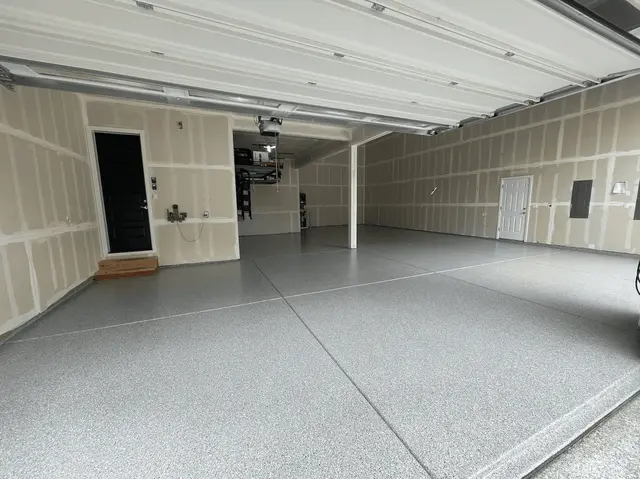
- Plastic under the garage slab too. The code doesn't require it there, but it's cheap before the pour and impossible to add after. It's the best protection a coated garage floor can have against Seattle ground moisture.
- Ask what they'll use to cure the slab. Tell them you plan to coat the floor and write down the product name. Whoever coats the floor will want to know what's on it.
A realistic timeline for a Seattle new build
Say your slab is poured in early September.
- Late September: still green. Nobody should be coating it or testing it for a coating yet.
- Early October: 28 days. We can test it. After a dry summer, a September pour sometimes passes.
- October to March: if it reads high, it won't dry much over the winter. You choose between the barrier primer now or a retest in spring.
- April or May: most slabs that failed in the fall pass by now.
A late-spring pour is friendlier. Summer is the best drying weather Seattle gets, and a May slab is often ready by July.
How we handle a brand-new slab
This is how a garage floor coating goes when the concrete is new:
- We start from the pour date. If the slab is younger than about 28 days, the install goes on the calendar for after it has cured.
- We test before we quote a system. Three meter readings, plus a look for the visible signs of moisture, like dark damp patches or white chalky deposits.
- We grind wall to wall. Two passes plus hand-worked edges, which takes off the curing compound and the weak top layer.
- We fill cracks and joints so nothing shows through the finished floor.
- If the slab reads high, the moisture barrier primer goes down first and cures overnight. On a Premium floor it's one of the included upgrades. If it reads dry, it's a one-day install.
- You walk on it the next day and park on it after 72 hours.
New concrete questions
Can you epoxy a new garage floor?
Yes, once the concrete is about 28 days old and passes a moisture test. Before that it's still curing and giving off water, and a coating sealed over it is set up to fail. The same rule applies to polyaspartic. Any curing compound or sealer on the new slab also has to be ground off first.
How long should new concrete cure before you coat it?
About 28 days at a minimum. That's when concrete reaches most of its strength, but it doesn't mean the slab is dry. The rule of thumb is about a month of drying per inch of thickness in good weather, and a damp Seattle winter slows that down. A moisture test, not the calendar, decides the install date.
Does a new garage slab have a vapor barrier under it?
Not necessarily. Washington's residential code requires a plastic vapor retarder under a house's concrete floors but exempts garages, so a builder doesn't have to put one under the garage slab. Ask yours. If there isn't one, ground moisture can keep reaching the concrete, which is what the moisture test and, where it's needed, a barrier primer are for.
Do you have to grind new concrete before coating it?
Yes. A new slab usually has a curing compound on it, a smooth troweled finish and a weak top layer. A coating stuck to any of those can peel. Diamond grinding removes all three and opens the surface so the coating soaks in. Pressure washing and acid washing don't.
What happens if you coat new concrete too soon?
Water still leaving the slab gets trapped under the coating, pressure builds, and the coating blisters and peels. Coating too soon can also mean sticking to a curing film, or to a surface that's still shrinking and cracking. All of it is avoidable by waiting and testing first.
Can you coat a new garage slab in winter in Seattle?
If it's past 28 days and tests dry, yes. The catch is that a slab poured in the fall rarely dries much between October and March. We'd rather test it and tell you to wait, or put the barrier primer under the coating, than coat a slab that's still wet.
Moved into a new build?
Tell us when the slab was poured. We'll plan the install for when it's ready, test it before we coat it, and grind off whatever the builder left on it.
Get A Quote