
Garage Floor Resurfacing and Repair in Seattle
Most "resurfacing" jobs are really a grind, a repair and a new floor, finished in a day or two. Some slabs need a cement overlay first. A few need a concrete contractor, and we'll tell you if yours is one of them before you spend a dollar.
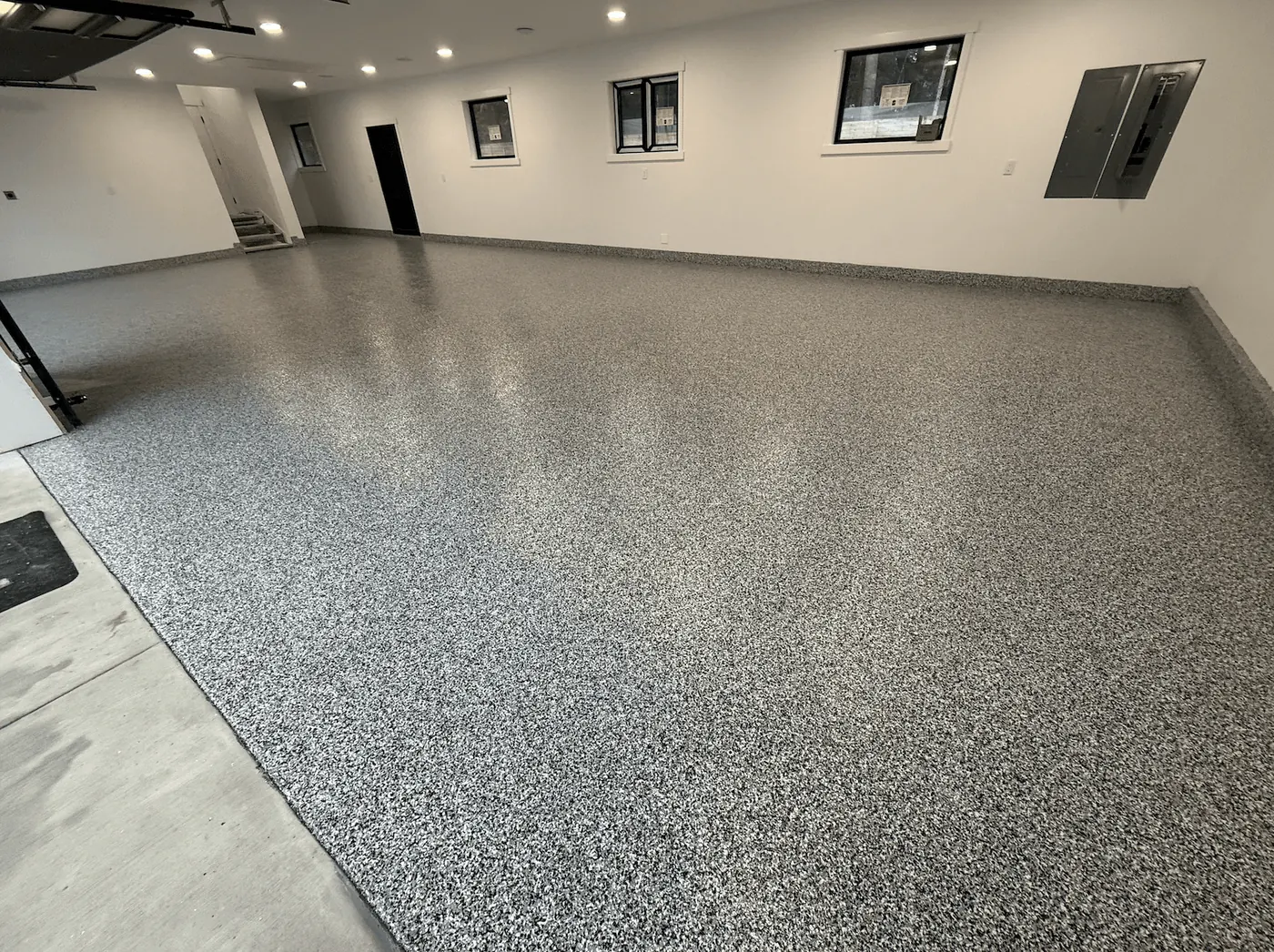
- Grind, repair, then coat
- Pits and cracks filled first
- Honest call on leveling
- Lifetime adhesion warranty
What does garage floor resurfacing actually mean?
Three different jobs hide behind one word, and the price gap between them is huge.
Grind and coat is what most coating companies mean. The concrete is ground back to a sound surface, pits and cracks are repaired, and a new floor goes on top. It's the cheapest fix and the one most garages need.
A cement overlay is a resurfacer troweled over the old slab, for damage too deep to grind out. Replacement is for concrete that's moving, not concrete that's ugly.
Whatever you call it, refinishing, restoring or a garage floor makeover, the question is the same: is the concrete sound? If it is, the floor is a day or two from new. If it isn't, we'll tell you before anyone coats it.

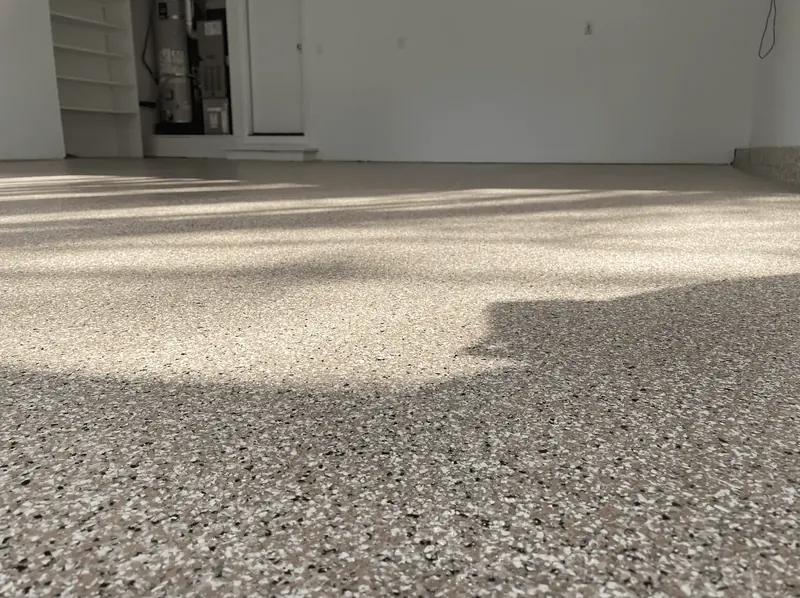

Read your slab: which fix it needs
Walk the floor and match what you see. Then tap it with a hammer: a spot that rings hollow has already separated from the concrete under it, and nothing can bond there.
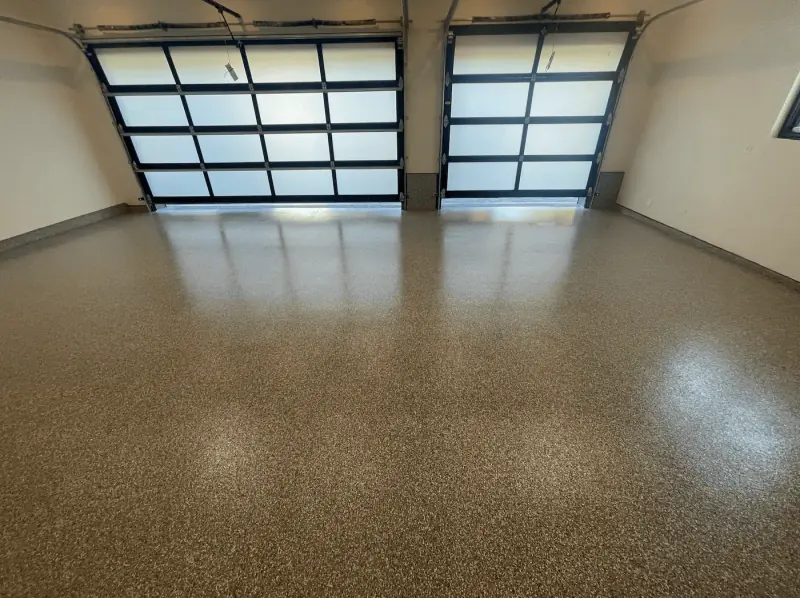 Grind and coat
Worn on top
Oil stains, gray dust, a few pits, hairline cracks you can't catch a fingernail on. That's a worn surface over sound concrete, which is exactly what grinding fixes.
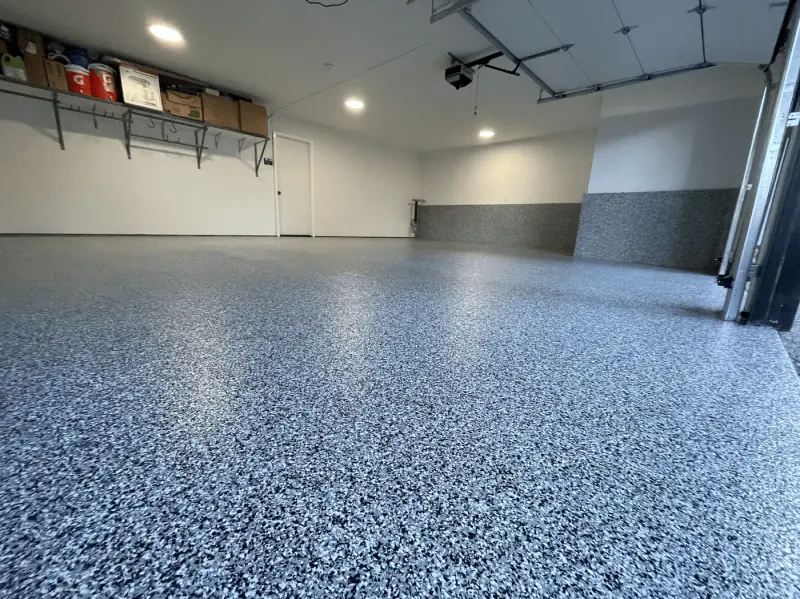 Overlay, then coat
Damaged deep
Pitting across whole areas, chunks missing a quarter inch or more, low spots up to half an inch. Too deep to grind out. A resurfacer goes on, cures about a month, then the coating.
 Contractor first
Moving or failing
Panels out of level, a crack with one side raised, concrete that crumbles, water coming through. Leveling, lifting or replacement comes before any floor, and we'll point you to the right trade.
 A separate question
An old coating peeling
Failing epoxy or paint is a bond problem, not a slab problem. It gets ground off to bare concrete and the floor is rebuilt. Recoat or redo, and what each costs.
What our crew does on a damaged slab, and what we don't
We look before we quote, and we stop if we find something a coating can't fix: active water, a structural crack, crumbling or brand-new concrete.
-
Walk it, tap it, test it
The estimator checks moisture with a meter, taps for hollow spots, counts the cracks and the depth of the damage, and leaves you a written price. If it's a concrete contractor's job, you hear that now, not on install day.
-
Grind
Two passes with diamond grinders, edges and corners by hand, dust collection running. Grinding takes off the dusty, oil-soaked, weak top layer and opens the sound concrete under it. This single step is what turns a "needs resurfacing" floor into a floor ready to coat.
-
Repair
Pits, spalls and cracks are filled and ground flush; on a Premium floor, wider cracks are cut open and rebuilt so the repair is as hard as the slab. Control joints are filled so they stop holding water, and spalling at the door is ground back to sound concrete and patched.
-
Coat
A moisture vapor barrier primer if the slab reads high, then a polyurea base coat, full flake and a clear polyaspartic topcoat with anti-slip grit. The flake hides the color differences and patch outlines a repaired slab always has. One day, or two with the barrier.


What we refer out: leveling, mudjacking, structural crack repair, and any slab that needs replacing. We'd rather send you to a concrete contractor first than coat a floor that's going to move. Once the slab is sound, we come back and finish it.
Pitted, uneven, cracked or hollow: straight answers
Four kinds of damage, and what each one really needs.
The easiest fix here
Pits are usually shallow. We grind, fill them with a patch harder than the concrete, grind flush and coat, and full flake hides the patches. Flaking across whole areas is the overlay case: a resurfacer first, a month to cure, then the coating.
A coating won't level it
A coating follows the concrete, so a dip is still a dip. Low spots up to about half an inch can take a self-leveling overlay. A settled panel gets lifted first by a concrete contractor. A gentle slope to the door is on purpose; it lets water out.
Repaired, then coated
Almost every cracked floor can be coated, but not by coating over the cracks. They're filled, or cut open and rebuilt, and ground flush first. A crack that's still moving, or has one side higher, is a slab problem to fix first. More on cracks.
That layer comes off
A hollow ring means the top layer has separated from the slab, usually from the original pour or years of salt at the door. It comes off down to attached concrete. Small areas we grind and patch; large ones need an overlay or a replacement.
What garage floor resurfacing costs in Seattle (2026)
National ranges from published cost guides, for a two-car garage of about 400 to 500 square feet. Our own prices for the grind-and-coat row are in the Seattle cost guide.
| Fix | Per square foot | Two-car garage | Expected life |
|---|---|---|---|
| Grind, repair and coat (polyurea-polyaspartic) | $4 to $12 installed | $1,600 to $5,800 | 15 to 20+ years |
| Cement overlay, then a coating | $3 to $7 for the overlay, plus the coating | $1,500 to $3,500 before the coating | Overlay 8 to 15 years |
| Leveling a settled slab (mudjacking or foam), then a coating | $3 to $8 mudjacking; foam higher | About $700 to $3,200, plus the coating | Mudjacking 5 to 10 years; foam longer |
| Replace the slab | $8 to $18 removed and poured | $4,800 to $9,000 | 30+ years |
The pattern: an overlay costs roughly 40 to 60 percent of a replacement, leveling is cheaper than either when the slab is sound but sunk, and grind-and-coat is the only one of the four that leaves you with a finished floor instead of a repaired one. Removing an old coating before any of these adds about $1 to $3 per square foot.
Why Seattle garage floors look worse than they are
Three local facts, and all three point the same way: toward grinding, not replacing.
 Age
Age
Old concrete, still sound
Census estimates put the city's median year built around 1976, and roughly four in ten homes went up before 1960. A 50- to 90-year-old garage slab is usually dusty, oil-soaked and pitted on top, over concrete that's still solid underneath. That's the grinding case.
 Water
Water
Moisture decides the coating, not the repair
Ground water moves up through a slab for months in our wet season. Both an overlay and a coating fail over a damp slab that wasn't tested. The repair plan comes from the tap test; the coating plan comes from the moisture meter.
 Weather
Less freeze, more salt
We get far less freeze-and-thaw than the Midwest, so the deep scaling that forces overlays there is rarer here. The de-icer that rides home on your tires is the bigger wear factor, which is why the worst spot on a Seattle floor is almost always the first few feet inside the door.
Floors we've installed
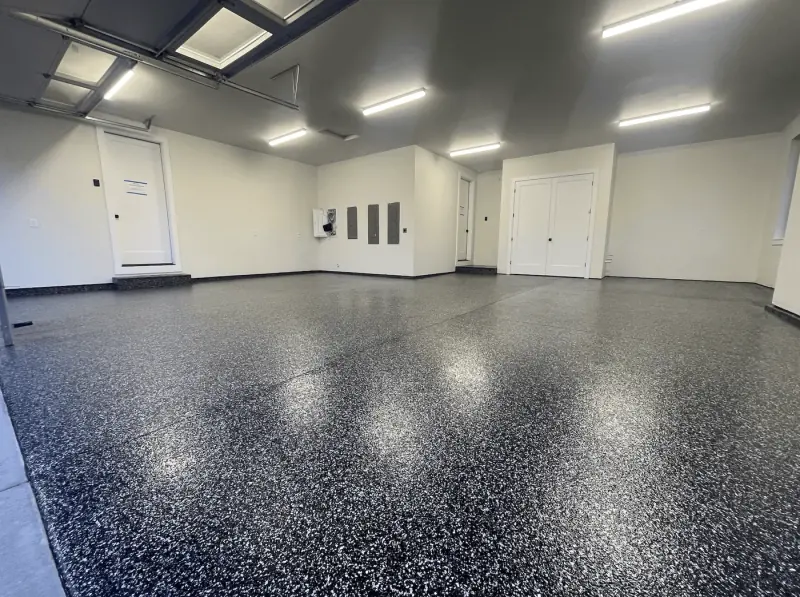
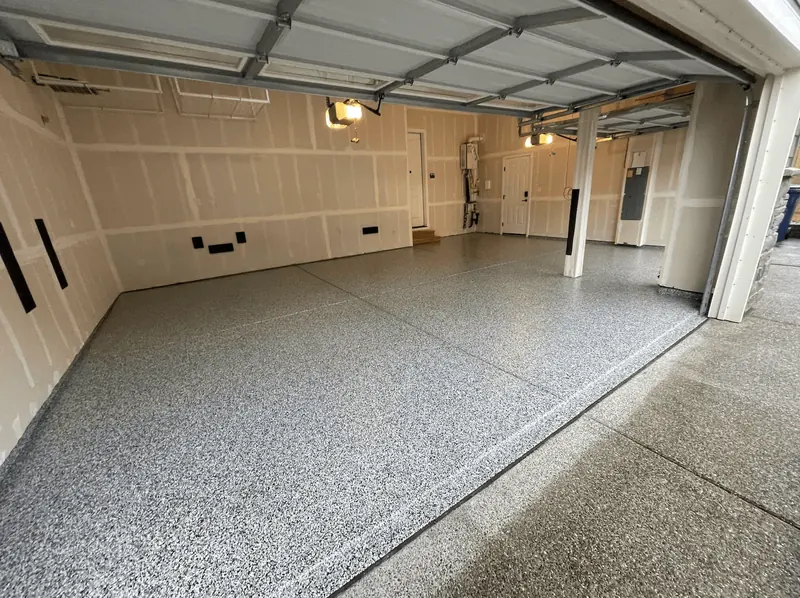
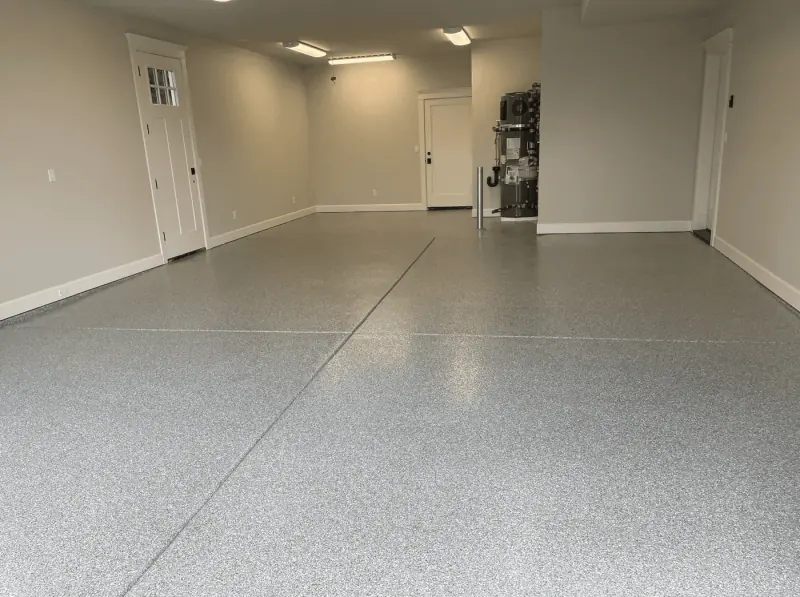
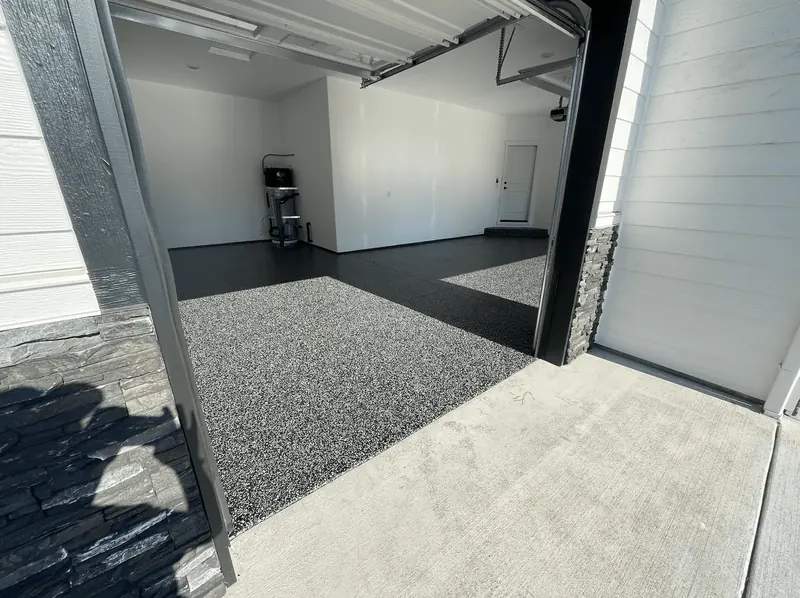
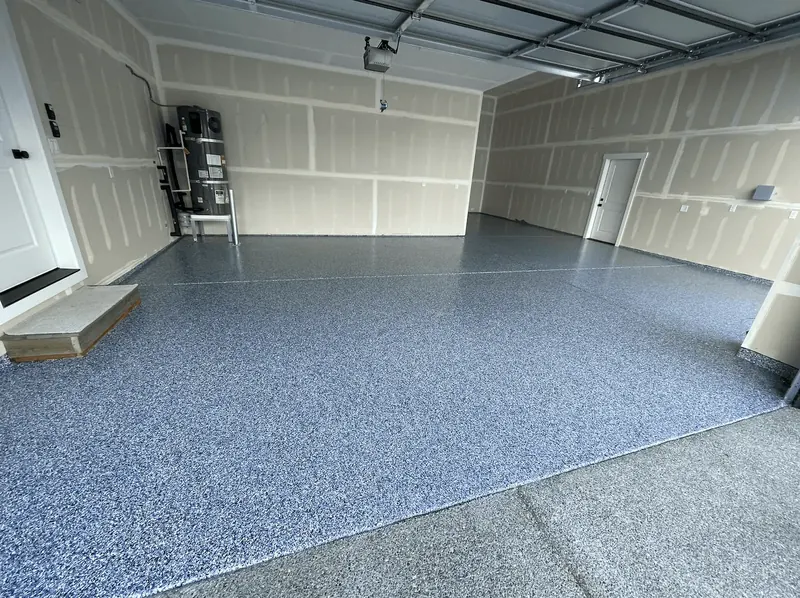
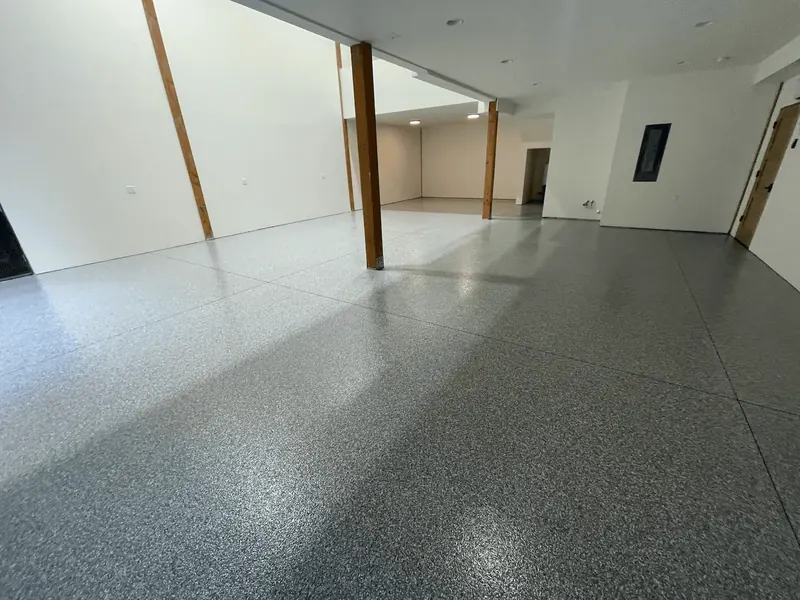
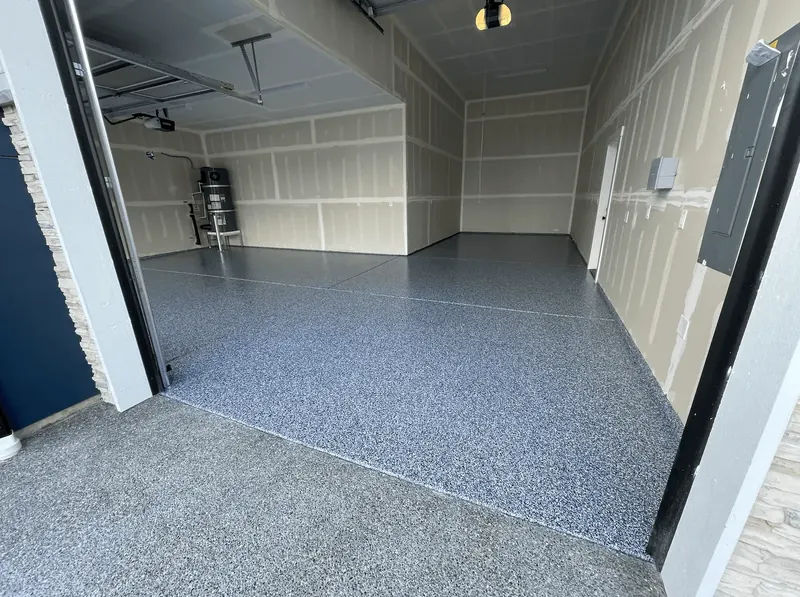
Real jobs, real slabs. Every one of these started with a grind and a moisture reading. See the full gallery, or preview a flake color on your own garage.




Resurfacing and repair questions
Can you resurface a concrete garage floor?
Yes, as long as the slab underneath is solid. Shallow damage like stains, dust, small pits and hairline cracks is fixed by grinding the surface down and coating it. Deeper damage gets a cement overlay first, then the coating. A slab that's moving or crumbling needs a concrete contractor before anyone resurfaces anything.
How much does it cost to resurface a garage floor?
For a two-car garage, grinding, repairing and coating runs about $1,600 to $5,800 in the Seattle market. A cement overlay adds roughly $1,500 to $3,500 before the coating. Replacing the slab is $4,800 to $9,000 or more. Removing an old coating first adds about $1 to $3 per square foot.
Can you coat a pitted garage floor?
Yes. Shallow pits are filled with a patch that's harder than the concrete, ground flush and coated, and full flake hides the patches. Pitting or spalling across whole areas, a quarter inch deep or more, needs a cement resurfacer first and about a month to cure before the coating goes on.
Can you level a garage floor with epoxy or a self-leveling coating?
Not really. A coating is a thin film that follows the concrete. Low spots up to about half an inch can take a self-leveling cement overlay before the coating. A slab that has settled needs mudjacking or foam lifting by a concrete contractor first, usually $3 to $8 per square foot, and then it can be coated.
Will a coating fix an uneven garage floor?
No. It will look better and seal the concrete, but every dip and hump will still be there. If the unevenness is from settling, the slab gets lifted first. If it's a gentle slope toward the door, that's by design and should stay; it's how water gets out.
Should I resurface or replace my garage floor?
Resurface if the concrete is sound: no panels out of level, no lips at the cracks, no hollow sound, no crumbling, no water coming through. Replace only when the slab itself has failed. Resurfacing costs a third to half of a replacement and takes a day or two instead of most of a week.
How long does garage floor resurfacing take?
Grind-and-coat is one day, or two if the slab needs a moisture barrier. A cement overlay adds about a month of curing before the coating can go on. Leveling or replacement is a concrete contractor's schedule first, then a day or two for the floor.
Can you fix spalling at the garage door?
Yes. Spalling there comes from water and de-icer sitting on the slab. The flaking surface is ground back to sound concrete, patched and ground flush before the coating goes on. If the concrete under it rings hollow, that loose layer comes off first.
Think your garage floor is past saving?
Most aren't. We walk the slab, tap it, test it and tell you which fix it needs: a grind and a coating, an overlay first, or a concrete contractor before anything else. Free, with a written price.