
Is a Garage Floor Coating Worth It? An Honest Answer for Seattle Homeowners
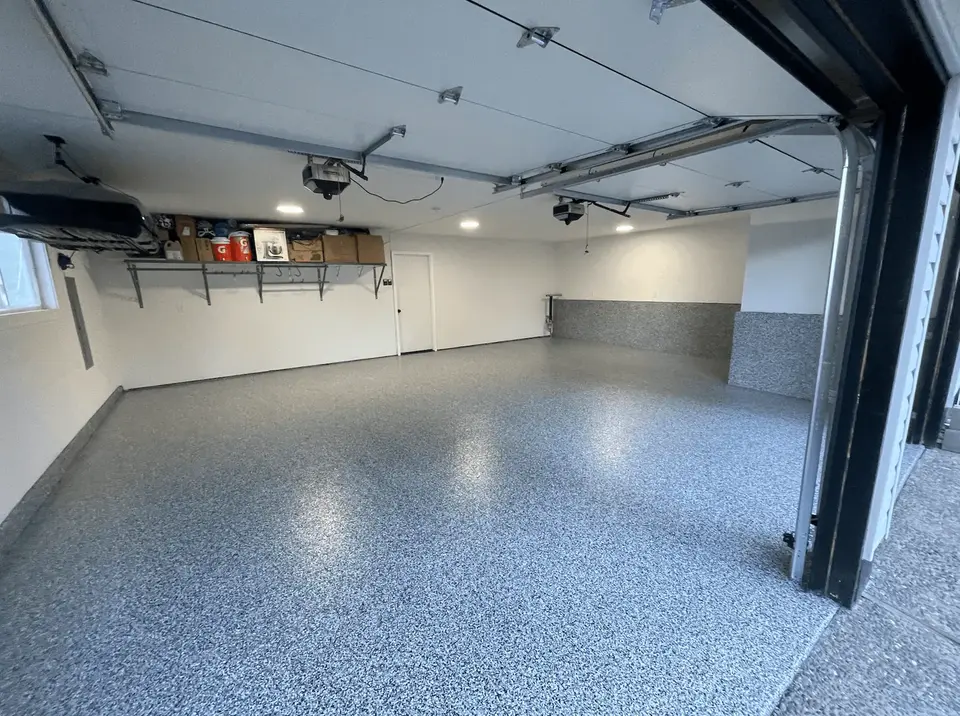
Short answer: if you park in your garage, work in it or walk through it every day, yes, as long as the coating goes onto a slab that's been ground and tested for moisture. You get a floor that hoses clean, stops shedding dust, and shrugs off wet tires and road salt. It isn't worth it if the slab has problems a coating can't fix, if you're about to pour new concrete, or if the plan is a cheap kit rolled over bare concrete.
That's the honest version. Here's how to work out which side of it your garage is on, with real numbers where they exist.
First, be honest about how you use the garage
Study after study finds the same thing: a lot of garages have no car in them. Sightline Institute, a Seattle think tank, summed up the research in 2022 under the headline "One in Three Garages Has No Car in It." A U.S. Department of Energy survey found that a quarter of people with a two-car garage don't park in it at all. A Sacramento study put the no-car share at 37 percent.
Why does that matter? Because the value of a coating depends on what the floor goes through. A floor that takes two wet cars a day gets a beating: road grime, oil drips, hot tires, salt in winter. A floor that holds boxes and a bike gets almost none. A coating is worth a lot to the first garage and mostly looks to the second.
What a coating actually changes
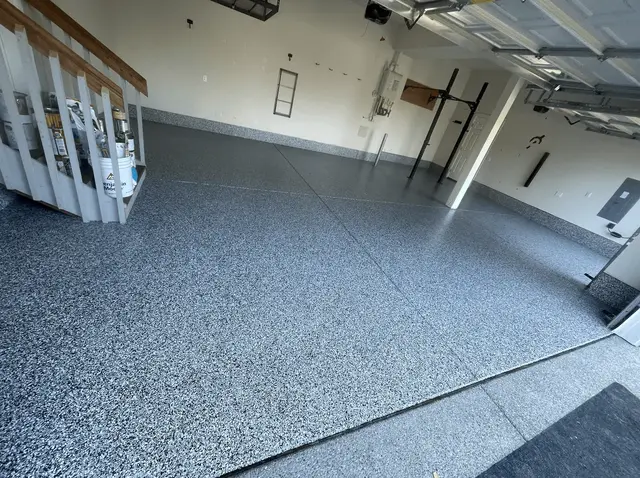
- Cleanup. Bare concrete works like a sponge. Oil, road grime and spills soak in and stain. On a coated floor they sit on top, and a hose, a squeegee or a damp mop takes them off. Our care guide has the whole routine.
- Dust. Older or soft concrete wears into a fine gray dust that gets on everything you store and tracks into the house. A coating seals the surface.
- Light. Seattle averages 226 heavily overcast days a year, according to weather service records, and December gives you about eight and a half hours of daylight. A light flake floor under a glossy top coat bounces back far more light than gray concrete. In a garage with one ceiling bulb, you notice it right away.
- Grip. Every floor we install has anti-slip grit in the top coat, which matters when the floor sees wet tires for half the year. See is a coated garage floor slippery?
- Road salt. When the roads ice up, the state treats King and Snohomish County highways with a calcium chloride anti-icer, which is a salt, and it comes home on your tires. On a coated floor it rinses off instead of soaking into the concrete.
- Staying down. A proper install starts with a moisture test and, on a slab that shows moisture, a barrier primer. That's what keeps the floor bonded through a Seattle winter. Our moisture guide explains why.
The cost per year is the number that matters
Garage floor prices are all over the map, so compare them the way you'd compare a roof: by the years you get out of them. Here's a simple example for a 450-square-foot two-car garage, using Seattle-market price ranges and the lifespans the trade reports for this climate. Our Seattle cost guide has the full ranges.
- A hardware-store kit: roughly $300 to $500 in materials. Most last one to three years in a wet climate. Call it $200 a year before you count your weekend. When it fails, stripping it off runs about $1 to $3 a square foot, roughly $450 to $1,350 for this garage, before the next floor goes down.
- A professional epoxy floor: about $4 to $10 a square foot installed, so $1,800 to $4,500 here. In a Seattle garage it typically lasts three to seven years, and less on a poorly prepped slab.
- A professional polyurea or polyaspartic floor: about $4 to $12 a square foot, so $1,800 to $5,400 for this garage, and 15 to 20 years or more on a prepared slab. Spread over 15 years, that's around $120 to $360 a year.
The pattern is simple. The cheapest floor costs the most per year, because you buy it again and you pay to remove the failure. That's also why the warranty matters. Ours is a lifetime adhesion warranty: if the coating peels or lifts from the concrete, we repair or recoat that area at no charge. It doesn't cover impact damage, scratches or stains, which is normal for coating warranties. Our warranty guide explains what "lifetime" does and doesn't mean.
When a coating isn't worth it
We'd rather say this at the estimate than after the install.
- The slab has problems a coating can't fix. Water coming up through the floor, a structural crack or crumbling concrete needs repair first. A coating only hides it until it fails. Our resurfacing guide explains how to tell the difference.
- The concrete is about to change. If an addition or a new slab is coming in the next year or two, do that first. Brand-new concrete needs about a month to cure. See coating a new garage floor.
- Nothing drives in. If the garage is storage only, you're paying mostly for looks. That can still be worth it to you, but it's a different decision.
- It's a welding shop. Welding spatter and cutting sparks mark any resin floor. Plan a welding mat for that bay or leave it bare.
- The plan is a kit over bare concrete. A kit rolled onto a slab that was only washed or acid-etched is the version that disappoints people. Our DIY vs. professional guide covers why.
Does it add value to your home?
No reliable study puts a dollar figure on a coated garage floor, so be wary of anyone who promises you a return. What we can say is that buyers notice garages. In the 2025 Cost vs. Value report from Zonda, replacing a garage door recouped about 268 percent of its cost at resale, the highest of the 28 projects tracked. The floor isn't the door, but it's the first thing a buyer sees when the door goes up. Treat a coating as an upgrade you'll enjoy while you live there, with a bonus in listing photos, not an investment you cash out.
What people say a few years in
Read enough homeowner forum threads and a pattern shows up. The happy owners talk about how much brighter the garage is and how fast it hoses out. The regrets almost always trace back to three things: a floor that wasn't prepped and started peeling within a year or two, a coating that didn't suit how the garage gets used, or a busy flake pattern that hides every dropped bolt.
The first one is the installer's job. The second is a conversation to have at the estimate. The third is easy: if you work on cars, pick a calmer flake blend. Our colors and ideas guide shows the options.
The question that decides it
Whether a coating is worth it has less to do with epoxy versus polyaspartic than with what happens before either goes down: grinding the slab open, testing it for moisture and fixing the cracks. Ask every company that quotes you how they handle those three. Our 12 questions to ask covers the rest, and how long a coating lasts shows what good prep buys you.
Is it worth it? Common questions
Is it worth coating a garage floor?
For a garage that's used every day, yes, if it's installed on a ground, moisture-tested slab. It cleans up with a hose, stops concrete dust and stands up to wet tires and road salt. It isn't worth it over a slab with active water or structural damage, right before new concrete work, or as a thin kit rolled onto bare concrete.
Is a garage floor coating worth it if I only park in the garage?
Usually, yes, because parking is where the mess comes from: wet tires for half the year, road grime, oil drips and winter salt. On bare concrete that soaks in. On a coated floor it rinses off. If nothing drives in and the garage is only storage, you're paying mostly for looks.
Does a coated garage floor add resale value?
Nobody has reliable data putting a dollar figure on it, so be skeptical of anyone who promises a return. Buyers do notice garages, and a finished floor photographs well. Treat it as a quality-of-life upgrade rather than an investment.
Is epoxy worth it, or should I get polyaspartic?
Both can be worth it on a well-prepared slab. In Seattle's damp climate, a polyaspartic top coat holds up better: it doesn't yellow, resists hot tires and chemicals better, and lets you park sooner. Our epoxy vs. polyaspartic guide compares them.
Is a concrete sealer enough instead of a coating?
A penetrating sealer helps concrete shed water and resist stains, and it costs less. It doesn't give you a colored, seamless, wipe-clean floor, it needs reapplying over time, and it has to be ground off before a coating can go down later. See sealer vs. coating.
When should you not coat a garage floor?
When water is coming up through the slab, when there's a structural crack or crumbling concrete, when the concrete is less than about a month old, or when new concrete work is planned soon. Fix or finish those first, then coat.
Want a straight answer for your garage?
We'll test the slab, tell you what it needs, and tell you whether a coating makes sense for how you use the space.
Get A Quote