
Garage Floor Coating Ideas: Flake Colors and Finishes From Real Seattle-Area Garages
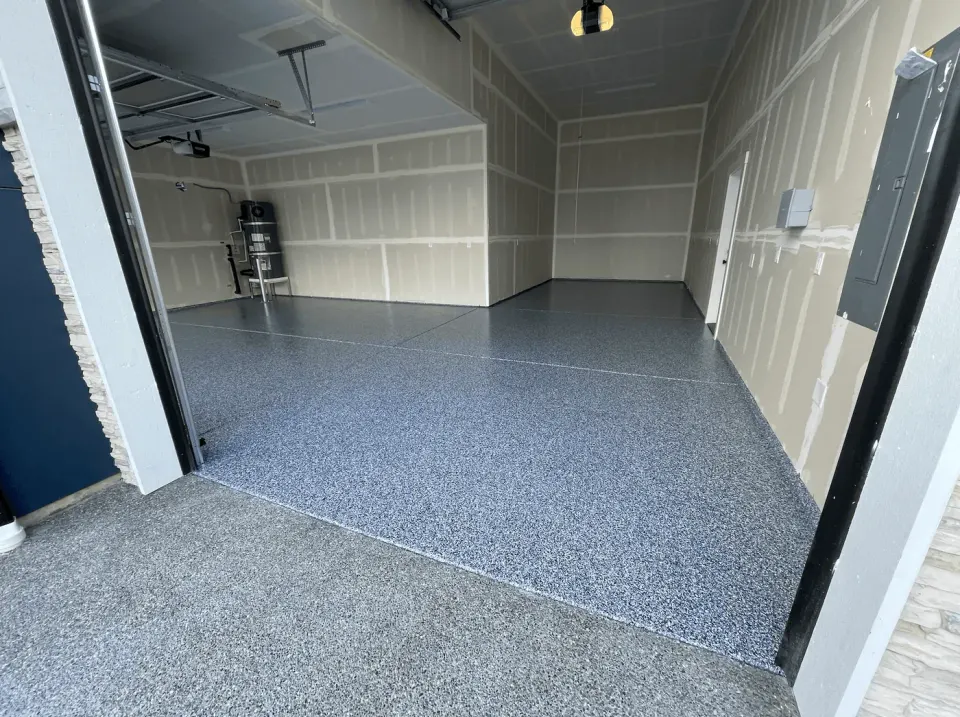
Short answer: The best garage floor ideas aren't about color. Decide what the floor has to do, how far the coating should run (up the stem walls, onto the steps, a few inches up the walls), how big the flake should be and how much grip you want. Then pick the color. By then it's the easy part. Every photo below is a real Seattle-area garage, and you can try any blend on a photo of your own in our AI floor preview.
Color is where most garage floor ideas start, and where most of them stop. The ideas below are the other choices: the ones that change how the garage works, how it cleans and how it looks from the driveway. The color section is at the end on purpose.
Flake size: quarter-inch, finer or bolder
The quarter-inch chip is the garage standard. From standing height it reads as a pattern, a bit like granite, and it hides patched cracks and old stains well.
- Finer flake looks more like stone or sand and, from across the garage, almost like a solid color. It takes more of it to cover a floor: one supplier figures about 50 pounds of quarter-inch flake for a two-car garage, against about 75 of the smaller sizes. It also shows dips in the slab more and hides less dirt.
- Bigger flake is bold and graphic. It suits a big shop and can look busy in a one-car garage.
Whatever the size, every floor we install is full flake: chips thrown until the base coat can't take any more, so no base color shows between them. A light sprinkle over a painted color is a flatter look that wears through in the tire paths, and we don't install it. What sits under the chips is on flake garage floor coating.
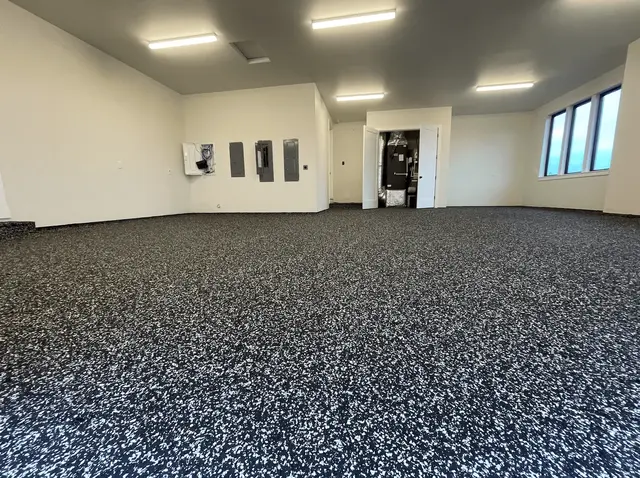
Finish and texture: gloss, grit and light
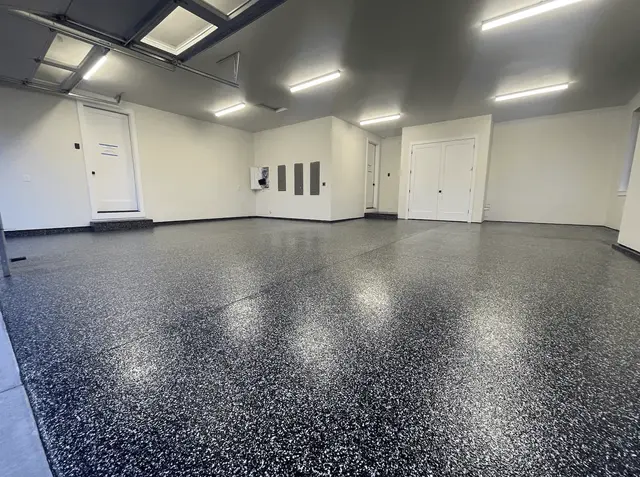
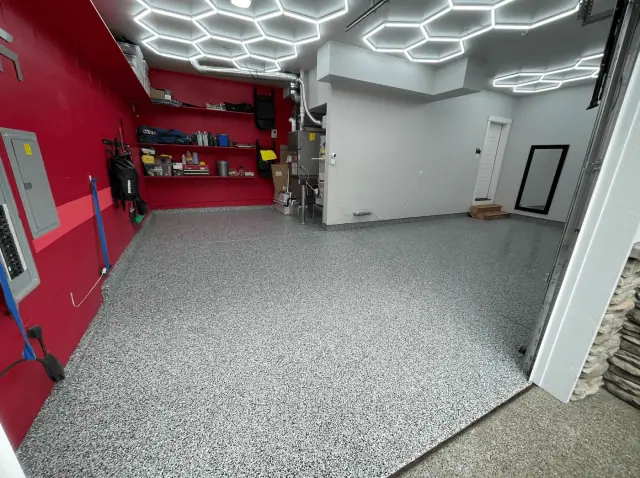
The clear polyaspartic top coat dries glossy. The flake under it breaks up reflections, so it doesn't look like a mirror, but the gloss still repeats your light fixtures. Bare LED strips and hexagon grids show up on the floor as bright lines and shapes. Frosted or diffused fixtures soften them.
Texture comes from the grit. Fine anti-slip grit goes into every top coat we install, and we can go heavier where feet get wet: the first few feet inside the door, the steps, a workbench or a gym corner. Heavier grit grips better but holds more dirt and feels rough on bare feet, so it goes only where you ask for it. The trade-off is laid out in is a coated garage floor slippery.
Carry it up the walls and onto the steps
Where the coating stops changes how finished the garage looks, and how easy it is to hose out.
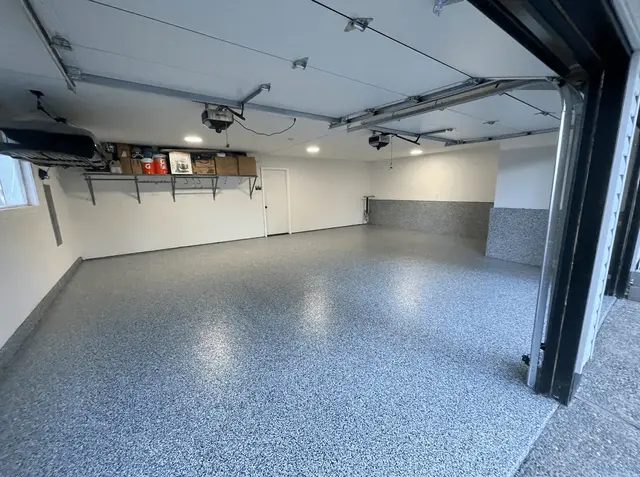
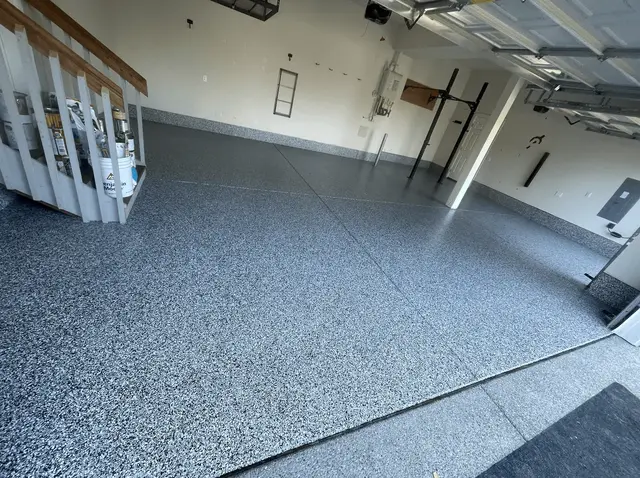
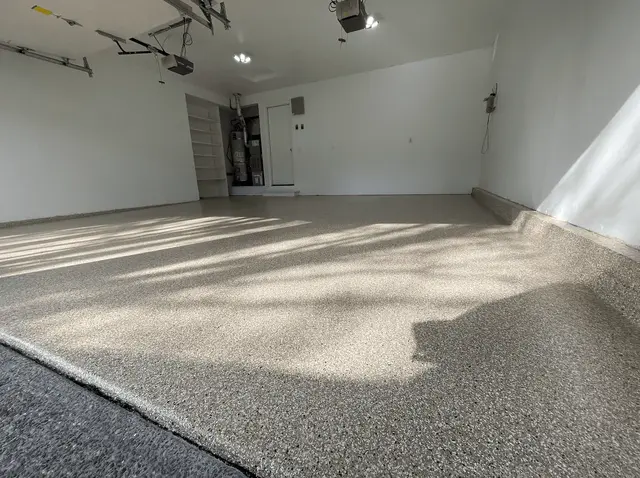
- Cove base. The coating runs 4 to 6 inches up the walls, so there's no raw seam where grit, salty water and leaves collect. The floor becomes one sealed tray you can squeegee out.
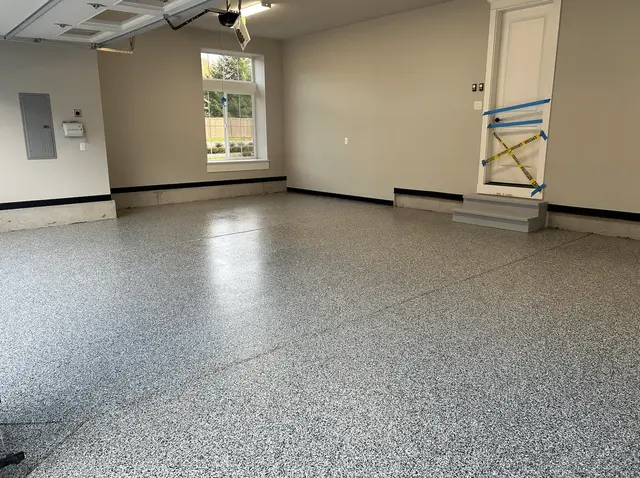
- Stem walls. Many garages have a concrete curb or stem wall along the sides or back, where the foundation rises above the slab. Coated in the same flake, it reads as part of the floor instead of a band of gray concrete, and it wipes clean.
- Steps. The steps into the house get the same flake and finish as the floor, with heavier grit on the treads if you want it.
Cove base and coated steps are both included on our Premium floor. If your garage has stem walls, ask about them at the estimate.
Ideas by what the garage is for
Workshop
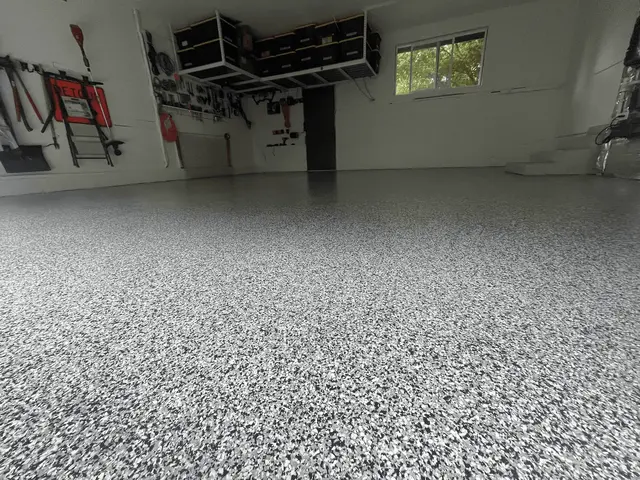
Mid and dark blends hide oil, brake dust and rust marks. A lighter floor makes a dropped screw easier to find, so it's a trade. Put plywood under jack stands and under a floor jack's steel wheels, and weld over a welding blanket: hot slag can scar any coating, and the warranty covers the bond, not burns or dents.
Home gym
Put rubber mats where the weights land. A dropped plate is impact damage, and our warranty doesn't cover that. Lift the mats now and then, because softeners in some solid rubber can stain a coating that sits under them for months; our care guide has the details. Ask for heavier grit where you train, and pick a lighter blend if the garage is dim.
EV garage
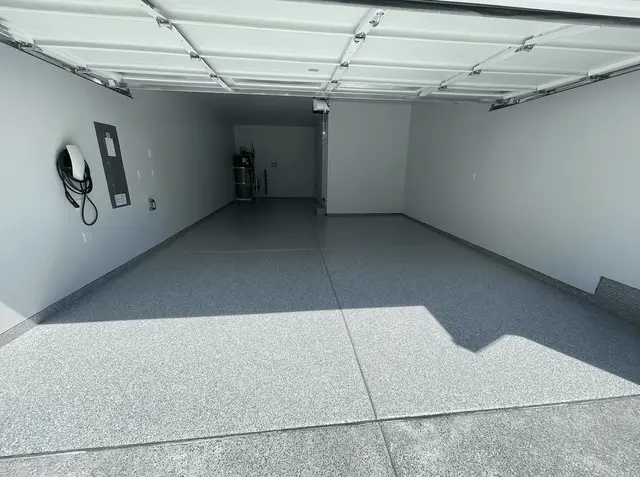
An electric car is heavier than a gas one, about 4,400 pounds for a typical recent EV against about 3,700 for a gas car, but the slab carries that weight, not the coating. You don't need a special floor. Two things are worth planning. Tell us where the charger will go: a wall-mounted unit sits well above a 4-to-6-inch cove base, and anything bolted to the floor, like a charging post or wheel stops, should go in before the coating. And since an EV doesn't drip oil, a lighter blend stays cleaner than it would under a gas car, though road grime and salt still ride in on the tires.
Show garage
For a car you'd rather look at than drive in the rain, the details carry the look. Coat the stem walls and run a cove base so no bare concrete shows. Consider a finer flake for a calmer floor, and use diffused lights so the gloss shows off the car instead of the fixtures.
A whole-garage makeover: walls, storage and light
We don't install cabinets, shelving or lights. But the floor turns out best when the rest of the makeover is planned around it.
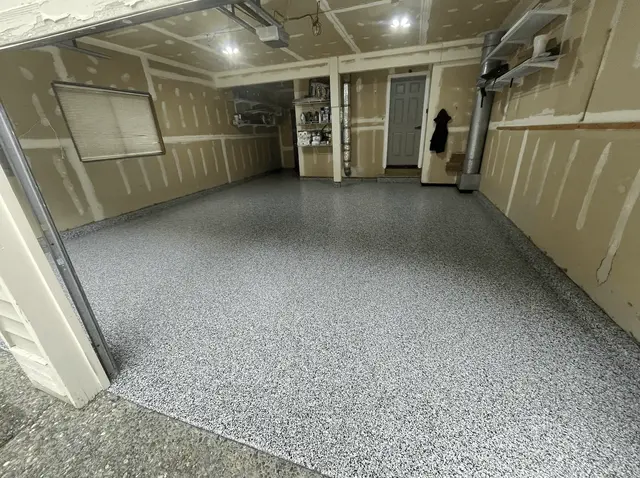
- Paint the walls first. Drips on the old slab vanish when it's ground. Drips on a new floor don't.
- Plan storage around the install. The crew coats wall to wall, so cabinets on the floor, shelving units and the freezer move out for the install. Wall-mounted shelving can usually stay. Give the floor 7 to 10 days before you drag anything heavy back across it.
- Get things off the floor. Wall cabinets, rails and overhead racks leave the floor open, and an open floor is a five-minute clean. Start wall panels above the cove base.
- Light it for the floor. A common target for a garage is about 50 lumens per square foot, roughly 20,000 lumens for a two-car garage, with extra light over a bench. Stick to one color of light, 4000K or 5000K, and use several frosted fixtures rather than a few bright bare ones.
- Light walls, mid-tone floor. White or light gray walls bounce light around, and a mid-tone floor hides what a pale one shows. A dark floor under dark walls makes a small garage feel smaller.
Pairing the floor with Seattle house styles
With the door up, the garage is the one room the whole street sees. A floor that suits the house looks planned. These pairings use blend names from our color range.
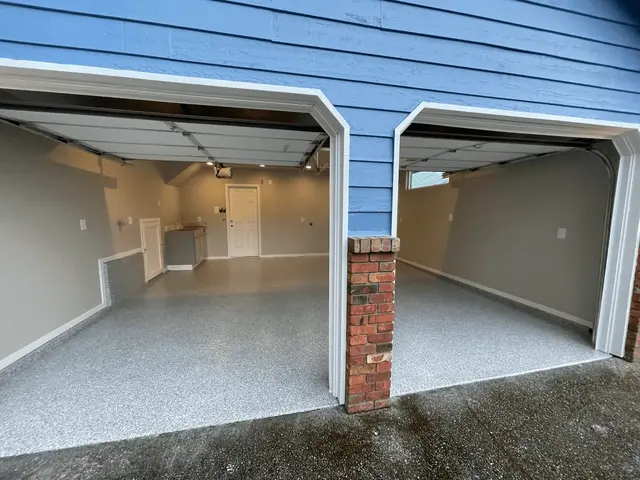
- Craftsman bungalows and Seattle boxes, 1900s to 1920s. Wood trim and earthy paint. Warm, mixed blends sit right with them: Shoreline (sand, tan and black) or the quieter Creekbed (taupe, brown and gray).
- Tudors from the 1920s and 30s. Brick, stucco and arched doorways. A stone-like tan or gray in a finer flake suits the masonry.
- Mid-century ramblers and split-levels, 1950s to 70s. Terrazzo was a signature floor of mid-century design, and the black-and-white Domino blend reads like terrazzo. Many split-levels put the garage on the lower level, cut into the slope. That's the garage most likely to need a moisture barrier, so get the moisture test done before you fall for a color.
- Older houses with lap siding and brick. A soft gray like Gravel goes with painted siding of almost any color.
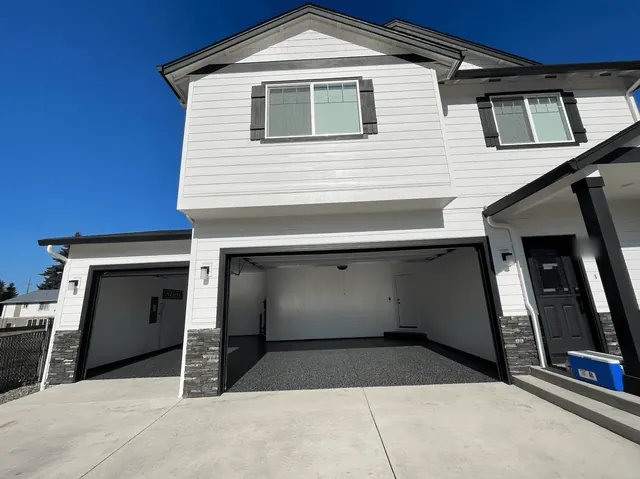
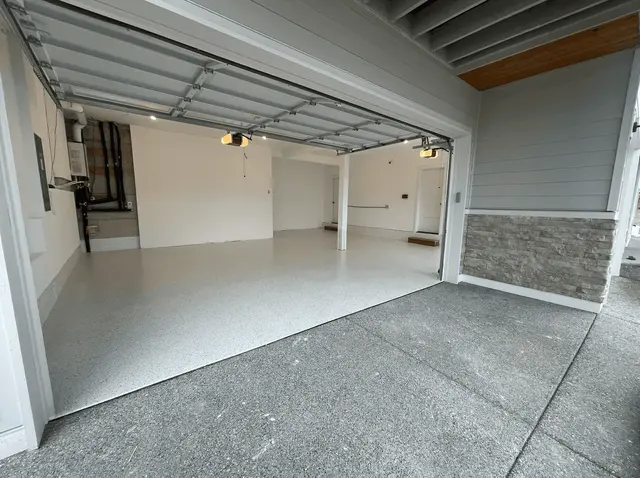
- New builds and townhouses. White or gray siding, black window trim and stone at the base. Charcoal blends like Nightfall, or Domino, match the trim. A narrow townhouse garage is often dark, so a lighter gray keeps it from feeling like a tunnel.
Pick the color last
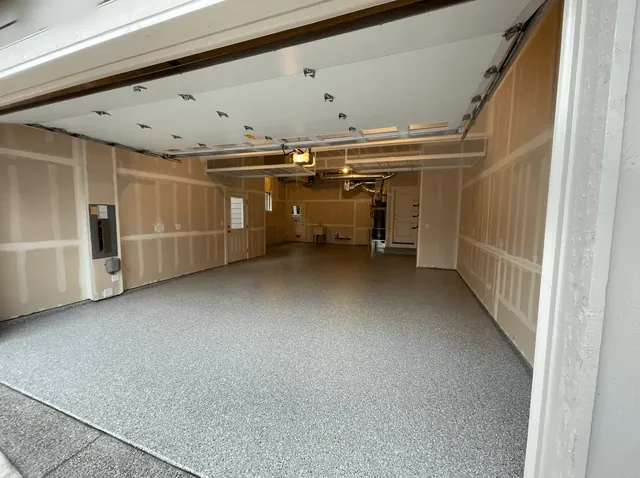
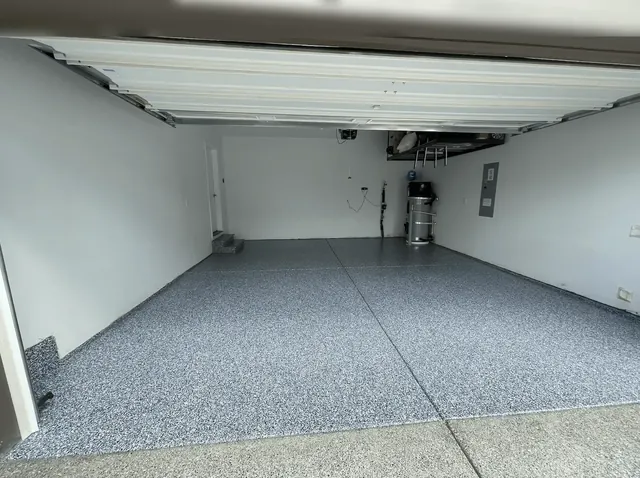
With the use, the light and the finish settled, color mostly comes down to light or dark. A lighter floor brightens a dim garage but shows tire marks. A darker one hides oil and tire marks but shows dust and the white film road salt leaves. A mid-tone blend with several chip colors hides the most. The nine blends, each photographed in a real garage, are on our garage floor colors page. Try your top two on a photo of your garage in the AI floor preview, then look at the real chips in your garage's own light at the estimate.
Garage floor idea questions
What are some garage floor coating ideas besides color?
Coat the stem walls and run a cove base a few inches up the walls, coat the steps into the house, choose a finer or bolder flake, and ask for extra grit by the door or in a gym corner. Then plan the rest of the garage around the floor: light walls, storage up off the floor and soft, even lighting.
Can the coating go up the wall and onto the steps?
Yes. A cove base carries the coating 4 to 6 inches up the walls, and the steps into the house get the same flake and finish as the floor. Both are included on our Premium floor. Concrete stem walls can be coated in the same flake too; ask about them at the estimate.
What size flake looks best in a small garage?
Usually the standard quarter-inch flake. In a one-car garage, bigger chips can look busy, and very fine flake reads almost like a solid color and shows dips in the slab. If you want a calmer floor and the slab is flat, a finer flake works. Look at the samples in your own garage's light at the estimate.
Should I put in cabinets before or after the floor coating?
After. The crew coats wall to wall, so anything standing on the floor comes out for the install anyway, and cabinets set on a finished floor leave no bare concrete behind them. Wall-mounted cabinets and shelving can usually stay. Wait 7 to 10 days, until the floor has fully hardened, before you drag anything heavy across it.
What garage floor works best for a home gym?
A full flake coating with extra grit where you train, and rubber mats where the weights land, since our warranty covers the bond, not dropped plates. Lift the mats now and then: softeners in some solid rubber can stain a coating left under them for months. A lighter blend helps in a dim garage.
Do I need a special garage floor for an electric car?
No. An EV is heavier than a gas car, but the concrete slab carries the weight, not the coating. Plan two things: tell us where the charger will go, and put in anything bolted to the floor, like a charging post or wheel stops, before the coating. A wall charger sits well above the cove base.
What garage floor coating color hides dirt best?
A mid-tone blend with several chip colors, like a medium gray or a sandstone tan. The mix of chips breaks up dust, tire tracks and winter grit. Very dark floors show dust and dried road salt, very pale ones show tire marks, and a solid color shows nearly everything.
Can a garage floor coating be a solid color instead of flake?
It can, but full flake is the standard for good reasons. The chips hide dirt, give the clear coat texture for grip, and hide the lines of filled cracks. A solid color shows all three. If you still want one, raise it at the estimate and we'll talk through what it means for your slab.
Do you do metallic epoxy garage floors?
No. The swirled, marbled metallic look is an epoxy technique that needs epoxy's long working time, and it brings epoxy's problems in a Seattle garage: a narrow cure window and amber patches where the sun hits. The floors we install are polyurea and polyaspartic flake systems, which hold their color.
Planning the whole garage?
Book a free estimate. We'll test the slab, show you real flake samples in your garage's own light, and leave a written price for the floor and any cove base, steps or stem walls you want.
Get A Quote