
Garage Floor Tiles vs. Epoxy Coating: Which Is Better for a Seattle Garage?
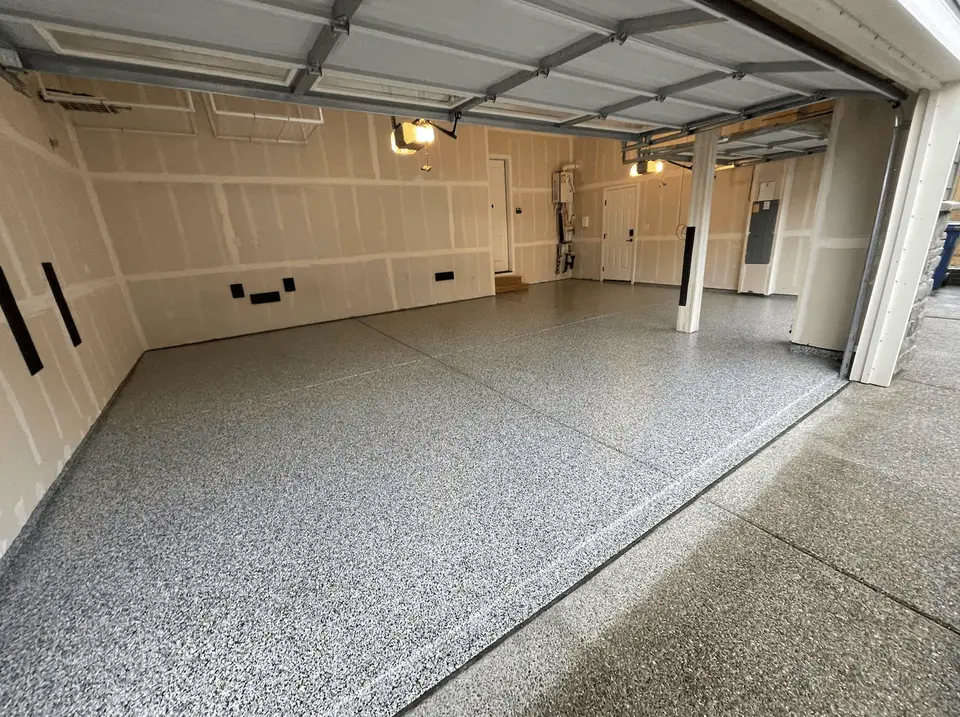
Short answer: tiles are the better pick if you want a floor you can lay in an afternoon, take with you when you move, or put over rough concrete you don't want to fix. A coating is the better pick if you want one seamless surface that wipes clean, doesn't stain from tires, and stays put for 15 to 20 years or more. In Seattle the tiebreaker is usually moisture: tiles let a damp slab breathe but hide what's going on underneath, while a coating has to deal with moisture before it goes down. Upfront cost is similar: roughly $3 to $8 a square foot for tiles, and $4 to $12 for a professional coating.
Both options are sold hard by the people who make them, so this guide tries to be the comparison we'd want if we were the homeowner. Every way to floor a garage is ranked on garage flooring options for Seattle, and the coating types are compared in our coating options guide; this is the deep dive on the two most people end up choosing between.
What we're comparing
Garage floor tiles are squares, usually 12 to 18 inches across and half an inch to three quarters of an inch thick, that snap together into a floating floor. Most are rigid plastic (polypropylene) with a raised grid underneath. Some are flexible PVC with a solid back. Roll-out vinyl mats are a cousin, and the same moisture notes apply to them.
A coating is a liquid system applied to the concrete itself: a base coat, usually a broadcast of color flakes, and a clear top coat. Epoxy, polyurea and polyaspartic are the common chemistries. Our epoxy vs. polyaspartic guide explains the differences.
Cost
Tiles run from about $2.70 a square foot for budget rigid tiles to about $7.75 for premium brands, with most popular tiles around $4 to $5. Flexible PVC tiles cost roughly a quarter more than entry-level rigid ones. Because you install them yourself, there's no labor bill; one major brand's own estimate for a two-car garage is about $1,900 to $3,500 in tiles.
A professional coating runs about $4 to $12 a square foot installed, depending on the chemistry and how much prep the slab needs, so roughly $1,600 to $5,800 for a two-car garage of 400 to 500 square feet. That price includes grinding the concrete, repairing cracks and the moisture test. Our Seattle cost guide and polyaspartic cost guide have local numbers.
Install time
Tiles win here without a contest. A typical two-car garage goes down in four or five hours with a rubber mallet, and you can drive on it the same day. A coating takes one day, or two if the slab needs a moisture barrier primer. You walk on it the next day and park after 72 hours. Our install timeline shows the day hour by hour.
Moisture: the Seattle tiebreaker
Concrete is porous, and in a wet climate ground moisture moves up through a garage slab for months at a time. The two floors handle that very differently.
Rigid tiles with a perforated or raised-grid design let water and vapor pass underneath and dry out. That's genuinely useful on a damp slab you don't want to fix. The catch is that you can't see under them. Dirt and water collect in the grid, and on a slab with real moisture, mildew and a musty smell can build up. Tile guides recommend lifting a few tiles every few months to vacuum and dry underneath. Solid-backed PVC tiles and roll-out mats are worse: they trap moisture against the concrete.
A coating can't hide from moisture, so it has to deal with it first. Every slab we coat gets a moisture test, and a slab that reads high gets a barrier primer before the base coat. Done right, that's what keeps a coating down through a Seattle winter. Skipped, it's the reason coatings peel. Our moisture guide and moisture barrier guide explain it.
One honest line for both camps: if your slab has white chalky deposits, dark damp patches or water coming through, the moisture problem comes first, whatever you put on top.
Tires: stains and hot-tire pickup
Tire rubber contains a chemical, 6PPD, that slowly leaches out and stains whatever the tire sits on. Flexible PVC tiles are known for yellow-brown tire stains that don't come out; the usual advice is black tiles under the parking spots. Rigid polypropylene tiles shrug it off.
Coatings have a different tire problem. A thin epoxy can soften under a hot tire and lift when you back out, which the trade calls hot-tire pickup. Polyaspartic top coats resist it, and on our floors lifting is an adhesion failure, which the warranty covers. Our guide on why epoxy floors peel explains what goes wrong.
Jack stands, dropped tools and dents
Tiles dent. Narrow jack-stand feet and the small steel wheels of a floor jack put a lot of weight on a tiny spot, and owners report permanent dimples. The standard fix is a square of plywood under the stands. The good news is that the color runs all the way through a tile, so dents are hard to see, and a ruined tile can be swapped out.
A coating chips under the same abuse. A dropped engine block or a dragged jack stand will leave a mark. Chips are repairable, but a repaired patch on an older floor may not match perfectly, because the original has had years of light on it. Impact damage isn't covered by either kind of warranty.
Noise, feel and looks
Solid-top tiles can click and sound hollow underfoot, especially on an uneven slab. Perforated tiles are much quieter, and a layer of landscape fabric underneath quiets solid ones. Tiles also expand in heat, so installers leave a quarter- to half-inch gap at the walls. Buckling complaints come mostly from hot climates, but a south-facing garage door can heat a floor here too.
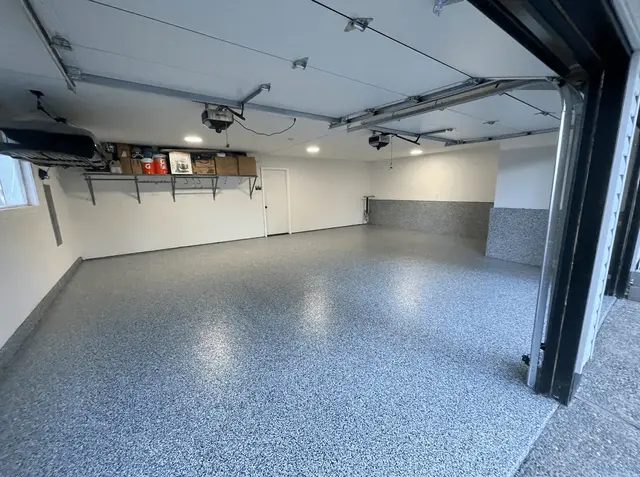
A coating is one seamless surface, with the flake blend and the gloss level you pick. There's no grid pattern and nothing to catch a broom. The finish can also run up the wall as a cove base, so there's no seam at the edge for dirt to collect in. Our colors and ideas guide shows what's possible.
Cleaning
A coated floor is the easier one to clean: sweep, hose, squeegee. Dirt stays on top. With tiles, grit and water drop through the perforations and sit in the grid until you lift the tiles. PVC tiles have tighter seams but stain more easily. Our care guide covers the coating routine.
Over a rough, stained or uneven slab
This is where tiles earn their keep. They bridge pitting, stains and a worn surface without any repair, and they can go over wood or old tile. They don't fix a slab that's heaving or settling, and they shouldn't go over active water.
A coating needs the slab fixed first: ground down, cracks filled, pits patched. That costs more up front and leaves you with a sound floor underneath. Our resurfacing guide and crack repair guide cover what that involves.
Lifespan and warranty
Good rigid tiles come with 15- to 20-year warranties, and some premium lines offer a limited lifetime warranty. They fade a little in sunlight and single tiles can crack, but a tile floor as a whole lasts a long time. A polyurea and polyaspartic coating lasts 15 to 20 years or more on a ground, moisture-tested slab, and far less when the prep is skipped. Ours carry a lifetime adhesion warranty: if the coating peels or lifts from the concrete, we repair or recoat the area. Our guide on how long a coating lasts explains what the prep buys you.
If you move
Tiles come with you. A coating stays, and it shows in the listing photos. There's no reliable data on what either adds to a sale price, so weigh that as a nice-to-have, not a return.
Which should you choose?
Choose tiles if:
- You want it done this weekend, by you.
- You rent, or you expect to move and want to take the floor.
- The slab is rough or stained and you don't want to pay to fix it.
- You want a floor that comes up for a future remodel.
Choose a coating if:
- You want one seamless, wipe-clean surface with no grid and no seams.
- You park daily and don't want tire stains or a floor that holds grit underneath.
- You'd rather fix the slab once than cover it.
- You want a written warranty on the bond to the concrete.
Tiles vs. coating questions
Are garage floor tiles better than epoxy?
Neither is better for everyone. Tiles install in hours, come with you when you move and go over rough concrete without repairs. A coating gives you a seamless, wipe-clean floor that doesn't stain from tires and stays bonded for 15 to 20 years or more when the slab is prepared properly. In a damp climate like Seattle's, the deciding factor is usually how each one handles moisture.
Do garage floor tiles trap moisture?
Perforated rigid tiles let moisture pass and dry out underneath, which is why they suit a damp slab. Solid PVC tiles and roll-out mats can trap it, and any tile hides what's happening below. Lift a few tiles every few months to check and vacuum. If the slab shows white deposits or damp patches, fix the moisture first.
Do garage floor tiles stain from tires?
Flexible PVC tiles can, with yellow-brown marks that don't come out, because of a chemical in tire rubber that leaches out over time. Rigid polypropylene tiles resist it. If you choose PVC, put black tiles under the parking spots.
Can you use jack stands on garage floor tiles?
Yes, with a square of plywood under them. Narrow jack-stand feet and floor-jack wheels concentrate a lot of weight on a small spot and will dent tiles. The color runs through the tile, so dents are hard to see, and a damaged tile can be replaced.
Which is cheaper, tiles or a coating?
Upfront they overlap. Tiles cost roughly $3 to $8 a square foot and you install them yourself. A professional coating costs about $4 to $12 a square foot installed, including grinding, crack repair and the moisture test. Over 15 years both are reasonable value; the cheap options in either category are the ones that cost more in the end.
How long do garage floor tiles last compared with a coating?
Good rigid tiles carry 15- to 20-year warranties and some lifetime warranties. A polyaspartic coating on a prepared slab lasts 15 to 20 years or more, and ours carry a lifetime adhesion warranty. Both fail early for the same reason: cheap materials or a slab that wasn't ready.
Leaning toward a coating?
We'll test the slab and tell you honestly whether a coating or tiles makes more sense for your garage.
Get A Quote