
Garage Floor Paint vs. Coating in Seattle
We install coatings, so you'd expect us to call painting a garage floor a mistake. It isn't always. Sometimes a can of garage floor paint and a Saturday is the right amount to spend. The trick is knowing which garage you have. Here's the honest version.
- When paint is fine
- How to paint it right
- Real costs, side by side
- Lifetime adhesion warranty
Should you paint a garage floor?
If you're selling the house next spring, or you just need the dust knocked down in a garage nobody parks in, sure. Paint it. Spend the hundred bucks and follow the steps further down this page.
If you're staying and a car lives in that garage, don't. Painted garage floors around here fail the same way: warm tires soften the paint, moisture from below lifts it, and one wet February finishes it.
A coating is the thing paint is pretending to be.
- 1–3 yrspaint's usual life in a garage
- 1–2 daysto install a coating
- Lifetimeadhesion warranty on ours
What garage floor paint really is
Walk the paint aisle and you'll see three things that all claim to be a garage floor. They are not the same product, and one of them is mostly paint with "epoxy" on the label.
Latex with a tough label
House paint's cousin: a water-based latex made a bit harder. It dries to a film about a third as thick as a sheet of paper. It's color, not protection.
Paint with some epoxy
Same latex, with a little epoxy resin stirred in so the label can say "epoxy." A bit tougher than plain paint, and it still peels under hot tires, just slower.
Real epoxy, a thin coat
Two cans you mix, about three times thicker than paint, with a bag of flake. The best thing in the aisle, and it still needs a warm, dry slab and three days before you park.
What we install is none of these: a polyurea base coat with full flake under a clear polyaspartic topcoat, over diamond-ground concrete, about ten sheets of paper thick. What's in a flake floor · The big-box kits by name · A kit vs. a pro floor · Every garage flooring option, ranked
Why painted garage floors peel in Seattle
Paint fails everywhere eventually. Around here it fails faster, for four reasons that have nothing to do with how carefully you rolled it on.
What's working against the paint
- Hot tires. Warm tires soften the paint overnight, then pull it up when you back out. Hence the bald tire paths.
- Moisture from below. About half of Seattle's houses predate the plastic sheet under the slab, so vapor comes up and bubbles the paint off.
- A cold slab. Paint wants a warm floor to cure. From October to May it never fully hardens.
- No grind. The can says to etch, which leaves the concrete smooth. A thin film has almost nothing to grip.
What a coating does differently
- It's thick enough that warm tires can't soften through it.
- When the slab reads wet, a moisture barrier primer goes under the floor so vapor can't push it off.
- The polyurea and polyaspartic we use cure in cool weather, so a February install is a real install.
- We diamond-grind the slab open so the base coat bites into it. That's the step paint skips, and it's the step that decides whether a floor stays down.
The full story of what's happening under the floor: why garage floors fail in Seattle.
When painting a garage floor is the right call
We'll say it because most coating companies won't: there are garages where paint is the smart move.
You're selling soon
Fresh gray paint makes a garage photograph clean, and the next owner's hot tires are their problem. Just don't call it epoxy in the listing.
Nothing parks there
A workshop, gym or storage garage doesn't have the hot-tire problem. Paint will still scuff and chip, but it won't peel in sheets.
You need it this weekend
Paint is the only garage floor you can buy on Saturday morning and walk on Sunday night, if the slab is warm and dry.
The budget is $100
Then paint, do the prep below, and plan to repaint in a year or three. There's no shame in it.
If none of those describe you, keep reading. The math changes fast once you count the repaints, and faster in a garage that doubles as a shop: shop and pole barn floor coating.
Painting a garage floor yourself? Do it right
If you've decided on paint, here's how to get the most out of it. Most of this is the same prep we do, scaled down to a weekend.
-
Do the plastic test first
Tape a square of plastic sheeting to the floor overnight. If the concrete under it is dark or the plastic is fogged by morning, moisture is coming up through the slab and paint will fail. Stop and call someone who installs barriers.
-
Degrease, then degrease again
Oil spots are a top reason paint lets go. Scrub them with a concrete degreaser, rinse and let it dry. If water beads anywhere, it isn't clean yet.
-
Rough up the surface
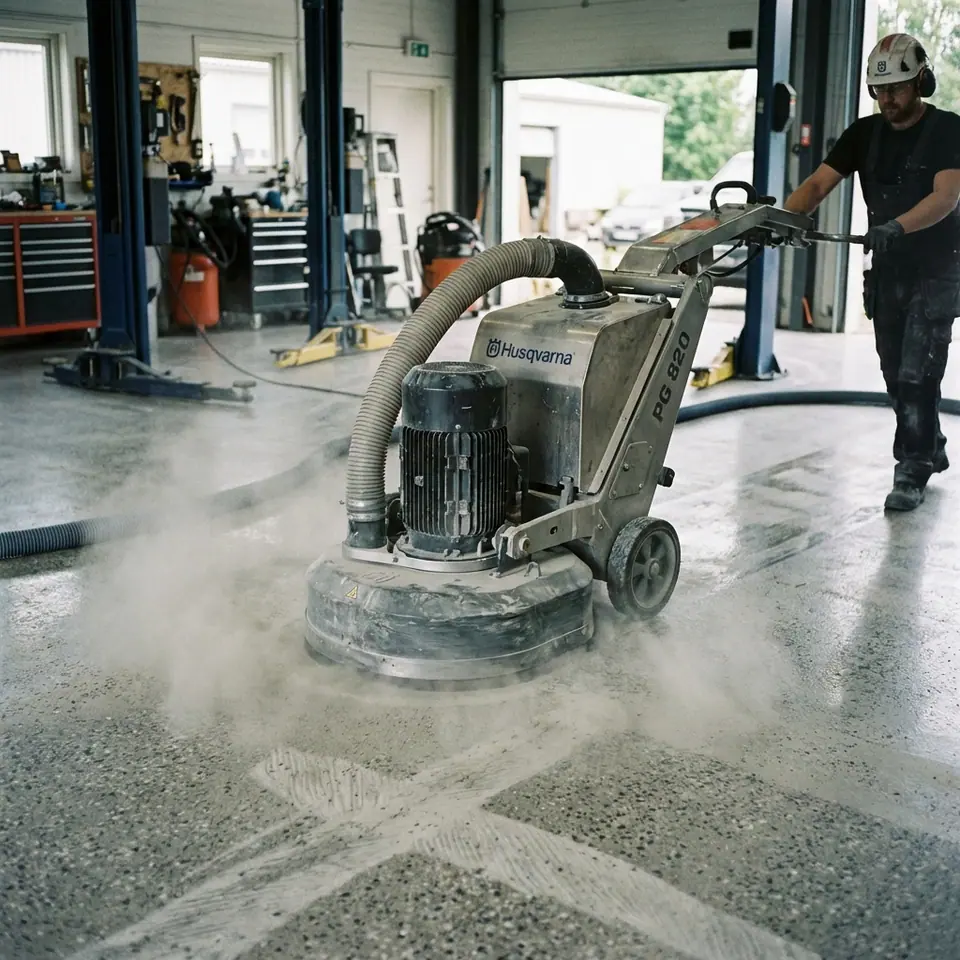
The can says to etch, and etching helps a little. Renting a floor grinder for a day helps a lot. It's what makes a paint job last three winters instead of one.
-
Wait for a warm, dry week
Not warm air: a warm slab. Around Seattle that means July through September. Paint a cold slab in April and it never fully cures.
-
Two thin coats, then wait
Thin coats bond; thick coats skin over and stay soft. Give it a full week before a car goes on it, longer if the garage is cool.

The floor paint is pretending to be
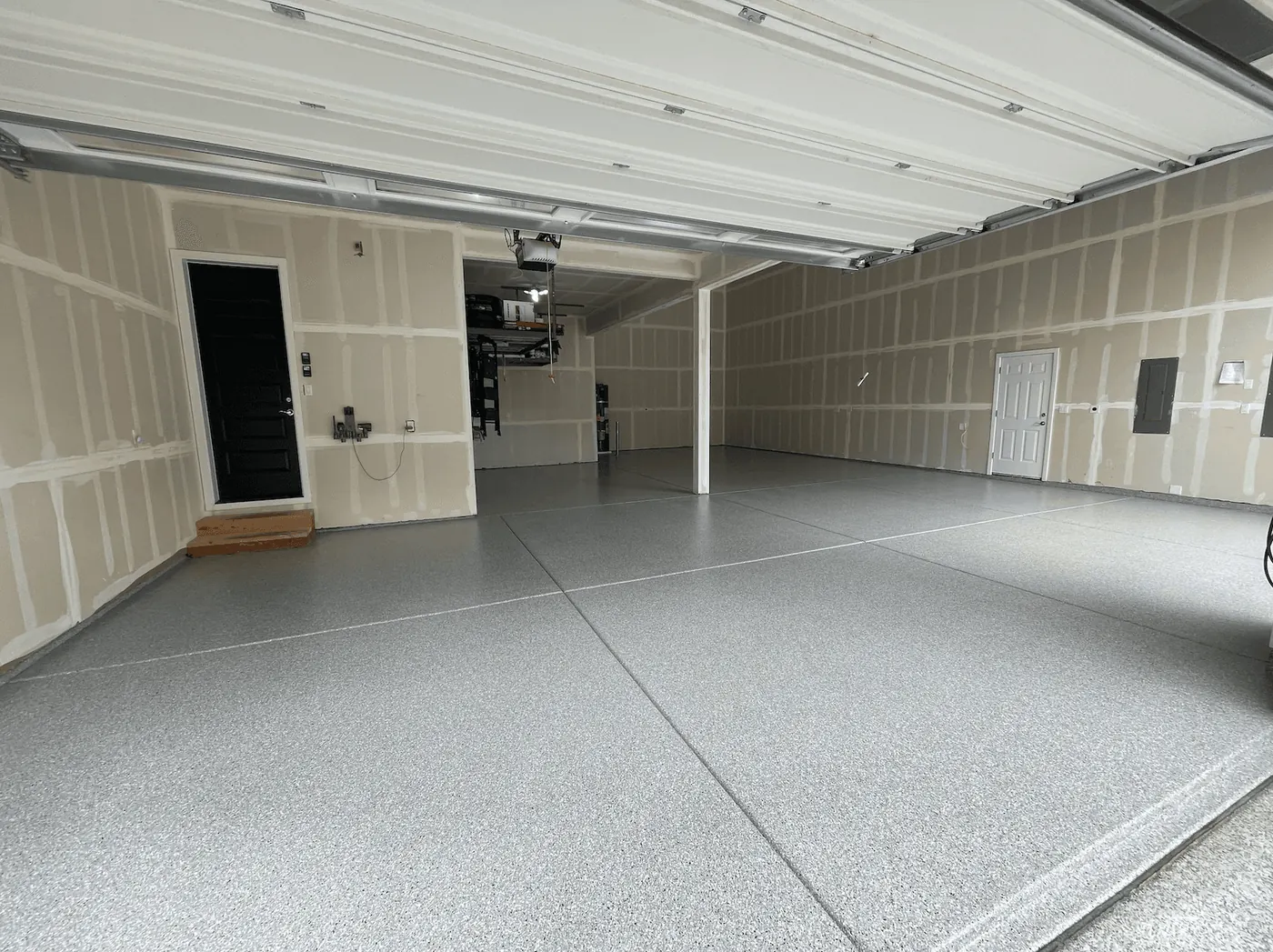
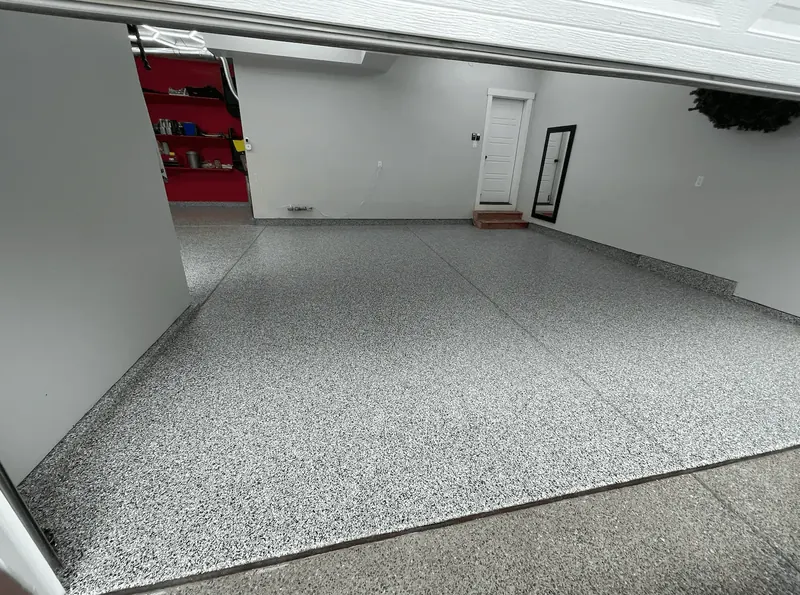
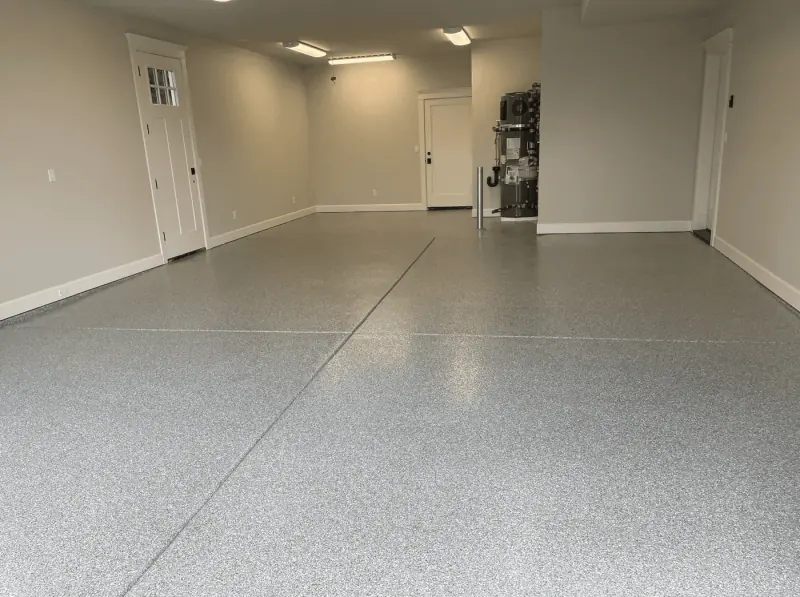
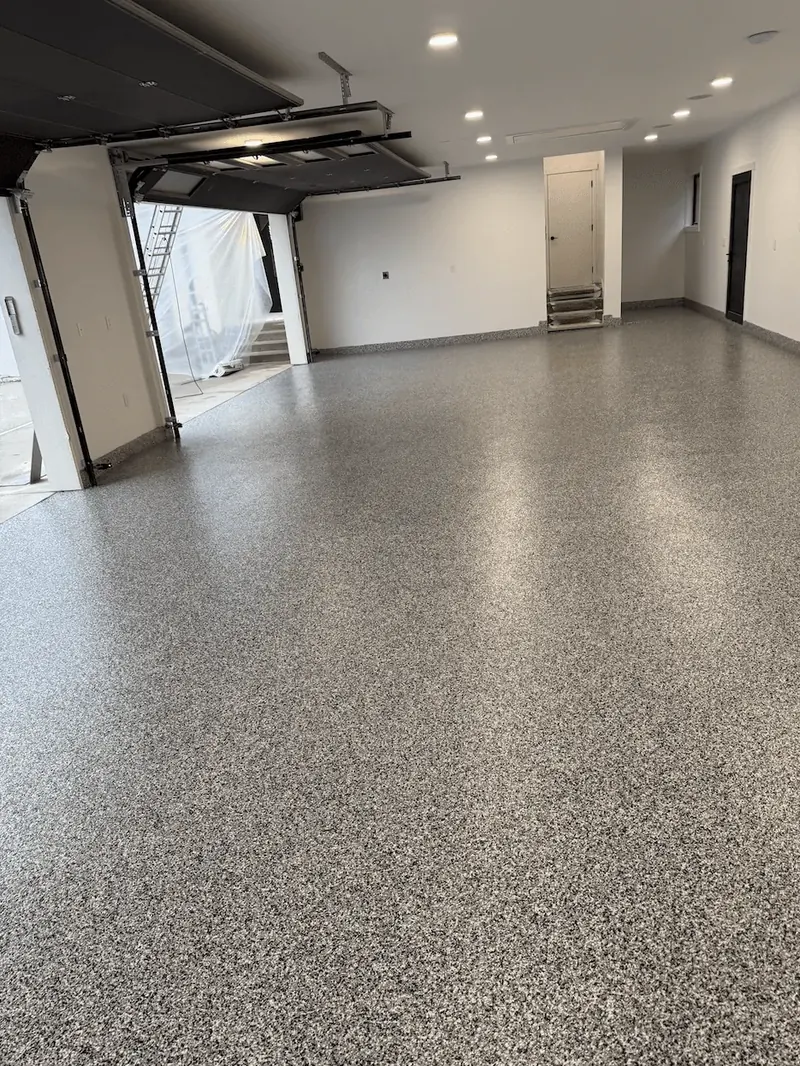
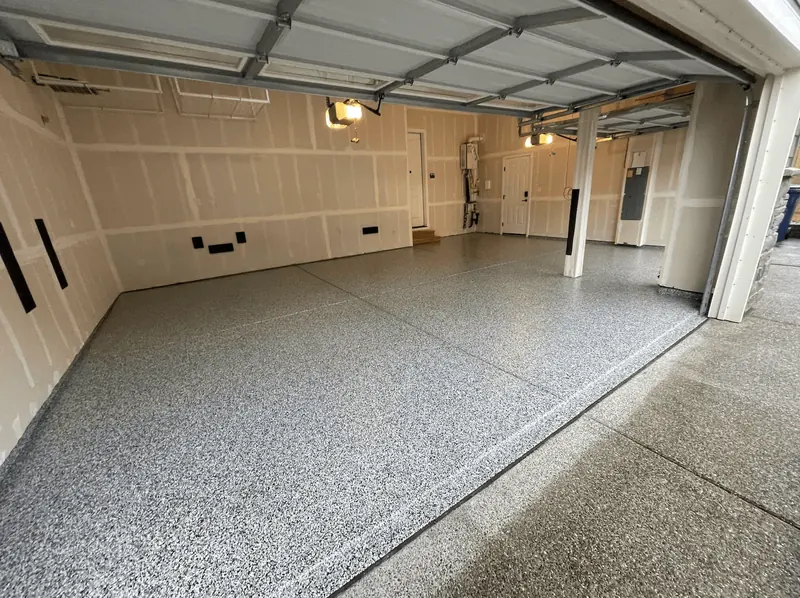
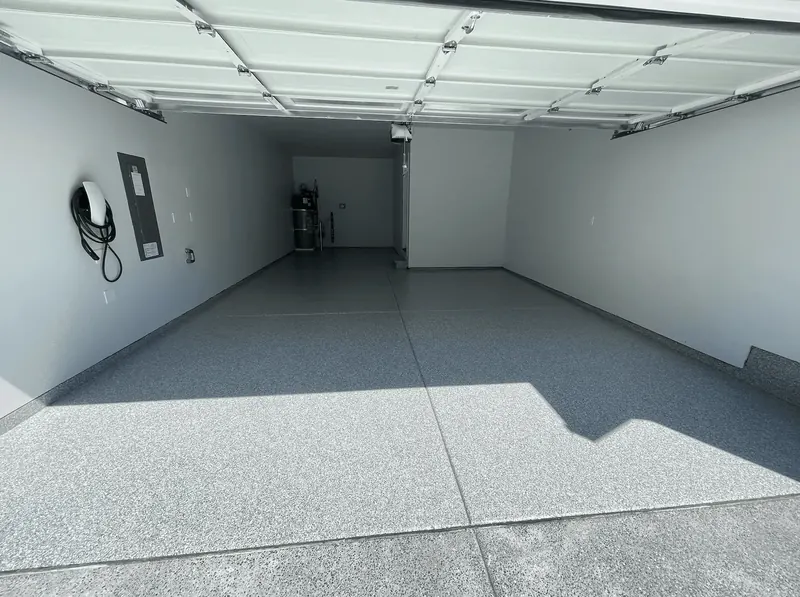
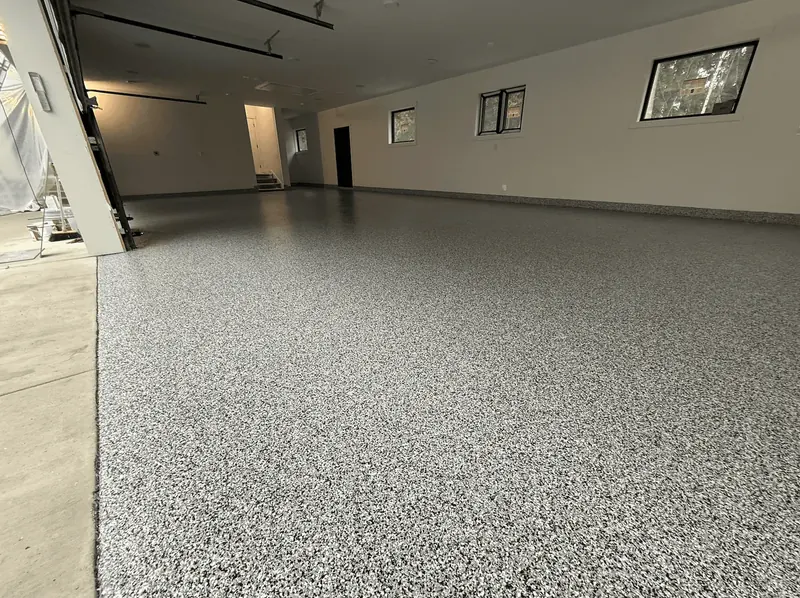
Every one of these is a full-flake floor our crew installed in a Seattle-area garage. No tire paths, no bald patches by the door, no repaint in three years.




Garage floor painting cost vs. coating cost in Seattle
Here's the comparison people actually want, with the honest second line nobody puts on the can.
About $100 to $250
Two gallons of paint, a degreaser, an etch kit and rollers, plus a weekend. The second line: plan to scrape and redo it in one to three years.
About $140 a kit
That's a 2.5-car kit. Add a clear topcoat and a rental grinder and you're near $300. It lasts a few years on a warm, dry slab, less on a damp one.
$1,600 to $5,800
What most two-car garages run across the Seattle market: about $4 to $12 a square foot, slab ground, cracks repaired, barrier where needed. Done once.
Every number and what moves it: garage floor coating cost in Seattle. Whether it pays back: is a garage floor coating worth it?
Painting over epoxy, coating over paint
Plenty of garages already have something on the floor. Here's what each combination means.
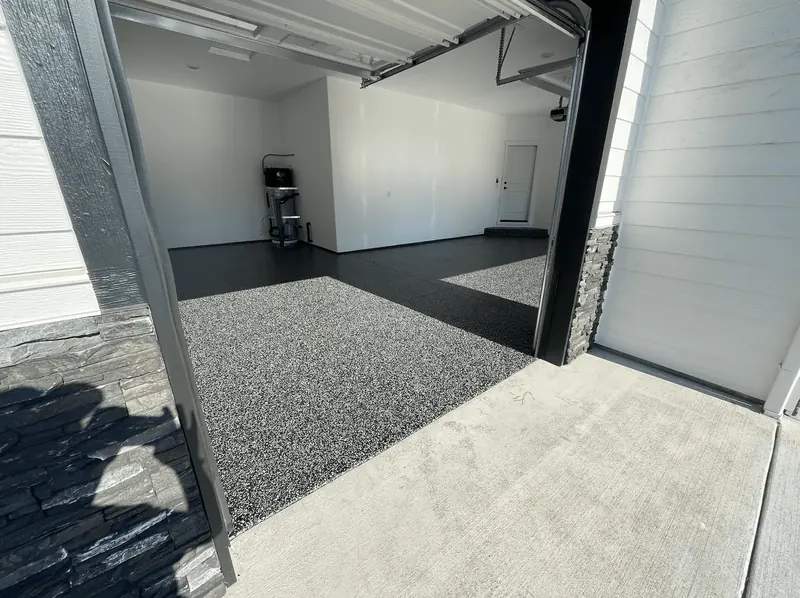 Paint over epoxy
Only if the epoxy is stuck
Scuff it well and paint will hold as well as the epoxy under it. Anywhere it's lifting, scrape to bare concrete first. Recoat or redo? Coating over old epoxy.
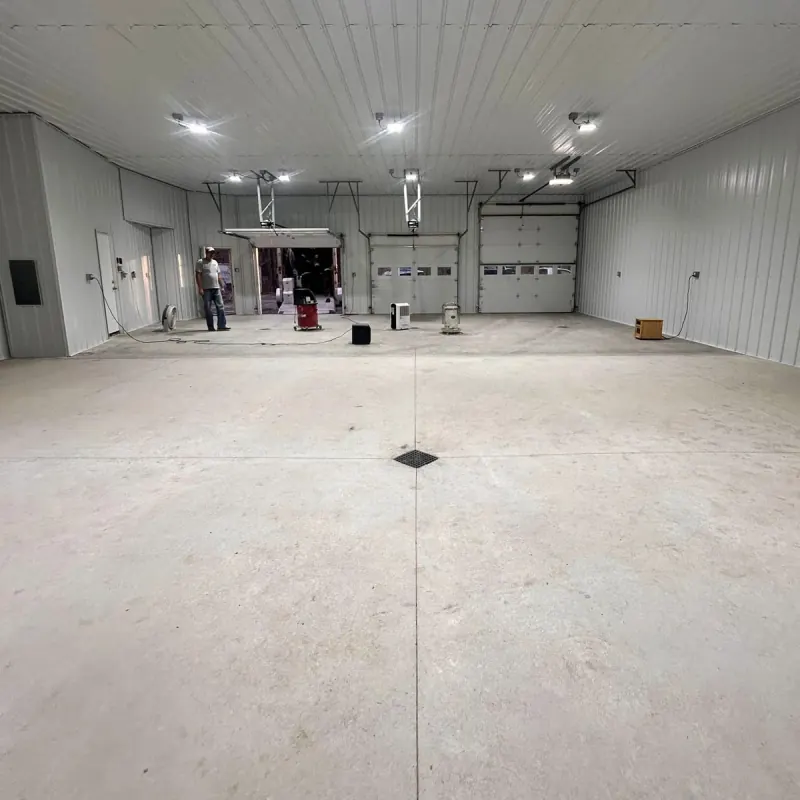 Coating over paint
We grind it off first
Diamond grinding takes old paint, sealer and failed epoxy down to clean concrete in the same pass that preps the slab. It's part of install day, not an extra project.
 Peeled with a damp back
Moisture pushed it off
If old paint came up damp or chalky underneath, vapor from the slab lifted it. That floor gets a moisture barrier primer under the new coating.
Garage floor painters near me? Call the right trade
A house painter will paint your garage floor if you ask, and do a neat job of it. It's still paint, with everything above attached to it.
If you want a floor you'll drive on for years, you want a coating crew that grinds, tests for moisture and puts its warranty in writing. That's us, and we'd rather you knew the difference before you called anyone.

Paint, coatings and the Seattle garage
Three things about this climate make paint a short-lived choice here.
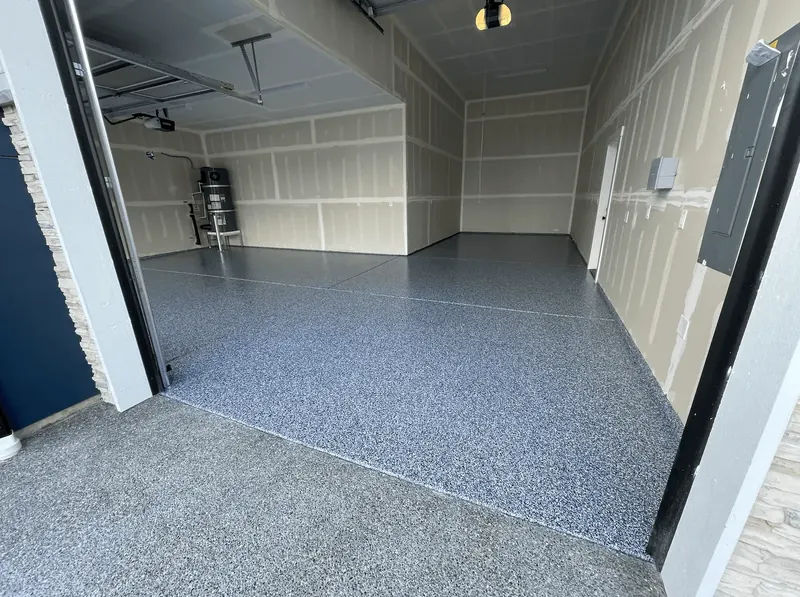 Season
A short painting season
A slab warm enough to paint shows up around July and leaves by September. Our coating installs year-round; moisture is its test, not cold.
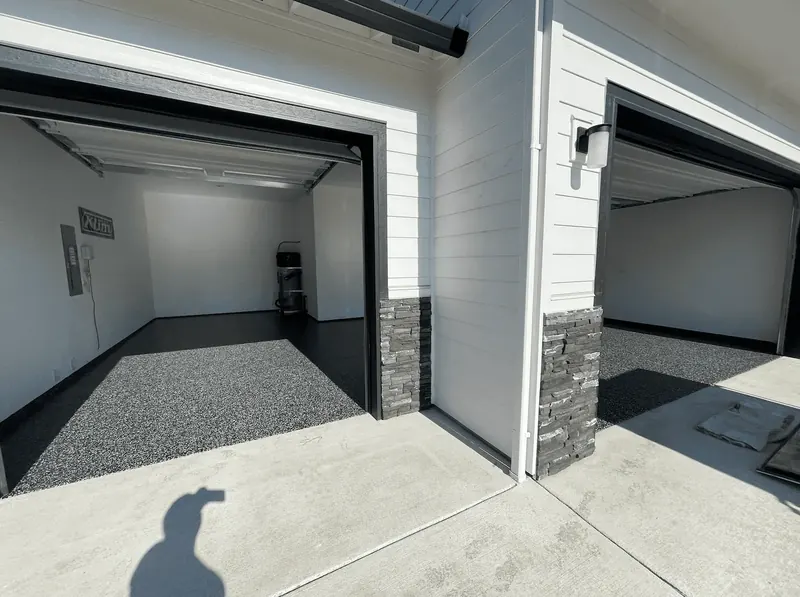 Housing
Older slabs breathe
Many Seattle garages sit on concrete poured before vapor sheets were standard. That's the slab paint fails on, and the one our barrier primer is for.
 Winter
Grit and salt on tires
Winter road grit grinds a thin paint film down fast in the tire paths. A thick clear coat shrugs it off and sweeps clean.
We coat garages across Seattle, Bellevue, Kirkland, Redmond, Renton, Kent, Tacoma and Everett. Also serving Nashville and Scottsdale & Phoenix.
Garage floor paint questions
Is epoxy garage floor paint the same as an epoxy coating?
No. "Epoxy paint" or "1-part epoxy" is latex paint with a small amount of epoxy mixed in, and it dries to a film about a third as thick as a sheet of paper. A two-part epoxy kit is real epoxy, roughly three times thicker. A professional coating is thicker again, about ten sheets of paper, and ours isn't epoxy at all: it's a polyurea base and a polyaspartic topcoat.
How long does garage floor paint last?
One to three years in a garage a car parks in, longer in a garage that's only storage or a workshop. Hot tires peel it in the tire paths first, and moisture from below lifts it in patches. A professional coating over ground concrete with a moisture barrier where needed is a one-time job backed by a lifetime adhesion warranty.
What is the best garage floor paint?
If you're going to paint, a two-part water-based epoxy kit beats any one-part paint by a wide margin. Beyond that, the brand matters less than the prep: a clean, degreased, roughed-up slab that passes the overnight plastic test, painted on a warm week in two thin coats and left alone for a full week before a car touches it.
How much does it cost to paint a garage floor?
Doing it yourself, roughly $100 to $250 in paint and supplies for a two-car garage, or about $140 for an epoxy kit before the clear coat and a rental grinder. Having it painted is a painter's day rate on top. A professional floor coating installed around Seattle runs about $1,600 to $5,800 for most two-car garages, and it doesn't get redone every few years.
Can you paint over an epoxy garage floor?
Yes, if the epoxy is still bonded everywhere and you scuff it thoroughly first. The paint will only hold as well as the epoxy under it. Anywhere the epoxy is lifting, scrape to bare concrete before you paint, or the new paint comes up with the old floor.
Do you paint garage floors?
No. We install coatings, which is a different product and a different trade. If paint is the right answer for your garage, we'll say so and point you to the steps on this page. If a coating is, we'll test the slab and leave you a written price.
Can you coat over a painted garage floor?
Not over it, but a painted garage is no problem. Diamond grinding takes the old paint off down to clean concrete as part of the normal prep, so a painted floor isn't an obstacle or an extra charge in most cases. If the old paint peeled with a damp or chalky back, moisture pushed it off, and a vapor barrier primer goes under the new floor.
Is a painted garage floor slippery?
Smooth paint is slick when it's wet, which in Seattle is most of the year. You can stir an anti-slip additive into the last coat. Our coatings get texture from the full flake broadcast plus anti-slip grit in the clear topcoat, and we can go heavier on the grit if you want more bite.
Want the floor paint is pretending to be?
We'll test your slab, tell you honestly whether paint would hold on it, and leave a written price for the floor that will.