
Shop & Pole Barn Floor Coating in Seattle
The detached shop. The pole building out back. The third bay you turned into a workshop. These floors take more abuse than any garage, and they're the most worth coating, because you spend real time out there. Here's the shop floor coating we install, and what it will and won't take.
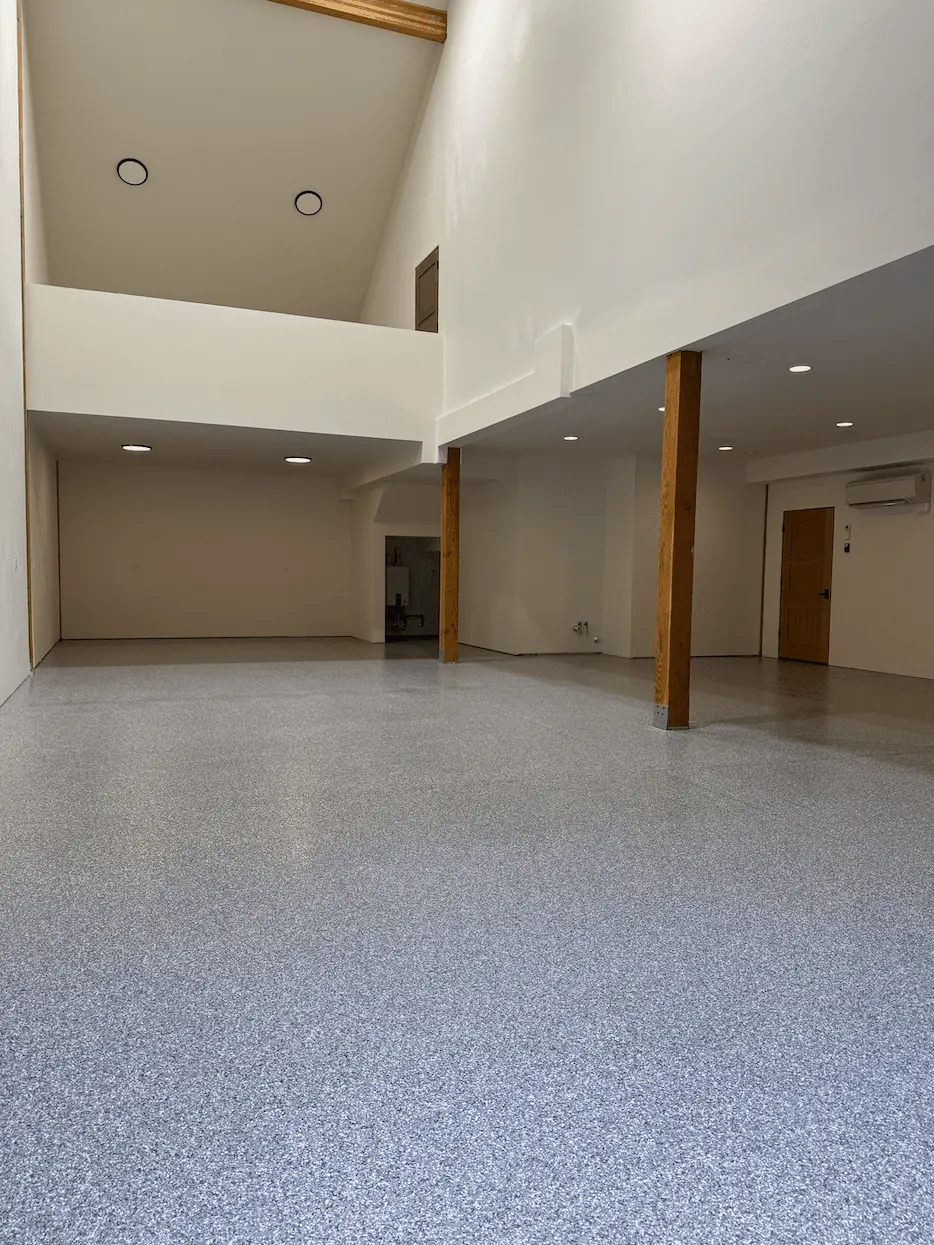
- Built for hot tires
- Grip set by zone
- Cures in a cold shop
- Lifetime adhesion warranty
What's the best shop floor coating?
For a shop around Seattle: a full-flake floor with a polyurea base coat and a clear polyaspartic topcoat, over diamond-ground concrete.
Not just because it's what we sell. A shop floor has every problem a garage floor has, and three more: it's colder, it gets hit harder, and the car on it is usually warm and up on jack stands.
Epoxy hates all three. Paint doesn't survive the first. A thick, flexible floor that cures in the cold and shrugs off a warm tire is the one still down when you sell the place.
- 1–2days per shop
- 72 hrsuntil the toolbox rolls back in
- Lifetimeadhesion warranty

Shop floor epoxy: why we skip it
"Shop floor epoxy" is what everyone searches for, and it's a fine floor in a heated building in Arizona. In an unheated shop in Snohomish County it has a hard life.
What goes wrong with epoxy in a shop
- It won't cure cold. Epoxy wants the slab warm. A shop slab is cold from October to May, so it either waits for summer or cures soft and stays soft under the tires.
- Hot tires all day. A daily driver comes in warm, sits, and the next morning takes a strip of thin epoxy with it. The bald tire paths you've seen in other shops are that.
- Moisture from below. Shop slabs are often poured on gravel with nothing under them. Ground moisture breathes up, epoxy blocks it, and it lifts in sheets.
- It yellows. Under a big open door, epoxy ambers in a few summers.
What we install instead
- A polyurea base coat that stays slightly flexible, so it moves with a slab that's warming and cooling every day instead of popping off it.
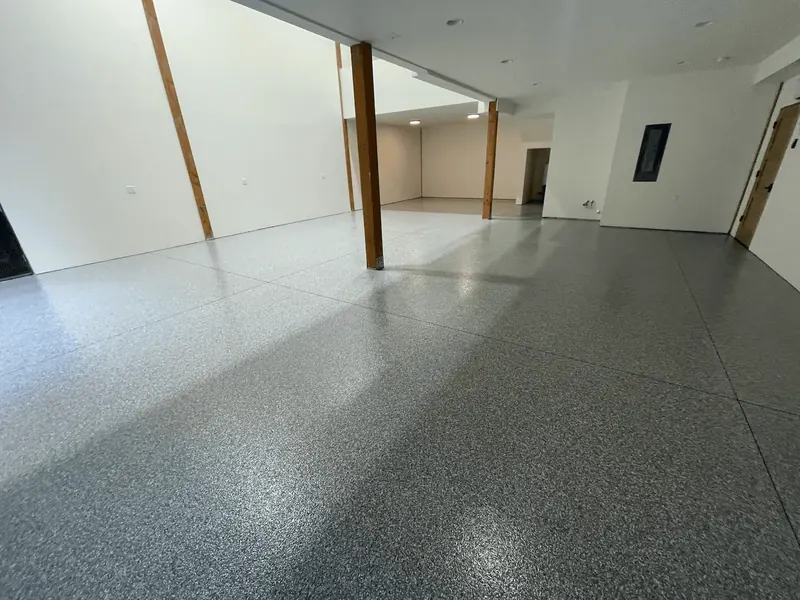
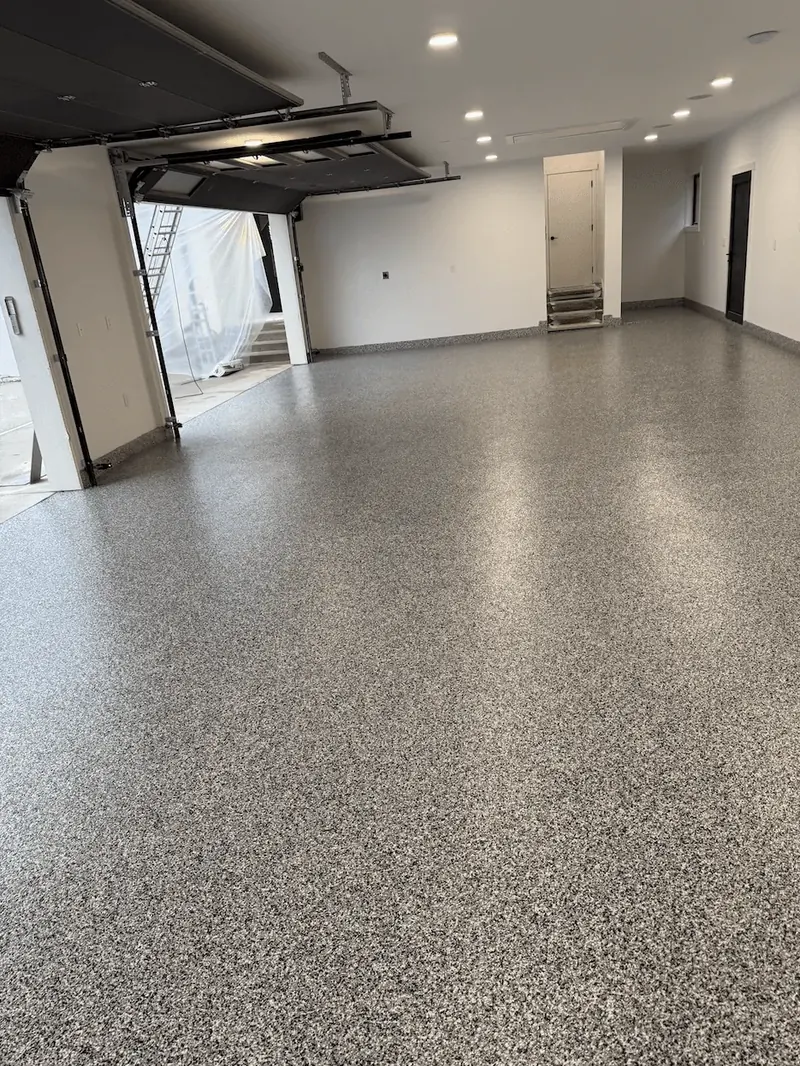
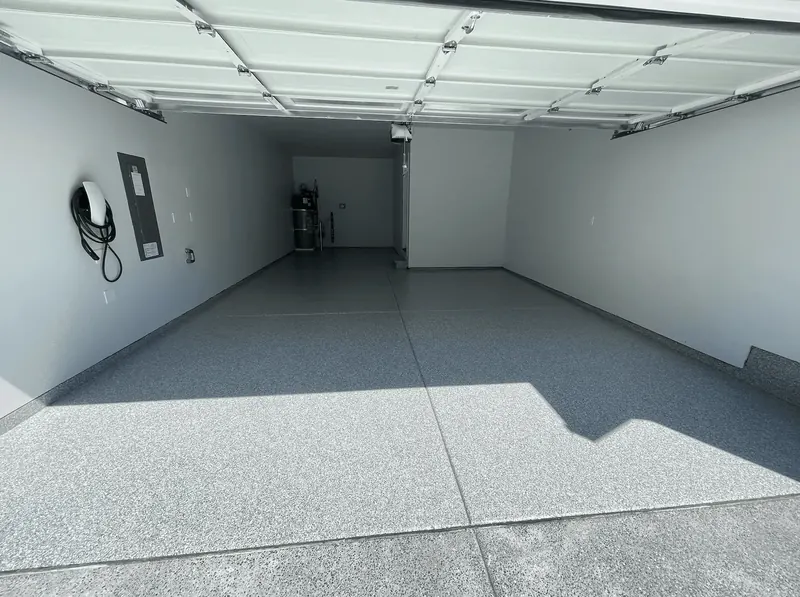
- Full flake, broadcast to rejection, so the floor is thick, roughly ten sheets of paper, and the pattern hides oil, grinding dust and the repairs.
- A clear polyaspartic topcoat that cures in cool weather, stays clear in the sun, and carries anti-slip grit where you want it.
- A moisture barrier primer under all of it when the slab reads wet, which in a shop is often.
The chemistry in plain English: epoxy vs. polyaspartic. What the flake is doing: flake floors explained.
Pole barn floor coating starts with the slab
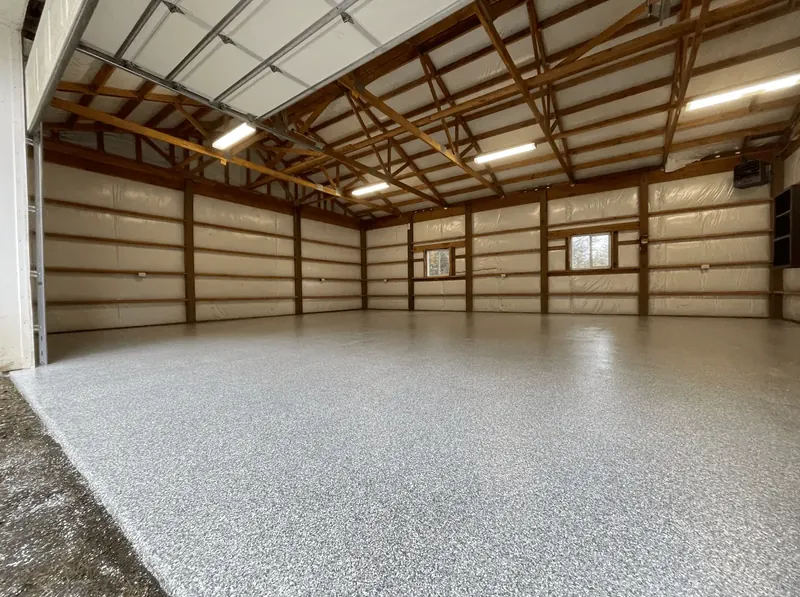
Pole buildings make great shops and tricky floors. Anyone who quotes one without walking the slab first is guessing. Here's what we look at.
 The pour
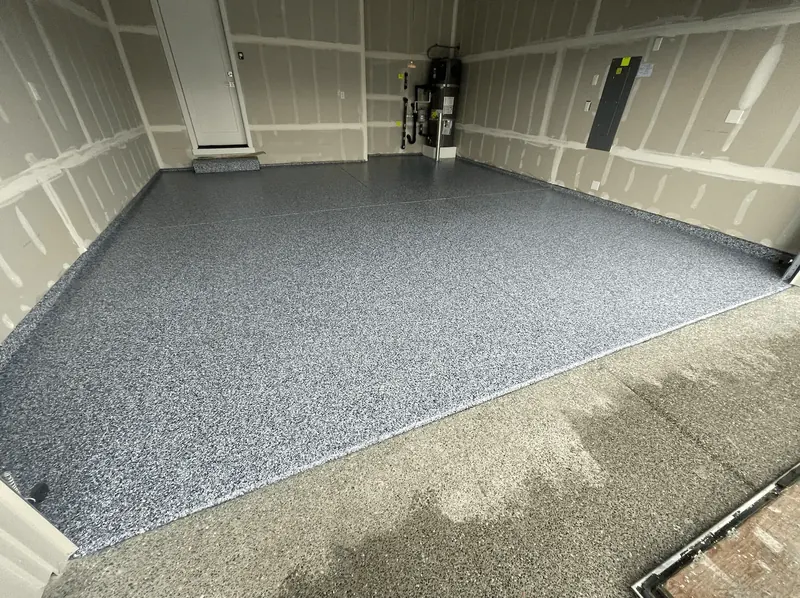
Often poured later
Many pole barn slabs went in years after the building, thinner than a house garage and rarely over a vapor sheet. That's fine, as long as we know it going in.
 Moisture
Wet gravel below
No vapor sheet plus a wet site means moisture breathes up most of the year. If the meter reads wet, a barrier primer goes down first and cures overnight.
 The edges
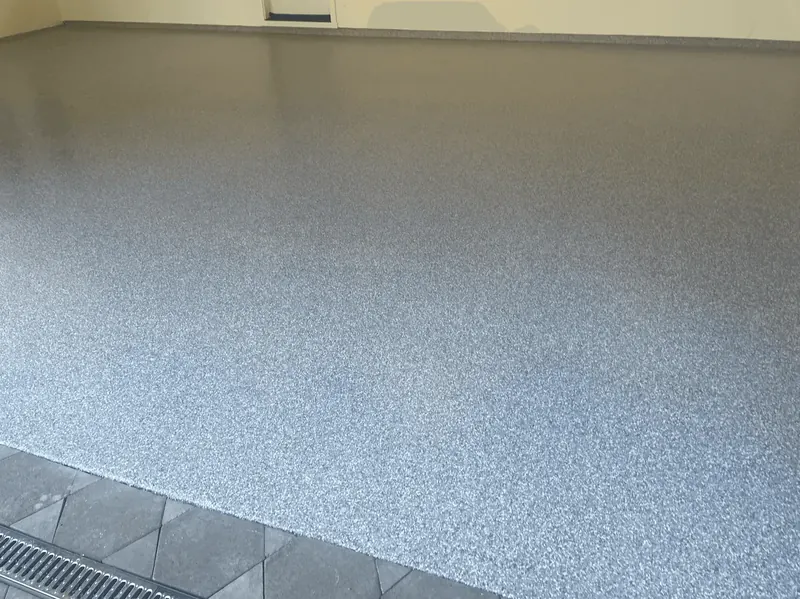
Posts and drains
We coat tight to every post, down into the drain and up to the door threshold, so there's no bare edge for water to get under and start a peel.
 Cold
Cold
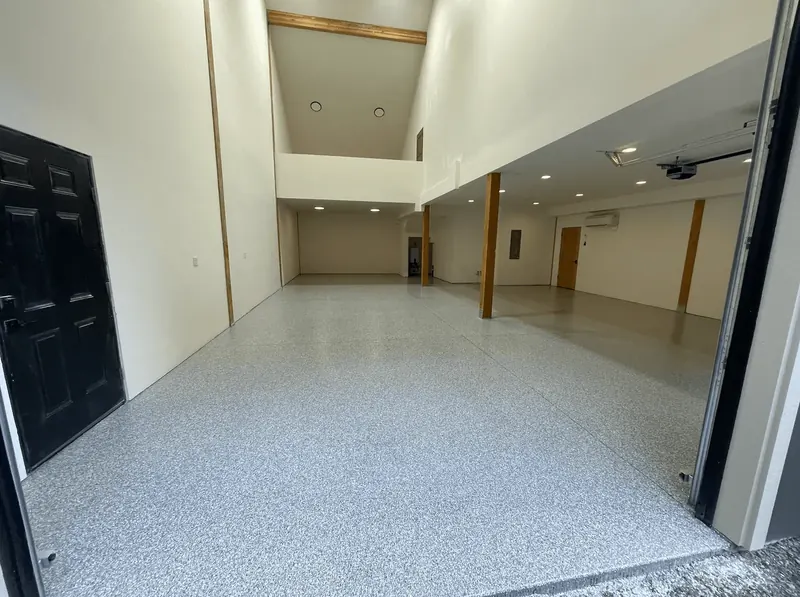
Unheated is fine
Polyaspartic cures in a cold shop, so a pole barn floor can go down in February. The slab just has to pass the moisture test and stay dry while it cures.
Workshop floors: grip where you stand, smooth where you roll
A smooth clear coat is slick when it's wet, and a shop floor is wet every time you walk in from the rain. So grip is built in: the flake gives the clear coat texture, and we broadcast anti-slip grit into the topcoat.
Around the bench, the lift and the door, we go heavier. Down the middle, where the toolbox, the floor jack and the creeper roll, we keep it smoother. We'll walk the shop with you and mark the zones.
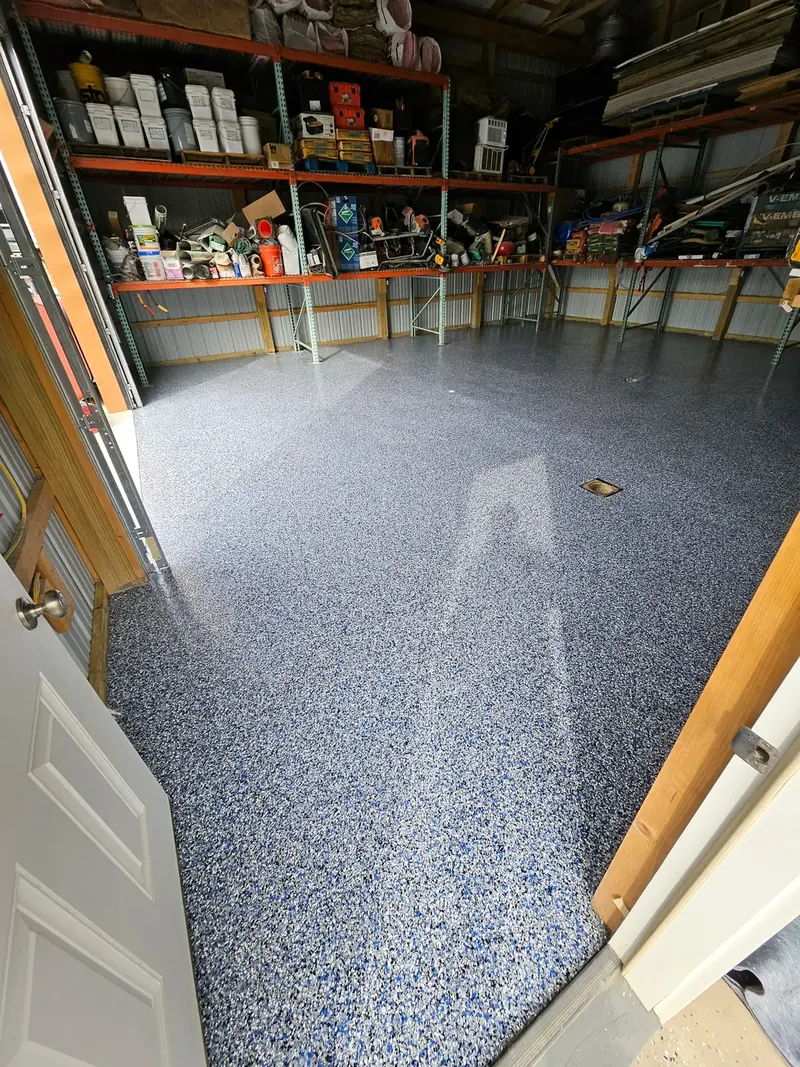
What a shop floor coating puts up with
- Oil, coolant, brake fluid, gas. Spills sit on top of the clear coat and wipe up.
- Dropped wrenches and sockets. A full-flake floor is thick enough that most of that bounces.
- Sawdust, grinding dust, mud. It sweeps or blows out the door. Bare concrete holds it forever.
- Hot tires, jack stands, a rolling toolbox. That's what the floor is for.
What it won't, honestly
- Welding spatter and hot slag. They burn a mark into any coating. Weld on a mat.
- A transmission dropped from waist height. That chips anything, and impact damage isn't covered by the warranty.
- Brake fluid left pooled for a week. It will mark this floor, like it marks every floor.
- A slab that's wet or heaving. A coating follows the concrete. We'll tell you at the estimate if it needs work first.
Garages that double as shops
Not every shop is its own building. Plenty are the third bay, or the whole garage with the car parked outside. Same floor, same rules, and the flake bounces your light back up at the work, so the same bulbs feel brighter.

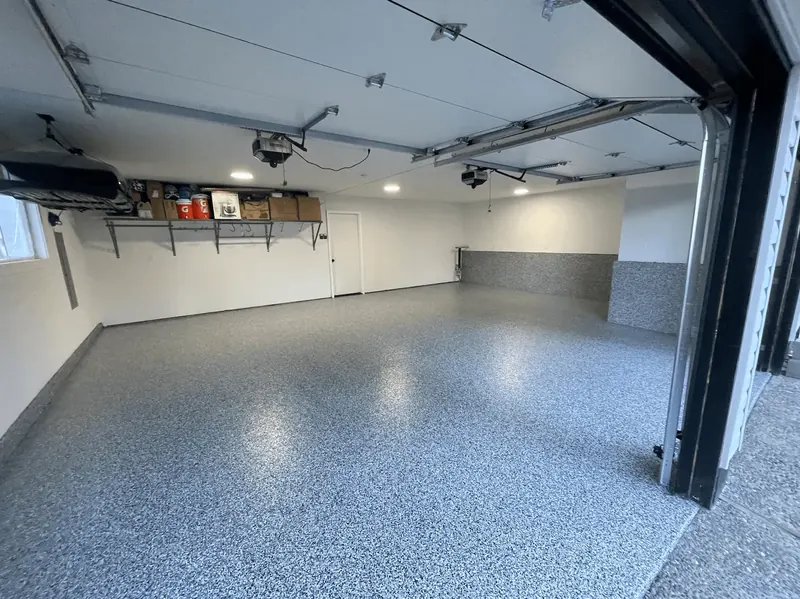
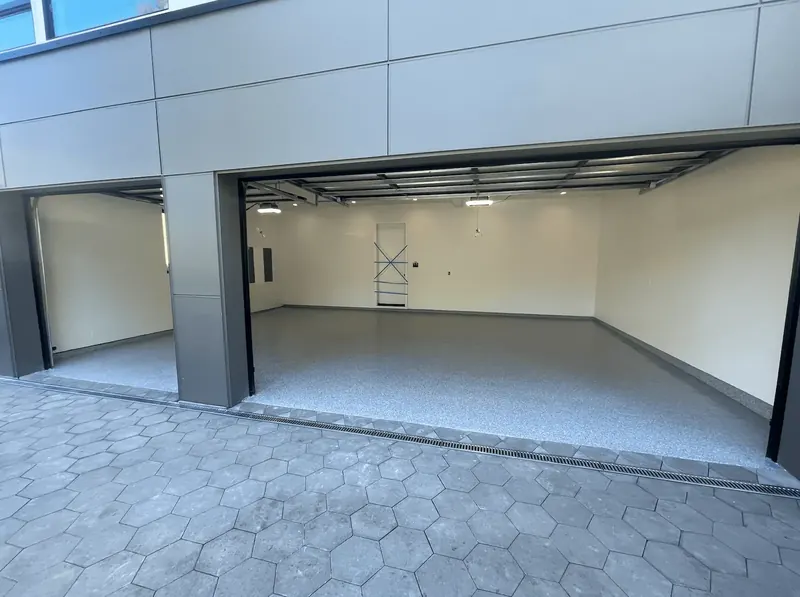
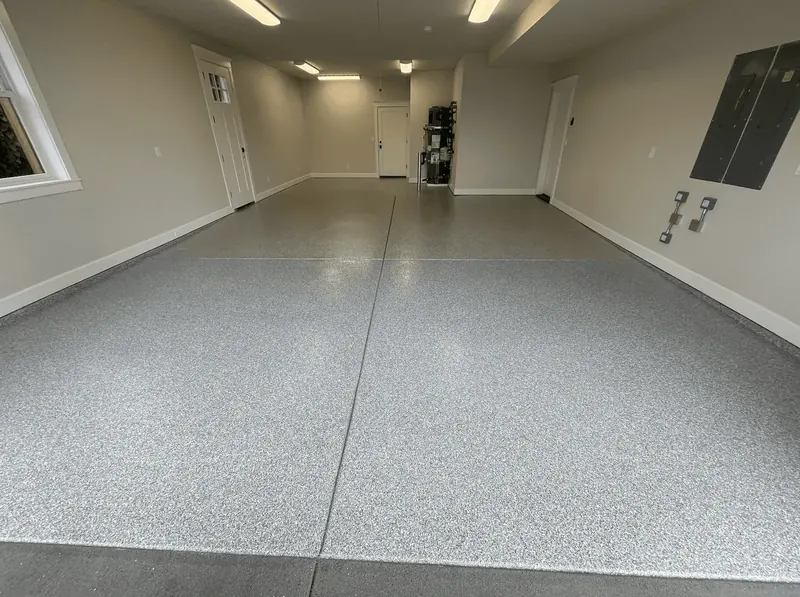
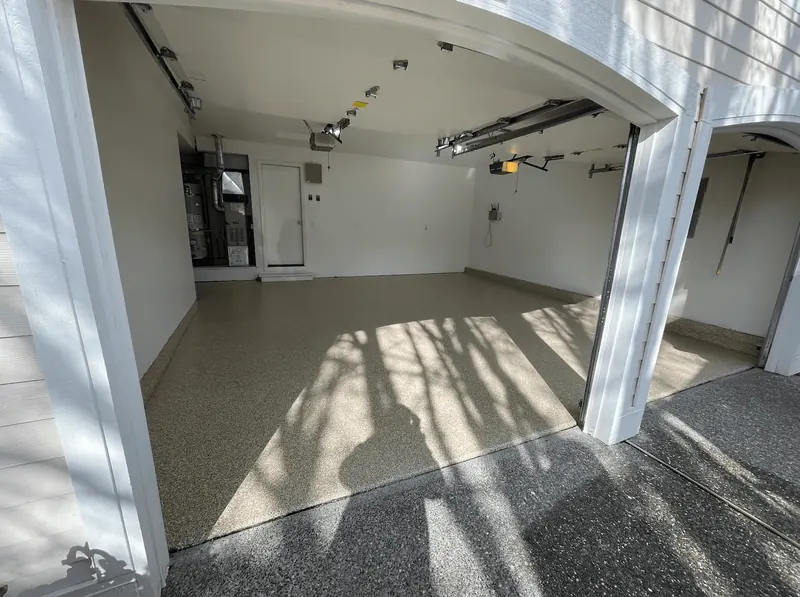
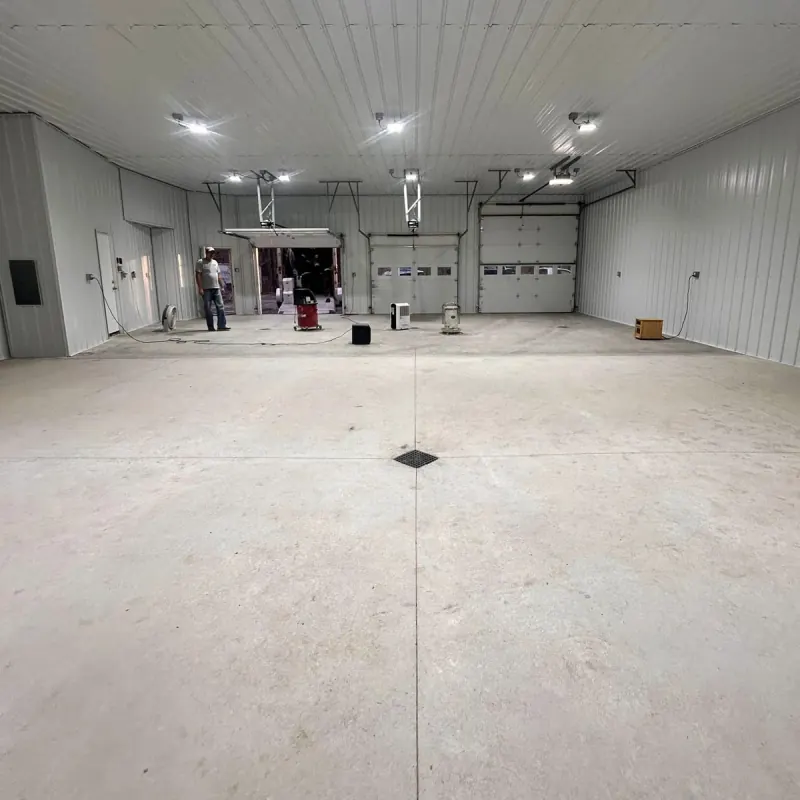
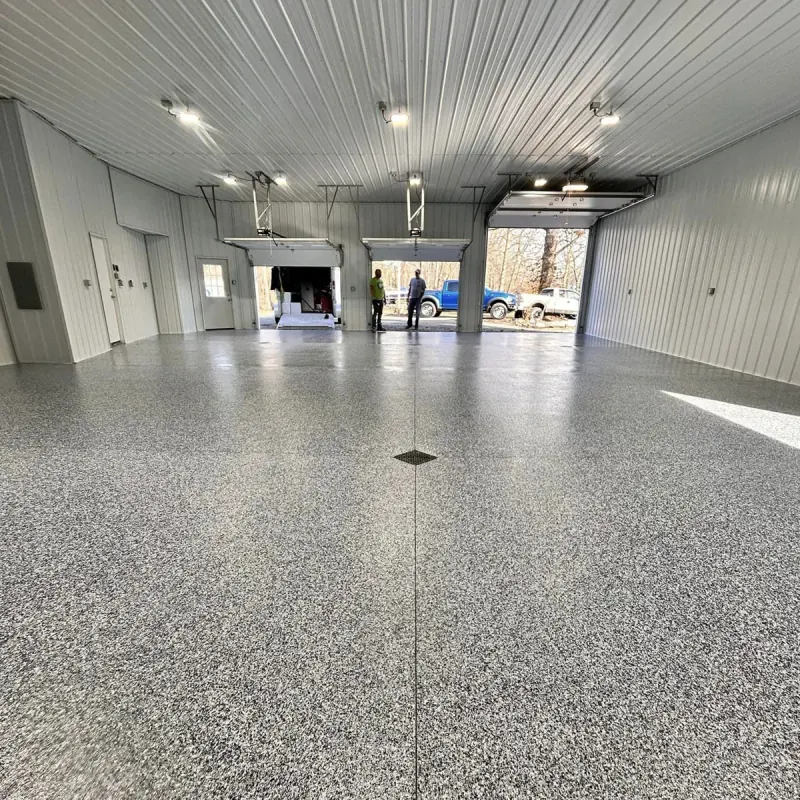
A shop floor, before and after
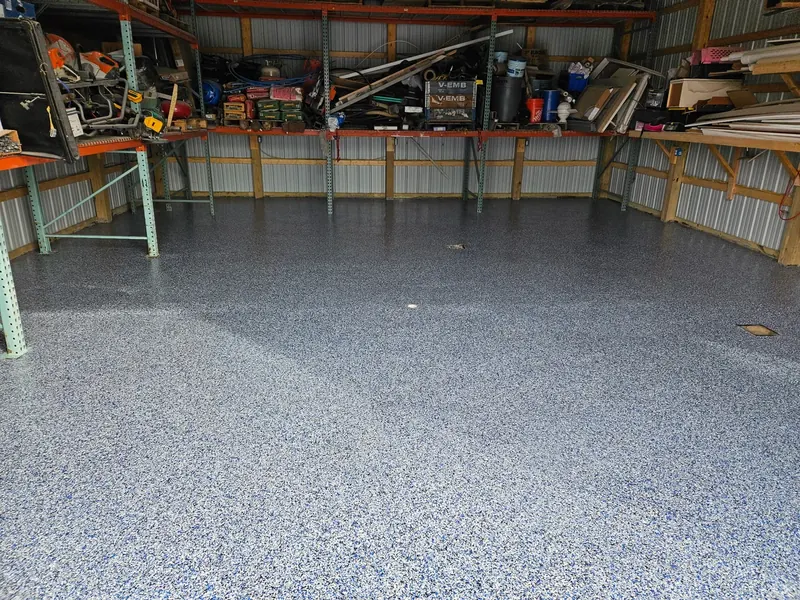
One pole-building shop, one install. The before is what every shop starts as: dusty concrete and a floor drain. The after is the same floor with a full-flake coating, drain and all.
How we coat a shop floor
Most shops are one day. A slab that needs a moisture barrier is two. Here's the order of things, and what we need from you: the floor cleared, and the big stuff you can't move pushed to one wall so we can work around it.
-
Walk the shop
Moisture readings, every crack and joint, the drain, the posts, where the lift goes, where you stand and what rolls. Then a written price, and that's the price.
-
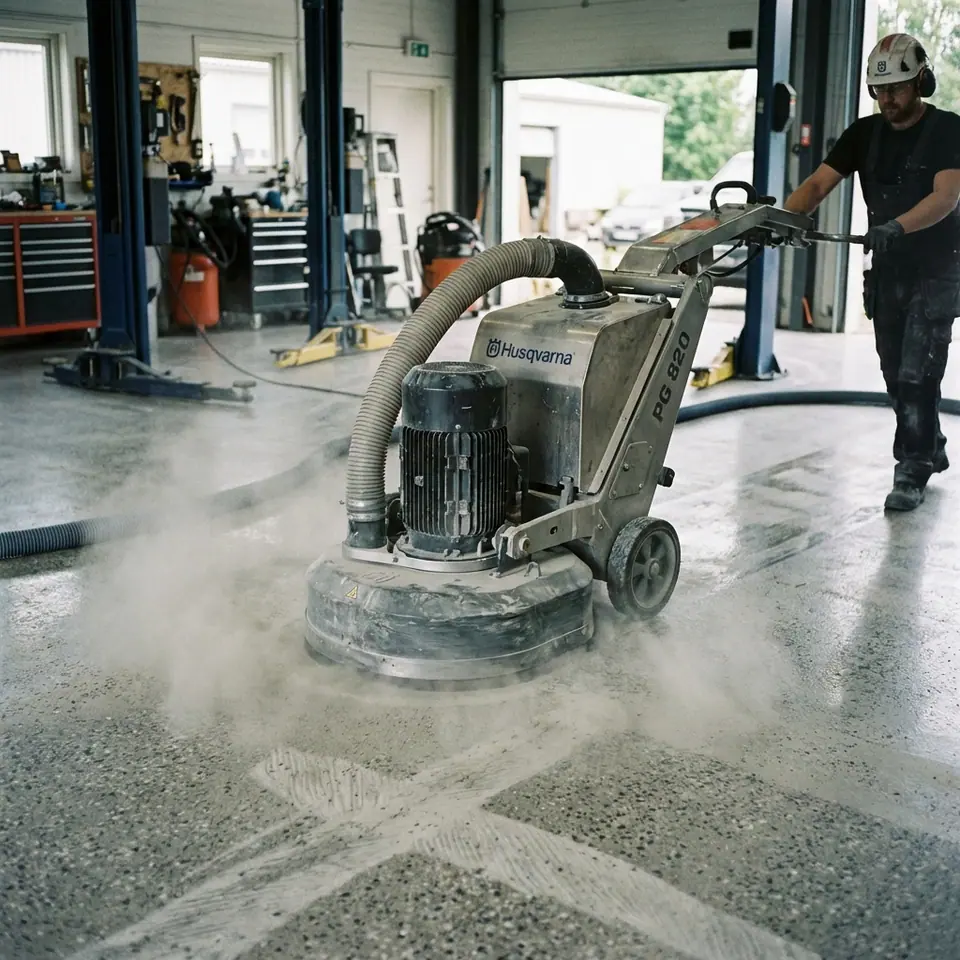
Diamond grind, with dust collection
We grind the slab open so the base coat can bite, and take off old paint, sealer or failed epoxy in the same pass. The grinders run on vacuums, so your tools stay clean.
-
Cracks, joints, drains, posts
Cracks and joints are filled and ground flush, and the edges are detailed by hand around the posts and into the drain. A structural crack gets flagged before anything covers it.
-
Moisture barrier, if the meter says so
The barrier primer goes onto the bare, ground slab and cures overnight. On a pole barn slab it's needed more often than not. When a slab needs one.
-
Base, flake, and a clear top
Polyurea base, flake to rejection, then the clear polyaspartic top with grit set by zone. Walk on it the next morning; roll the toolbox back in after 72 hours.


Shop floors and the Seattle area
Shops and pole barns tend to be out where there's room for them: Snohomish, Monroe, Lake Stevens, Duvall, Woodinville, Maple Valley, Enumclaw and the acreage between. Three things about this climate shape every one.
Wet boots, wet tires, mud
Gravel drives track mud in all winter. Mid-tone flake hides it between sweepings, and the grit keeps the wet spot by the door from getting slick.
Slabs that breathe
The glacial till under most of the region holds water, and a slab poured on it without a vapor sheet breathes moisture up all winter. We test first.
Unheated is fine
Epoxy needs a warm slab. Polyurea and polyaspartic don't, so a pole barn floor in winter is a real install, not a gamble.
We coat shops, pole barns and workshops across the whole Seattle area, about 50 miles out. Seattle · Snohomish · Everett · all Seattle-area cities. Also serving Nashville and Scottsdale & Phoenix.
Shop floor coating questions
What is the best shop floor coating?
For a shop in a cool, wet climate: a full-flake floor with a polyurea base coat and a clear polyaspartic topcoat over diamond-ground concrete, with a moisture barrier primer when the slab needs one. It stays flexible, cures in an unheated building, doesn't yellow under the big door, and is thick enough to ignore hot tires and dropped tools. Shop floor epoxy is the common search, but epoxy wants a warm, dry slab, which a shop here rarely has. How it stacks up against tiles, mats and the rest: garage flooring options, ranked.
Can you coat a pole barn floor?
Yes. Pole barn slabs are often thinner, poured later and laid over gravel with no vapor sheet, so the moisture test matters more than anywhere else. If the slab reads wet, a vapor barrier primer goes down first and the install is two days instead of one. We coat tight to the posts and down into the floor drain.
Will the coating hold up under a car lift?
The coating isn't the question with a lift, the slab is. A two-post lift bolts through the floor into the concrete, and it needs a slab thick enough and sound enough to hold it, which is a concrete question we'll give you an honest read on at the estimate. The coating around the posts is fine; it's the same floor that takes hot tires and jack stands every day.
Can I weld in a shop with a coated floor?
Yes, with a welding mat or blanket under the work, the same way you'd protect anything else. Hot spatter and slag will burn a mark into any coating, ours included, and burns aren't covered under the warranty. Grinding sparks are fine; they're cool by the time they land.
How soon can I use the shop again?
Walk on it the next morning. Roll the toolbox back in and park on it after 72 hours. The floor keeps hardening over the following week, so give the heaviest things a few extra days if you can. Most shops are one day of work, two if the slab needs a moisture barrier.
Can you coat an unheated shop in winter?
Yes. Cold isn't the problem for the polyurea and polyaspartic we use; moisture is. As long as the slab passes the moisture test and stays dry while it cures, we install shop and pole barn floors year-round. In the wettest weeks of winter some slabs read too wet, and we'll tell you to wait rather than coat a floor we'd be back to fix.
How much does a shop floor coating cost?
Across the Seattle market, a full polyaspartic flake floor runs about $4 to $12 a square foot installed, and a bigger shop floor tends to land lower in that range per foot than a one-car garage, because the setup is the same either way. What moves the number is what's on the slab now, how many cracks and joints need work, and whether it needs a moisture barrier. We leave a written price at the estimate.
Does a flake floor hide oil and grinding dust?
Better than anything else you can put on a shop floor. The speckle breaks up oil drips, dust and tire marks so the floor reads as a pattern, not as a mess, between sweepings. A medium gray or charcoal blend hides the most. Spills still wipe up; the clear coat keeps them from soaking into the concrete.
Get a free shop floor estimate
We'll walk the shop, put a meter on the slab, mark the grip zones with you, and leave a written price.