
Epoxy Floor Installation in Seattle, Done Right
The same prep a real epoxy floor installation needs, taken further than most crews take it, with a polyurea base and a clear polyaspartic topcoat in place of plain epoxy. One to two days to install. Park on it in 72 hours.
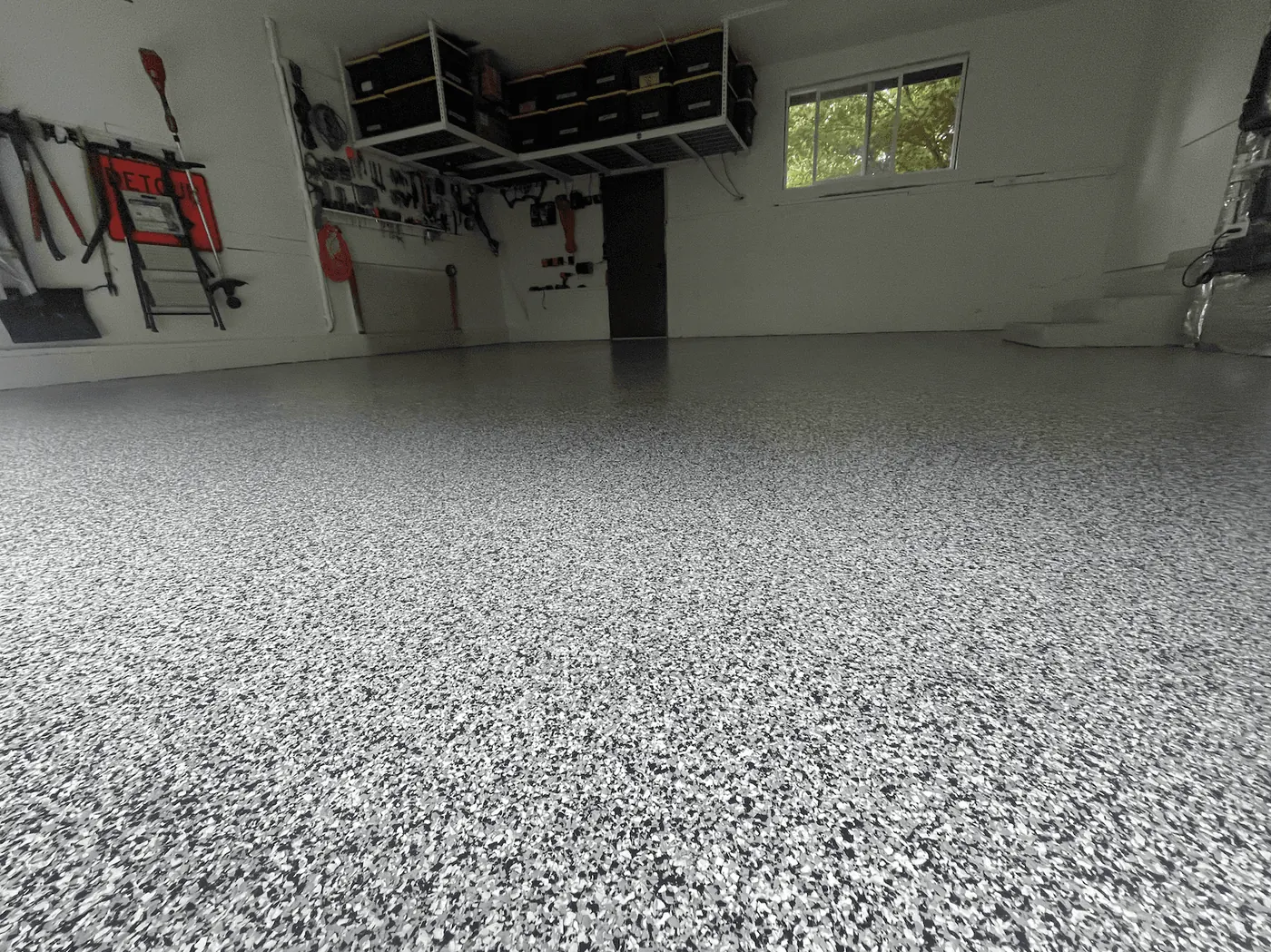
- Installed in 1–2 days
- Park on it after 72 hours
- Moisture-tested first
- Lifetime adhesion warranty
Yes, we do epoxy floor installation in Seattle. Just not with plain epoxy.
Around here, "epoxy floor" has become the word for any coated garage floor, the way "Kleenex" means tissues. So when you call about an epoxy garage floor installation, we know what you want: a tough, glossy flake floor that hides stains and shrugs off road salt and oil drips. That's exactly what we install.
The difference is under the gloss. Plain epoxy wants a warm floor, hates damp air and needs most of a week before you can park, which is a bad match for a Seattle garage. Polyurea and polyaspartic cure in the cold, handle the damp, stay flexible as the slab moves and never yellow. You park three days after we leave. Still set on epoxy? Here's an honest look at epoxy garage floors in Seattle, and when they make sense.
The side-by-side is in our epoxy vs. polyaspartic guide. Or upload a photo of your garage and see it coated first.
- 1–2days to install
- 72 hrsuntil you park on it
- Lifetimeadhesion warranty

How our epoxy floor installation works
Most of the work is invisible once the floor is down, which is exactly where corners get cut. Here's every step, and what to watch for with any installer.
-
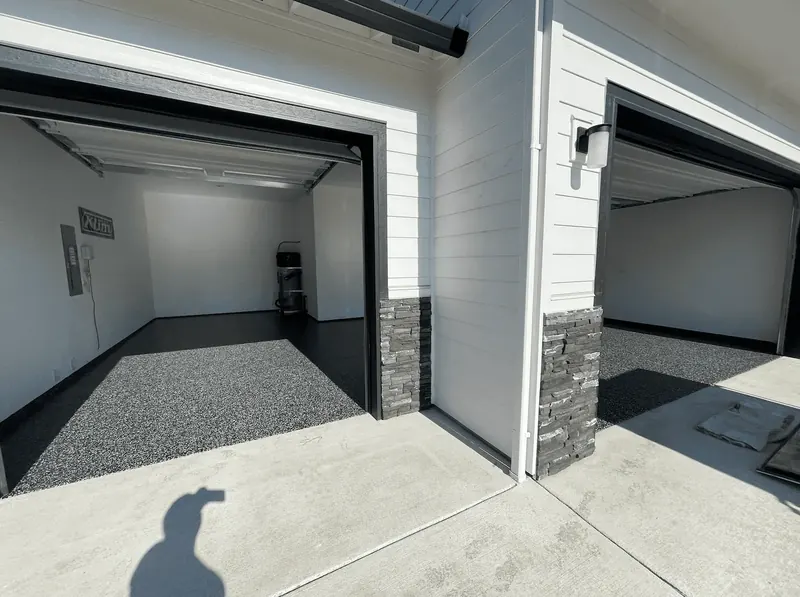
A 20-minute estimate at your house
We measure the floor, test the slab for moisture, and look at the cracks and the old coating if there is one. Then you get the exact price in writing, itemized, before we leave. No "starting at" number that grows on install day, and nothing to sign on the spot. Here's what the visit looks like.
The estimate happens at your garage -
We grind the concrete. All of it.
This is the whole game. The top of your slab is weak and dusty, and a coating stuck to it is stuck to nothing. We grind in two passes and hand-grind every edge and corner, with dust collection running. A cheaper installer acid-etches or makes one quick pass: it looks the same the day you pay, and lets go in year two.
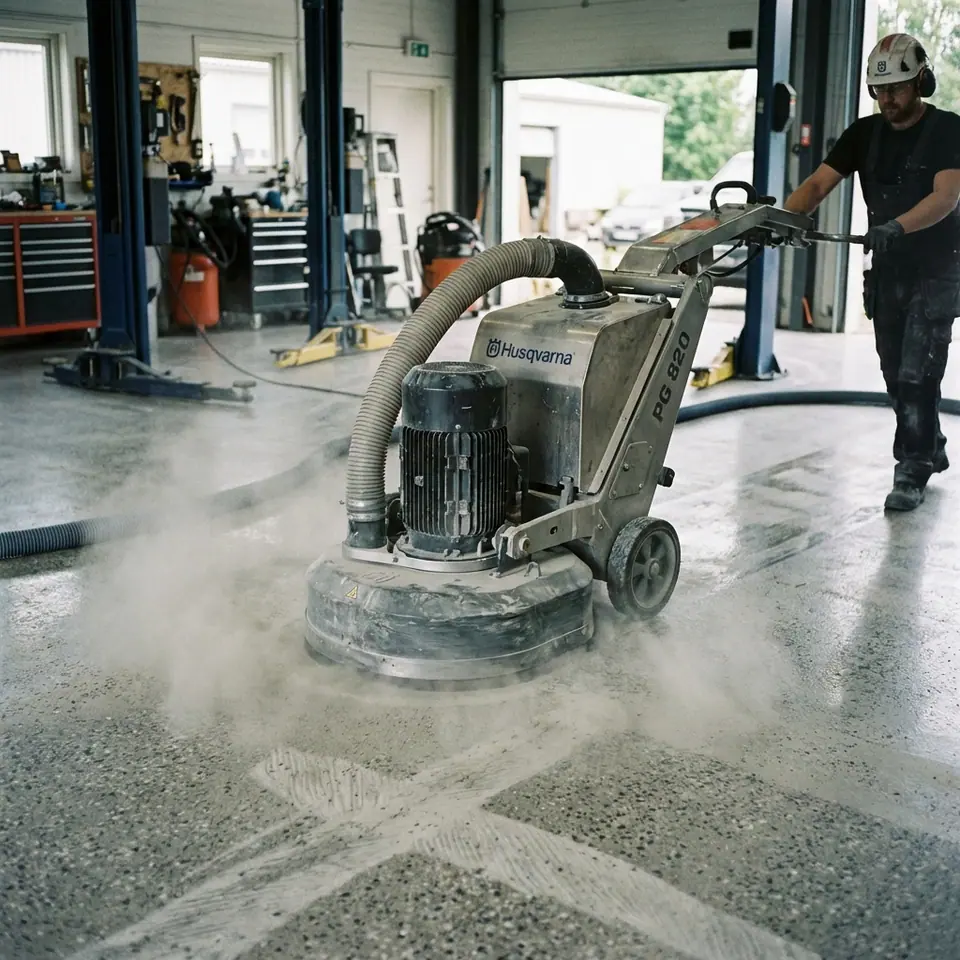
Diamond grinding, dust collection running -
Cracks and joints get fixed, not hidden
Every crack, chip and control joint is filled and ground flush, so your finished floor is one smooth plane and you'll never know where they were. On our Premium floor the bigger cracks are cut open and rebuilt from the bottom. What we won't do is coat over a structural problem and hope. If the slab is settling or crumbling, we'll tell you at the estimate.
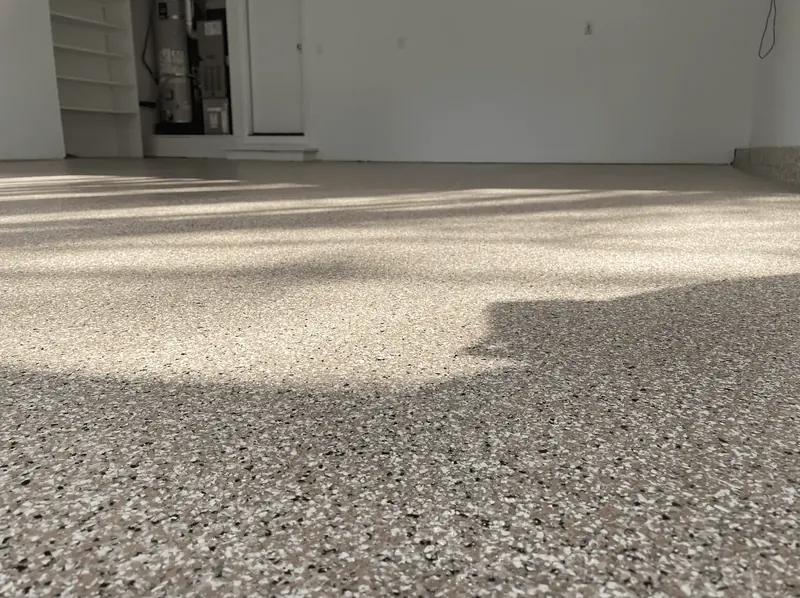
Cracks filled and ground flush -
The moisture barrier, when your slab needs it
Seattle ground stays wet eight months a year, and that water rises through the concrete as vapor. It's what lifts a coating off the slab. If your floor tests wet, or shows the signs a meter can miss, a moisture vapor barrier goes onto the freshly ground concrete and cures overnight. That's what makes it a two-day installation, and it's included on every Premium floor.

The barrier primer goes onto the bare slab -
Base coat and full flake, by hand
The polyurea base coat goes down and the crew broadcasts vinyl flake into it while it's wet, by hand, until the floor won't hold any more. That full broadcast is what gives you the even, speckled finish in our gallery, and it builds real thickness over the concrete. Once it sets, the loose flake is scraped off and vacuumed.

Flake broadcast into the wet base coat -
Clear topcoat with grip, then the cure clock
The topcoat is the layer you actually live on. It's clear, it locks the flake in, and we mix anti-slip grit into it so a wet floor is still a floor you can walk across. Stay off it that evening, walk on it the next day, park after 72 hours. It keeps hardening for about a week.
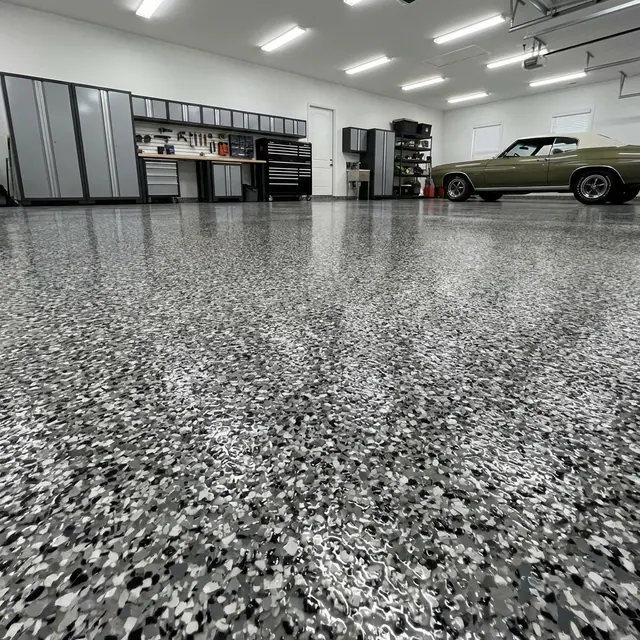
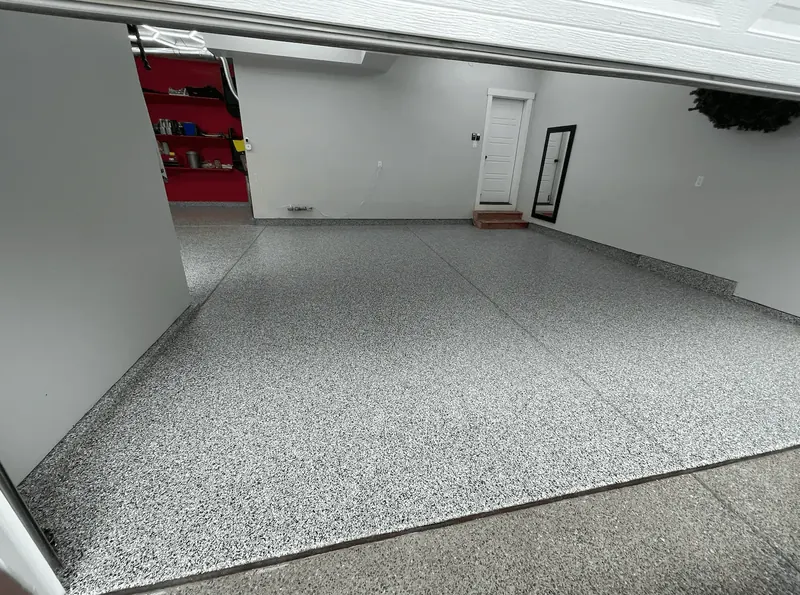
The finished floor, sealed and glossy
Want the hour-by-hour version? How long a garage floor installation takes.
Why Seattle garages chew up epoxy floors
Floors that last for years in Phoenix peel here. It isn't bad luck or a bad product. It's three things about this place that any epoxy floor installation in Seattle has to be built around.
 Moisture
Wet ground, eight months a year
From October to May the soil under your slab is saturated, and the concrete wicks that moisture upward. A floor that tests bone dry in August can test wet in February. We test, and we weigh what the slab shows, not just one reading.
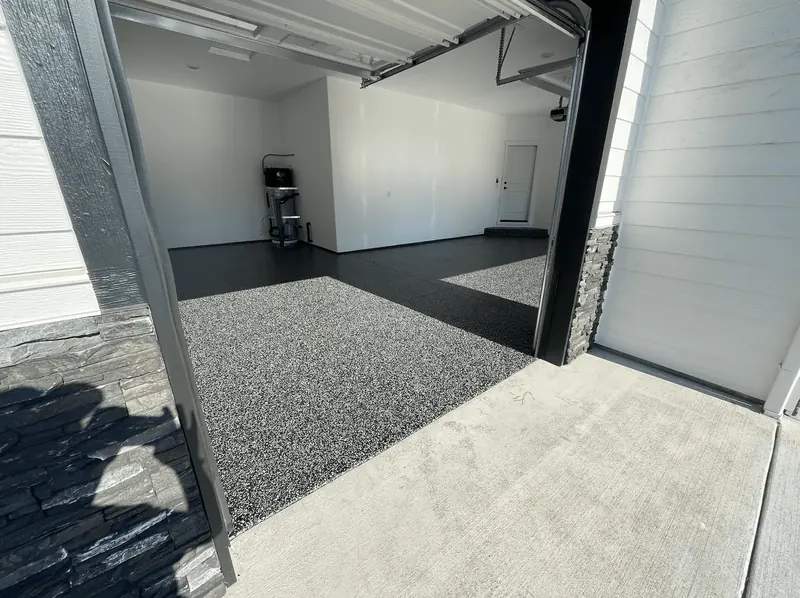 Cold
Cold
A garage that's too cold for epoxy
Epoxy wants the floor warm to cure, and a Seattle garage in January is nowhere near it. Polyaspartic cures in the cold. That's why we can install in October or March, while the epoxy crews are waiting for July.
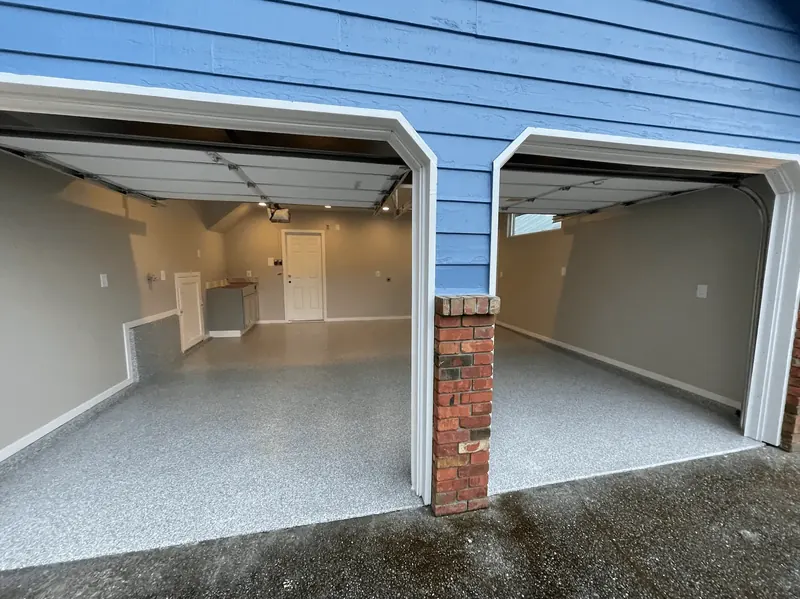 Housing
Older slabs with nothing under them
A huge share of Seattle garages were poured before plastic sheeting under the slab was standard, and plenty are cut into a hillside. Both let more moisture through, which is why the barrier decision comes before the color decision.
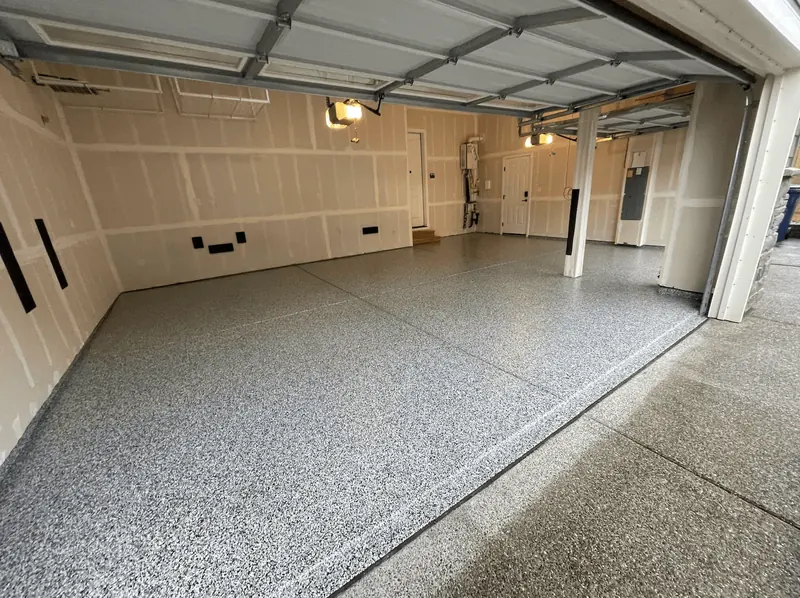
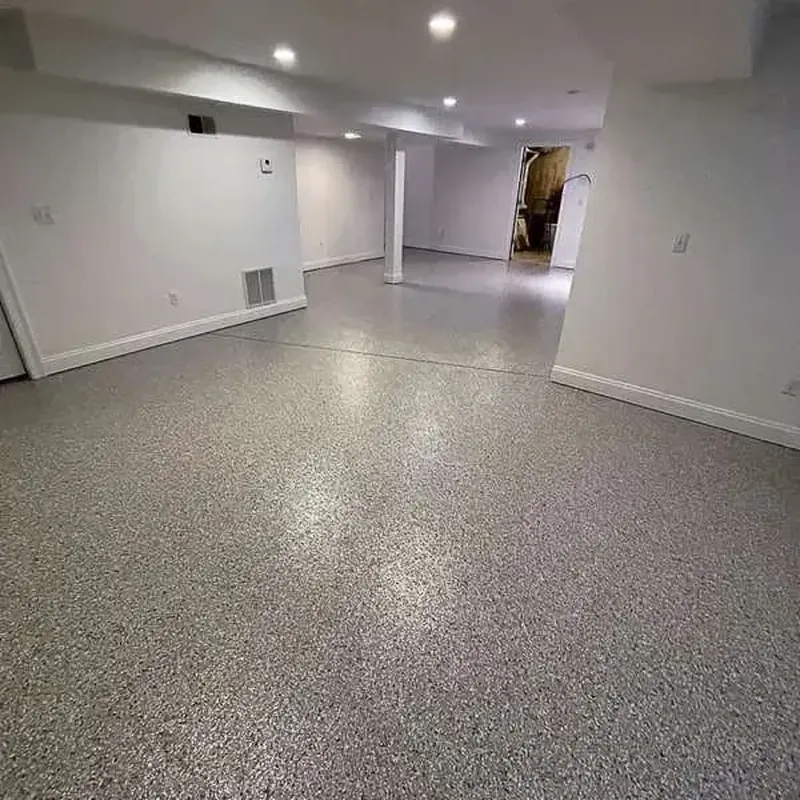
Garage floor installation, plus basements and patios
Whether you call it garage floor installation, a concrete floor coating or a cement floor epoxy coating, it's the same job to us: the same moisture test, the same grinding, the same crew.
What epoxy floor installation costs in Seattle
Where your floor lands in these ranges has almost nothing to do with the color. It's the prep: grinding depth, crack work, and whether a moisture barrier is in the quote.
- $4–$12per square foot installed, across the Seattle market
- $1,600–$5,800for a typical two-car garage
- $1,513of upgrades included on a Premium floor, listed at $0
Labor, materials and what's included, line by line: epoxy floor installation cost in Seattle.
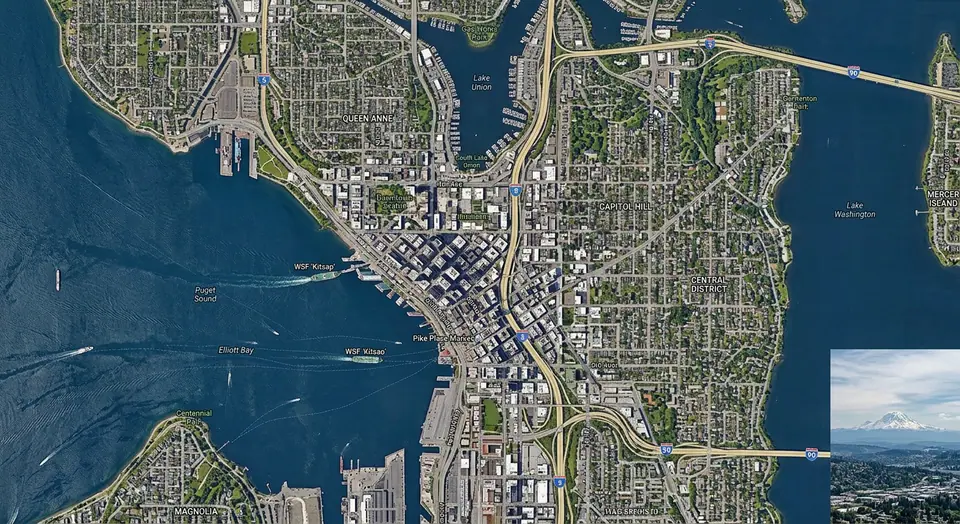
Epoxy floor installation near me: where our crew works
Searched "epoxy floor installation near me" from anywhere in the Seattle metro? You're covered. Not on the list? Call us. If we can get a truck there, we'll coat it.
- Seattle
- Seattle
- Shoreline
- Bothell
- North
- Eastside
- Bellevue
- Redmond
- Kirkland
- Sammamish
- Issaquah
- South
- Renton
- Kent
- Federal Way
- Tacoma
Before our crew shows up
Your part of the installation is short, but it has to be done the night before, not that morning.
Please have ready
- An empty garage: cars, bikes, boxes, the fridge, freestanding shelves. We grind wall to wall.
- A clear driveway for the truck.
- An outlet we can reach, and a tap within about 50 feet. An outside spigot is fine.
- Pets inside and away from the door. Grinding is loud.
- Someone reachable by phone, and there at the end for the walkthrough.
Good to know
- It's loud and a little dusty for a few hours. The dust collector catches most of it.
- The garage door stays open while we work, for ventilation.
- Rain doesn't stop the job. The coating goes down indoors.
- If we find something under an old coating that nobody could see, we stop and call you with the options. No surprise line items.
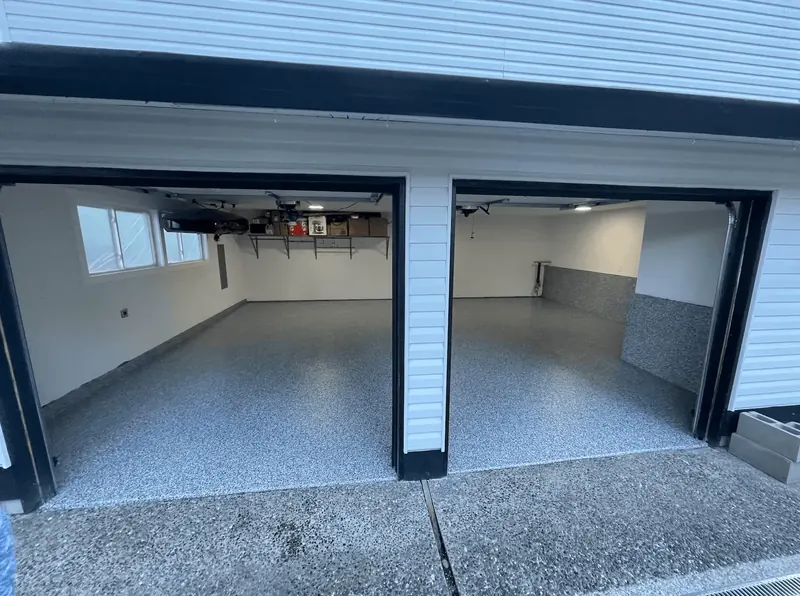
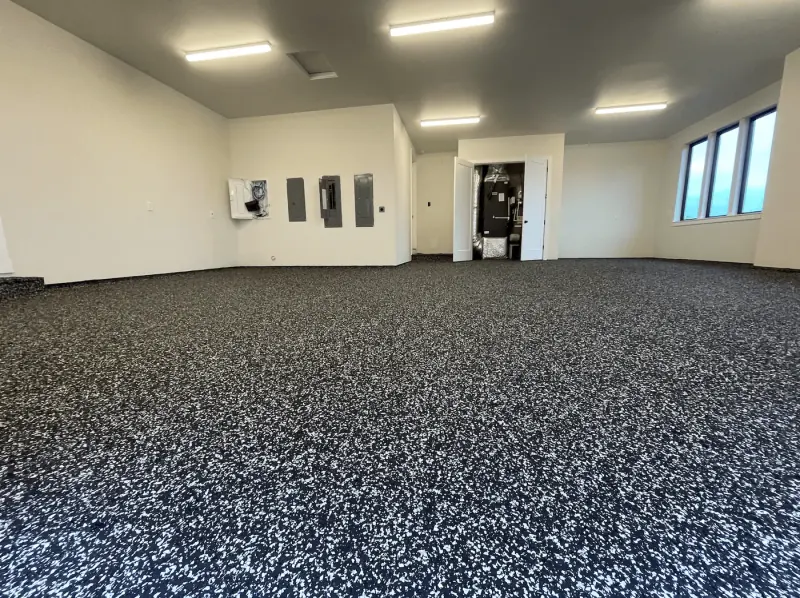
Recent floor installations
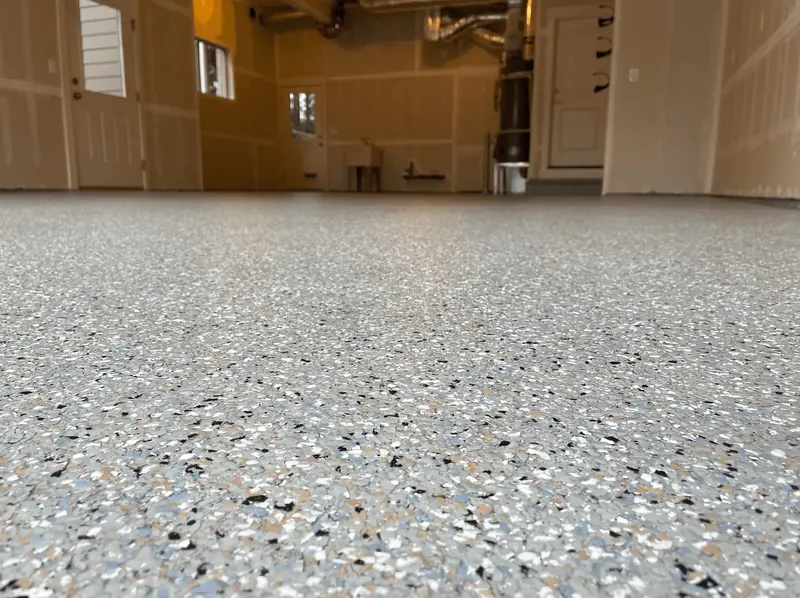
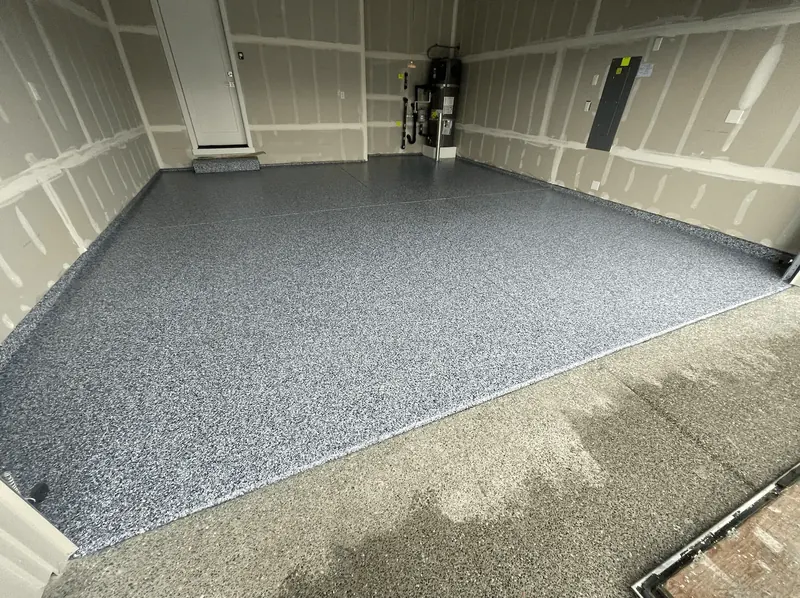
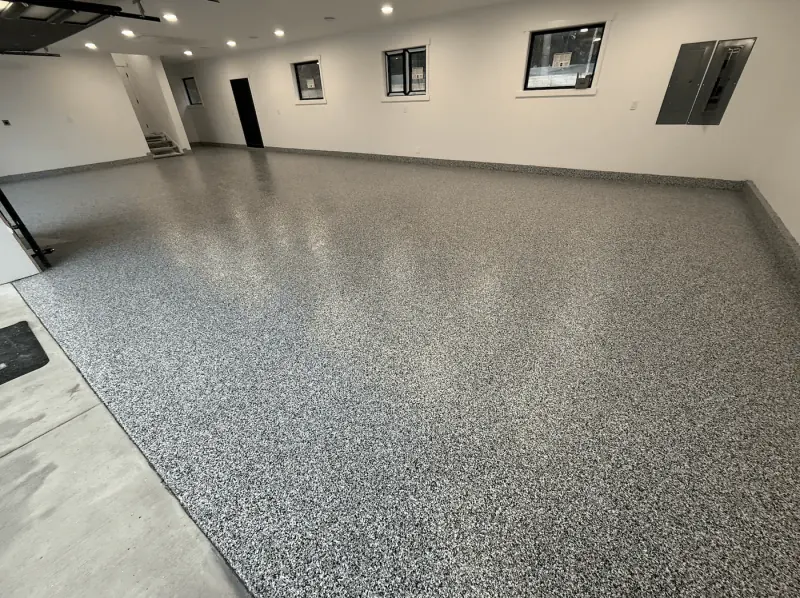
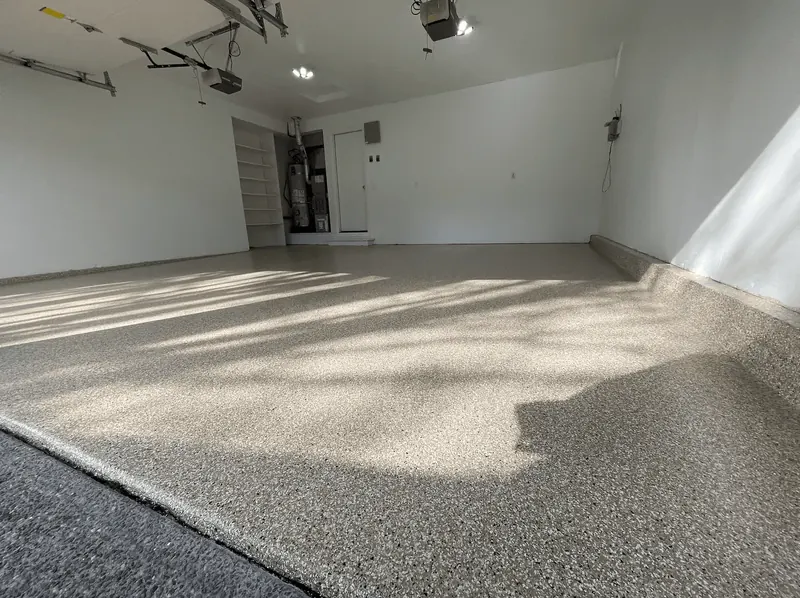
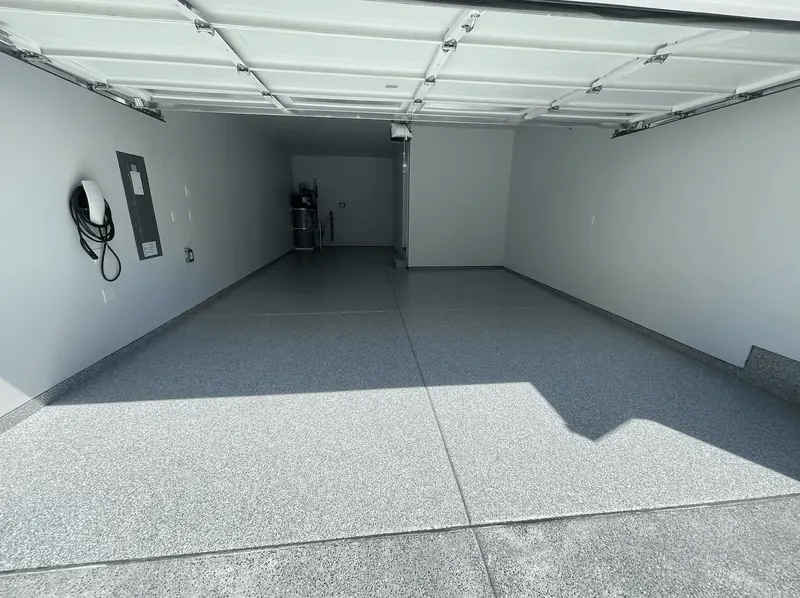
A few finished floors from the project gallery. Pick a flake blend you like, or preview any of them on your own garage before you book.



Epoxy floor installation questions
How long does epoxy floor installation take?
Our polyaspartic floors go in over one day, or two when the slab needs a moisture barrier that cures overnight. You walk on it the next day and park after 72 hours. A plain epoxy installation is usually two days of work plus most of a week before you can park, because the epoxy base has to cure between coats.
Do you install real epoxy, or something else?
Something better suited to Seattle. We install a polyurea base coat with full flake under a clear polyaspartic topcoat, over the same diamond-ground prep a good epoxy floor needs. It cures in a cold garage, handles our damp air, never yellows, and takes a car three days after install instead of a week. Everyone still calls it an epoxy floor, and that's fine by us.
Can you install a floor in a Seattle garage in winter?
Usually. Cold isn't the problem for polyaspartic the way it is for epoxy. Moisture is. The slab is at its wettest in the rainiest weeks of winter, so if yours tests wet in January we'll say so and talk about timing or a barrier. Fall and spring installs are routine once the slab passes the moisture test.
Do I need a moisture barrier under my garage floor?
Only if your slab says so. We test it at the estimate and look for the signs a meter can miss: white chalky patches, damp spots with nothing spilled, an old coating that peeled from underneath, a garage cut into a slope, a house from before the 1980s. If the floor needs a barrier, it's in the quote. If it doesn't, we won't sell you one.
Can you install over my old peeling epoxy floor?
Not over it. The old coating gets ground off down to sound concrete, even the parts that look fine, because your new floor is only as well stuck as whatever is under it. Then we fix whatever made the first one peel, usually moisture or thin prep, so the new floor doesn't repeat it.
How soon can I park on the new floor?
72 hours after we finish. Walk on it the day after. The coating keeps hardening for a week to ten days, so hold off on dragging the heavy shelving back across it until then. We go over all of it with you at the walkthrough.
How much does epoxy floor installation cost in Seattle?
About $4 to $12 a square foot installed across the Seattle market, which puts a typical two-car garage between $1,600 and $5,800. Prep decides where you land, not color. We price your floor from its square footage and condition at a free 20-minute estimate, and you get the number in writing before we leave.
Keep reading
Ready for a floor that's still down in ten years?
Free 20-minute estimate at your house, with an exact price in writing before we leave. No pressure.