
Garage Floor Coating in Lynnwood, WA
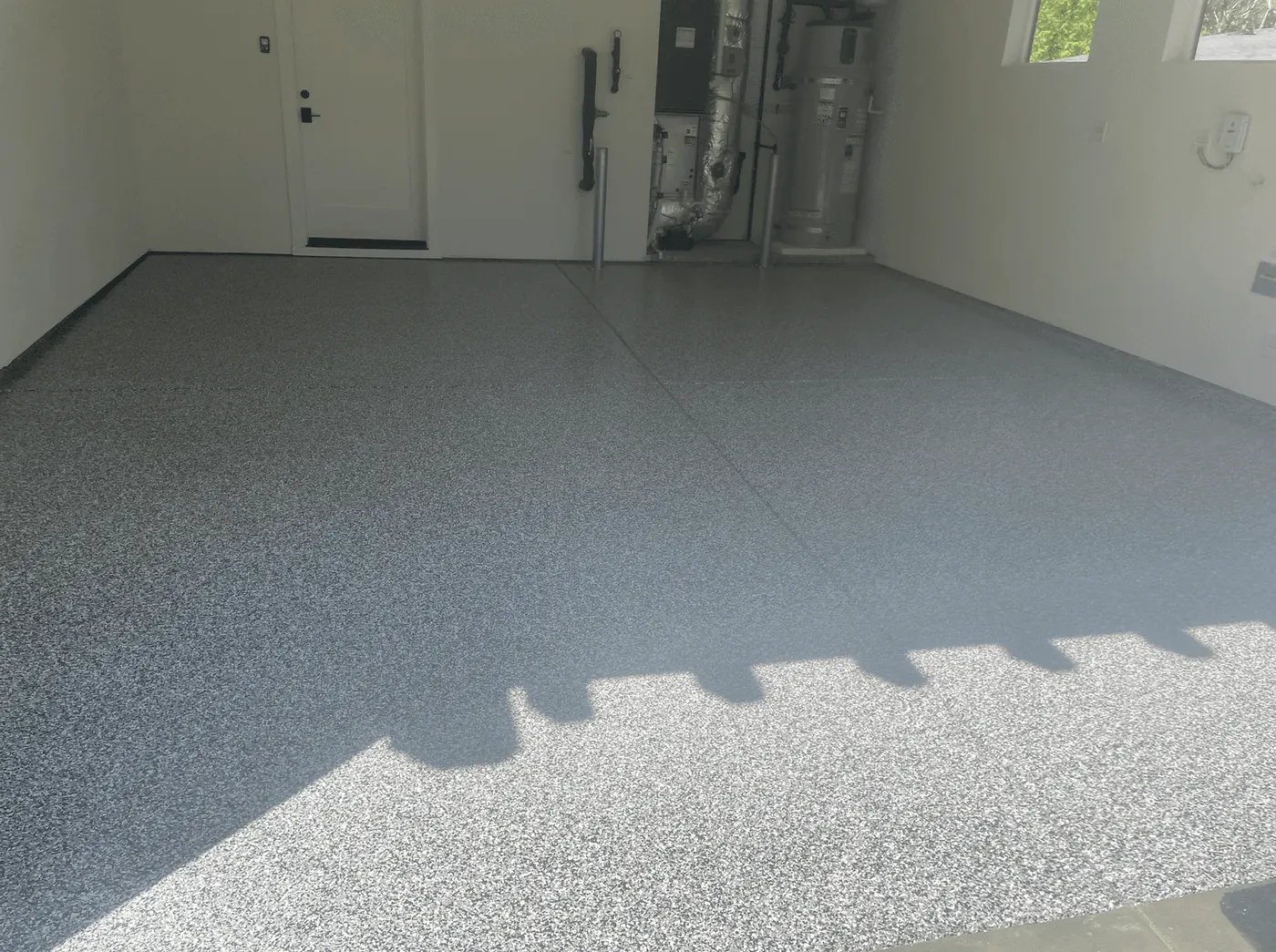
If your Lynnwood garage floor dates from the 1960s or 70s, it probably shows it: oil stains, worn paint and a crack or two. Our garage floor coating, the upgrade over epoxy, grinds that away and lays full flake over a slab we test first. The estimate is free, at your house.
- Free estimate at home
- Old paint ground off
- Cars back in 72 hours
- Lifetime adhesion warranty
Garage floor coating for Lynnwood's older garages
Task Force Garage installs garage floor coatings in Lynnwood, WA, including on slabs that have seen sixty winters. We grind off old paint and stains, fill the cracks, then lay a polyurea base, full vinyl flake and a clear polyaspartic topcoat. Every slab gets a moisture test first, and the estimate is free, at your house.
Open your garage door and you may know the look. There's a dark patch where your old car dripped, paint worn through in your tire lanes, a crack running from the door to the back wall. Under all that, your concrete is usually sound. It just needs the right prep.
Comparing epoxy garage floors in Lynnwood?
Epoxy is the word most people use for a floor like this. Ours is the step up from it. You get the same diamond grind and the same flake look. It cures in hours instead of days, and the topcoat keeps its color where your afternoon sun hits it. Your car goes back in after 72 hours instead of a week.
Your garage floor is older than Alderwood Mall
Lynnwood built more homes in the 1960s than in any other decade. The mall didn't open until 1979. If your house is one of those, your slab has had about sixty years of oil drips and wet tires, and maybe a coat of paint or two.
Concrete that age still makes a great floor. Our diamond grinders cut through the paint and the stained top layer down to clean concrete. Every crack and joint gets filled and ground flush, so the old damage doesn't show through the flake.
A slab poured before the 1980s likely has no plastic sheet under it. So we count your floor as one step closer to needing the moisture barrier, then let the meter and the floor itself decide.
When it's done, your garage may look newer than the rest of the house. Most people can live with that.
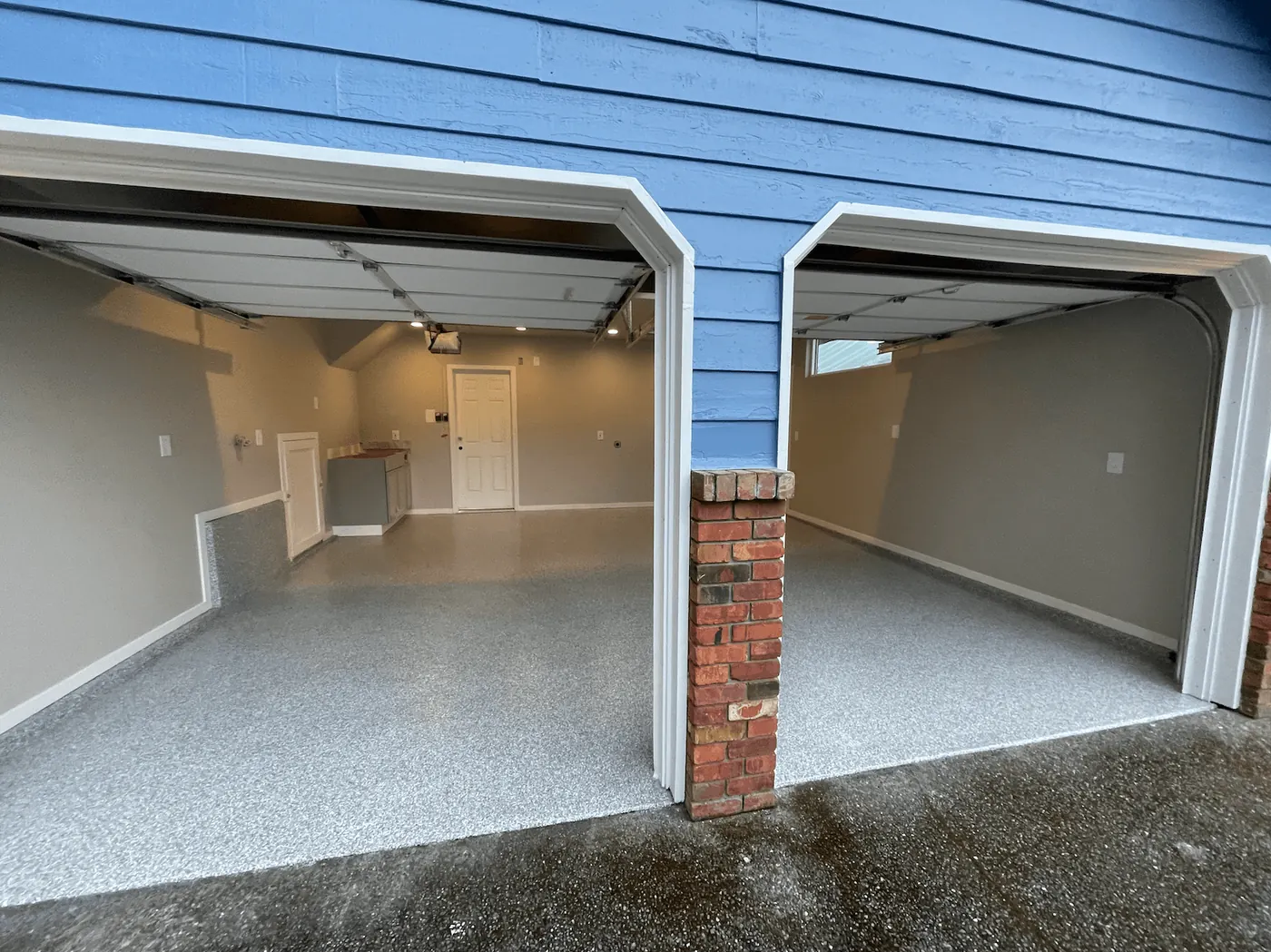
Rambler, split-level or new build?
The shape of your Lynnwood house tells us a lot about your garage floor before we've measured a thing. Find yours below.
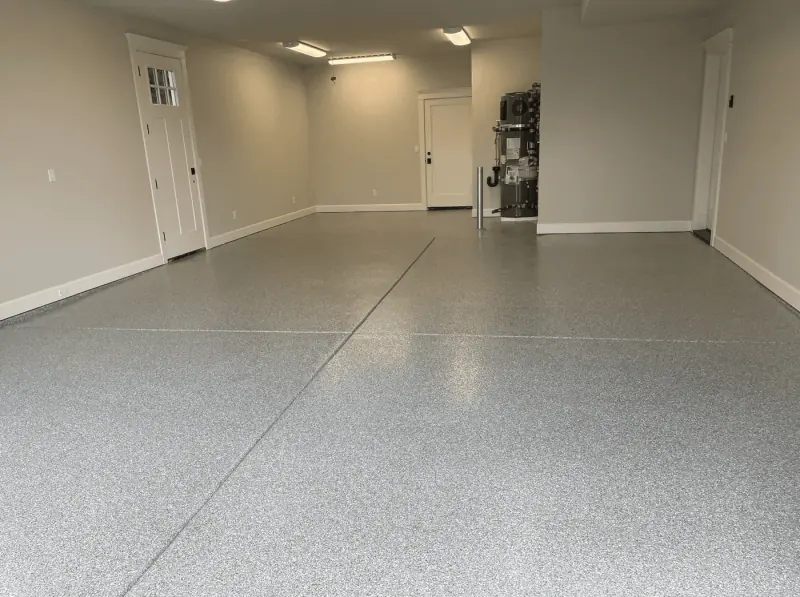 Rambler
Garage on the level
A one-story rambler usually has its garage at one end, right at ground level. That makes it one of the easier older slabs to coat, flat and simple to reach. If yours tests dry, it's done in a day.
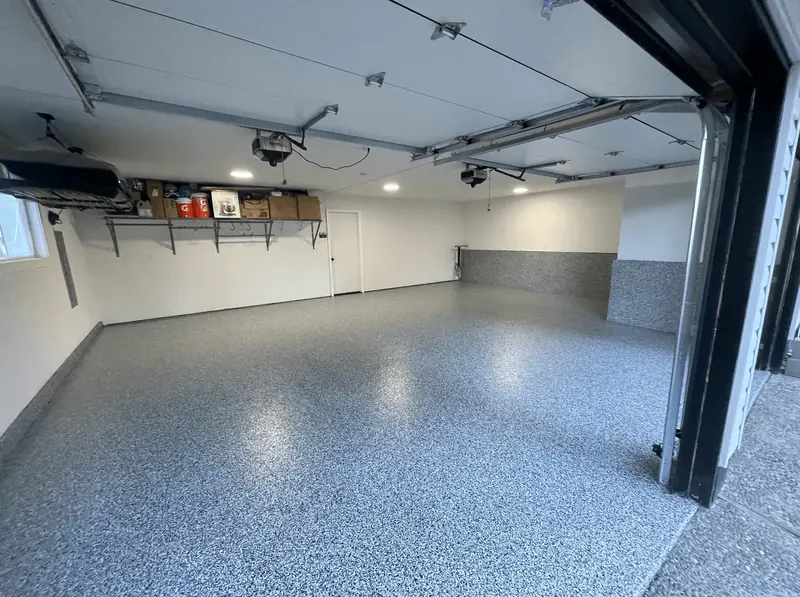 Split-level
Garage down low
In a split-level, the garage often sits on the lower floor, partly below the ground outside. That's the biggest moisture risk we check for, so we read your slab near the walls and plan the barrier if it asks for one.
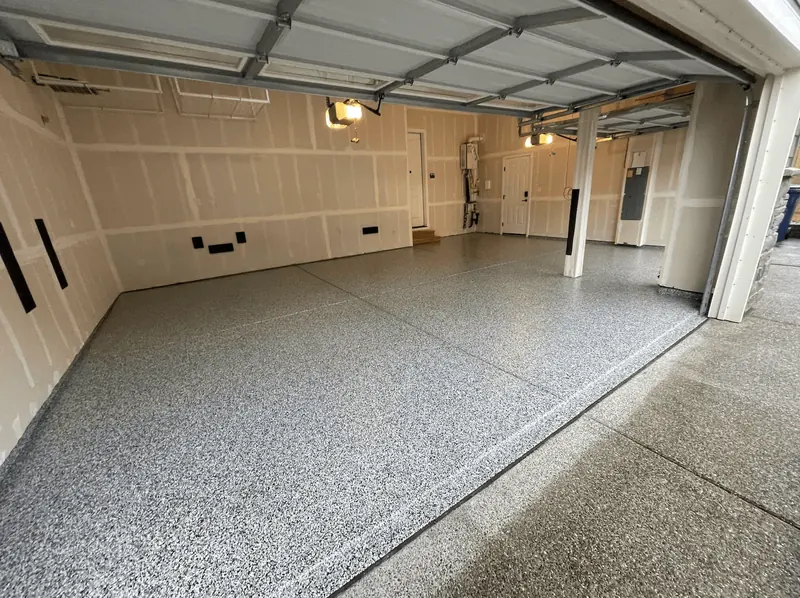 New build
Bare, young slab
One of Lynnwood's newer homes? Your slab may still be bare. Fresh concrete needs about 28 days to cure first. After that, there's little to grind and few cracks to fill, so the work goes fast.
Why a Lynnwood slab can test dry in August
Around here, Alderwood is a mall and a neighborhood. It's also the soil under a lot of lawns, quite possibly yours. Lynnwood's own surface water plan says glacial till covers most of the city: dense soil over a hardpan that water barely gets through.
In winter, rain soaks into your yard, stops at the hardpan and sits there. The county's soil survey puts that water a foot and a half to three feet down from January through March. By late summer, the same ground under you has mostly drained.
So your slab can read drier in August than it will in February, and we don't lean on the meter alone. We also look for white chalky deposits, dark damp patches and old paint lifting off the floor. If the signs are there, the barrier primer goes down first, and your floor stays put through every wet winter after. How the moisture barrier works.
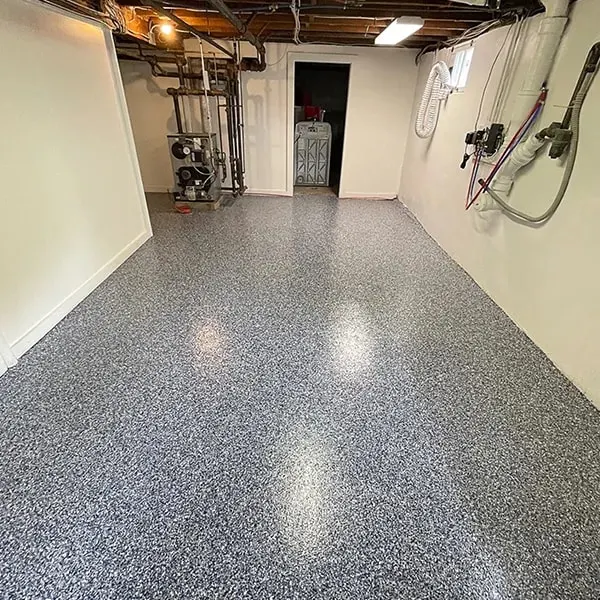
Lynnwood garage flooring options, ranked
There are four common ways to finish a garage floor you park on. Here's how they stack up on an older Lynnwood slab, best first.
Selling in the spring? A deep clean might be all your garage needs, and we'll tell you so. Staying put, or keeping the house as a rental? The coating is the one you won't be redoing.
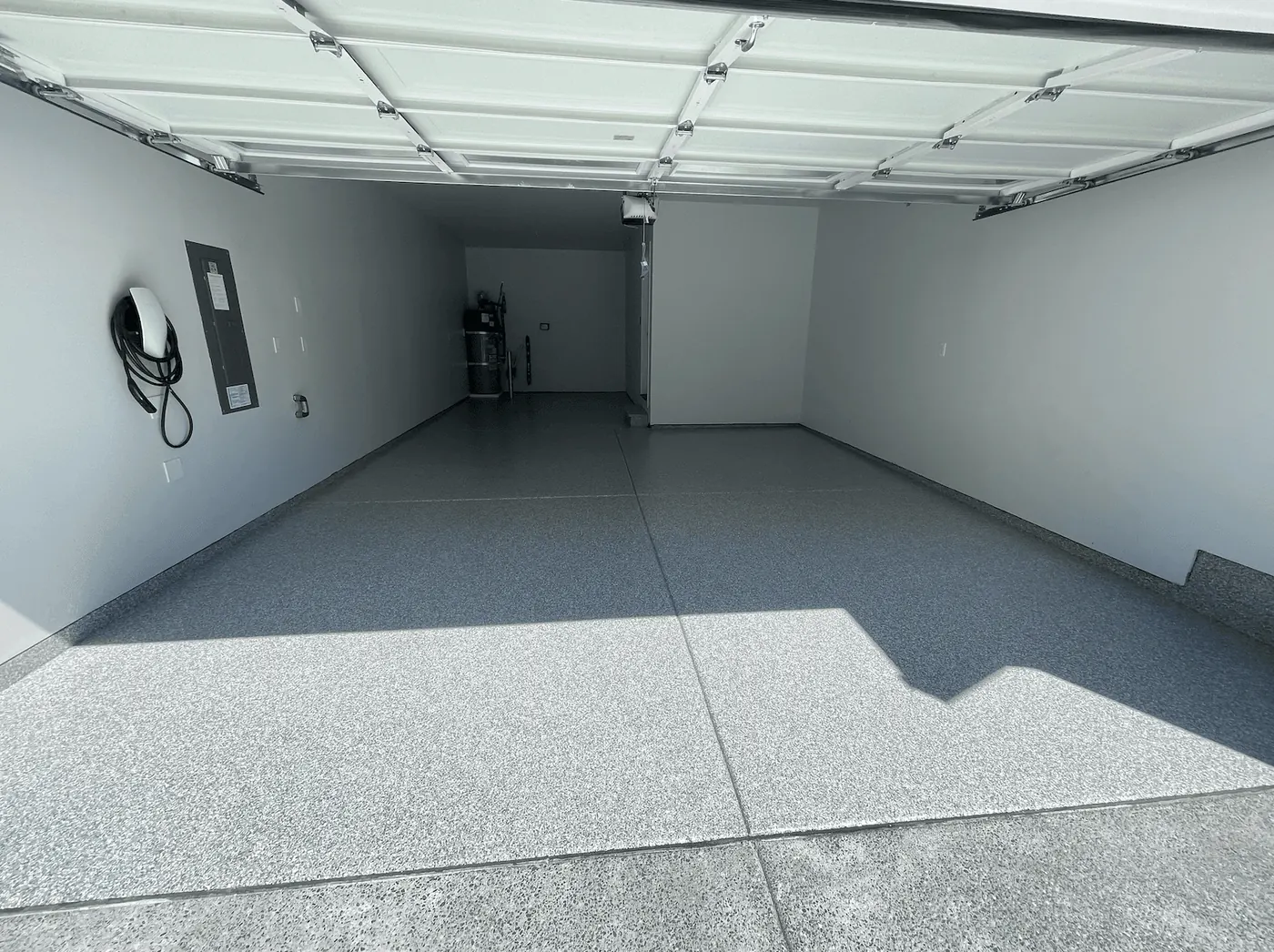
What happens when we come out
The visit takes about 20 minutes, and you'll leave it knowing exactly what your floor needs. Here's what we do while we're there.
We measure the floor
Length, width, steps and any odd corners, so your price is built on your real square footage.
We test in more than one spot
The meter goes down by the door, along the walls and in the low spots. Because of that winter water, we weigh the signs on the floor just as much.
We check the old coatings and cracks
Old paint, epoxy or sealer has to come off first, and big cracks take filler. Each shows up on your price as its own line.
You get a written price
Every item is listed, from crack repair to cove base. Take your time with it. Nobody will push you to sign that day.
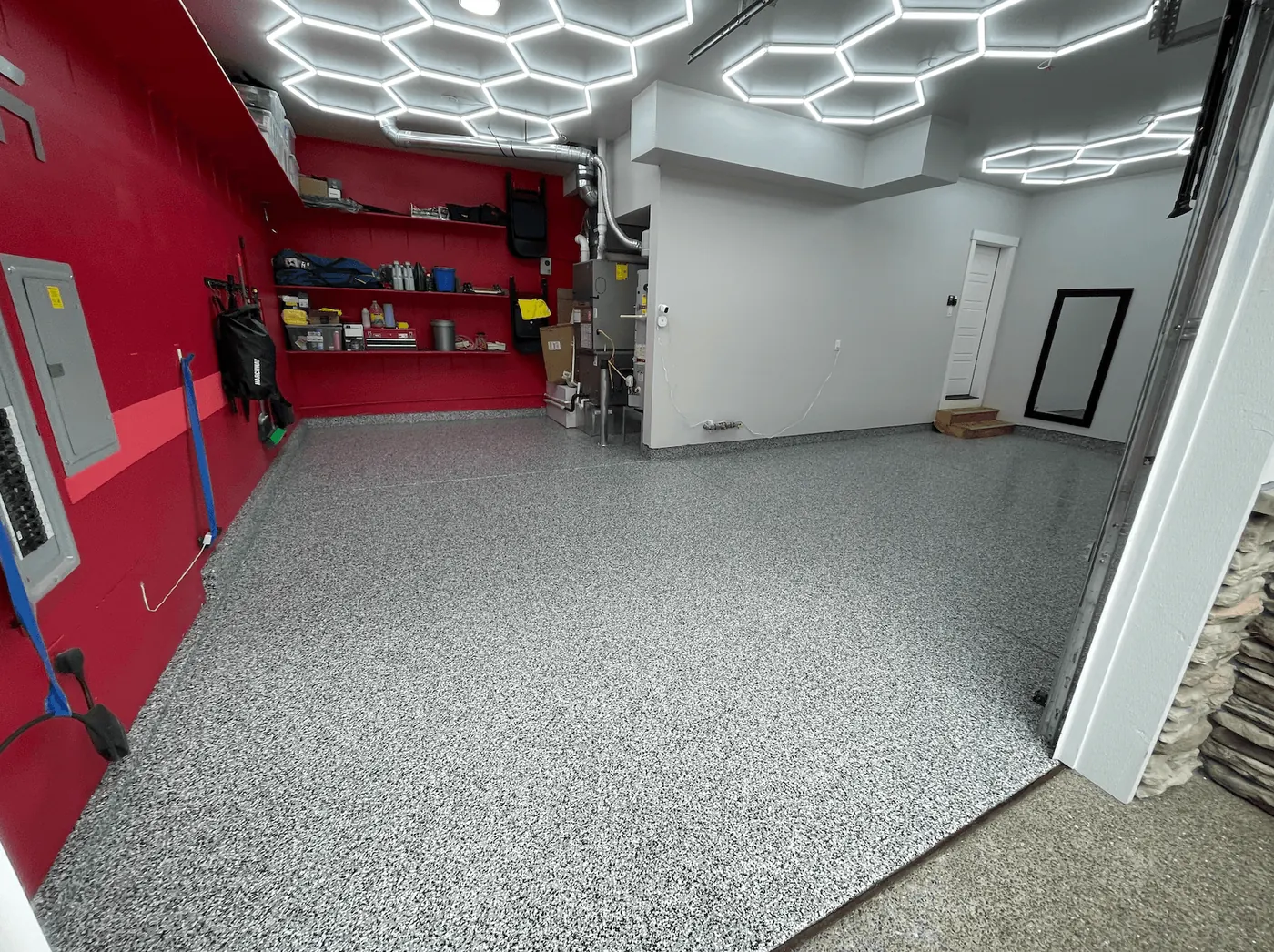
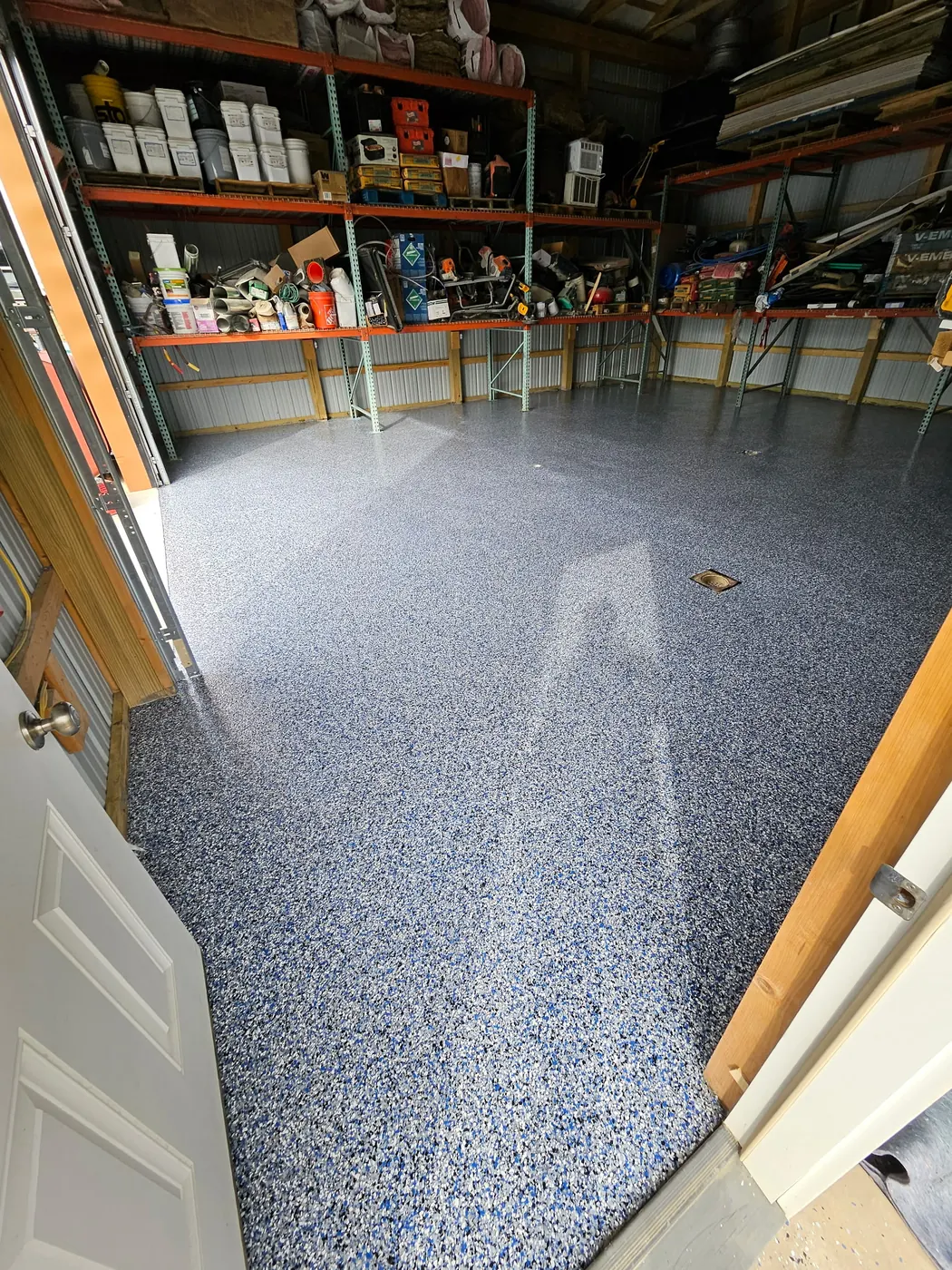
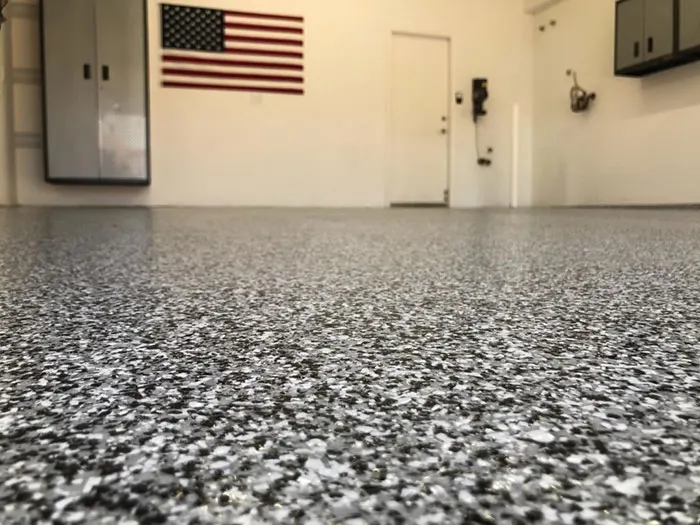
If your slab tests dry, the install takes one day. With the barrier, it takes two, because the primer cures overnight. You walk on it the next day and park after 72 hours. More on the free estimate.
What a Lynnwood garage floor coating costs
You'll see your exact price in writing, line by line, so it's easy to hold up against another installer's quote. For a ballpark, most pro-installed floors across the Seattle area land in these ranges.
- $835–$3,340a typical one-car garage
- $1,600–$5,800a typical two-car garage
On an older Lynnwood slab, prep moves your number most. That means old paint to grind off, cracks to fill, and the moisture barrier if your slab needs it.
Premium includes the barrier, cove base, coated steps, a flake design session and a one-year checkup at no extra charge. See what Premium includes, or read our Seattle cost guide.
Lynnwood, and the neighborhoods around it
If your mail says Lynnwood, you're covered, inside the city limits or out. That's ZIP codes 98036, 98037 and 98087.
- In the city
- City Center
- Alderwood
- Highway 99
- Scriber Lake
- Hall Lake
- Just outside
- Alderwood Manor
- Martha Lake
- North Lynnwood
Live next door? We also work in Edmonds, Shoreline, Mill Creek and Bothell.
See a few blends in real rooms
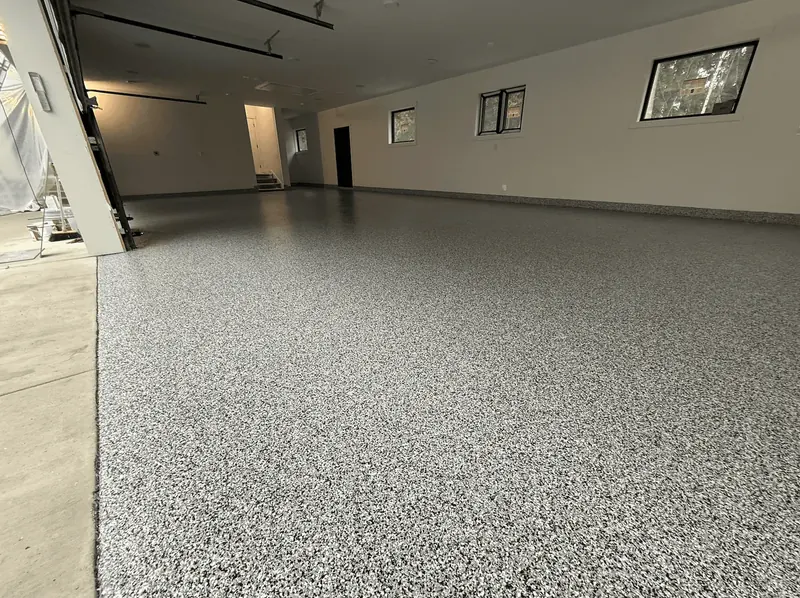
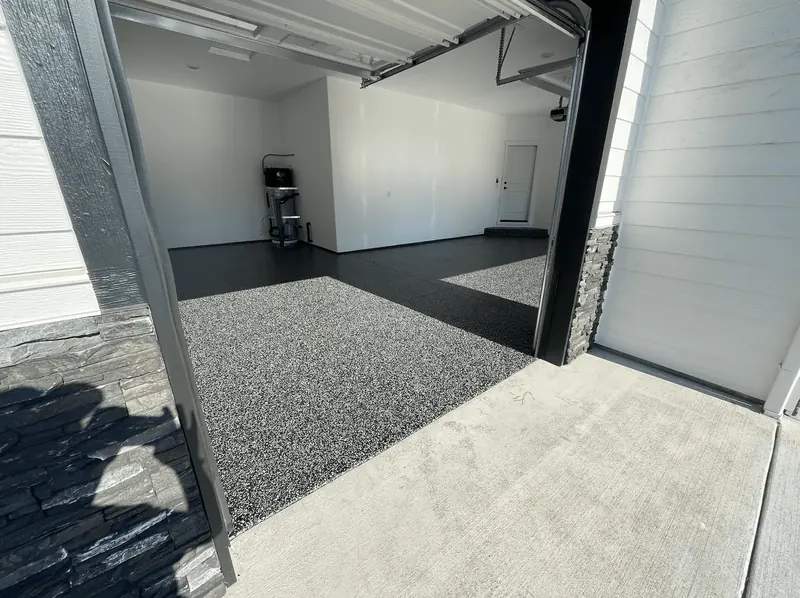
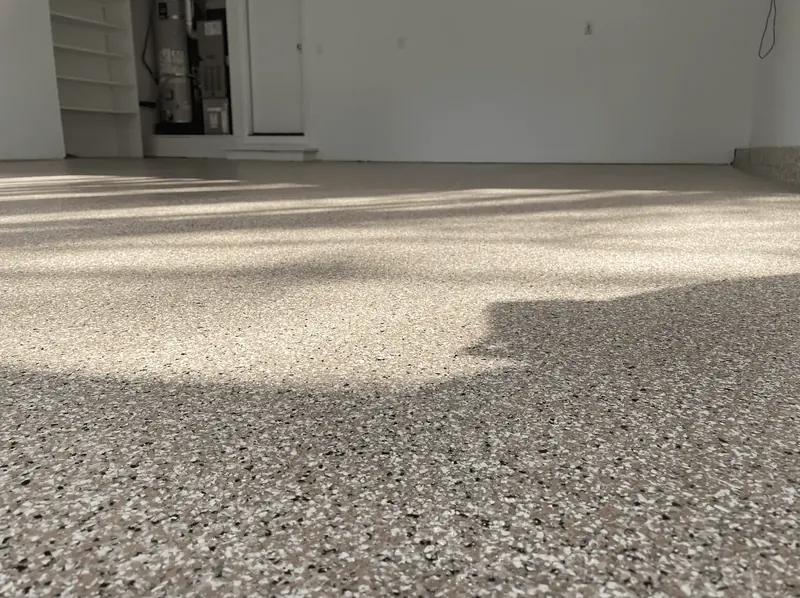
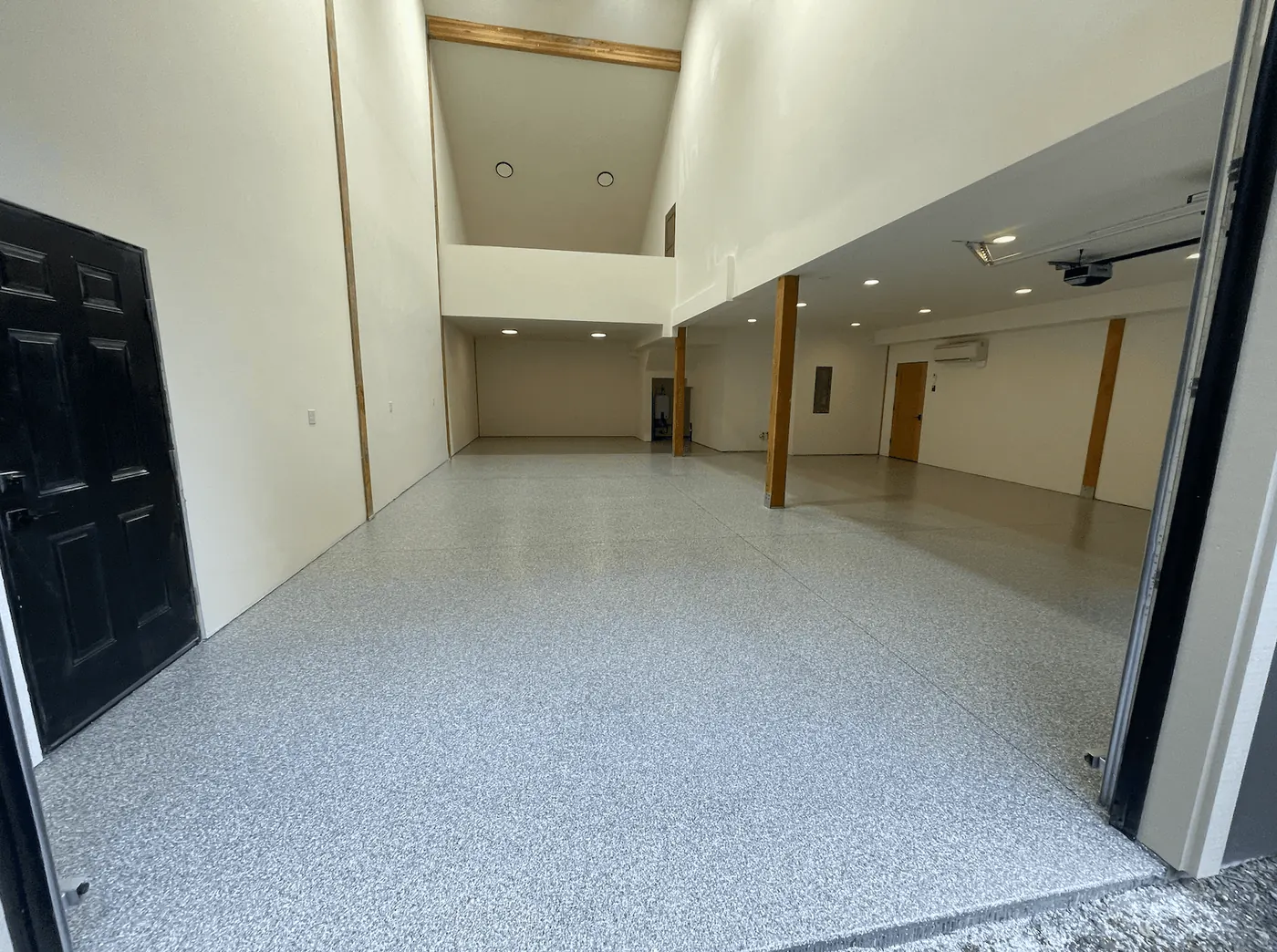
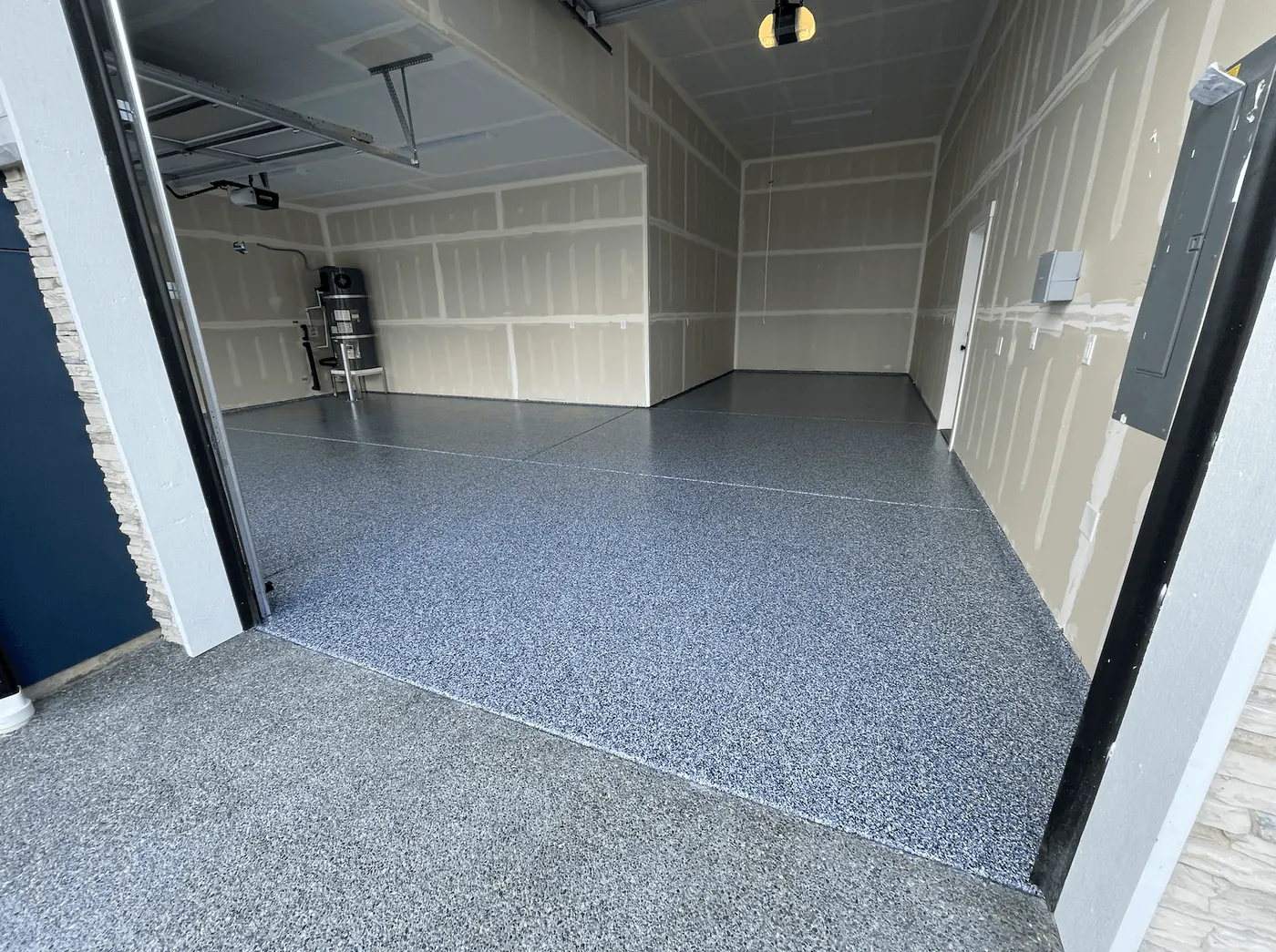
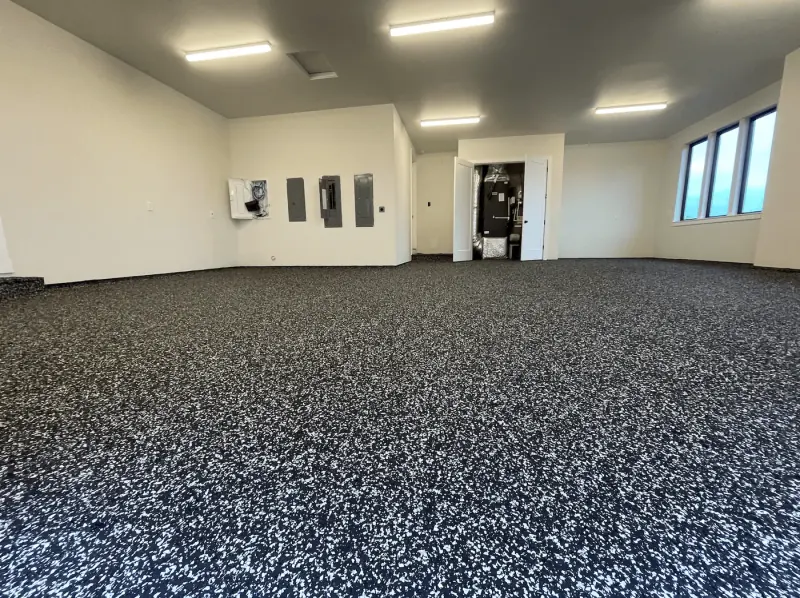
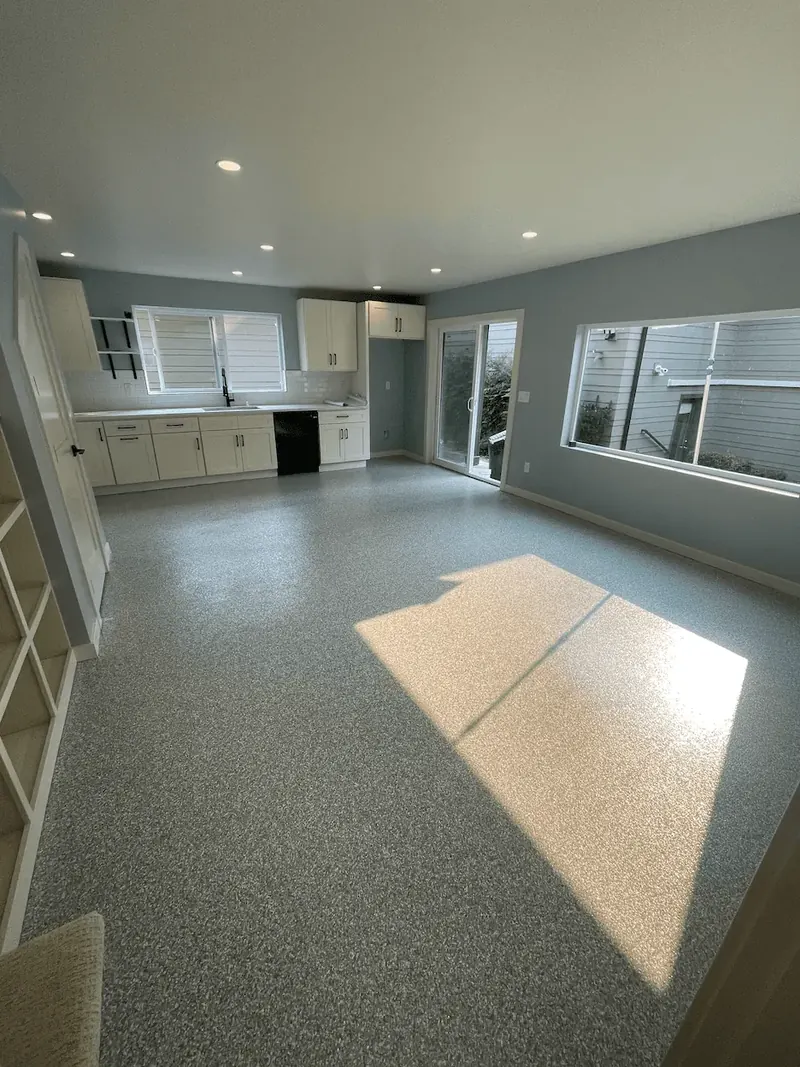
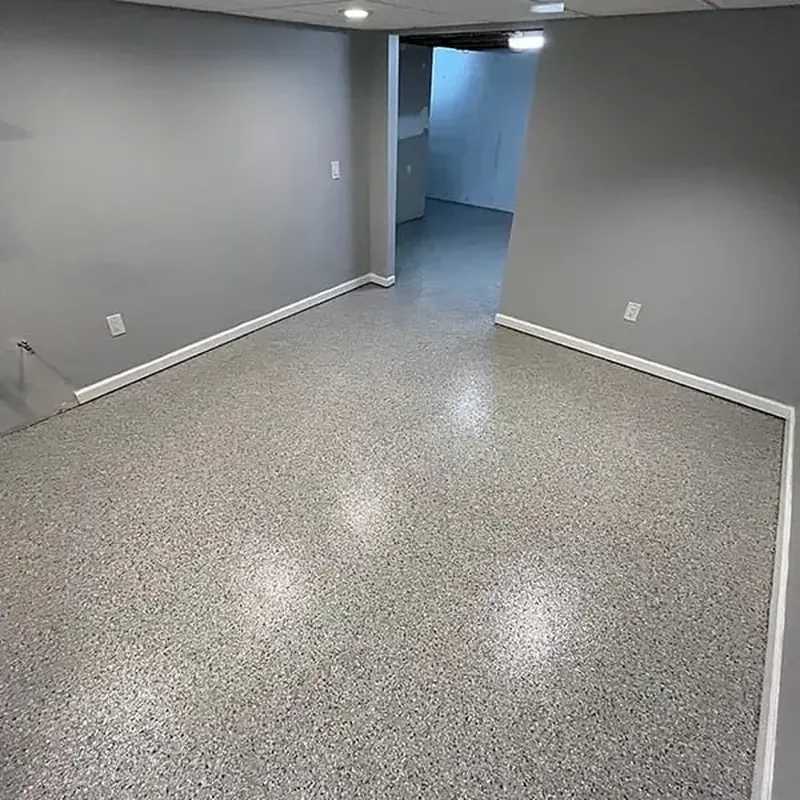
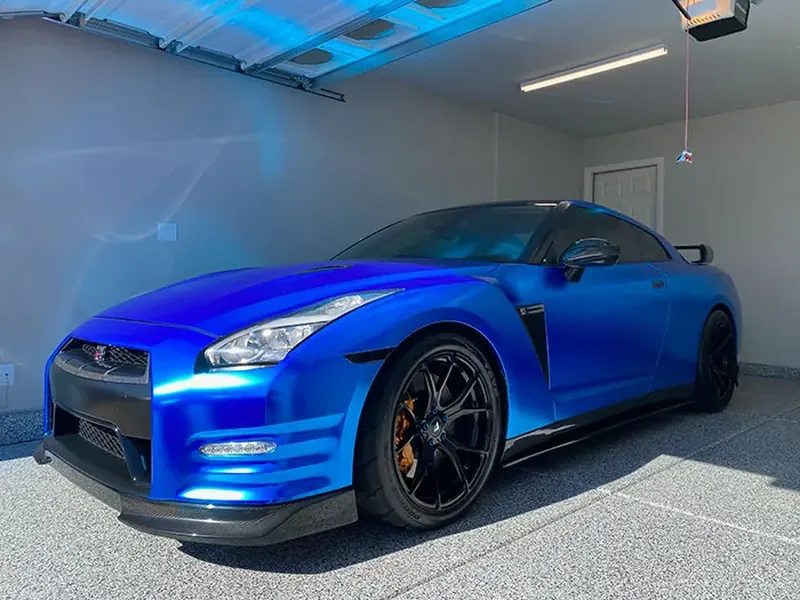
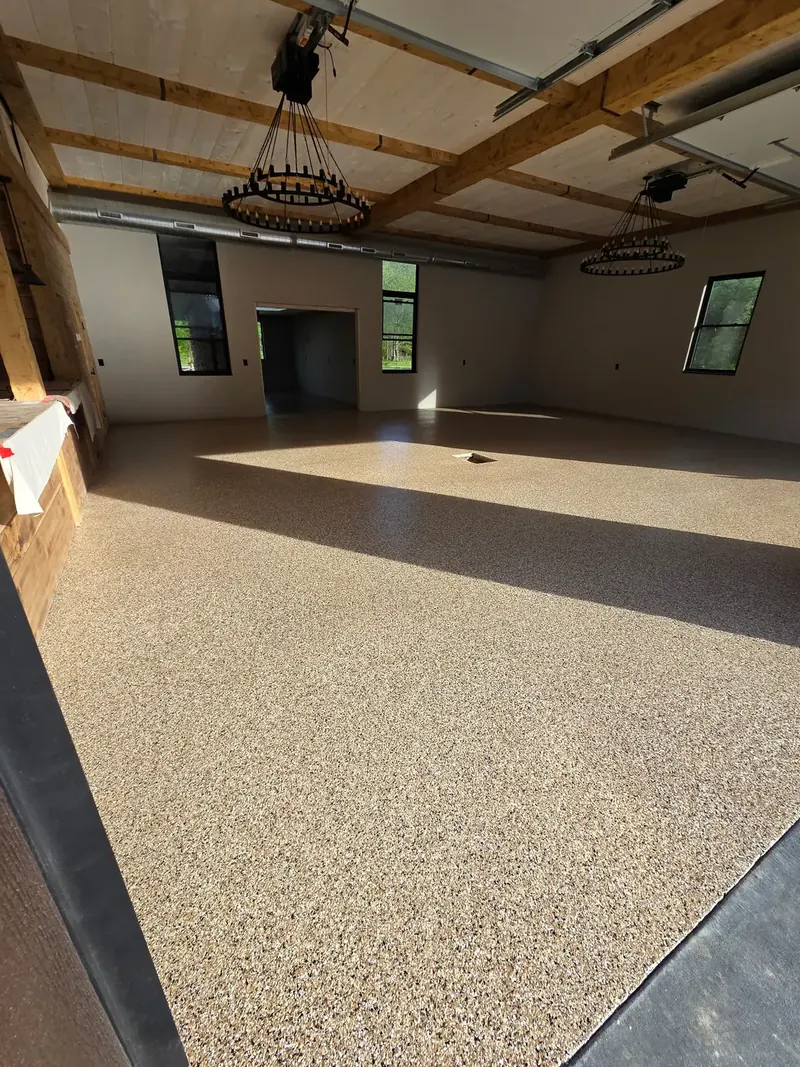
Full flake in garages, a basement and a couple of living spaces. Try a blend on a photo of your own garage, or see the full gallery.


Lynnwood garage floor questions
What does garage floor coating cost in Lynnwood?
Across the Seattle area, most pro-installed floors in a two-car garage run about $1,600 to $5,800, and a one-car costs less. On an older Lynnwood slab, the spread mostly comes from prep: old paint to grind off, cracks to fill, and the moisture barrier if your slab needs it. You'll get your exact price in writing at the free estimate. See prices by garage size.
Is an epoxy garage floor a good idea in Lynnwood?
Epoxy can work, but it wants a warm, dry slab, so most epoxy jobs around here happen in summer. It also tends to yellow where the sun hits it. We install the step up: a polyurea base and a clear polyaspartic topcoat over full flake. It goes down in fall and winter too, once your slab passes the moisture test. Compare it with epoxy.
Our slab tested dry last summer. Is that enough?
Not on its own, because the water under a lot of Lynnwood is seasonal. In the glacial till here, the county's soil survey puts a perched water table a foot and a half to three feet down from January through March. A slab can read drier in August than in February, so we weigh the signs on your floor just as much as the meter.
Can the original slab in a 1960s house be coated?
Yes. An older slab gets more grinding and more crack repair, and any old paint or coating comes off first. Because the house predates the 1980s, we treat it as likely having no plastic sheet underneath, which makes the barrier primer more likely. The readings and the floor itself make the final call.
There's old paint or epoxy on our floor. Can you coat over it?
Usually not. A painted or previously coated floor almost always needs that layer ground off, so the new system bonds to bare concrete. If the old layer is already lifting, coating over it would only trap the problem. Grinding it off is a line on your written price. What happens to an old coating.
We rent the house out. Is a coated floor worth it on a rental?
It can be. About half of Lynnwood's homes are rented, and a coated floor hoses clean between tenants and hides wear better than bare concrete. If you plan to sell soon, a deep clean may be the smarter spend. Tell us your plans at the estimate, and we'll be straight with you about which makes sense.
Do you cover Alderwood Manor and Martha Lake?
Yes. We cover the city of Lynnwood and the unincorporated neighborhoods around it that use Lynnwood addresses, including Alderwood Manor, Martha Lake and North Lynnwood. If you're just over the line in Edmonds or Mill Creek, we cover you too.
How long does the install take?
One working day on a dry slab, or two if your slab needs the moisture barrier, because the primer cures overnight. Every Premium floor includes the barrier, so a Premium install always takes two days. You can walk on it the next day and park after 72 hours.
Get a written price for your Lynnwood garage
We'll measure, test your slab in more than one spot and price the floor line by line. It takes about 20 minutes, there's no pressure to sign, and the floor comes with a lifetime adhesion warranty.