
Garage Floor Coating in Edmonds, WA
Beach sand in the tire tracks, a wet dog shaking off by the door, and a slab that's been bare since the house was built. Our garage floor coating turns that concrete into full flake under a clear topcoat you can wipe clean. The estimate is free, and we do it at your house.
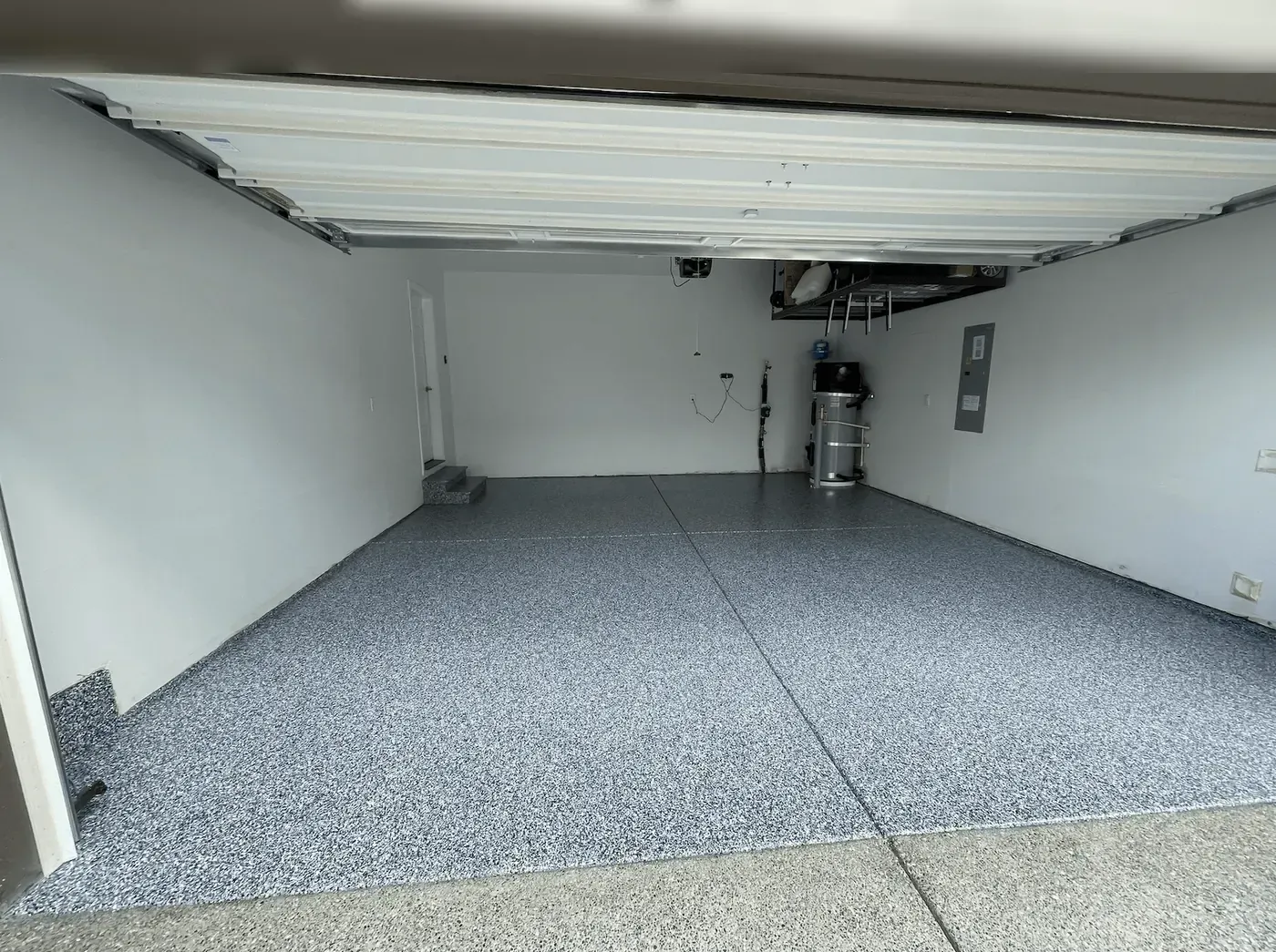
- Free estimate at home
- Moisture-tested first
- Parked again in 72 hours
- Lifetime adhesion warranty
Garage floor coating in Edmonds, explained
Task Force Garage installs garage floor coatings in Edmonds, WA. We diamond-grind your slab and fill the cracks. A polyurea base coat goes down next, covered edge to edge in vinyl flake, then a clear polyaspartic topcoat with anti-slip grit. Every slab is moisture-tested first, and the estimate is free, at your house.
Shopping for an epoxy garage floor in Edmonds? What we install is the upgrade over epoxy. You get the same prep and the same flake look. It cures faster and flexes with your slab, and it holds its color where the sun hits it. You park on it after 72 hours instead of waiting about a week.
Edmonds makes the prep matter. Most homes here went up before 1980, and plenty sit on a slope above the Sound. For your garage, that can mean an old slab with no plastic sheet under it, or a back wall dug into the hill. We check for both before you see a price.
The visit is quick. You get a written price with every line spelled out, and nobody leans on you to sign that day.
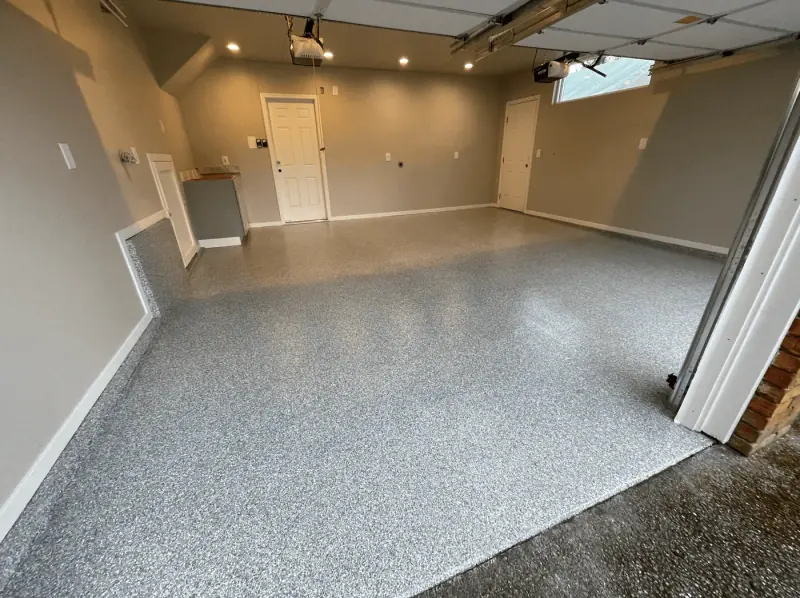

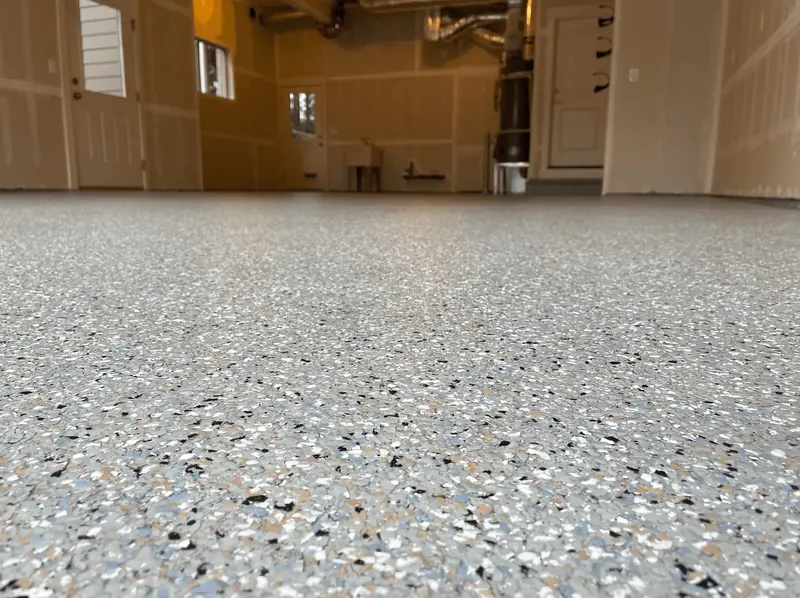
Is your Edmonds garage dug into the hill?
A lot of Edmonds houses step down a slope toward the water. That's where your view comes from. It also puts plenty of garages under the house or cuts them into the hillside, with soil packed against a wall or two.
Water travels through those hills. Rain soaks into sandy layers until it hits clay, then runs sideways and leaks out as seeps and springs. A slab cut into a slope is the biggest single moisture risk we test for before a garage floor coating goes down.
So in a hillside garage, we read your slab in more than one spot, starting at the uphill wall. A high reading, or signs like white chalky deposits and dark damp patches, means our moisture barrier primer goes down first. Plan on two days, because the primer cures overnight.
You'll know which kind of slab you have before you sign, and the barrier comes with every Premium floor.
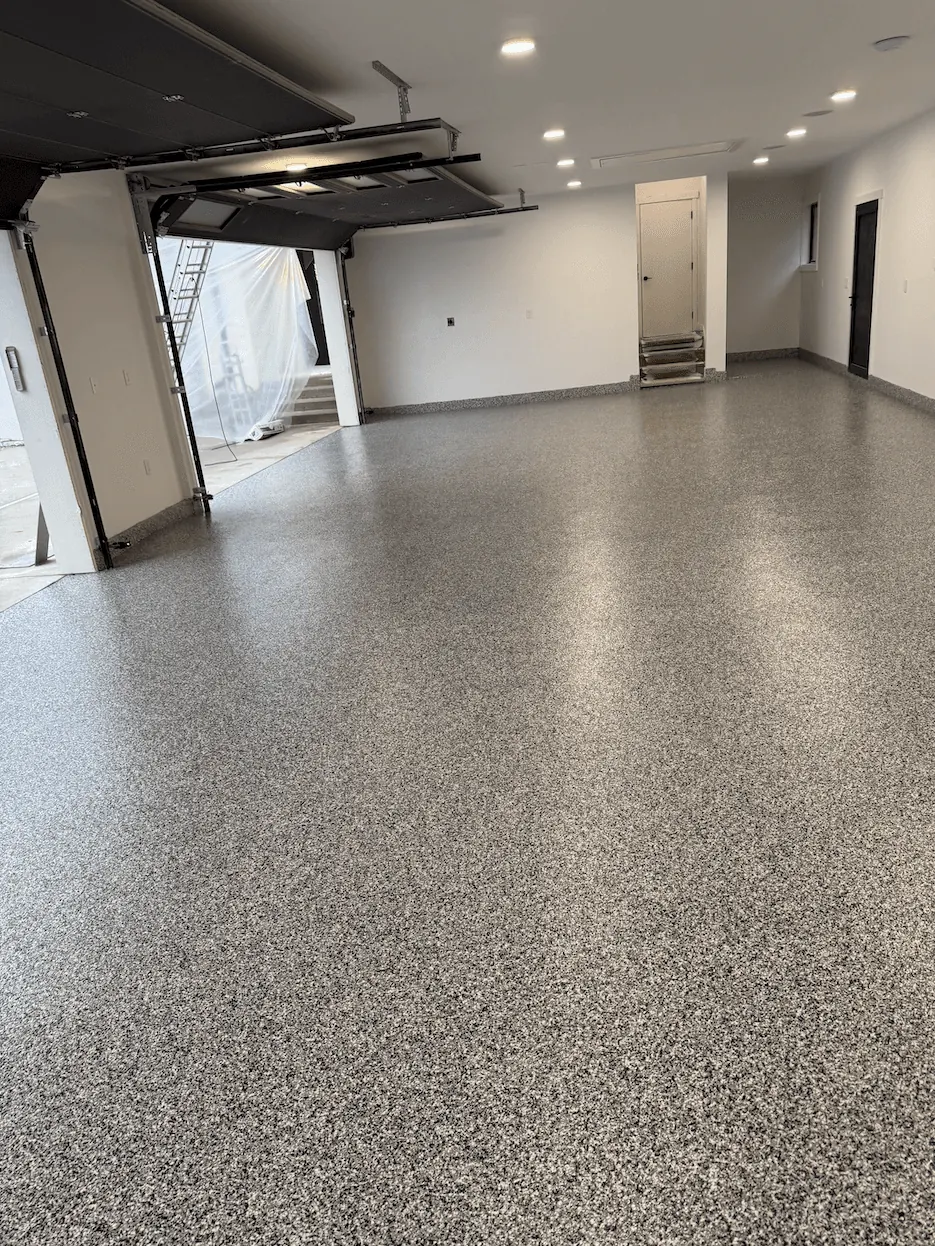
How old is the slab under your Edmonds car?
About six in ten Edmonds homes went up before 1980, and the 1960s built more of them than any other decade. Find your era below to see what your slab will likely need from us.
| Built | Where you'll find it | What your slab usually needs |
|---|---|---|
| Before 1950 | Cottages and older homes around the Bowl | Patches, wide cracks and old paint to grind off. Expect no plastic under the slab. |
| 1950s and 60s | Ramblers in Seaview and Esperance | Decades of oil soaked in, maybe an old sealer. The moisture test decides the barrier. |
| 1970s and 80s | Hillside homes like Talbot Park | Settling cracks at the joints, and often one wall below the yard. |
| 1990s to now | Infill and rebuilds all over town | Usually sound. Fresh concrete needs about four weeks to cure before we coat it. |
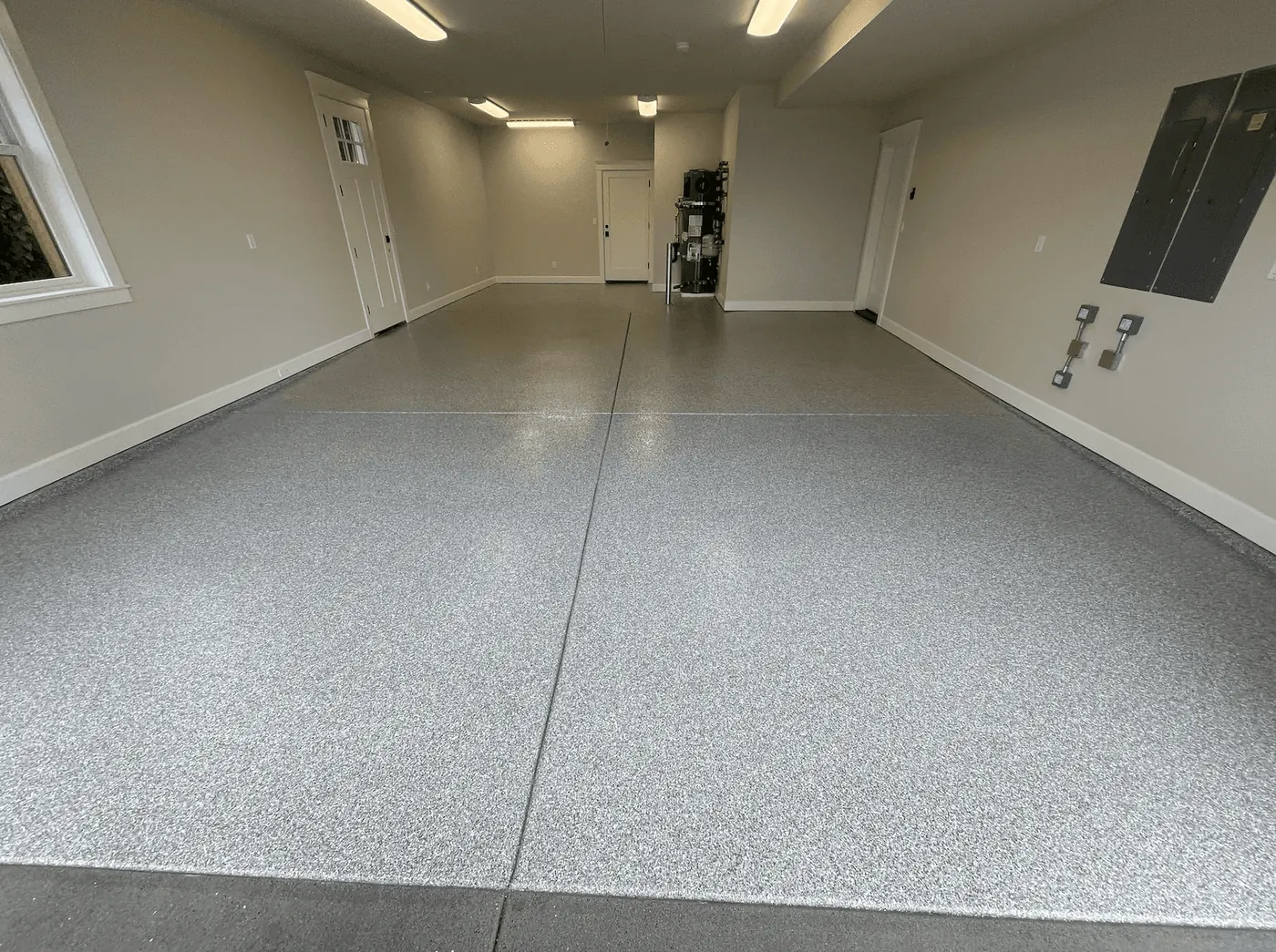
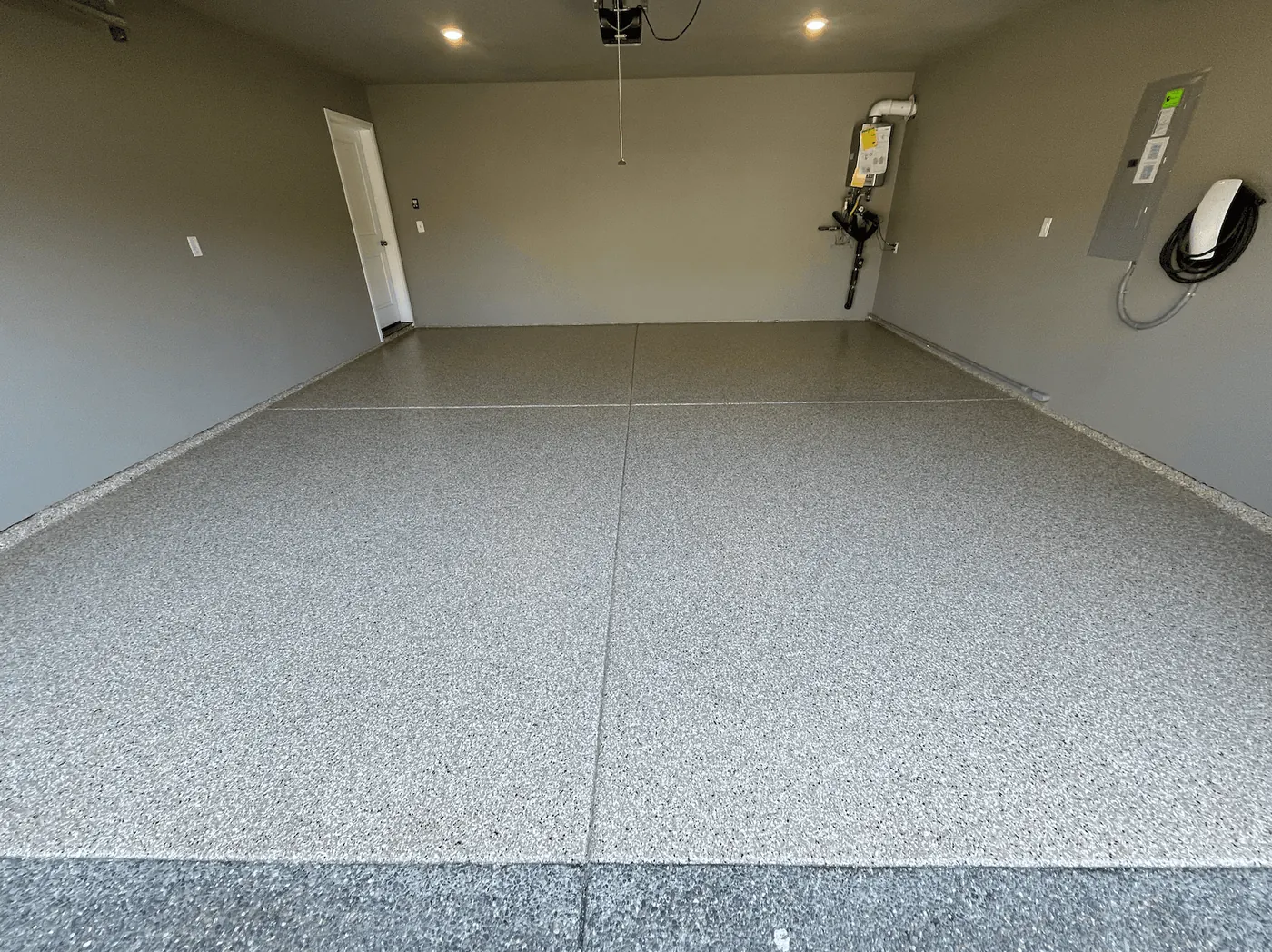
What an Edmonds garage floor puts up with
Life near the water comes with a cost, and your garage floor pays it in sand, salt water and steep driveways. Here's what bare concrete does with each, and what a coated floor does instead.
 Marina Beach
The wet dog
Does your dog love the off-leash beach? Then you know the routine: a coat full of salt water and one big shake by the door. On a coated floor, you squeegee the puddle out, and the grit keeps your feet under you.
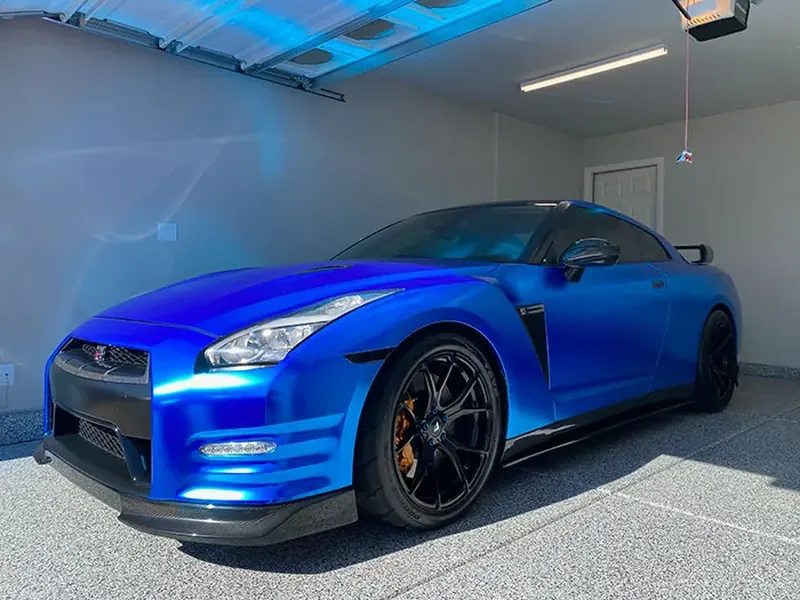 The pier
Crab season
Crab season leaves a trail of dripping pots and boots that smell like the pier. Bare concrete hangs on to that smell long after the season closes. Our clear topcoat soaks up nothing, so a hose and a mop finish the job.
 Beach days
Sand in the treads
Sand rides home in your tires and on the kids' feet. On bare concrete it grinds at the surface and adds to the dust on everything you store. On full flake it sweeps right up, and the pattern hides what you miss.
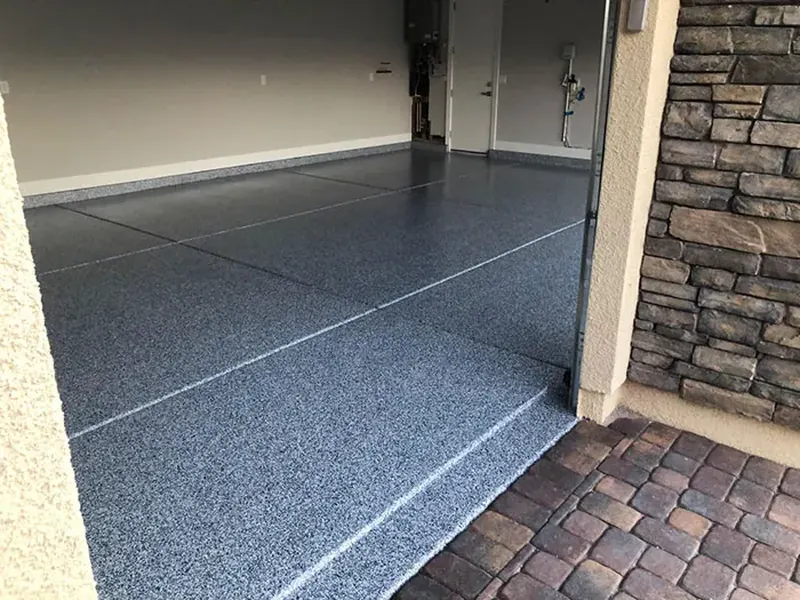 Steep driveways
Downhill rain
If your driveway drops toward the garage, rain finds the door seal and slips under it. Bare concrete drinks it in by the door, where stains start first. A coated floor keeps that water on top, so you push it back out.
When the convergence zone parks over Edmonds
You've seen it happen. Seattle gets rain, the convergence zone sets up over south Snohomish County, and Edmonds gets snow. The Main Street hill turns to packed snow, and even four-wheel drives start to slide.
Then the city spreads sand and anti-icer, and every trip home tracks some into your garage. On bare concrete the slush soaks in and dries in white rings. On a coated floor it waits on top until you mop it, winter after winter.
Your install doesn't have to wait for summer, either. Epoxy needs a warm slab, which is why most epoxy jobs around here wait for the dry summer months. Our system cures across a much wider range of temperatures, so a fall or winter floor works once your slab passes the moisture test.
Most people call in spring, so the cold months usually have more open dates. On the day, we make sure your slab and the air sit at least 5°F above the dew point. Here's more on the best time of year to coat a floor.
Your Edmonds install, faster than epoxy
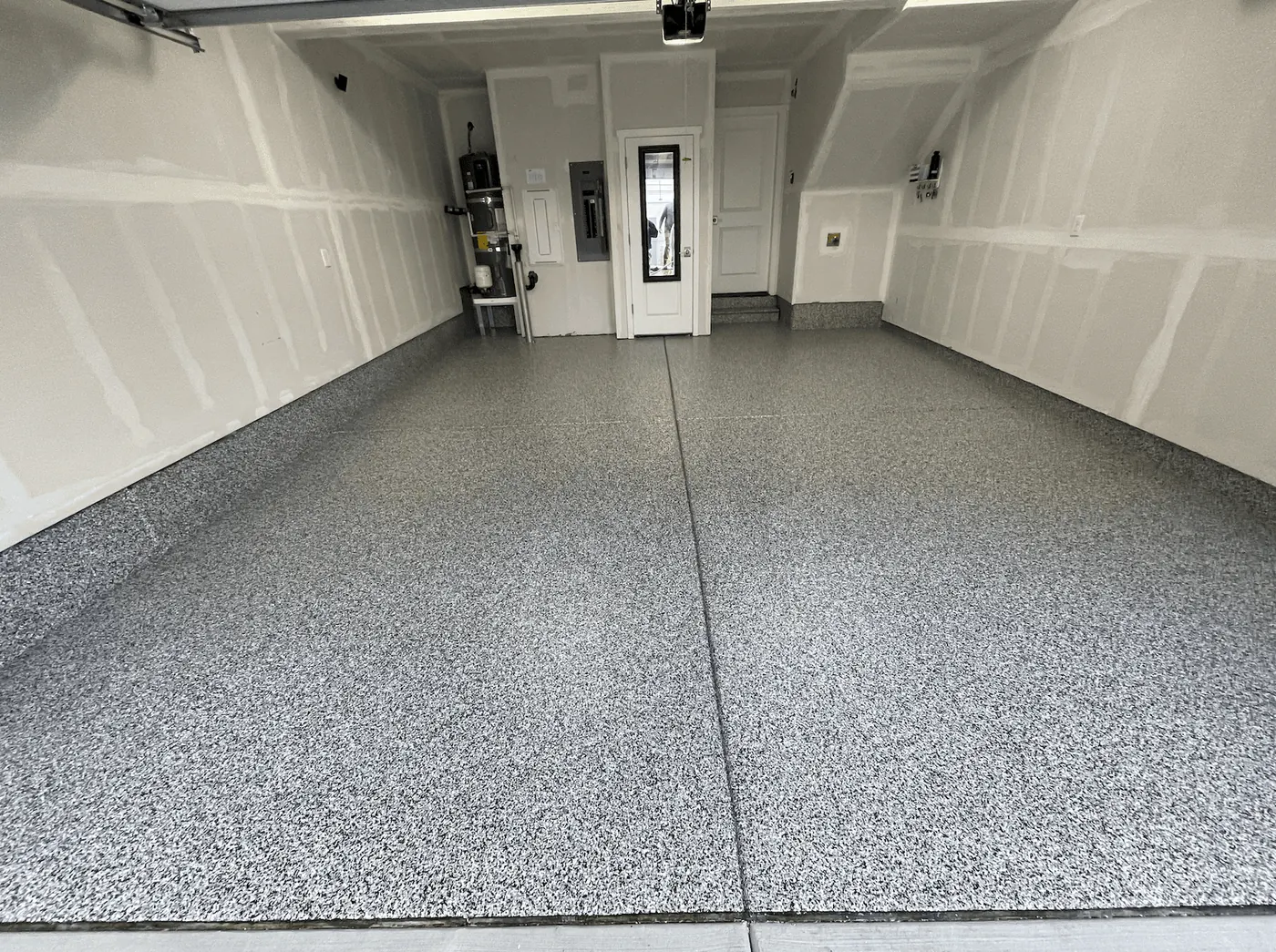
Most garages take one working day, or two when the slab needs the barrier primer. Either way, you park days sooner than an epoxy floor allows. Steep driveway, or a narrow street with no room to park? Tell us when you book, and we'll plan where our truck goes.
Grind and repair
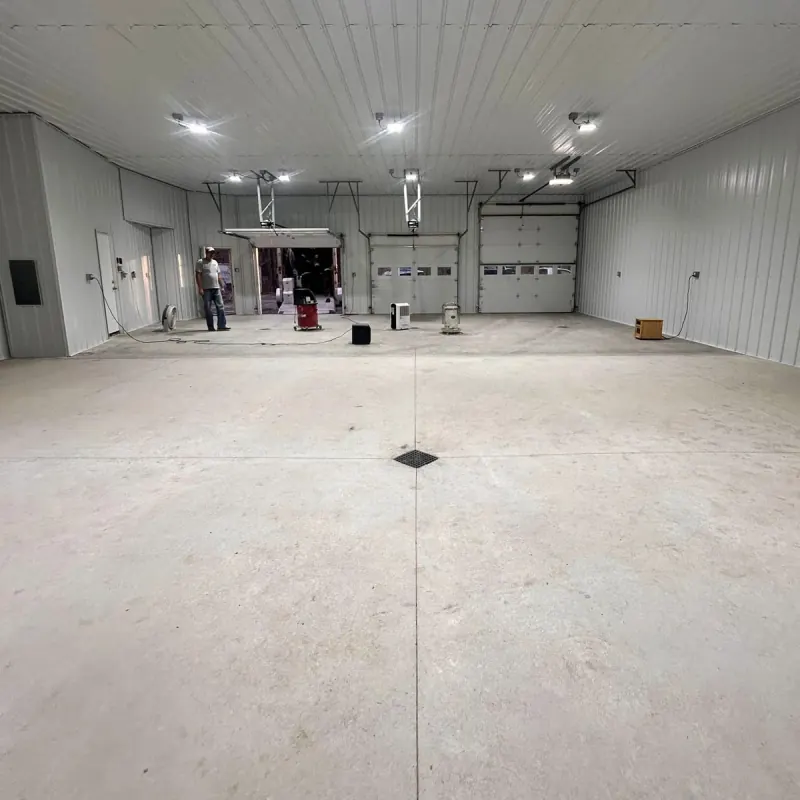
You clear the garage the night before. We diamond-grind the slab and do the edges by hand, with a vacuum hooked to every grinder. Then every crack and joint gets filled and ground flush.
Barrier, base and flake
If your slab needs the barrier, the primer goes on first and cures overnight. Then the polyurea base coat goes down, and we throw vinyl flake into it until no base shows.

Topcoat, then wait
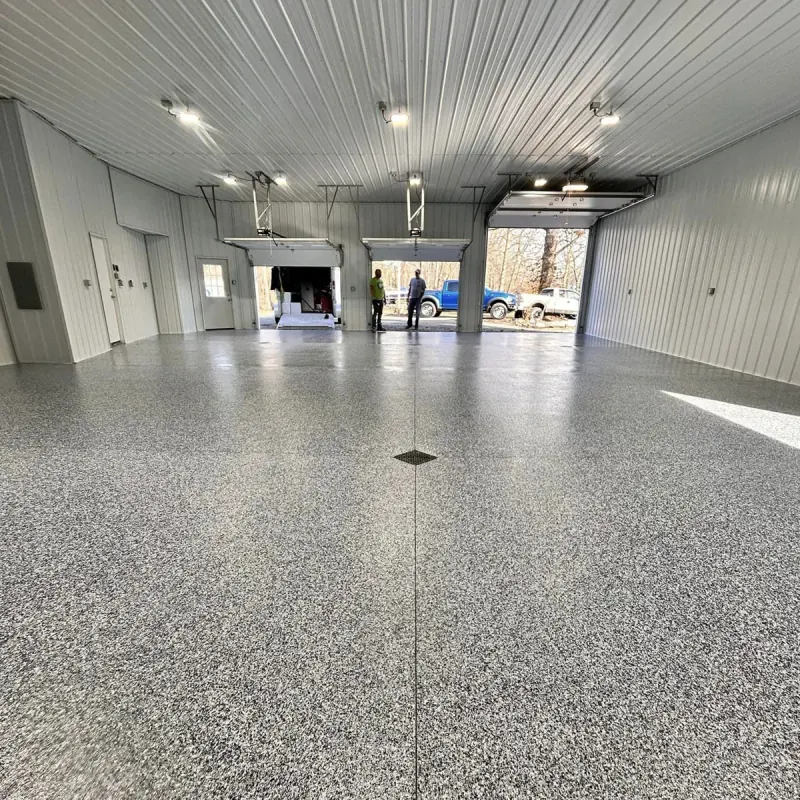
We scrape and vacuum the loose flake and roll on the clear topcoat with anti-slip grit. Walk on it the next morning, and bring the car back after 72 hours.
Garage floor coating cost in Edmonds
Your exact price comes in writing after the estimate. For a ballpark, here's where most pro-installed floors land across the Seattle area.
- $1.6K–$5.8Kmost two-car garages
- $4–$12per square foot, installed
Size moves your number most. After that come the cracks to fill, any old paint to grind off, and whether your slab needs the moisture barrier, which is more common on older and hillside slabs. Premium includes the barrier, cove base, coated steps if you have them, a flake design session and a one-year checkup at no extra charge.
Selling next spring? Tell us. A full Premium floor may be more than you need, and we'll say so. Our Seattle-area cost guide breaks prices down by garage size.
From the Bowl to Perrinville
We cover all of Edmonds, from the view streets above the ferry dock to the cul-de-sacs off Olympic View Drive. A few neighborhoods are below, by ZIP code. Don't see yours? You're still covered.
- 98020
- The Bowl
- Westgate
- Firdale
- Sherwood
- Five Corners
- 98026
- Perrinville
- Seaview
- Maplewood
- Meadowdale
- Esperance
Esperance is covered whether or not it joins the city. Just over the line, we also work in Shoreline, Lynnwood and Mukilteo.
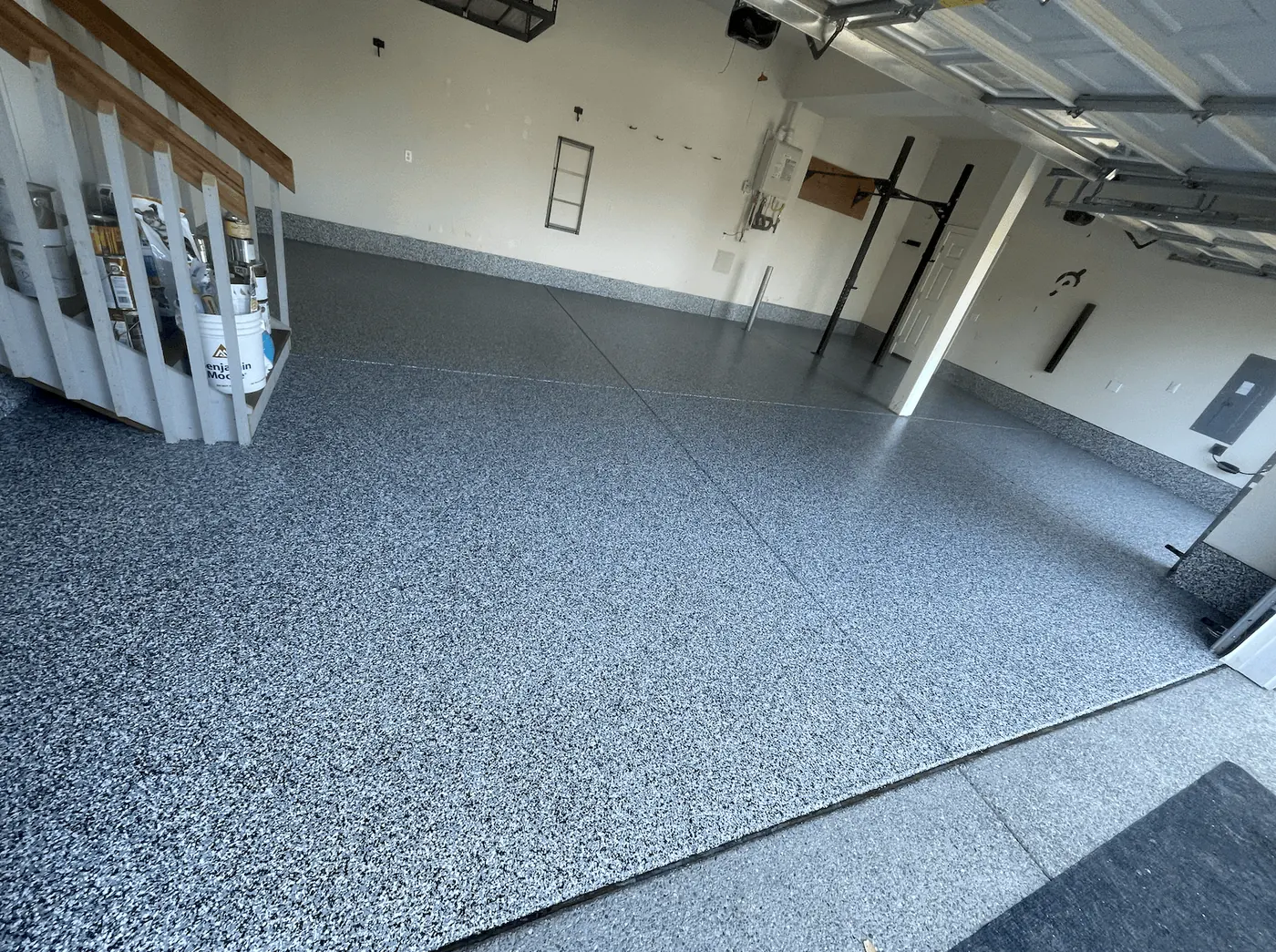
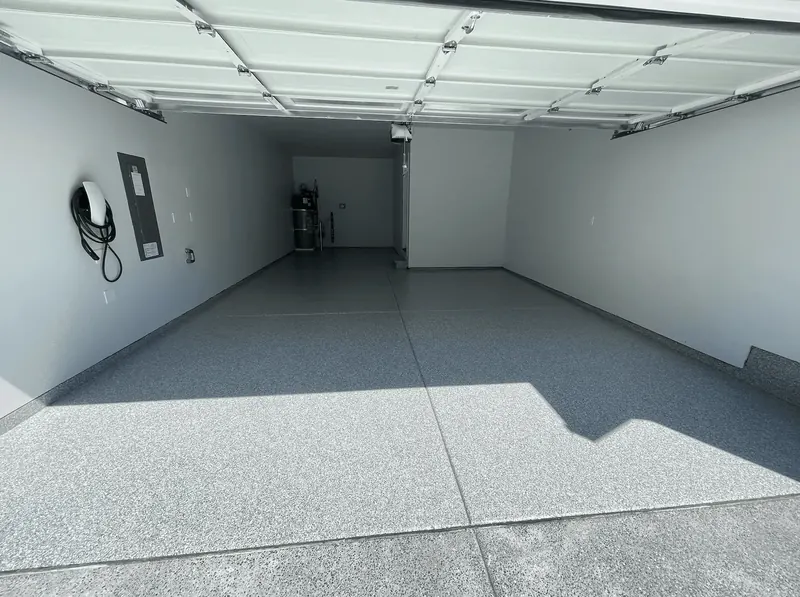
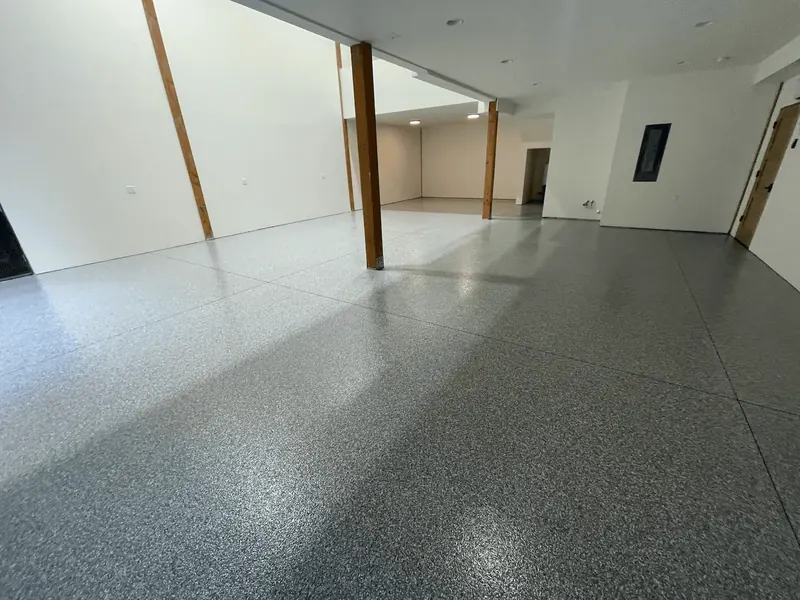
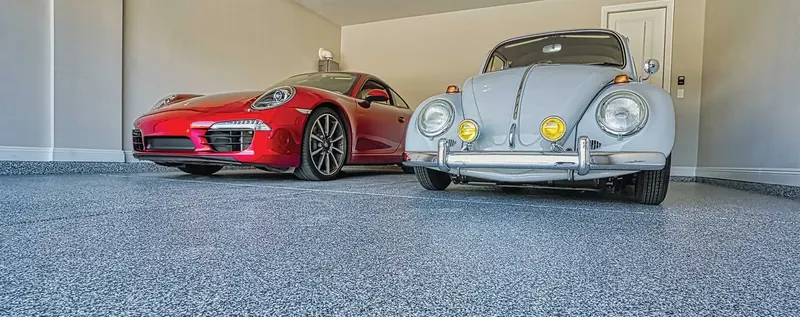
Flake blends that hide a little beach sand
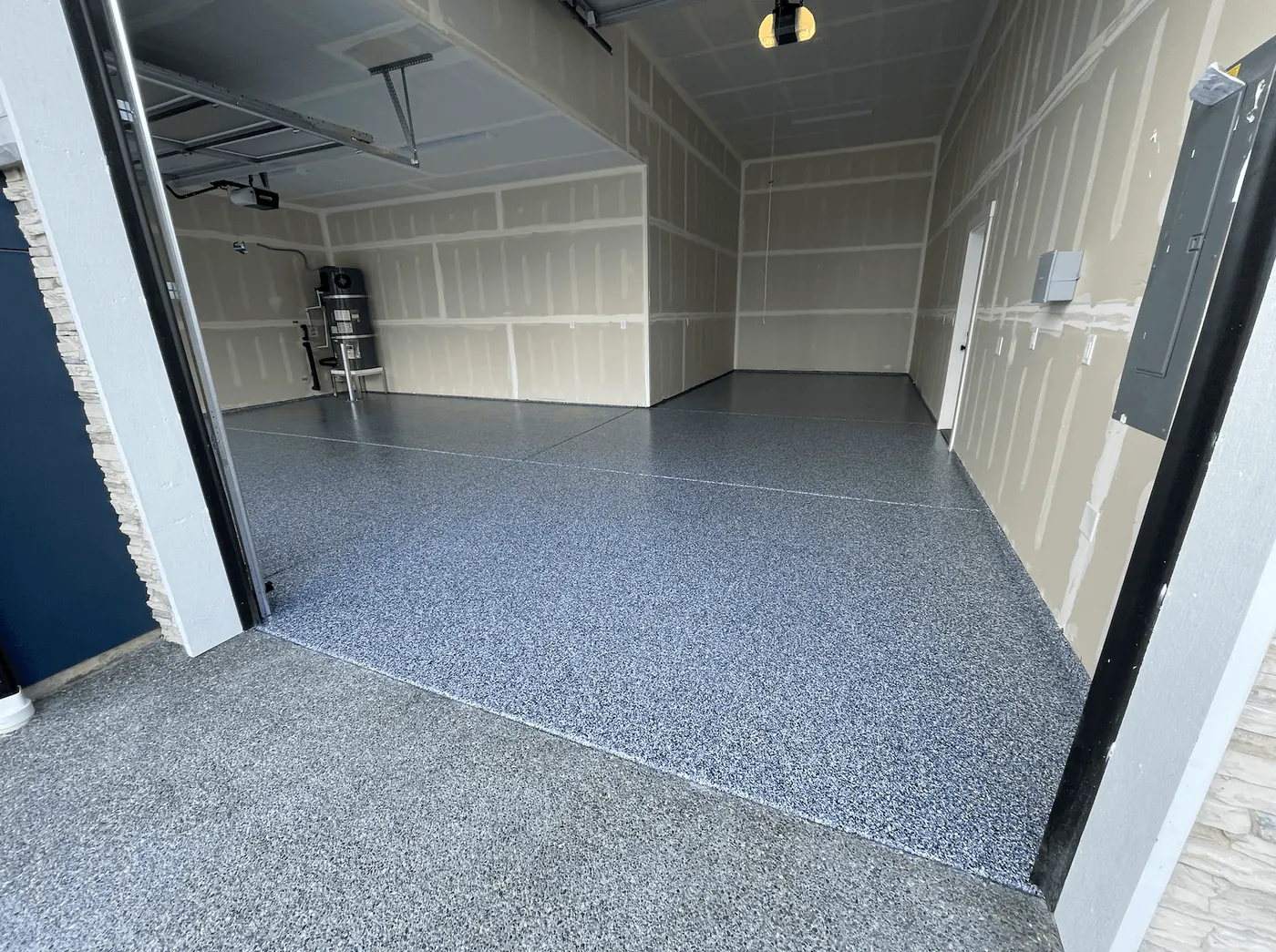
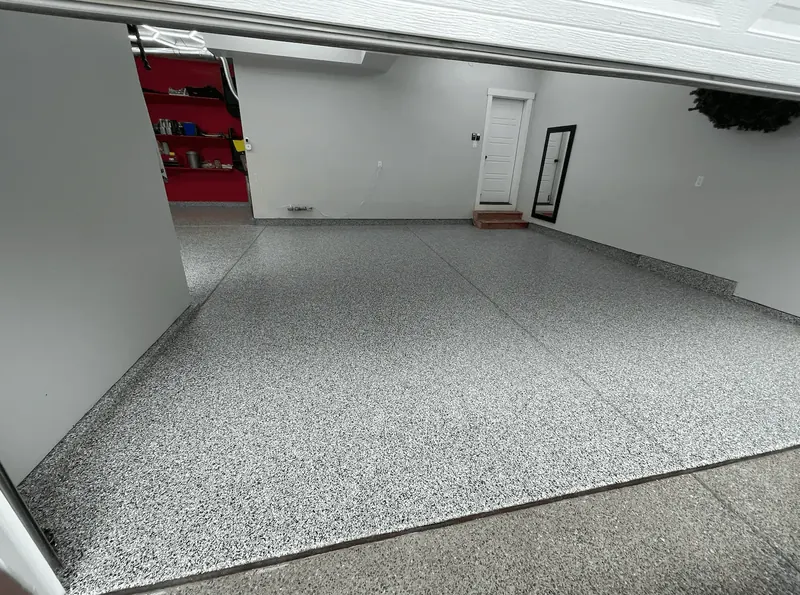
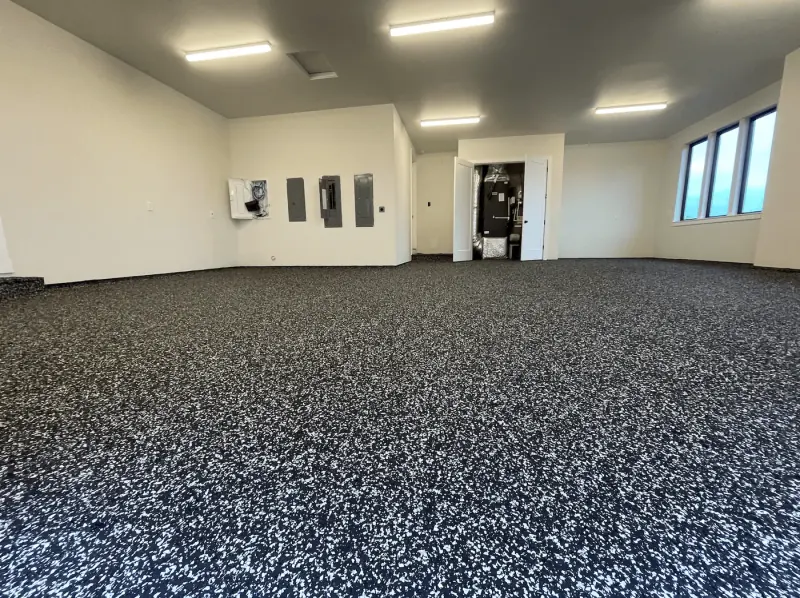
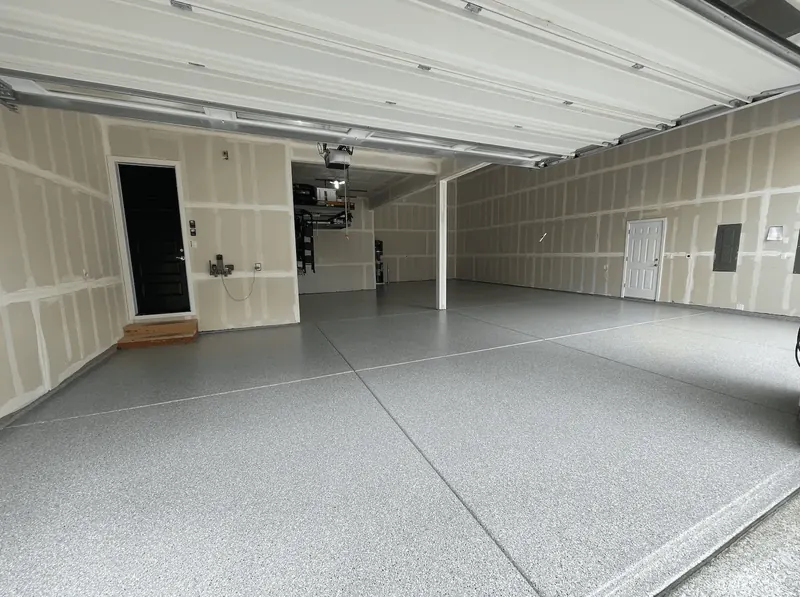
Seven blends, photographed in finished garages. A busy blend hides sand and dust between sweeps. See the full gallery, or try a color on a photo of your own garage.

Edmonds garage floor questions, answered
How much does garage floor coating cost in Edmonds, WA?
Across the Seattle area, most pro-installed two-car floors run about $1,600 to $5,800. Where yours lands depends on size, cracks, old paint, and whether your slab needs the moisture barrier, which is more common on older and hillside slabs. You get the exact figure in writing after the free estimate, and our cost guide breaks it down by garage size.
Do you install epoxy garage floors in Edmonds?
We install the upgrade over an epoxy floor. It has the same ground prep and the same full-flake look, with a polyurea base and a clear polyaspartic topcoat. It cures fast enough that your car is back in three days, it bends a little as the slab moves, and it holds its color in the sun. See how it compares to epoxy.
Our garage is cut into the hill. Can it still be coated?
Usually, yes. A garage dug into a slope is the riskiest kind for moisture. So we take readings in several spots, starting at the uphill wall, and look for chalky deposits and dark patches. If they call for it, the barrier primer goes down first and your install takes two days. Cove base carries the coating a few inches up the wall, so that edge wipes clean.
Is a coated floor slippery when the dog comes back wet?
Less than you'd think. The clear topcoat has anti-slip grit in it, so a wet floor still gives paws and shoes some bite. Water sits on top instead of soaking in, so a squeegee clears the puddle in a minute. Bare concrete stays damp for hours after the same shake.
Is it worth coating the garage in an older Edmonds house?
If you're staying a few years, usually yes. An older slab has had decades to soak up oil and shed dust onto whatever you store. Coated, it wipes clean and looks finished. If you're selling soon, a full Premium floor may be more than you need. Tell us your plans, and we'll price the simpler option too.
Can you coat a garage floor in an Edmonds winter?
Yes. Our system keeps curing in the cold that stalls epoxy, so fall and winter installs work once your slab passes the moisture test. Deep winter, when the ground is wettest, gets our most careful reading. Cold-month dates are also easier to get, since most people call in spring.
Do you cover Esperance and the rest of 98026?
Yes, all of it, and Esperance is covered whether or not it joins the city. That takes in Perrinville, Seaview, Maplewood, Meadowdale and Lake Ballinger. On the 98020 side, we cover the Bowl, Westgate and Firdale. Woodway, just south, is covered too.
How do I compare garage floor coating companies in Edmonds?
Ask each installer the same four things. Do you diamond-grind or acid-etch? Do you test the slab for moisture before you quote? Is the price itemized line by line? What does the warranty cover, in writing? We grind, we test first, we itemize every line, and our floors carry a lifetime adhesion warranty. More questions worth asking.
Find out what your Edmonds slab needs
We'll come to your house, read your slab for moisture and price the floor line by line. Your floor carries a lifetime adhesion warranty, and you're free to think it over.