
Garage Floor Coating in Federal Way, WA
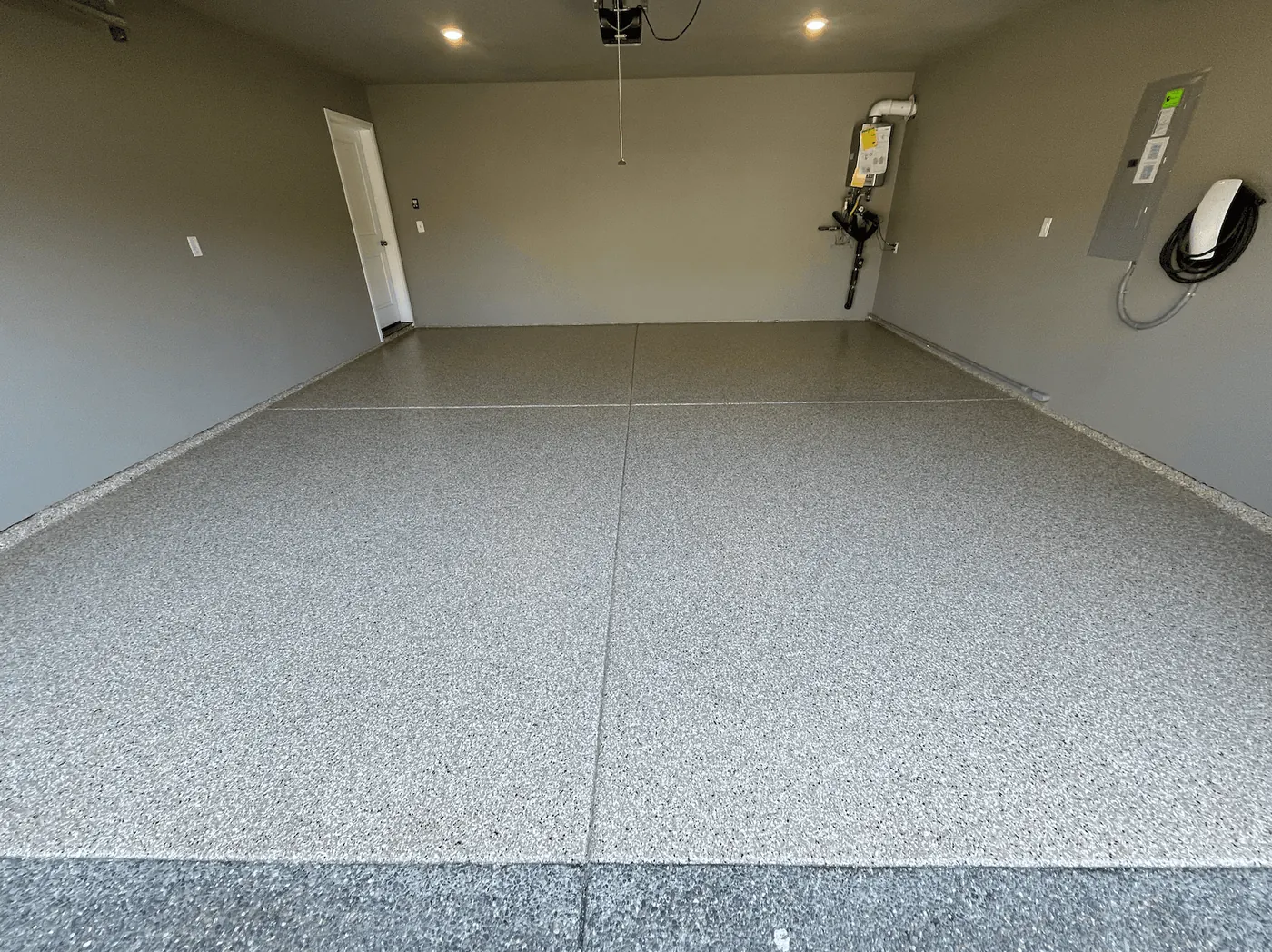
See that crack in your Federal Way garage floor? It's older than your car, and the sealer someone rolled on wore off years ago. We fill the crack, grind the slab and lay our garage floor coating, full flake under a clear topcoat that wipes clean. The estimate at your house is free.
- Free estimate at home
- Every crack filled
- Park after 72 hours
- Lifetime adhesion warranty
Federal Way garage floor coating, layer by layer
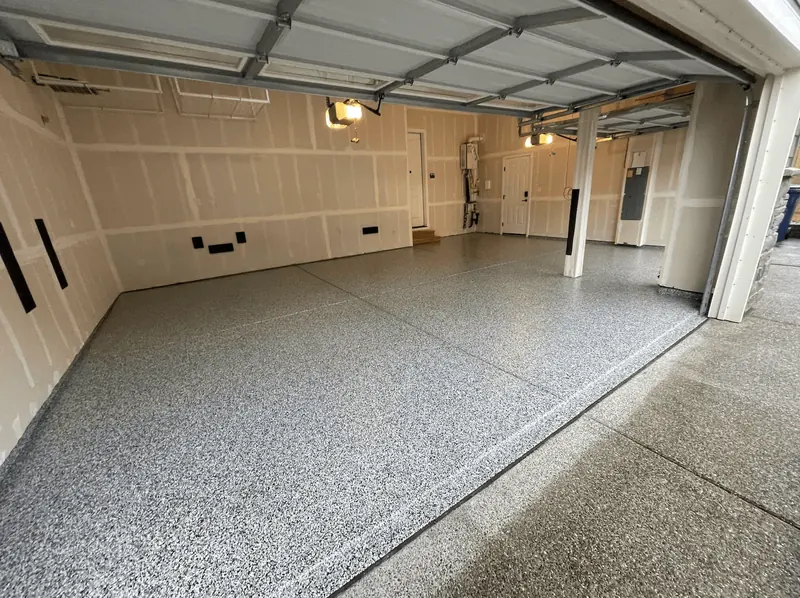
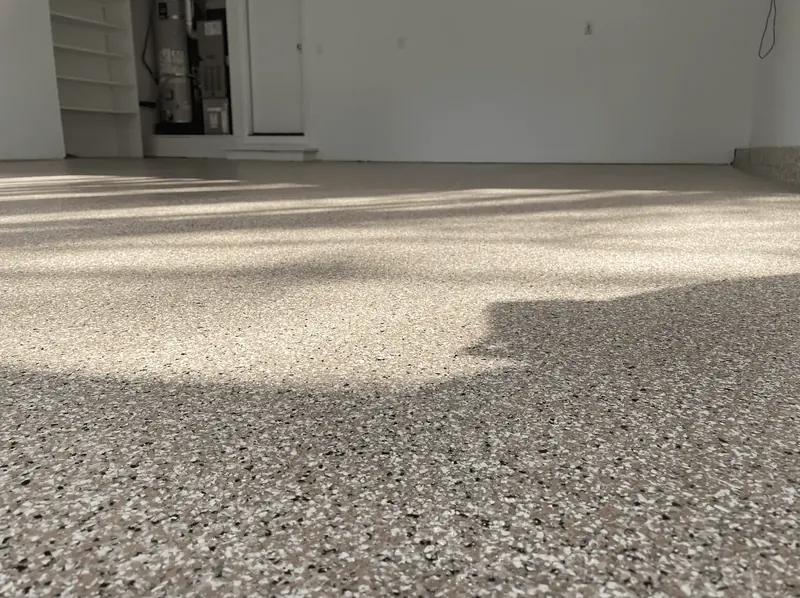
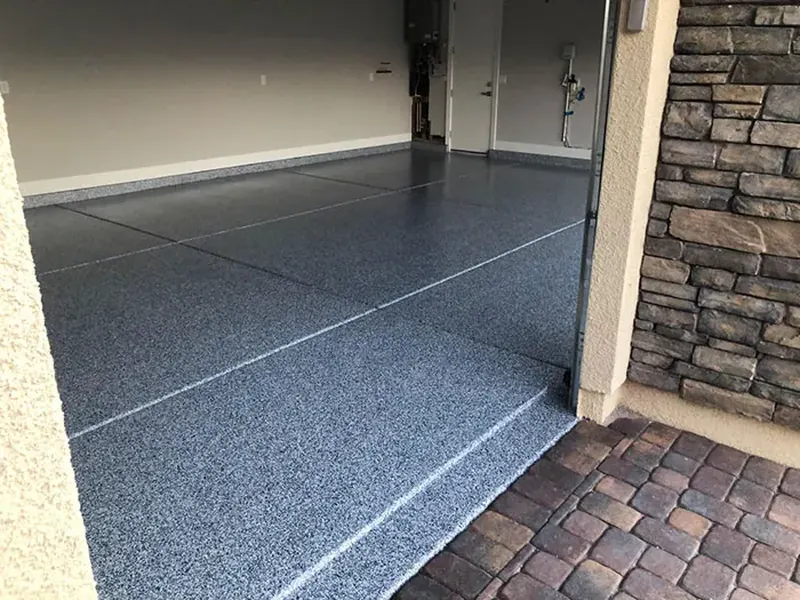
Task Force Garage installs garage floor coatings in Federal Way, WA. It starts with a free estimate at your house and a moisture test. Then we diamond-grind the slab, fill its cracks and lay a polyurea base coat under a full broadcast of vinyl flake. A clear polyaspartic topcoat with anti-slip grit goes on last.
Had an epoxy garage floor in mind for your Federal Way house? Ours is the upgrade over epoxy. It goes on the same ground slab with the same flake look, then cures faster and stays flexible as the concrete moves. It won't yellow in the sun, and your car is back inside after 72 hours instead of about a week.
A dry slab takes one working day. If yours needs our moisture barrier primer, it takes two, because the primer cures overnight. Either way, you can walk on the new floor the next morning.
Is your garage from the 70s or 80s?
Federal Way filled in fast after I-5 opened, and more than four in ten homes here went up in the 1970s and 80s. If yours is one of them, your garage slab has seen four or five decades of winters.
A slab that age usually shows it. You'll see settling cracks, control joints that have opened up and oil worked deep into the tire lanes. There may be a sealer or a weekend epoxy kit flaking off, too. We grind all of it down to clean concrete and fill every crack flush, so your new floor bonds to sound concrete.
Slabs that age often sit right on the ground, with no plastic sheet under them. That's why the moisture test comes before the price, and why your house's age counts as one of the warning signs we weigh. Which cracks are routine, and which aren't.
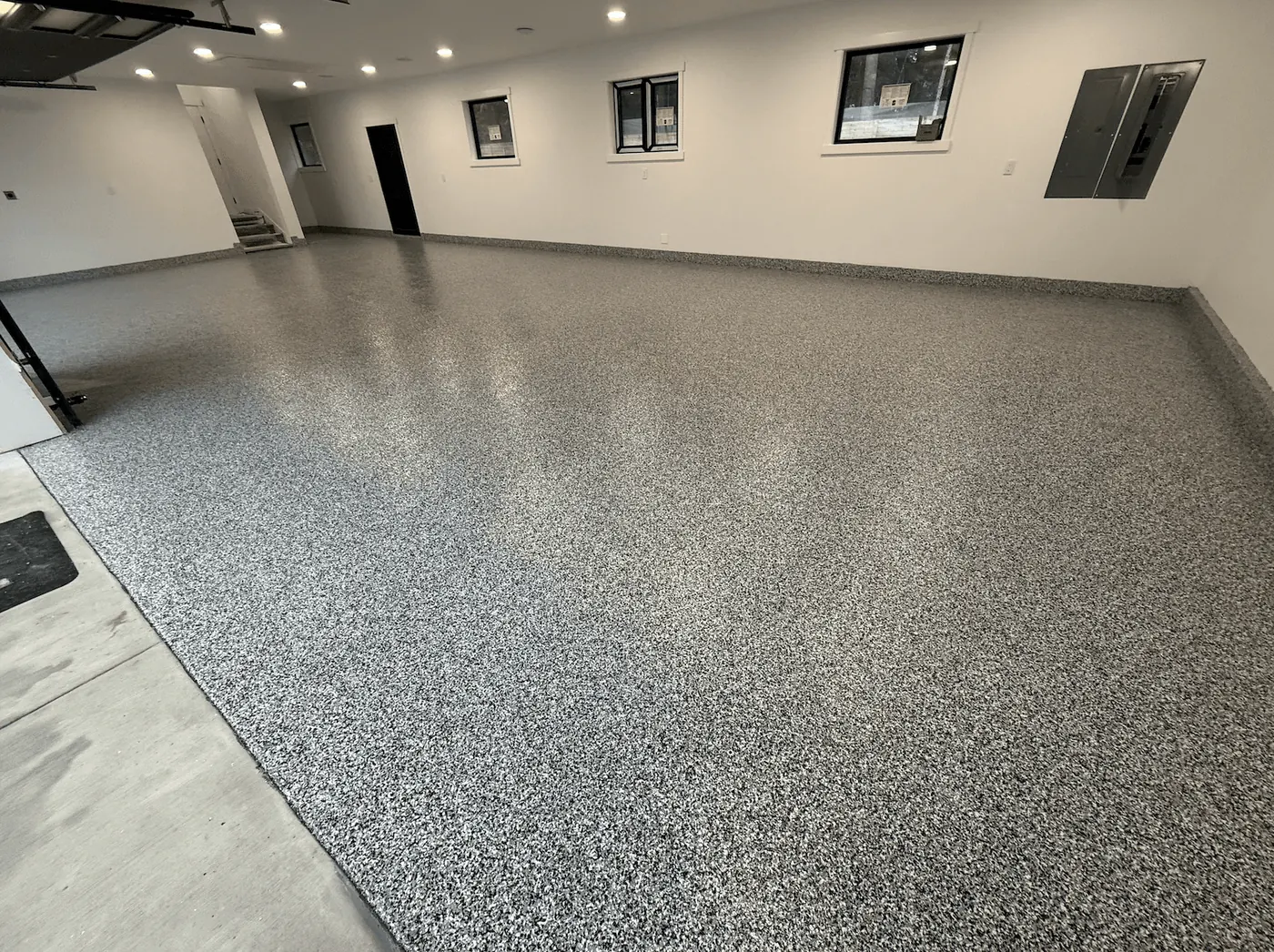
Split-level, rambler or two-story?
Your house style says a lot about your garage. Here's what each kind usually needs from us, and what you get out of it.
 Split-level
Steps to the door
Your split-level garage likely has a few concrete steps up to the door. Bare ones chip and stay slick when wet. We coat them in the same flake, and Premium includes them.
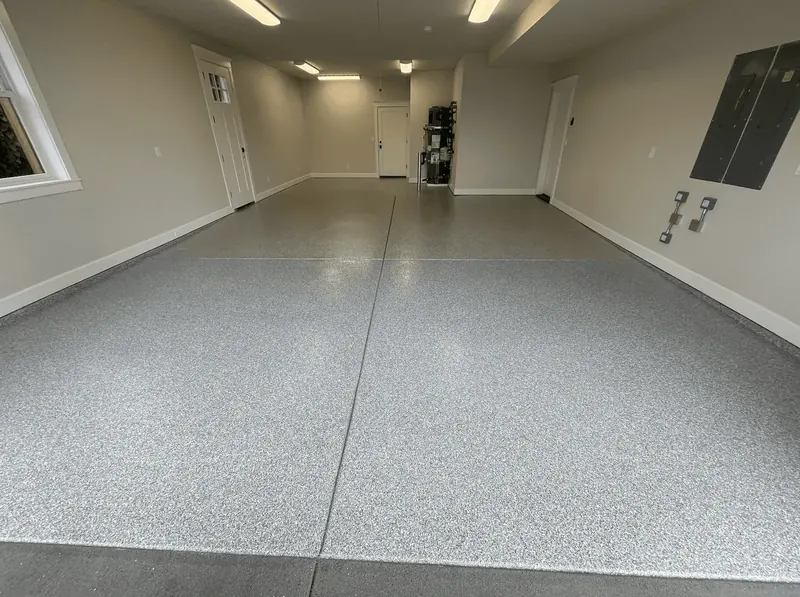 Rambler
Wide and jointed
A rambler's garage is usually one wide slab with a control joint or two. We fill the joints and the cracks beside them, then grind them flush, so your flake runs wall to wall.
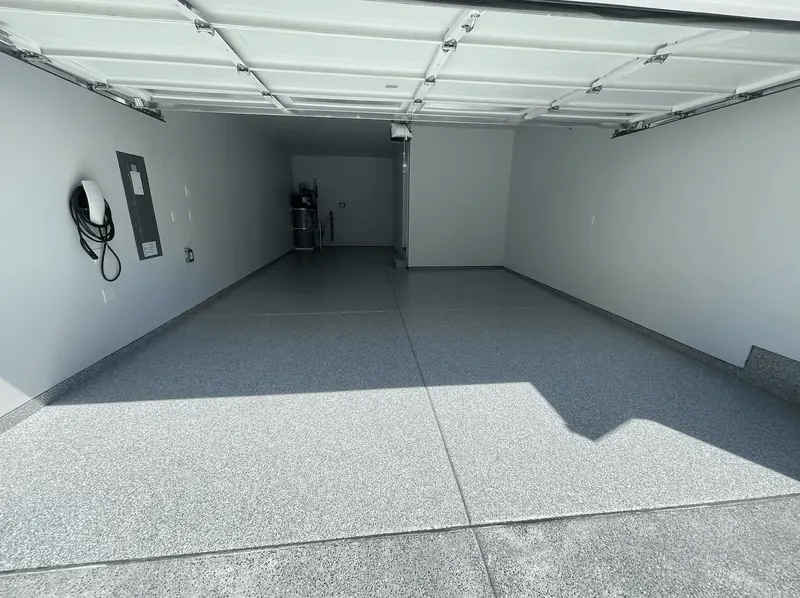 Two-story
Usually sound
A 90s or 2000s house usually has a sound slab, maybe with a worn sealer and a few settling cracks. We grind and fill those. Just built? Give new concrete about four weeks first.
Live near Steel Lake or down by Dumas Bay?
Federal Way is dotted with small lakes, from Steel Lake and Mirror Lake to the two lakes at the heart of Twin Lakes. On the west side, the land drops to the Sound at Dumas Bay and Dash Point.
A lot near the water tends to sit low, where the ground stays wet longer. A hillside lot can put your garage floor below the dirt outside, which is the biggest single moisture risk we test for. Either way, we read your slab in several spots, and a high reading puts our moisture barrier primer down first.
If you launch at Steel Lake, you know what a wet trailer leaves on a garage floor. On full flake under a clear topcoat, the lake water and grit squeegee out the door instead of soaking into the concrete.
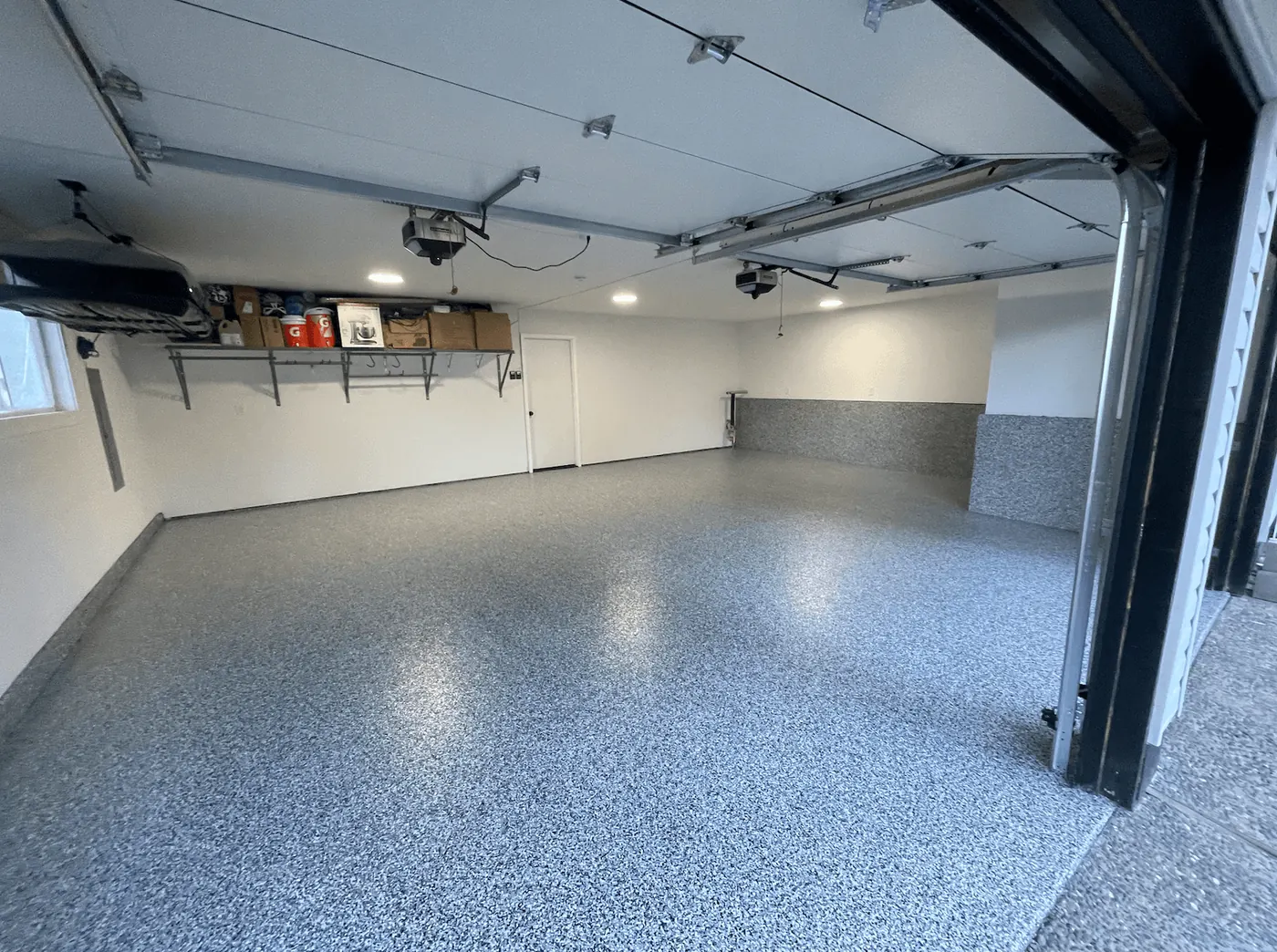
Federal Way side streets stay icy longer
When it freezes, city crews brine and plow the major arterials first, then the collector streets and hills. The city says residential streets may not be treated down to bare pavement, so yours can stay slushy after the main roads clear.
Out on I-5, the state's crews spread salt and chloride. Between the two, every drive home carries slush, brine and grit into your garage. Bare concrete drinks it in and dusts up as it dries.
A coated floor keeps all of it on top, where a mop and a squeegee can reach it. The grit in the topcoat keeps your feet under you on a wet morning.
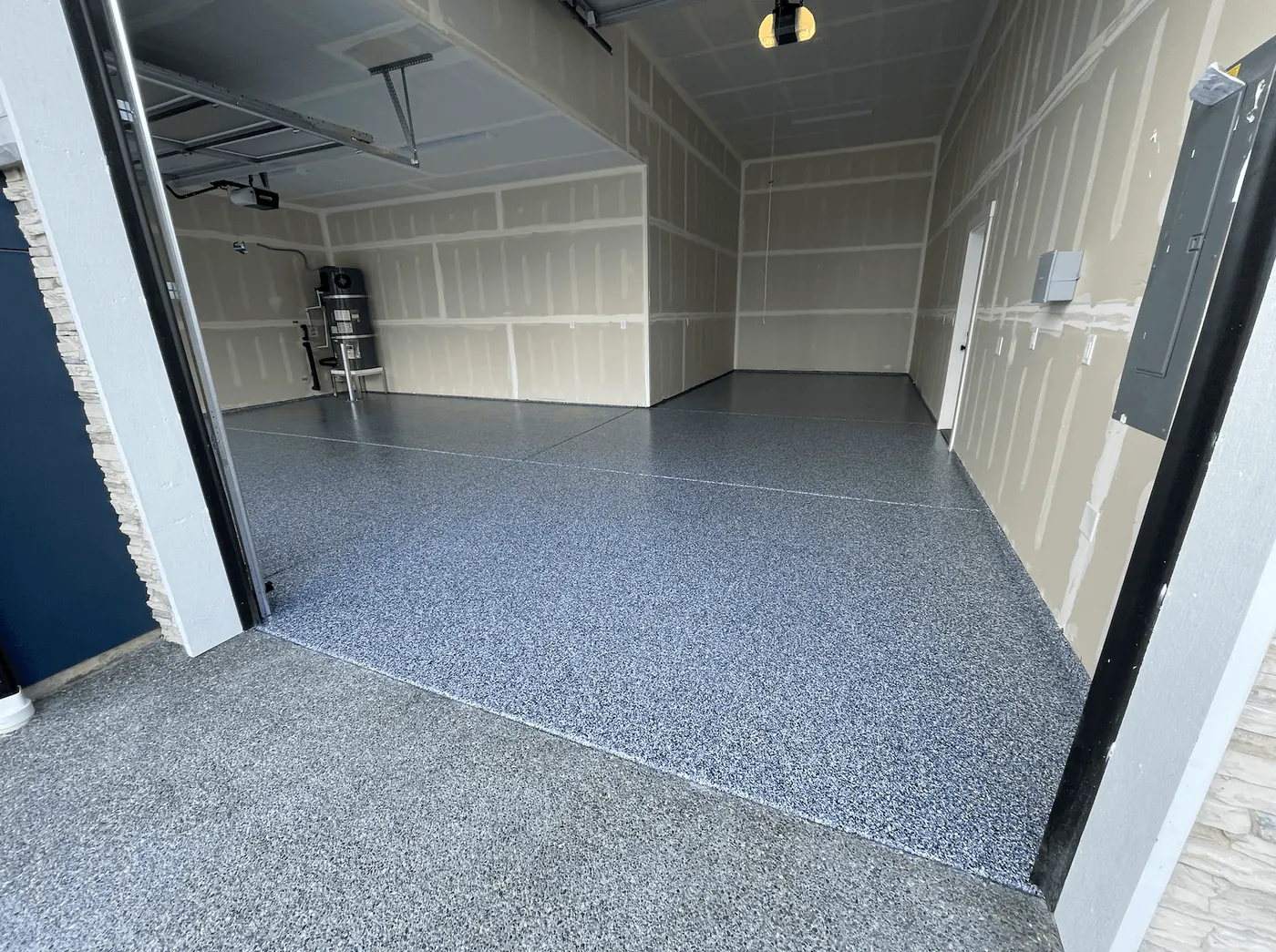
Install day, in order
One working day on a dry slab, or two when the barrier goes in. Here's what happens in your garage, and when you get it back.
Empty and check
You clear the garage the night before. In the morning we re-check the moisture, mark the cracks and tape your walls.
Grind
Diamond grinders take off the old sealer, paint and the stained top of the slab, with the edges done by hand and the dust vacuumed as we go.
Fill and prime
Cracks and joints get filled and ground flush. If your slab needs the barrier, its primer goes down now and cures overnight.
Base, flake and topcoat
The polyurea base coat goes down and we cover it in flake, wall to wall. The clear topcoat with anti-slip grit seals it in.
Hands off
Walk on it the next day and park after 72 hours. Give it a week before the heavy shelves go back.
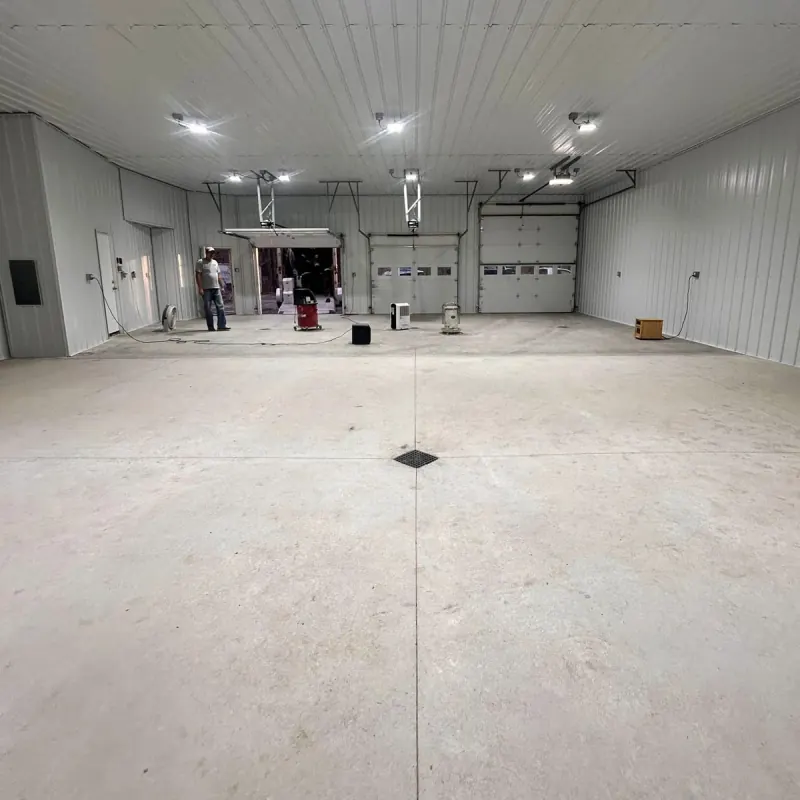
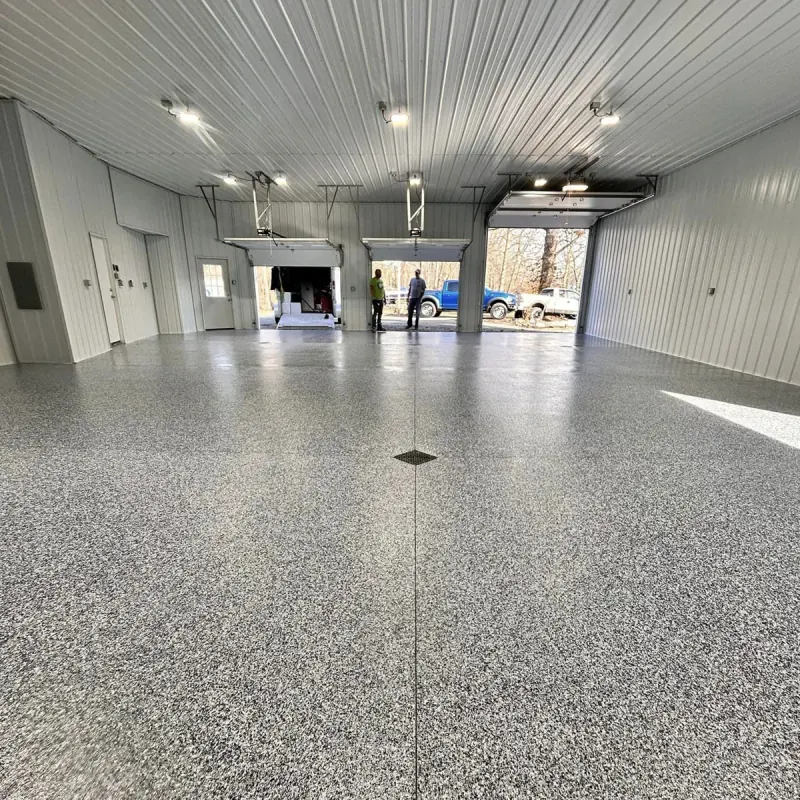
Federal Way garage floor coating cost, ballpark first
Your price comes in writing, item by item, after we measure and test. For a ballpark, here's where most pro-installed floors land across the Seattle area.
- $1,600–$5,800most two-car garages
- $2,500–$10,000a three-car garage
On a slab from the 70s or 80s, old sealer and wide cracks move your number most. So does the moisture barrier, if your test calls for it. Premium includes the barrier, cove base, coated steps, a flake design session and a one-year courtesy inspection.
If nobody parks in your garage and it's mostly storage, a good cleaning may be all it needs right now. We'll tell you that at the estimate. See what Premium includes, or read the Seattle-area cost guide.
Federal Way neighborhoods we cover
We cover all of Federal Way, from the lakes east of I-5 to the bluffs above the Sound. Here are a few neighborhoods by ZIP code. If yours isn't listed, you're still covered.
- 98023
- Twin Lakes
- Lakota
- Dumas Bay
- Wedgewood
- Lake Grove
- 98003
- Steel Lake
- Mirror Lake
- Lake Killarney
- Wildwood
- Adelaide
Are you just over the line? We also cover Auburn, Kent, Burien and Tacoma.
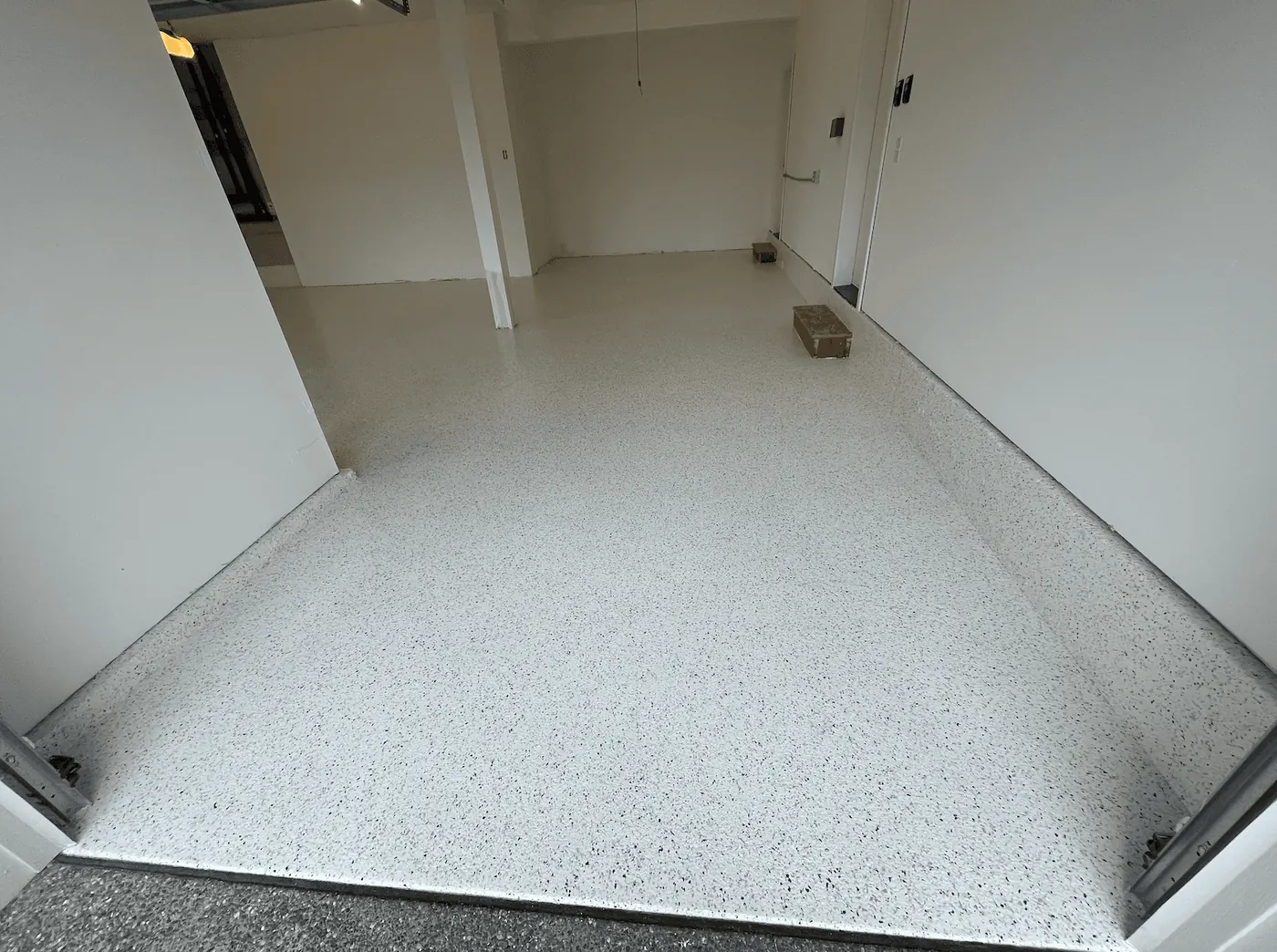
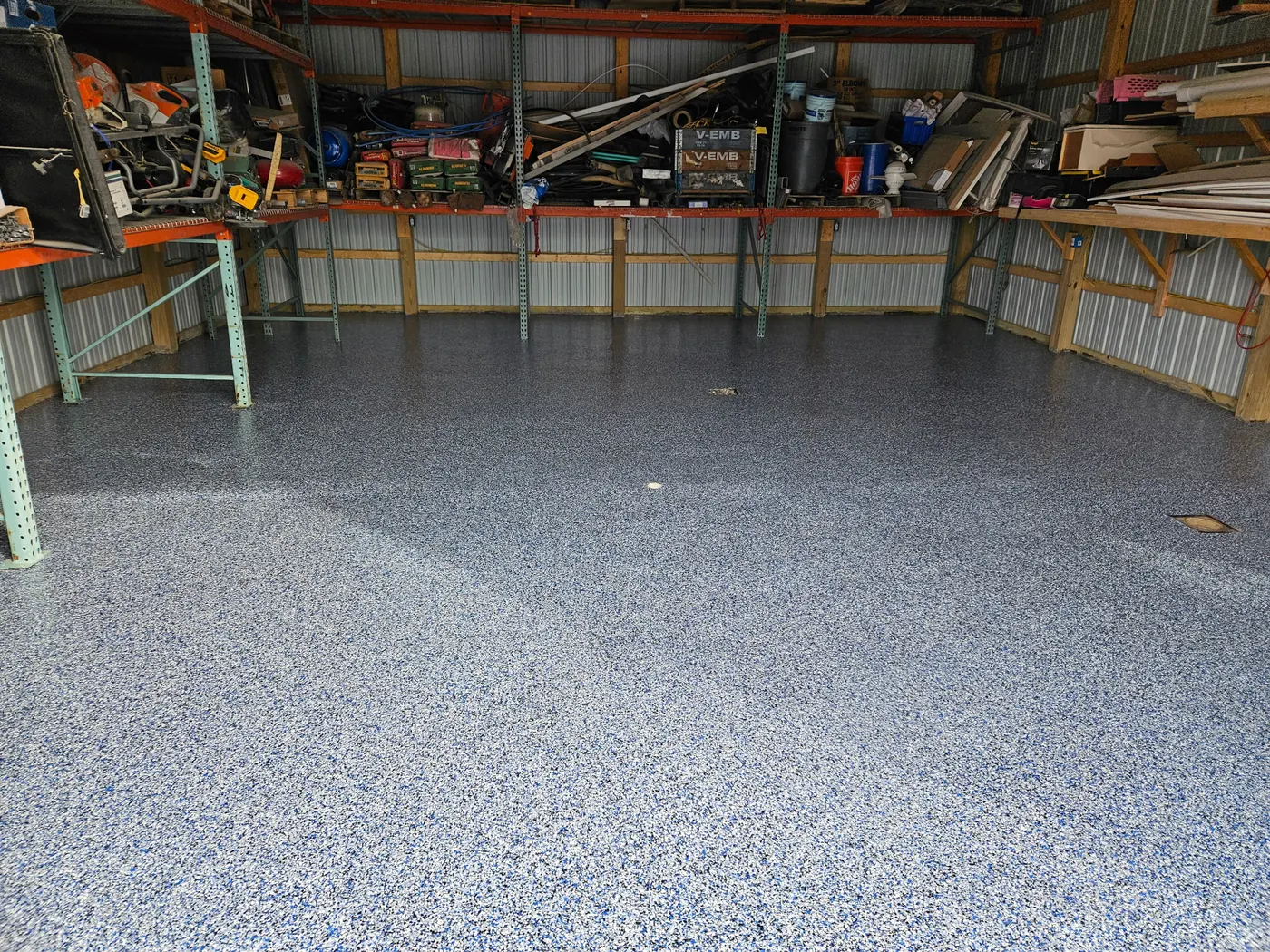
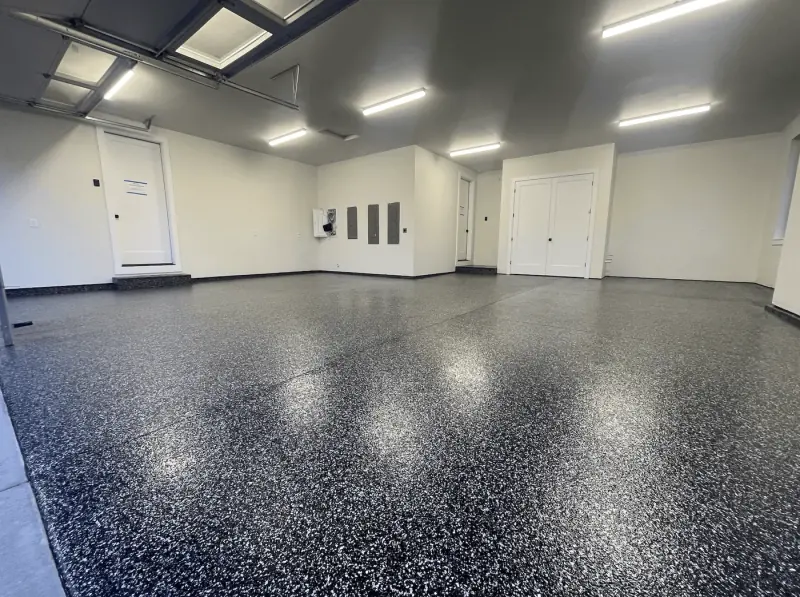
Blends that hide what winter tracks in
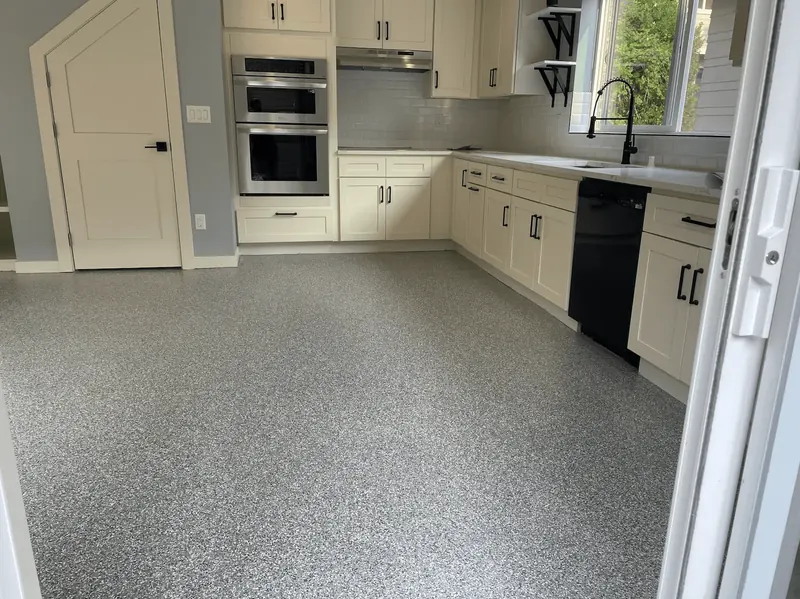
A busy, darker blend hides road salt and dust between cleanings. A lighter one brightens a dim garage but shows more of the mess. See every color, or try one on a photo of your own garage.



Federal Way garage floor questions
How much does garage floor coating cost in Federal Way?
Across the Seattle area, most pro-installed floors for a two-car garage run about $1,600 to $5,800. On a Federal Way slab from the 70s or 80s, old sealer to grind off, crack repair and the moisture barrier move the price most. You'll get the exact number in writing at the free estimate, line by line. See prices by garage size.
Is polyaspartic better than epoxy in Federal Way?
For most garages here, yes. What we install pairs a polyurea base coat with a clear polyaspartic topcoat. Next to plain epoxy, it cures in a cold garage, flexes as an older slab moves and won't yellow in the sun. You park after 72 hours instead of about a week. Epoxy can still be fine in a warm, dry, shaded garage. Epoxy, honestly.
Can you coat over the old epoxy in my garage?
Sometimes. If the old epoxy is stuck down everywhere, we grind it dull and coat over it. If it's peeling or hollow anywhere, it comes off to bare concrete first, because a new floor only holds as well as the layer under it. We tap, tape and meter it at the estimate, so you'll know which before you see a price. How we decide.
Do you coat the steps up into the house?
Yes. Coated steps match the floor, grip better than bare concrete and stop the chipping on the edges. They're included at no extra charge with Premium, along with the moisture barrier, cove base, a flake design session and a one-year courtesy inspection. See everything Premium includes.
Do you cover Twin Lakes and the Dash Point Road area?
Yes. We cover all of Federal Way, west side and east, including Twin Lakes, Lakota, Dumas Bay, Steel Lake and Mirror Lake. If your garage sits on a hillside lot toward the Sound, expect extra moisture readings at the estimate. A floor below the ground outside is the biggest single moisture risk we look for.
Our house is near Steel Lake. Will the slab be too wet to coat?
Usually not, and you'll know for sure at the estimate. We meter the slab and look for white chalky deposits, damp patches and peeling paint. A high reading, or two signs, puts the barrier primer down first and makes it a two-day job. Standing water in the garage is a drainage problem to fix first, and we'll tell you so before you spend anything.
Who installs garage floor coatings in Federal Way?
We do. Our crew follows the same steps in every garage. Your slab gets a moisture test before you see a price, then diamond grinding (never acid etching), every crack filled, and full flake under a clear topcoat. The free estimate is a short visit to your house, and your written price lists every line. The floor carries a lifetime adhesion warranty.
How long will we be without our garage?
Plan on one working day for a dry slab, or two if the barrier goes in, since the primer cures overnight. You can walk on it the next day and park after 72 hours. The floor keeps hardening for about a week, so wait a few days before you roll heavy toolboxes back in.
Put a real number on your Federal Way garage
We'll measure, test your slab for moisture, check every crack and price the floor line by line, in writing. The visit takes about 20 minutes, and you never have to sign on the spot.