
Garage Floor Coating in Issaquah, WA
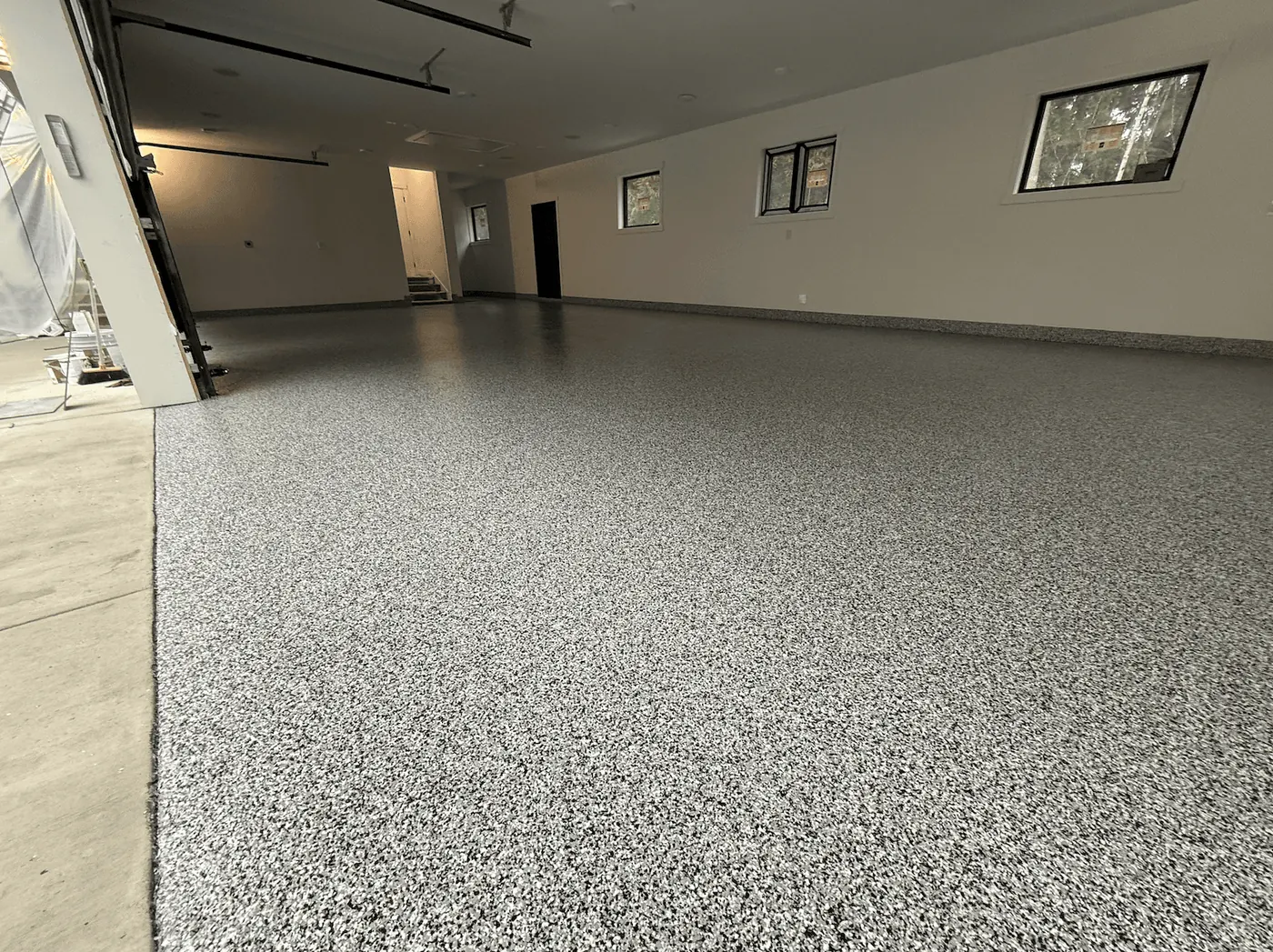
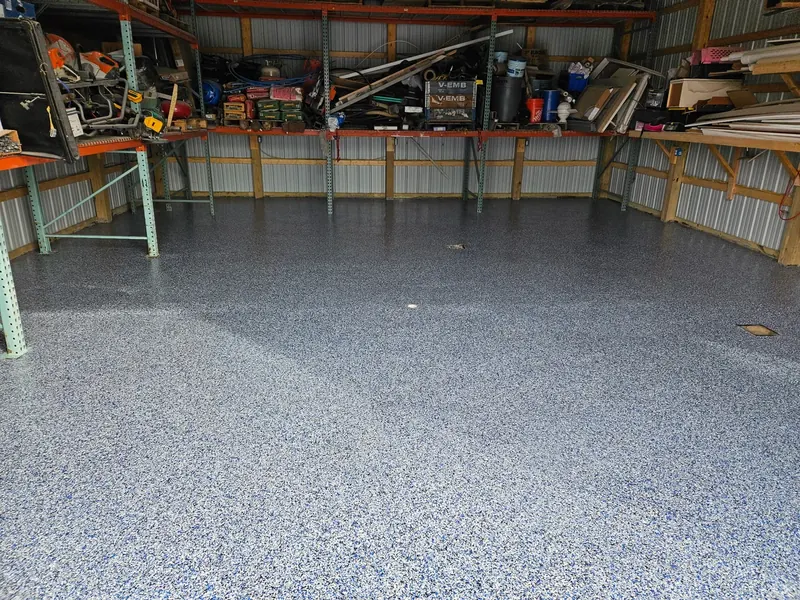
In Issaquah, your garage is where the trail ends. Your muddy boots from Tiger Mountain land there, and so do the wet dog and the bikes. Our garage floor coating gives your bare slab full flake under a clear topcoat you can hose clean. The estimate is free, at your house.
- Free estimate at home
- Moisture-tested first
- Cars back in 72 hours
- Lifetime adhesion warranty
Garage floor coating for Issaquah homes
Task Force Garage installs garage floor coatings in Issaquah, WA, from Highlands townhomes to older homes in the valley. We grind your slab with diamonds, fix its cracks, and build a polyurea base coat, full vinyl flake and a clear polyaspartic topcoat with anti-slip grit. Every slab gets a moisture test, and the estimate at your house is free.
Shopping for an epoxy garage floor in Issaquah? What we install is the upgrade over epoxy. It cures faster and stays flexible as your slab moves, and the clear top won't yellow where the sun hits it. Your car goes back in after 72 hours instead of about a week.
Rain doesn't hold up the job, since the coating goes down indoors. Our system also cures in the cool, damp months that push most epoxy installs to summer. All your slab has to do is pass the moisture test.
The estimate takes 15 to 20 minutes. You'll leave it with a written, itemized price, and you can take as long as you like to decide.
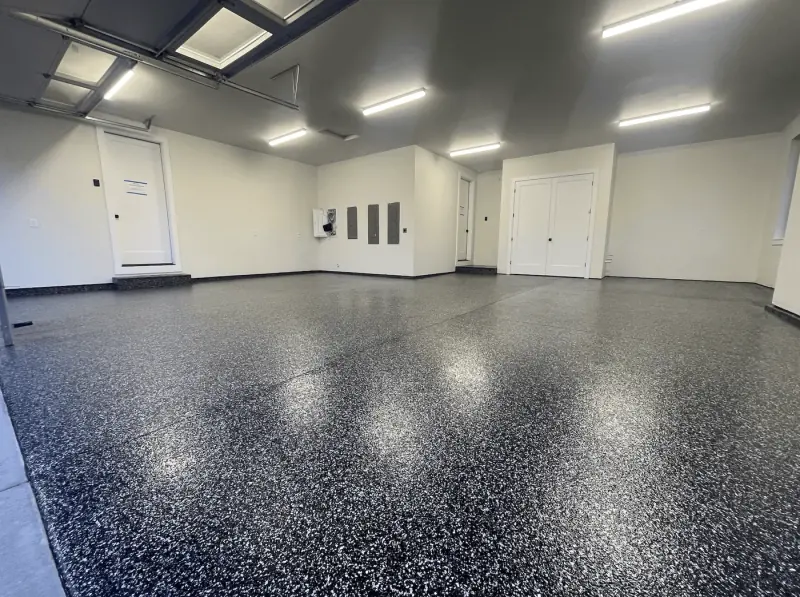


Which Issaquah garage is yours?
More than half of Issaquah's homes went up after 2000, but the town still runs from Highlands townhomes to older houses near the creek. Each kind of garage asks something different of your floor.
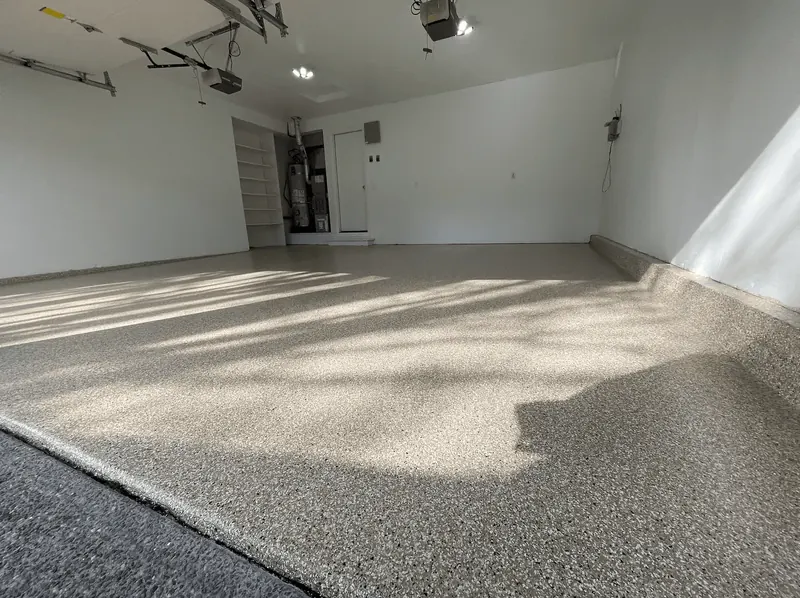 Issaquah Highlands
Townhome garages
Snug garages, often tucked under the living space, with an HOA in the picture. We work to your association's rules on hours and parking, and on Premium we coat the steps up to your door.
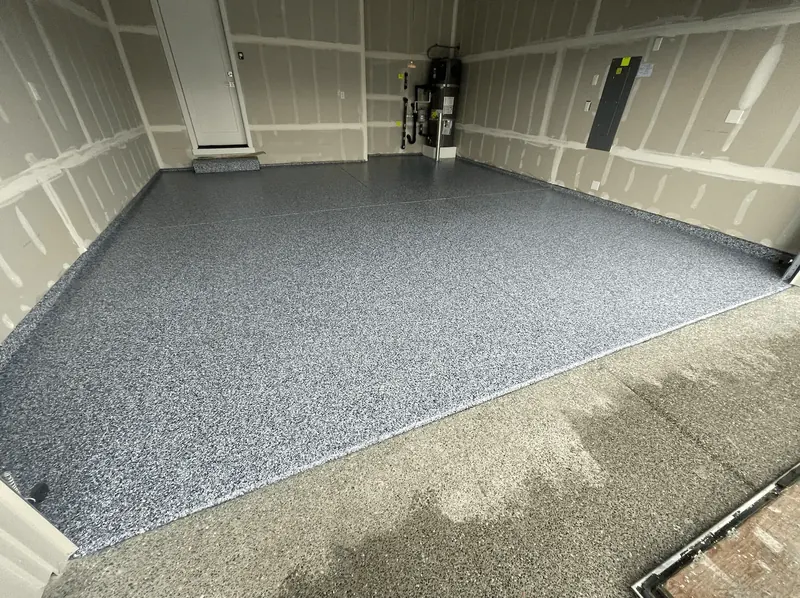 Squak, Cougar, Talus
Hillside homes
On the lower slopes of Squak and Cougar mountains, plenty of garages are cut into the hill. Where the ground outside sits higher than your slab, moisture pushes in, so we read the slab in several spots.
 The valley floor
Older valley homes
Closer to downtown and the creek, some homes predate the 1980s, when builders rarely laid plastic under a slab. Those floors get our most careful moisture read, and often the barrier primer.
Bringing half of Tiger Mountain home?
There's a reason people call Issaquah Trailhead City. Tiger, Squak and Cougar mountains wrap the town on three sides, and Grand Ridge rises right behind the Highlands. So your garage takes the muddy boots, the dripping bikes and the dog who found every puddle.
Bare concrete takes all of that personally. Grit grinds into the surface, and the floor stays dark and damp for days after a rainy hike. On a coated floor the mud sits on top. Hose it toward the door, squeegee it out, and the flake hides whatever grit you miss.
Our anti-slip topcoat keeps your footing when you walk in wet. Hang the bikes, line up the boots, and before long you'll cross that floor in your socks.
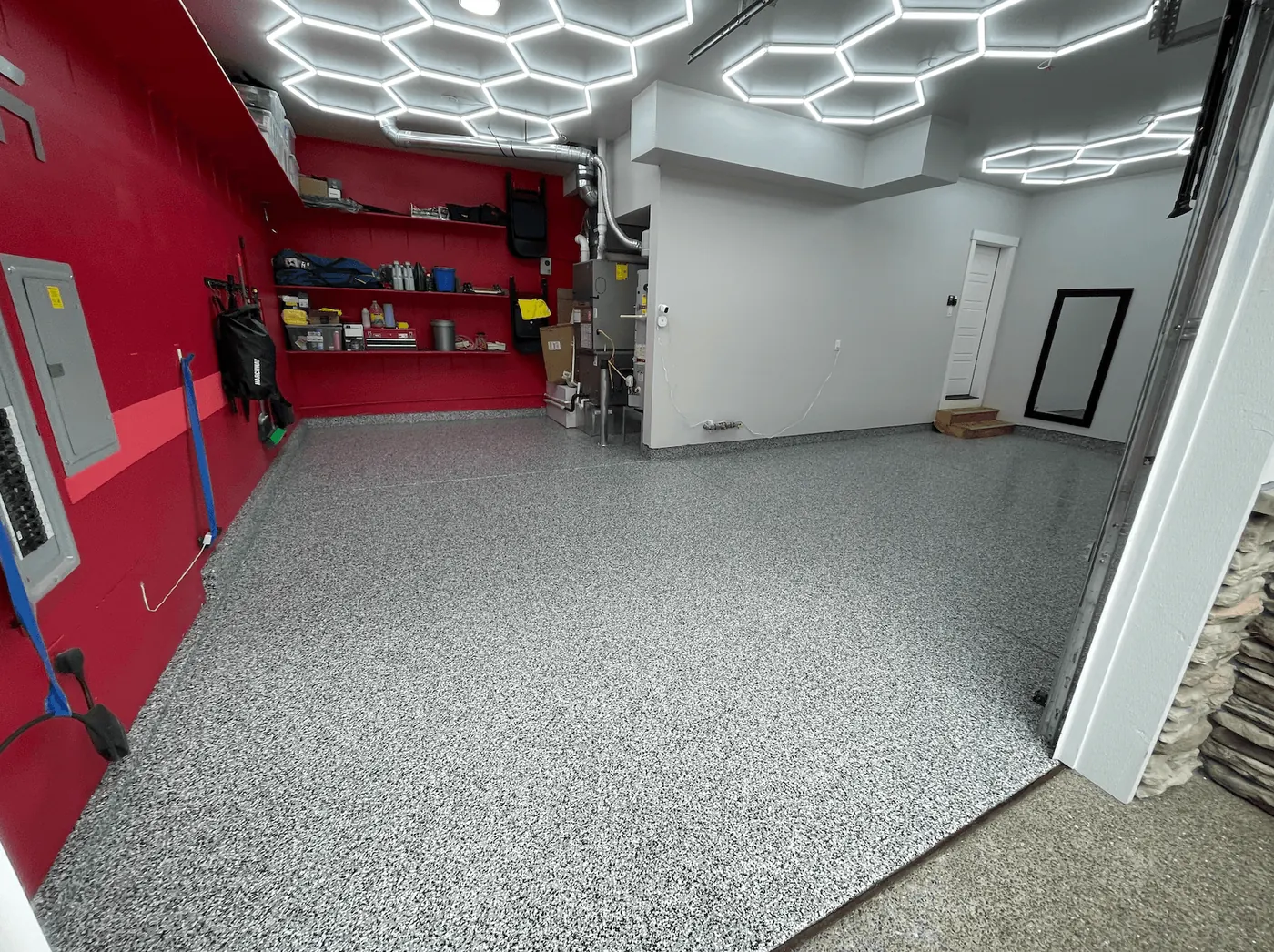
What's inside an Issaquah garage floor coating
Reading up on polyaspartic flooring? Here's how ours is built, from the concrete up, and what each layer does for you.
| Layer | What it does for you |
|---|---|
| Ground slab | Diamond grinding opens your concrete so the base coat bonds into it. We never acid-etch. |
| Barrier primer | Goes on the bare slab first, only when the moisture test calls for it. |
| Polyurea base | Bonds to the ground slab and flexes as the concrete moves. |
| Vinyl flake | Covers your floor wall to wall, builds thickness and hides trail grit. |
| Polyaspartic top | Seals in the flake and carries the grit that keeps wet boots steady. It won't yellow in sun. |
So there is polyaspartic in your floor, on top, where boots and tires do their damage. The polyurea underneath is what lets it cure in a chilly Issaquah garage in January.
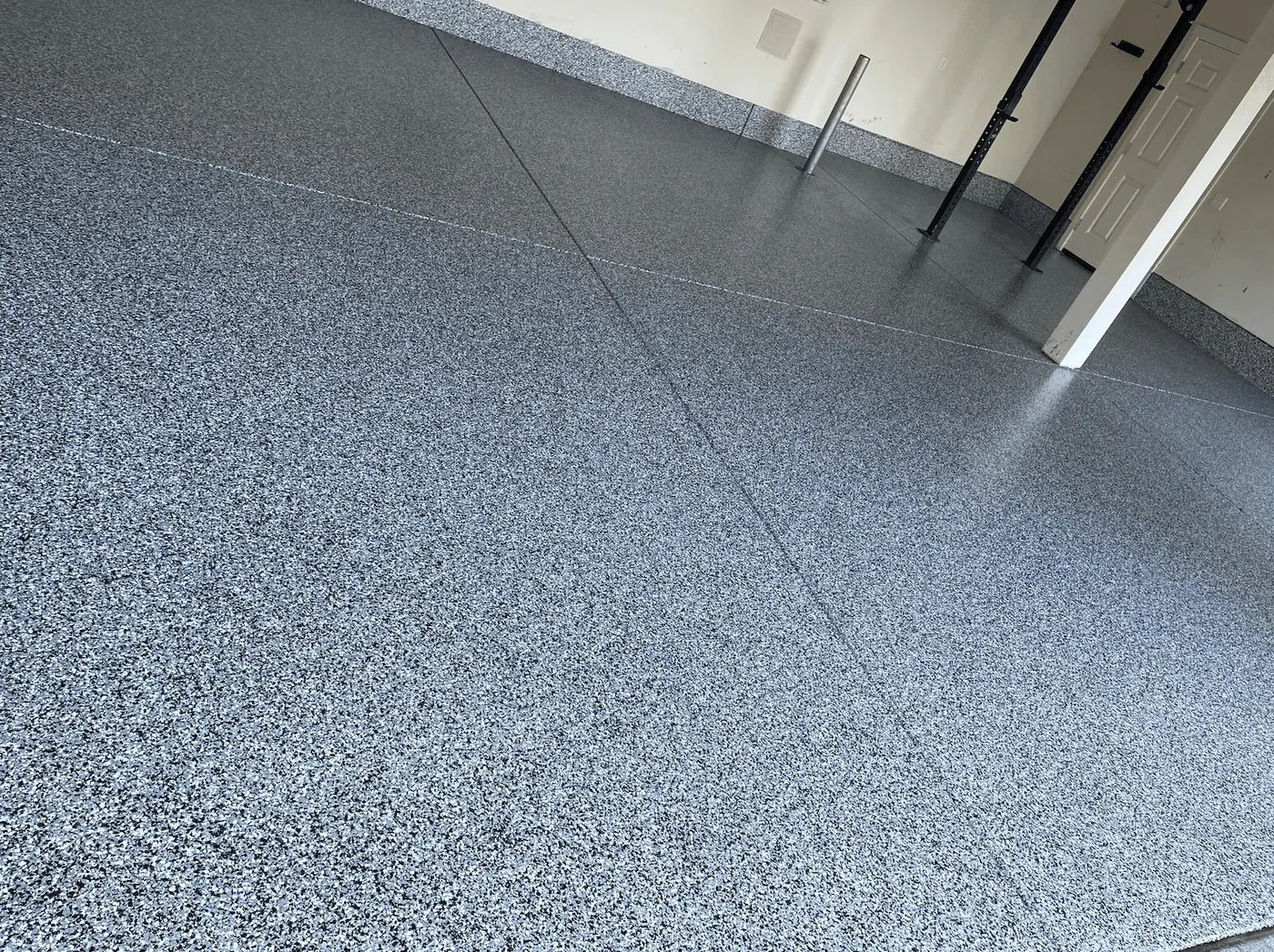
Is your Issaquah garage always damp?
You're not imagining it. Issaquah gets more than half again as much rain as Seattle, and nearly twice the snow. Wet cars and wet boots keep coming in, and a bare slab can stay dark from November into spring.
Down in the valley, Issaquah Creek runs through town to Lake Sammamish, and King County's flood warning system keeps an eye on it. If your home sits low near the creek, or water has ever crept into your garage, tell us at the estimate.
We'll read your slab in more than one spot and look for white chalky deposits, dark patches and old coating that's bubbling. A high reading or two of those signs means our moisture barrier primer goes down first, and your floor takes two days. Our moisture barrier guide explains why.
If storm water actually runs in, from a downspout or the slope, fix that first. No coating stops a stream, and we'll say so before we quote.
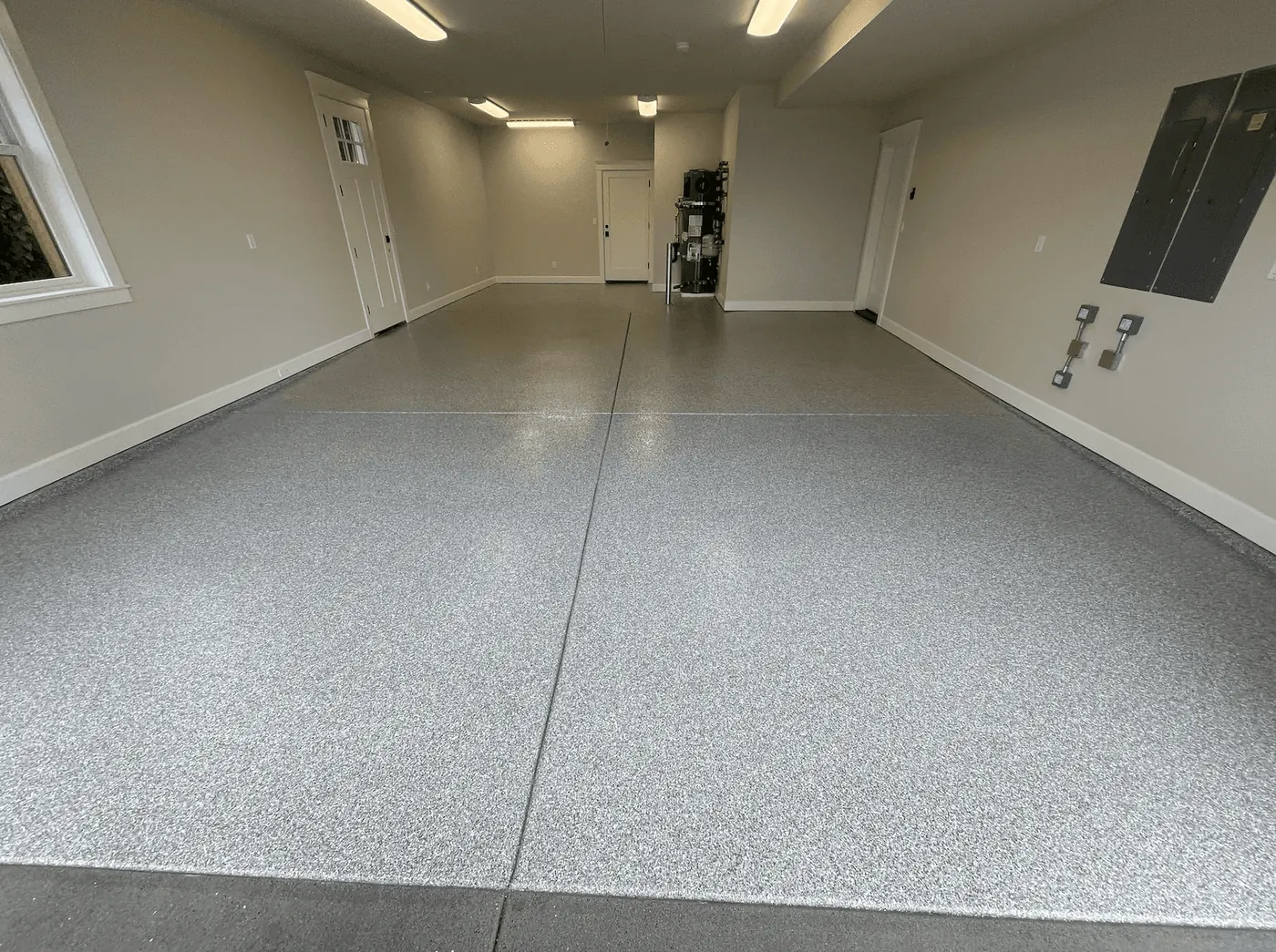
How install day runs in Issaquah
Here's a two-car garage on a dry slab. A townhome garage is smaller, so the day often runs shorter. If your slab needs the moisture barrier, the same steps spread over two days.
Tell us your HOA's rules
Share your association's rules on contractors, hours and parking when you book. Then clear the garage the night before, bikes and boot trays included.
Test, tape and grind
Our crew re-checks the moisture and tapes your walls. Diamond grinders with vacuums attached take the slab down to fresh concrete, and every crack gets filled and ground flush.
Barrier primer, if needed
When the meter says so, the barrier primer goes on the ground slab and cures overnight. Day two starts on a sealed, dry surface.
Polyurea and flake
The polyurea base coat goes down, and we broadcast vinyl flake into it until no gray shows through.
Clear coat and grit
We scrape and vacuum the loose flake, then roll on the clear topcoat with its anti-slip grit. Walk on it tomorrow, and park after 72 hours.

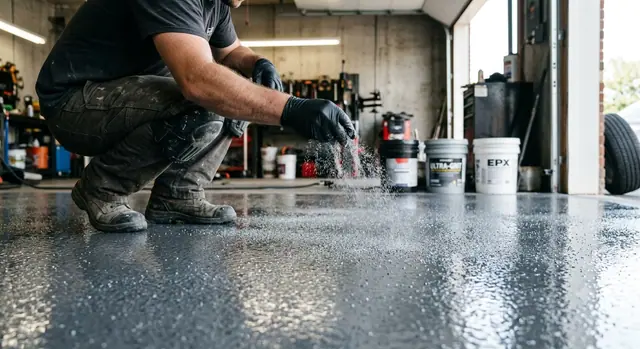
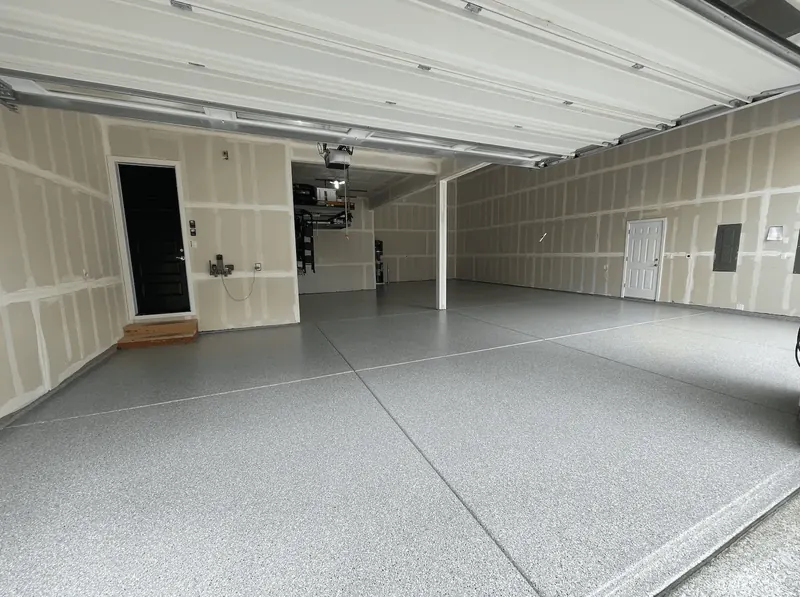
How much a garage floor coating costs in Issaquah
You'll get an exact, itemized price at the estimate. Until then, here's what most pro-installed floors cost across the Seattle area, from our Seattle-area cost guide.
- $835–$3.3Ka typical one-car garage
- $1.6K–$5.8Ka typical two-car garage
Size matters most. Your small townhome garage costs less in total but more per square foot, because setting up for the day costs the same at any size. Beyond size, your number moves with old paint to grind off, cracks to fill and whether the slab needs the barrier.
Premium bundles the moisture barrier, cove base, coated steps, a flake design session and a one-year checkup at no extra charge. Here's everything in Premium. Both packages come with our lifetime adhesion warranty.
Getting quotes from other epoxy floor installers too? Ask each one whether the price includes diamond grinding and a moisture test. Those two steps decide how long a floor lasts.
Just moved into a new townhome? If your slab was poured in the last month, we'll wait. Fresh concrete needs about four weeks to cure before any coating goes on, and we'd rather start late than redo your floor.
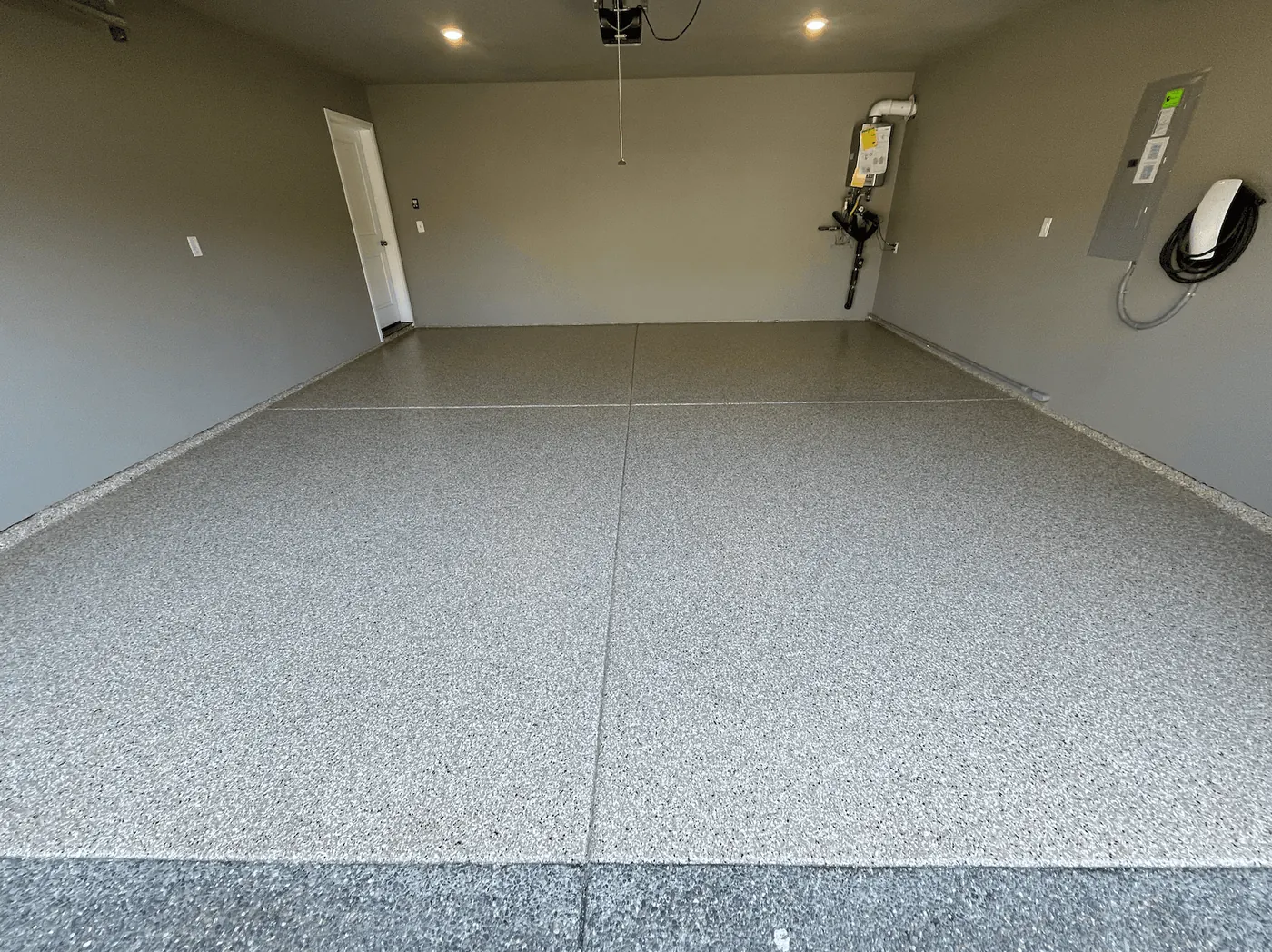
Every corner of Issaquah, valley to ridge
Squak Mountain house or Highlands townhome, you're on our map. We work on both sides of I-90, and below are some of the places we go, grouped by the ground they sit on. If yours isn't listed, call anyway. You're covered.
- The valley
- Downtown
- Gilman
- Along the creek
- The slopes
- Squak Mountain
- Cougar Mountain
- Talus
- The ridge
- Issaquah Highlands
- Grand Ridge
Your ZIP is probably 98027 or 98029. If you're just past the city line, we also cover Sammamish, Bellevue, Newcastle and Snoqualmie.
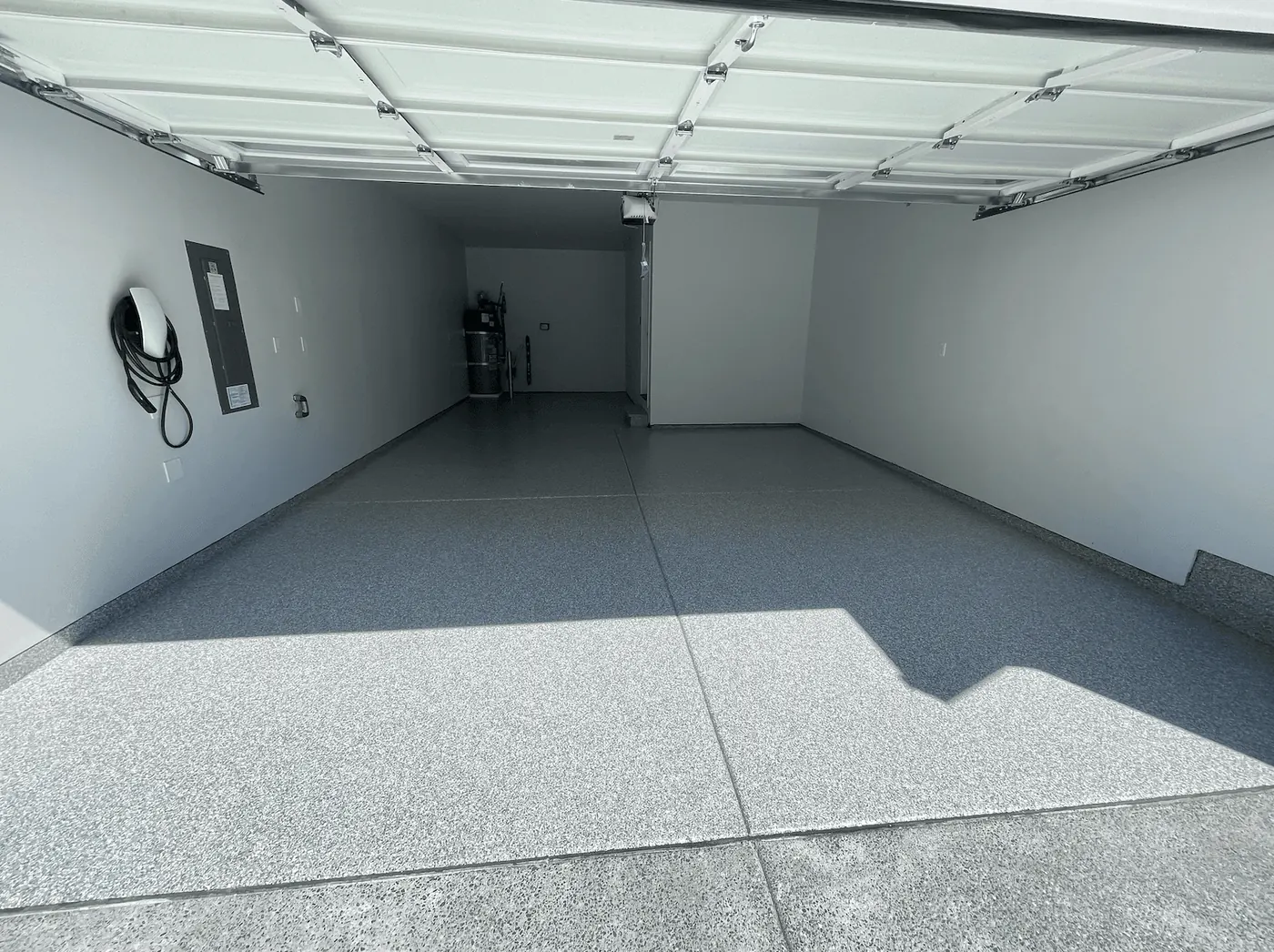
The same floor, past the garage door
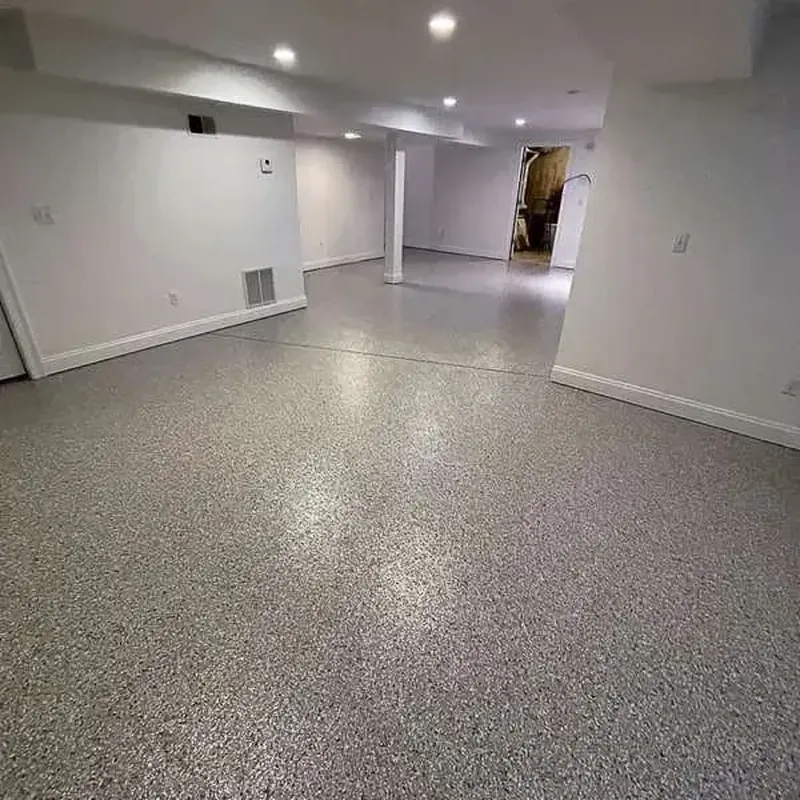
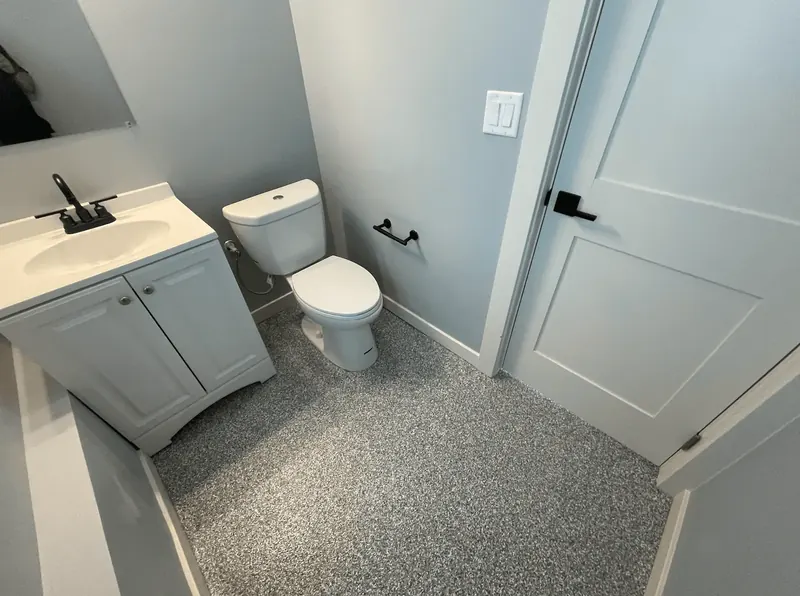
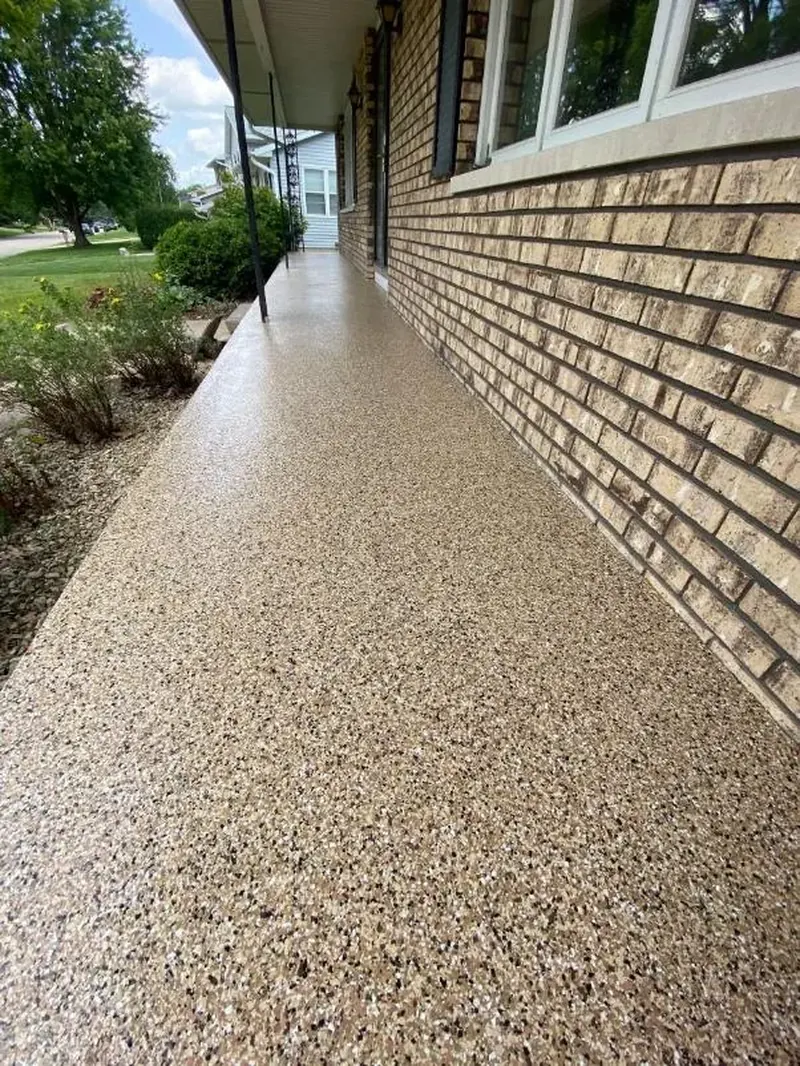
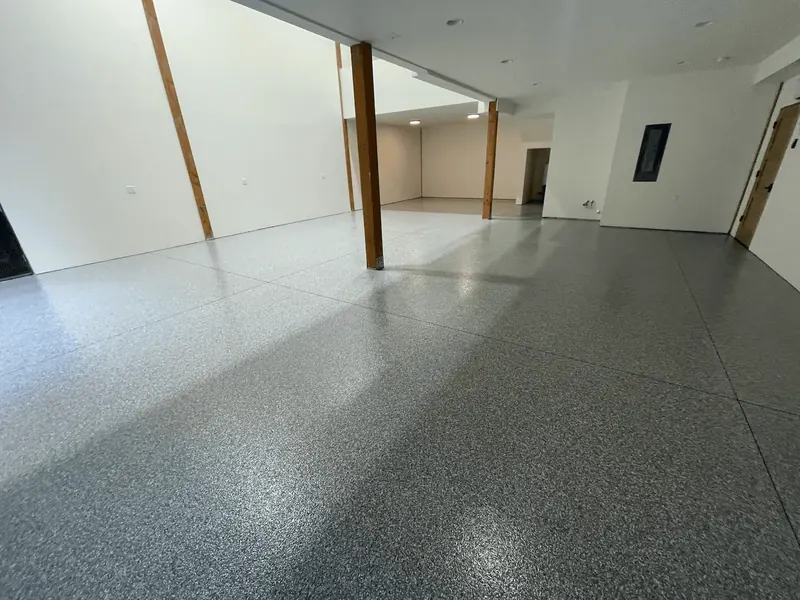
The full-flake system that hoses clean in a garage works in a basement, a bathroom, a shop or a covered walkway too. Here are seven. See the full gallery, or try a flake on a photo of your own garage.
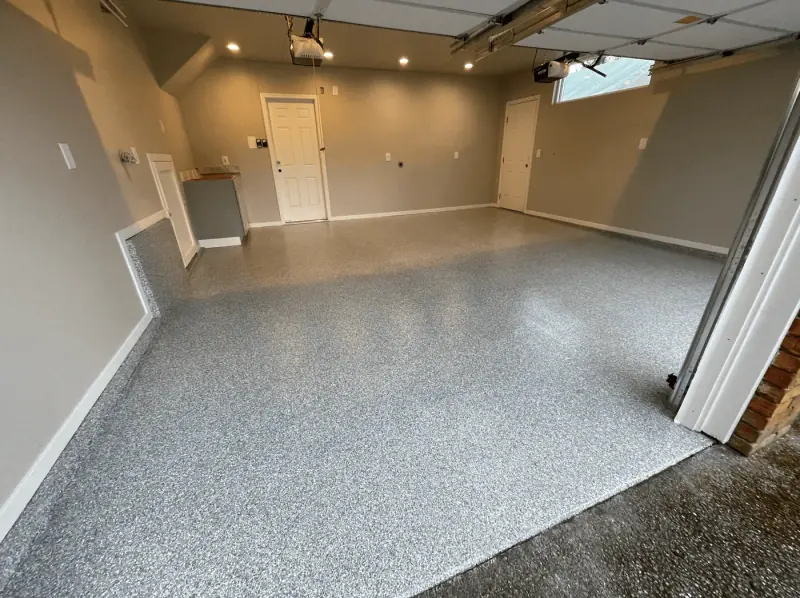

Your Issaquah garage floor, answered
How much does garage floor coating cost in Issaquah?
Across the Seattle area, most pro-installed one-car floors run about $835 to $3,340, a common size for townhome garages, and two-car floors cost more. Your price depends on size, crack repair, any old coating to remove and whether your slab needs the moisture barrier. You get it in writing, itemized, at the free estimate.
Do you install polyaspartic garage flooring in Issaquah?
Yes, as the top layer. Your floor gets a polyurea base coat, a full broadcast of vinyl flake and a clear polyaspartic topcoat with anti-slip grit, all over a diamond-ground slab. The polyaspartic top handles sun and wet boots. The polyurea underneath bonds to the concrete and keeps curing in a cold garage.
Is a garage floor coating better than epoxy in Issaquah?
For most Issaquah garages, yes. Epoxy wants a warm slab and about a week before you park, so it's mostly a summer job here. The polyurea and polyaspartic layers we use cure through the cool, wet months and take your car back after 72 hours. Our floor goes over the same diamond-ground prep a good epoxy job needs. See the full comparison.
Can you coat a garage in an Issaquah Highlands townhome?
Yes. Townhome garages tend to be smaller, so the work goes quicker. Check your HOA's rules on contractors, work hours and parking before we book. If your association is set up like a condo, the slab may count as shared property, so ask the board first. Your written estimate describes the work if they want details.
Will muddy boots and bikes wreck a coated floor?
They're what it's built for. Mud, grit and water sit on the clear topcoat, so a hose and a squeegee clear them out, and the flake hides grit between cleanings. Kickstands and metal cleats can scuff the topcoat over the years, so a mat under a bike stand is cheap insurance.
Our garage is near Issaquah Creek. Can it still be coated?
Usually, yes, after a closer moisture check. We read the slab in several spots and look for chalky deposits and damp patches. A high reading means the barrier primer goes down first and the job takes two days. If water actually flows in during storms, fix the drainage first, and we'll tell you so.
How soon can we park in the garage again?
You can walk on the floor the next day and park on it after 72 hours. The install itself takes one day on a dry slab, or two when the moisture barrier goes down, because the primer cures overnight. The floor keeps hardening for about a week, so hold off on dragging heavy things.
Do you offer garage floor coating across Issaquah, WA?
Yes, in every part of Issaquah, from downtown and the creek valley to Talus and the Highlands. We also cover Sammamish, Bellevue, Newcastle, Snoqualmie and the rest of King County's Eastside. Not sure you're in? Call and ask, and we'll give you a straight answer.
Find out what your Issaquah garage needs
Book the free estimate and we'll measure, test your slab for moisture and hand you an itemized price in 15 to 20 minutes. Take your time deciding. Nobody will rush you.