
Garage Floor Coating in Mercer Island, WA
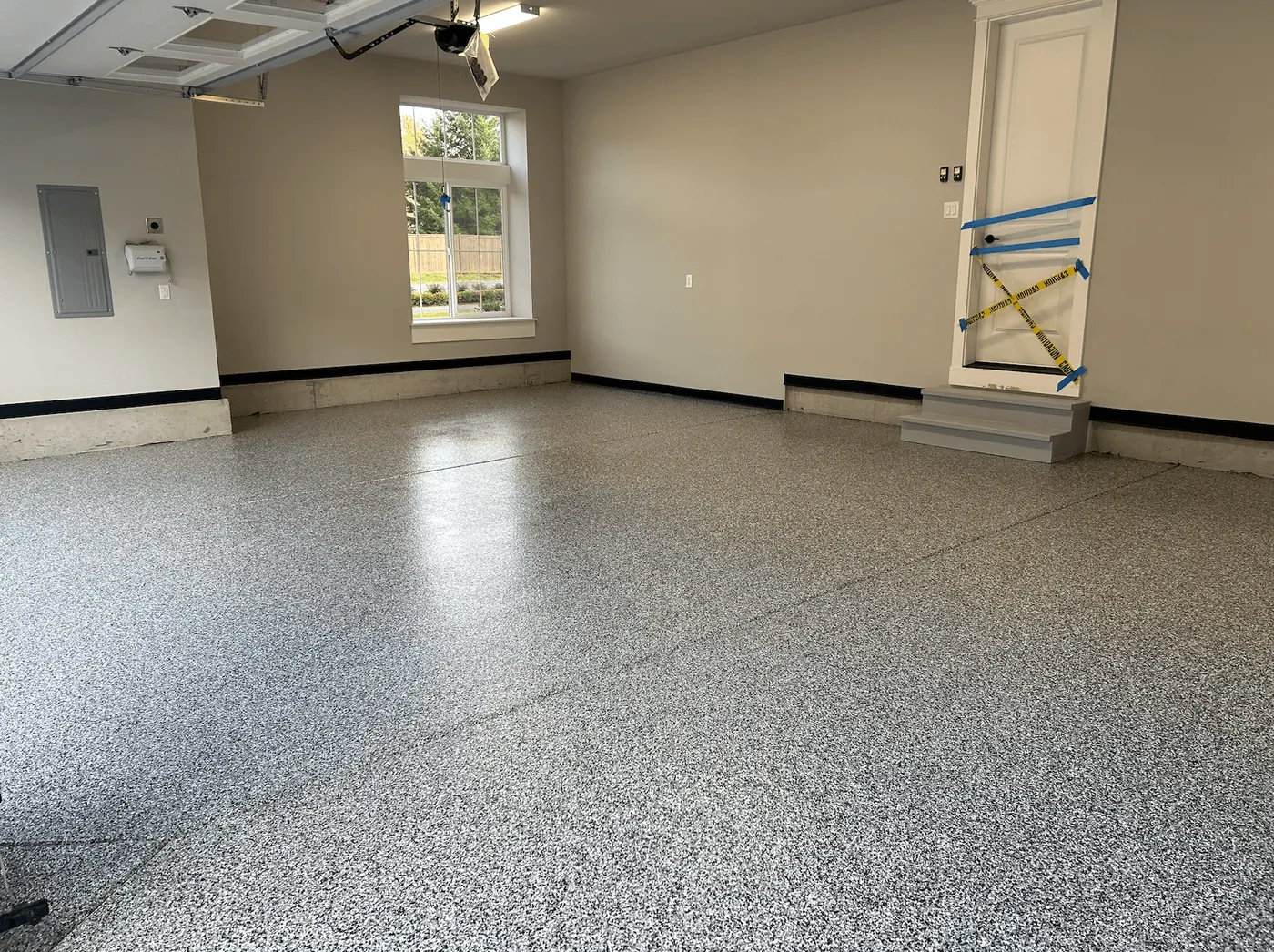
Your paddleboards drip. So does the boat trailer, and the slab under them has soaked it all up for decades. Our garage floor coating, the step up from an epoxy floor, gives your Mercer Island garage full flake under a clear topcoat. We test your slab first, and your estimate is free.
- Free estimate at home
- Moisture-tested first
- Cures in a cold garage
- Lifetime adhesion warranty
How garage floor coating works on Mercer Island
Task Force Garage installs garage floor coating on Mercer Island, WA, with a system suited to damp Northwest slabs. We diamond-grind your concrete, repair its cracks, then lay a polyurea base coat, a full layer of vinyl flake and a clear polyaspartic topcoat with anti-slip grit. Your estimate, moisture test included, is free.
Most island garages take one day. If your slab reads damp, our moisture barrier primer goes down first and cures overnight, so your job runs two. You can walk on the floor the next morning and drive back in after 72 hours.
Pricing epoxy garage floors on Mercer Island? This is the floor that improves on them. You get the same ground prep and flake look. It cures in hours instead of days, flexes with your slab and won't yellow by the open door, and you're parked in three days instead of a week.
It doesn't need summer, either. Epoxy wants a warm slab, so island epoxy jobs tend to wait for July. Yours can go down in the cold months too, once your slab passes the moisture test.

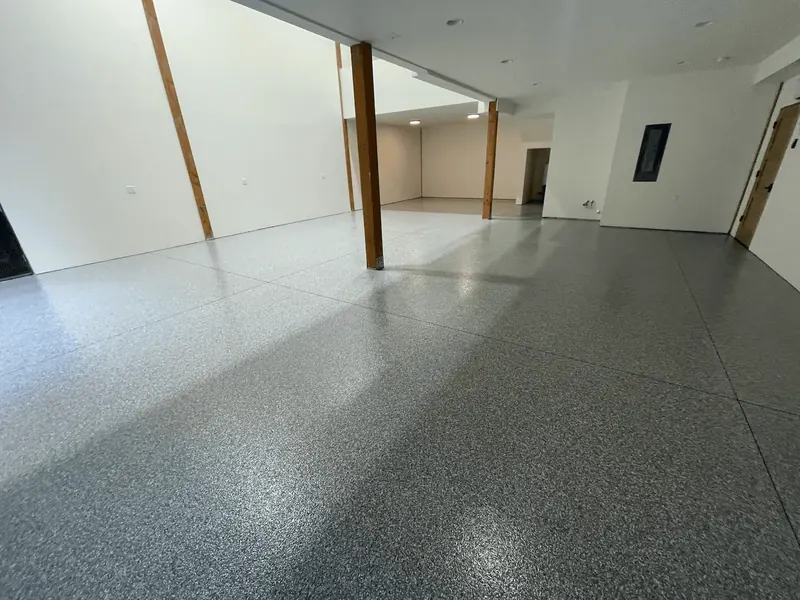

Mercer Island garages on the low side of the hill
The island climbs from the lake to a ridge down its middle, so plenty of houses step down their lots. If yours does, your garage probably sits on the low side or tucked under the house, with soil against a wall or two.
What your hillside garage puts up with
- Soil packed against your back wall, holding the rain.
- Dense glacial till below, so slow to drain that water sits on it all winter.
- A slab old enough to have no plastic sheet under it.
What we do in yours
- Take moisture readings beside those walls, not only mid-floor.
- Lay the barrier primer first if a reading runs high or two warning signs show.
- Seal the seam where your floor meets the wall, with cove base on Premium.
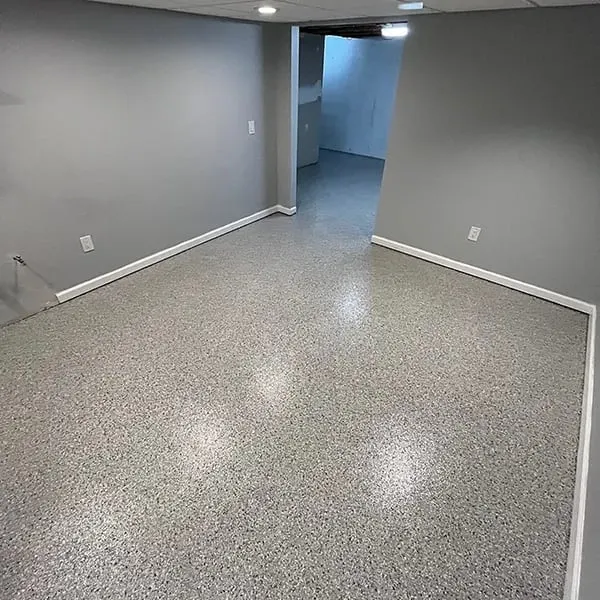
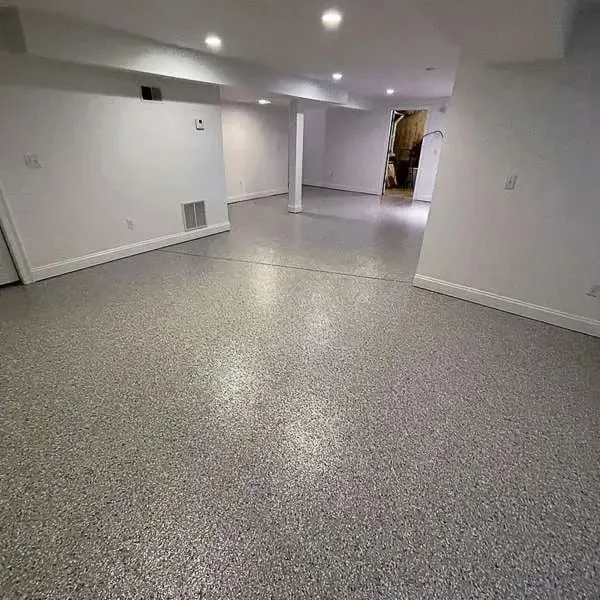
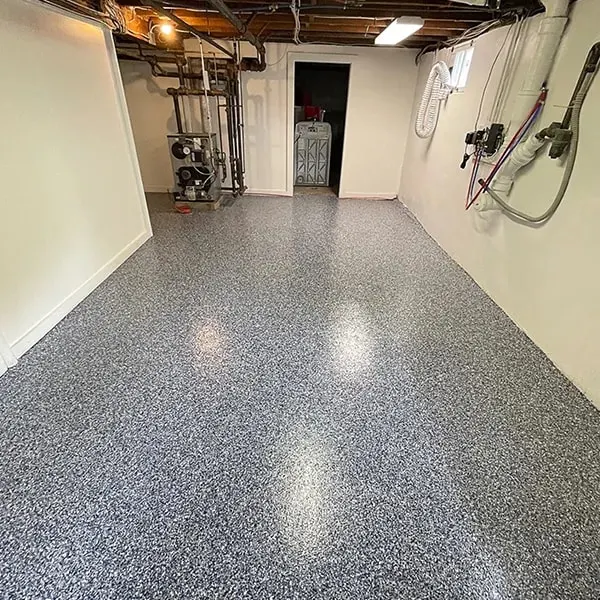
Your rooms beside a tuck-under garage often need the same care, and we can coat your basement floors too. Our moisture barrier guide explains when the primer goes in.
Where island life dries off
Your summer on the lake comes home wet, and winter brings its own mess. Here's what lands on your garage floor, and what changes once you coat it.
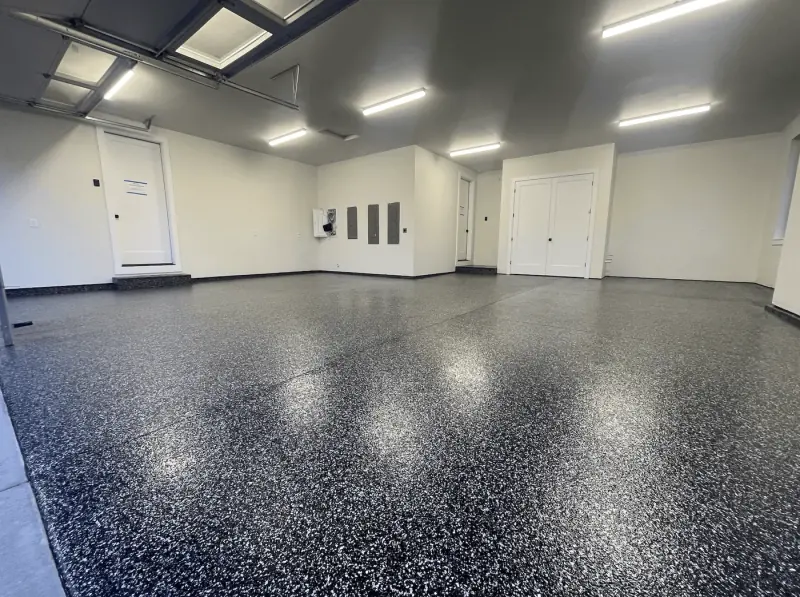 Boat on a trailer?
Drips and a jack
Trailer your boat to the island's one public launch? Then it comes home dripping lake water off the bunks and hull, and a coated floor takes that in stride. Slide a pad under the tongue jack so its steel foot can't gouge your topcoat.
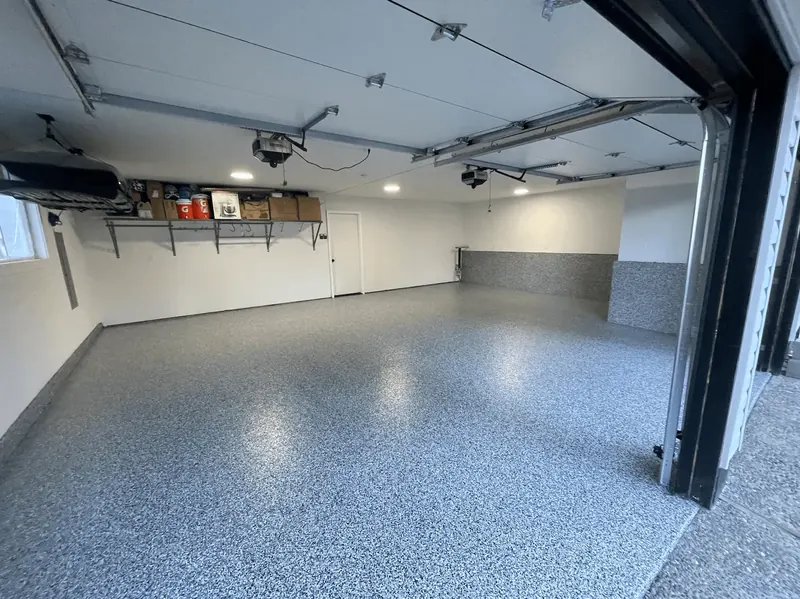 Boards and wetsuits
Gear that drips
Your paddleboards, kayaks and wetsuits come back dripping all summer, and bare concrete drinks every drop until your garage smells like the lake. On a coated floor the water stays on top, and the grit keeps your wet sandals from sliding.
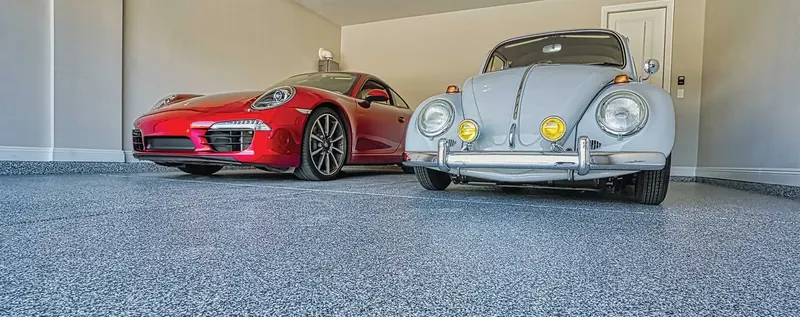 The daily drivers
Cars and bikes
Mercer Island has about one EV for every three households. Yours may plug in out there, with bikes and strollers squeezed around it. Road film from your I-90 commute and winter sand wipe off the topcoat with a damp mop.
Your slab's age decides the prep
If your house is like most on the island, it went up before 1980. About 7 in 10 did, and the 1960s were the busiest decade. Most new houses here replace an older one, so your 60-year-old slab may sit across the street from a fresh pour.
| Built | What it likely has | What we do |
|---|---|---|
| 1950s to 1970s | No plastic underneath, decades of oil, maybe paint or a peeling kit. | Grind deep, fill every crack, take extra readings. |
| 1980s to 2000s | Hairline cracks at the joints, tire marks, an old sealer. | Grind through the sealer and fill the joints flush. |
| A rebuild | A hard, smooth top, and maybe no plastic under the garage. | Wait about four weeks, then grind it open and test it. |
Whatever the age, you see what your slab needs on paper before you agree to anything.
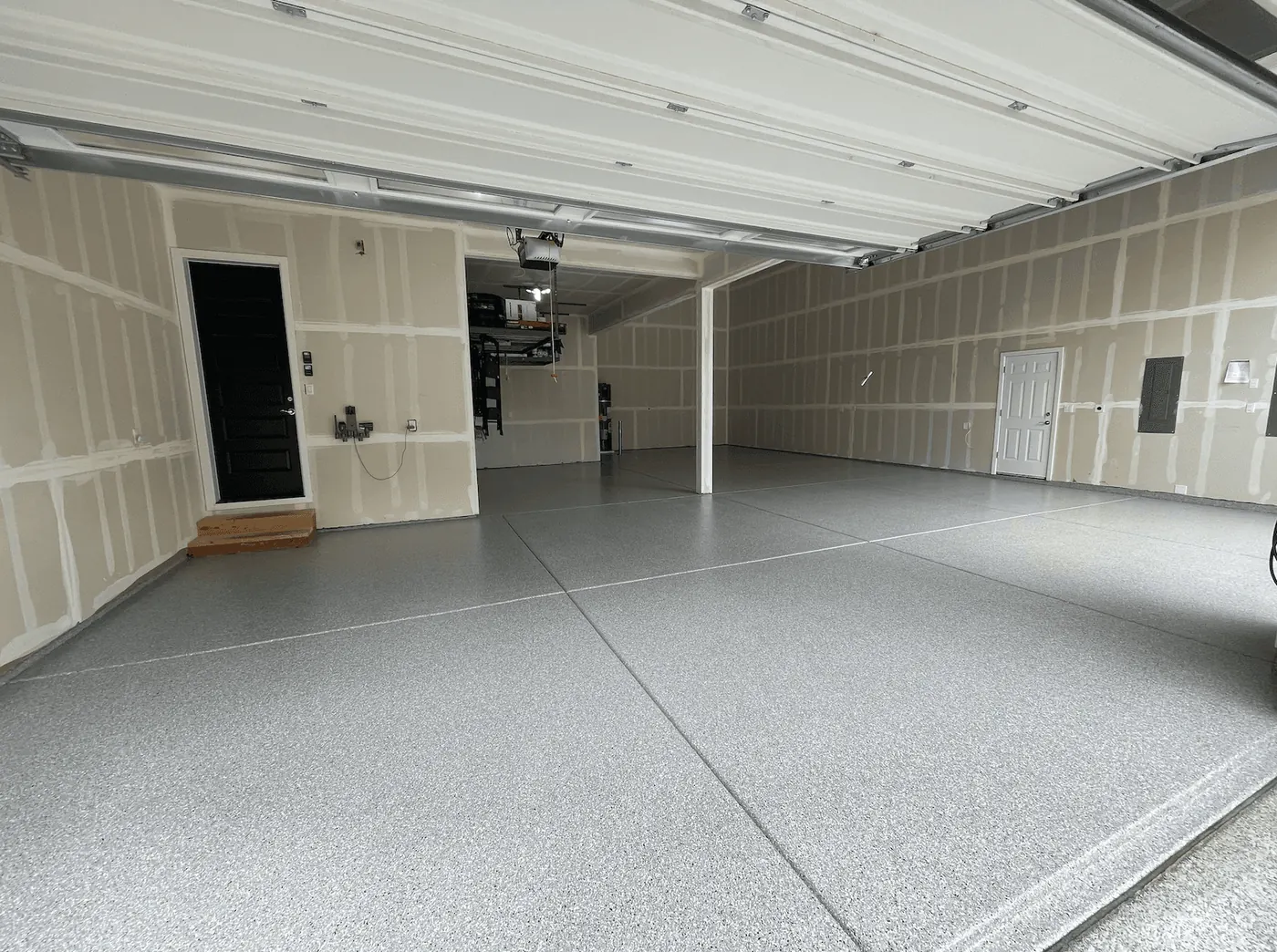
Fall and winter work fine on Mercer Island
Most people call about their garage floor in spring. Call in fall or winter instead, and you'll usually have more dates to choose from, because it's our quiet season.
Cold won't stall our coatings the way it stalls epoxy, so moisture is what we watch. On a damp, still morning by the lake, our crew checks your slab and the air against the dew point. Both have to sit at least 5°F above it, so no water condenses under your base coat.
Then there's the road grit. When ice is forecast, the city sands your main routes, from Island Crest Way to the Mercer Ways, and pre-treats the steep hills with liquid deicer. It all rides home on your tires. On a coated floor, you sweep it out the door instead of grinding it into your concrete.
Want to time it? Our guide to the best time to coat goes month by month.
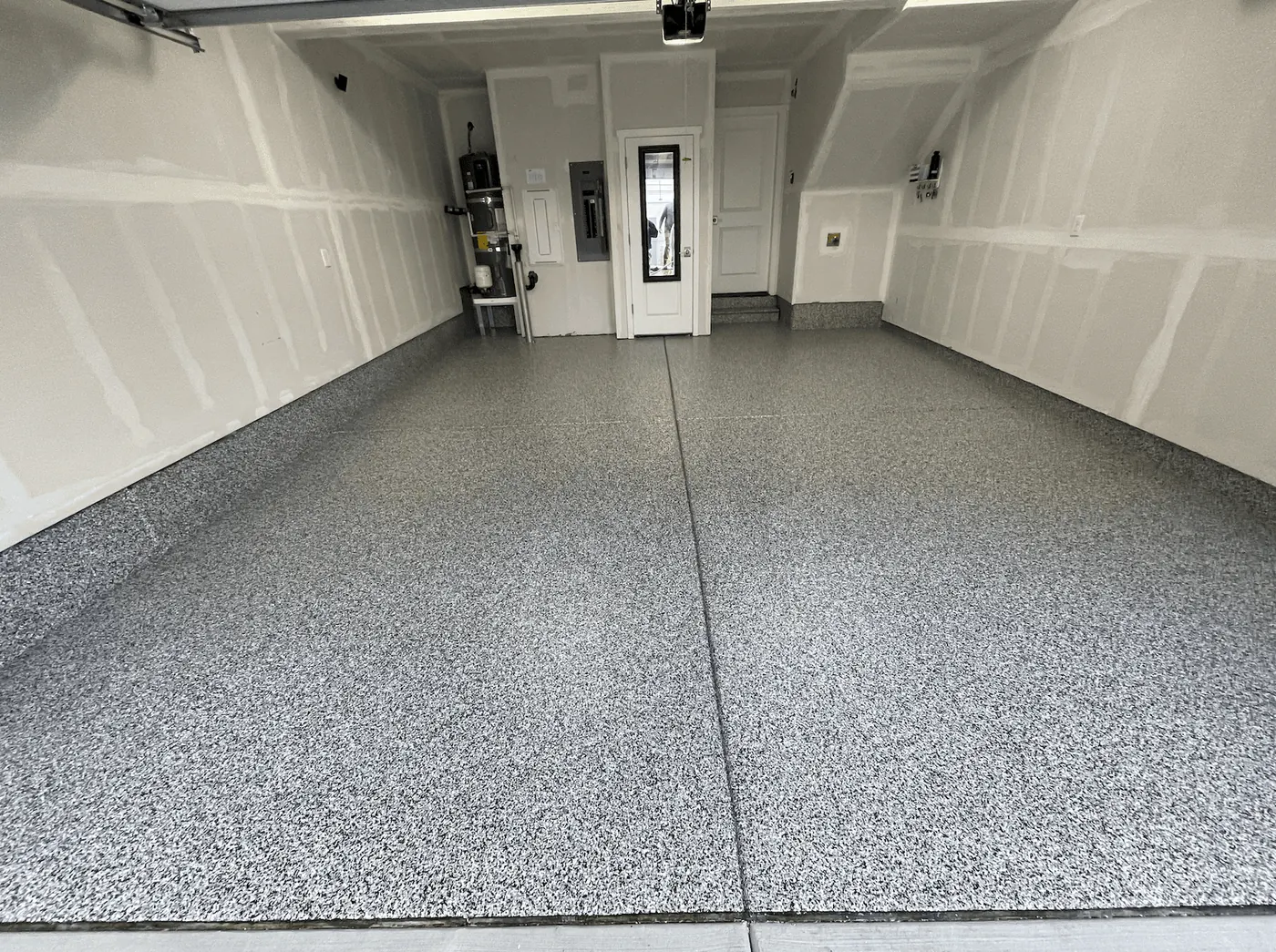
How install day goes on Mercer Island
Here's how your job runs, from the first call to parking. If your slab is dry, steps two and three happen the same day.
Before we come
Tell us if your driveway is steep, shared or tight, and where your cars can sit for three nights. Clear the garage the evening before. Wall cabinets can stay.
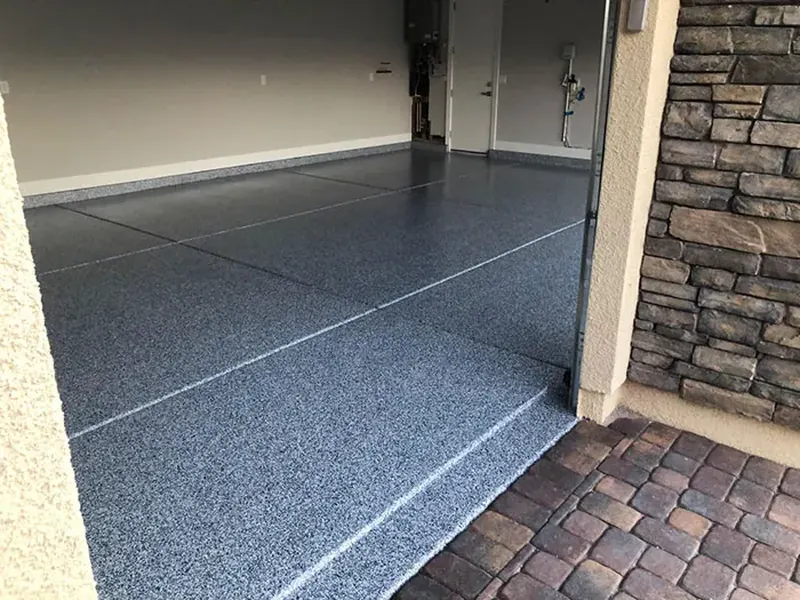
Grind and repair
Our crew re-checks your slab, then diamond-grinds every inch, edges by hand, with vacuums on the grinders. Cracks and joints get filled and ground flush.
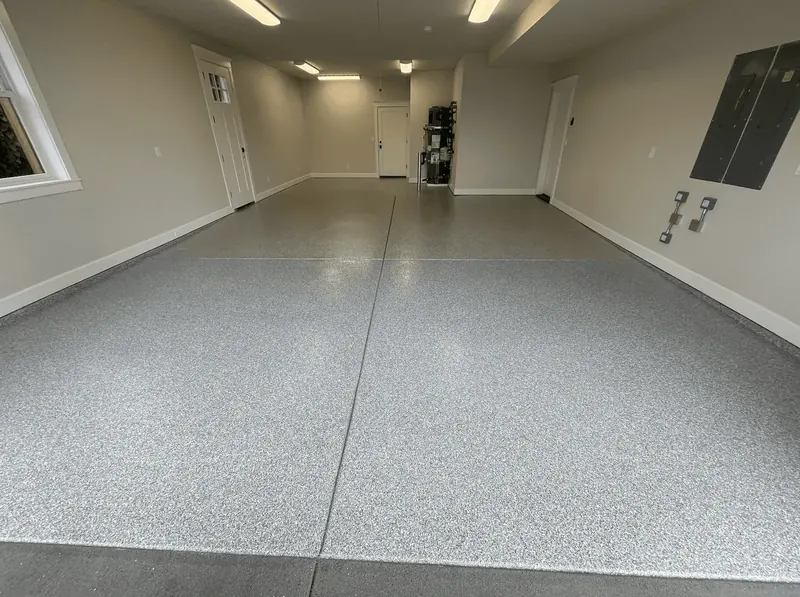
Flake and topcoat
If your slab needs the barrier, it cures overnight first. Then your polyurea base goes down, buried in flake, and a clear topcoat with grit seals it.
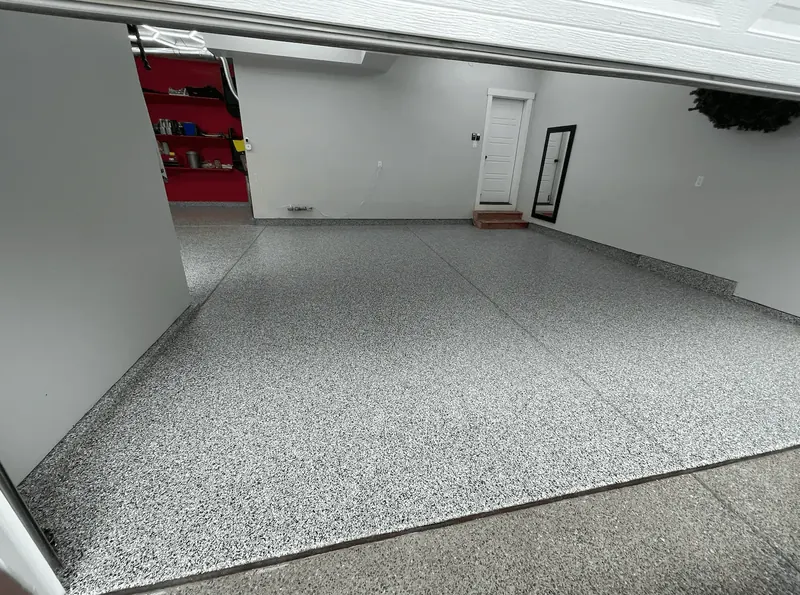
Park in 72 hours
You can walk on it the next day and drive in after 72 hours. Your floor keeps hardening for a week, so roll heavy things in gently at first.
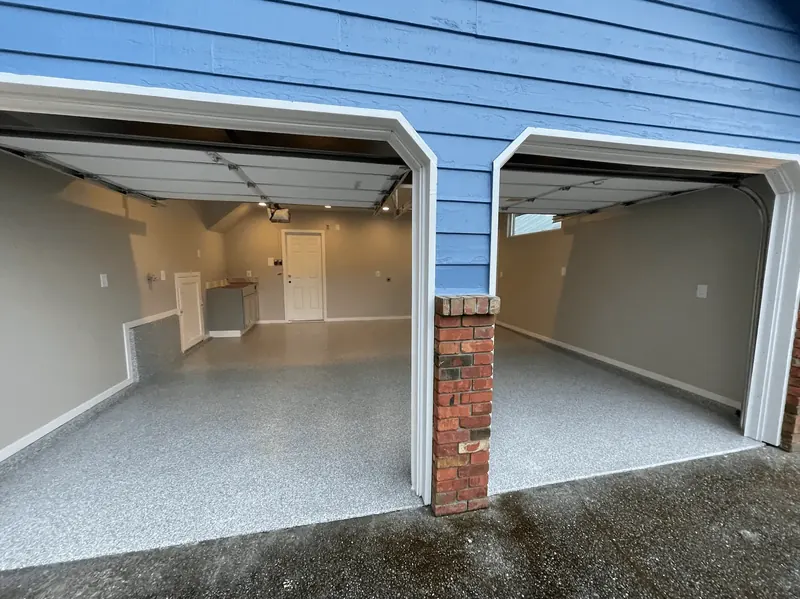
Garage floor coating cost on Mercer Island
You'll get your price in writing at the estimate. Until then, here are common Seattle-area prices for professionally installed coatings, from light-prep jobs to full flake.
- $1.6K–$5.8Kmost two-car garages
- $4–$12per square foot, installed
Prep moves the price most on the island. That means old paint or a peeling kit to grind off, the cracks a 60-year-old slab collects, and whether your slab needs the barrier.
If your garage sits under the house, you almost certainly have steps up to the door. Premium coats them and adds the barrier, cove base, a flake design session and a one-year checkup, at no extra charge. If your slab tests dry and you have no steps, Original may cover you, and we'll say so.
Either way, you get a lifetime adhesion warranty. For prices by garage size, see our Seattle cost guide.
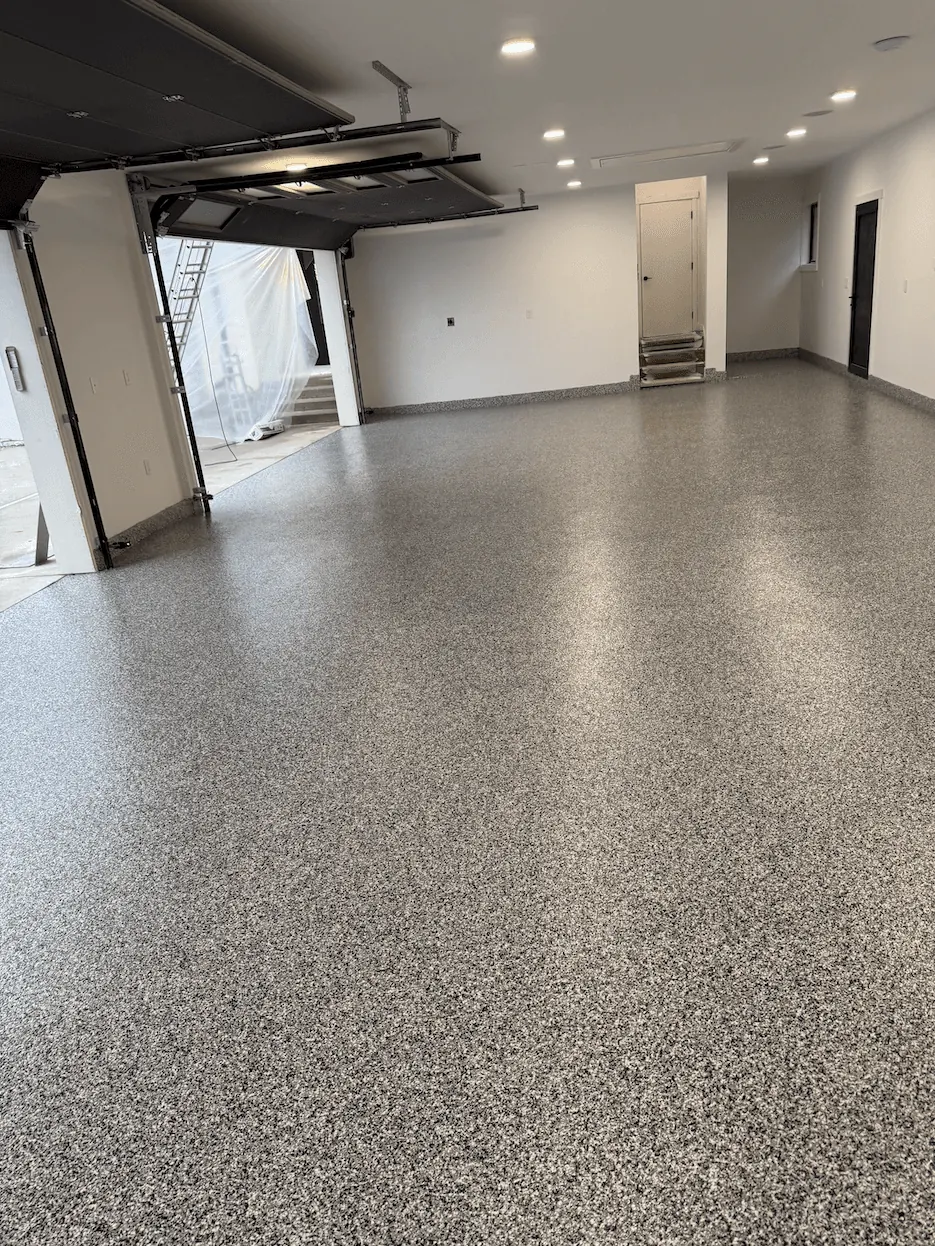
The whole island, shore to ridge
Wherever you live on Mercer Island, you're in 98040, and we cover every street in it. Here are a few neighborhoods and roads to help you place yourself.
- North end
- East Seattle
- McGilvra
- Luther Burbank
- Town Center
- Mid-island
- Mercerdale
- Middle Island
- Island Crest
- Gallagher Hill
- The shore
- East Mercer
- West Mercer
- North Mercer
- Clarke Beach
Off the island? You're covered in Bellevue, Newcastle and Renton, too.
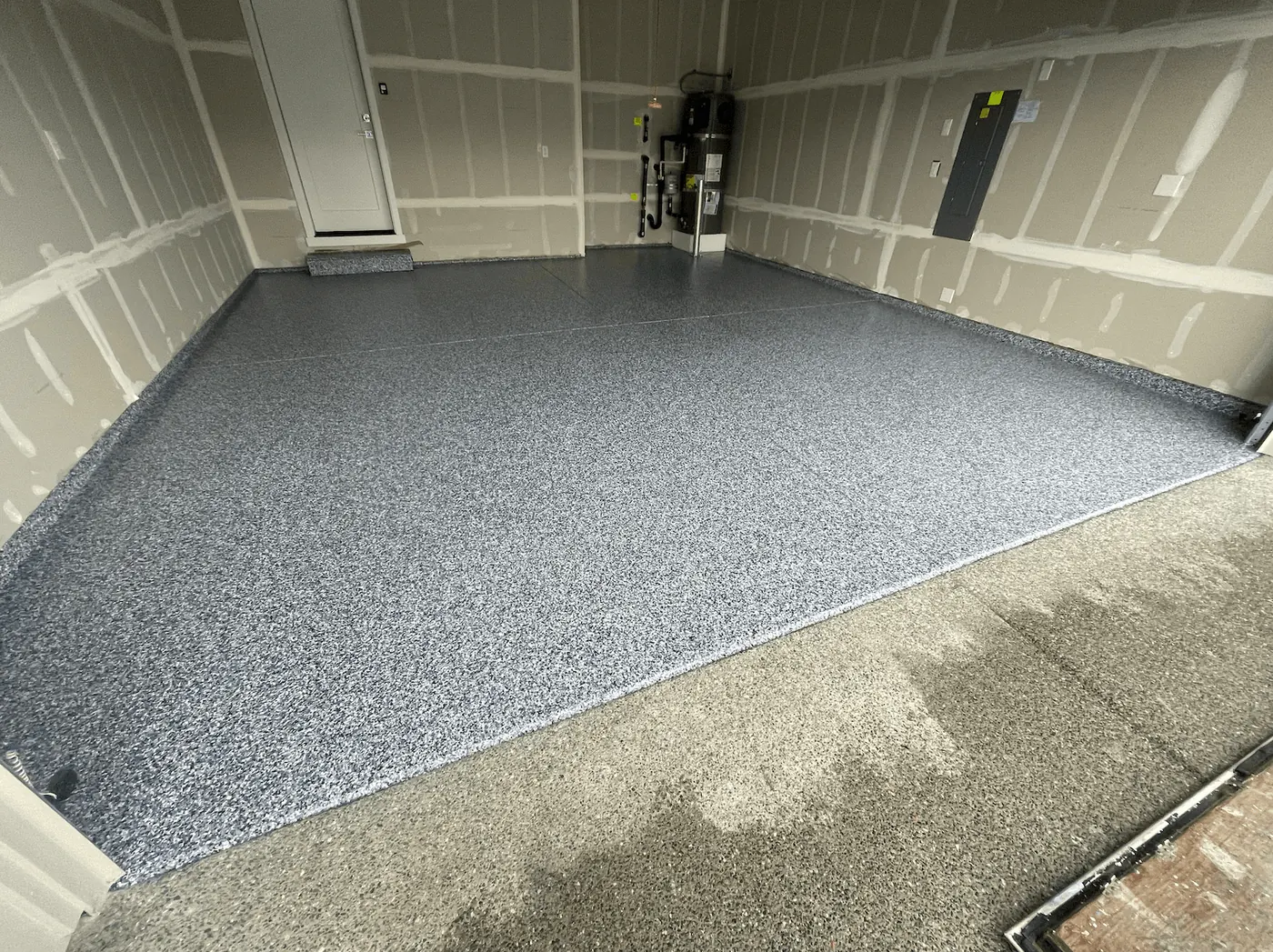
Blends that hide a wet season
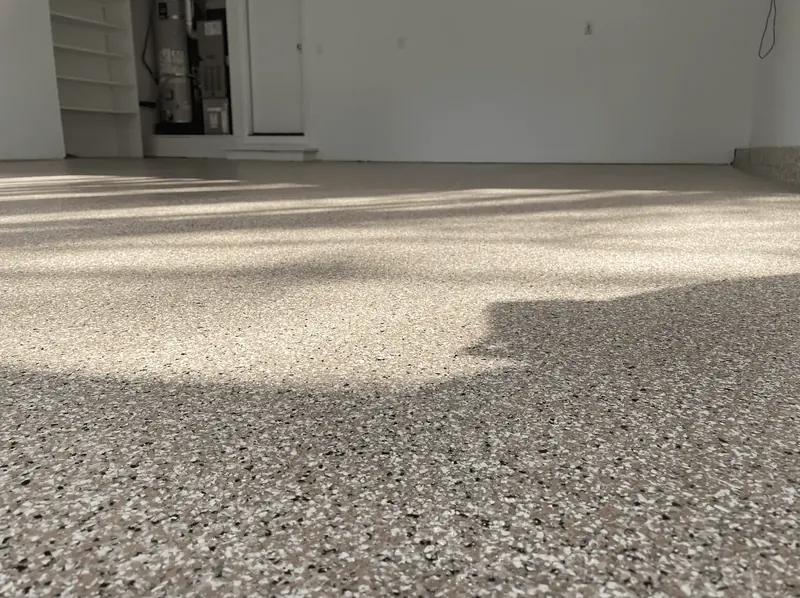
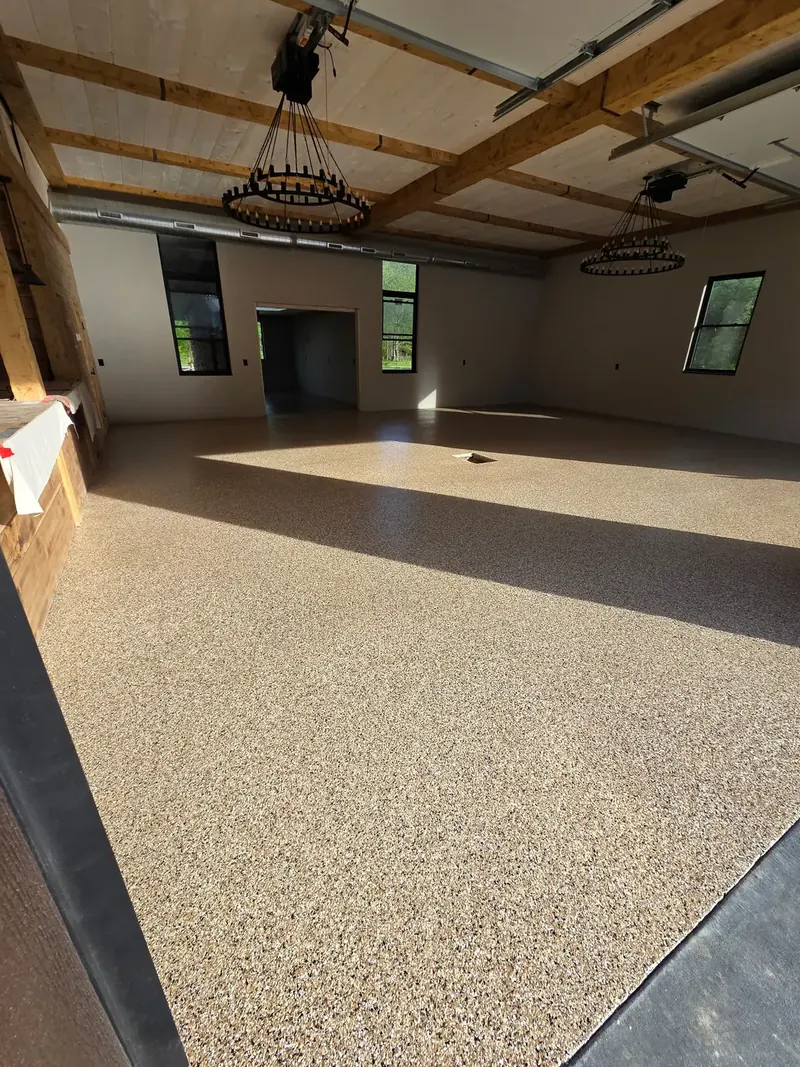
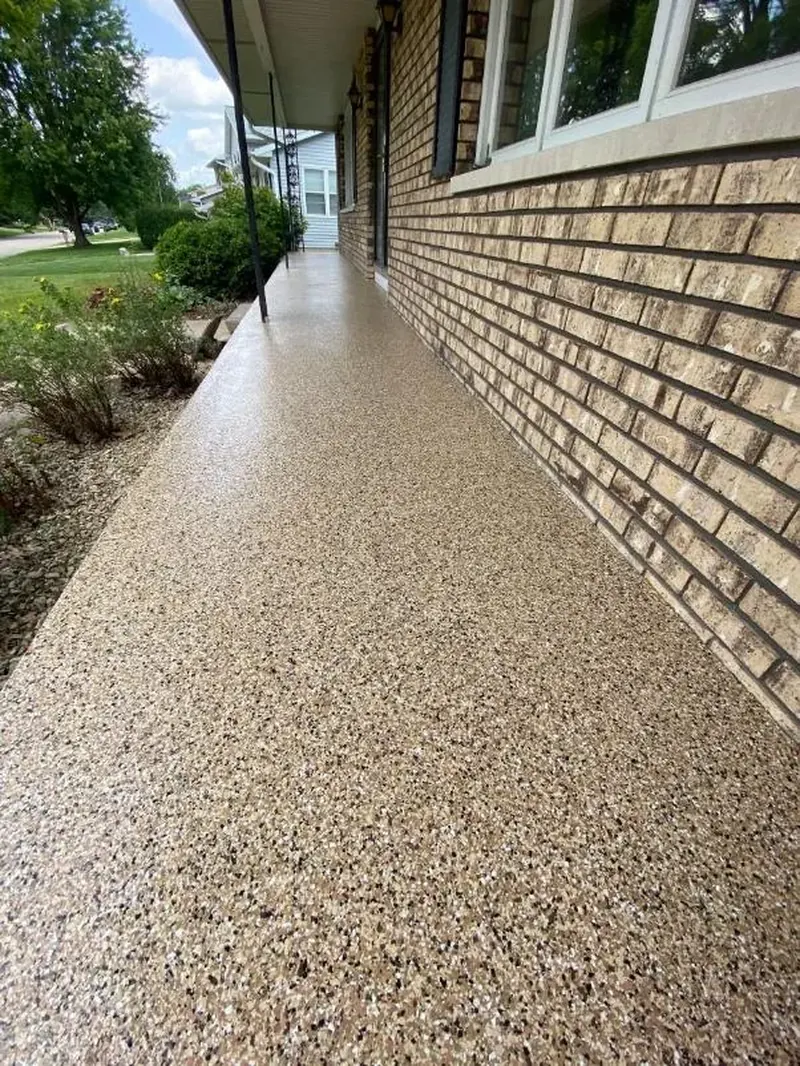
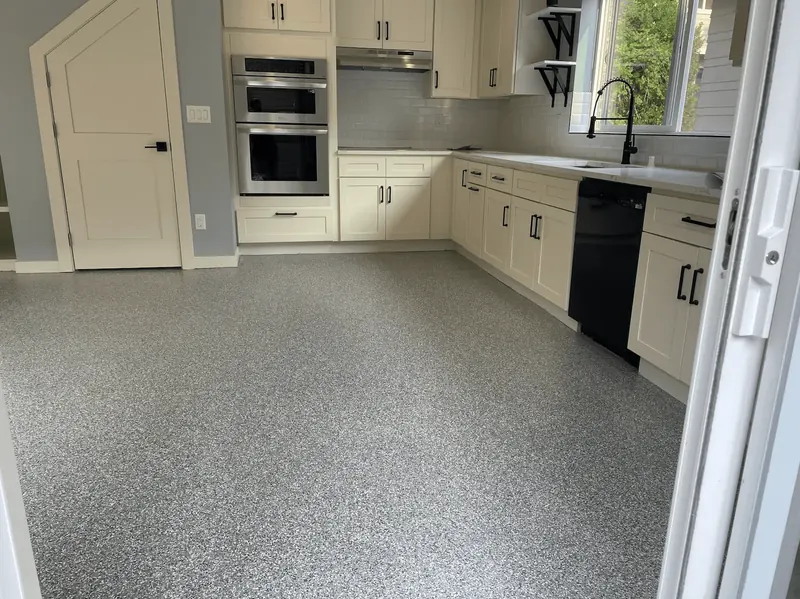
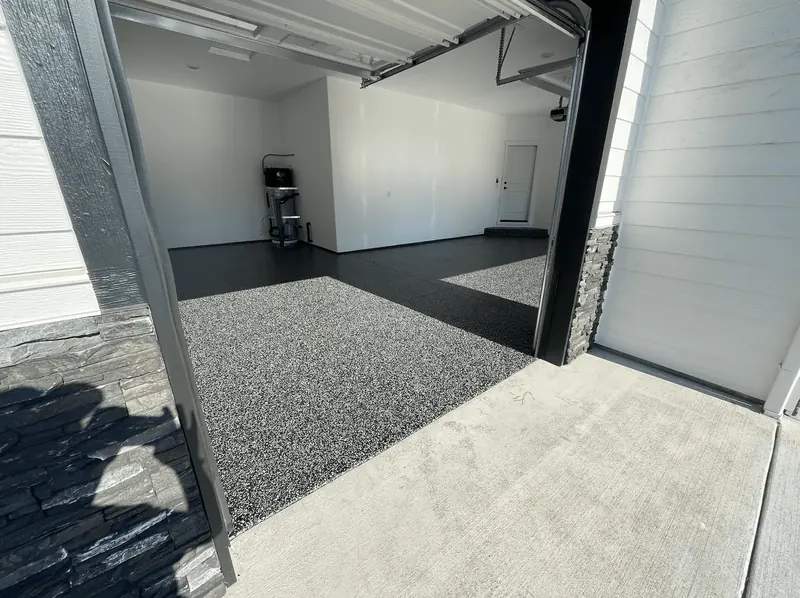
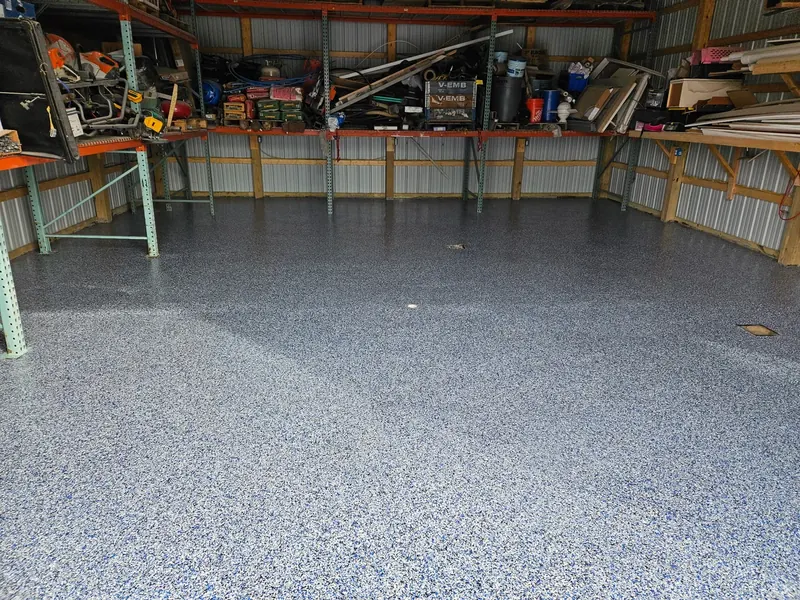
Mid-tone blends hide drips, sand and footprints between cleanings, and they work just as well in a basement or a hallway. Browse the gallery, or see a blend on a photo of your garage.

Mercer Island garage floor questions
How much does garage floor coating cost on Mercer Island?
Across the Seattle area, a professionally installed coating runs about $835 to $3,340 for a one-car garage and $1,600 to $5,800 for a two-car. If your slab is older, expect the upper part of the range, since paint, cracks or the moisture barrier add prep. You'll get your exact price in writing, item by item, at the free estimate.
Do you install epoxy floors on Mercer Island?
We install what comes after epoxy: a polyurea base coat with full vinyl flake and a clear polyaspartic topcoat. You get the look people mean when they say epoxy, on a floor that cures in hours, flexes with your old slab and stays clear where sun hits it. Yours can also go down in fall and winter, when epoxy usually has to wait. Compare the two.
Our garage is under the house. Can it still be coated?
Yes, yours just gets a closer look. We take moisture readings near the walls that hold back soil, and if they run high, the barrier primer goes down first and your job takes two days. Your steps up to the house can be coated to match, and cove base seals the edges along the walls.
Will a boat trailer damage a coated garage floor?
Your trailer's tires won't. What can mark any floor is a small steel foot under heavy weight, like a tongue jack or a jack stand left in one spot for months. Set a pad or a square of plywood under it, and your topcoat stays clean. The concrete carries the load, and the coating covers the surface.
Is a coated floor slippery when wet gear drips on it?
Less than you'd think. Our clear topcoat has anti-slip grit mixed in, so your wet sandals and boots keep their grip, and the flake adds texture of its own. A squeegee clears standing water in seconds, and you can talk grit levels through with us at the estimate. How anti-slip floors work.
Can you coat our basement floor as well?
Yes. If your house steps down the slope, your daylight basement may sit right beside the garage, and it gets the same moisture test and the same system. If water actually seeps in, that needs fixing first, since the barrier handles vapor. Doing both floors in one visit is easier on your schedule. See basement floor coating.
Will the coating hide old oil stains?
Most of them. Grinding takes off surface stains, and we degrease your deep spots and grind those harder, since oil keeps a coating from gripping. Full flake then covers any shadow that's left. A stain soaked in for decades can need extra prep, and we'll show you those at the estimate.
Do you cover every street, McGilvra to Clarke Beach?
Yes, every street on the island, from McGilvra and East Seattle on the north end to the houses along East and West Mercer Way near Clarke Beach. Tell us your street when you book, and we'll plan the visit around your driveway. Across the East Channel Bridge, we cover Bellevue too.
Book your Mercer Island garage floor estimate
We'll come out to the island, measure, meter your slab and leave a written, itemized price. Plan on about 20 minutes. If and when you go ahead is up to you.