An Epoxy Garage Floor That Holds Up in Houston
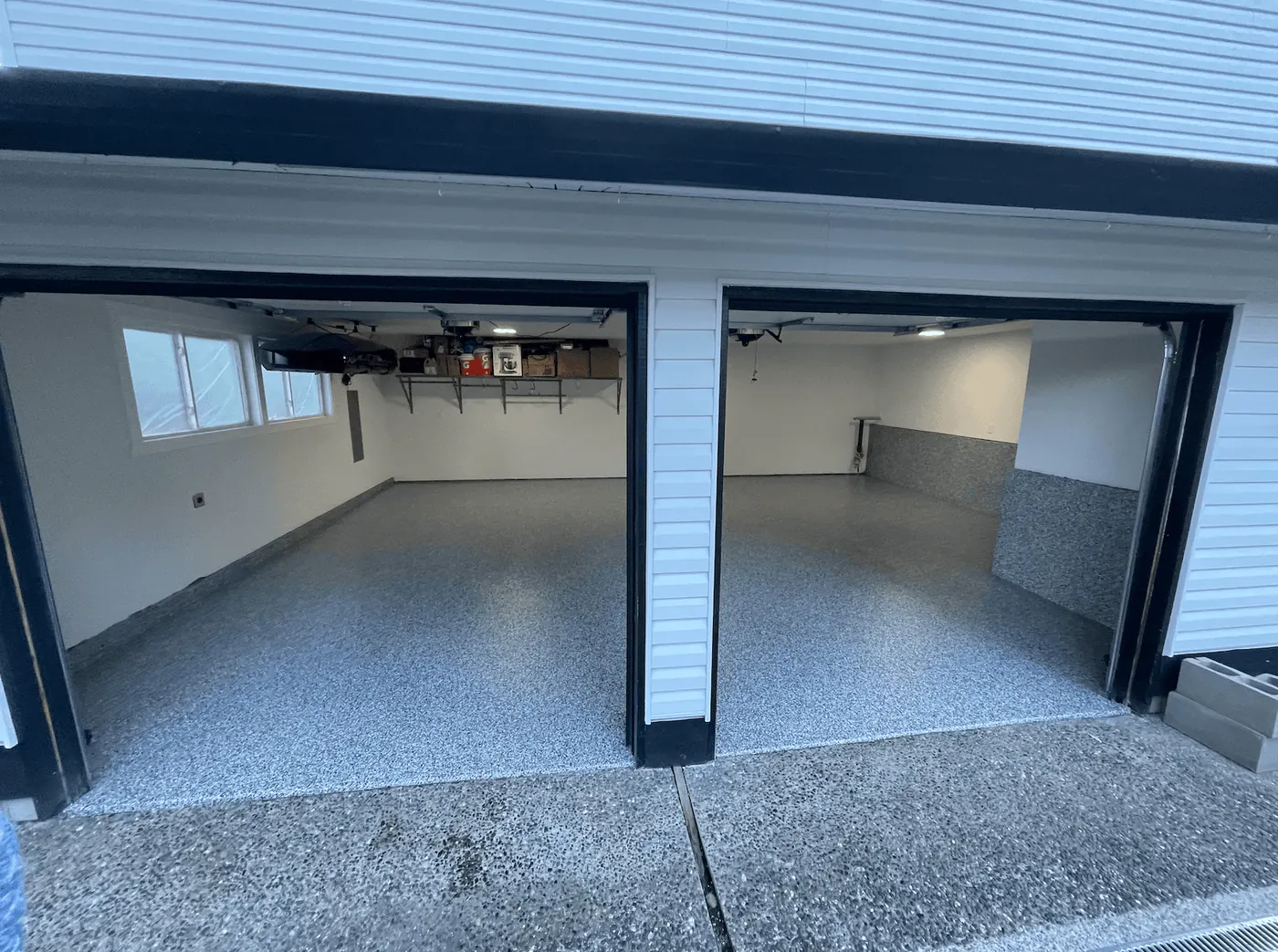
Your Houston garage takes hot tires all summer, gumbo mud after every storm and a film of oak pollen each spring. An epoxy garage floor should shrug off all three. The one we recommend is the step up from epoxy, sealed under a clear top on a diamond-ground slab, and your price comes by phone.
- Price over the phone
- Diamond-ground slab
- Park again in 72 hours
- Lifetime warranty
Should you coat your Houston garage floor?
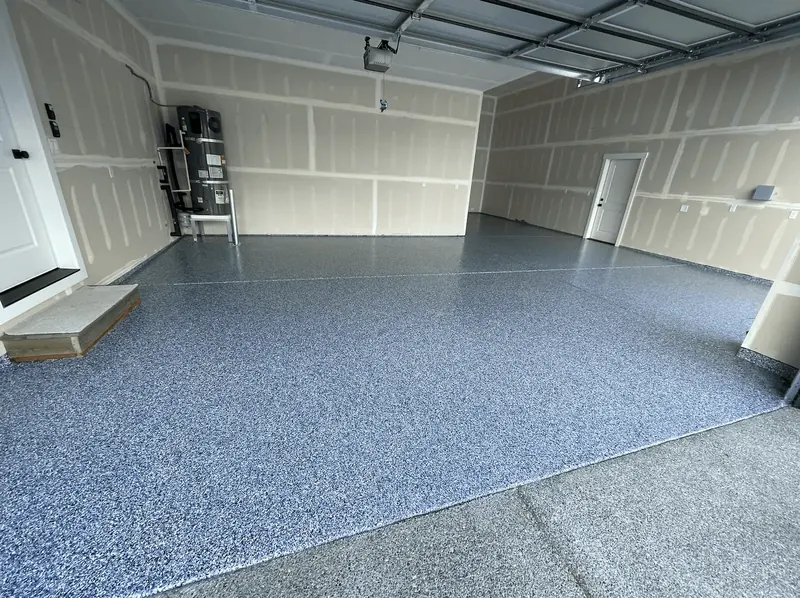
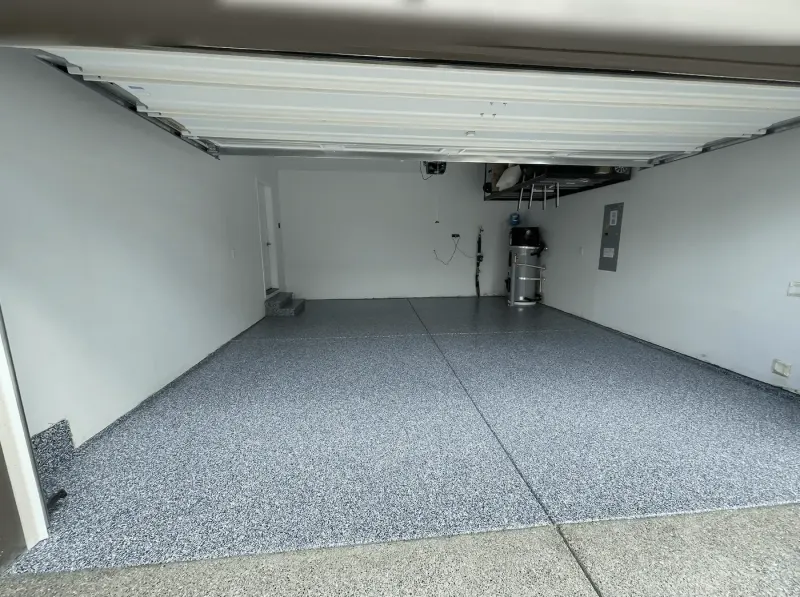
If you park inside and plan to stay in the house, yes. Task Force Garage installs the step up from an epoxy garage floor across Houston: a diamond-ground slab, a polyurea base, full vinyl flake and a clear polyaspartic topcoat. Your estimate is free and happens by phone.
Bare concrete drinks every oil drip, sheds a fine gray dust onto whatever you store and hangs on to mud stains for good. A coated floor keeps all of it on top, where a mop or a hose takes it off.
Plain epoxy gives you that look for a while, but a Houston garage is hard on it. Sun through the open door ambers it, and hot tires soften a thin coat until it lifts. The step up keeps the look without those weak spots, and your car is back inside in three days instead of about a week.
If your garage is only storage, or you're selling next spring, a kit or a good sealer may be all you need. We'll say so on the call.

What your Houston garage floor goes through
With no basement in most Houston homes, your garage holds the storm gear, the overflow and the cars. Here's what that puts on your floor through the year.
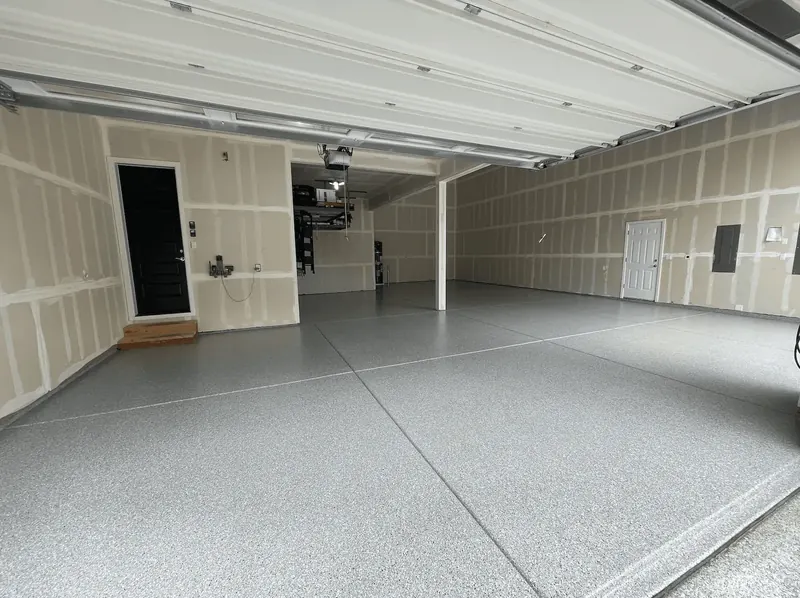 Spring
Pollen and sweat
In March, oak pollen leaves a yellow-green film on everything, and it blows in each time the door goes up. Then warm Gulf air can bead up on a slab that stayed cool overnight. A coated floor sweeps clean, and the water sits on top.
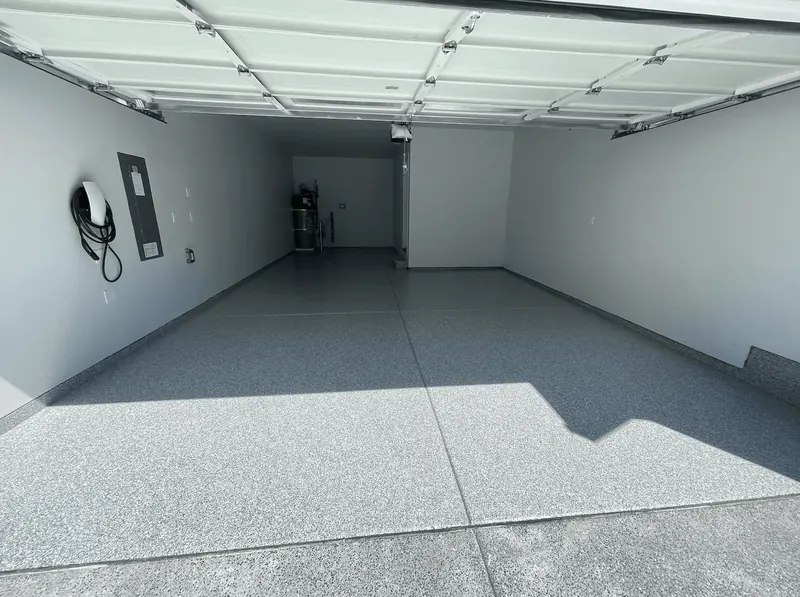 Summer
Hot tires
Your tires come home hot off the Beltway and sit on the slab while they cool. Floor paint and thin epoxy soften under them and peel up in the tire lanes. A ground slab under a polyaspartic top stays put, and the warranty covers it.
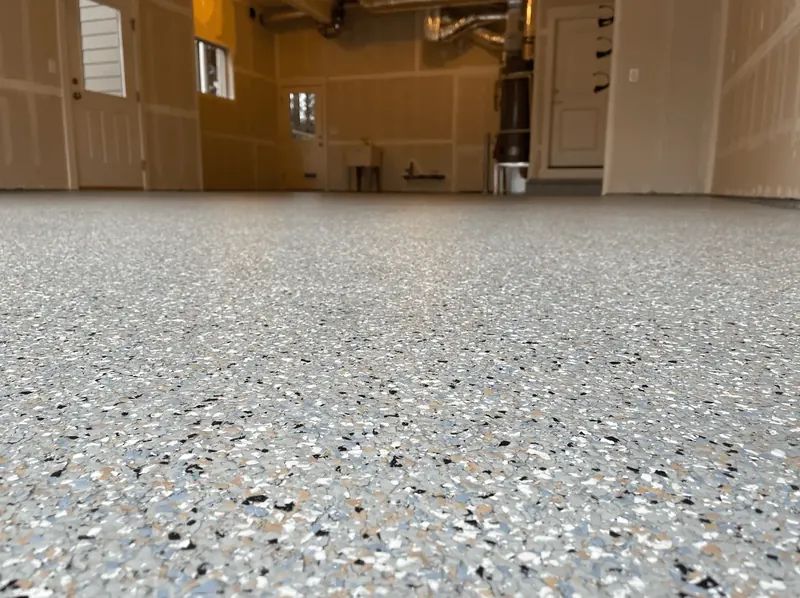 June to November
Storm gear
The generator, the gas cans and the cases of water wait out here all season. Beryl left more than two million CenterPoint customers without power in 2024, and your garage is where the gear sits for the next one. Spilled gas wipes off before it stains.
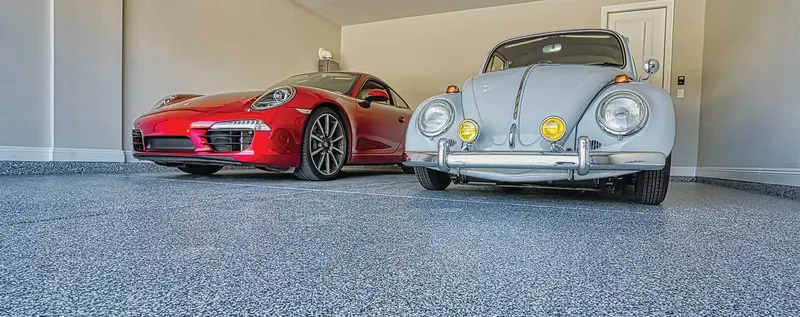 After the rain
Gumbo mud
Houston's dark clay turns to sticky mud after a soaking and rides in on boots, tires and the dog. On bare concrete it leaves a gray shadow. On full flake it hoses off, and the flake hides whatever is left between cleanings.
A DIY epoxy kit or a pro floor in Houston?
A hardware-store kit is the right call for some garages. Put what comes in the box next to what a professional floor puts down, then decide which one your garage needs.
| A hardware-store kit | A pro floor | |
|---|---|---|
| Prep | An acid or citric etch | Diamond grinding, edges by hand |
| Thickness | A few thin coats | About as thick as a credit card, all in |
| Flake | A light sprinkle of chips | Wall to wall, with no base showing |
| Topcoat | Often sold separately | Clear polyaspartic with grit |
| Moisture check | Up to you | A meter reading before any coat |
| Weather it needs | A mild, dry day and night | The crew checks the dew point first |
| Your car back inside | About three days, longer when it's humid | 72 hours |
Why the right kit weekend is rare in Houston
Read the side of a kit can. Most want air between about 60 and 85 degrees, humidity below about 80 percent, and no cold snap while the coating cures.
Houston rarely lines those up. Summer runs too hot and too muggy, and plenty of winter and spring mornings are damp enough to bead on the slab. Your best shot is the dry, cool stretch right after a cold front, and it may last only a day or two.
Going the kit route anyway? Rent a grinder instead of etching. Tape down a square of plastic sheeting overnight, and if the concrete under it looks darker by morning, water is coming up through your slab. Then keep your car out for at least three days.
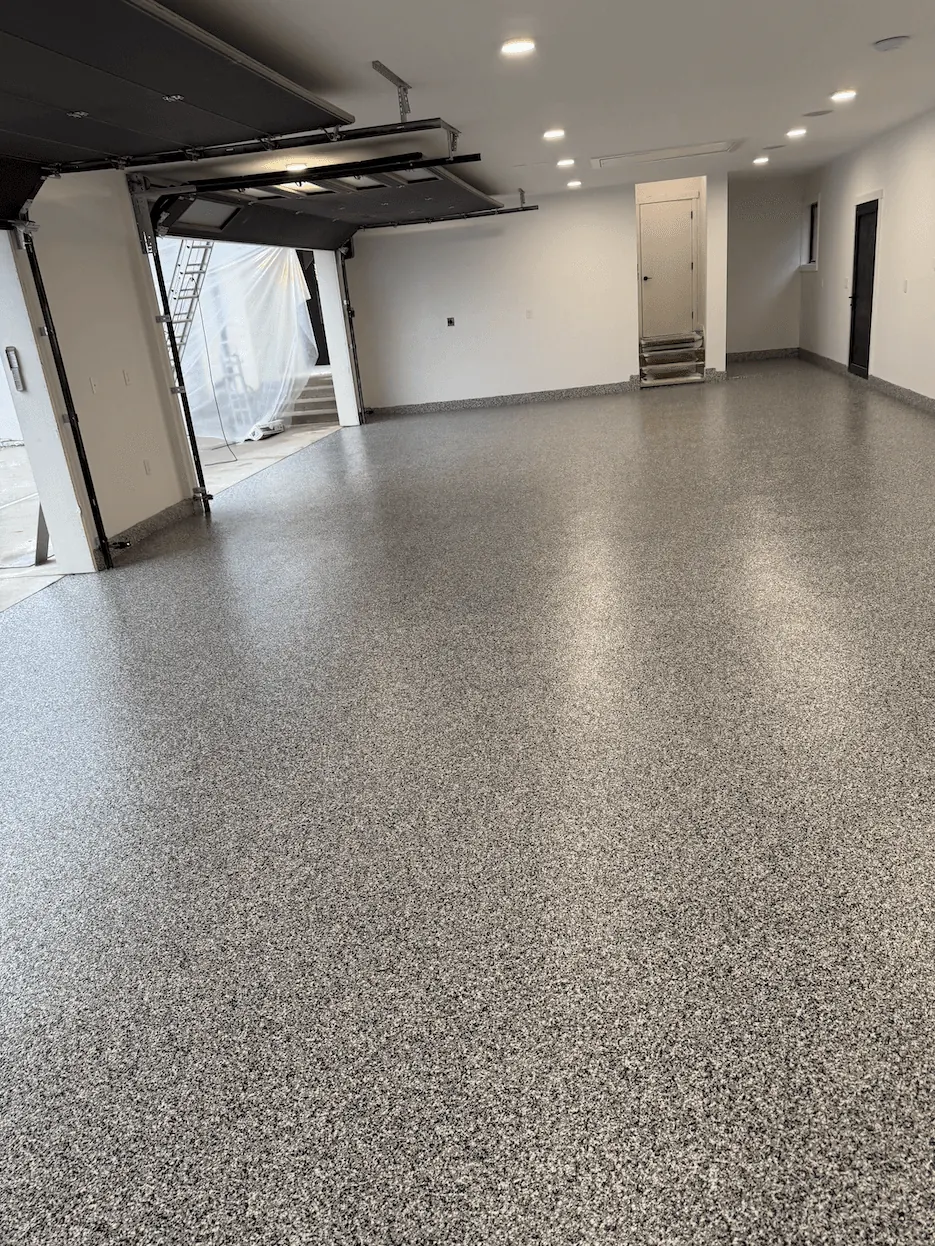
How your Houston garage floor comes together
Four steps take you from the first phone call to parking on your new floor. Your part is mostly the first and the third.
-
Tell us about it
Send the quote form or call (832) 925-4487. Say how many cars it holds and whether it has ever flooded. Photos help. Text them to our main line, (206) 895-7444.
-
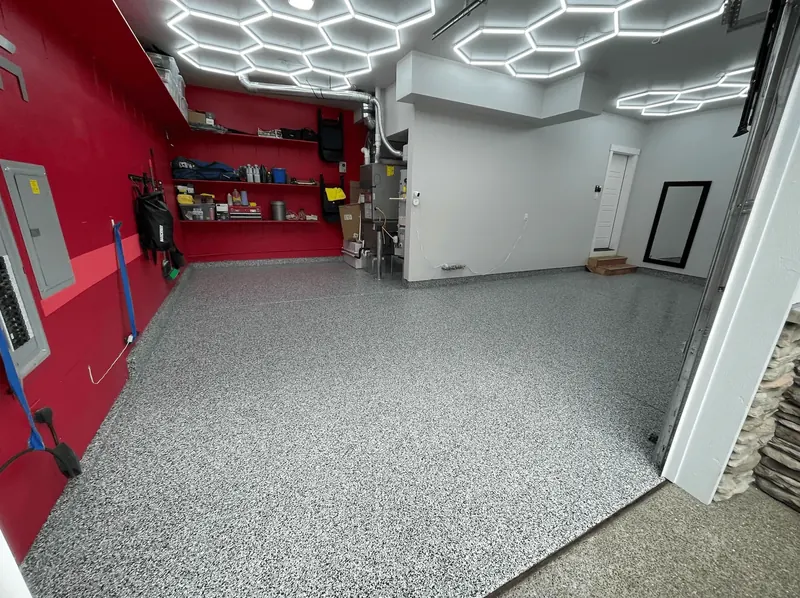
Hear your price
A few questions and a couple of photos tell our estimator what it takes to price your floor. You hear the number by phone, and it follows in writing by email.
-
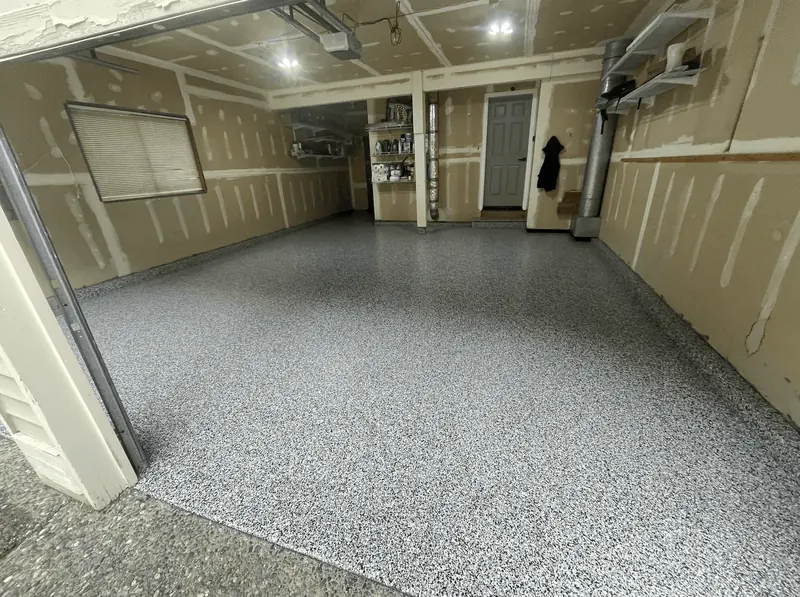
Clear it out
Empty the garage the evening before: cars, bikes, bins and any shelving that stands on the floor. Cabinets screwed to the wall can usually stay put.
-
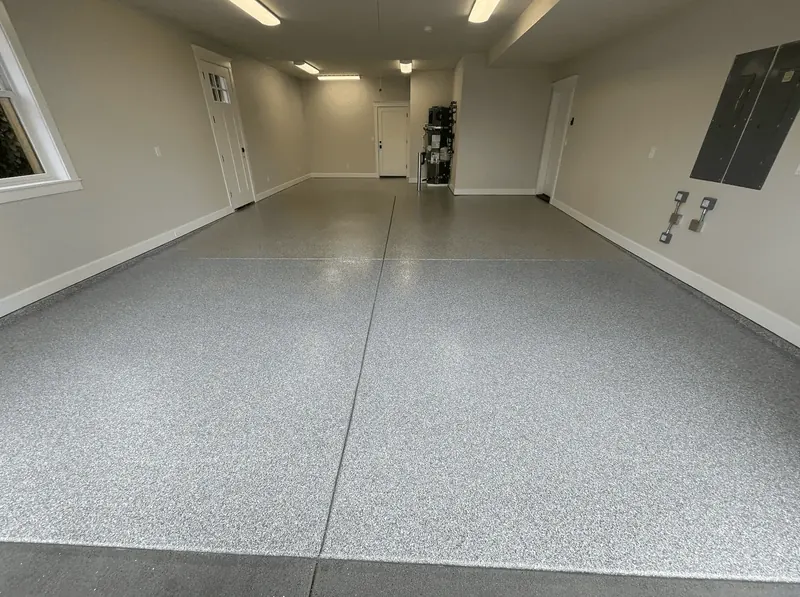
Install day
Our crew grinds, fills the cracks, lays the base and flake and finishes with the clear top. One day on a dry slab, two with the barrier. Park after 72 hours.
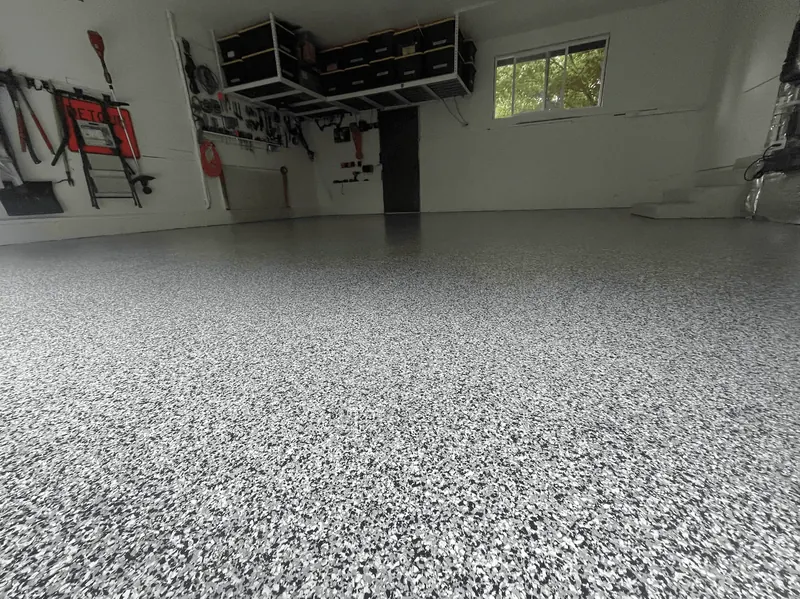
Choosing a flake color for a Houston garage
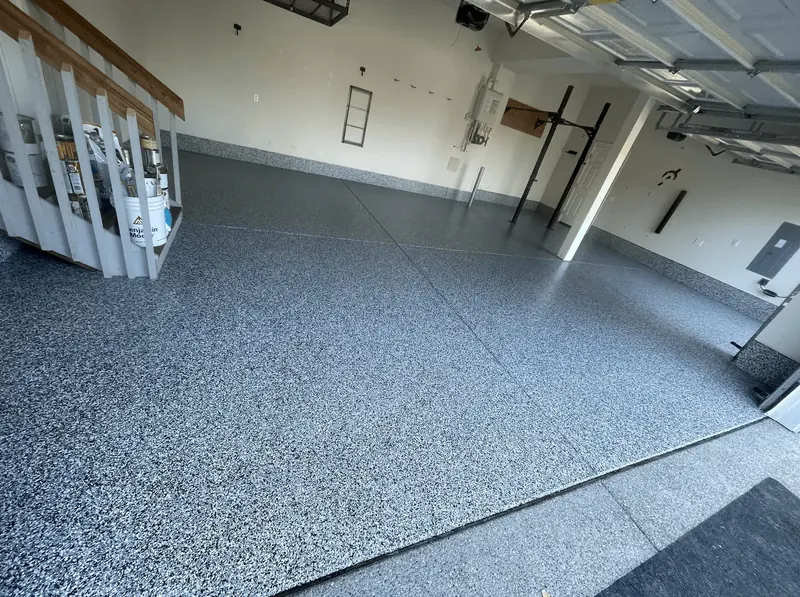
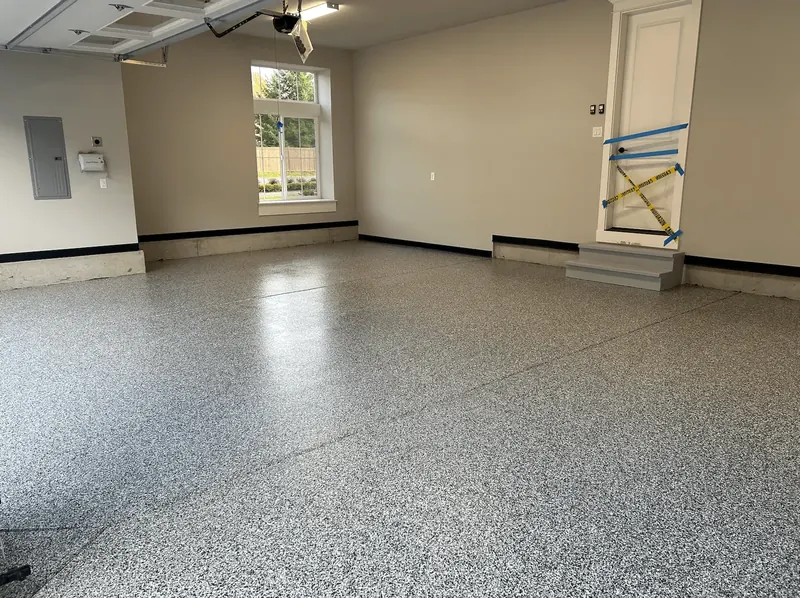
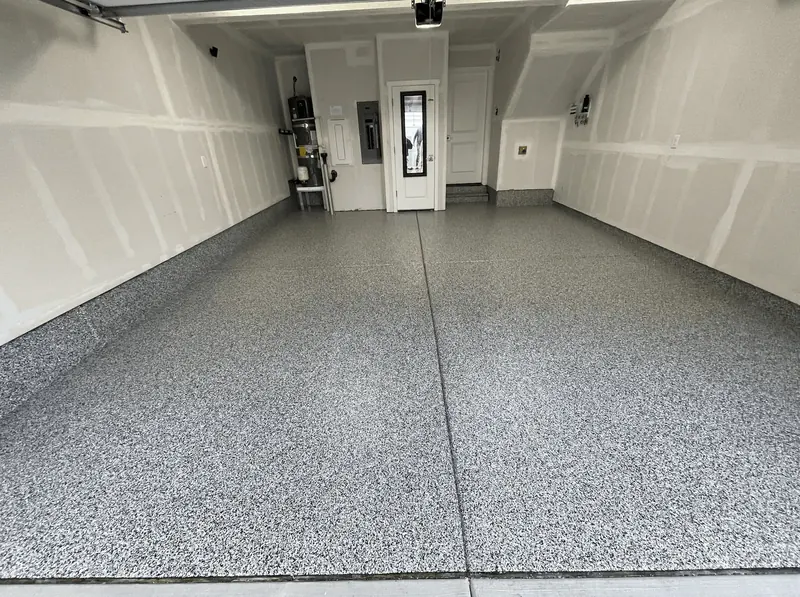
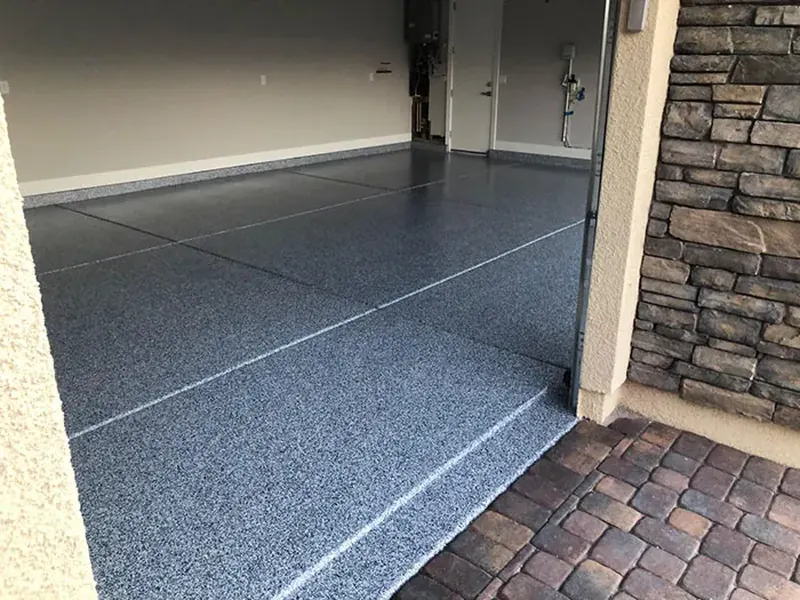
Start with what your garage fights most. Then try your top two on a photo of your own garage in our color preview, and see every blend on the colors page.
 Mud and tire marks
Mid grays
Dark clay mud and black tire marks fade into a medium gray blend with some black in it. If storms and soccer cleats are part of your week, start here and you'll sweep less often.
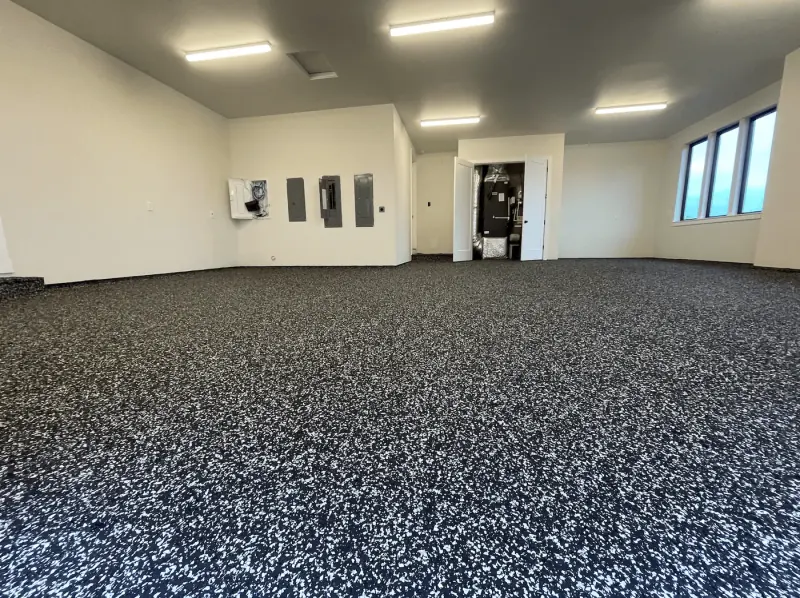 Pollen season
Busy blends
A blend of three or four colors hides a spring dusting of pollen between sweeps. Plain-looking blends show every grain of it until you get the broom out again.
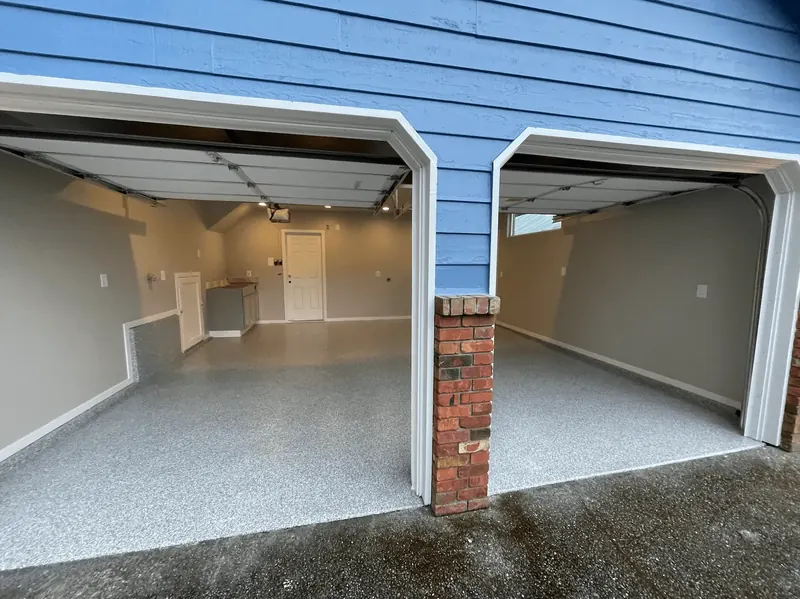
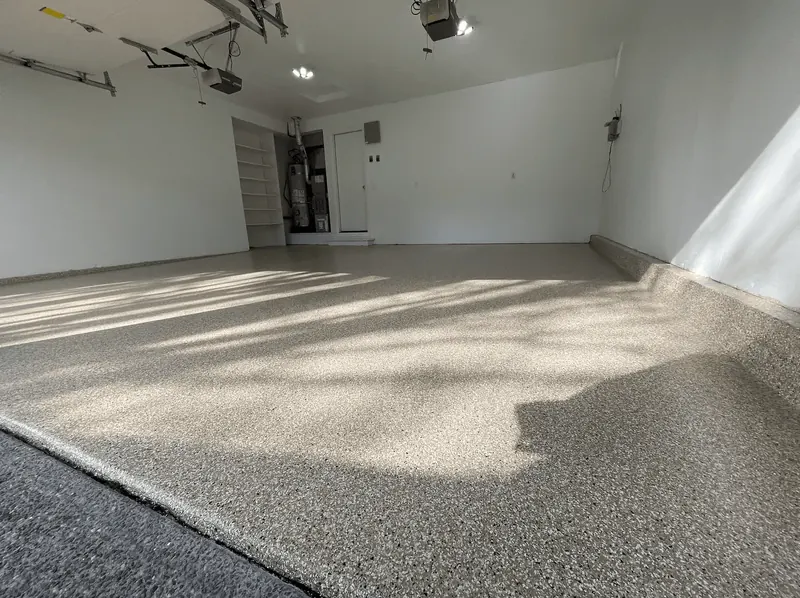 Brick front?
Warm tans
Got a red or brown brick front? A tan or sandstone flake picks up that warmth when the door is open, and it still hides everyday dust well.
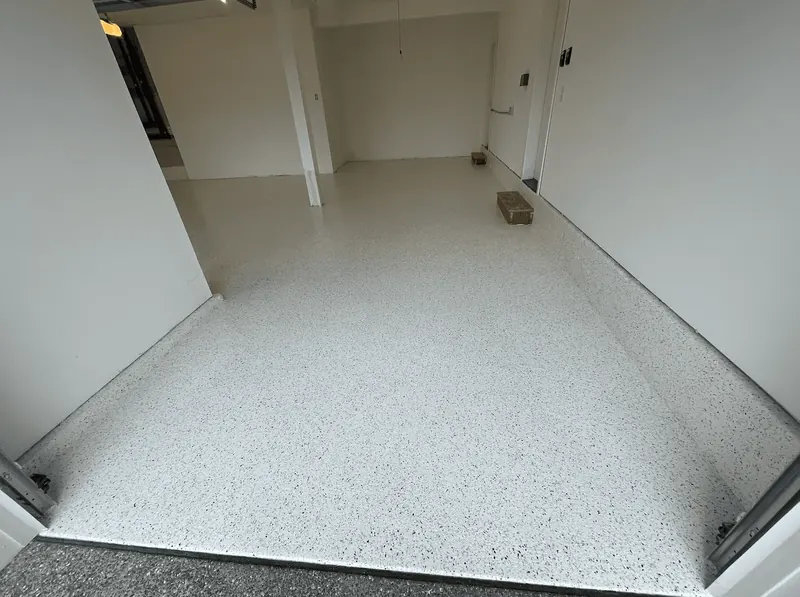 One-bulb garage
Lighter blends
A garage lit by a single bulb looks bigger and brighter with a pale floor. Pale shows tire marks first, though, so choose a light blend with darker chips in it.
More flake colors to try
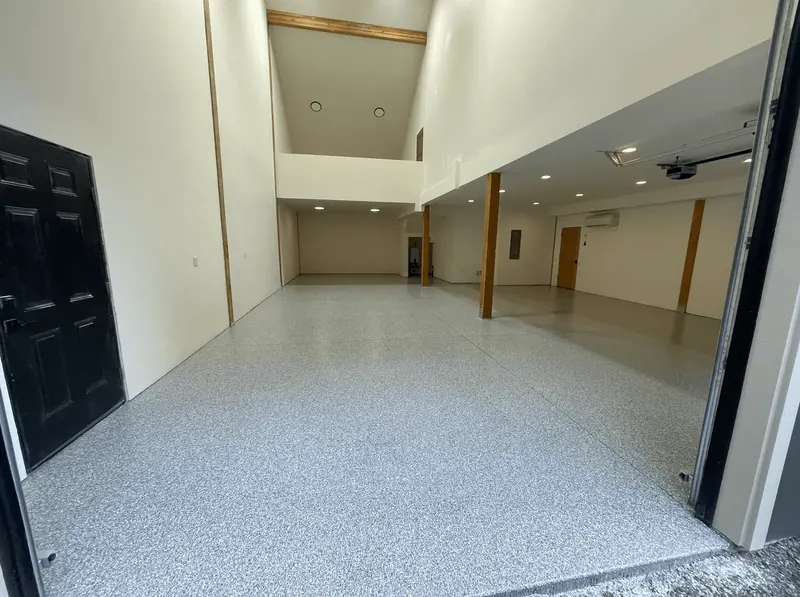
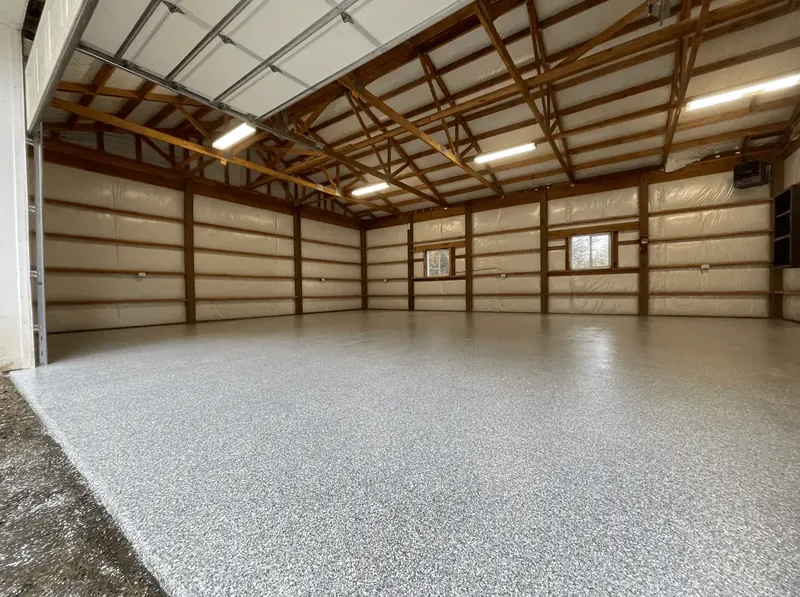
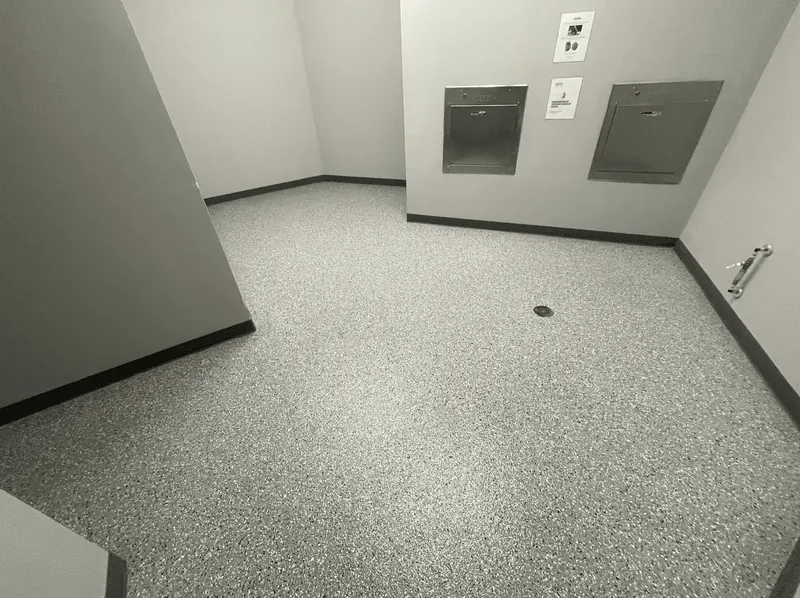
Grays, blues and warm tones, plus floors in shops and barns. See them all in the gallery, or preview one on a photo of your own garage.
Houston epoxy garage floor questions
How much does an epoxy garage floor cost in Houston?
Four things move it: the size of the garage, the crack repair, any old paint or epoxy that has to come off, and whether the slab needs the moisture barrier. Bigger garages cost less per square foot. Tell us about yours, and our estimator gives you your price over the phone, then sends it in writing.
Can I epoxy my own garage floor in Houston?
You can, and a kit costs far less up front. It's a fair pick for a storage garage or a house you're about to sell. Grind instead of etching, check for moisture with plastic taped down overnight, and wait for a dry spell after a front. Under daily driving in August, kits tend to lift in the tire lanes first.
Can you epoxy a new garage floor?
Yes, after the concrete has cured for about four weeks. A brand-new slab in a Katy or Bridgeland subdivision is a great start, with no old coating to remove and few stains. Coat it before you move in and you never have to empty the garage for it. Get your price early, then pick a date past the four weeks.
What is the best coating for a garage floor in Houston heat?
One that stays flexible underneath and clear on top. In a Houston garage, that means a polyurea base, flake wall to wall and a polyaspartic topcoat, bonded to diamond-ground concrete. If you're buying a kit instead, pick a thick two-part epoxy over a thin water-based one, and rent a grinder.
Will hot tires pull up the floor?
Hot tires lift floors that are thin or poorly bonded. The rubber softens the coating as it cools, then tugs it loose when you back out. Ours bonds to diamond-ground concrete, and the polyaspartic top is made for that heat. If the coating ever lets go, the lifetime warranty covers it.
Is an epoxy garage floor slippery when the slab sweats?
Smooth epoxy can get slick when a muggy morning beads water on it. Ours has full flake for texture and fine grit in the clear top, so your shoes grip. Want extra grip on the step from the house? Ask, and we'll add it. Keeping the door down on muggy days cuts the sweating, too.
Can you put a new floor over my old epoxy or paint?
Usually the old coating comes off first. We grind paint and epoxy down to bare concrete, so your new floor bonds to the slab and not to a coating that's already letting go. If yours peeled, tell us on the call. That's a reason to look hard at moisture before anything new goes down.
How do I clean the floor after a storm or pollen season?
Sweep or dust-mop the grit and pollen, then mop with warm water and a little mild soap. After high water, hose the silt out and let the floor dry. Skip acid cleaners and harsh solvents, and wipe up gas, oil and antifreeze when you see them. That's about all the care it needs.
Do I need to empty the whole garage?
Yes, since the grinder works wall to wall. Move out the cars, bikes, bins and any shelving that stands on the floor the night before. Cabinets on the wall can usually stay. Bring light things back the next day and your cars after 72 hours, and give heavy shelves about a week.
Ready to park on a floor that holds up?
Fill in the form, or pick up the phone and call (832) 925-4487. We'll ask about your garage, our estimator gives you your price over the phone, and you decide on your own time.