Epoxy Garage Floors Built for San Antonio
Your San Antonio garage gets cedar dust in January, both cars when the hail warnings come, hot tires all summer and the truck after a weekend at the deer lease. The epoxy garage floor we recommend is the step up from epoxy, bonded to a diamond-ground slab so it stays put. Your price comes by phone.
- Priced over the phone
- Bonded to ground concrete
- Park again in 72 hours
- Lifetime warranty
Is a coated garage floor worth it in San Antonio?
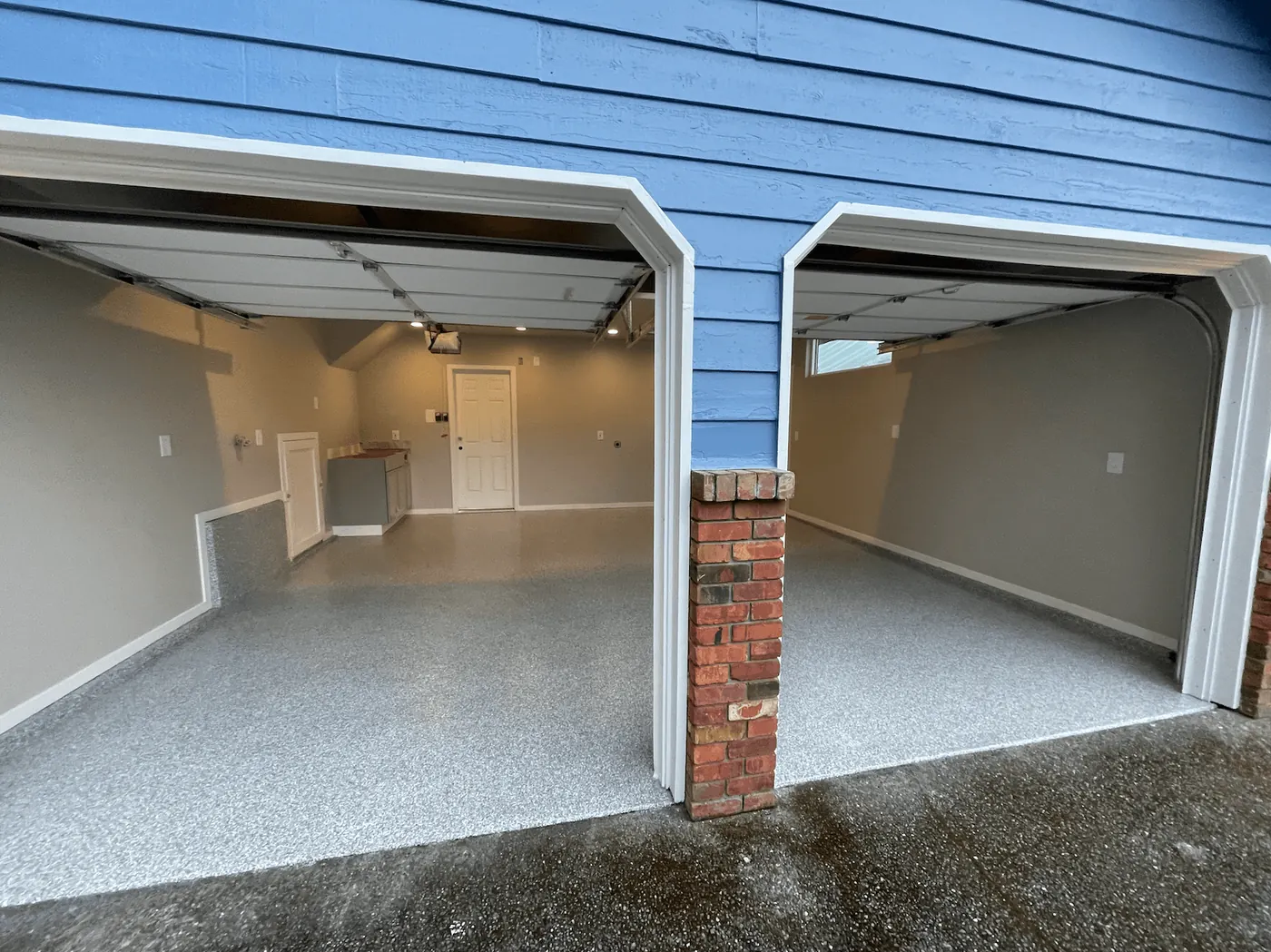
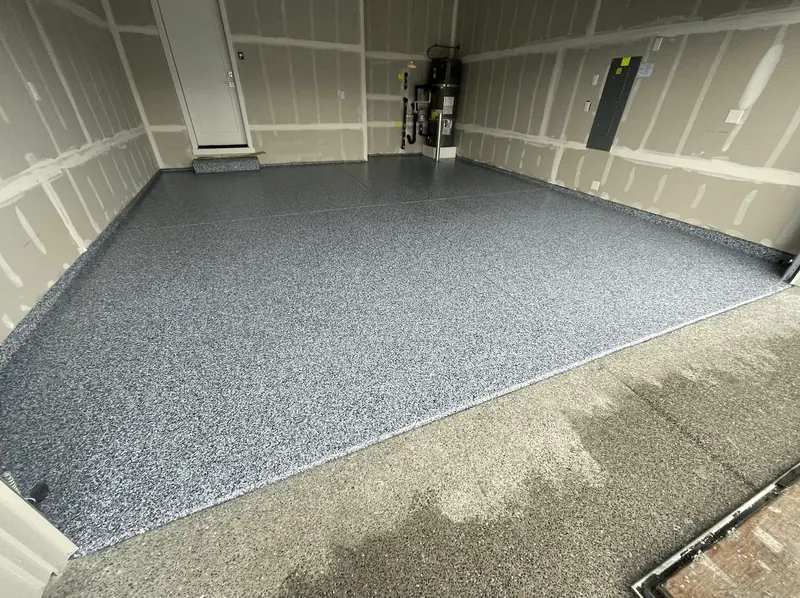
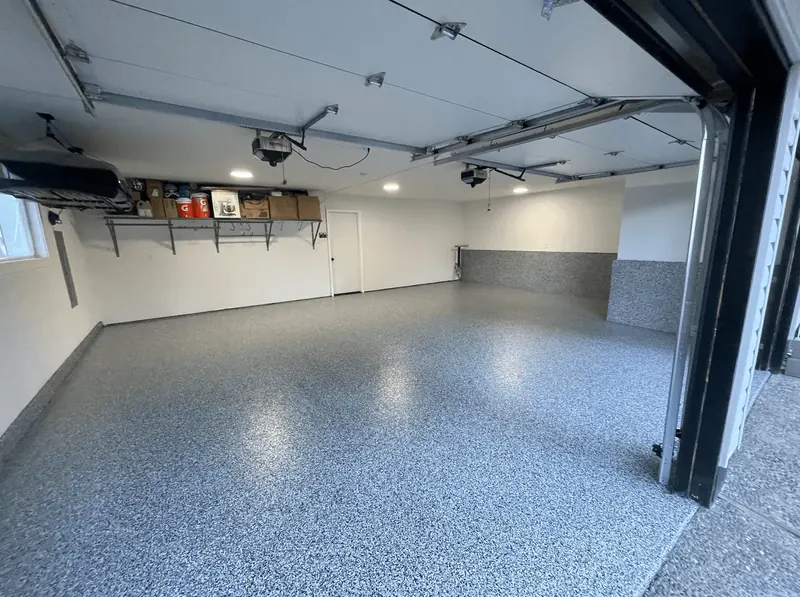
Yes, if you park in there and you're staying a few years. Our floor at Task Force Garage is the step up from an epoxy garage floor, and we put it down across San Antonio and the Hill Country. It's a diamond grind, a polyurea base, flake wall to wall and a clear polyaspartic top. Your estimate is free and by phone.
Bare concrete holds onto caliche dust, oil drips and the black clay that rides in from the yard. A coated floor keeps it all on the surface, so a broom and a damp mop handle most weeks. That counts in a drought year, when SAWS rules ban washing driveways and other paved areas.
Plain epoxy gives you the look for a while. San Antonio heat is hard on it, though. Hot tires soften thin coats, and the sun through the door turns them amber. The step up keeps the look and loses those weak spots.
If the garage is just storage, or the house goes on the market in spring, put the money elsewhere. We'll tell you that on the call.
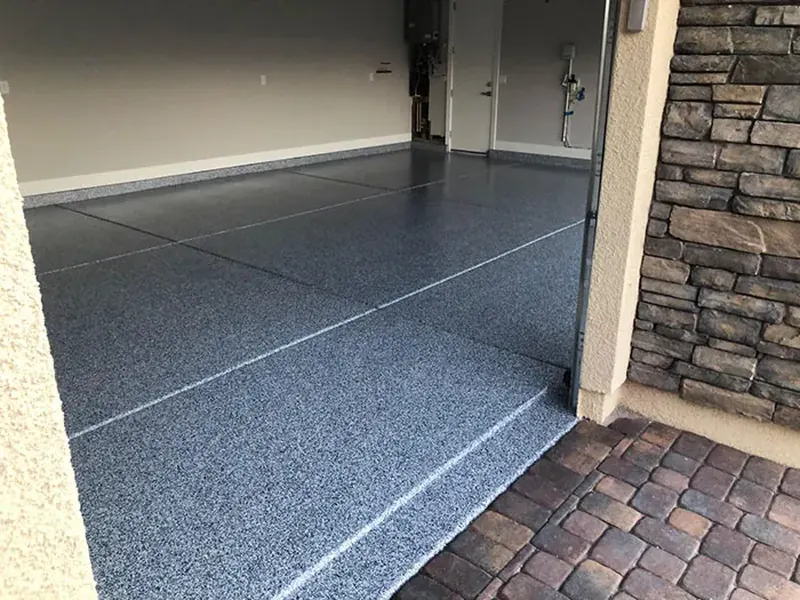
Your garage floor, season by season in San Antonio
Every season here brings its own mess into your garage. Here's what each one does to bare concrete, and what it does to a coated floor.
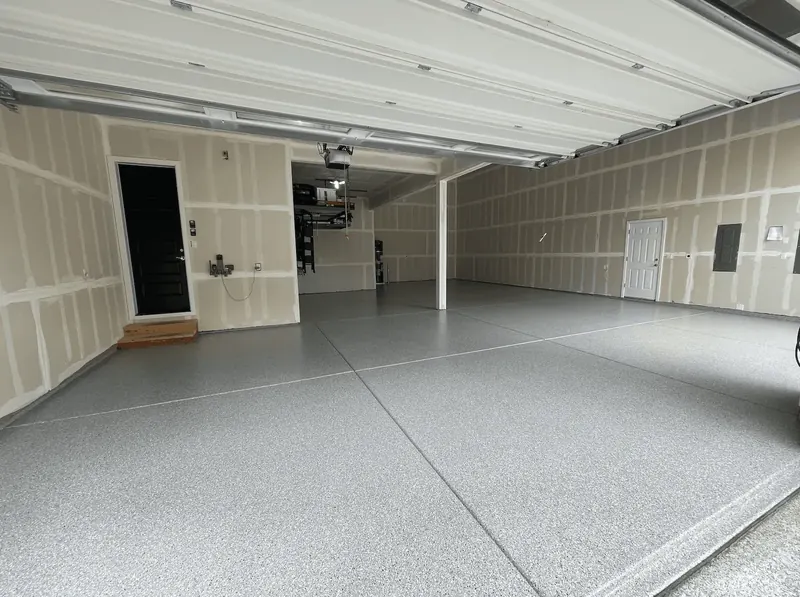 Winter
Cedar dust
From December into February, mountain cedar pollen rides in on north winds after a cold front. It settles on your cars and your floor alike. Full flake hides the haze between sweeps, and a damp mop lifts it right off.
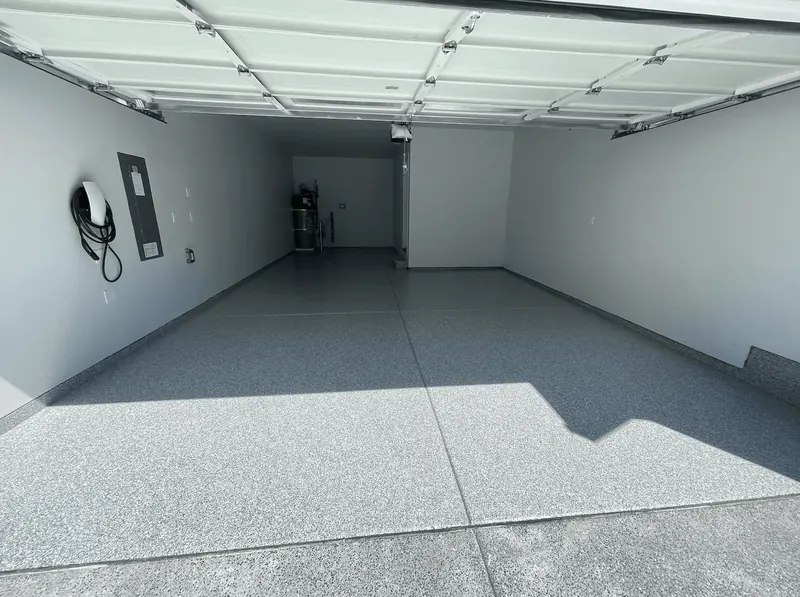 Spring
Hail warnings
When a hail warning hits your phone, both cars need to fit inside fast. A floor you like keeping clear turns that into a two-minute job, instead of an hour of moving bins and bikes around.
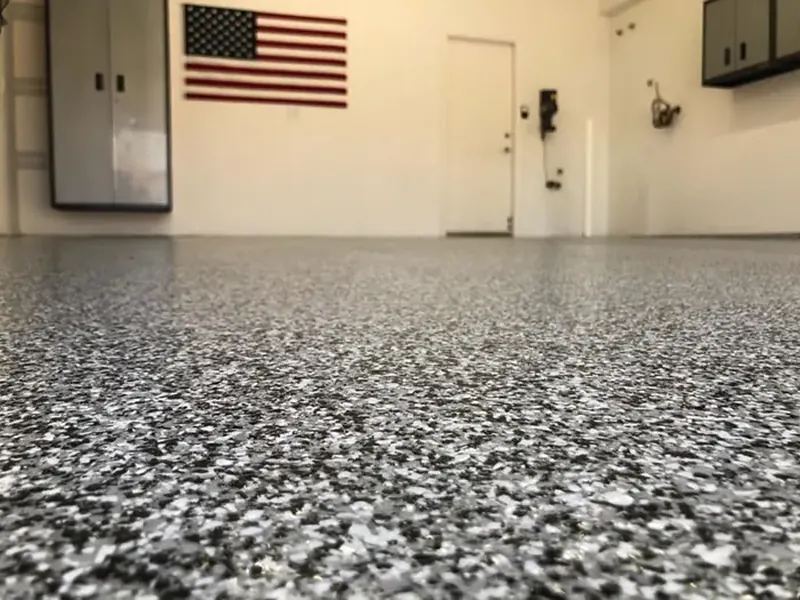 Summer
Hot tires
After a drive on a triple-digit afternoon, your tires park hot and cool on the slab. That's what softens floor paint and thin kits until they peel. A polyaspartic top over ground concrete stays down.
 Fall
Deer season
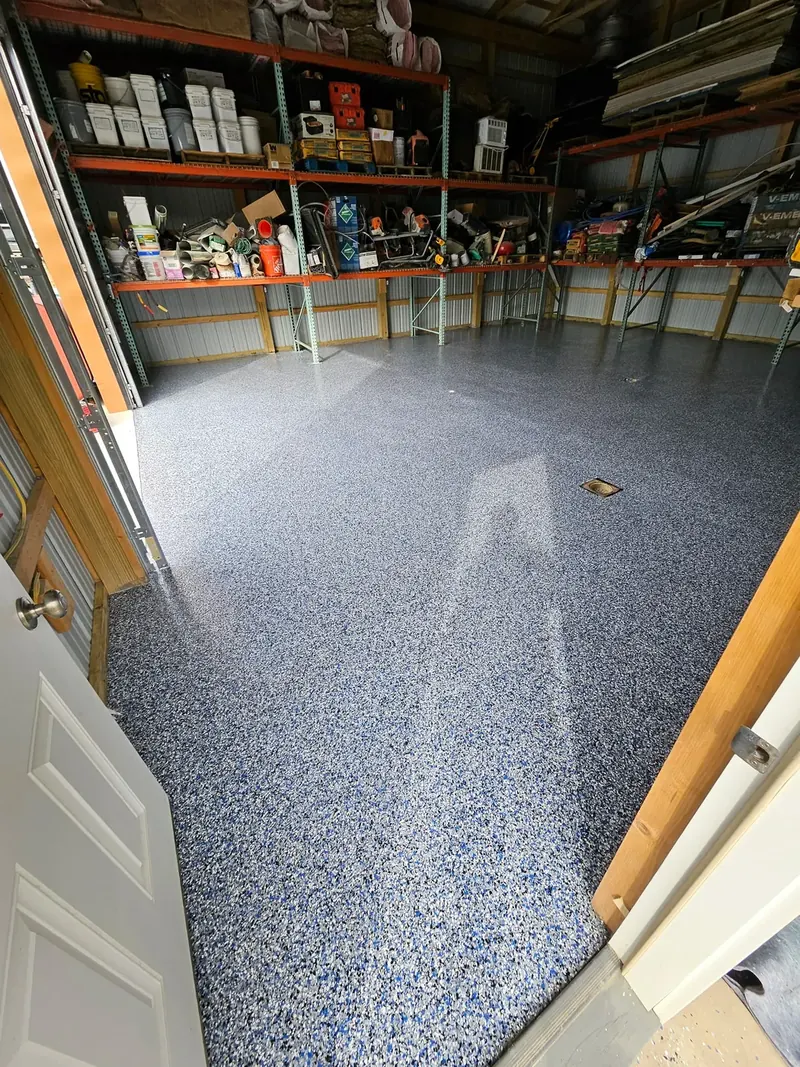
Once the season opens in November, the truck comes home muddy and the coolers drip. Mud, cooler water and spilled feed corn wipe up from a coated floor instead of soaking into the concrete.
A DIY epoxy kit or a pro floor in San Antonio heat?
Some garages do fine with a kit. Here's the honest difference, so you can match the floor to the way you use yours.
A hardware-store kit
- An acid or citric etch in place of a grinder
- Thin coats you roll on yourself
- A sprinkle of chips, often with no clear topcoat
- No moisture test unless you run one
- A weather window you have to wait for
A professional floor
- Diamond grinding, with hand work at the edges
- Base, flake and top about as thick as a credit card
- Flake wall to wall under a clear polyaspartic top
- A meter reading before anything goes down
- Park after 72 hours, with a lifetime warranty
When a kit has a fair shot in San Antonio
Most kits want air between about 60 and 85 degrees while they go on and cure. From late spring into fall, San Antonio afternoons run past the top of that range most days.
Your best windows are the mild weeks of early spring and late fall, and even then a cold front can drop the nights too low. Pick a dry, settled forecast and give it three days before your car goes back in.
Doing it anyway? Rent a grinder rather than etching, and tape plastic to the bare slab overnight. A dark patch under it by morning means moisture is coming through, and a kit won't hold there.
Flake colors that suit a San Antonio home
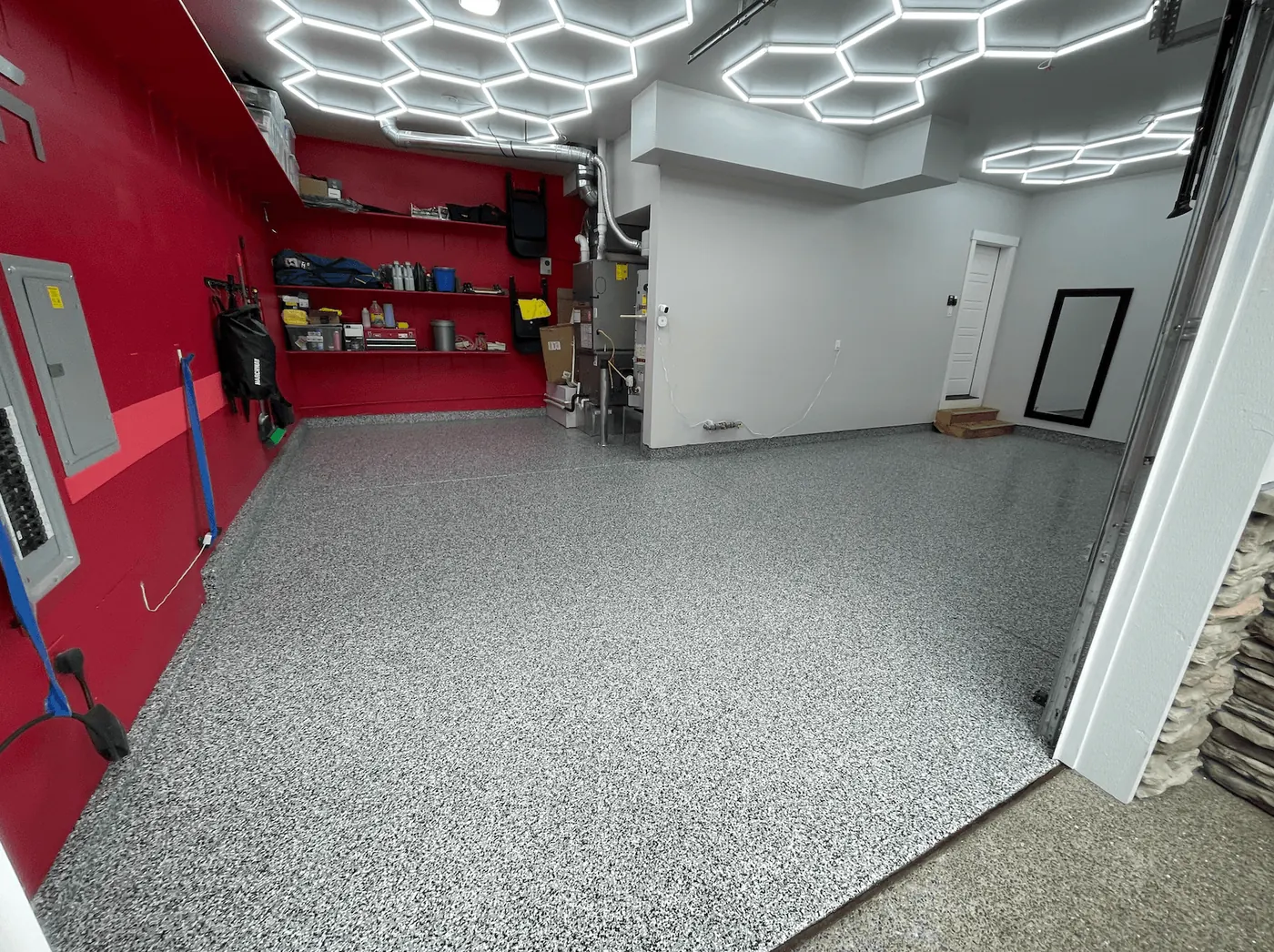
Pick for the dirt you fight and the house you see from the driveway. Try your favorites on a photo of your own garage in our color preview, and see every blend on the colors page.
 Limestone front?
Cream and tan
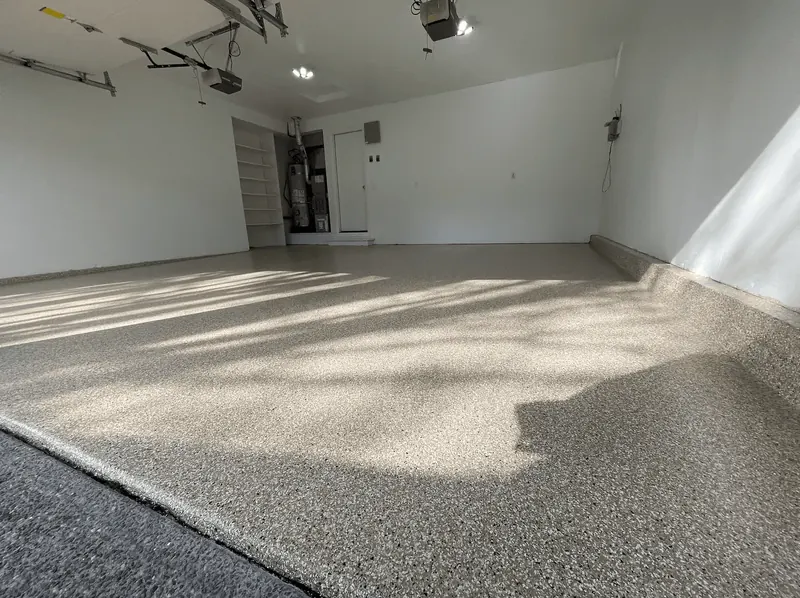
Cream limestone or tan stone out front? A sandstone or driftwood flake carries that color into the garage, and it hides everyday dust well.
 Caliche lots
Light tans
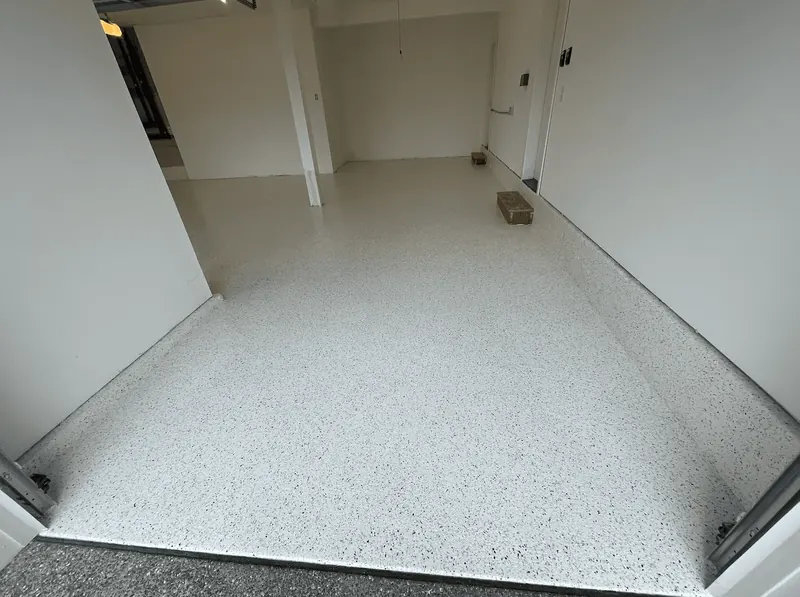
If your road or driveway sends pale caliche dust inside, a light tan or alabaster blend hides it. Dark floors show every pale grain until you sweep.
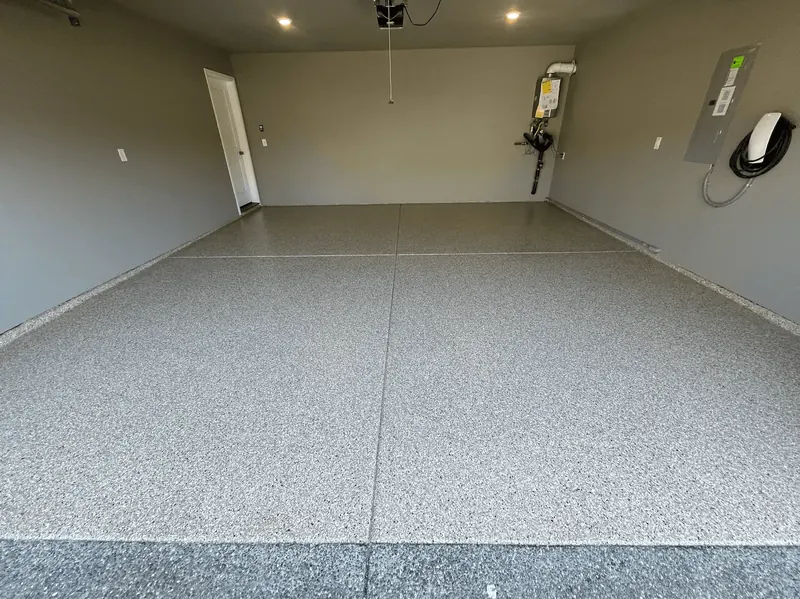 Black clay
Mid grays
On the east and south sides, the yard is dark clay that sticks to everything when it's wet. A medium gray with black chips swallows those footprints.
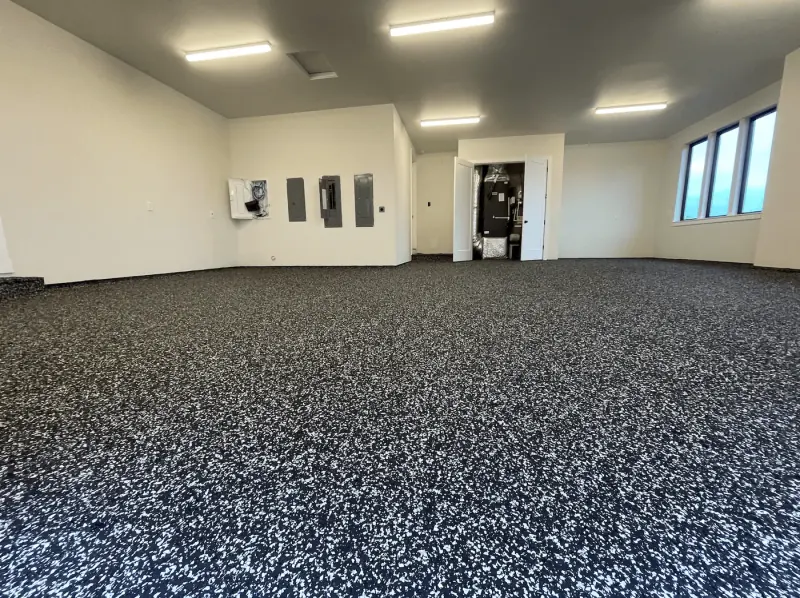 Newer builds
Black and white
A newer home with white trim and black fixtures looks sharp over a black-and-white domino blend. It hides oil drips, though pale dust shows on the dark chips.
From your first call to parking again
Here's the whole thing, start to finish. Most of the work is on us, and none of it starts until you've signed.
-
Call or send the form
Call (726) 230-8996 or use the quote form. We'll ask about the size, the cracks, any old paint and the steps into the house.
-
Send a few photos
Text them to our main line, (206) 895-7444. A wide shot from the driveway and a close look at the worst crack tell our estimator a lot.
-
Get your price
Our estimator gives you your price over the phone. The written quote follows by email, and you sign when you're ready.
-
Install day
Clear the garage the night before. Our crew checks for moisture, grinds, fills cracks, lays the base and flake and finishes with the clear top. Plan on two days if the slab needs the barrier.
-
Back in business
Walk on it the next day. Park after 72 hours, and wait about a week before you drag anything heavy across it.
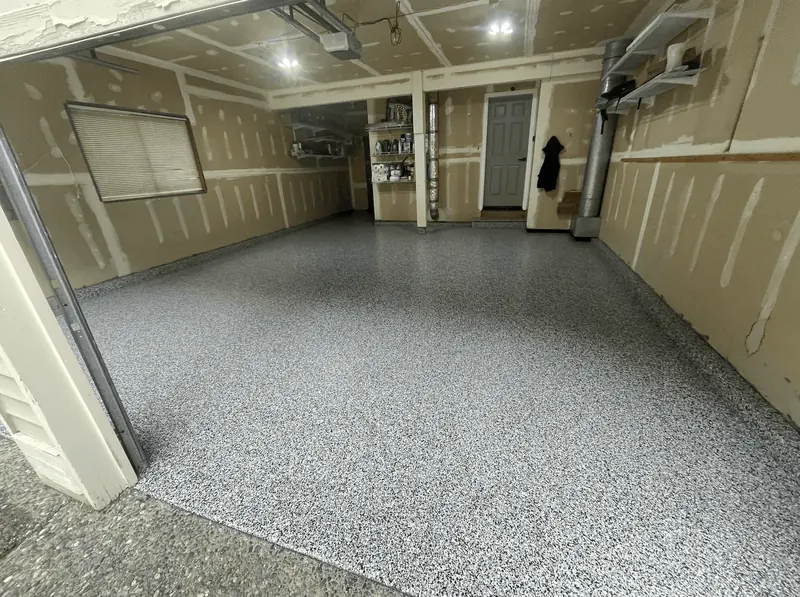
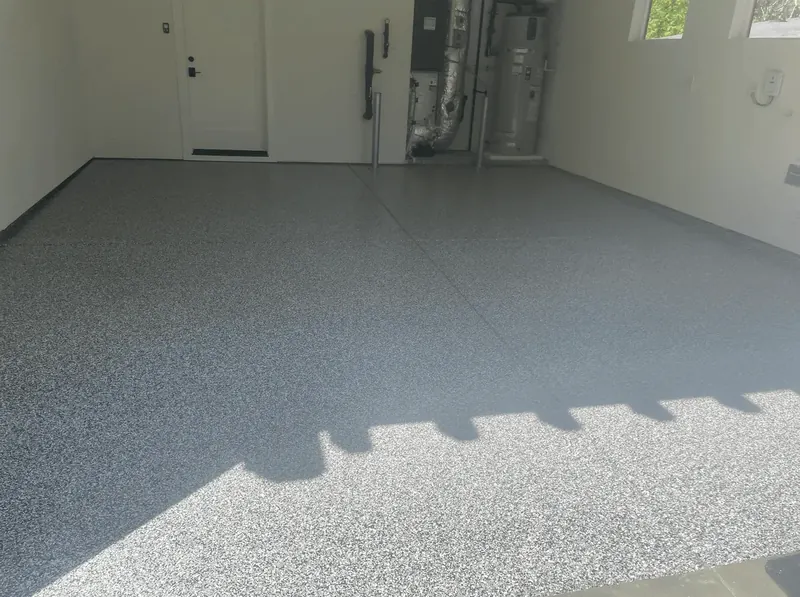
A few more blends to compare
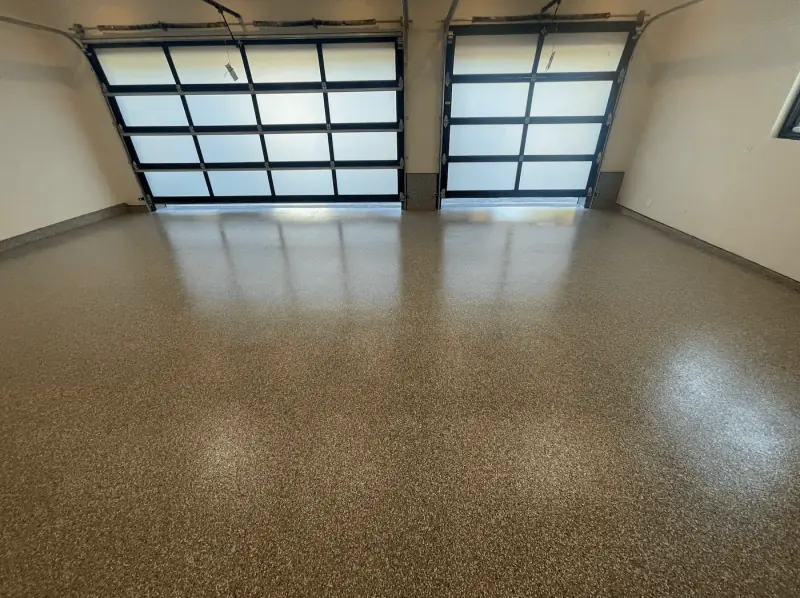
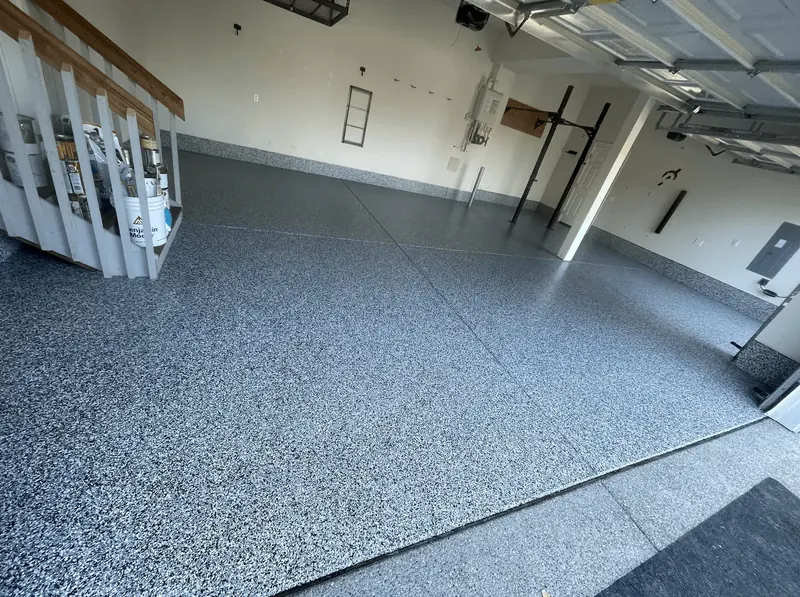
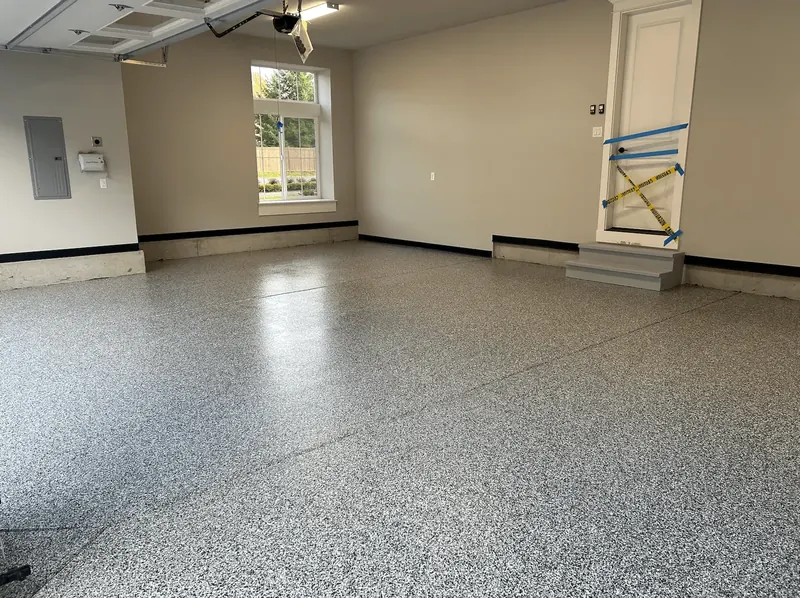
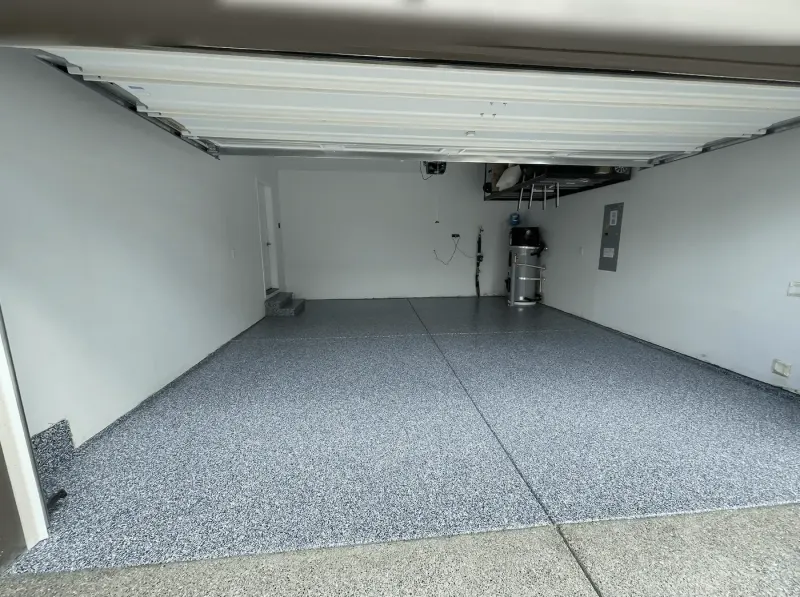
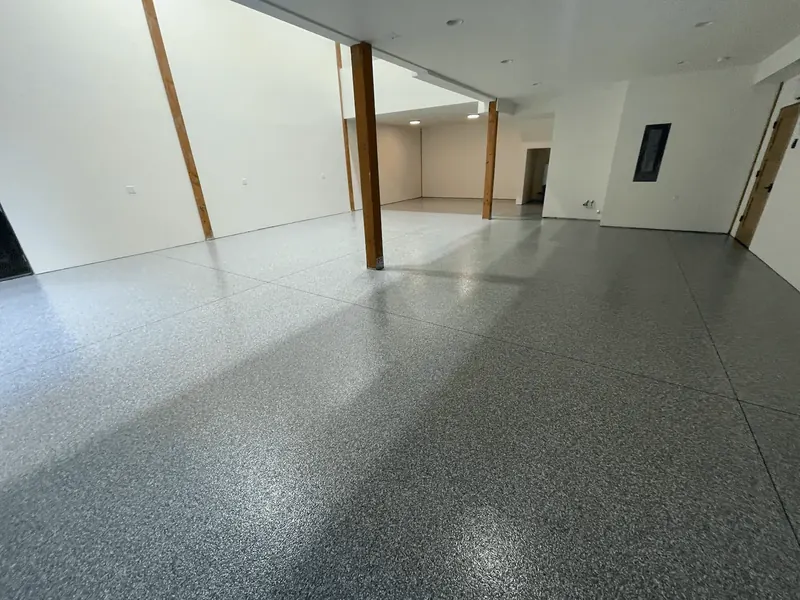
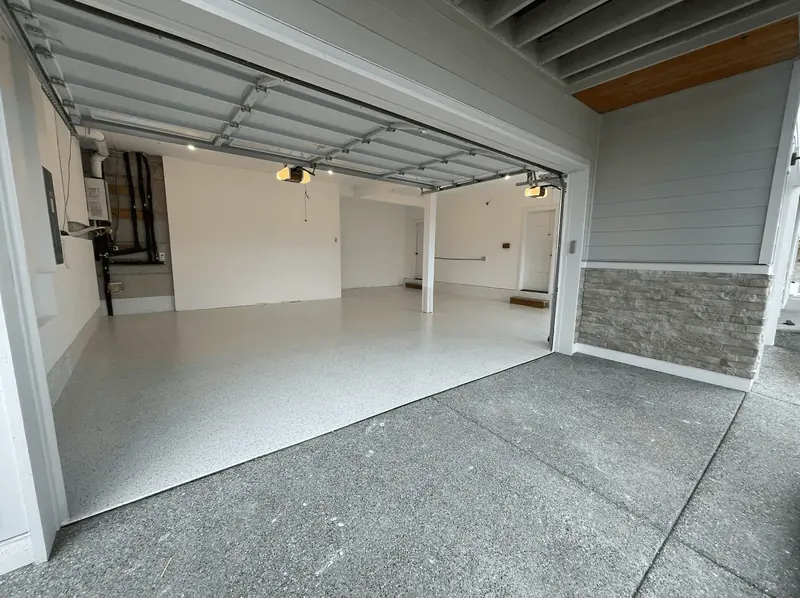
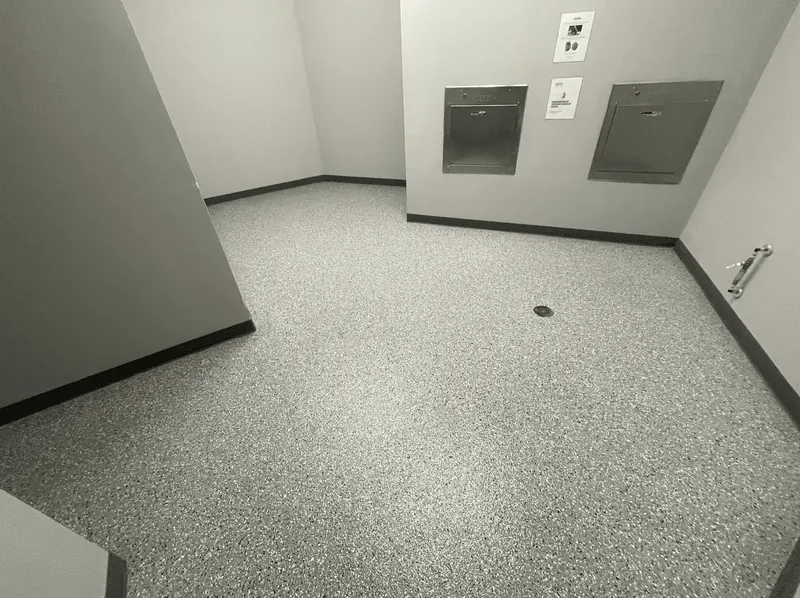
Warm tans, cool blues and a shop floor or two. See them all in the gallery, or try one on a photo of your own garage.
San Antonio epoxy garage floor questions
Epoxy garage floor cost in San Antonio?
It turns on the size of the garage and what the slab needs first: crack repair, removing old paint or epoxy, or the moisture barrier. A three-car garage costs less per square foot than a one-car. Our estimator gives you your number over the phone after a few questions, and the quote follows by email.
Can I epoxy my own garage floor in San Antonio?
You can. A kit makes sense for a storage garage or a house you're about to sell. Do it in the mild weeks of spring or fall, grind instead of etching, and check for moisture first. Under a truck in August, expect a thin kit to lift where the tires sit.
How soon can a brand-new slab be coated?
Give new concrete about four weeks to cure. If you're closing on a new build in Alamo Ranch or Schertz, that timing works in your favor. Get your price early, set a date past the four weeks, and the floor goes down before the moving boxes arrive.
Will a San Antonio summer soften the floor?
Not ours. Hot tires soften floor paint and thin epoxy, then pull them up as you back out. Our clear polyaspartic topcoat is built for that kind of heat, and it sits on diamond-ground concrete. If the coating ever lets go of the slab, the lifetime warranty covers it.
Is the floor slippery when it's wet?
Less than you'd think. Full flake gives the surface texture, and fine grit in the clear top helps your shoes grip when someone tracks in rain or cooler water. For the step from the house, ask us for extra grit.
Can you coat over old epoxy or paint?
We take it off first. The grinder cuts old paint and epoxy back to bare concrete, so the new floor grips the slab itself. If the old coating peeled, mention it on the call, because peeling often points to moisture we'll want to test for.
What's the easiest way to keep it clean?
A broom or a dust mop for the grit and cedar pollen, then a damp mop with mild soap. Skip acid cleaners. It's handy in a drought year, too, since SAWS rules can ban washing paved areas, and this floor doesn't need a hose.
Do you cover Boerne, Helotes and Schertz?
Yes, along with Alamo Heights, Stone Oak, Alamo Ranch, Fair Oaks Ranch, New Braunfels, Cibolo and the streets in between. Your estimate happens by phone, so it's quick to check. Call (726) 230-8996 if you're not sure about your road.
How long until both cars go back in?
Seventy-two hours after the clear top goes on. You can walk on it the next morning and bring light things back then. Most garages take one working day, or two when the slab needs the barrier primer to cure overnight.
Ready for a garage floor that stays put?
Give us a call at (726) 230-8996, or start with the form. A few questions about your garage, and our estimator gives you your price over the phone. The written quote follows by email.