
Garage Floor Repair in Nashville
Found a crack in your garage floor? Almost every slab has a few, and most are harmless. Garage floor repair for those is part of every floor we install: filled, ground flush and buried under flake. If yours means the ground is moving, you'll hear it at the free estimate, before you spend a dime.
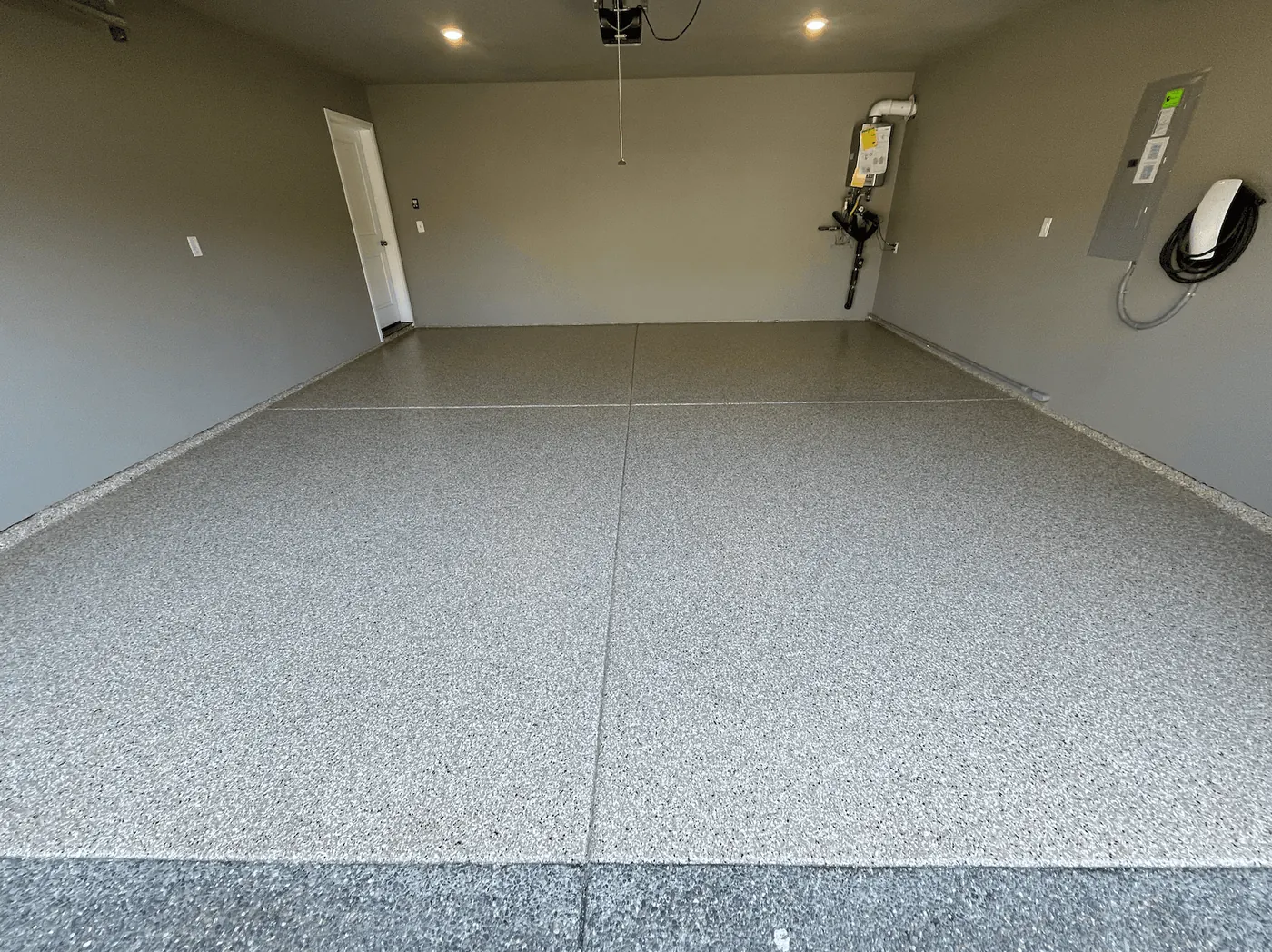
- Every crack filled
- Control joints filled
- Honest call on settling
- Lifetime adhesion warranty
Can a cracked garage floor be repaired?
Usually, yes. Concrete shrinks as it dries, so almost every garage floor cracks in its first year or two. If yours has thin, flat cracks, those are normal, and they're the easy part of garage floor repair. We fill them and grind them flush before your new floor goes on.
What matters is whether a crack is still moving. If one side sits higher than the other, the gap is wider than about a quarter inch, or the crack keeps growing, the ground under your slab is moving. A coating can't stop that, so your slab needs a concrete contractor first.
It also helps to know what your garage floor is. In most homes it's a slab resting on the ground inside the foundation walls, and it isn't holding the house up. So most cracks in it are a looks problem, and looks are exactly what a new floor fixes.
Either way, you'll know which kind you have before anyone quotes you a floor. We check every crack at the free estimate and tell you straight.

Nashville ground is tough on garage floors
Your slab sits on ground that moves, in four different ways around here. Most homes deal with one or two of them. Here's what each one does to a garage floor.
 Clay
Clay
Shrink and swell
Much of the area sits on clay that swells when it's soaked and shrinks as it dries out. Spring here is wet and early fall is dry, so the ground under your slab rises and sinks a little every year.
 Limestone
Shallow rock
Across much of the Nashville Basin, lumpy limestone sits just under the soil, sometimes only inches down. Your slab can rest on rock at one corner and soft clay at another, so it settles unevenly.
 Sinkholes
Karst country
In parts of the basin, like around Murfreesboro, that limestone is dotted with sinkholes. Water moves through the rock, and moving water can carry soil out from under your slab. If your floor dips in one spot, that's a clue.
 Trees
Trees
Thirsty roots
Got a big maple near the driveway? Its roots can reach two or three times past its branches, mostly in the top couple of feet. They can lift your slab's edge, or drink the clay dry in a drought so the slab drops.
What your garage floor cracks are telling you
Find your crack in the table. The first five rows are routine garage floor repair that we handle in prep. The last four mean the ground or the house needs a look first.
| What you see | What it usually means | What happens |
|---|---|---|
| Thin, flat cracks, random or in a web | The concrete shrank as it dried | Filled and ground flush in prep |
| A crack running along a control joint | The joint did its job | Filled and ground flush with the joint |
| A crack from a corner, a post or the drain | Stress gathers at corners; normal | Filled and ground flush in prep |
| Chipped or spalled edges along joints or at the door | Tires, salt and freeze-thaw | Edges rebuilt, then ground flush |
| Small pits and pinholes in the surface | Salt, wear or a weak top layer | Ground open, filled, ground flush |
| One side of the crack higher than the other | The ground settled or heaved | Concrete contractor first |
| Wider than about a quarter inch, or growing | Your slab is still moving | Concrete contractor first |
| A dip in the middle, or a hollow sound | Soil sank or washed out underneath | Concrete contractor first |
| Cracks in the foundation wall, or doors sticking in the house | It may be the house, not just the floor | A foundation specialist first |
Check yours in five minutes
-
Lay a straightedge on it
Set a level or any straight board across the crack. If it rocks, or a coin slides under one side, your slab has moved up or down.

-
Measure the width
A hairline you can't fit a credit card into is normal shrinkage. A crack you could lay a pencil in, about a quarter inch, is worth a closer look.

-
Mark it and wait
Pencil a line across each end and write the date. Look again after a season. If the crack has grown past your marks, it's still moving.

Garage floor repair comes with every coating
Crack and joint repair is part of every floor we install, on every package, and it's already in your written price. Premium takes it further.
Grind first, then look
Grinding strips off the stains and the worn top skin, so every real crack in your slab shows up, hairlines included.
Fill every crack and chip
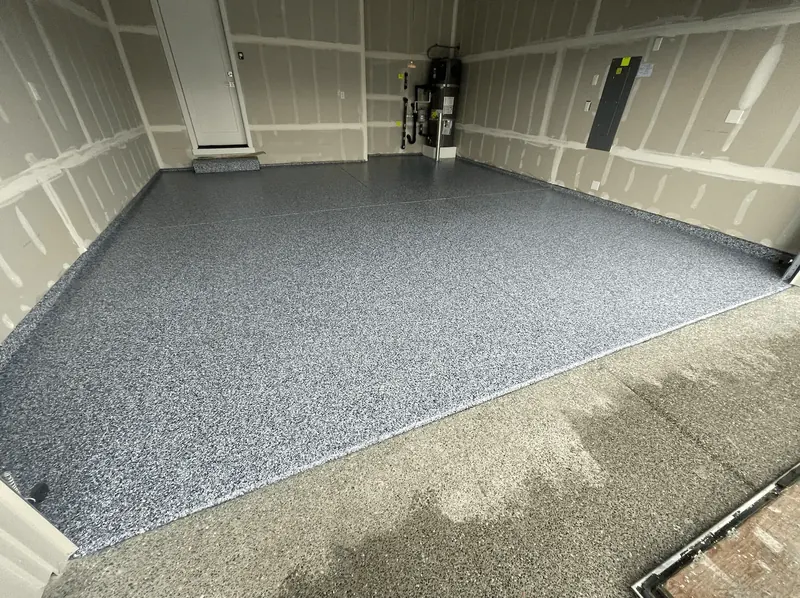
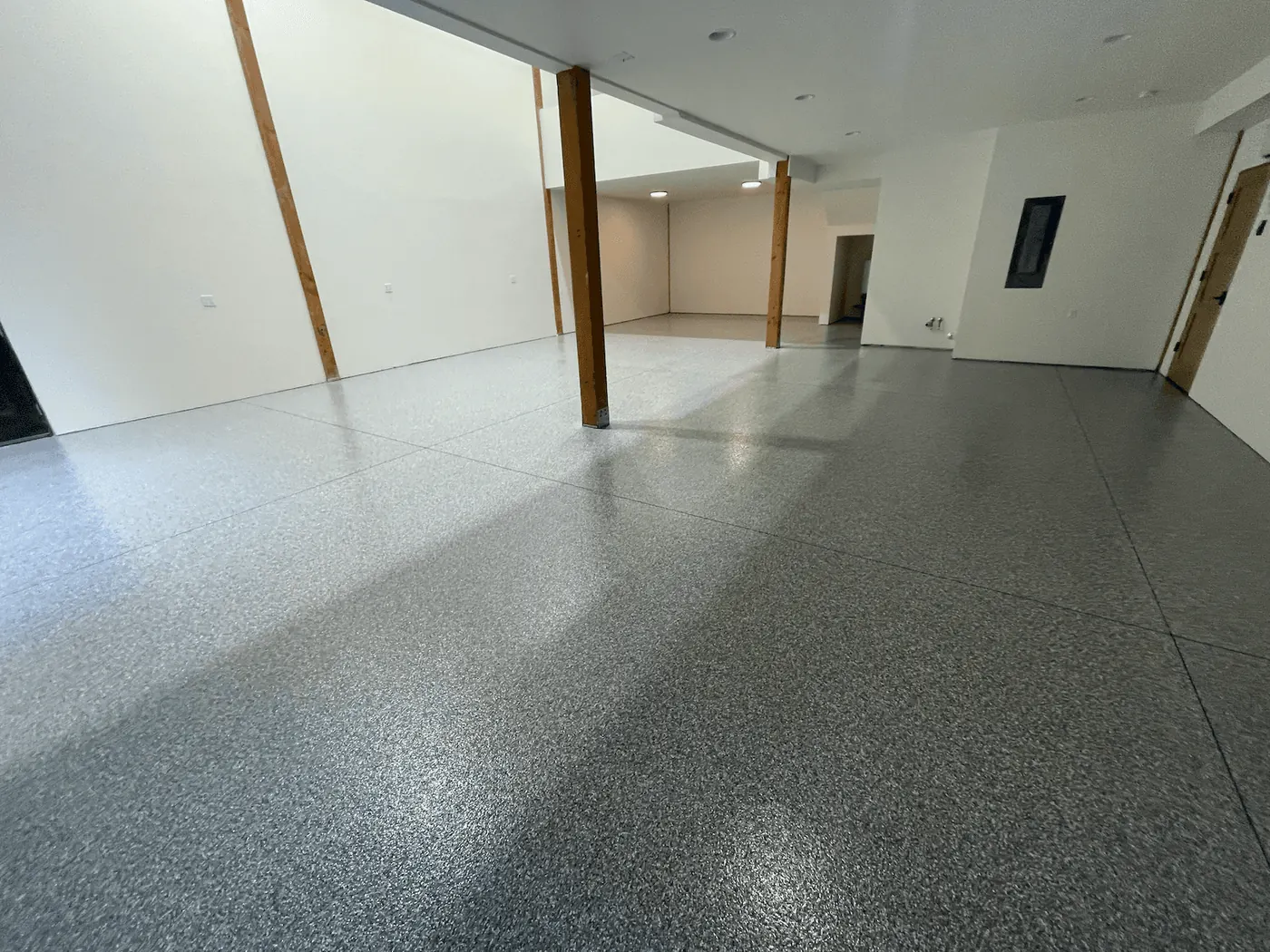
Each one gets a professional filler, ground flush with the floor. Once the flake is down, you'd have to know where to look.
Fill the control joints
Saw-cut joints get filled and ground flush too, so they stop catching grit and water.
Rebuild spalled edges
Joint edges chewed up by tires and salt get rebuilt before the base coat, so your tires roll flat across them.
Premium goes deeper
On a Premium floor, larger cracks are cut open and rebuilt from the bottom, joints run edge to edge, and the perimeter is sealed.

When your slab itself is moving
Your garage floor rests on the fill dirt under it. If that fill was never packed down well, or water from a downspout or a leak washes it out, the middle sinks and cracks while the edges stay put.
Settling, heaving and a crack that keeps opening are ground problems. A concrete contractor fixes those, often by pumping foam or grout under a sunken slab to lift it, or by replacing a section. If you also see cracks in your foundation walls, or doors that start to stick, call a foundation specialist.
Once your slab is stable, it's a normal coating job. At the estimate we'll point out what we see and tell you which trade to call. We won't coat a slab that's still moving, because your new floor would crack right along with it.
Will a garage floor crack come back?
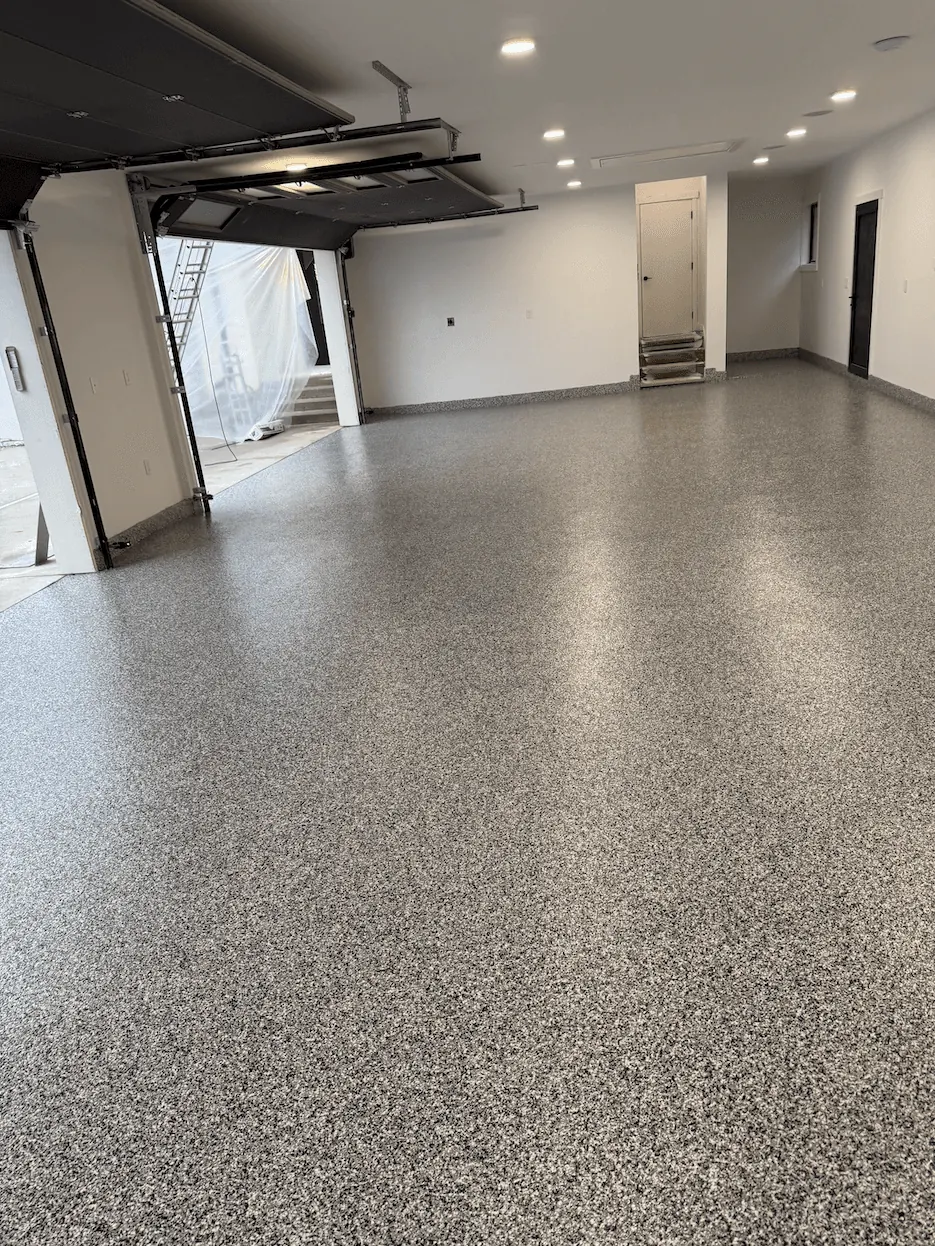
If your cracks are old shrinkage cracks, they've usually finished moving. Once we fill them, the repair stays hidden under the flake, and filled control joints disappear the same way.
A coating follows the concrete, though. If your slab cracks somewhere new, or an old crack opens because the ground moved, the coating cracks with it. Nothing you put on a floor can stop concrete from moving.
That's why our lifetime adhesion warranty covers the coating letting go of the slab, while new cracks and settling in the concrete itself aren't covered. It's also why we'd rather send you to a concrete contractor than coat a slab that's still on the move.
Pick a flake that hides the lines
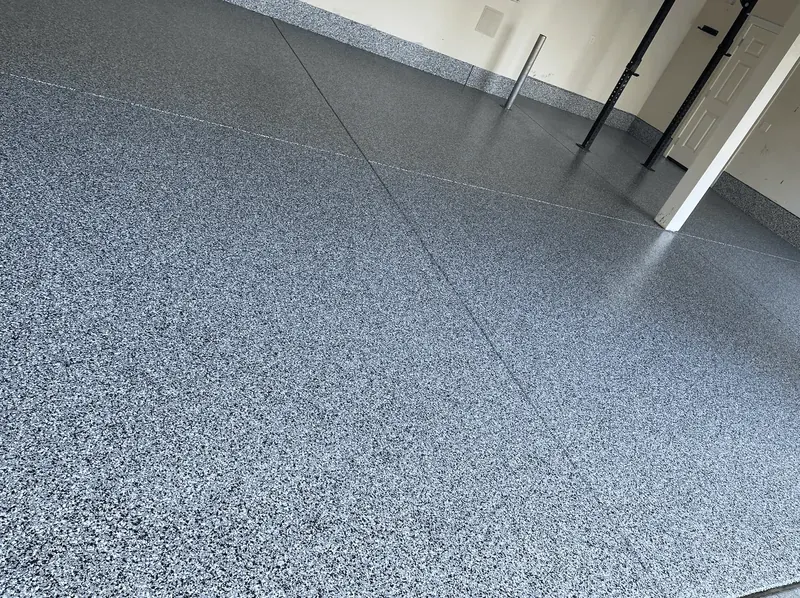
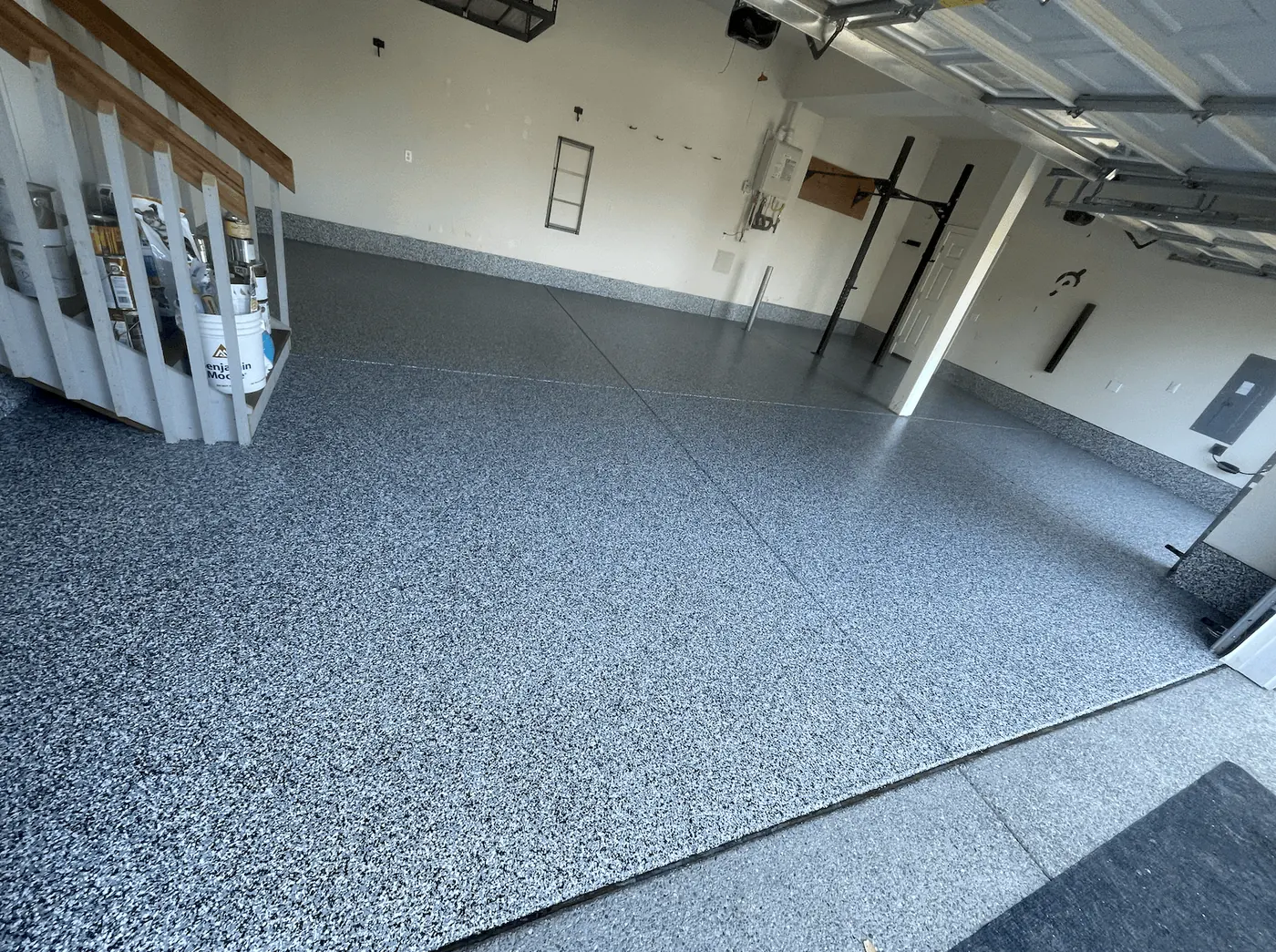
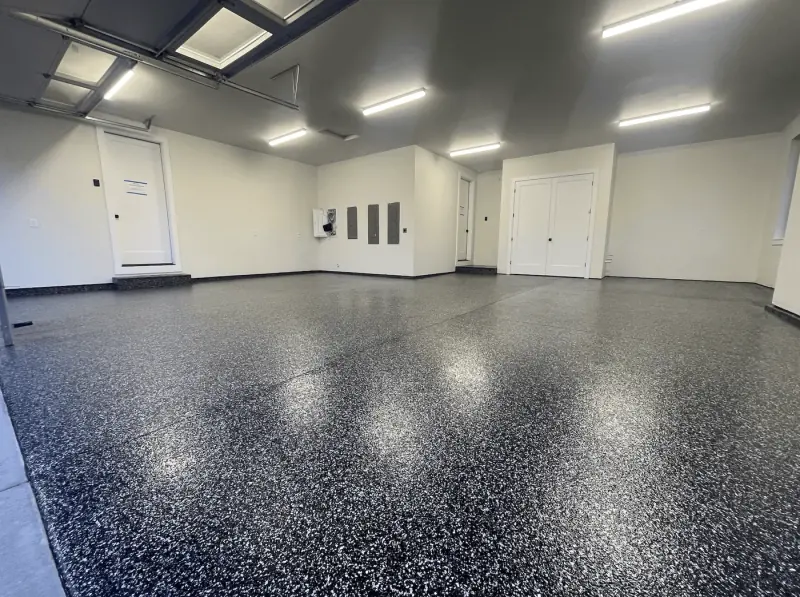
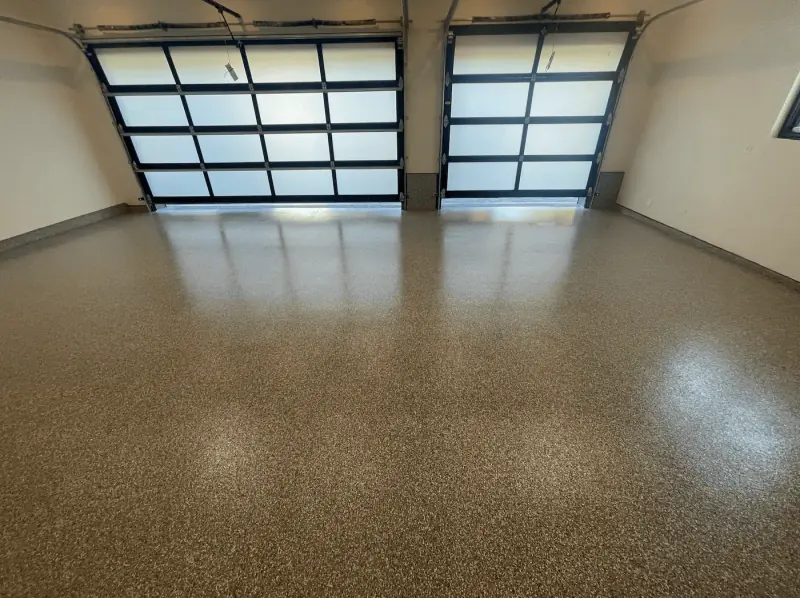
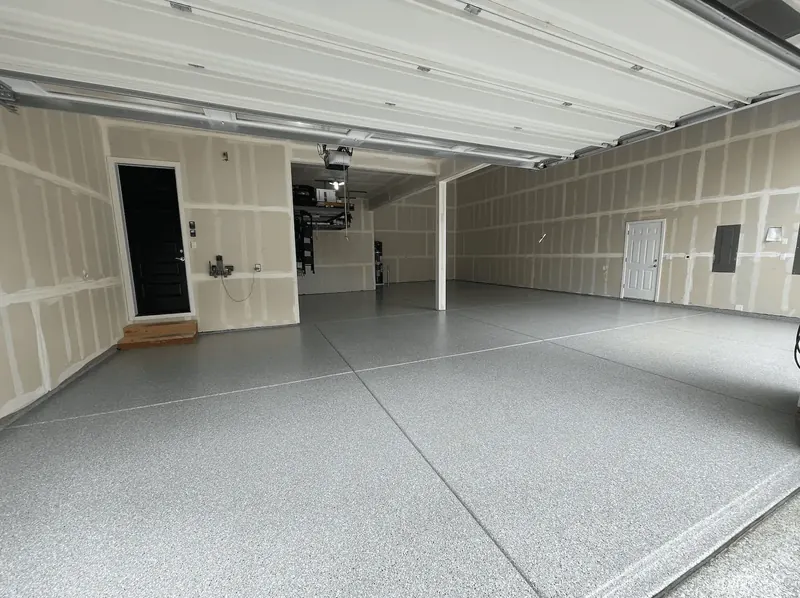
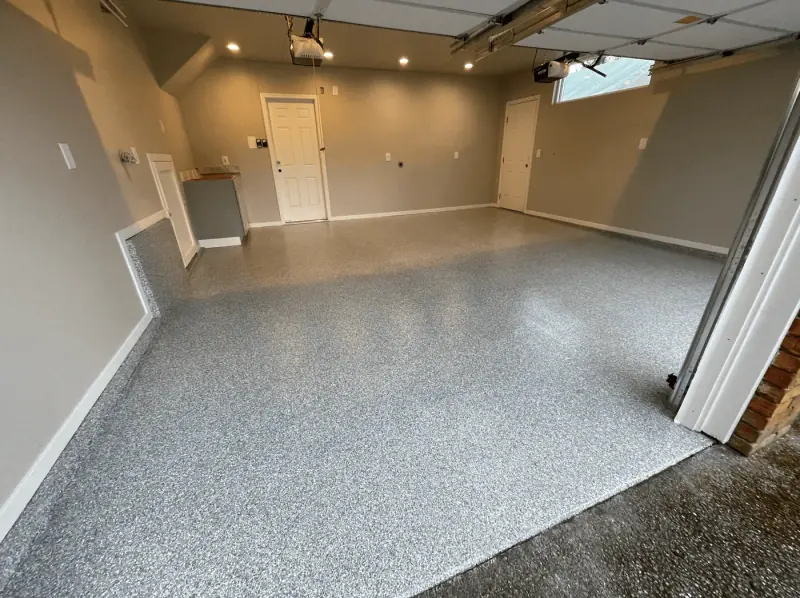
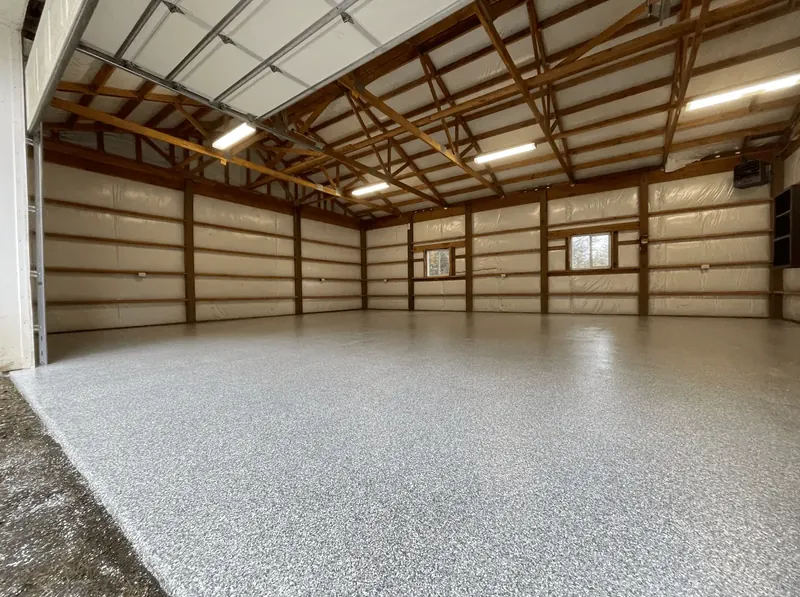
Busy, multi-color blends hide your filled cracks and joints best. See more in the gallery, or preview a flake color on a photo of your own garage.


Garage floor repair questions
Are cracks in a garage floor normal?
Yes. Concrete shrinks as it dries, and that strain cracks almost every slab, usually in the first year or two. If yours are thin and flat, or run along the control joints, they're normal and only cosmetic. Keep an eye on any crack that's wider than about a quarter inch, has one side higher than the other, or keeps growing.
Why does my new garage floor have cracks?
Fresh concrete keeps shrinking for months as it dries, so hairline cracks in your new slab are normal, often near corners or along the saw-cut joints. Your new garage may also sit on fill dirt brought in to level the lot, and fill that wasn't packed well settles. If a crack widens or one side drops, raise it with your builder.
When should I worry about a crack in my garage floor?
Worry when one side sits higher than the other, when it's wider than about a quarter inch, or when it keeps growing after the first year. Also watch your house for cracks in the foundation wall, sticking doors or gaps at the trim. Any of those means the ground is moving, and you'll want a concrete contractor or foundation specialist before any coating.
Is a cracked garage floor a foundation problem?
Usually not. In most homes the garage floor is a slab resting on the ground inside the foundation walls. It doesn't hold your house up, so shrinkage cracks in it are cosmetic. If you see a crack that runs into the foundation wall, a lip at the crack or settling across the floor, have a foundation specialist take a look.
How do you repair garage floor cracks before coating?
We grind your whole slab first so every crack shows, then fill each crack, chip and control joint with a professional filler and grind it flush. Chipped joint edges get rebuilt. On a Premium floor, larger cracks are cut open and rebuilt from the bottom. Then the full flake broadcast hides the repaired lines, and you'd have a hard time finding them.
What causes a garage floor to sink in the middle?
Usually the soil under it. Your slab rests on dirt, and fill that wasn't packed well compresses over time, while water from downspouts or leaks can wash soil out. The middle loses support and sinks while the edges stay put. A concrete contractor can lift it with foam or grout pumped underneath, and after that your floor is ready for a coating.
Will cracks come back through a garage floor coating?
A filled shrinkage crack that has stopped moving usually stays hidden. If your slab moves again, the coating cracks along with it, because a coating follows the concrete. Our lifetime adhesion warranty covers the coating letting go, while cracks in the concrete itself aren't covered. That's why we check your slab for movement before we coat.
How much does garage floor repair cost?
With us, normal crack, chip and joint repair is part of every coating price. Around Nashville, a professional flake floor runs about $5 to $9 a square foot, and heavy repair is one of the things that moves your number. If your slab needs lifting or replacing, that's a concrete contractor's separate quote. More on Nashville costs.
Can I fix garage floor cracks myself?
You can patch them. Hardware stores sell epoxy concrete patch kits for chips and cracks, and flexible sealant for joints that move. Clean the crack out, fill it and scrape it flush. Just know that if you coat later, your DIY patch gets ground out and redone, and no patch fixes a slab that's still moving.
Want a straight answer on your cracks?
Send us a photo, or book the free estimate at your house. We'll tell you which cracks are routine and which aren't, and leave a written price for the repair and the new floor. No pressure to sign.