
Garage Floor Coating in Murfreesboro, TN
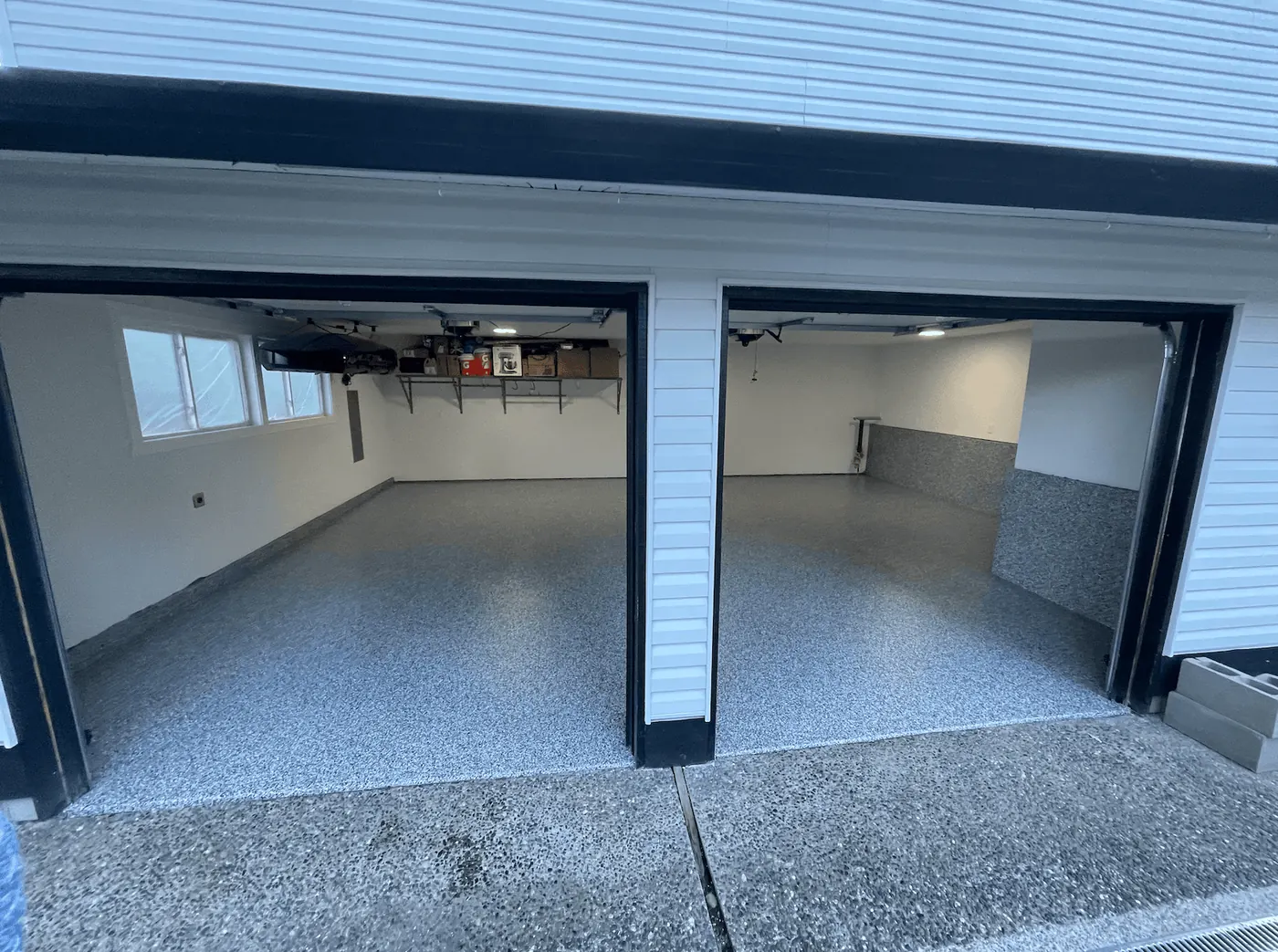
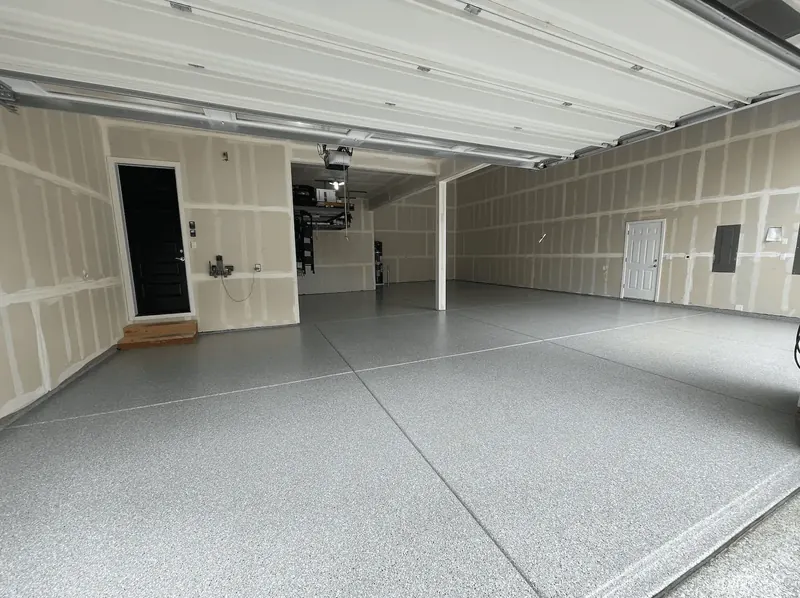
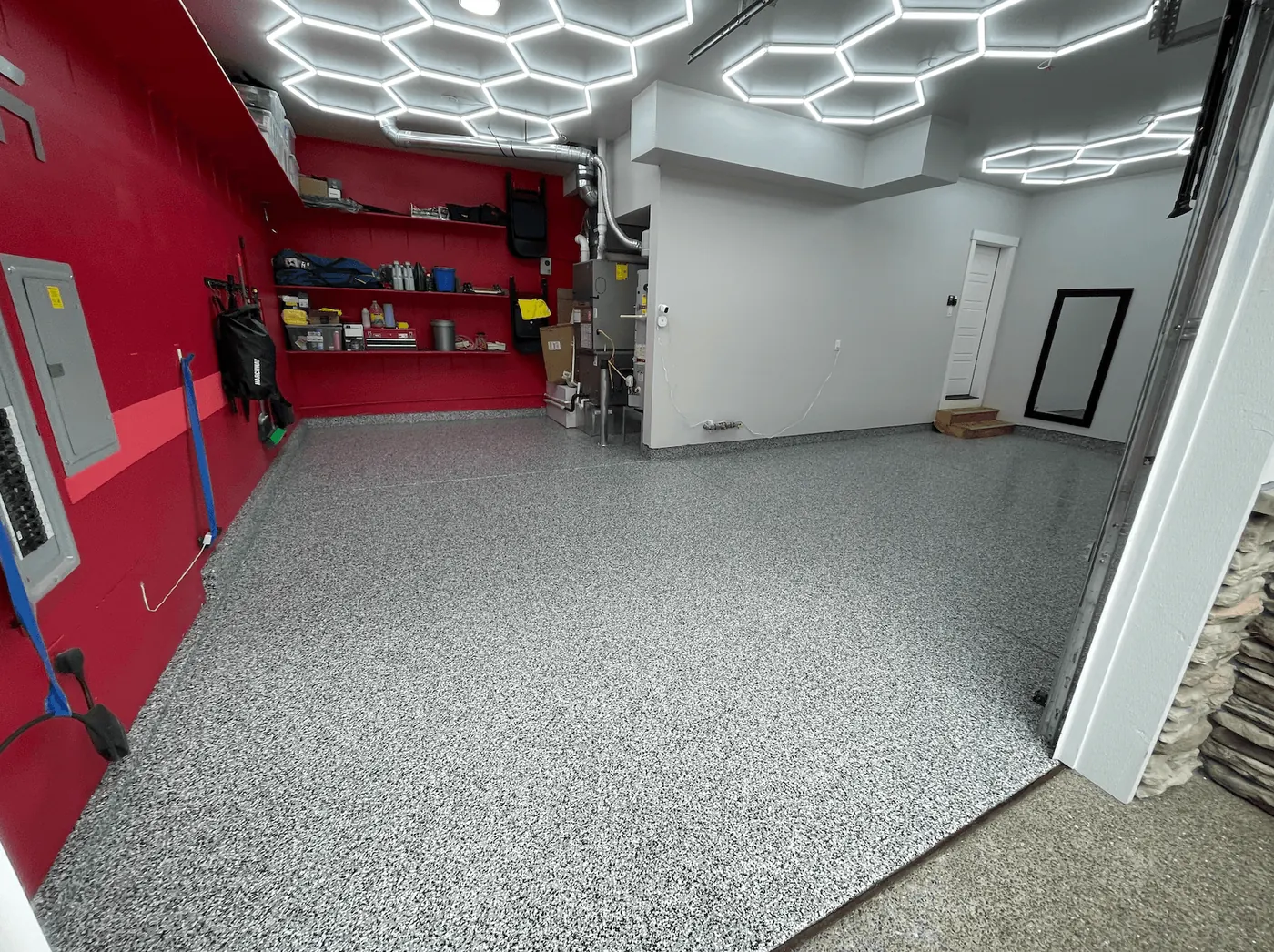
Thinking about epoxy for your garage? Our garage floor coating in Murfreesboro, TN has the same flake look, on a floor that flexes with the slab and stays clear in the sun. You park after 72 hours. We test your slab for moisture first, and the estimate is free.
- Free estimate at home
- Cracks filled flush
- Park after 72 hours
- Lifetime adhesion warranty
Garage floor epoxy in Murfreesboro, honestly
Most people start with epoxy, and that's fair, because epoxy made flake floors popular. Plain epoxy has a few habits you should know about before you buy, though. It wants a warm, dry slab and about a week before you park. It yellows where the sun hits it. And it's rigid, so it can crack when the slab under it moves.
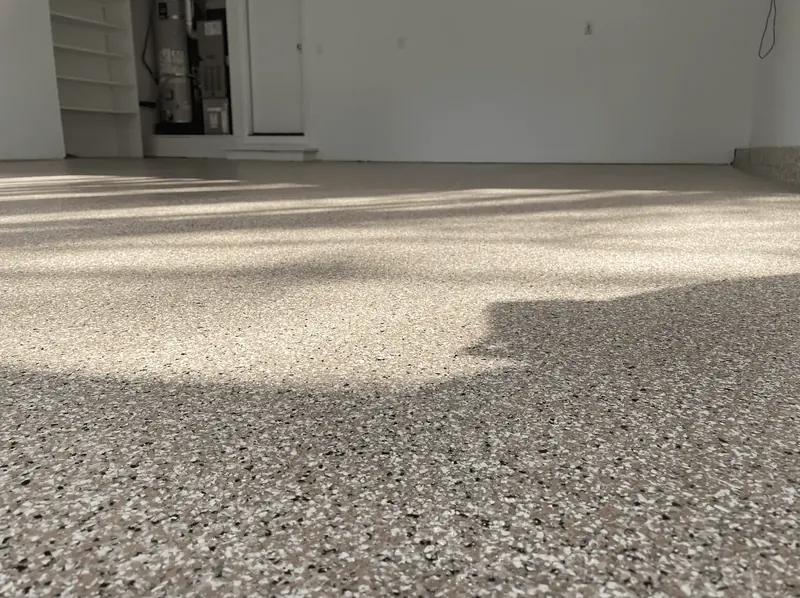
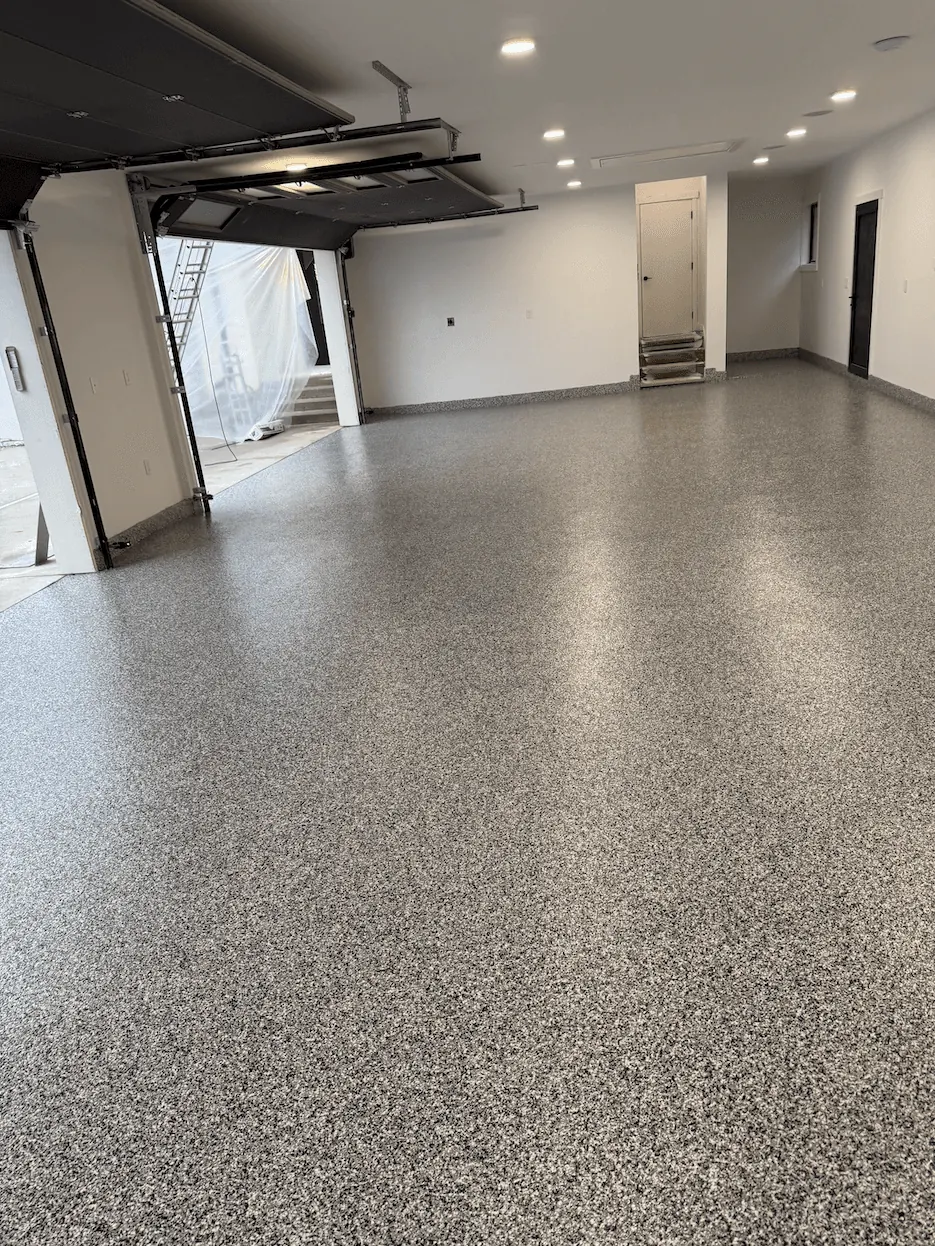
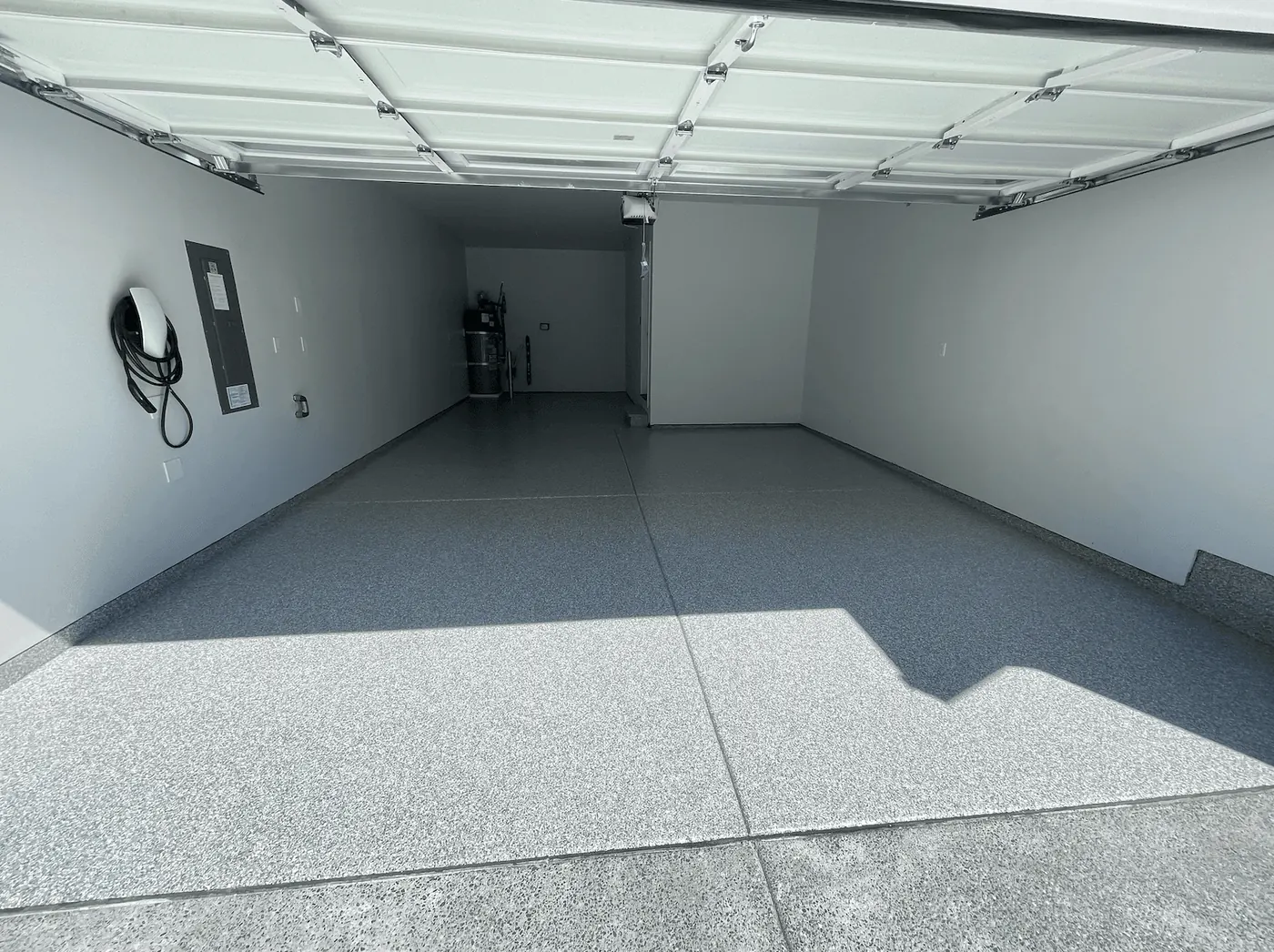
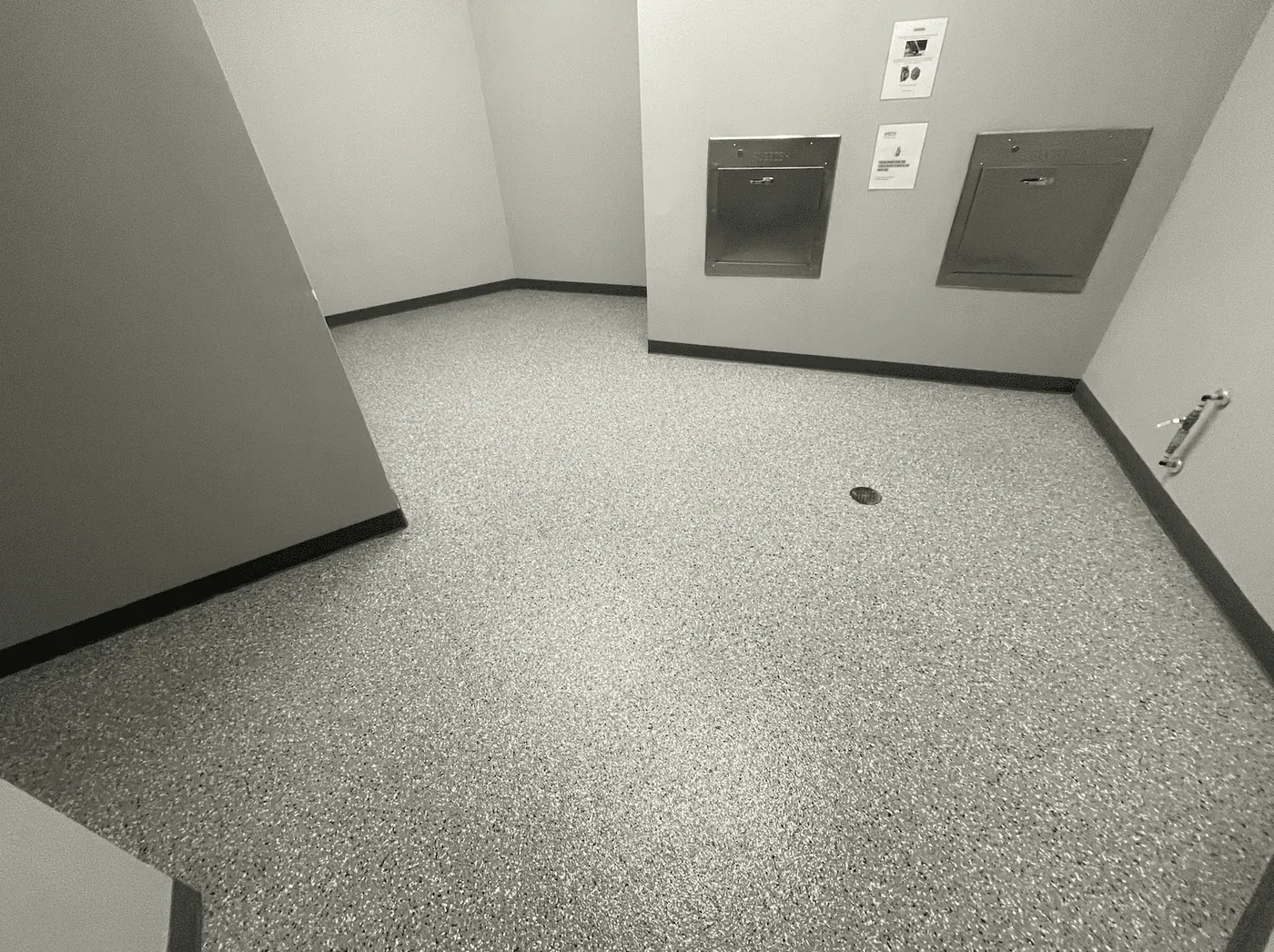
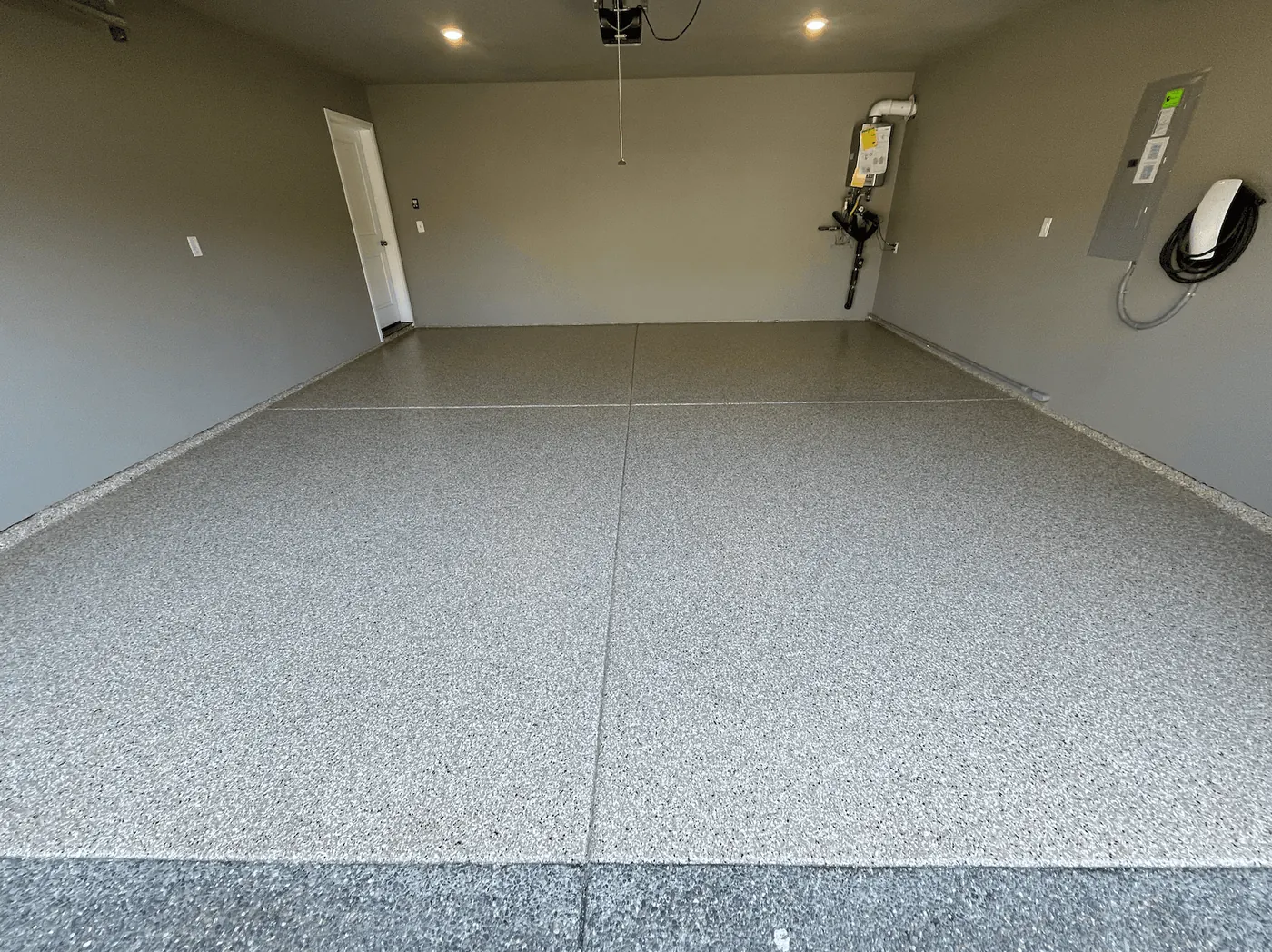
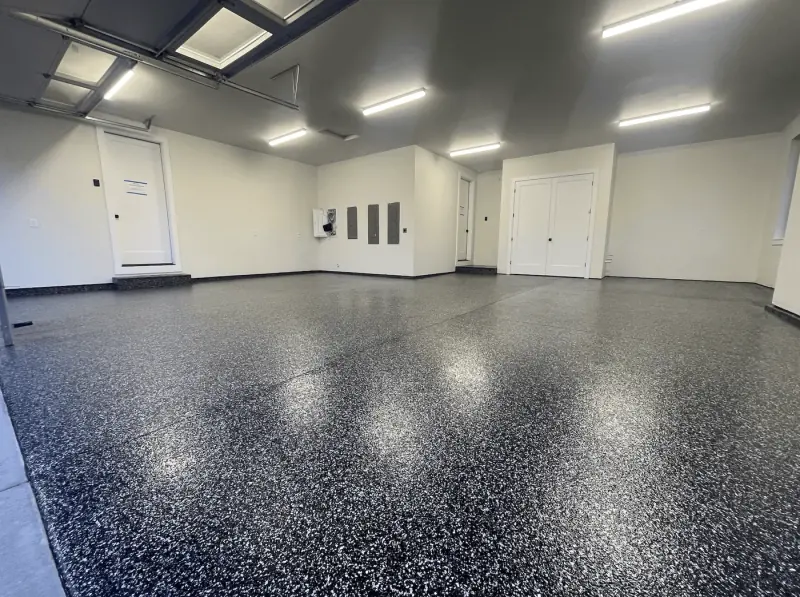
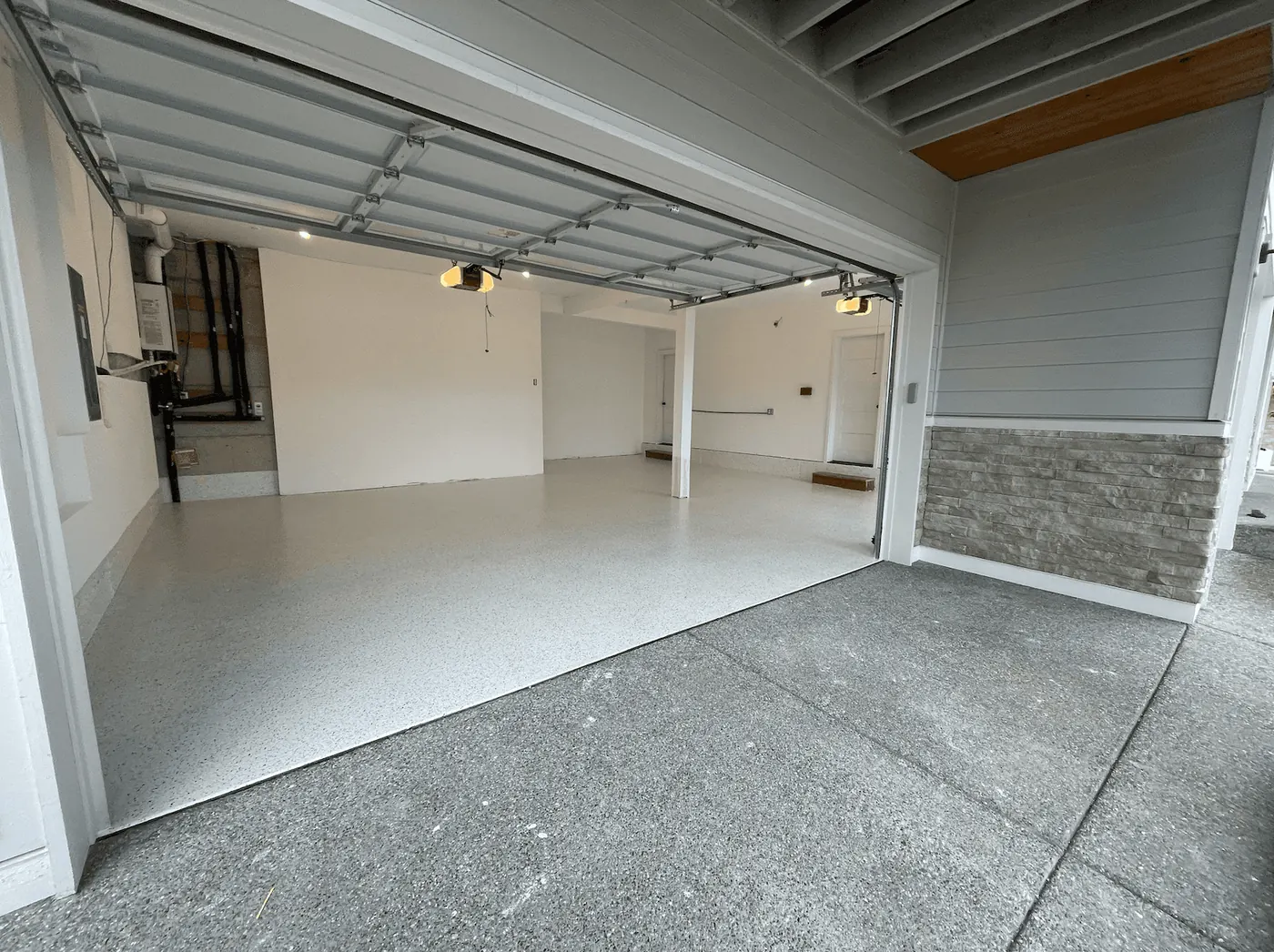
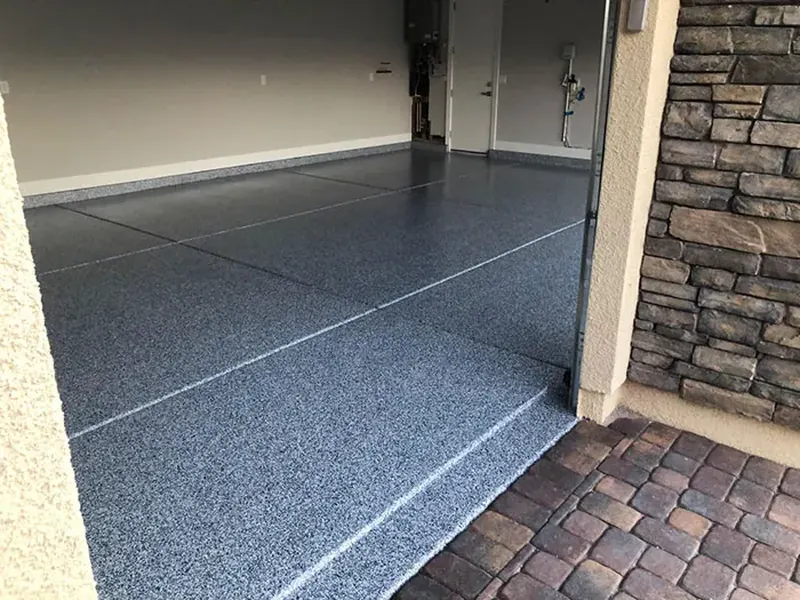
What we install looks the same from the driveway: ground concrete, full vinyl flake and a glossy clear coat. Underneath, it's a polyurea base that flexes and a polyaspartic topcoat that stays clear. Most garages are done in one working day. You walk on it the next day and park on it three days after we finish.
Every floor starts with a moisture test, because the ground under your slab matters as much as the coating on top. Your free estimate covers that test, the measurements and a written price, item by item, before you decide anything. Want a number sooner? Send a few photos and we'll quote from those. Either way, the floor comes with a lifetime adhesion warranty.


Why Murfreesboro garage floors crack
Under your Murfreesboro garage, there's flat limestone with a thin coat of soil on top. That's why the area has sinkholes, springs and caves, and why you'll spot bare rock at the surface here and there.
Over most of town, there's silty, clayey soil between your slab and that rock, and some of it swells when it's wet and shrinks when it dries. A slab sitting partly on rock and partly on clay can get pushed and pulled as the seasons turn. That's one way a hairline crack ends up running from the door to your back wall.
So we fill every crack and grind it flush, and our polyurea base flexes with small movement instead of fighting it. A crack with one side higher than the other is a concrete problem, and we'll show it to you before anything goes over it.
Epoxy flooring vs. what we install in Murfreesboro
Both floors look great on day one. Here's how they compare once you're living with them in your Murfreesboro garage.
| Plain epoxy | Our floor | |
|---|---|---|
| Before you park | About a week | 72 hours |
| A cold garage in January | Cures slowly on a cold slab | Keeps curing in cool weather |
| Sun through your open door | Yellows over time | Stays clear |
| When your slab moves | Rigid, can crack with it | Flexible base moves with it |
| Install time | Often two or three days | One day, two with the barrier |
What your neighborhood says about your slab
Murfreesboro has houses more than a century old and houses finished last month. More than half have gone up since 2000, but the age of yours still tells us a lot about the slab you park on.
 Downtown
Old downtown
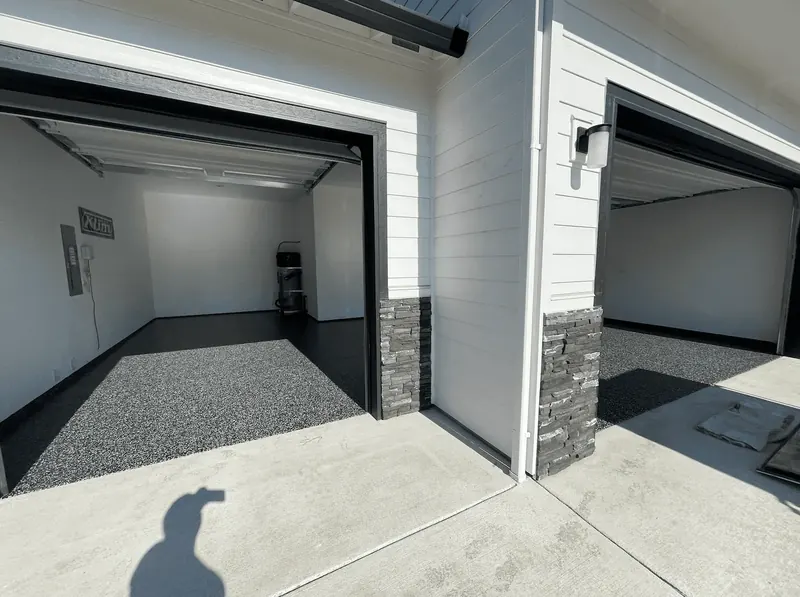
Most homes on East Main Street and North Maney Avenue are over a century old, older than attached garages. Your slab came later, and its age is what counts.
 Near MTSU
Kingwood Heights
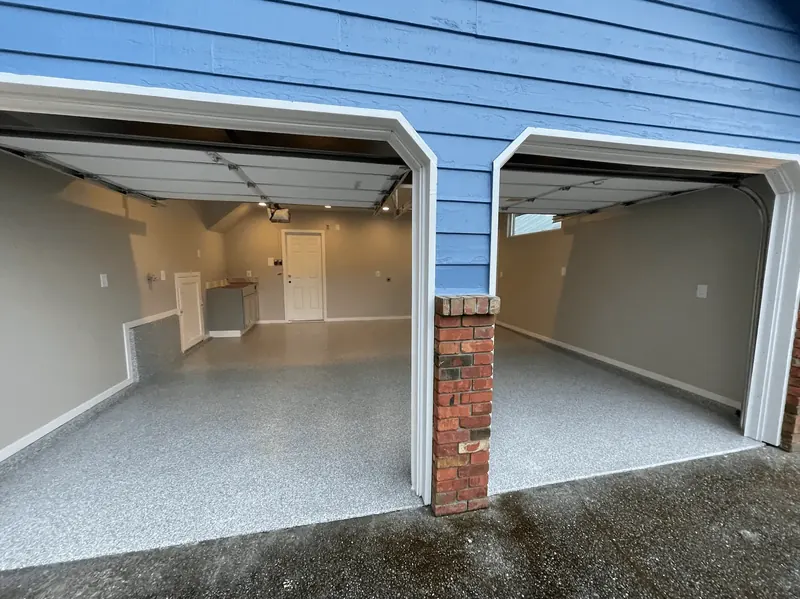
Brick homes near campus, from the 1930s on. An older slab here likely has no plastic under it, so the moisture test matters more. Any old paint comes off first.
 South side
Indian Hills
Built mostly in the 1990s and early 2000s around the golf course on the Stones River. Your slab is likely sound, with settling cracks to fill and maybe an old sealer.
 West side
Blackman area
Berkshire, Shelton Square and the newest streets out west. A brand-new slab cures for about four weeks before we grind open its slick top.
Wet winters are why we read every slab
Lived here a few winters? Then you've probably seen the West Fork of the Stones River and Lytle Creek run high. The city's own flood records put the worst of it between December and April, when sinkholes fill up because heavy rain has nowhere to go.
Most garages never see a flood. Still, the ground under your slab holds the most water in late winter and spring, so a slab can read drier in August than it will in March.
So we read your slab, look at how your lot drains, and put the barrier primer down when the signs say so. It's a few minutes of testing that protects the floor you're paying for.
From free estimate to parked car
It's five steps and one or two days in your garage. Three days after we finish, your car is back inside.
Estimate and moisture test
We measure, read your slab with a meter, check every crack and write the price down, item by item. It takes about 20 minutes.
Grind and repair
Two diamond-grinding passes, edges by hand, with the dust collector running. Cracks and joints get filled and ground flush.
Barrier, if the slab needs it
A high reading, or two signs like white chalky deposits and damp patches, puts the barrier primer down. It cures overnight.
Base, flake and topcoat
The polyurea base goes down and flake covers it edge to edge. A clear polyaspartic topcoat with anti-slip grit seals it.
Park in 72 hours
Walk on it the next day. Your car goes back in after 72 hours, and the floor keeps hardening for another week or so.

What a Murfreesboro garage floor coating costs
You'll get your real number in writing at the estimate. Until then, here's what professionally installed flake floors typically run across the Nashville area.
- $1.2K–$2.6Ka one-car garage
- $2K–$4.5Kmost two-car garages
Crack repair, an old coating to grind off and the moisture barrier move your number the most. Polyurea and polyaspartic floors also usually run a dollar or two more per square foot than plain epoxy, and the table above shows what that buys you. Read the full cost guide.
Garage floor coating across Murfreesboro
Wherever you live in Murfreesboro, we'll come to you, from the old streets downtown to the newest ones out west.
- Downtown, north
- East Main Street
- Maney Avenue
- Kingwood Heights
- West
- Blackman
- Berkshire
- Shelton Square
- South
- Indian Hills
- Three Rivers
Live somewhere in between? If your ZIP is 37127 through 37130, or 37132 by MTSU, you're covered. Up the road, we also cover Smyrna and La Vergne.
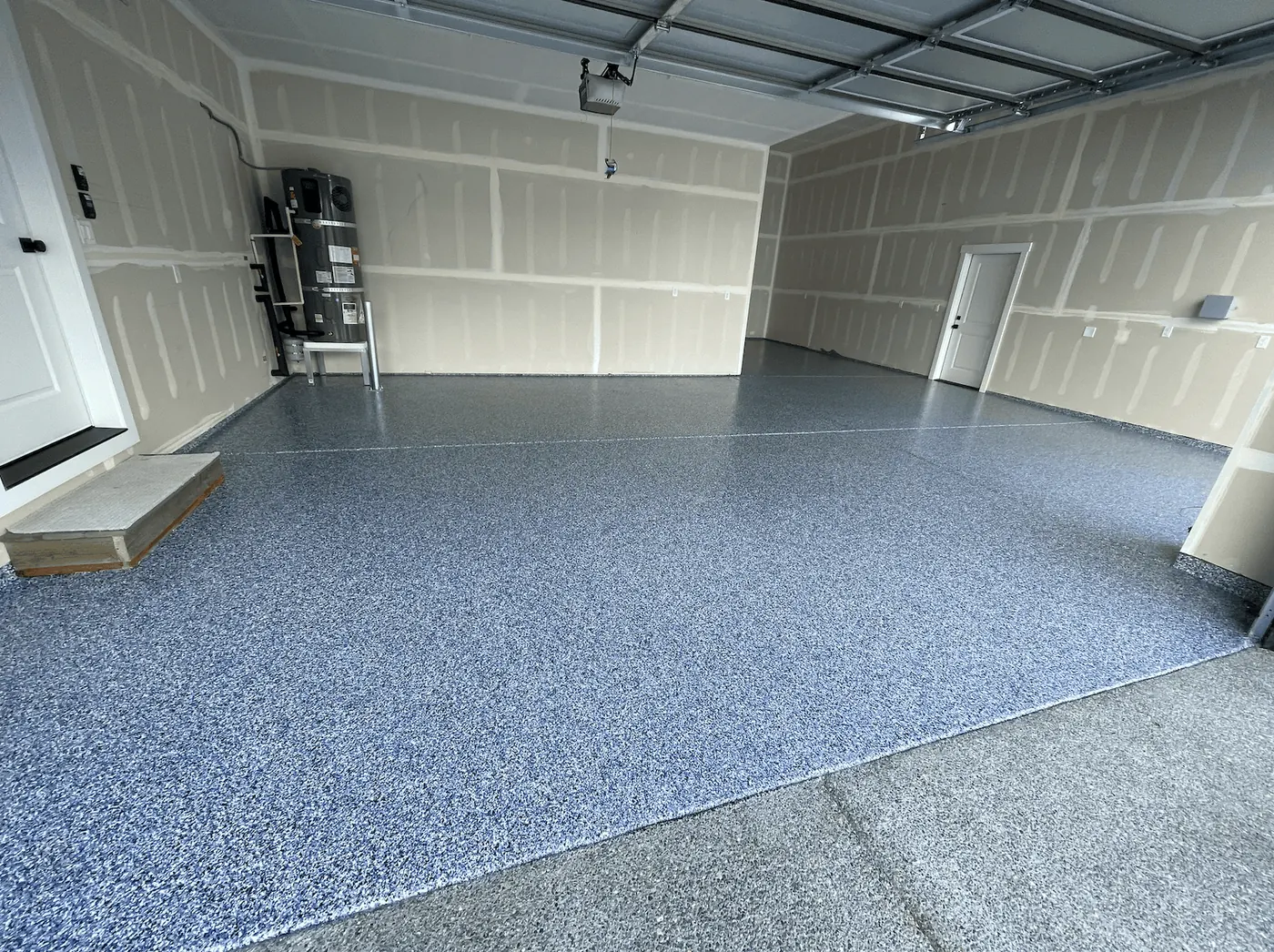
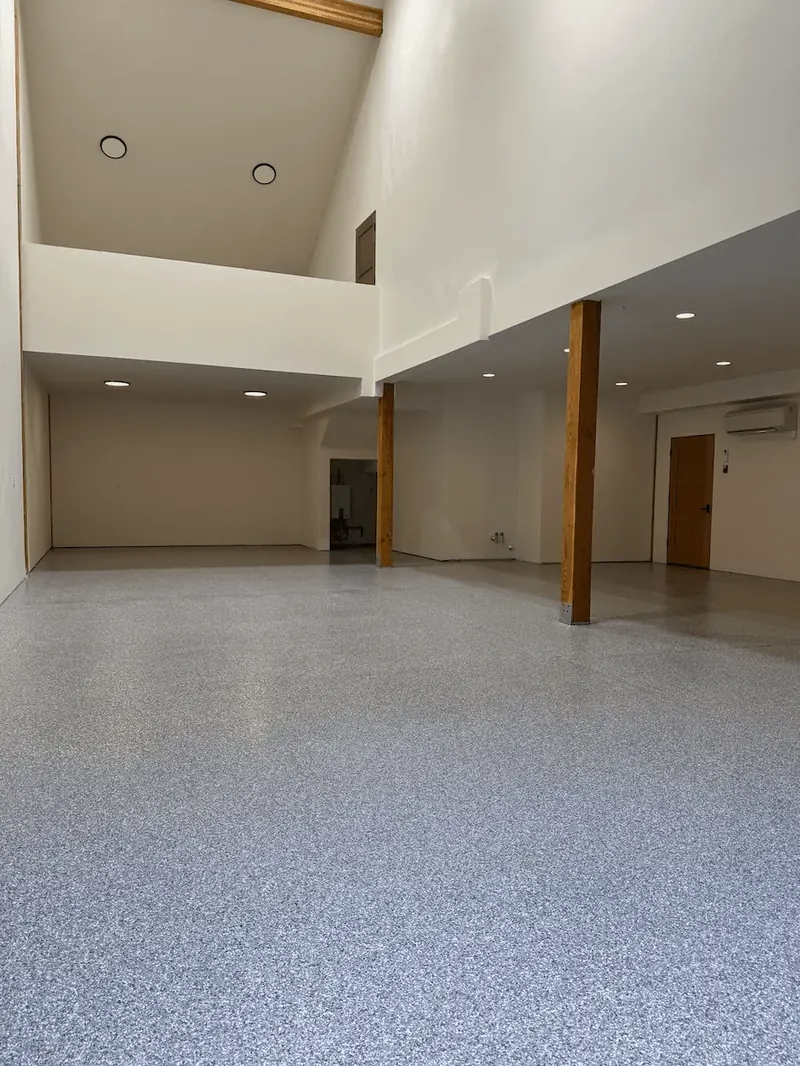
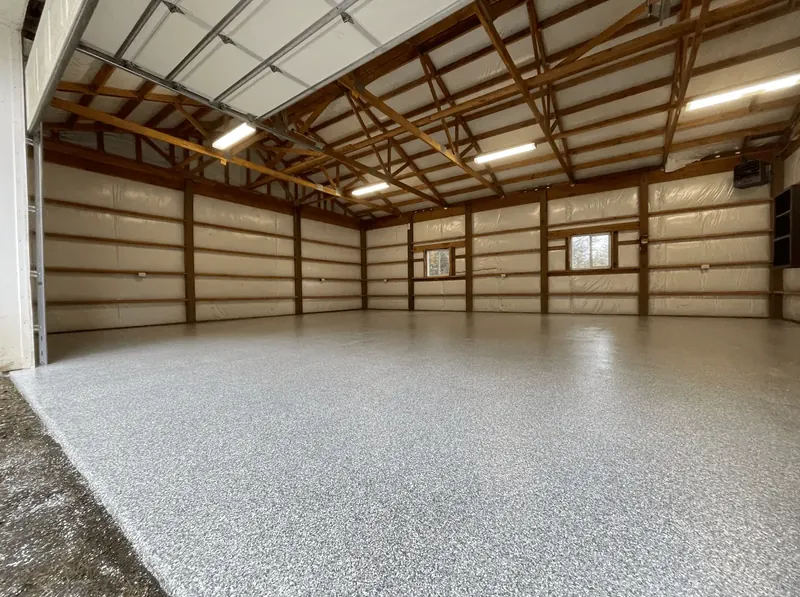
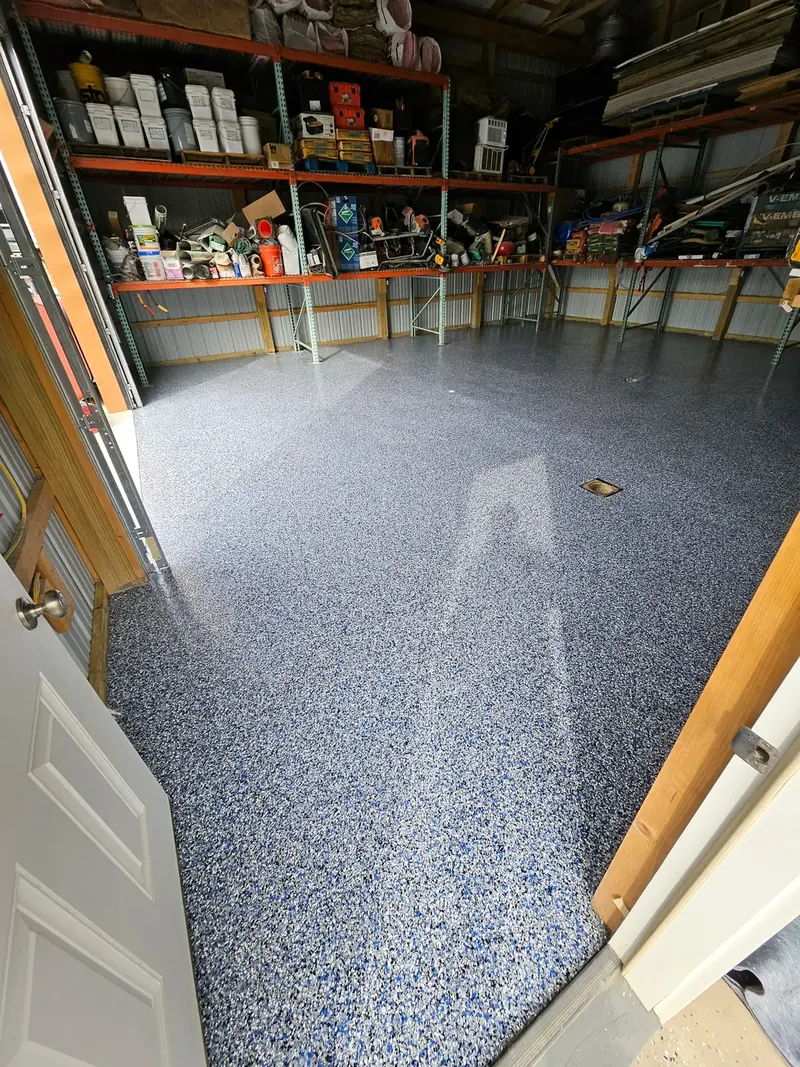
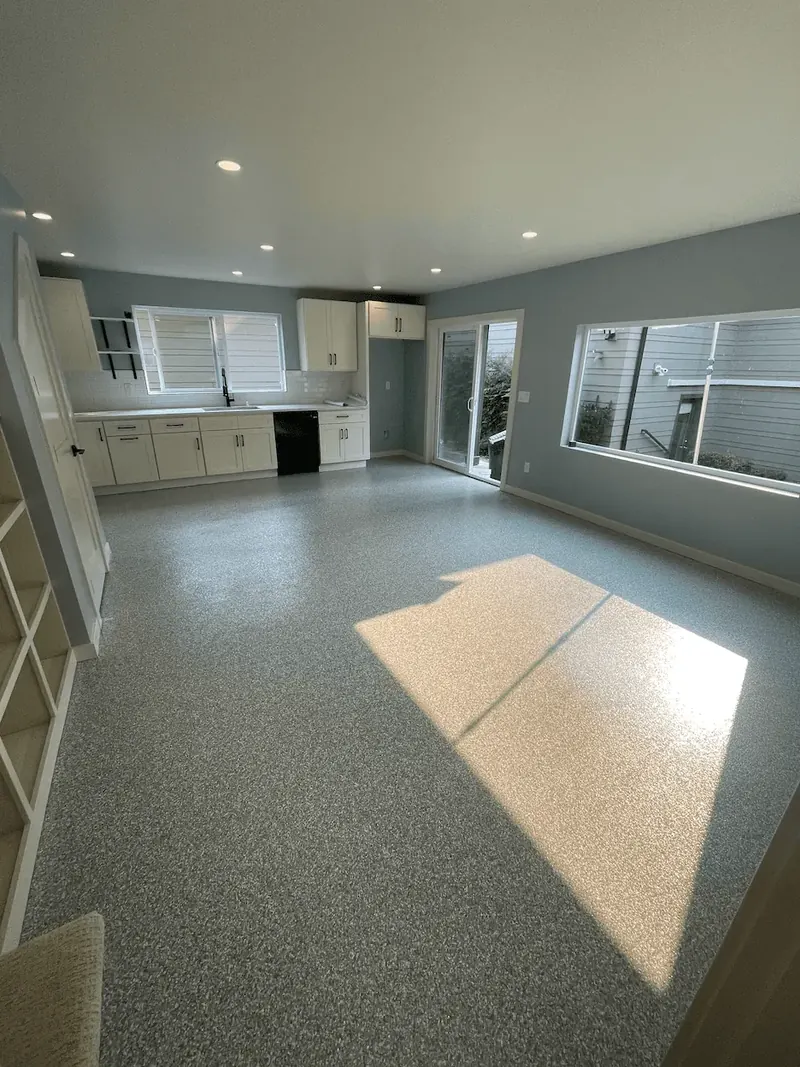
Garages, shops and a great room
Got a shop out back or a bonus room too? We coat those floors the same way. See the gallery, or preview a color on a photo of your own floor.


Murfreesboro garage floor questions
Do you install garage floor epoxy in Murfreesboro, TN?
We install the upgrade on it. Plain epoxy needs a warm, dry slab, takes about a week before you can park, and yellows in the sun. Ours uses the same diamond-ground prep and full flake look, with a flexible polyurea base and a polyaspartic topcoat that stays clear. Most garages take one day, you park three days later, and your floor carries a lifetime adhesion warranty.
How much does epoxy flooring cost in Murfreesboro?
Most two-car garages around Nashville run about $2,000 to $4,500 for a professionally installed flake floor. Polyurea and polyaspartic floors like ours usually cost a dollar or two more per square foot than plain epoxy. Cracks, an old coating and the moisture barrier move your price the most, and you'll get it in writing after the free estimate. See the cost guide.
Why does my garage floor have so many cracks?
Mostly shrinkage. Concrete pulls in as it cures, so thin cracks are normal in any garage. In Murfreesboro the ground adds to it, since thin soil over limestone and clay that swells when wet can shift parts of a slab a little over the years. We fill every crack and grind it flush, and the polyurea base flexes with small movement.
What if a crack is uneven or keeps growing?
Then the slab itself is moving, and a coating won't fix that. A crack with one side higher than the other, crumbling edges or a sinking corner points to a concrete problem that needs repair first. We'll show you at the estimate, before we price a floor. Most garage cracks are the ordinary kind that we fill and grind.
Will road brine hurt a coated garage floor?
No. Murfreesboro's crews spray brine on state routes and major city streets before snow, then spread rock salt as it builds up. Your subdivision street may never see a salt truck, but the main roads do, and that brine rides home on your tires. The polyaspartic topcoat keeps it on the surface, so it mops off instead of soaking into the concrete.
Is winter OK for garage floor coating in Murfreesboro?
Yes. Murfreesboro winters bring plenty of freezing nights, and epoxy cures slowly in the cold. Our polyaspartic topcoat keeps curing in cool weather. On install day, we check that your slab stays warmer than the dew point, so no condensation forms under the coating. The work happens inside your garage, so a rainy day doesn't stop it either.
Do you work near MTSU and in older neighborhoods?
Yes. Older slabs near downtown and MTSU often come with old paint, more cracks and no plastic sheet underneath. They get a full grind, crack repair and the moisture test. If the readings or the signs call for it, the barrier primer goes down first, which makes it a two-day job. You'll know which one your slab needs before you sign anything.
Which parts of Murfreesboro do you cover?
Every part of it, from downtown and the East Main Street area to Kingwood Heights, Blackman, Berkshire, Shelton Square, Indian Hills, Three Rivers and everywhere between. We also cover Smyrna, La Vergne and the rest of the Nashville area, and your estimate is free wherever you live.
Price your Murfreesboro floor in writing
Your estimate is free and takes about 20 minutes. We measure, read the slab with a meter, check every crack and write your price down item by item. Then you decide, on your own time.