
An Epoxy Garage Floor Built for a Nashville Year
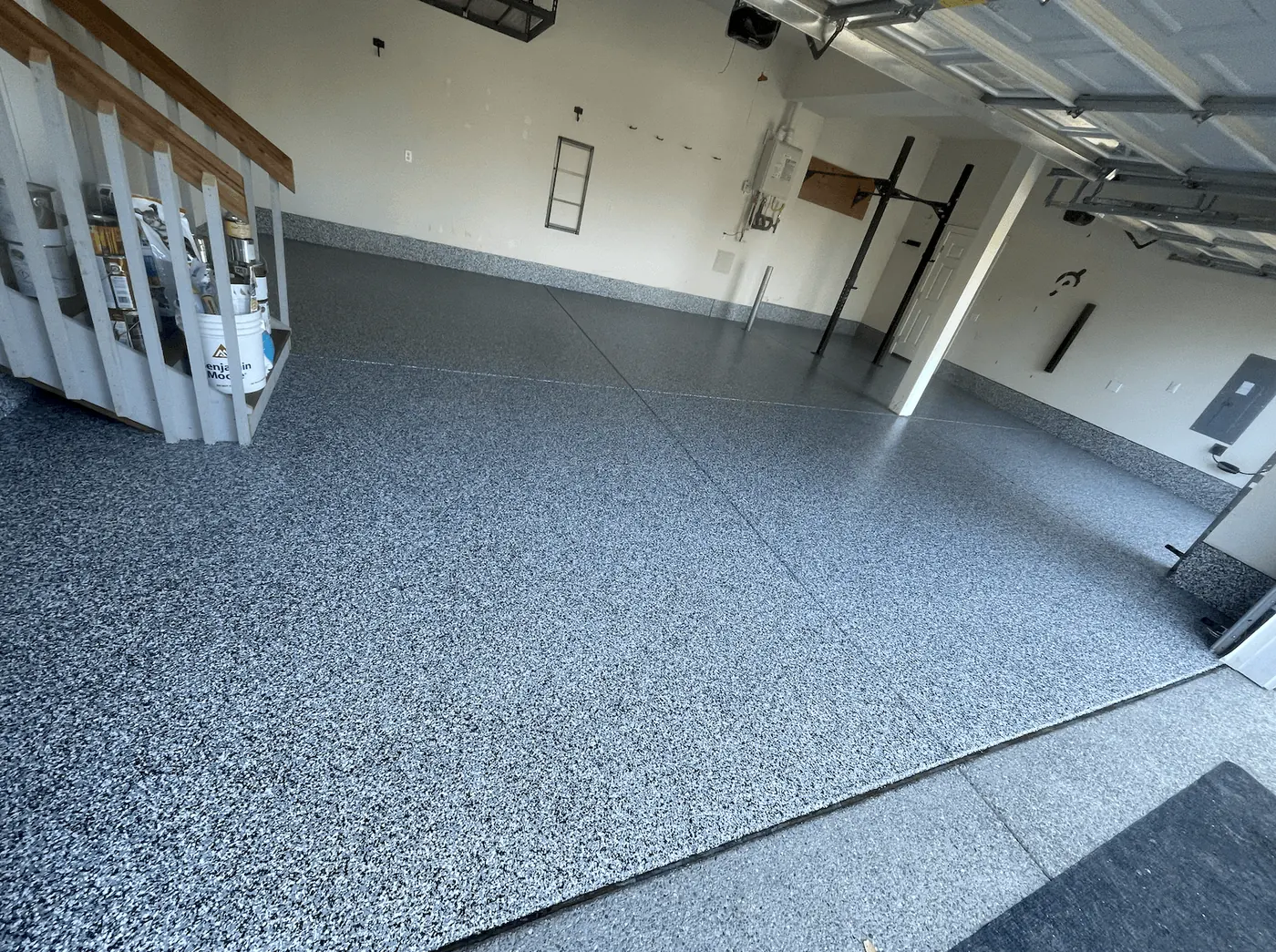
An epoxy garage floor in Nashville earns its keep. Yours will take July tires, spring mud, mower gas and winter brine. Fair warning, we don't lay plain epoxy. You get the upgrade instead, with diamond-ground prep, the flake look you're after and a clear top that shrugs off salt and sun. Your car goes back in after 72 hours.
- Ground, never acid-etched
- Brine and oil wipe up
- Park on it in 72 hours
- Lifetime adhesion warranty
Is an epoxy garage floor worth it in Nashville?
If you park in there and plan to stay in the house, yes. Bare concrete soaks up every oil drip and sheds a fine gray dust. A coated floor seals it and wipes clean, and your garage starts to feel like part of the house.
Plain epoxy, though, has a rough time in a Nashville garage. Muggy summer air, sun through the open door and damp coming up through the slab all work on it. So we put down the upgrade instead: a polyurea base, full flake and a clear polyaspartic top.
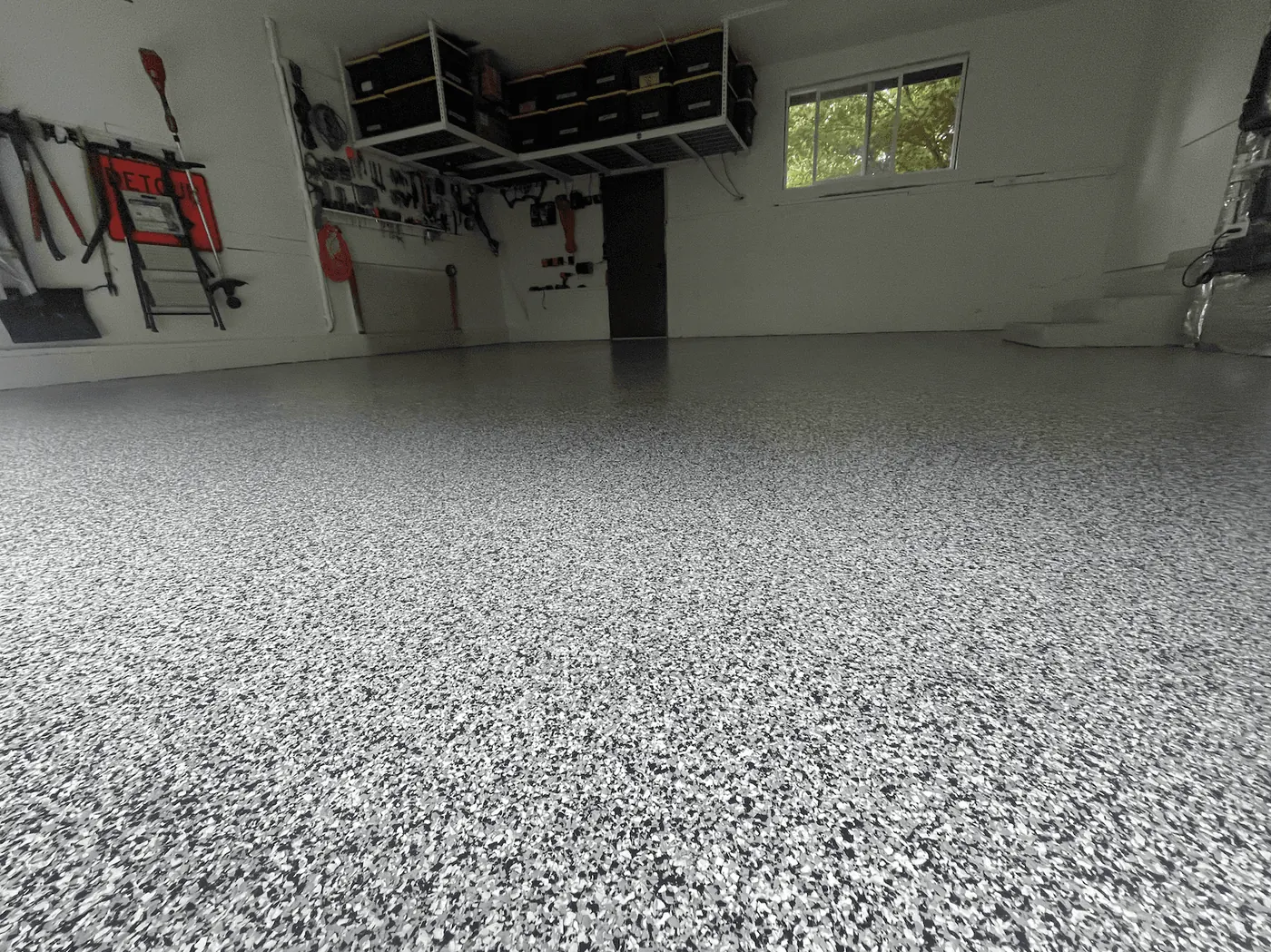
From the driveway it looks like the epoxy flake floor you're picturing. It just handles a Middle Tennessee year better, and your car goes back in after 72 hours instead of about a week.
If the garage is just storage, or you're selling next year, a kit may be all you need. Not sure which camp you're in? The free estimate takes about 20 minutes and leaves you with a written price.


What a Nashville year does to your garage floor
Your garage floor never gets an off-season here. Every few months a new mess rolls in, and each one finds the weak spots in a cheap coating.
 Spring
Mud and mowers
Tree pollen starts flying in late January, and spring storms track mud in on your boots. Then the mower comes out with the gas can and the fertilizer. Wet fertilizer leaves rust spots on bare concrete; on a coated floor you sweep it up.
 Summer
Heat and tires
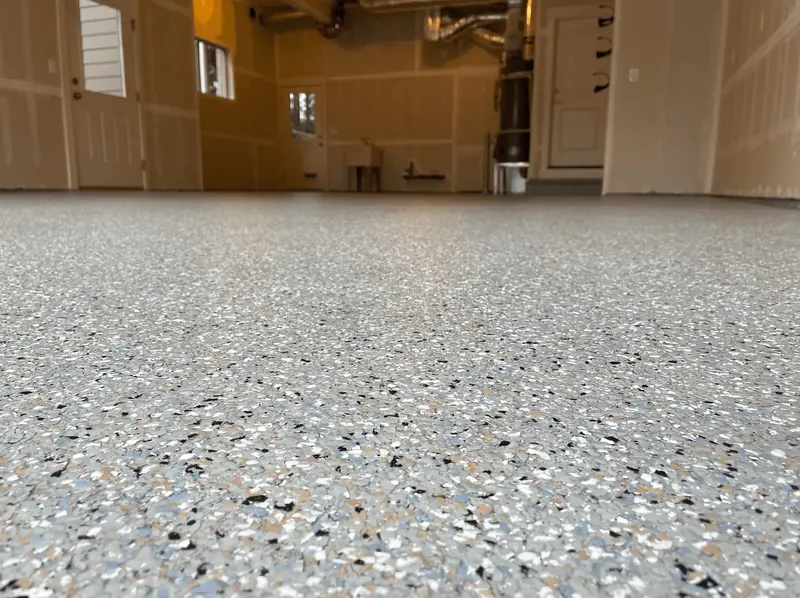
From late May to mid-September, 90-degree afternoons are routine and the slab by your door bakes. Hot tires sit there as they cool, and a thin coating softens and lifts. Ours is built for it, and the warranty covers it.
 Fall
Fall
Leaves and grit
Wet leaves blow in while the door's up and stain bare concrete tea-brown. Acorns and yard grit ride in on your shoes as the bikes and coolers come back inside. Full flake hides the grit between sweeps, and leaves mop right up.
 Winter
Brine and ice
Crews brine Nashville streets before winter storms, and it drips off your car onto the slab. The January 2026 ice storm left about half an inch of ice. Bare concrete soaks up that salty melt and can pit; ours rinses clean.
What lands on your garage floor around here
Your garage is also the mower shed, the paint closet and the place the car drips after a salty drive. Bare concrete soaks all of it up like a sponge. Bought the house with oil spots already in the floor? Those came with the last owner's car, and bare concrete hangs on to them.
A coated floor keeps every spill on top, where a rag or a mop takes it. Just wipe things up when you see them, because even a tough topcoat can mark if a strong chemical sits on it for days.
Here's how the usual garage spills behave on your bare concrete now, and on the floor we install.
| What spills | On bare concrete | On your new floor |
|---|---|---|
| Motor oil and drips | Soaks in and leaves a dark stain | Wipes up with a rag; it can't soak in |
| Salt brine and ice melt | Soaks in; over freezing winters it can pit and flake | Sits on top until you mop or rinse it off |
| Gas from the mower can | Soaks in and stains | Wipe it up the same day |
| Antifreeze | Stains, and it's poisonous to your pets | Wipe it up right away |
| Wet fertilizer granules | Leaves rust-orange spots | You sweep them up; they can't stain your slab |
| Wet leaves | Tea-brown stains | You mop or hose them away |
| Battery acid or brake fluid | Etches and stains | Clean it up fast; strong chemicals can mark any floor |
DIY epoxy kit vs. a professional garage floor
A garage floor epoxy kit can work, inside its limits. Here's what you get in the box next to what goes into a professional floor, so you can choose with your eyes open.
A hardware-store kit
- An acid or citric etch to rough up your slab, in place of a grinder.
- Each coat dries thinner than a sheet of copy paper.
- A handful of decorative chips to sprinkle on.
- Often no clear topcoat unless you buy one separately.
- No moisture test, so you find out the hard way.
- Cars after about three days in mild weather, longer when it's cool.
A professional floor
- Two diamond-grinding passes, with hand work at the edges.
- Base, flake and clear top together: about as thick as a credit card.
- Flake wall to wall, so no base coat shows or wears through.
- A clear polyaspartic top with grit, built for sun and tires.
- A meter reading first, and a barrier primer if your slab needs it.
- Walk on it the next day, park after 72 hours, with a lifetime adhesion warranty.
Why your perfect kit weekend is hard to find
Read the fine print on a kit. A typical one wants a mild, dry day between 60 and 85 degrees, then a couple of warm nights.
Nashville doesn't hand out many of those. Summer afternoons run too hot and the mornings too muggy, and in May and September the nights get too cool. The right weekend comes, but you have to watch for it.
Going the kit route anyway? Rent a grinder instead of etching. Tape a square of plastic to the bare floor overnight, and if it's wet underneath in the morning, your slab is moving moisture. Then keep the car out for three days.
How your epoxy garage floor install goes
There are four steps from start to finish. Your part is the second one, and our crew handles the rest.
-
The estimate
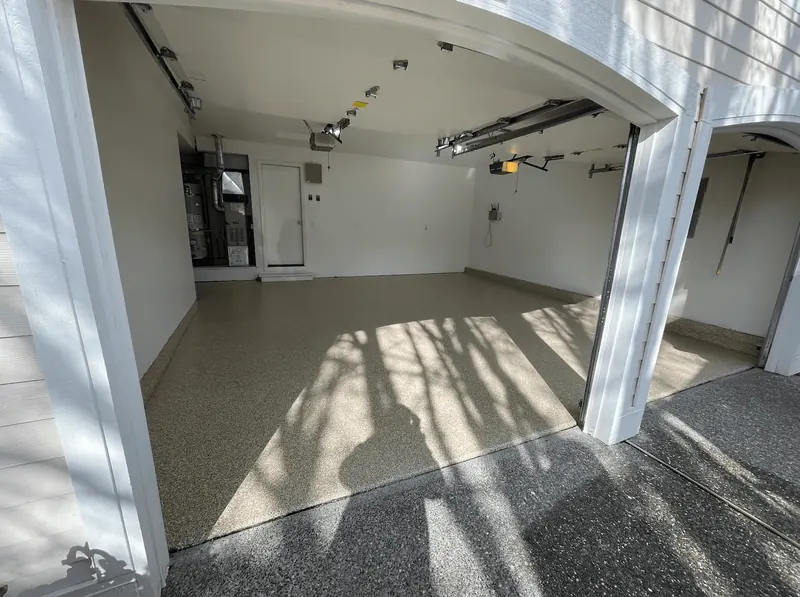
About 20 minutes at your house. We measure, test your slab for moisture and leave a written, itemized price. No pressure to sign.
-
Clear it out
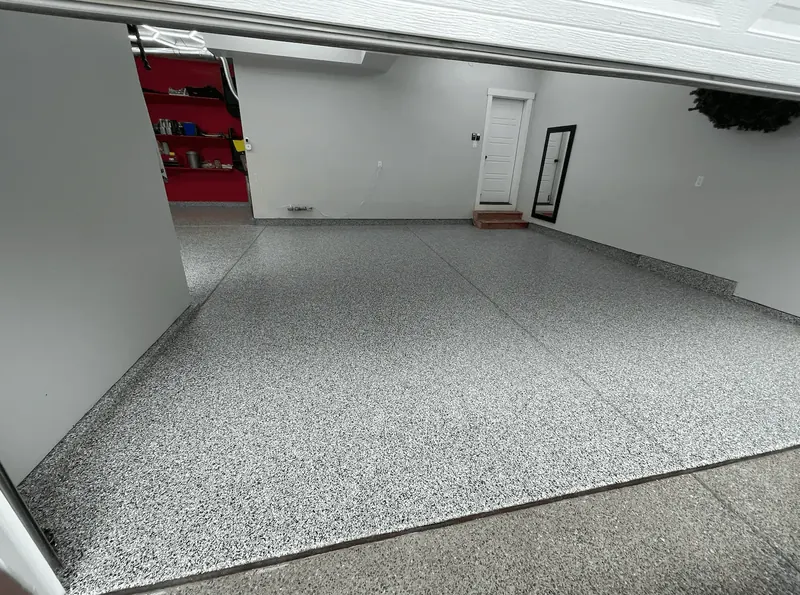
The night before, you move the cars, bins and freestanding shelves out. Wall cabinets can usually stay. Leave room in the driveway for our truck.
-
Install day
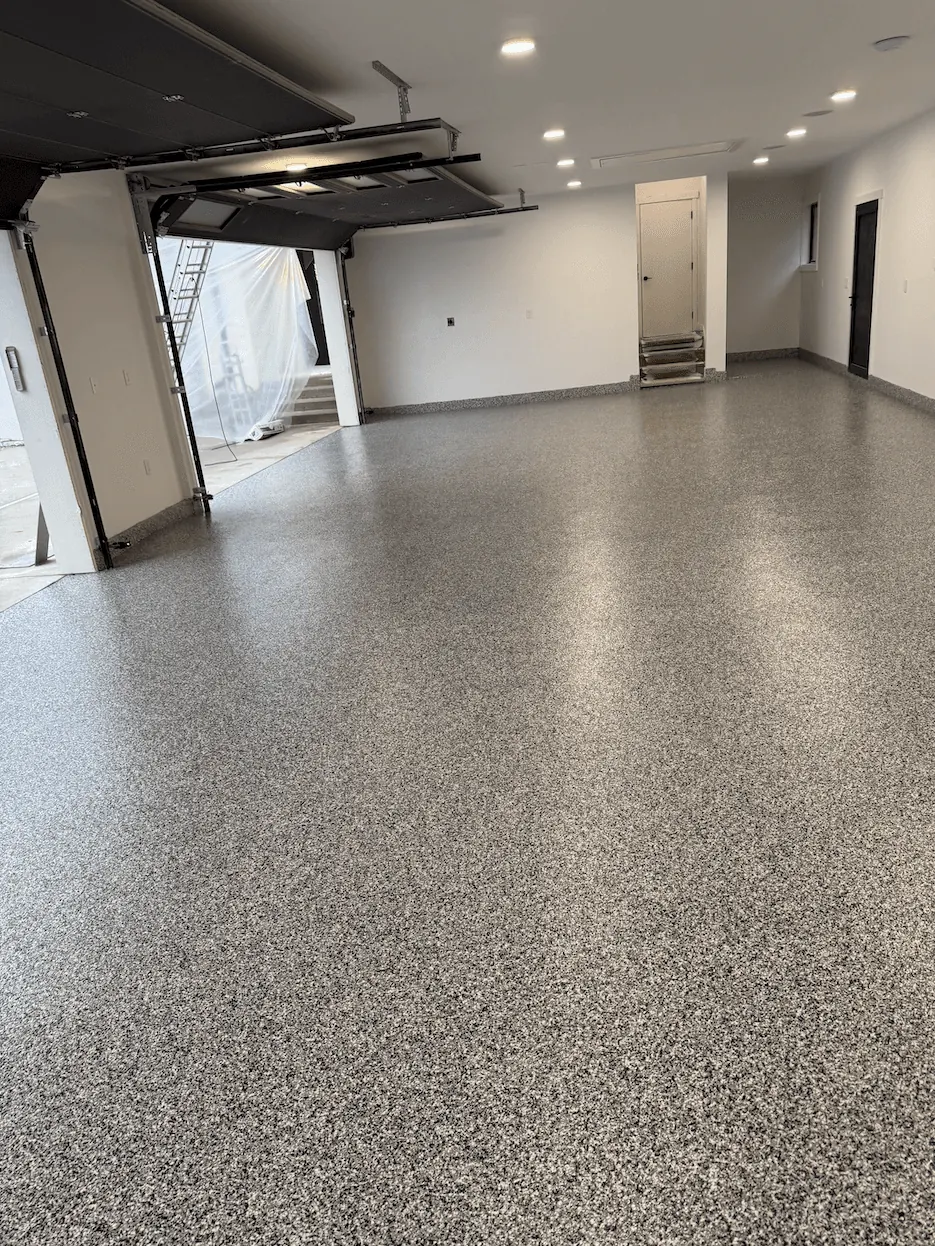
We grind first, then fix cracks, roll the base, throw the flake and add the clear top. One day on a dry slab; two if the primer needs a night.

-
Back in use
Walk on it the next morning and park after 72 hours. It keeps hardening for a week to ten days, so lift heavy things instead of dragging them.
Picking a floor color for your Nashville house
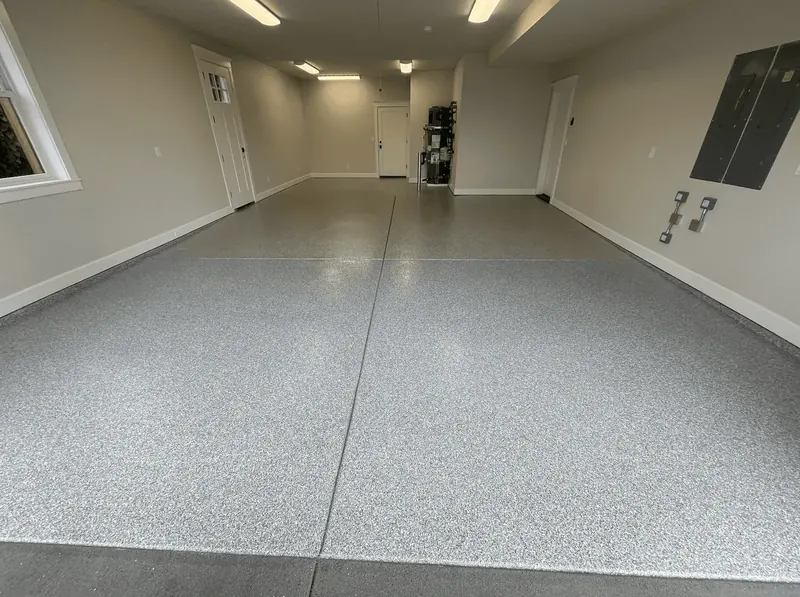
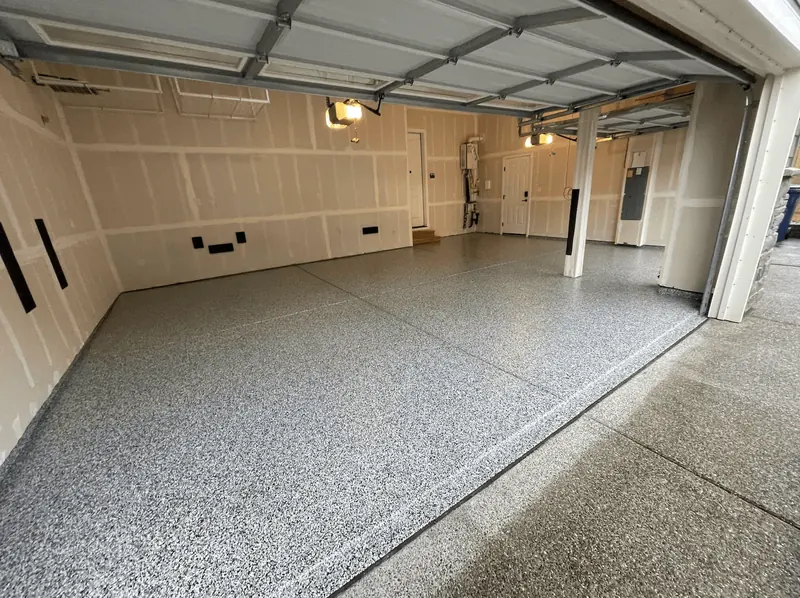
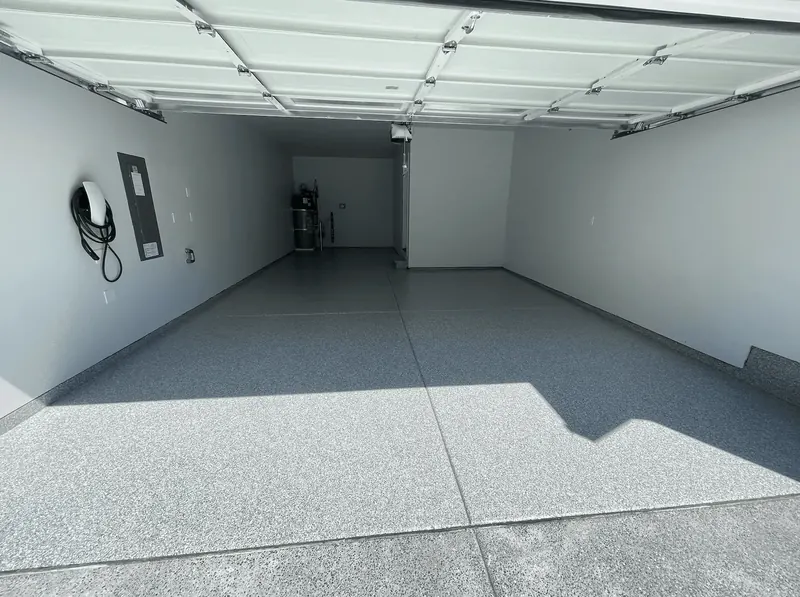
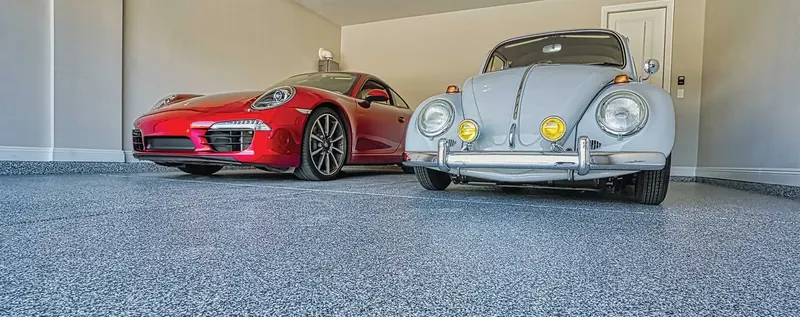
Start from the outside of your house. Then try your top two on a photo of your own garage in our color preview, and see every blend on the colors page.
 Red brick
Warm tans
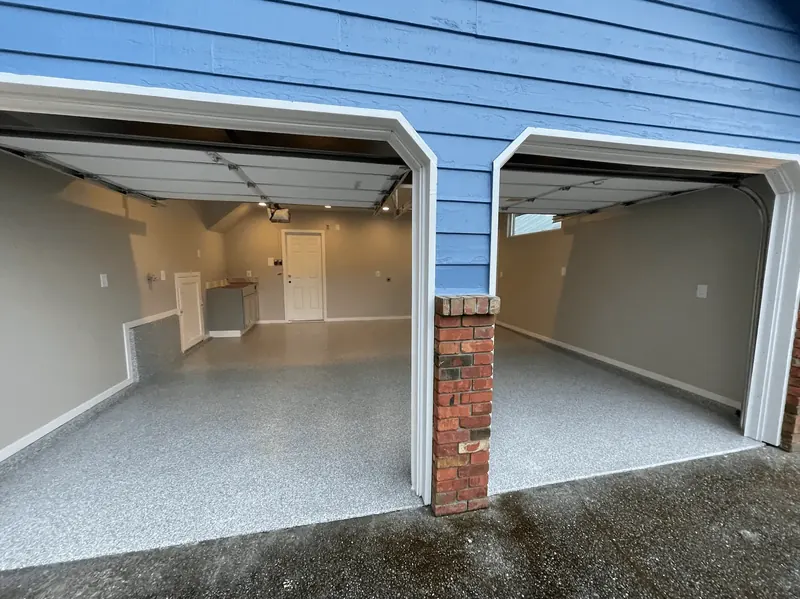
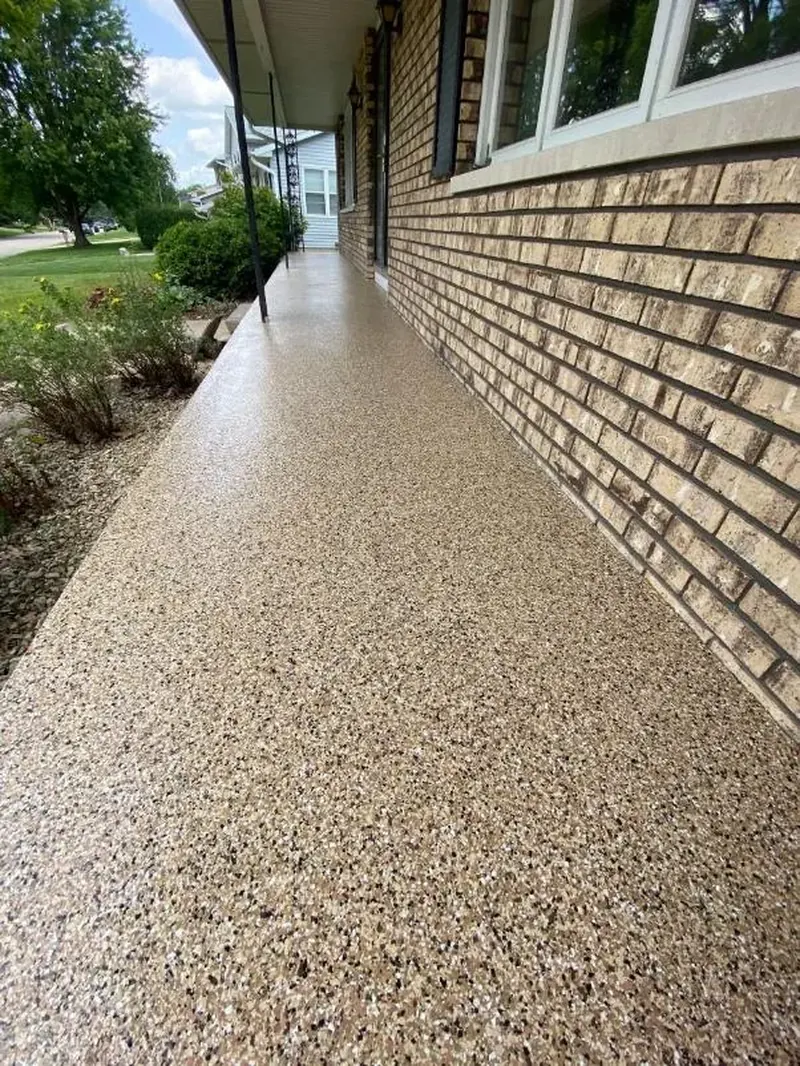
Got red brick? A tan flake looks made for it. Tan also hides the red clay dust that rides in on your boots, bikes and tires all year.
 White farmhouse
Two-tone
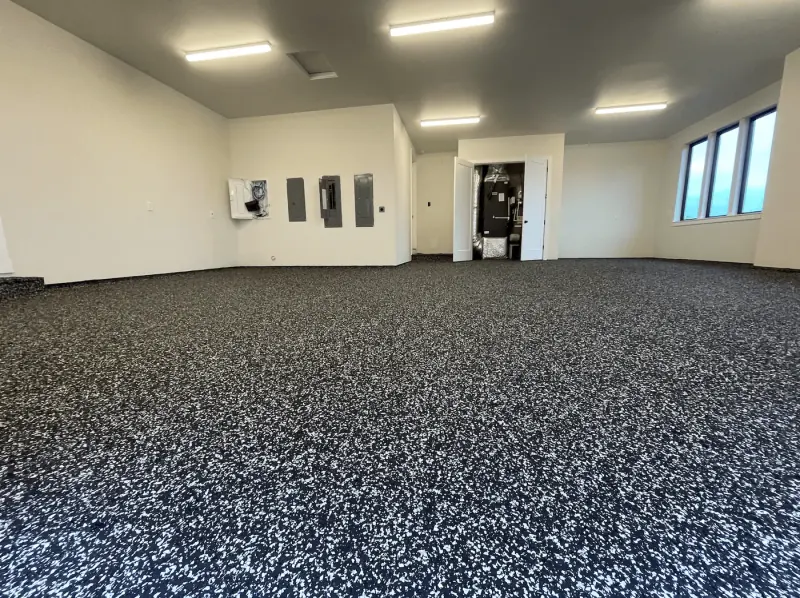
White siding with black trim? Go black-and-white or charcoal. It looks sharp and hides oil drips, though you'll see dust until you sweep.
 Gray or stone
Cool grays
Gray reads clean and flatters any car, and it hides road grit and winter salt. Stuck between two colors? A medium gray is the safe call.
 Dim garage
Light blends
Just one bulb and no windows? A light flake bounces what light you have. It shows tire marks sooner, so pick one with gray chips.
More flake colors, side by side
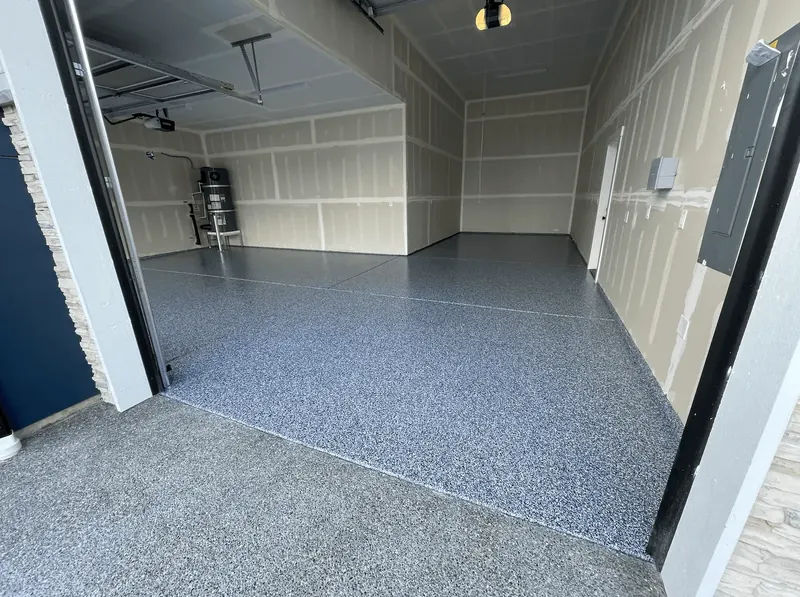
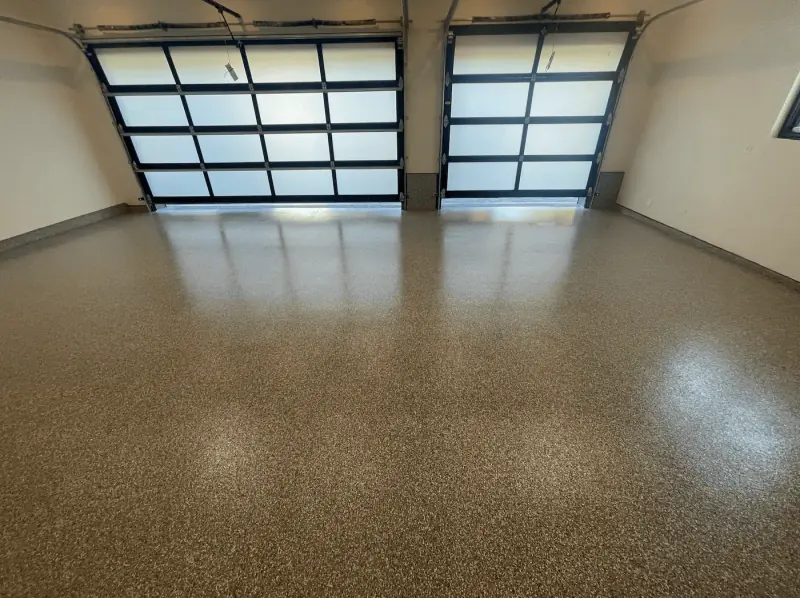
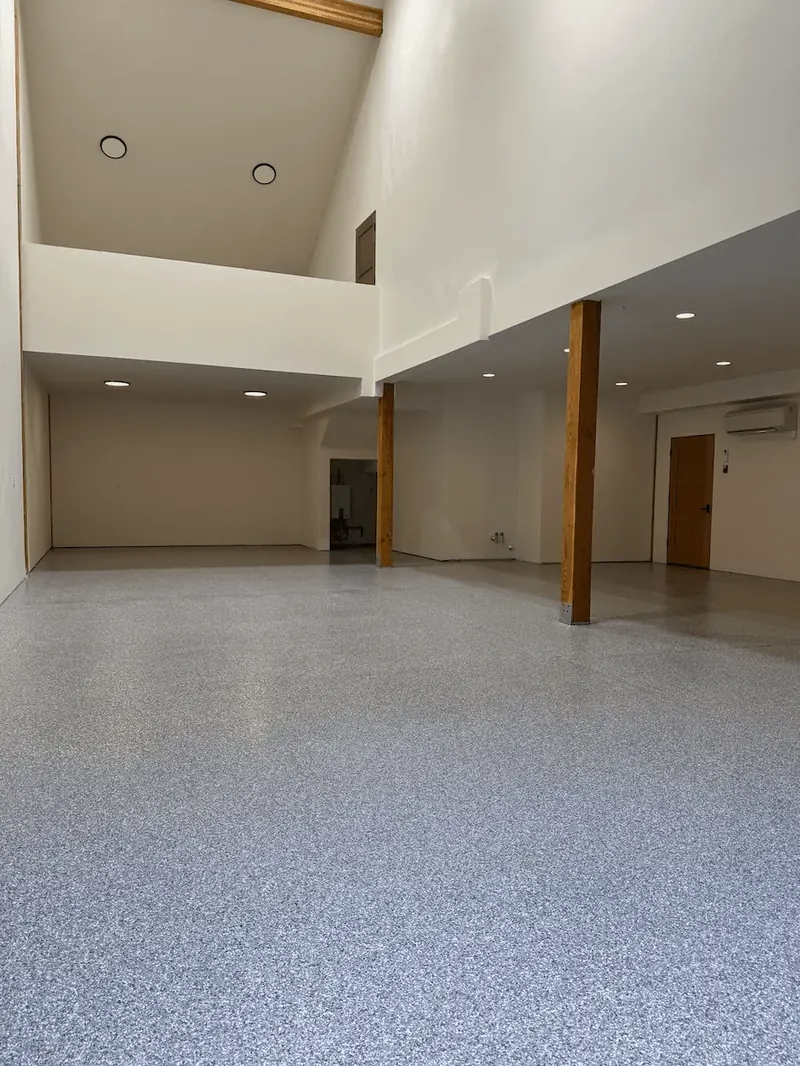
Blues, warm tones and a two-tone. See more in the gallery, or try one on a photo of your own garage.




Epoxy garage floor questions
How much does an epoxy garage floor cost in Nashville?
Most two-car garages around Nashville land between $2,000 and $4,500 for a professional flake floor. A one-car garage costs less overall but more per foot, because the setup is the same. Crack repair, an old coating to grind off and the moisture barrier all move your number. See the full breakdown.
Can I epoxy my garage floor myself?
You can, and a kit costs far less up front. It's a fair choice for a storage garage or a house you're selling soon. Rent a grinder instead of etching, test for moisture with a square of plastic taped down overnight, and wait for weather inside the can's limits. Under daily driving in a Nashville summer, kits tend to lift in the tire lanes first.
What is the best epoxy for a garage floor?
For a garage that sees sun, hot tires and winter brine, the best floor skips plain epoxy on top. A flexible base, full flake and a clear top that won't yellow will outlast it. Doing it yourself? A thick two-part product beats a thin water-based one, and grinding beats etching every time.
Will road salt and brine hurt the floor?
Not ours. Brine and ice melt sit on the clear top instead of soaking into the concrete, so a mop or a rinse takes them off. On bare concrete, salty water soaks in. Over a few freezing winters it can pit and flake the surface, usually right inside the door where your car drips.
Will the floor get slick when the slab sweats?
Warm, muggy air can bead up on a cool slab in spring and summer, and smooth epoxy gets slick when it does. Ours carries full flake and fine grit in the clear top, so your shoes grip even when it's damp. Keeping the garage closed on muggy days, or running a dehumidifier, cuts the sweating itself.
Can you coat over an old epoxy garage floor?
Usually the old coating comes off first. We grind it down to bare concrete, so your new floor bonds to the slab instead of to a coating that's already letting go. If the old floor peeled, that's a reason to check moisture extra carefully, and we do that at the estimate.
How do I clean an epoxy garage floor?
Sweep or dust-mop the grit, then mop with warm water and a little mild soap. Wipe up oil, gas and antifreeze when you see them, and skip harsh solvents and acid cleaners. After a salty week of winter driving, give the strip inside the door a rinse. That's about all the care it needs.
Is there an epoxy garage floor installer near me?
If you live in or around Nashville, yes. Our crew covers the city and the towns around it, from Clarksville and Gallatin in the north to Franklin, Murfreesboro and Columbia in the south. The estimate is free and happens at your house. Rather start with photos? Send a few of your floor through the contact form.
Do I need to empty the whole garage?
Yes. Cars, bins, bikes, freestanding shelves and the spare fridge come out the night before, because we grind wall to wall. Wall cabinets can usually stay. Light things can come back the next day, your cars after 72 hours, and heavy shelves once the first week has passed.
Want a floor that handles all four seasons?
Book the free estimate. In about 20 minutes at your house, we measure, test your slab for moisture and leave a written, itemized price. Then you decide, on your own time.