
Garage Flooring in Nashville: Every Option, Ranked
Picking garage flooring in Nashville? We ranked seven options for a garage you park in, and we say who each one suits. We install the one at the top, and we'll still tell you when tiles or a sealer fits your garage better.
- Seven options, ranked
- Heat, humidity, salt
- Who each one suits
- Free slab moisture test
What's the best garage flooring in Nashville?
Three things about your garage decide it: whether you park in it, how long you're staying, and what shape the slab is in. Hot tires rule out paint. A long stay pays back a floor that lasts. Cracks and damp spots point to tiles, or to a coating over a moisture barrier.
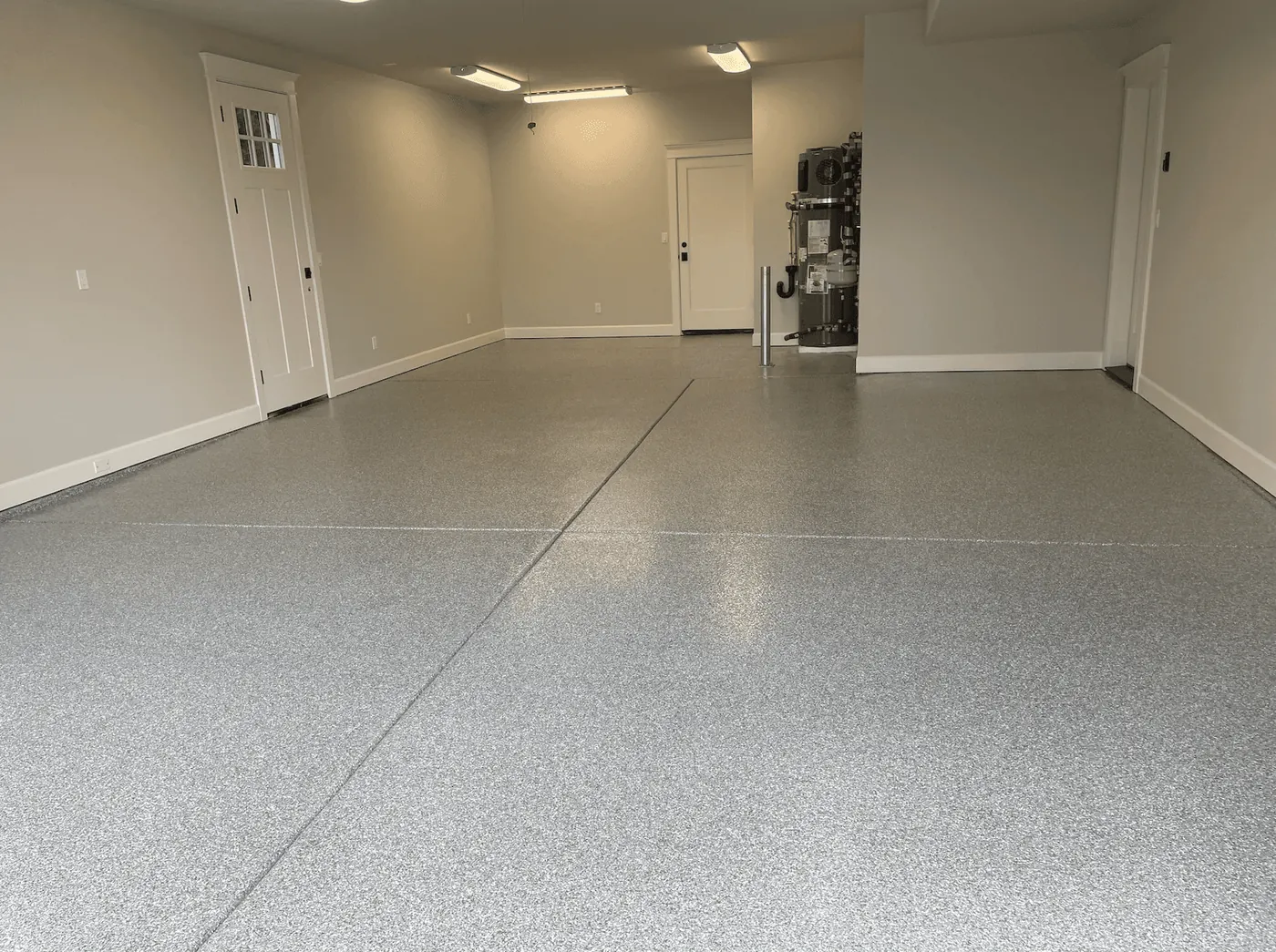
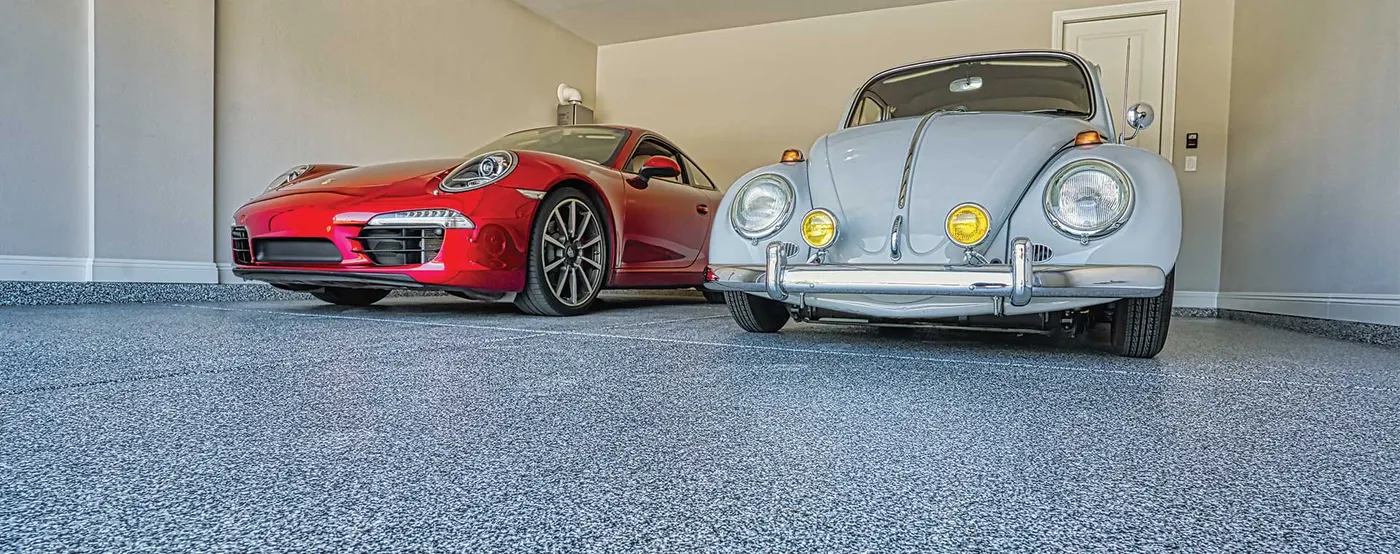
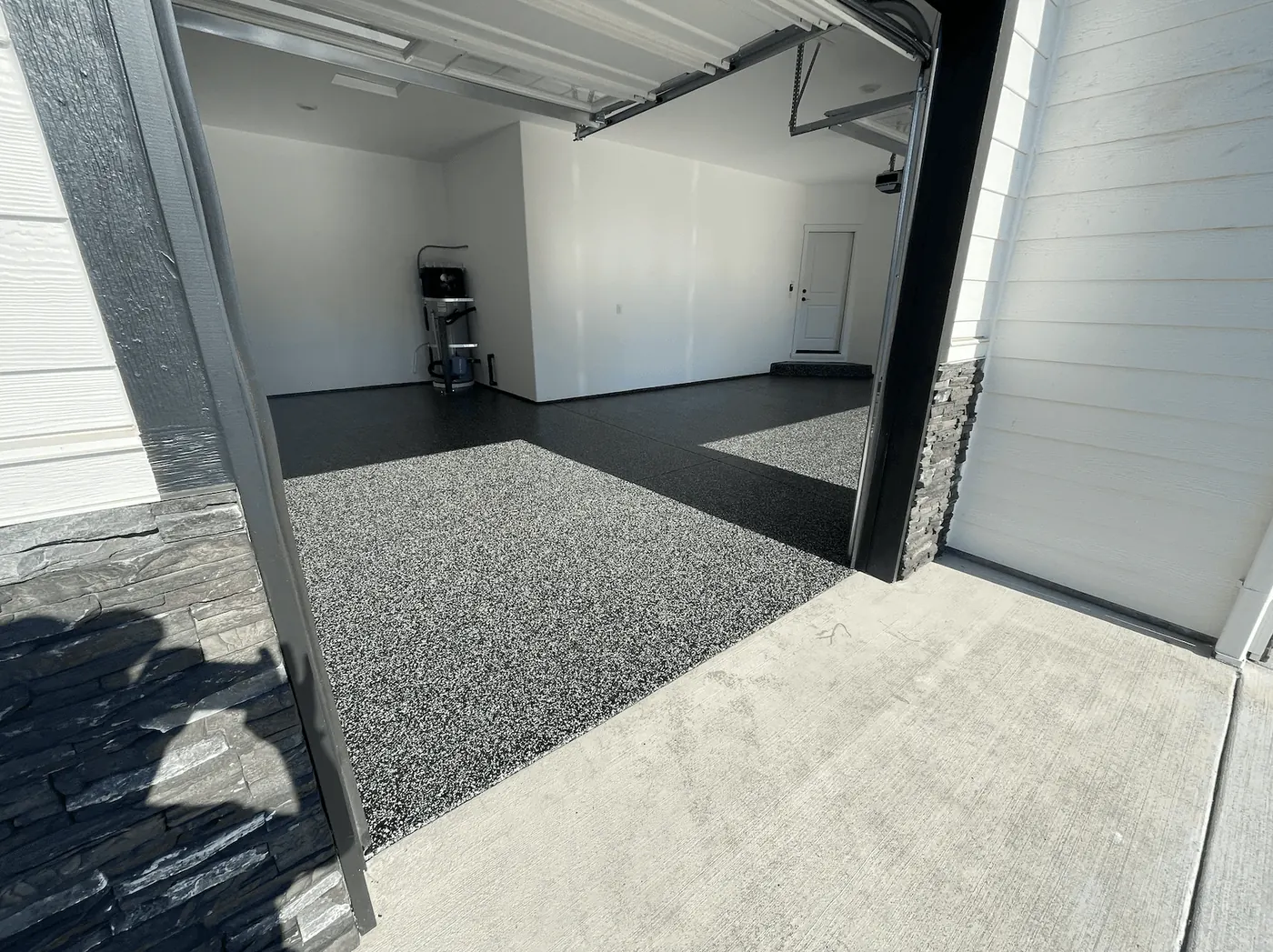
If you park in it and plan to stay, a flake coating wins. You get a polyurea base, full flake and a clear polyaspartic topcoat over ground, moisture-tested concrete. It stands up to hot tires in July and road brine in January, and it mops clean.
Renting, or stuck with a cracked, damp slab you can't fix yet? Interlocking tiles make more sense. Storing boxes in a garage you'll sell next spring? A sealer is plenty.
We install one of the seven, the one at the top. If your slab says tiles for now, or a sealer until you sell, that's what you'll hear from us at the estimate.

Garage flooring options, ranked for Nashville
We ranked them for a garage you park in and plan to keep. Each floor had to hold up to years of hot tires, sun, sticky summers and winter salt. Your garage might shuffle the middle of the list. It rarely moves the top or the bottom.
What you get with each garage flooring option
Each one gets a straight answer about what it does well and where it lets you down. Option one comes first because it's the floor we install.
Flake coating: polyurea and polyaspartic
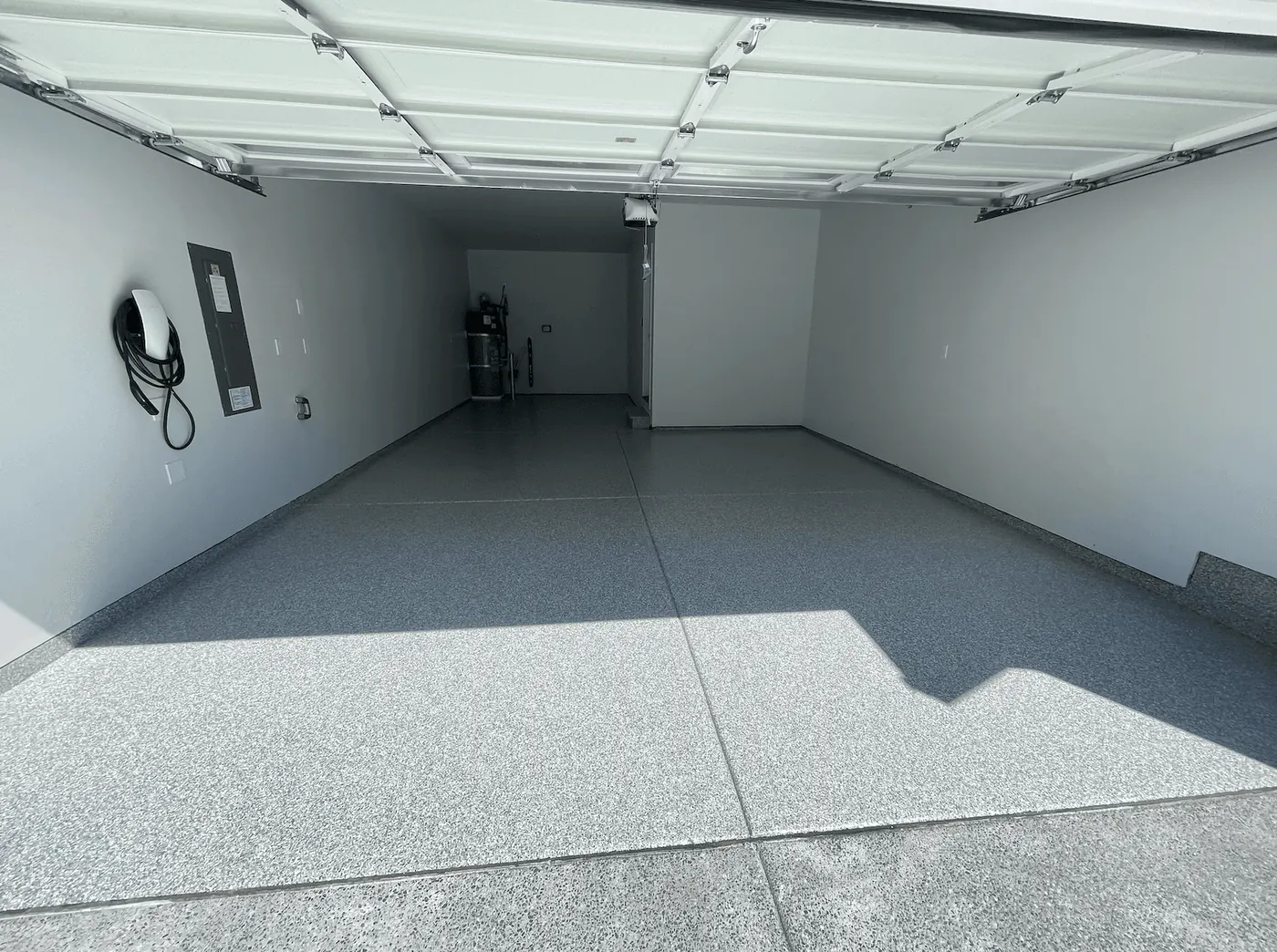
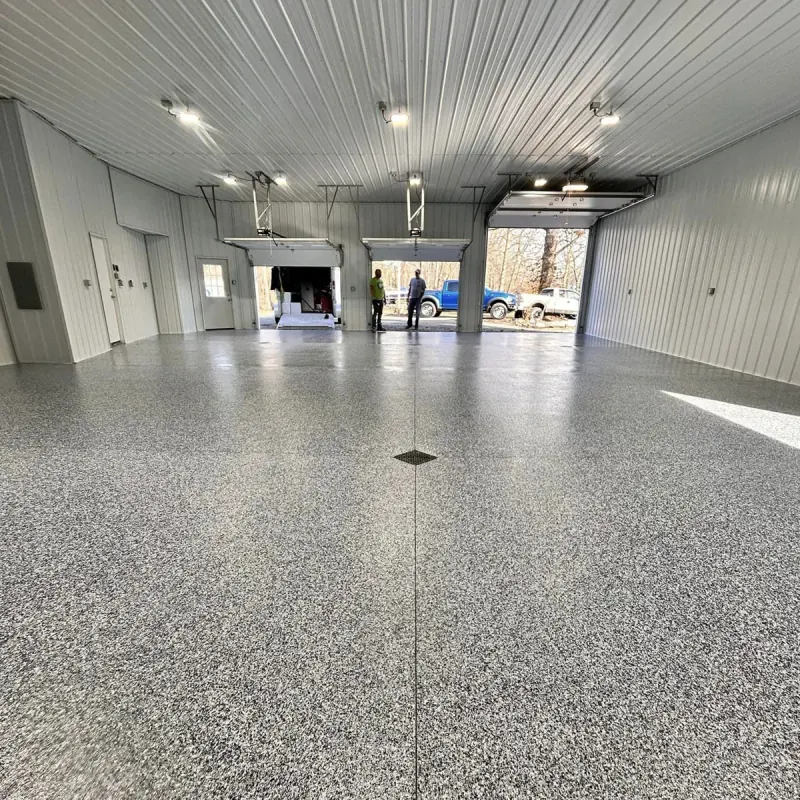
This one becomes the new surface of your slab. We diamond-grind and moisture-test the concrete and fill the cracks. Then we lay a flexible polyurea base, a full broadcast of vinyl flake and a clear polyaspartic topcoat with grip. Oil and road salt mop off. You walk on it the day after we finish and park after 72 hours.
It's a pro job, and it costs more up front than paint or a sealer. Around Nashville, a professional flake floor typically runs about $5 to $9 a square foot. See what moves that price.
It suits you if you want to do the garage floor once and be done. Park on it, work on it, drip on it, hose it out, and the lifetime adhesion warranty sits in a drawer for the day you need it.
Interlocking tiles
These rigid plastic tiles snap together right over your slab, with no prep. They float over cracks and damp spots, and they come with you when you move. Grit and water do work into the seams, so plan to lift a few and rinse underneath now and then. Tiles vs. coating.
Professional epoxy
A good epoxy floor starts with the same diamond grind and ends with flake under a clear coat. In a shaded, dry garage it's a solid floor. You'll wait most of a week to park, though. It's rigid, and it yellows where the sun hits. Epoxy, honestly.
Concrete sealer
A clear sealer soaks in, or sits on top, and slows oil stains and winter salt. Penetrating types let the slab breathe and go several years between coats. Your floor still looks like bare concrete, though, and old stains stay put. Sealer vs. coating.
Mats and liners
A roll-out vinyl liner or a containment mat with raised edges makes a good parking pad that catches drips and salty slush. Spread over the whole floor, vinyl traps moisture rising through your slab, and it creeps under turning tires.
Bare concrete
Doing nothing costs nothing, and a sound slab holds up your car just fine. It does dust and soak up oil, and salty slush can pit the surface over the winters. A sealer is the cheap stopgap. Cracked or pitted?
Garage floor paint
Latex or one-part "epoxy paint" rolls on in an afternoon, and it's fine for freshening up a storage garage. Under hot tires it often peels within a year or two, and it has to be ground off before any real floor goes down. Paint vs. coating.
What your garage floor goes through here
These four decide most of the ranking. Each one hits your floor at a different time of year, and each one favors different floors.
 Summer
Hot tires
Pull in after a July drive and your tires are hot enough to soften thin films like paint and budget epoxy. Back out the next morning and the softened film can lift with the tire. Thick flake coatings and rigid tiles take the heat.
 Sun
Sun
Sun at the door
Leave your door up on a sunny afternoon and the first few feet of floor bake for hours. Epoxy slowly ambers there, so you end up with a yellow strip by the door. A clear polyaspartic topcoat holds its color, so it's our top layer.
 Spring
Sweating slabs
On a muggy spring day, water can bead up on a slab still cool from winter, and more can rise from below. Mats trap that moisture, and paint can blister over it. Tiles let it breathe, and a coating over a barrier primer keeps it out.
 Winter
Clay, cracks, salt
The clay under local slabs swells when wet and shrinks when dry, so garage slabs crack. Before storms, the roads get brine, and your tires drip it across the floor. Tiles float over cracks. A coating needs them filled first, then keeps brine on top.
How long each floor lasts where you park
Line them up and you'll see the differences fast. Here's how each option holds up under your car, how it copes if your slab is damp or cracked, and the work it takes to put down.
| Option | Life under your car | Damp or cracked slab | Install |
|---|---|---|---|
| Flake coating (ours) | Years; lifetime adhesion warranty | Barrier primer first; cracks repaired | 1–2 days, pro |
| Interlocking tiles | Many years; swap single tiles | Floats over both | An afternoon, DIY |
| Professional epoxy | Years, with real prep | Needs a dry slab; cracks show | 2 days, a week to park |
| Concrete sealer | A few years (film) to several (soak-in) | Penetrating types breathe | An afternoon, DIY |
| Mats and liners | A few years | Traps moisture under it | An hour, DIY |
| Bare concrete | The slab lasts; the look doesn't | No change | Nothing to do |
| Garage floor paint | Often a year or two | Blisters and peels | A weekend, plus cure time |
Garage flooring ideas we'd talk you out of
- Carpet, vinyl plank or laminate where cars park. They trap moisture against your slab, and hot tires and dropped tools wreck them.
- Foam or soft rubber tiles over the whole floor. They hold water and heat in a humid garage. Rubber mats where you lift weights are fine.
- A roll-out liner as a permanent floor. It's a drip tray, so use it as one.
- Paint under daily drivers. One summer of hot tires and you'll have two bare stripes.
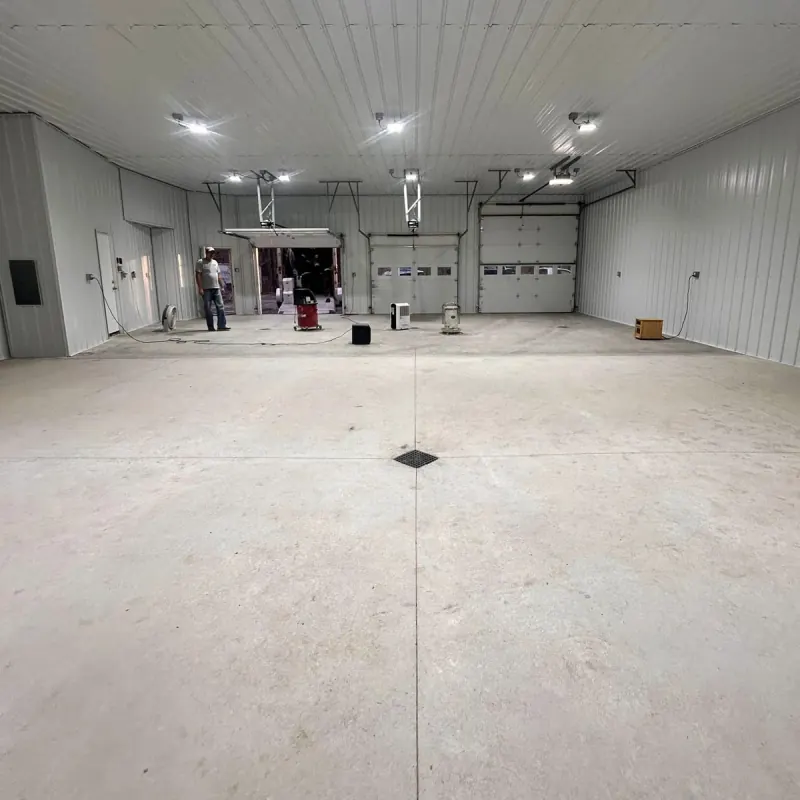
- Any coating on a slab nobody tested. That goes for ours too. The test takes minutes at your estimate.
Torn between the top two? Our tiles vs. coating guide puts them head to head for your garage.
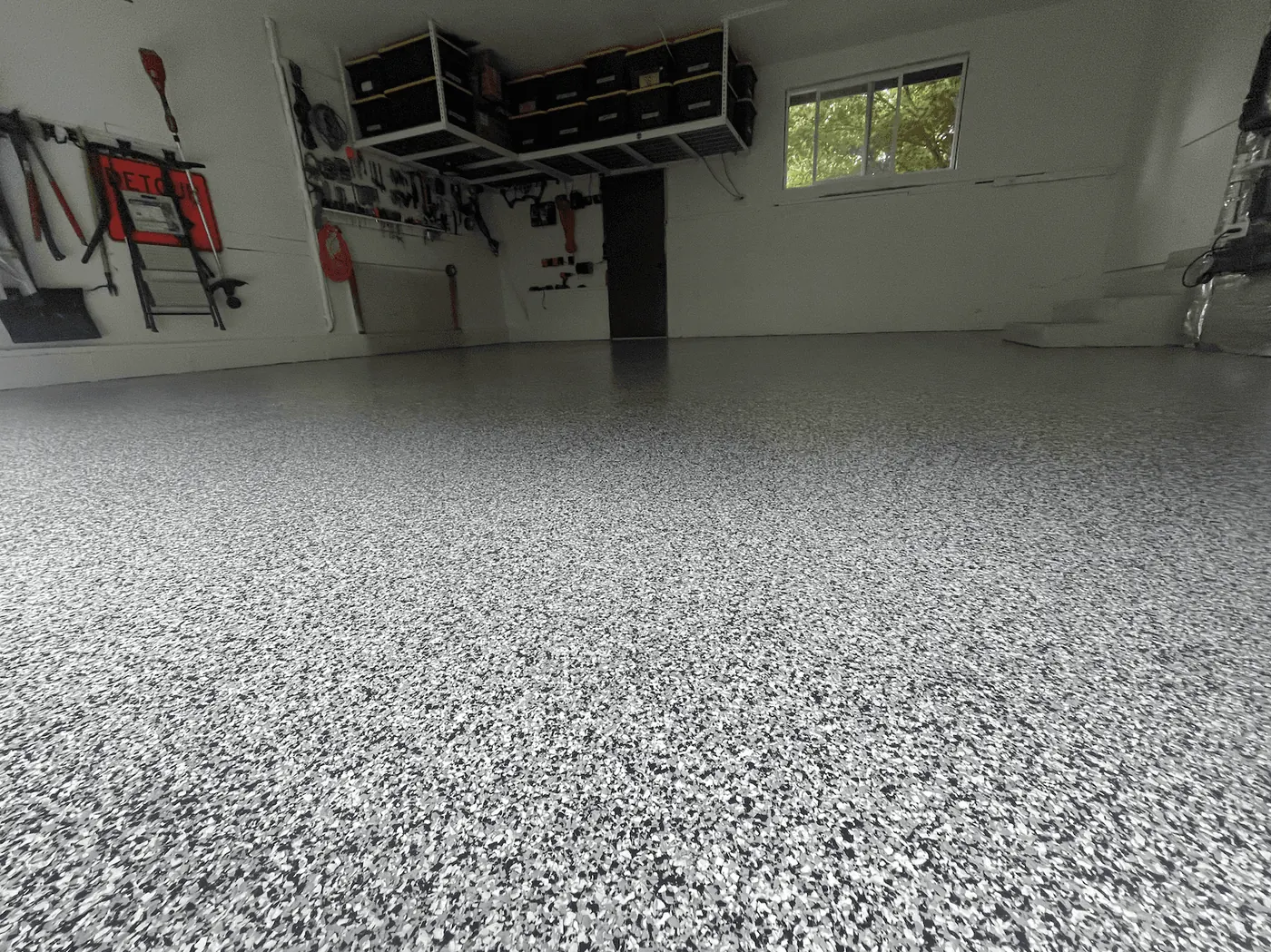
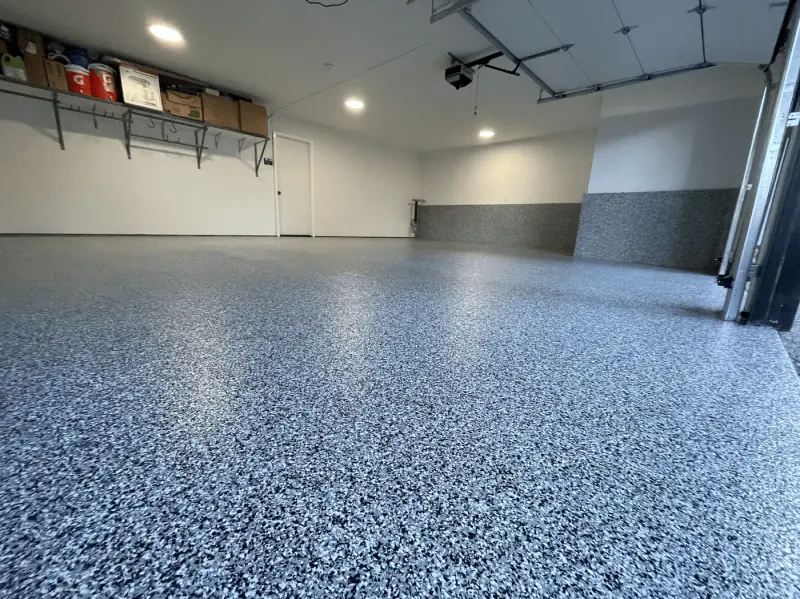
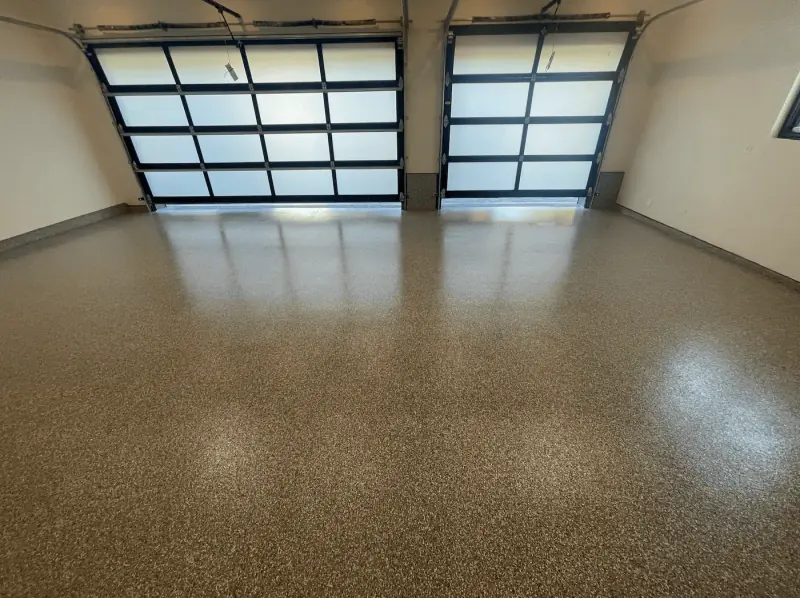
The top of the ranking, in seven colors
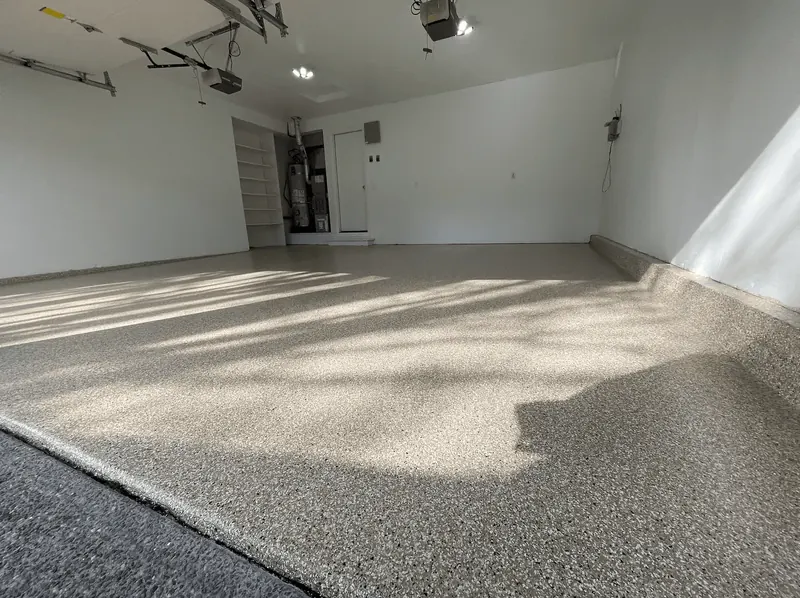
Pick the floor at the top and you still choose the look. Here are seven blends to start with. Browse the full gallery, or try a color on a photo of your own garage.





Garage flooring questions
What is the best garage flooring for a Nashville garage?
If you park in your garage and plan to stay, go with a flake coating. That's a polyurea base, full flake and a clear polyaspartic topcoat over ground, moisture-tested concrete. It holds up to hot tires and stays clear in the sun. For a renter or a cracked, damp slab, interlocking tiles are the better buy. For a storage garage you're selling soon, a sealer does the job.
Are garage floor tiles better than a coating?
Tiles win in three spots: you skip the prep, they float over a cracked or damp slab, and you can take them with you. A coating wins on a surface with no seams, so you mop it clean and nothing collects underneath. For a garage you're keeping, we rank the coating first and tiles a close second. The full comparison.
What is the cheapest garage flooring?
Bare concrete costs nothing, and a sealer or paint is the cheapest thing you can put on it. Either one is an afternoon's work. Neither lasts long where you park, though. Paint often peels in the tire lanes within a year or two, and sooner or later a sealer needs a fresh coat. Roll-out mats are the cheapest way to catch drips.
Are garage floor mats worth it?
As a parking pad, yes. A containment mat under your car catches drips, mud and salty winter slush. Over the whole garage, vinyl traps moisture rising through the slab, which can leave mildew and white mineral stains underneath. It also creeps under turning tires. Whatever mat you use, lift it now and then so the slab can dry.
Is rubber flooring good for a garage?
Where the weights land in your home gym, rubber mats are great. As a whole garage floor, soft rubber and foam tiles hold water and heat in a humid garage. Hot tires and jacks chew them up, too. Want a gym corner? Coat the floor and lay rubber mats where you lift.
Should I seal or coat my garage floor?
Seal it if you mostly store things, want to slow oil stains and salt for very little money, and don't mind the bare look. Coat it if you park in it and want a floor that wipes clean and hides old stains under flake. A coating needs a ground slab, so any sealer gets ground off first. Sealer vs. coating.
Is epoxy or polyaspartic better for a Tennessee garage?
For most Middle Tennessee garages, a polyurea base with a polyaspartic topcoat. It cures in hours, stays flexible and stays clear where sun comes through the door. You can park on it after 72 hours. Epoxy is a solid floor in a shaded, dry garage, but it's rigid, slow to cure and yellows in sunlight. Both need the same diamond-ground prep.
Can you put vinyl plank or carpet in a garage?
Not where cars park. Both trap moisture against the concrete, and hot tires, oil and dropped tools ruin them. If you've turned the garage into a finished room with a vapor barrier under the floor, they can work. For a garage that still holds your cars, go with a coating or tiles.
What garage flooring works on a cracked or damp slab?
Tiles, because they float over cracks and let a damp slab breathe. Or a coating, once the cracks are filled and ground flush and a moisture barrier primer goes down first. Paint, mats and plain epoxy fit worst. We take moisture readings at every free estimate, so you'll know what your slab is doing before you choose.
Not sure which floor your garage can take?
We test your slab at a free 20-minute estimate and tell you straight which floors it can take, even if the answer is tiles for now. If a coating fits, you get an itemized price in writing and all the time you need to decide.