
Garage Floor Painting in Nashville
Staring at your stained slab and thinking floor paint would fix it? Garage floor painting is cheap and quick, and sometimes it's the right call. Park your car on it every day, though, and Nashville's summer heat helps hot tires pull it up. A coating on diamond-ground concrete is made to take that heat.
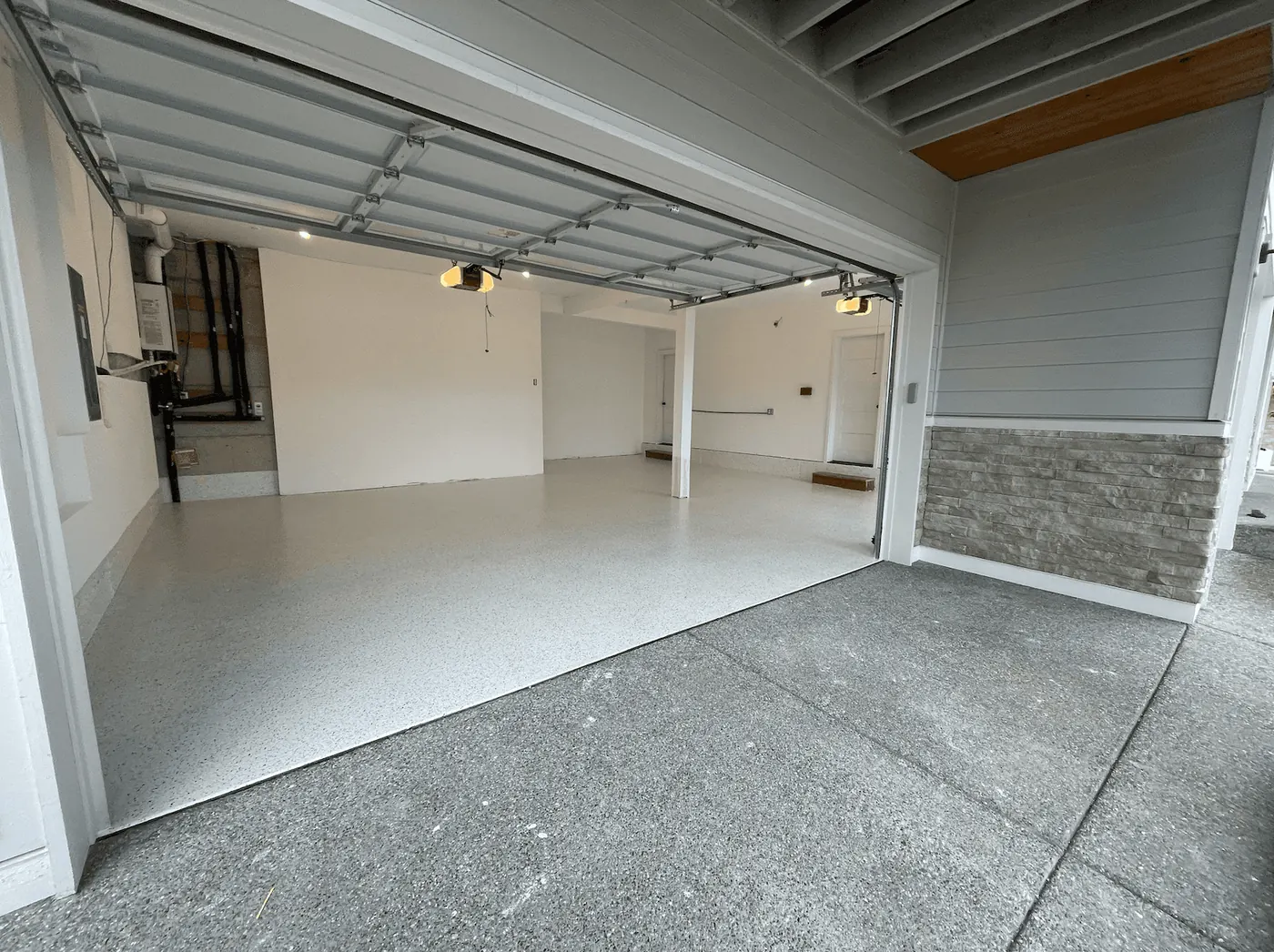
- Ground, never etched
- Moisture-tested first
- Cars back in 72 hours
- Lifetime adhesion warranty
Should you paint a garage floor in Nashville?
If nothing parks in your garage, or you're listing the house next month, garage floor painting can be the right buy. It takes a weekend and a few gallons. If a car parks there every day, paint is a short-term floor, and our summers make it shorter.
Garage floor paint, including the one-part "epoxy" kind, dries to a film thinner than a sheet of paper. Hot tires soften it, a damp slab pushes it off, and your tire lanes go bare first. One popular epoxy paint's own data sheet warns that the tire lanes may need a touch-up every year.
Paint is cheap to try, though, and it won't lock you out of a better floor later. When you're ready for one, our grinders take the old paint off as part of normal prep.
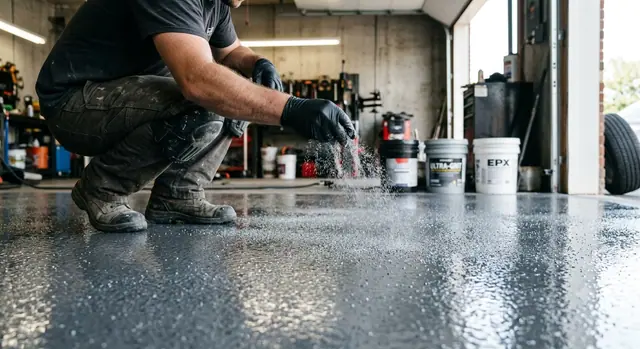
We don't paint floors ourselves. We grind the slab and build a coating about as thick as a credit card, and you park on it three days later. For the general comparison, see our paint vs. coating guide.



What's really in a can of garage floor paint
Walk down the paint aisle and you'll find three of these side by side. Here's what each one really is, going by its own data sheet, next to the floor you'd get from us.
| Floor paint | One-part "epoxy" paint | Two-part epoxy kit | Our coating | |
|---|---|---|---|---|
| What you're buying | Acrylic latex porch and floor paint | Acrylic latex with some epoxy added | Real epoxy, mixed from two parts | Polyurea base, full flake, clear polyaspartic top |
| How thick a coat is | Less than a sheet of paper | Less than a sheet of paper | About a sheet of paper | About a credit card, all layers |
| Prep on the label | Clean and etch | Clean and acid-etch | Clean and etch | Diamond grinding, repairs, moisture test |
| Before your car goes back | Some labels say never: not for garages | 7 days | 3 to 4 days | 72 hours |
| Hot tires | Soften it and pull it up | Yearly touch-ups expected | Lifts if prep or cure is off | Built to resist; covered by the adhesion warranty |
The one-part paints sold as "epoxy" are water-based acrylics with some epoxy in the mix. They beat plain paint, and your tires will still treat them like paint.
Why painted garage floors fail early around Nashville
Paint would wear out anywhere, eventually. Here it has four extra things working against it, and you can probably spot a couple of them in your garage right now.
 Heat
Heat
Hot tires
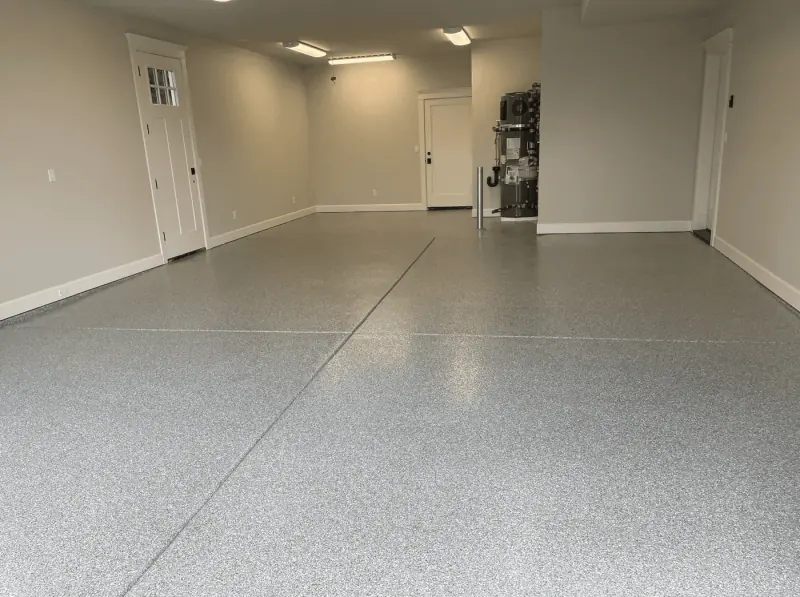
Nashville sees about seven weeks' worth of 90-degree days a year. Hot tires soften the paint while your car sits, then peel it up when you back out, so the tire lanes go first.
 Humidity
Muggy air
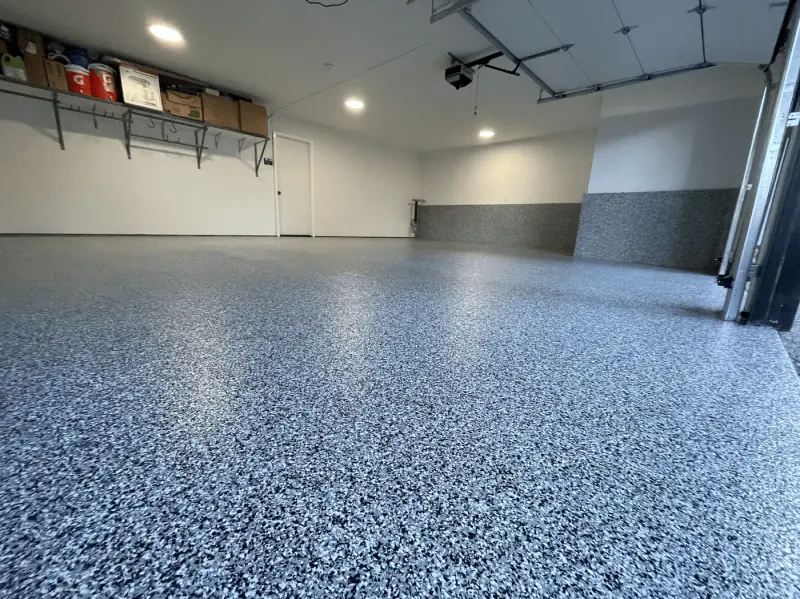
From mid-May to late September, the air is muggy much of the time. Water-based paint dries slowly in it, and dew settling on your fresh coat overnight can spoil the finish.
 Brine
Brine
Winter grit
Brine, salt and road grit ride in on your tires after every winter storm and sand down a thin film in the lanes. Once it chips, salty water creeps in under the edges.
 Ground
Damp slabs
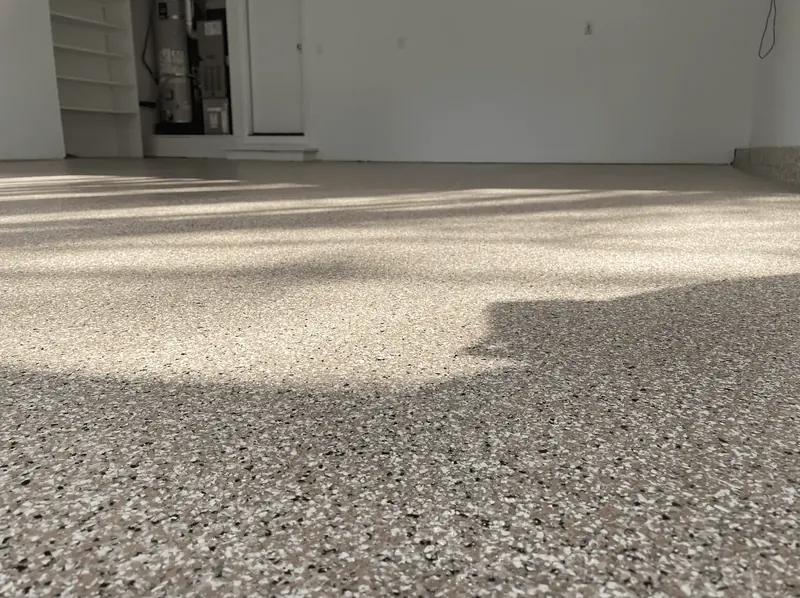
Clay soils hold water, and an older slab may have no plastic sheet under it. Moisture moving up through your concrete pushes paint off from below, in bubbles and patches.
What a Nashville summer does to your floor paint
On a July afternoon, you drive home on the interstate and pull straight into the garage. Your tires are hot enough to soften a thin film of paint, and the rubber grips it as it cools. In the morning you back out, and patches of paint leave with the tires.
Even the label sets rules that our weather often breaks. One popular one-part epoxy paint has to go on when the air and the slab are mild, out of direct sun, with no heavy dew for a day. Around Nashville, that rules out many summer afternoons and most of winter.
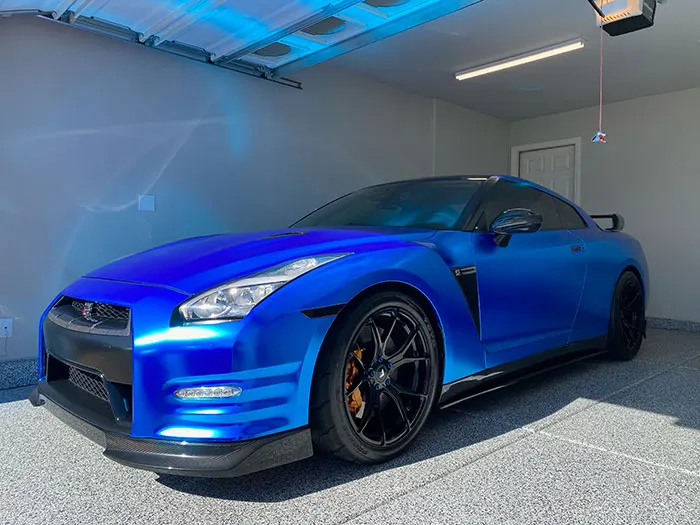
Your new floor handles heat differently. The clear polyaspartic topcoat resists softening, and the whole floor is locked into diamond-ground concrete. If it ever did lift under a hot tire, that's an adhesion failure, and our lifetime adhesion warranty covers it.
Garage floor paint peeling? Read the pattern
Where your paint lets go tells you why it failed. We read the same clues at the free estimate, because the cause decides what goes under your new floor.
 Tire lanes
Hot tires won
Bare stripes where you park mean hot rubber pulled the thin film up. We grind off whatever paint is left, and your new floor's clear topcoat is made to take hot tires.
 Bubbles
Moisture below
Blisters or patches with a damp or chalky back mean vapor pushed up through your slab. The paint comes off, and a moisture barrier primer goes under your new floor.
 Door edge
Salt and water
Peeling just inside your door is brine and rain at work, often over salt-pitted concrete. We grind it back to sound concrete, repair it and coat it.
 In sheets
It never stuck
Big flakes with a dusty back mean the paint stuck to dust, an old sealer or a slick surface. Grinding gives your next floor real concrete to grip.
Why we don't paint garage floors
Call a house painter and they'll happily paint your garage floor, and do a neat job of it. It's still paint, though. We turn those jobs down, for three reasons:
- We couldn't stand behind it. We put a lifetime adhesion warranty on our floors. Nobody can say that about paint under a car.
- The prep is most of the work. Grinding, crack repair and a moisture test cost more than the paint they'd go under.
- You'd pay twice. Paint that peels in two summers gets ground off before the floor you wanted goes down.
If paint really is right for your garage, we'll tell you so, and point you to the timing tips below.
What garage floor painting costs
Doing it yourself, a two-car garage takes a few gallons of floor paint plus degreaser, etch and rollers, a couple hundred dollars all in. Hiring a painter costs you more, and it's still a coat of paint.
- $2–$4per sq ft to paint, national guides
- $5–$9per sq ft, flake coating
Paint comes with a second bill, because you'll repaint it. Cost guides give a painted floor one to five years, less in the tire lanes. The coating range is the Nashville-area market, and your exact price comes in writing at the free estimate. See what moves it.
Painting it yourself? Pick the right Nashville week
Paint is fussy about weather, and ours doesn't always cooperate. Our paint vs. coating guide has the full how-to. Here's what changes around Nashville.
Pick spring or fall
Your label wants 50°F to 90°F in the air and the slab, and muggy air slows drying. Around here that points to April to mid-May, or late September through October.
Read the forecast
You'll want a full day with no rain or heavy dew after you paint. Start in the morning so the coat sets before the evening dew.
Test the slab first
Tape a square of plastic to your slab overnight. A damp, dark patch under it means moisture, and paint will lift there.
Give it a full week
Most labels say 7 days before tires. Park in the driveway, and keep hot tires off it as long as you can.
What your floor could look like instead
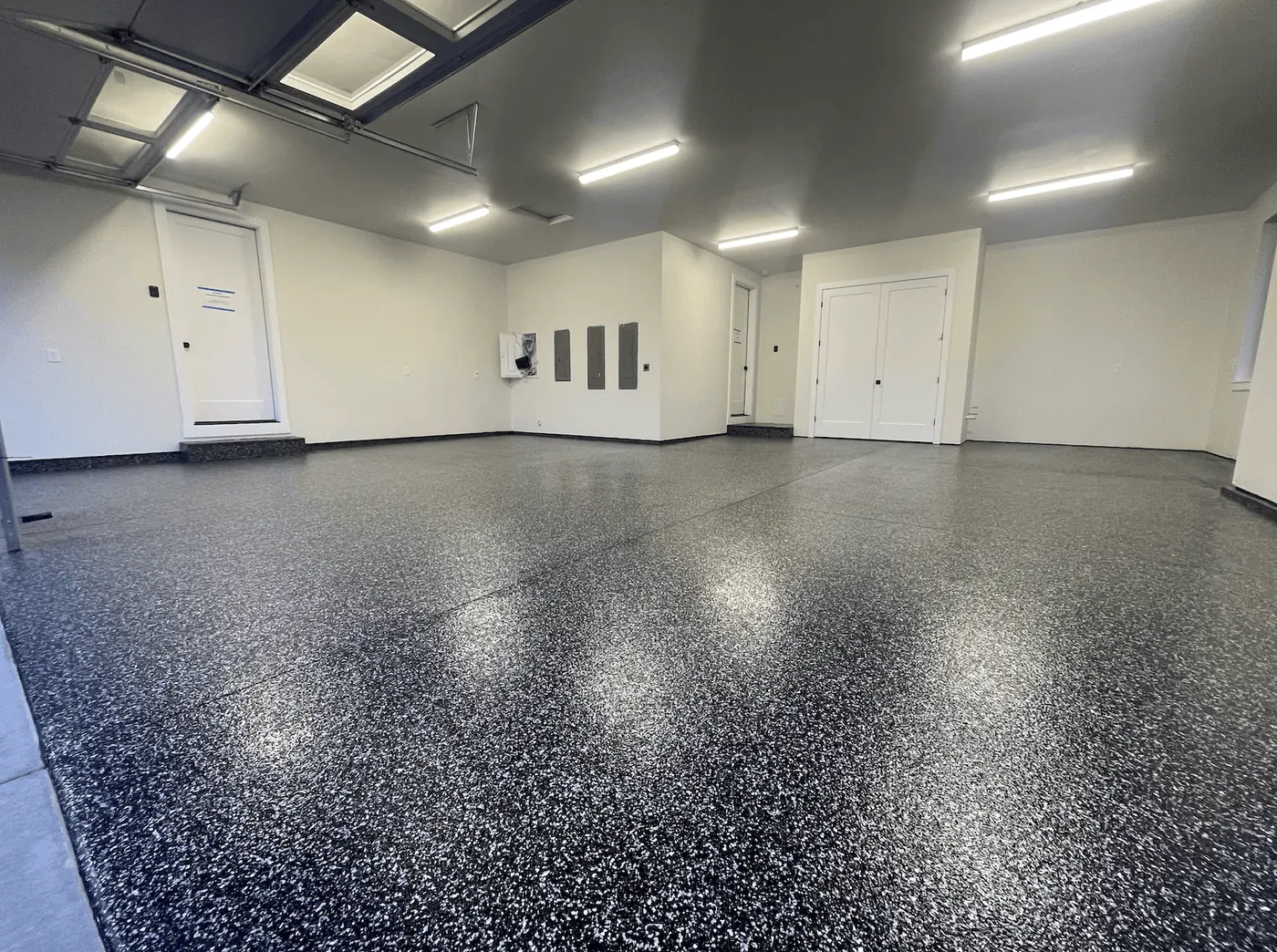
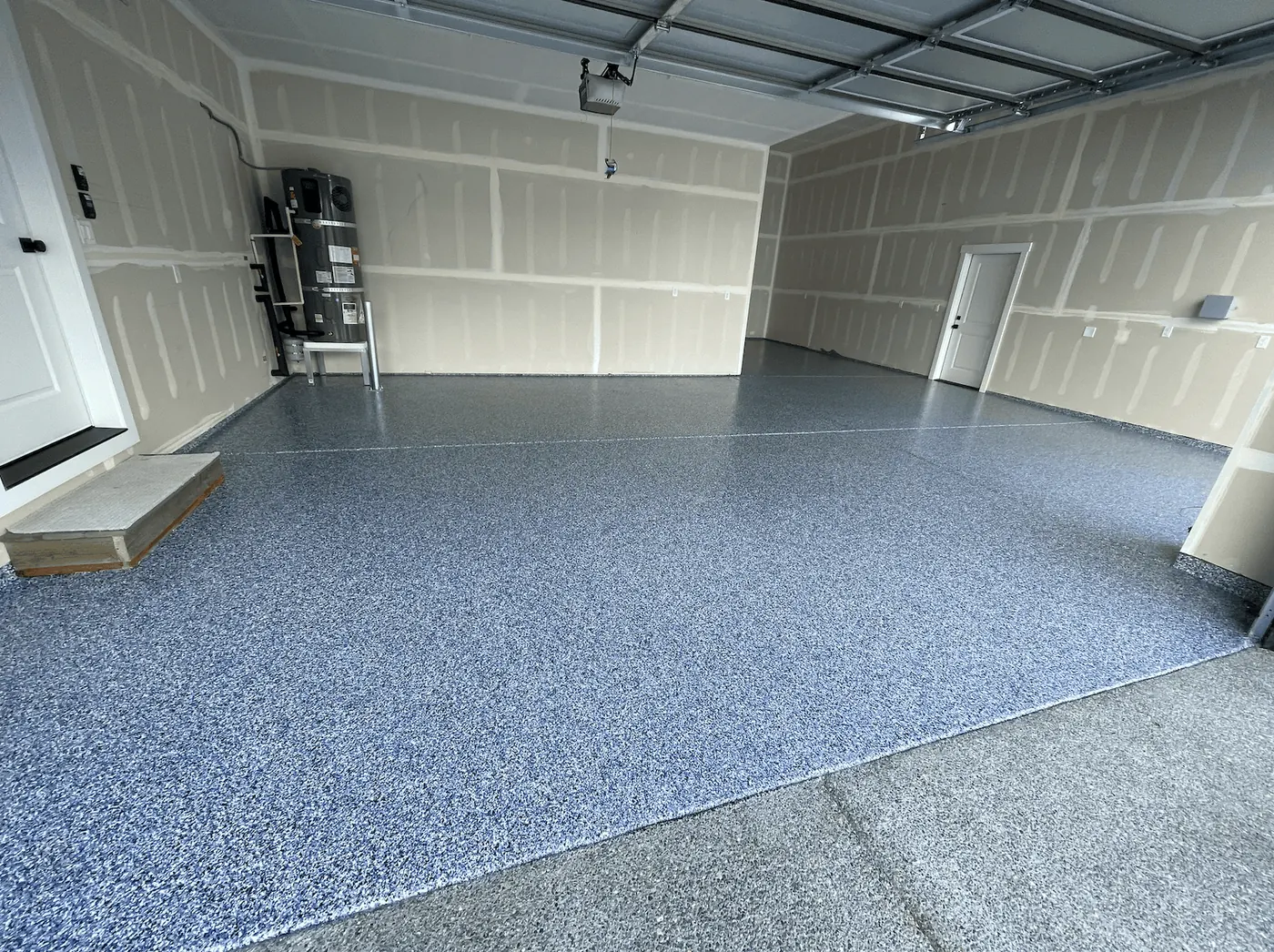
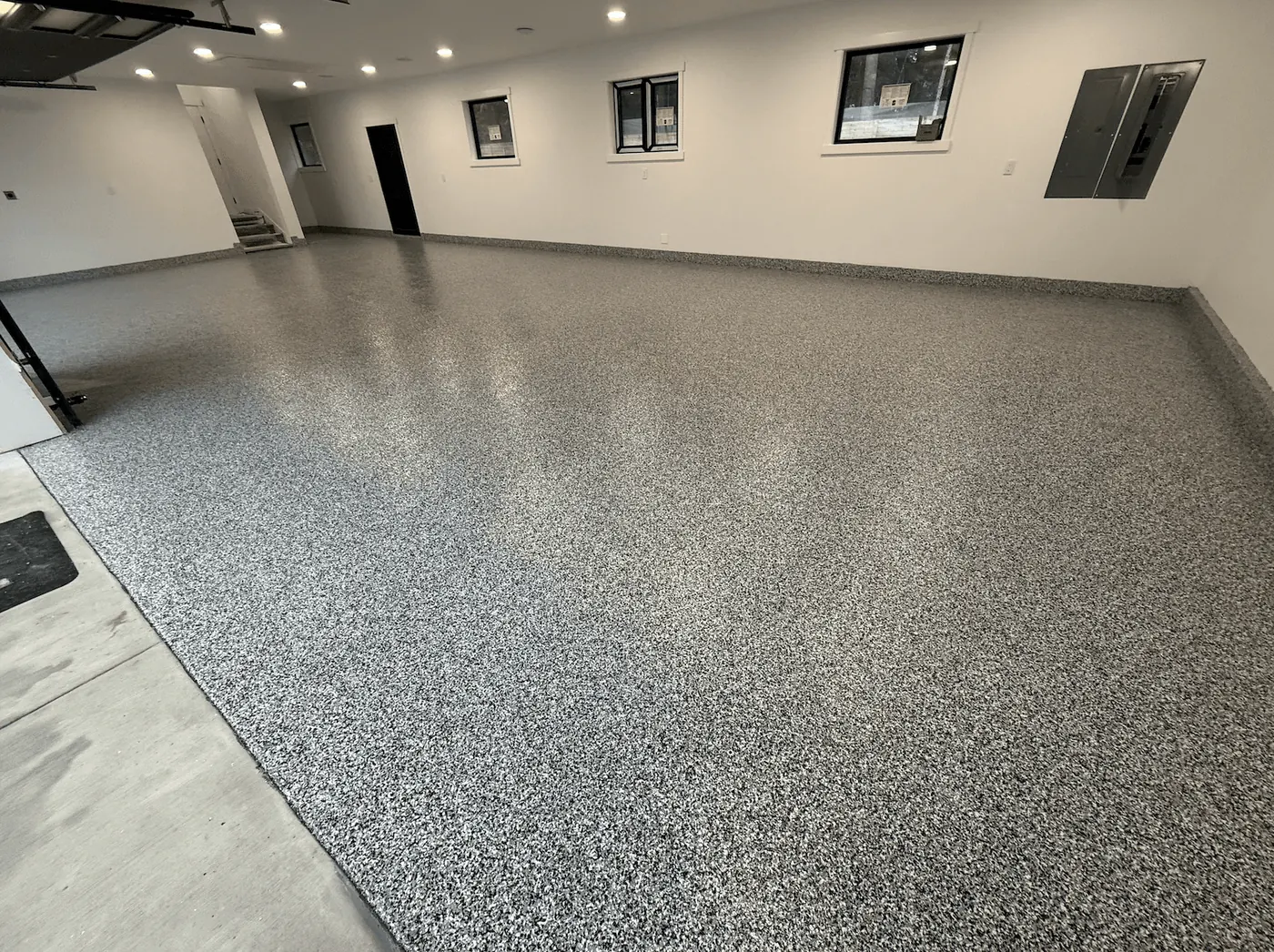
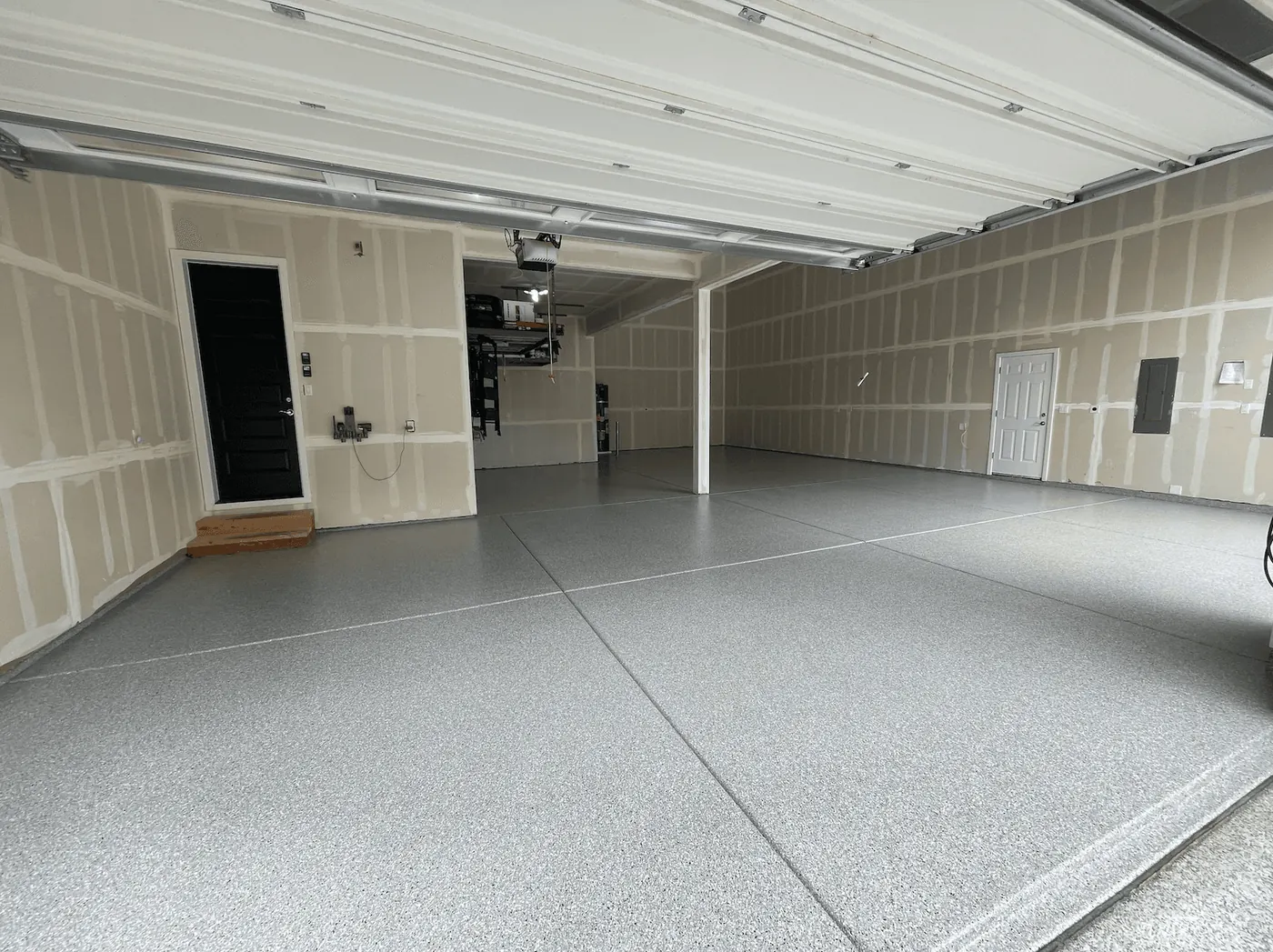
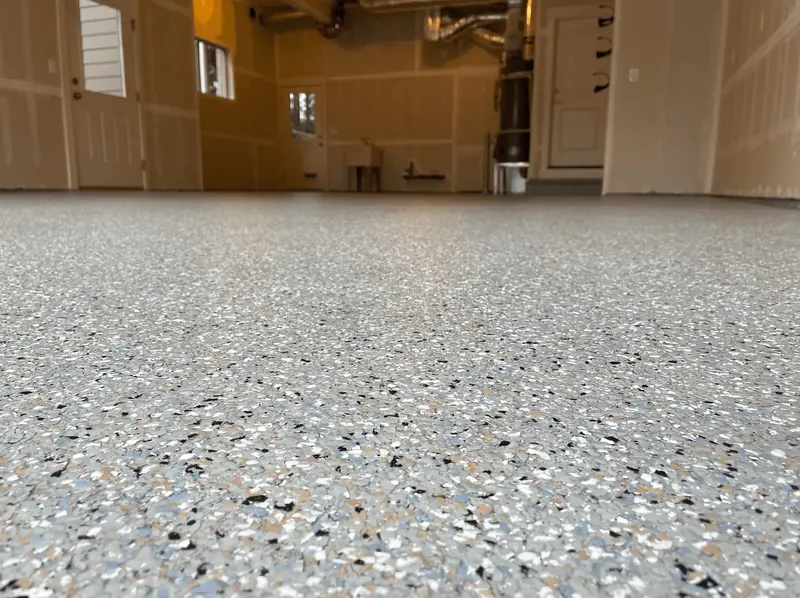
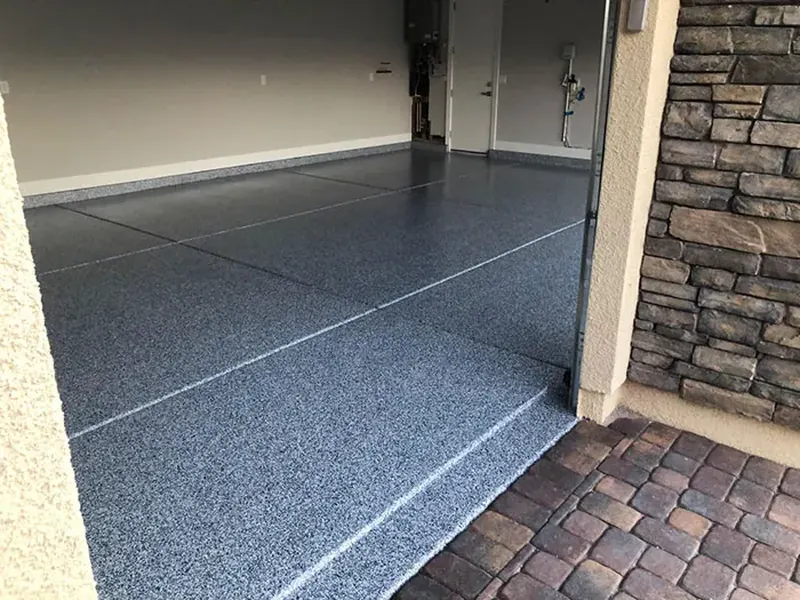
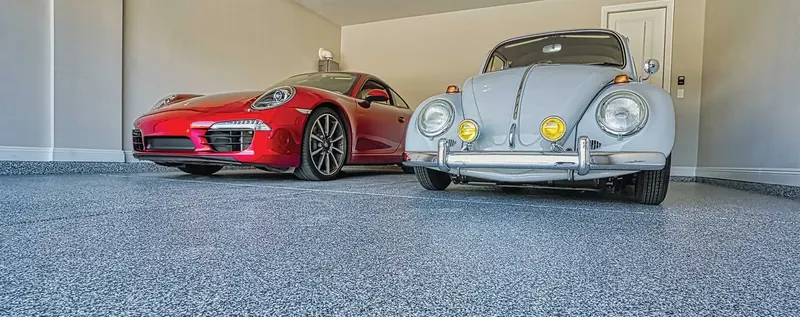
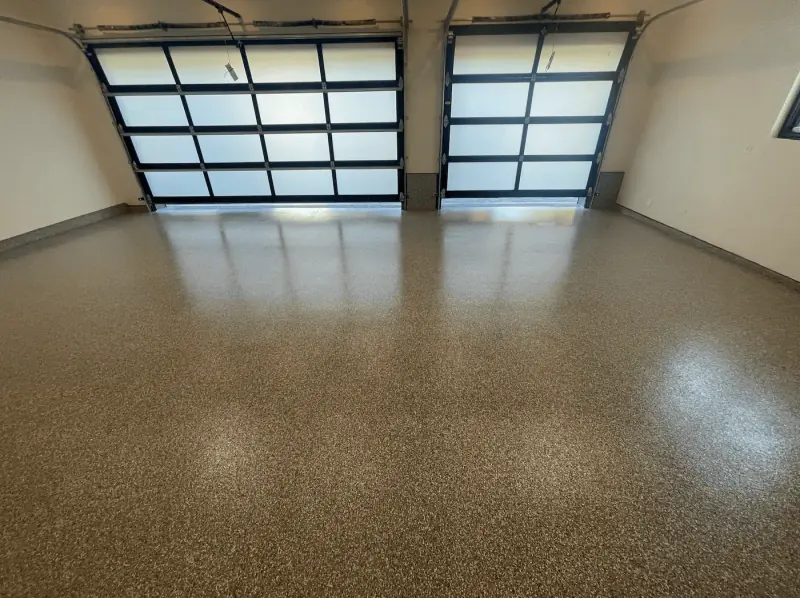
Skip the repaints. These are full flake floors under a clear topcoat, in a few of the colors you can pick. See more in the gallery, or preview a flake color on a photo of your own garage.



Garage floor painting questions
What is the best garage floor paint that won't peel?
No floor paint is peel-proof under a car. A two-part epoxy kit beats any one-part paint, and your prep matters more than the brand. That means degreased, roughened concrete that passes an overnight plastic test, painted on a dry spring or fall day and left a week before tires. For a floor that stays down under hot tires, you want a coating on ground concrete.
Is epoxy garage floor paint really epoxy?
Mostly not. One-part "epoxy" floor paints are water-based acrylics with some epoxy added, and they dry to a film thinner than a sheet of paper. A true epoxy comes as two parts you mix. What we install is neither one. It's a polyurea base coat, full flake and a clear polyaspartic topcoat over diamond-ground concrete.
Why is my garage floor paint peeling?
Look at where it's letting go. Bare tire lanes mean hot tires lifted the thin film. Bubbles or patches with a damp back mean moisture is coming up through your slab. Big flakes with a dusty back mean it never gripped, often over an old sealer. Peeling by the door is usually salt and water. Each cause has its own fix, and we'll match yours at the estimate.
How much does it cost to paint a garage floor?
Doing it yourself, a two-car garage runs about $100 to $250 in paint and supplies. Hiring it out, national cost guides put garage floor painting at about $2 to $4 a square foot. A professional flake coating around Nashville costs more up front, and you won't be repainting it every few years. Our Nashville cost page has those numbers.
How long does garage floor paint last?
Cost guides give it one to five years, and less where you park. Your tire lanes go first, then the area just inside the door. One popular one-part epoxy paint's data sheet says tire-traffic areas may need a touch-up every year. In a storage garage that never sees a car, paint can last much longer.
When is the best time to paint a garage floor in Nashville?
Spring or fall, on a dry stretch. Most labels want mild air and a mild slab, with no rain or heavy dew for a day afterward. Around Nashville that points to April to mid-May, or late September through October, before and after the muggy months. Skip hot July afternoons and cold winter slabs, and start your coat in the morning.
Can you put flakes in garage floor paint?
You can. Many kits come with a bag of decorative chips to toss into the wet paint. It's a light sprinkle on a thin film, so it changes the look more than the wear. A full flake floor works differently. The base coat gets covered completely in flake, then sealed under a clear topcoat. More on flake floors.
Can you coat over a painted garage floor?
Yes, once the old paint is gone, and that's part of normal prep. Our diamond grinding takes it off down to clean concrete. If the paint came up damp or chalky underneath, your slab moves moisture, and a moisture barrier primer goes under the new floor.
Thinking about painting your garage floor?
Let us look first. The estimate is free and takes about 20 minutes. We test your slab, tell you honestly if paint would hold, and leave a written price for a floor that will. No pressure to sign.