
Garage Floor Sealer in Nashville
Thinking about a garage floor sealer for your Nashville garage? It's the cheapest way to protect your slab, and in the right garage it's all you need. Where cars bring in hot tires and winter brine, though, a sealer wears thin fast. That's where a coating earns its price.
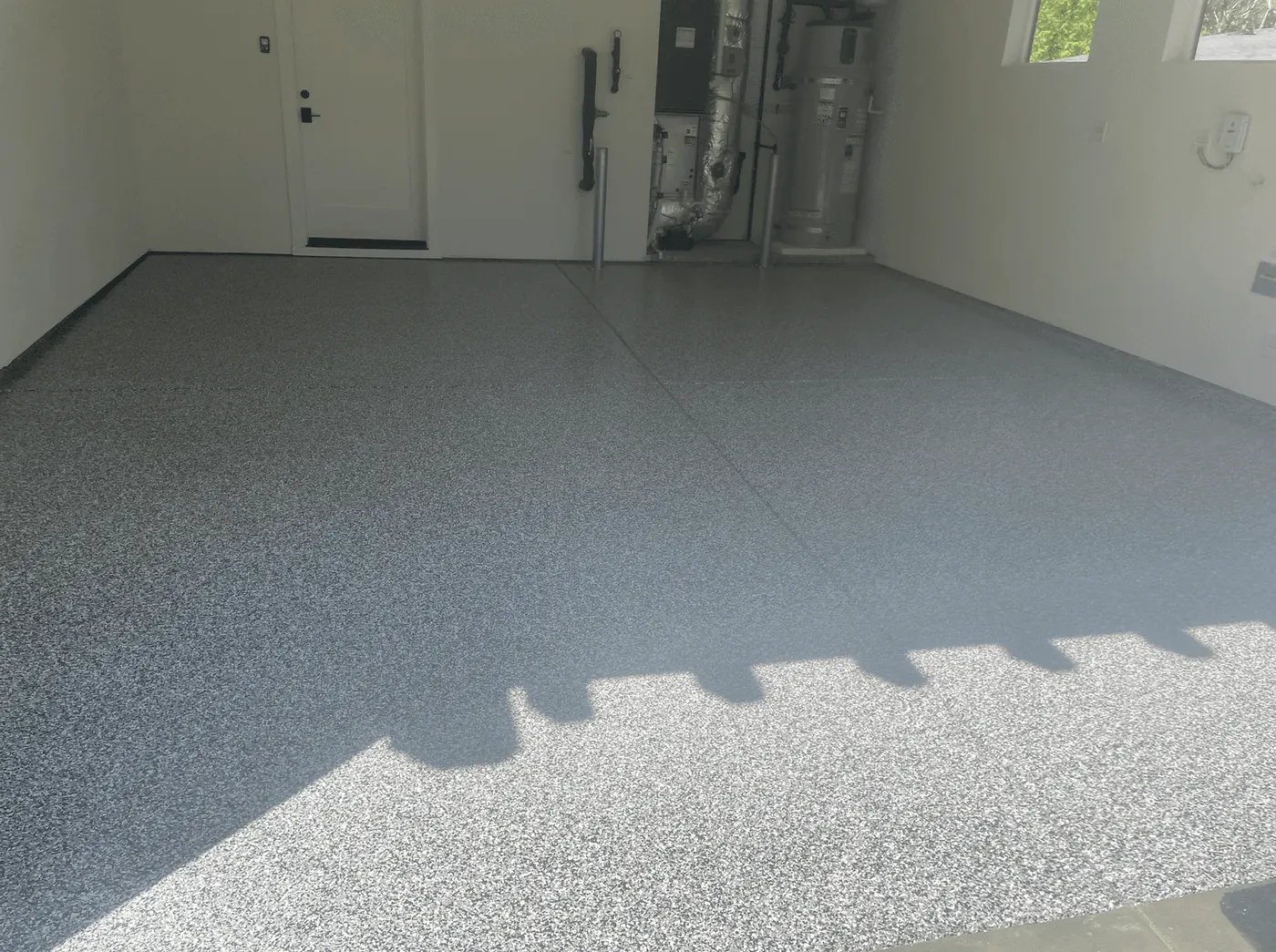
- Free estimate at home
- Moisture-tested first
- Clear top seals the slab
- Lifetime adhesion warranty
Is a garage floor sealer enough?
For some garages, yes. A garage floor sealer is a clear liquid that soaks into your concrete or dries on top of it. It slows water, salt and stains, and it stops a dusty slab from shedding. It costs a fraction of a coating, and in the right garage that's money well spent.
A sealer stays thin, though. Your old stains and cracks still show through it, and there's nothing on top for hot tires to wear down but the sealer itself. Where you park, a film sealer lasts a year to three. The soak-in kind lasts longer but does less.
Three questions decide it. Do you park a car inside? Does it bring home brine in winter and hot tires in July? Does your slab stay dry? Answer no, no and yes, and a penetrating sealer may be all your garage needs.
We don't sell sealer-only jobs. We install coatings, and a coating's clear topcoat seals your slab while it takes the wear. We'd still rather you buy the floor that fits, so here's the straight comparison.
Which concrete sealer fits your garage?
Concrete sealers come in two families. Penetrating ones soak into your slab and work from inside. Film sealers dry into a thin skin on top, and that skin is what your tires wear through.
 Penetrating
Silane, siloxane
Soaks a few millimeters into your slab and makes it shed water and salt. The concrete keeps its plain look and can still breathe. Expect five to ten years between coats, but it won't fully stop oil stains.
 Penetrating
Densifier
A silicate that reacts inside the concrete and hardens the top. If your slab sheds gray dust, this stops it. On its own it does little against water or salt, so people often add a silane over it.
 Film-forming
Acrylic
Dries to a thin, shiny skin that slows stains and darkens the concrete, and it's the cheapest gloss you can buy. Where you park, it wears off in the tire lanes and can lift under hot tires.
 Film-forming
Urethane, epoxy
Tougher films for when acrylic isn't enough. They still go on thin and want a clean, dry slab, and moisture pushing up from below can peel them. Thin epoxy sealers also yellow where the sun hits.
Garage floor sealer vs. a coating
A sealer is one thin treatment that soaks in or sits on top. A coating is built in layers on a ground slab, with a base coat, full flake and a clear topcoat. Here's what that difference means on your floor.
| Penetrating sealer | Film sealer | Flake coating | |
|---|---|---|---|
| What you see | Bare concrete, a little darker | Shiny concrete | A flake floor with a gloss top |
| Water and road salt | Repels them well | Blocks them until it wears | Sealed under the topcoat |
| Oil and stains | Slows them | Resists them while intact | Wipes off |
| Hot tires | Nothing to lift | Can soften and peel | Built to resist them |
| Old stains and cracks | Still visible | Still visible | Cracks filled; flake hides the rest |
| Grip when wet | Like bare concrete | Slick | Flake texture plus anti-slip grit |
| On a damp slab | Breathes; tolerates it | Clouds or peels | Barrier primer underneath when needed |
| When you redo it | About every five to ten years | Every one to three years where you park | No resealing schedule; lifetime adhesion warranty |

What a Nashville year does to a sealer
From mid-May to late September, the air in your garage is muggy most days. Roll a film sealer on then, and moisture trapped under it can dry cloudy white. Makers want dry air and a dry slab, which here means a dry spell in spring or fall.
Drive home on a July afternoon and your tires come in hotter than the air. Hot rubber softens a thin acrylic film and pulls it up in the tire lanes, the same way it lifts cheap paint.
In winter, a penetrating silane is a cheap, real defense against the road brine your tires drip on the floor. It won't undo scaling that has already started, and it won't stop oil.
And if your slab pushes moisture up from the soil, it lifts film sealers off from below. Penetrating sealers breathe, so they cope better, but no sealer is a moisture barrier.
When a sealer is all your garage needs
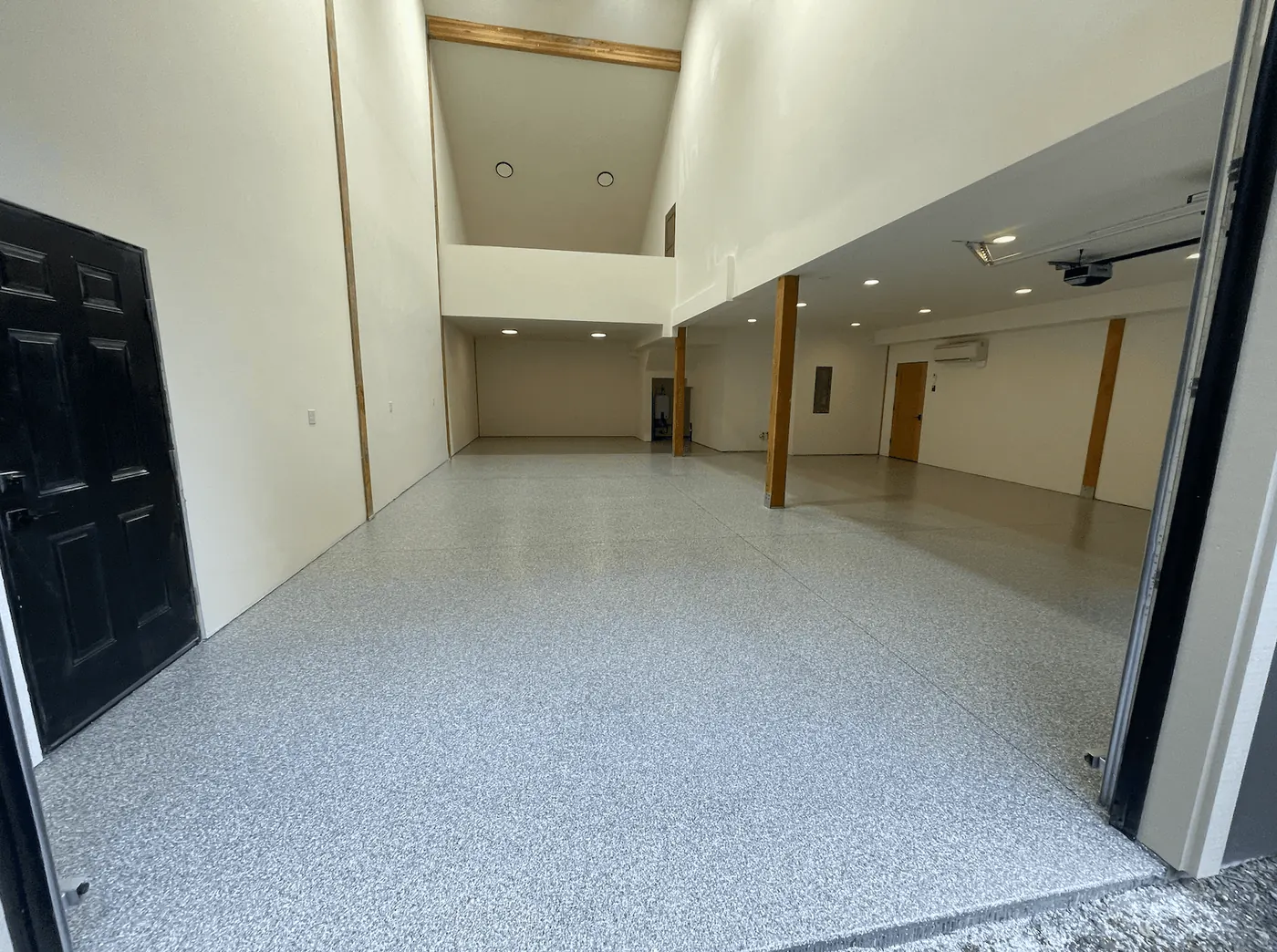
We'd rather you spend the right amount than the most. If your garage looks like one of these four, a garage floor sealer is the smart buy.
 Storage
No cars inside
If your garage holds bikes, boxes and a mower, nothing brings in hot tires or brine. A penetrating sealer keeps spills and dust down for years, for the price of a couple of gallons.
 Dust
Dust
A dusty slab
Tired of gray powder on everything you set down? A densifier hardens the top of your slab and stops it. Add a silane over it and the slab sheds water too.
 Selling
Moving soon
Listing the house this spring? A clean, sealed slab shows well for very little money, and a coating's long life would mostly be a gift to the next owner.
 Budget
Money is tight
A silane this fall beats a bare slab through another winter of brine. If you coat later, it gets ground off with the top skin of the slab, so think of it as a stopgap.
What a coating does that a sealer can't
- A real wear layer. Base, flake and clear top build up to about the thickness of a credit card, so your tires wear the topcoat instead of the concrete. A sealer is a fraction of that.
- Repairs underneath. We fill your cracks, chips and joints and grind them flush first, and full flake hides the patches.
- A moisture plan. We test your slab for moisture before we quote, and a barrier primer goes down if it needs one.
- Grip and a top that stays clear. Anti-slip grit rides in a polyaspartic topcoat that won't yellow where the sun hits.
- Done once. You skip the resealing every year or three, and your floor carries a lifetime adhesion warranty.
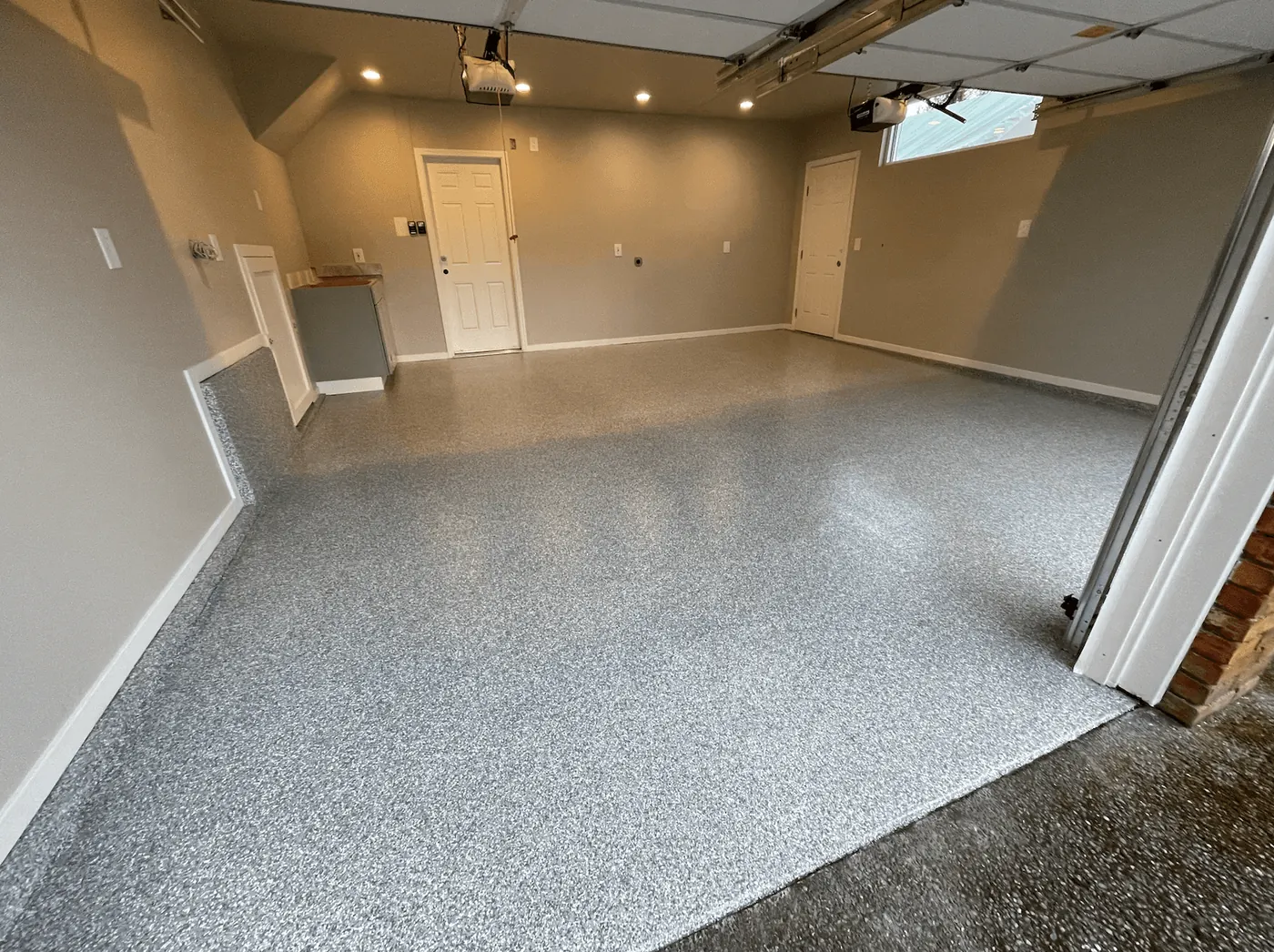
What garage floor sealing costs
If you want the budget option, sealing is it. For your two-car garage, a pro usually charges anywhere from a few hundred dollars to just over a thousand, and Nashville-area price lists land close to that. Doing it yourself costs you a couple of gallons of sealer and a roller.
- $1–$3per sq ft, pro sealing
- $5–$9per sq ft, flake coating
Count the redos, though. A film sealer where you park needs one every year or three, so the gap shrinks. The coating figure is the typical Nashville-area range, and our cost guide shows you what moves it.
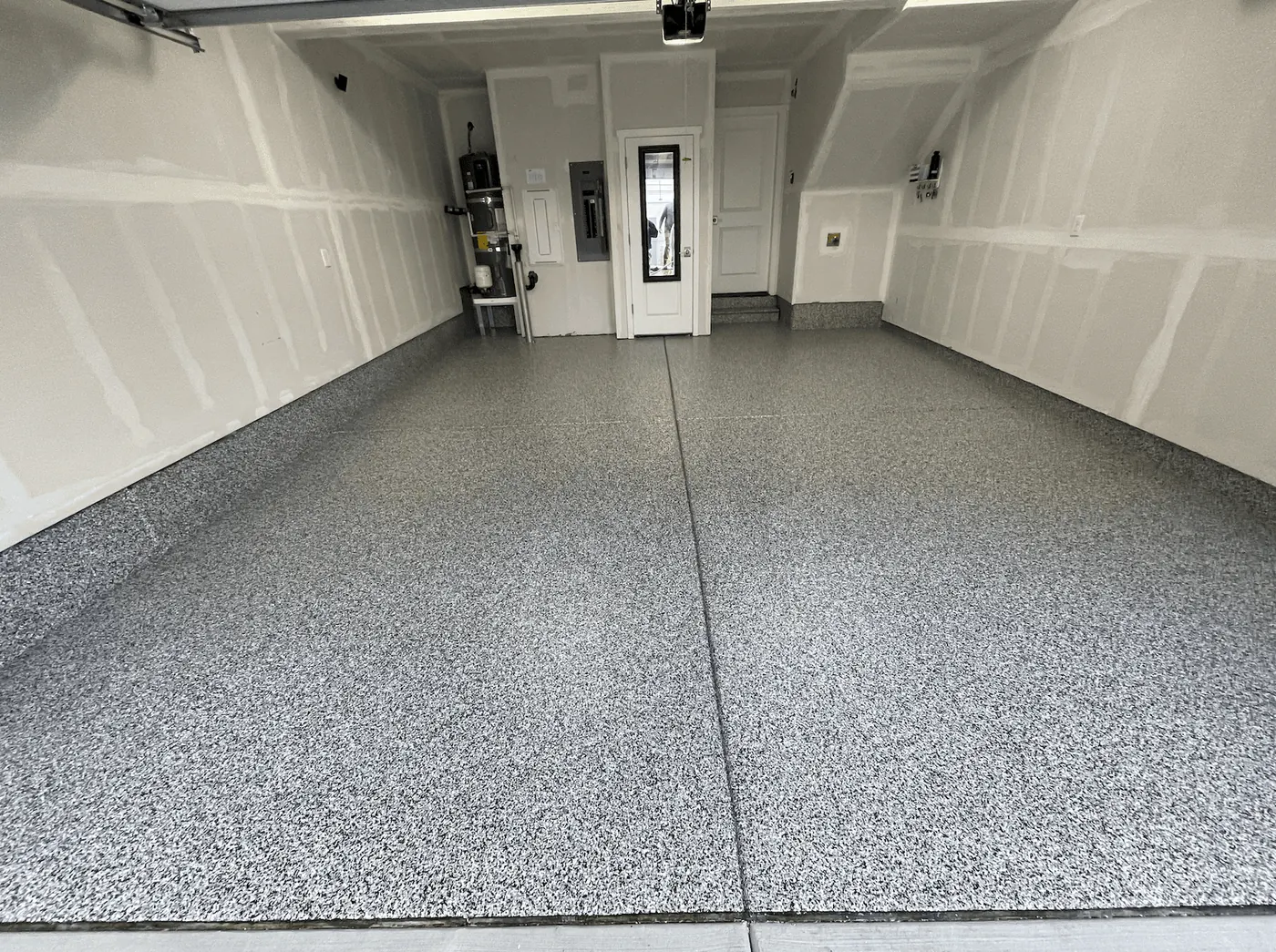
Sealing your garage floor yourself
Going the sealer route? These four steps make it last, and most of the work is prep and timing.
Clean it to bare concrete
Degrease your oil spots, then scrub and rinse. If water still beads anywhere, an old sealer is there, and it has to come off first.
Let it dry, then wait for dry air
Let your rinsed slab dry for a few days. Then wait for a dry spell in spring or fall, since muggy air can cloud a film sealer.
Go thin
Use a pump sprayer or roller and follow the label. Two thin coats beat one thick one, which can trap moisture and cloud.
Keep cars off
Keep your car off it as long as the label says, longer if it's cool. Reseal once water stops beading on it.
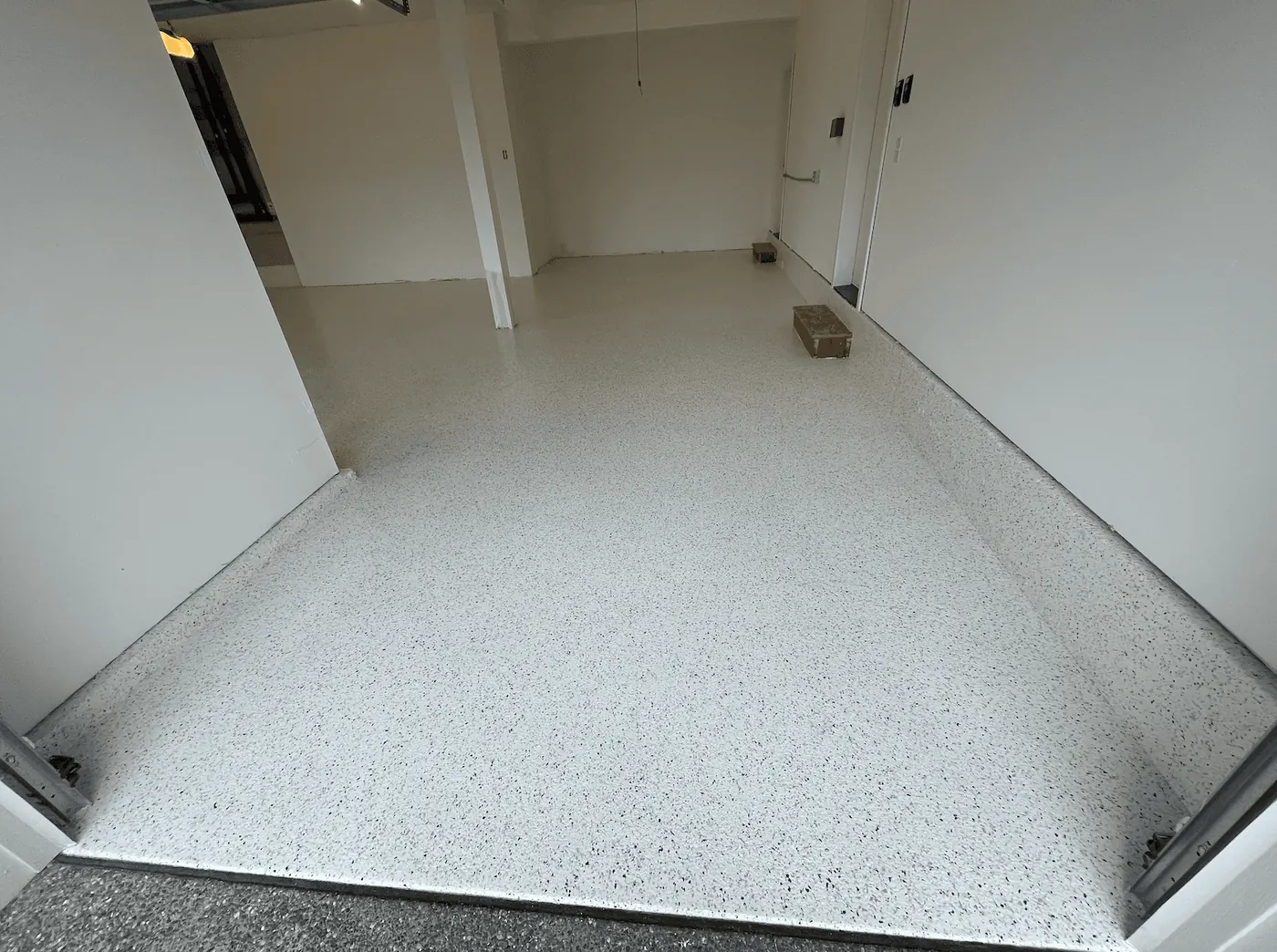
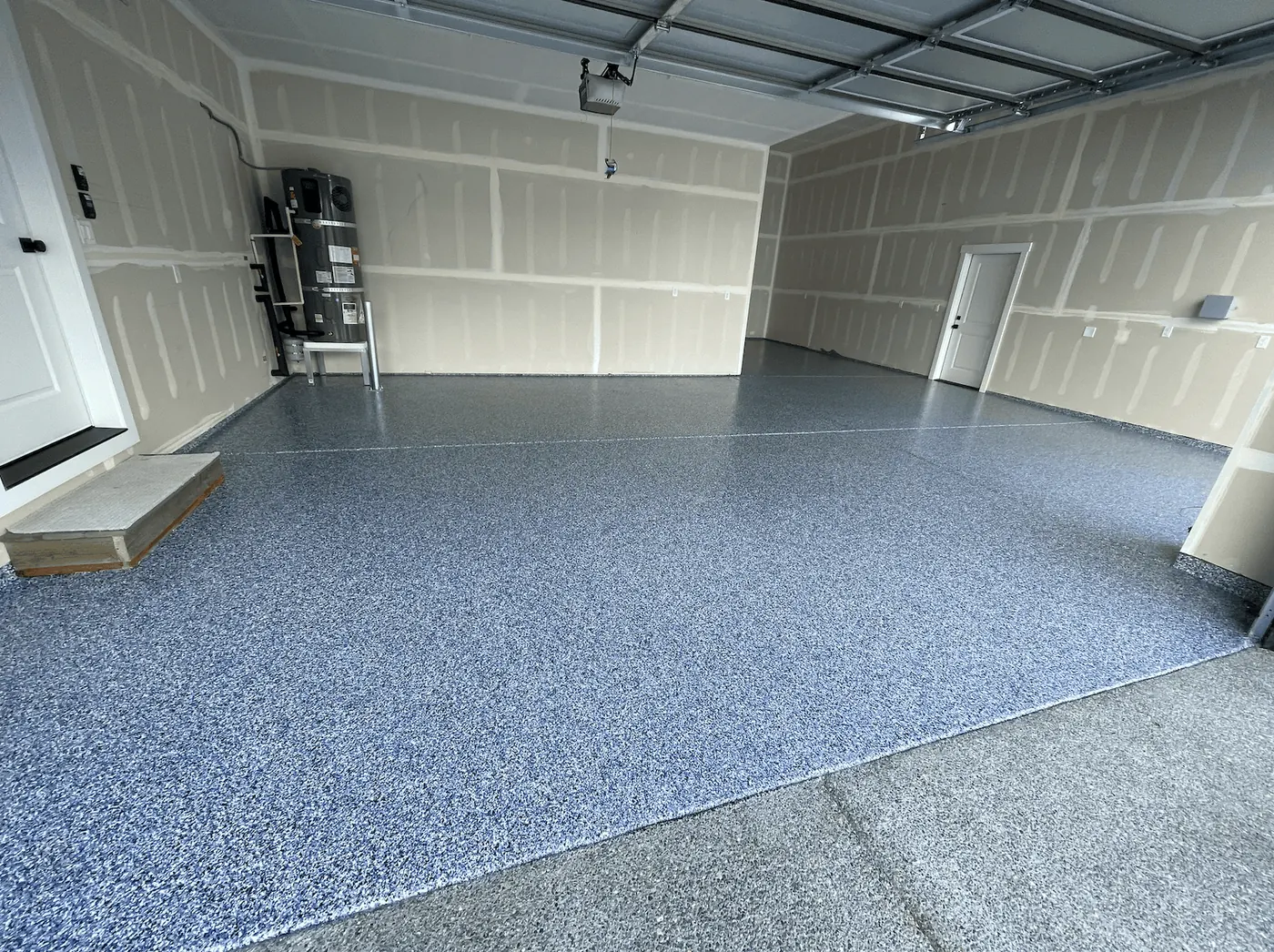
A sealed floor with some color in it
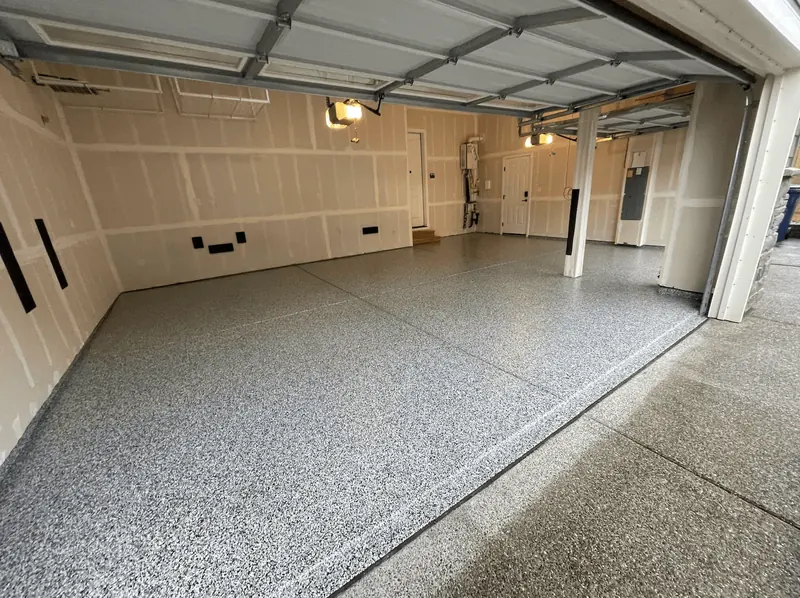
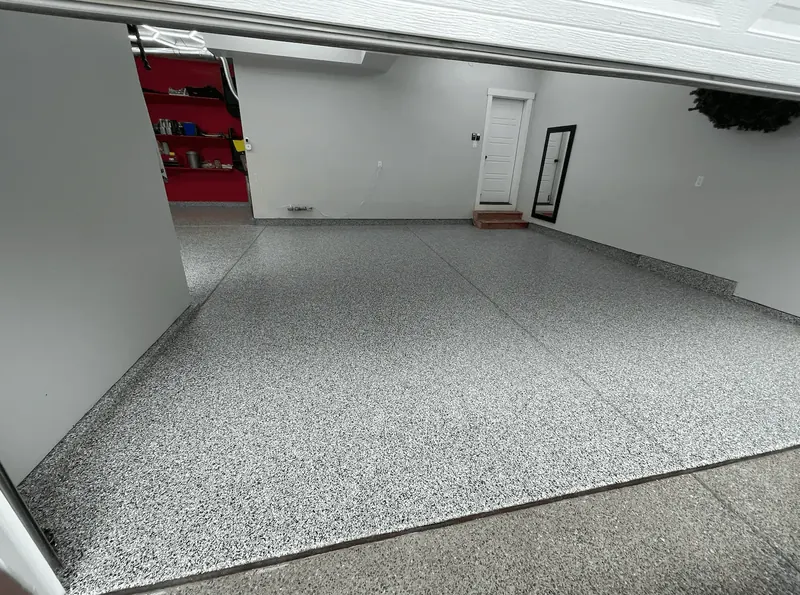
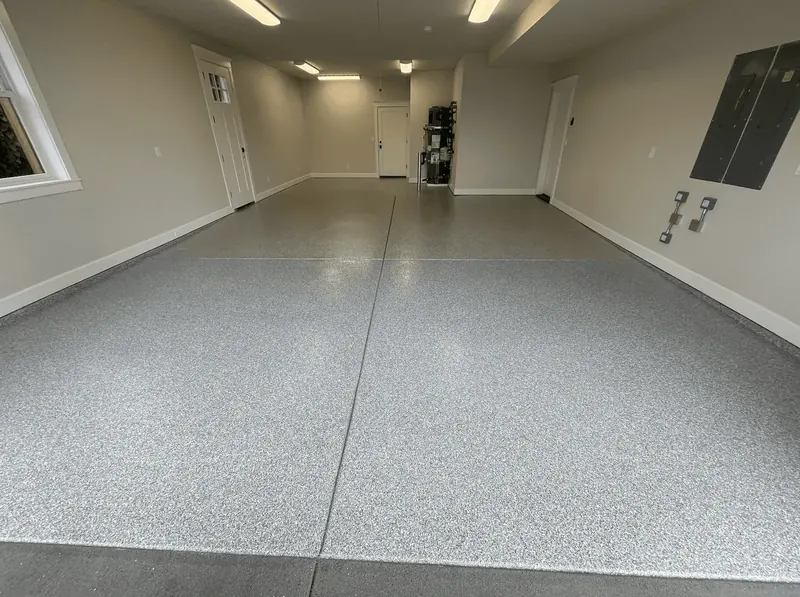
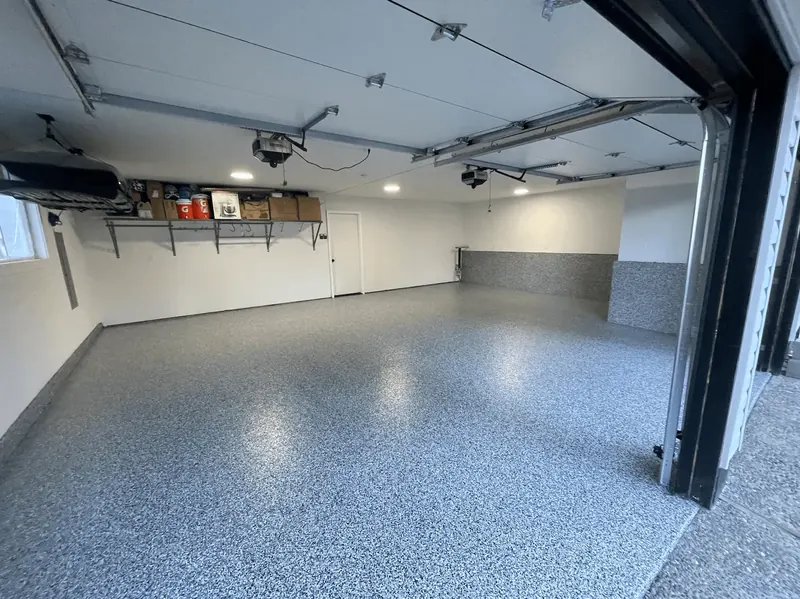
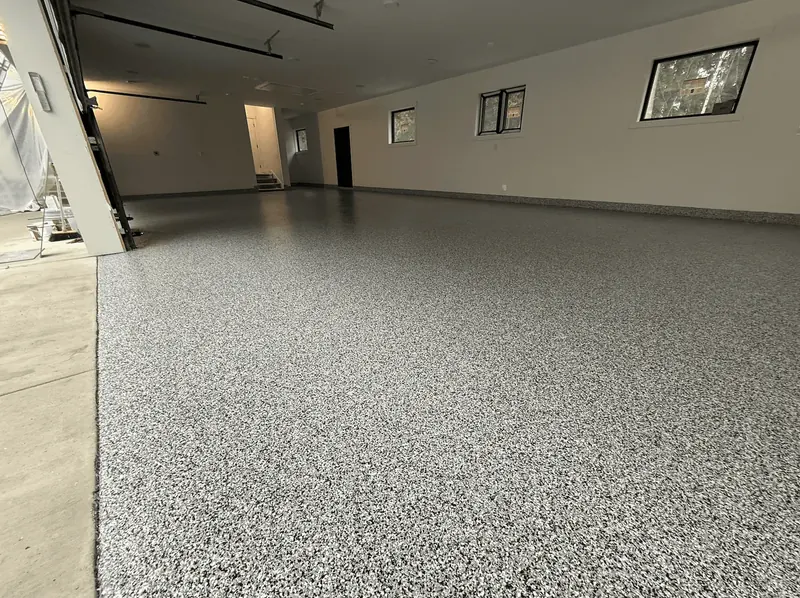
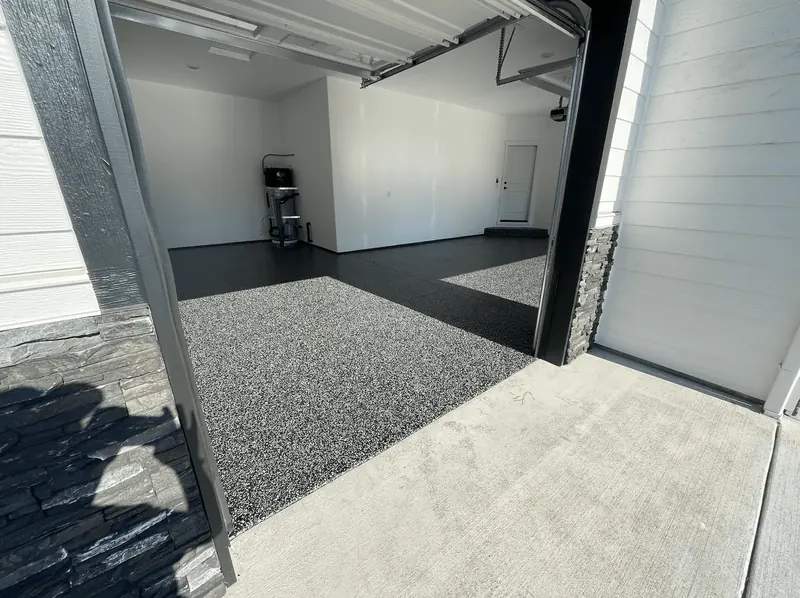
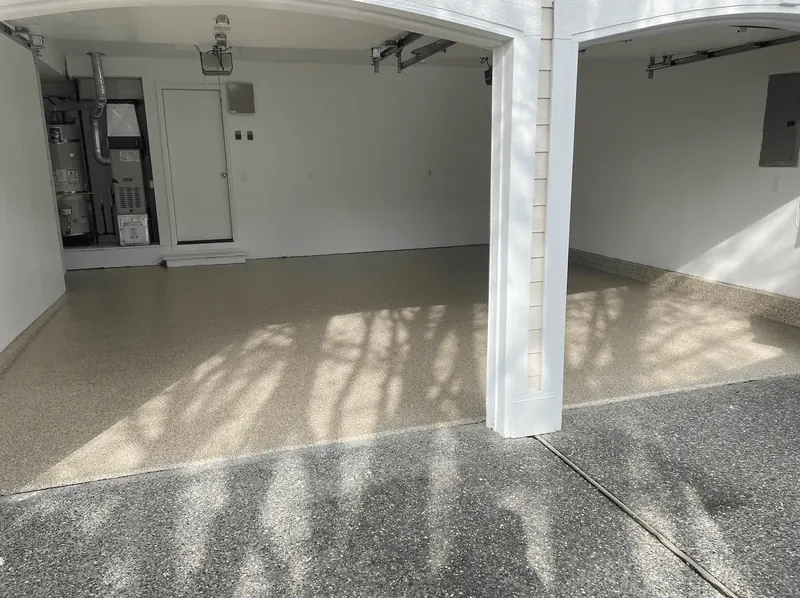
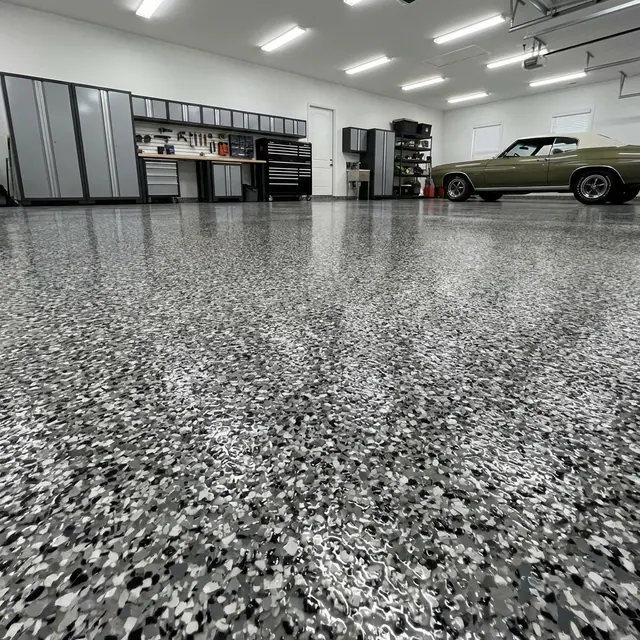
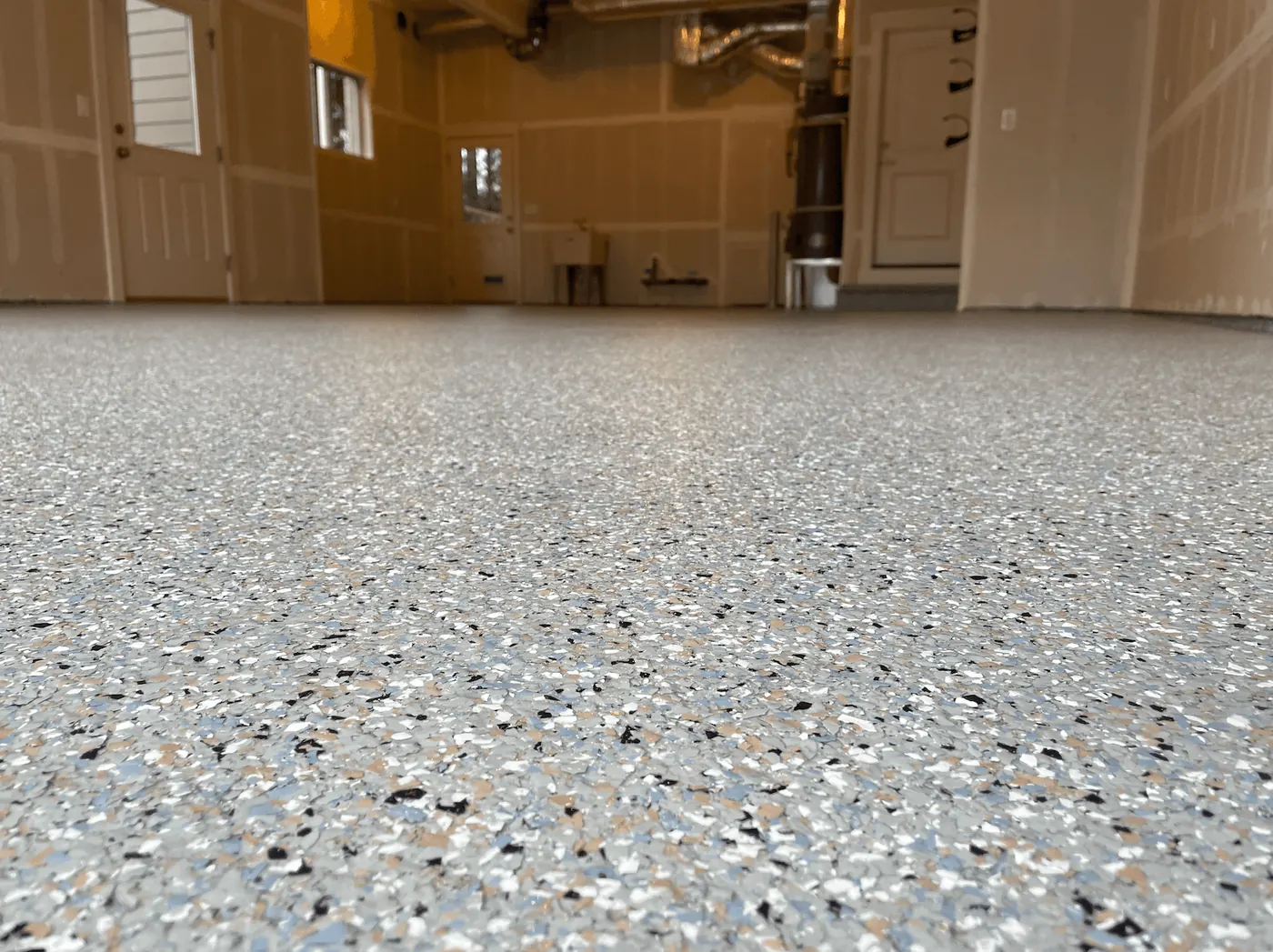
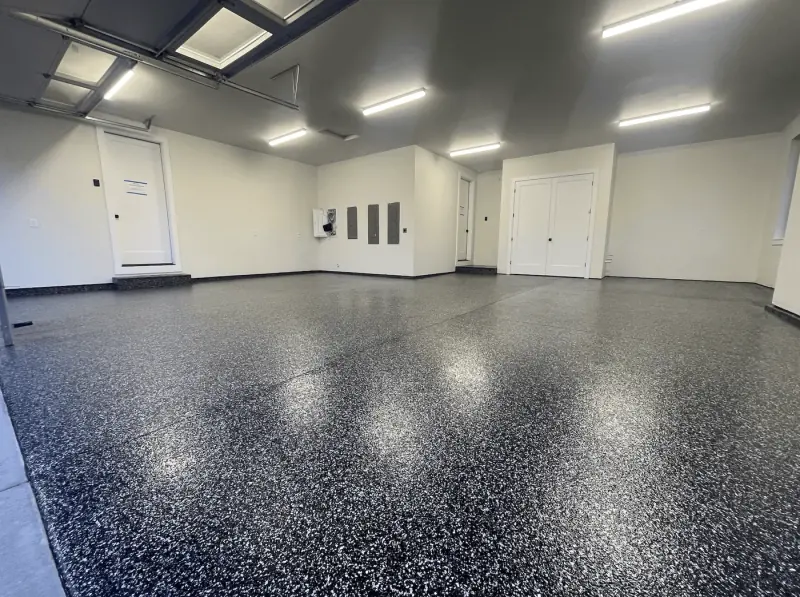
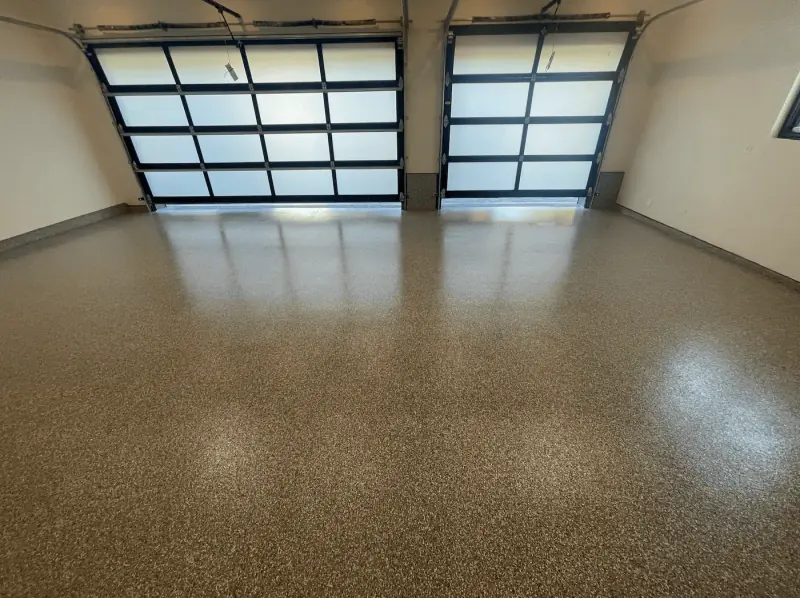
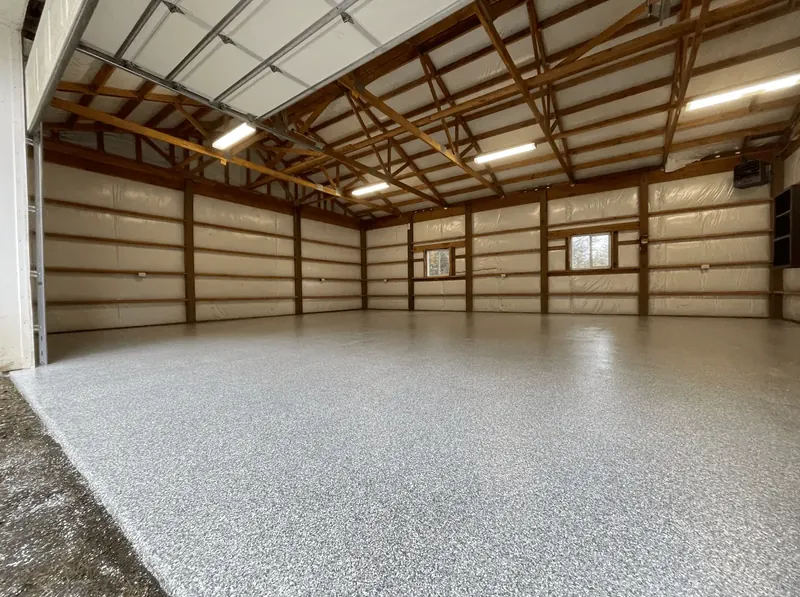
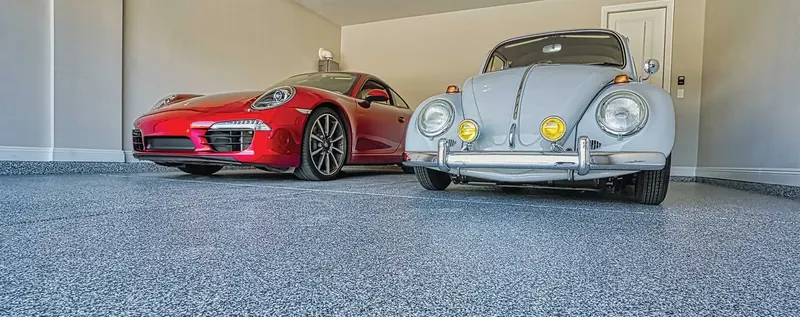
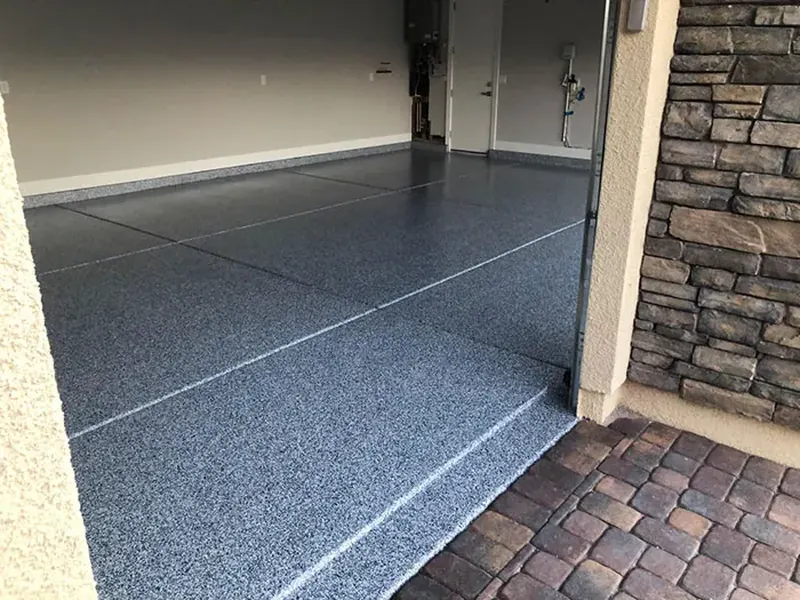
Each of these is full flake under a clear topcoat, so the slab is sealed and the floor finally looks finished. Browse more in the gallery, or preview a flake color on a photo of your own garage.



Garage floor sealer questions
What is the best concrete sealer for a garage floor?
For a garage you park in, a penetrating silane or siloxane. It soaks in and sheds water and road salt, and there's no film for hot tires to lift. Expect five to ten years between coats. Acrylics look shinier but wear off in the tire lanes within a year or three. If you want shine and a real wear layer, you're shopping for a coating.
Is a garage floor sealer better than epoxy?
They do different jobs. A sealer is a thin, cheap treatment that slows water and stains. Epoxy is a real coating, but it needs a warm, dry slab and yellows in sunlight. What we install goes a step past both, with a polyurea base, full flake and a clear polyaspartic topcoat over a diamond-ground slab. That top stays clear in the sun.
How often should you seal a garage floor?
A penetrating silane or siloxane lasts about five to ten years between coats. An acrylic film sealer in a garage you park in needs redoing every one to three years, sooner in the tire lanes. To check yours, sprinkle water on the slab. If it darkens and soaks in instead of beading, the sealer is spent.
How much does it cost to seal a two-car garage floor?
National cost guides put professional sealing at roughly $300 to $1,100 for a two-car garage, and many pros charge a minimum. Doing it yourself runs about $100 in sealer and supplies. A professional flake coating costs more per square foot, and our Nashville cost guide shows the local numbers.
Is a concrete sealer a moisture barrier?
No. A sealer slows water coming in from the top, but it doesn't stop vapor pushing up from the ground. That vapor can even lift a film sealer, turning it cloudy until it peels. A moisture vapor barrier is a separate primer that goes under a coating when your slab needs one, and we moisture-test every slab before we quote.
Should I seal a new garage floor?
If you'll never coat it, yes. Once the concrete has cured for about a month, a penetrating sealer protects it before its first winter of road salt. If you might coat it later, think twice. Any sealer has to be ground off before a coating can bond, so you'd be paying to put down something that comes back up.
Can you put a coating over a sealed garage floor?
Yes, once the sealer comes off. A coating can't grip through a sealer, so we grind it away along with the top skin of the slab during normal prep. A sealed floor isn't a problem. If you know what product went down before, tell us at the estimate.
Do you do garage floor sealing?
Every floor we install is sealed under its clear polyaspartic topcoat, but we don't do sealer-only jobs. If a sealer is the right call for your garage, we'll tell you at the estimate and point you to the steps on this page. If a coating fits better, you get a written, itemized price.
Sealer or coating? Let's look at the slab.
We'll test your slab for moisture, check for an old sealer and tell you straight whether a sealer would do. If a coating is the better call, you get a written, itemized price and no pressure to sign.