
Basement Floor Coating in Nashville
Most Nashville houses don't have a basement, so yours is bonus space. Family room, home gym, somewhere the kids can be loud. Our basement floor coating turns that bare slab into a clean, bright floor. It starts with a moisture test, and a vapor barrier goes down whenever your slab needs one.
- Free estimate at home
- Slab tested before a price
- Barrier when it reads wet
- Lifetime adhesion warranty
Can you coat a basement floor in Nashville?
Yes, as long as your concrete is sound and the moisture coming through it is vapor rather than water. A basement floor coating gets the same layers as a garage floor: a diamond grind, crack repair, a polyurea base coat, full flake and a clear topcoat.
You may know it as an epoxy basement floor. What you get is the step up from one, with the same prep and flake look. It stays flexible as the slab moves, cures fine in a cool basement and won't yellow by a sunny walkout door.
Down here, moisture decides everything, so we test your slab before you get a price. If water is getting in, you'll hear that first. That's a waterproofing job, and no floor coating fixes it.
If your slab passes, the floor goes down in one working day, or two with the moisture barrier. You can walk on it the next day, and it carries the same lifetime adhesion warranty as our garage floors.

Which Nashville basement is yours?
If you have a basement here, you're in the minority. Limestone sits close under a lot of Nashville lawns, so most builders went with a crawl space or a slab instead of digging. Basements mostly show up where the land slopes, and each kind brings its own floor questions.
 Hillsides
Walkout basements
On a sloped lot, the hill did the digging. One side of your basement sits in the earth and the other opens to the yard, so the buried wall is the one to watch after storms. Walkouts are common in Brentwood, Forest Hills, Oak Hill and Bellevue.
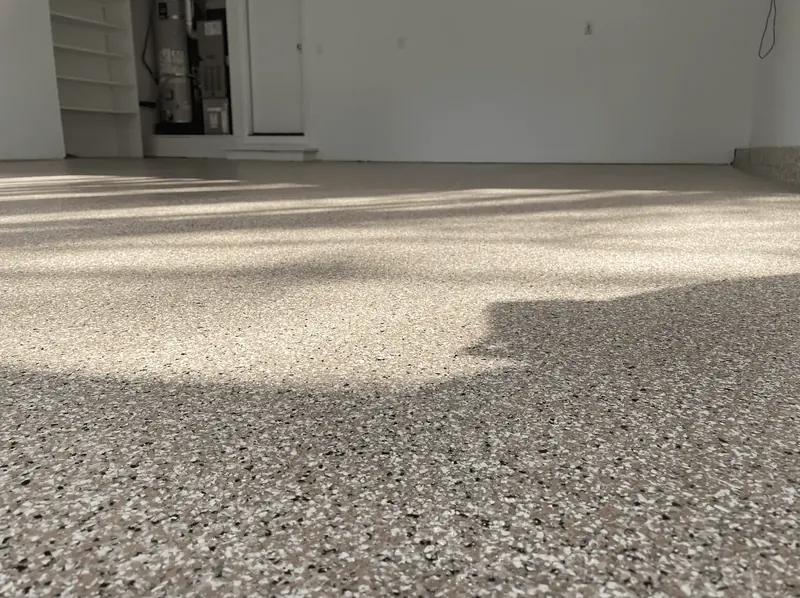 Lakes and hills
Lake and country lots
Around Old Hickory and Percy Priest, and west of Franklin toward Leiper's Fork and Fairview, houses step down the slope. Your lower level probably sees wet towels, lake gear and muddy boots, so a floor that wipes clean earns its keep.
 Older homes
1920s homes in town
Own a 1920s house in Belmont-Hillsboro or Hillsboro-West End with a full or partial basement? Your slab went down decades before builders put plastic sheeting under concrete, and that missing plastic is one of the signs we test for.
Why a dry basement can take water after one storm
Your basement can sit dry for months, then take water after one hard rain. Blame the rock under your yard. Rain can't soak down through limestone. It fills the thin clay soil above the rock, then runs sideways along it until it hits something, often your foundation wall.
Clay holds that water against your walls, and the pressure pushes moisture into the slab from below and from the sides. That's why we test your slab before we quote, and why we'll never sell you a coating as a fix for water coming in.
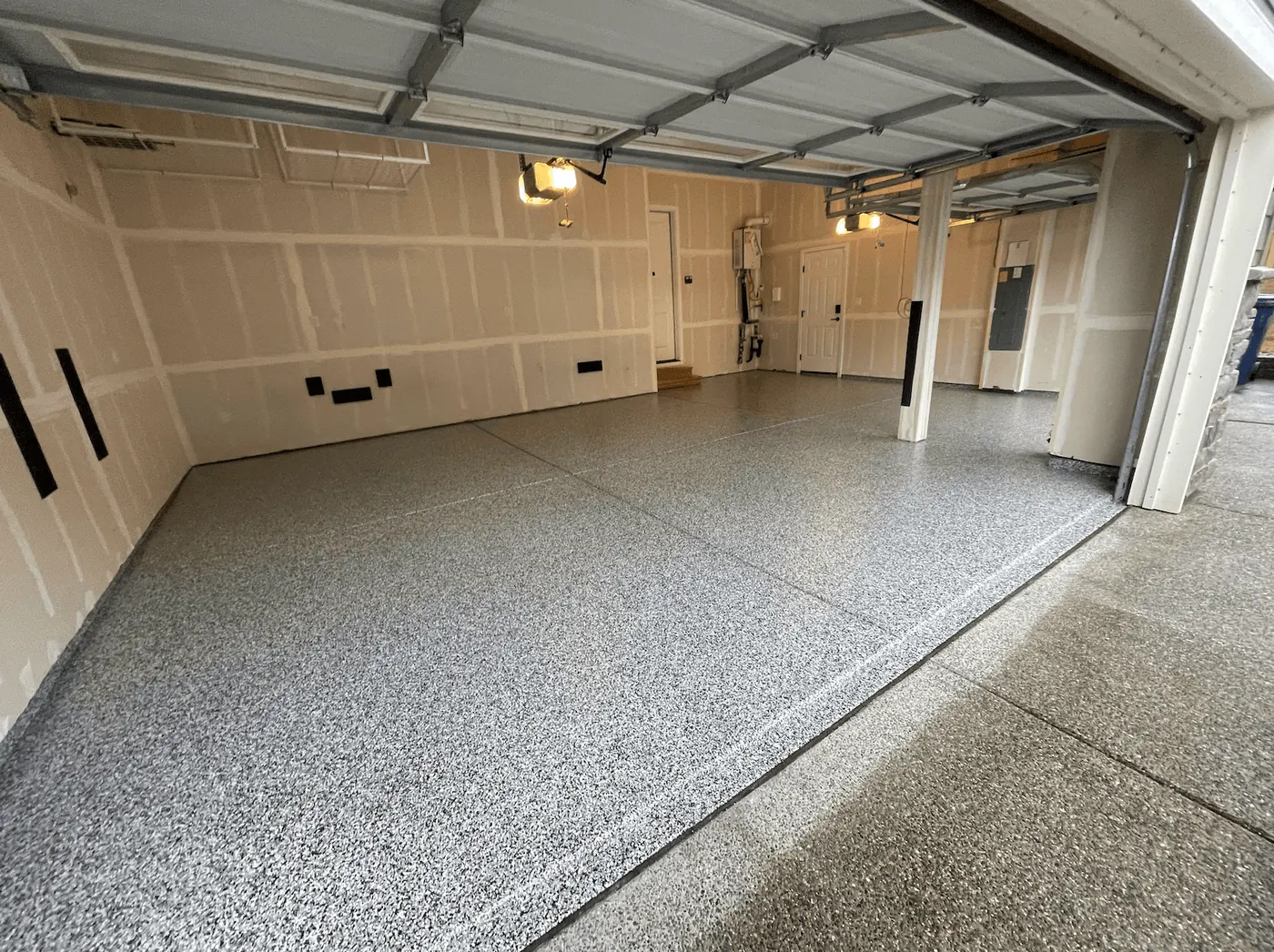
Basement floor coating starts with a moisture test
We test every slab before we price it, but your basement gets the closest look. Beyond the meter readings, we check for the signs a meter can miss: white chalky deposits, damp-looking patches, peeling paint, an older slab with no plastic under it.
A high reading, or two or more of those signs, means your floor gets the moisture barrier. It's a primer rolled onto the bare, ground concrete. It cures overnight, so your new floor goes down on day two.
The barrier comes with every Premium floor and is a paid add-on on Original. It's built for vapor. Running water needs a waterproofing fix, because nothing rolled onto a floor can hold it back.

A floor for whatever your basement becomes
Bare concrete sheds a fine gray dust for as long as it's bare. A coated slab is sealed and wipes clean, so the space down there finally feels like part of the house. Here's how it works in the rooms you're likely to build.
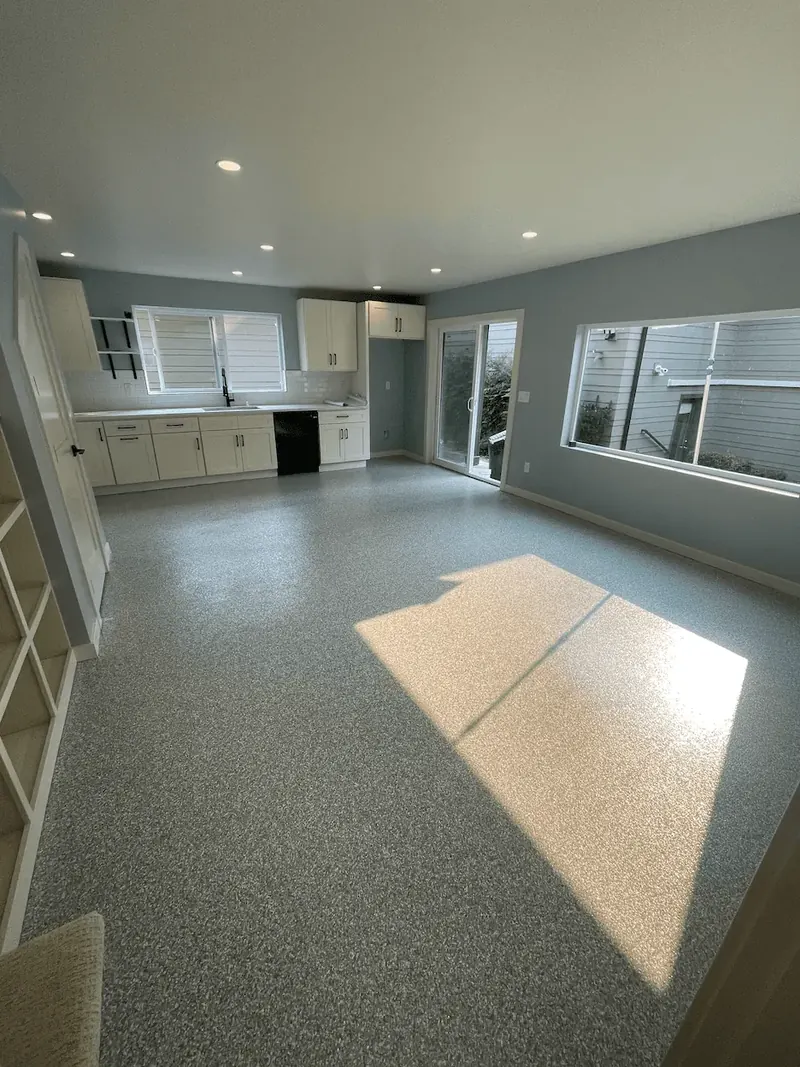 Living space
Family rooms
A light blend brightens a room that gets little daylight, and the flake hides the patchy color of bare concrete. It won't make the slab any warmer, so bring in a big rug for movie night.
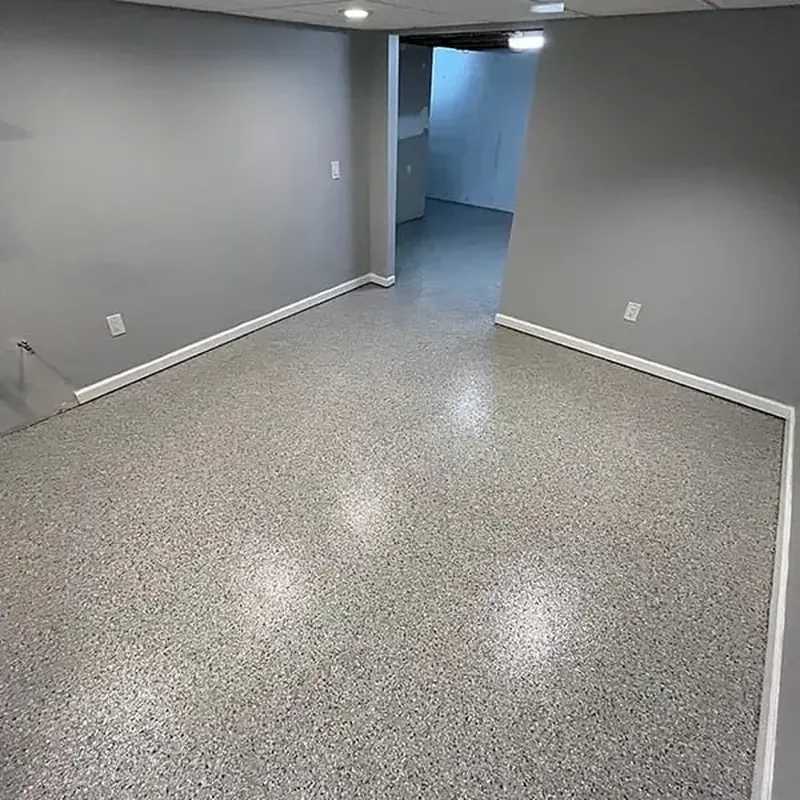 Fitness
Home gyms
Your floor can take racks, benches and sweat, and it wipes clean after a workout. Put rubber mats where you drop weights, because the warranty doesn't cover impact damage.
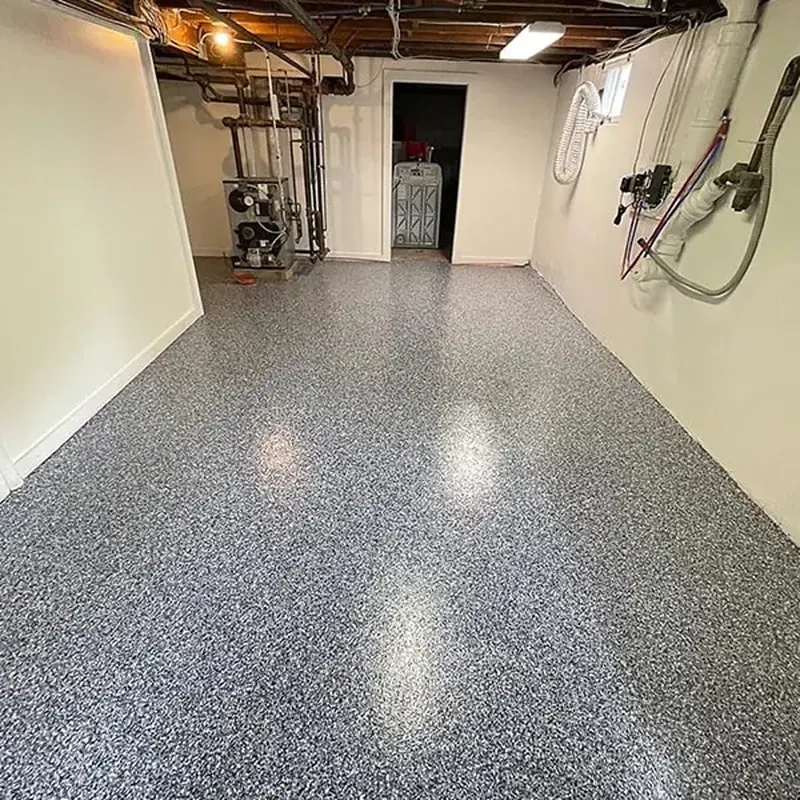 Utility
Laundry rooms
If the washer or water heater leaks, you wipe it up before it soaks in. Cove base carries the coating a few inches up the wall, so there's no seam at the edge for water to sit in.
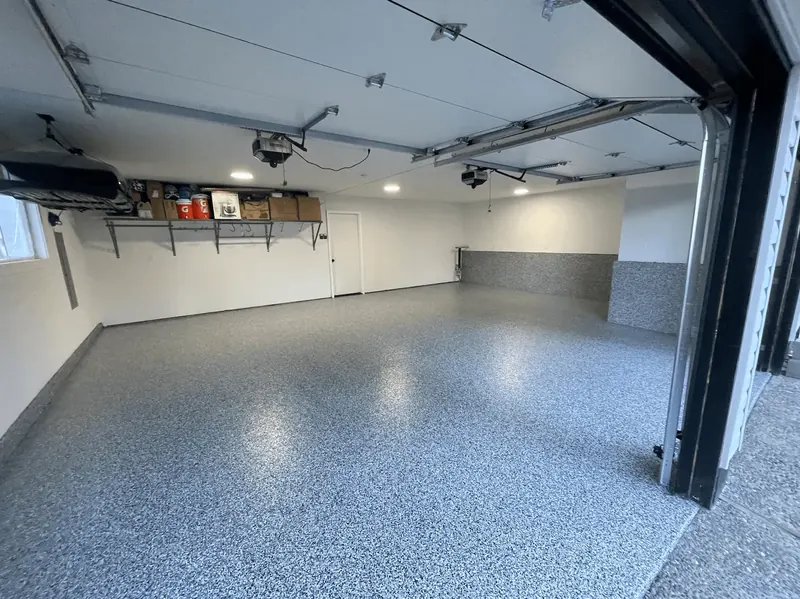 Storage
Storage rooms
No more concrete dust on every box. Your shelving goes back in after the cure, and the concrete steps down from a walkout door can be coated to match.
A damp floor in July may just be sweat
The ground under your basement stays around 60 degrees all year. A Nashville July is hot and sticky. When that air drifts in through an open door, it condenses on your cool slab like sweat on a glass of iced tea.
Try this before you worry. Tape a square of clear plastic to the floor overnight. Water on top of the plastic is condensation, and a dehumidifier fixes it. Water under the plastic is coming up through the slab, and that's what the barrier is for.
Who to call before you call us
Some basement problems need someone else before they need a floor. If you spot one of these, get it handled first. That way your new floor goes down once, on a slab that's ready for it.
- Water after storms. Water on the floor, or seeping in where the floor meets the wall, is a job for a waterproofing contractor. We don't do drainage, sump pumps or wall sealing.
- Moving concrete. A crack with one side higher than the other, or a slab that's heaving or sinking, needs foundation repair first.
- Old tile and black glue. If your house went up before about 1980, old 9-inch tiles or black adhesive can contain asbestos. Have them tested before anyone grinds, us included.
- Radon. Davidson and Williamson counties sit in the EPA's highest radon zone. The usual fix runs a vent pipe through the slab, so test before your new floor goes down.
How your basement floor coating goes in
Plan on one working day for a dry slab, or two when yours needs the barrier. If stairs are the only way down, setup takes a little longer, and your estimate will say so.
Test and price
We read the moisture, the cracks and the way in, then hand you a written, itemized price.
Grind and repair
The diamond grind takes off old paint and sealer, and cracks get filled and ground flush.

The barrier
When your slab needs it, the primer goes onto bare concrete and cures overnight.

Flake and topcoat
Flake goes into a polyurea base, then a clear topcoat with grit seals it. Walk on it the next day.

Blends that brighten a basement
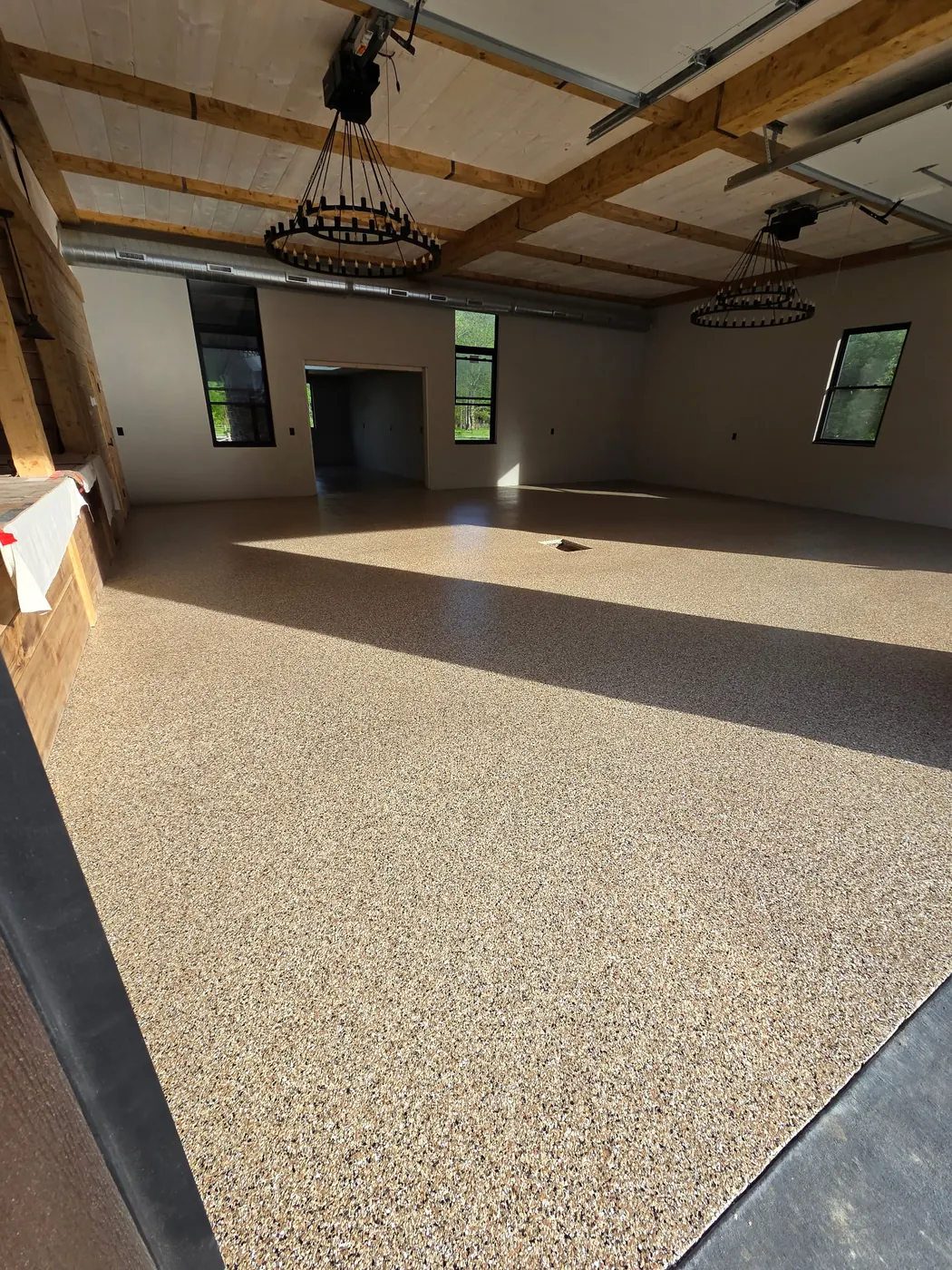
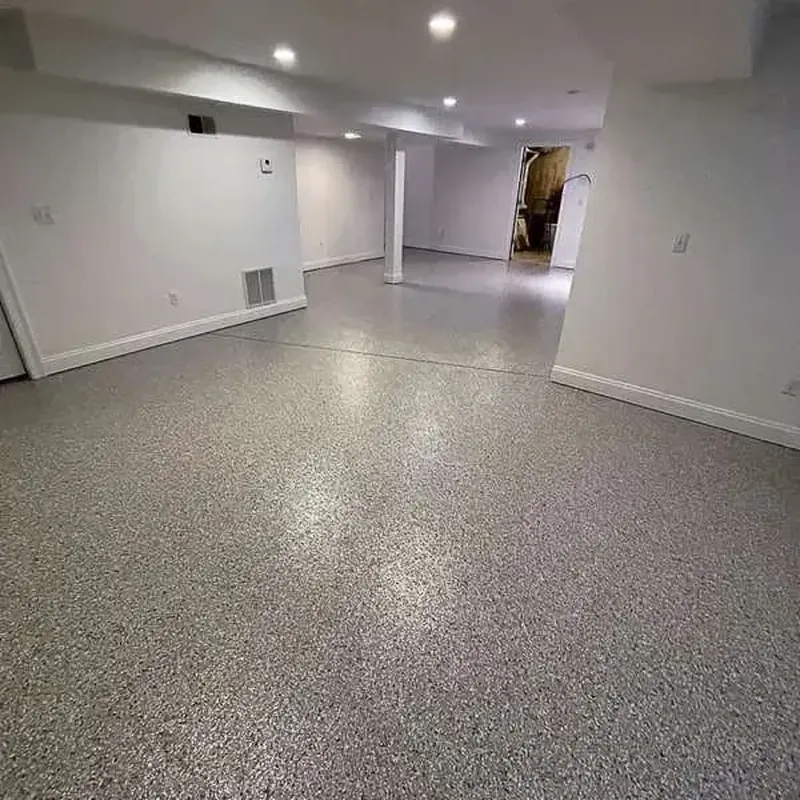
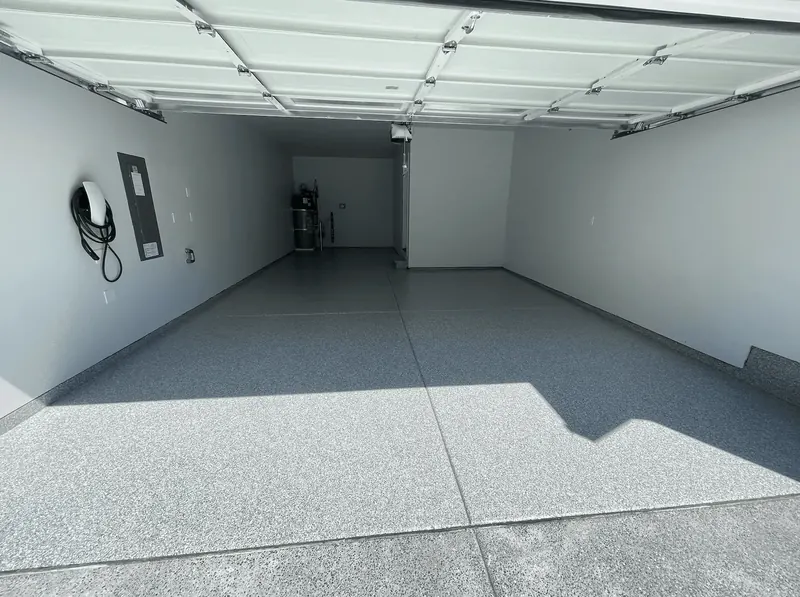
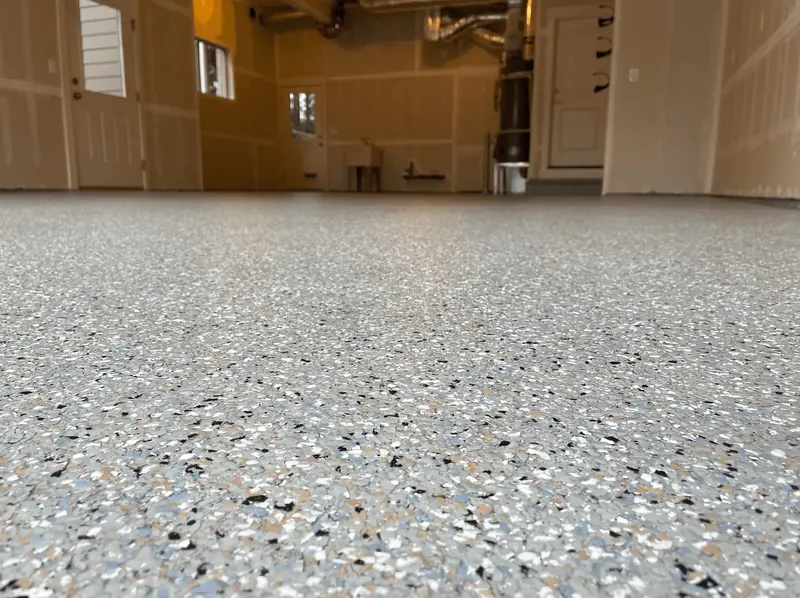
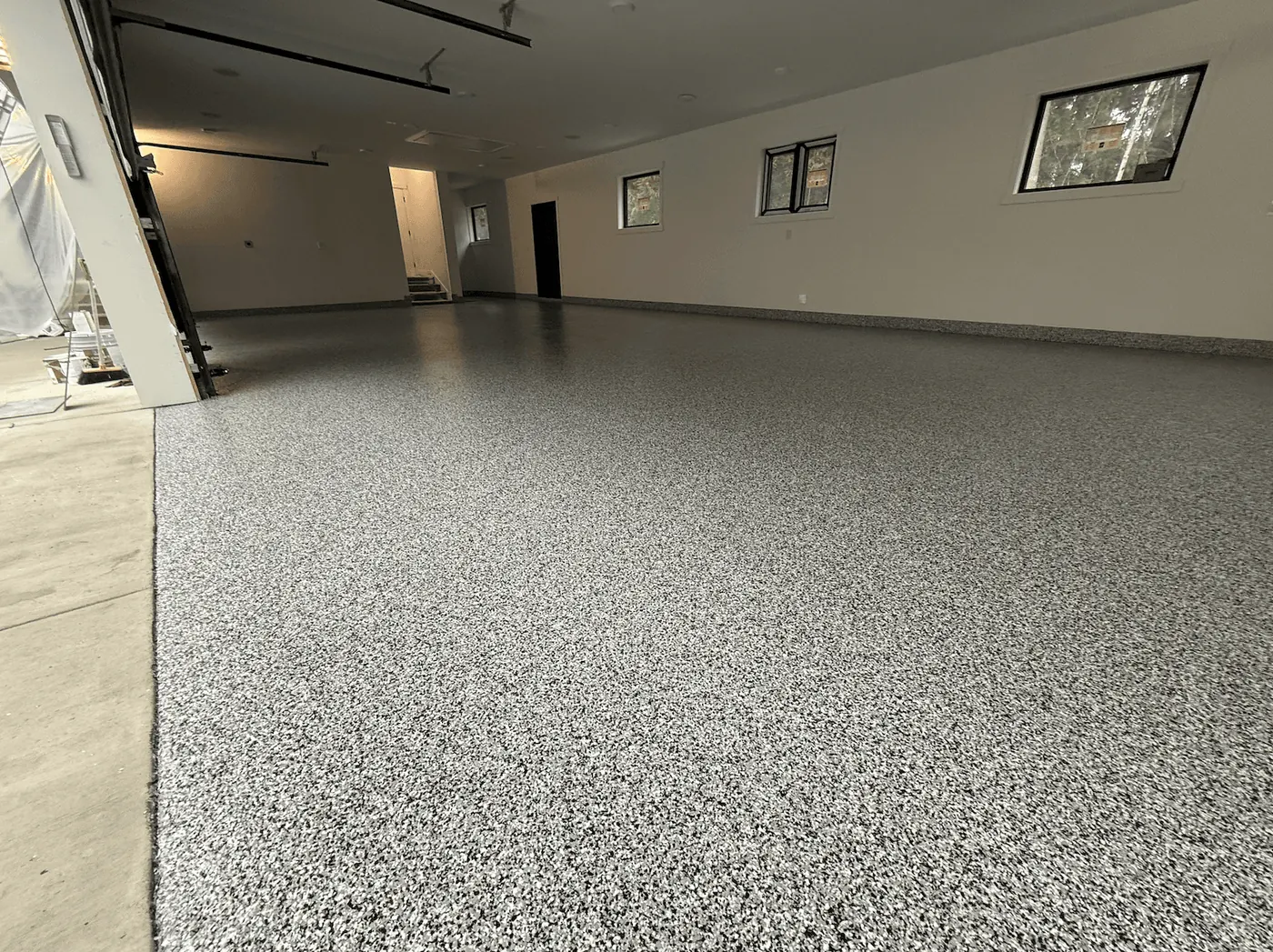
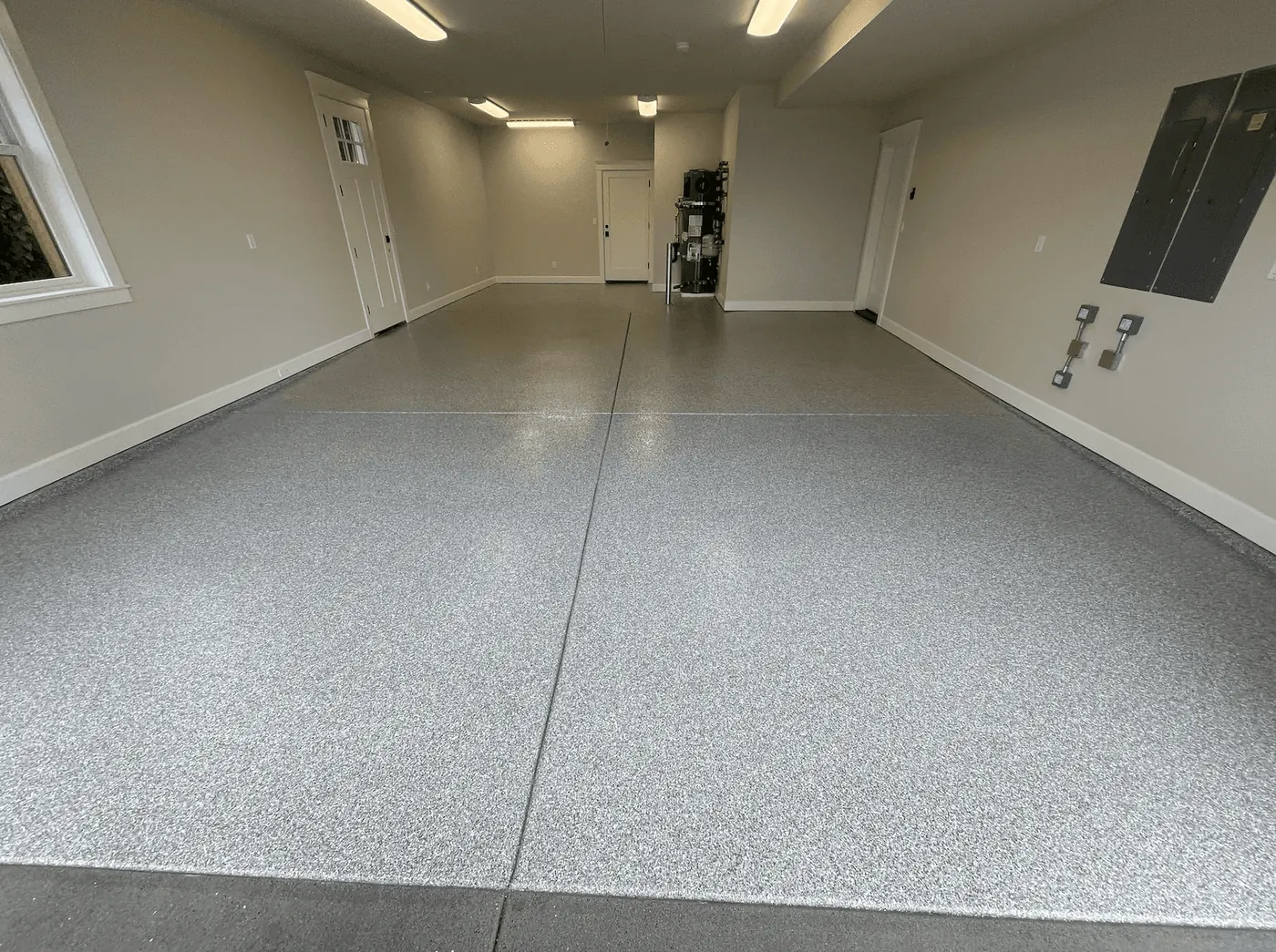
Your basement gets little daylight, so a lighter blend does a lot of work down there. These are garage floors from our gallery, in the same blends we use in basements. You can preview a color on a photo of your garage first.







Basement floor coating questions
Can you coat a basement floor that gets damp?
Usually, if the damp is vapor and not water. White chalky deposits and dark patches mean vapor is coming up through your slab, and a barrier primer under the coating handles that. Water on the floor after rain is a waterproofing problem to fix first. And if your floor only feels damp in muggy weather, it may just be condensation.
How much does a basement floor coating cost in Nashville?
Around Nashville, a professional flake floor typically runs about $5 to $9 a square foot. Your basement lands higher in that range if it needs the moisture barrier, has old paint to grind off, or can only be reached by stairs. You get the exact price in writing after the free estimate, and our Nashville cost guide explains what moves it.
Can you epoxy a basement floor?
You can, but below grade it's a gamble, and it isn't what we install. Epoxy is rigid and wants a warm, dry slab, and vapor pushing up from below tends to blister and peel it. Your basement floor gets a polyurea base and full flake under a clear polyaspartic topcoat, with a barrier primer underneath when the slab needs one.
Will a floor coating waterproof my basement?
No. A coating seals the surface against spills and stops the dusting, and the barrier primer handles vapor. Neither one stops liquid water that a storm pushes in. That takes drainage work outside or under the floor, done by a waterproofing contractor. Get that fixed first, then coat your floor.
Is a coated basement floor cold or slippery?
It feels about as cool as the slab under it, and that slab stays cool all year, so rugs still help in a family room. As for grip, any glossy floor is slick when it's wet, so anti-slip grit goes into the clear topcoat. We can go heavier on it by a walkout door or at the bottom of your stairs.
Can you coat over basement floor paint or old tile?
Paint, sealer and old coatings come off with the diamond grind. Old vinyl tile has to come up first. If it's 9-inch tile, or there's black glue under it, have it tested for asbestos before anyone grinds or scrapes it. Carpet glue and leftover mastic get ground off once your floor is cleared.
Is an epoxy basement floor better than vinyl plank?
It depends on your basement. Vinyl plank is warmer underfoot and floats over the slab, but if water gets under it after a leak, it has to come up so the slab can dry. A coating grips the slab and has no seams, so a leak is a wet-vac job. If your basement has ever taken water, we'd lean toward the coating.
How long does a basement floor coating take?
One working day on a dry slab, or two when yours needs the moisture barrier, because the primer cures overnight. You can walk on the floor the next day. Give it three days before heavy furniture and gym equipment go back. It keeps hardening for a week to ten days.
Is a basement concrete sealer enough?
If it's a storage room you rarely go into, maybe. A clear sealer slows stains and stops the dusting, but it has no wear layer, doesn't hide the patchy color and needs redoing every few years. Basement floor paint is similar, and it's the first thing to peel when vapor pushes up from below.
Find out what your basement slab needs
We'll test your slab, tell you straight if it's vapor or water, and leave a written, itemized price. No pressure to sign on the spot.